Electric Powertrain Simulation Software
Design electric powertrains that run cooler and last longer, with cloud-native multiphysics
Run CFD, FEA, thermal, and electromagnetic simulation on the e-motor, inverter, battery, and e-axle in one browser-based project. Find hot spots, losses, and structural risk before hardware.

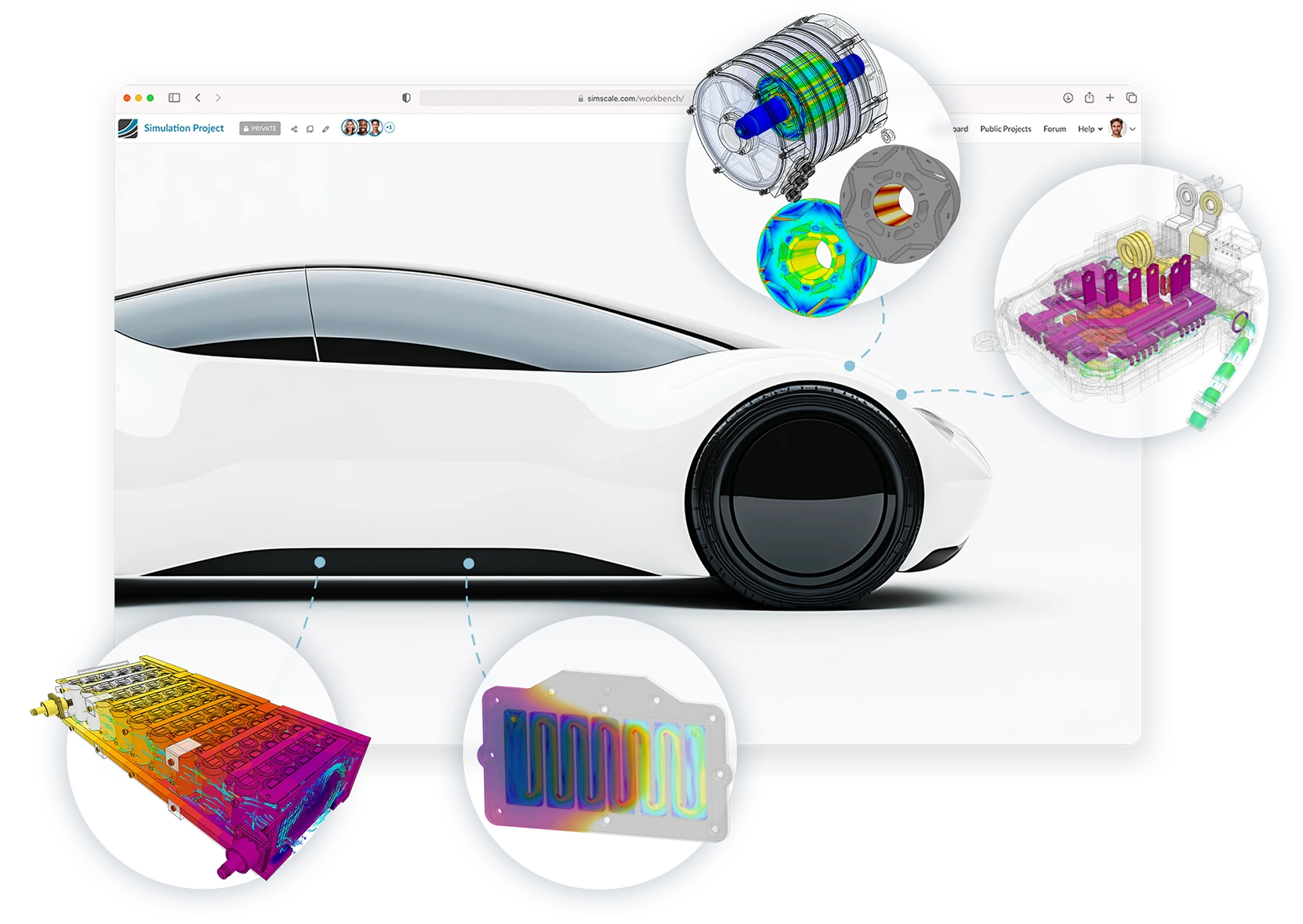




EV powertrain teams often split thermal, structural, and electromagnetic work across separate tools and lose fidelity at every handoff. SimScale runs all four physics on the same CAD in one cloud-native platform, so coil temperatures, junction limits, e-axle cooling, and structural margins get checked together in hours rather than weeks.
Electric powertrain simulation that covers your full design challenge
All the physics your e-powertrain engineers need
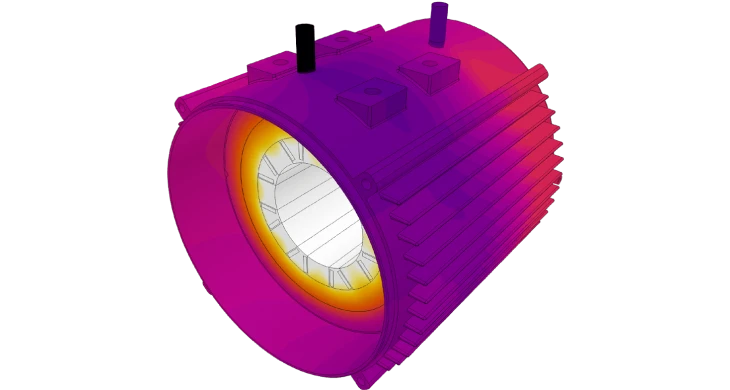
Powertrain failures cross domains: a hot stator derates the motor, and a rotor without structural margin closes the air gap at 16,000 RPM. Run CFD, FEA, conjugate heat transfer, and 3D electromagnetics on shared geometry, with one mesh setup and one results store.
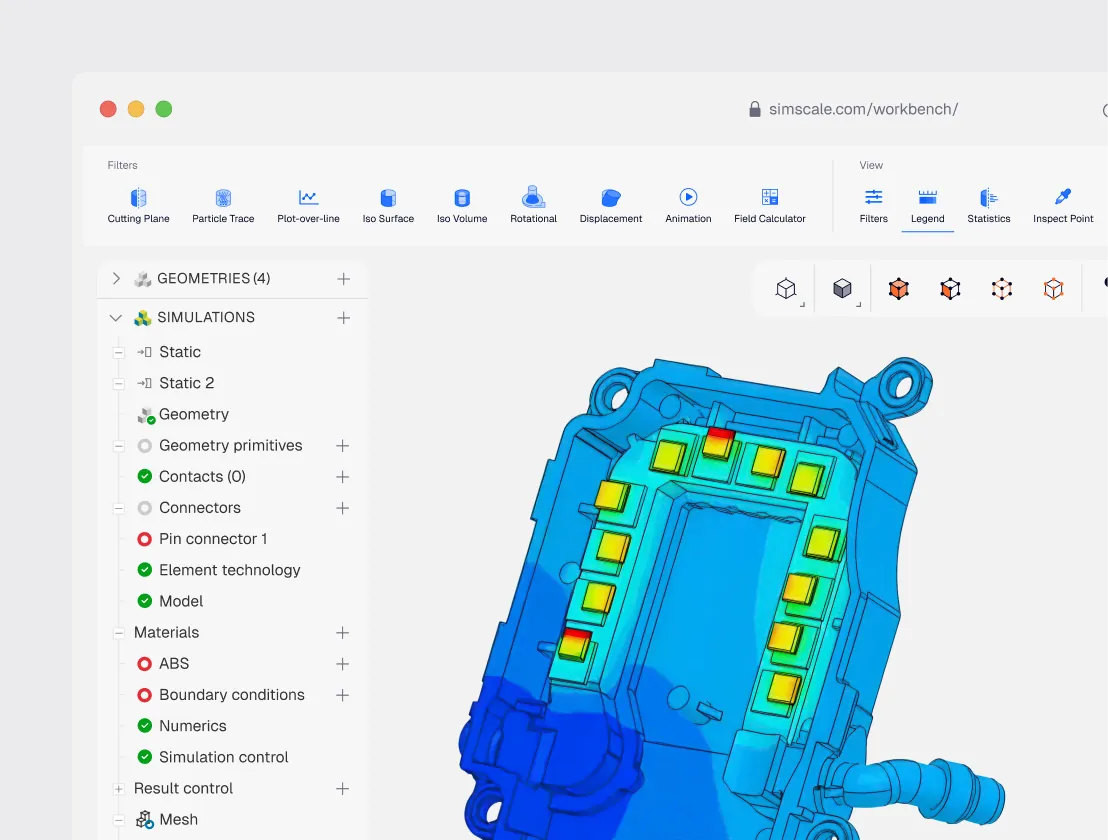
AI-native e-powertrain design optimization
Engineering AI automates setup, meshing, and post-processing on motor, inverter, and battery geometry. Physics AI returns near-instant predictions trained on high-fidelity simulation data, so you can sweep cooling-channel and geometry variants in seconds and send only the strongest candidates to full CFD.
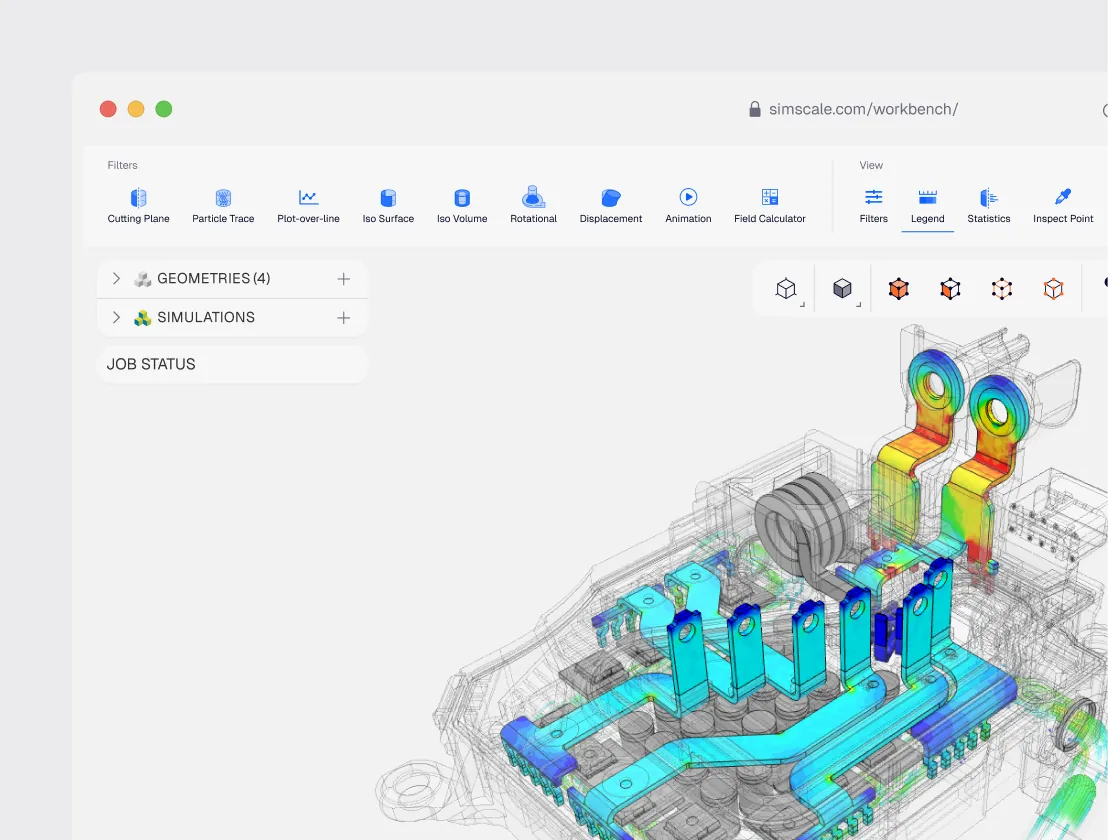
Cloud-native scale: more variants, faster
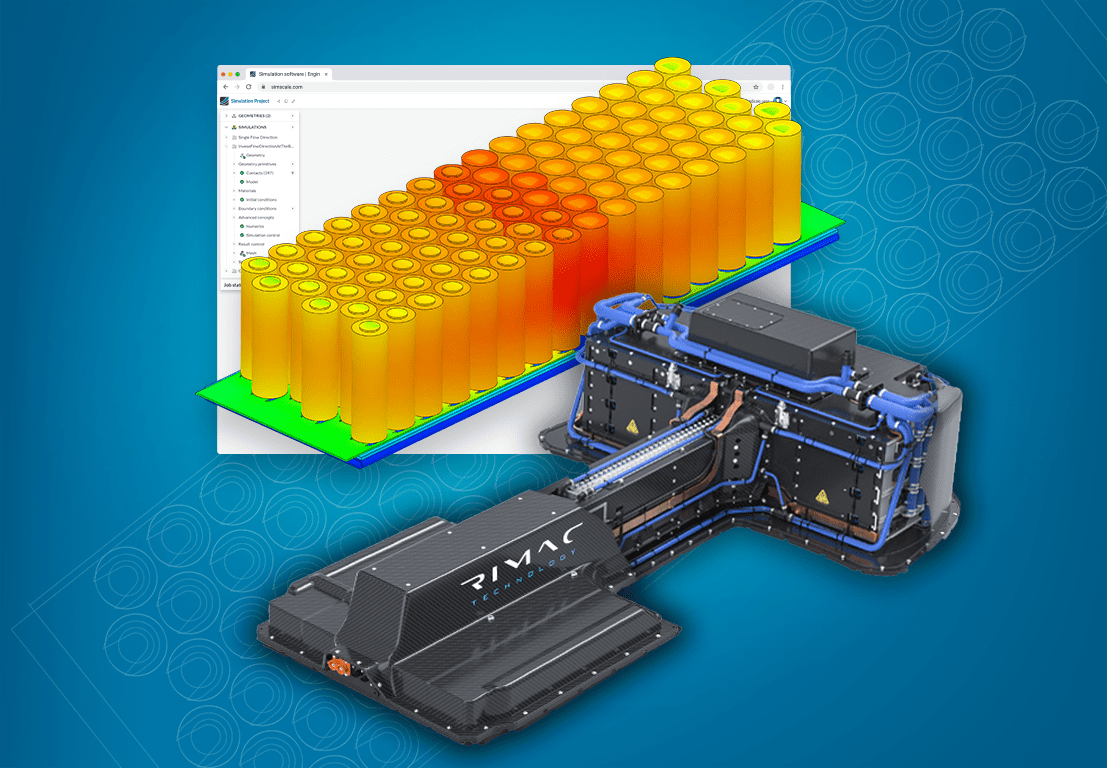
Run thermal, structural, and electromagnetic studies on the same e-axle in parallel, with no on-prem HPC, no VPN, and no license ceiling. Rimac ran 30 battery cooling simulations in parallel in 13 hours, work that would have taken about 300 hours in series.
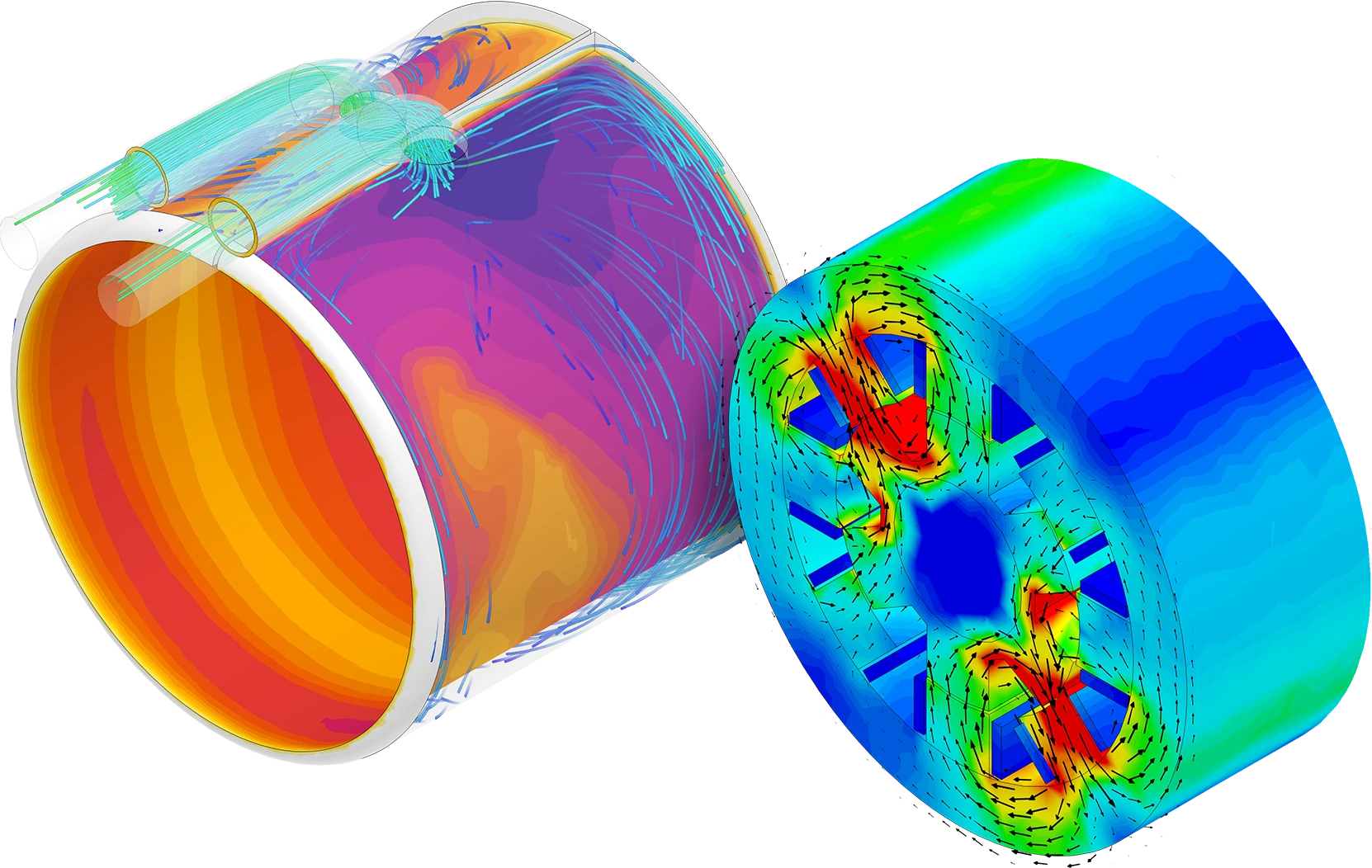
E-motor electromagnetic, thermal, and structural design
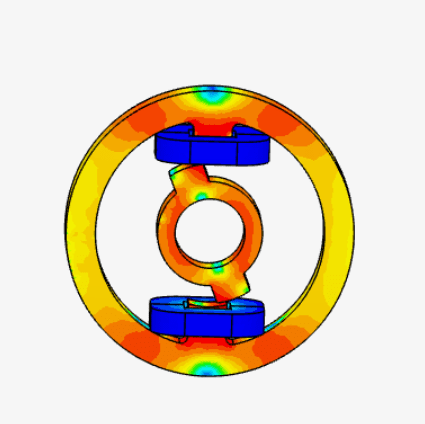
Compute flux density, cogging torque, and eddy-current losses in radial and axial flux motors. Map those losses into a thermal model of the windings, then check rotor integrity under centrifugal load on the same geometry.
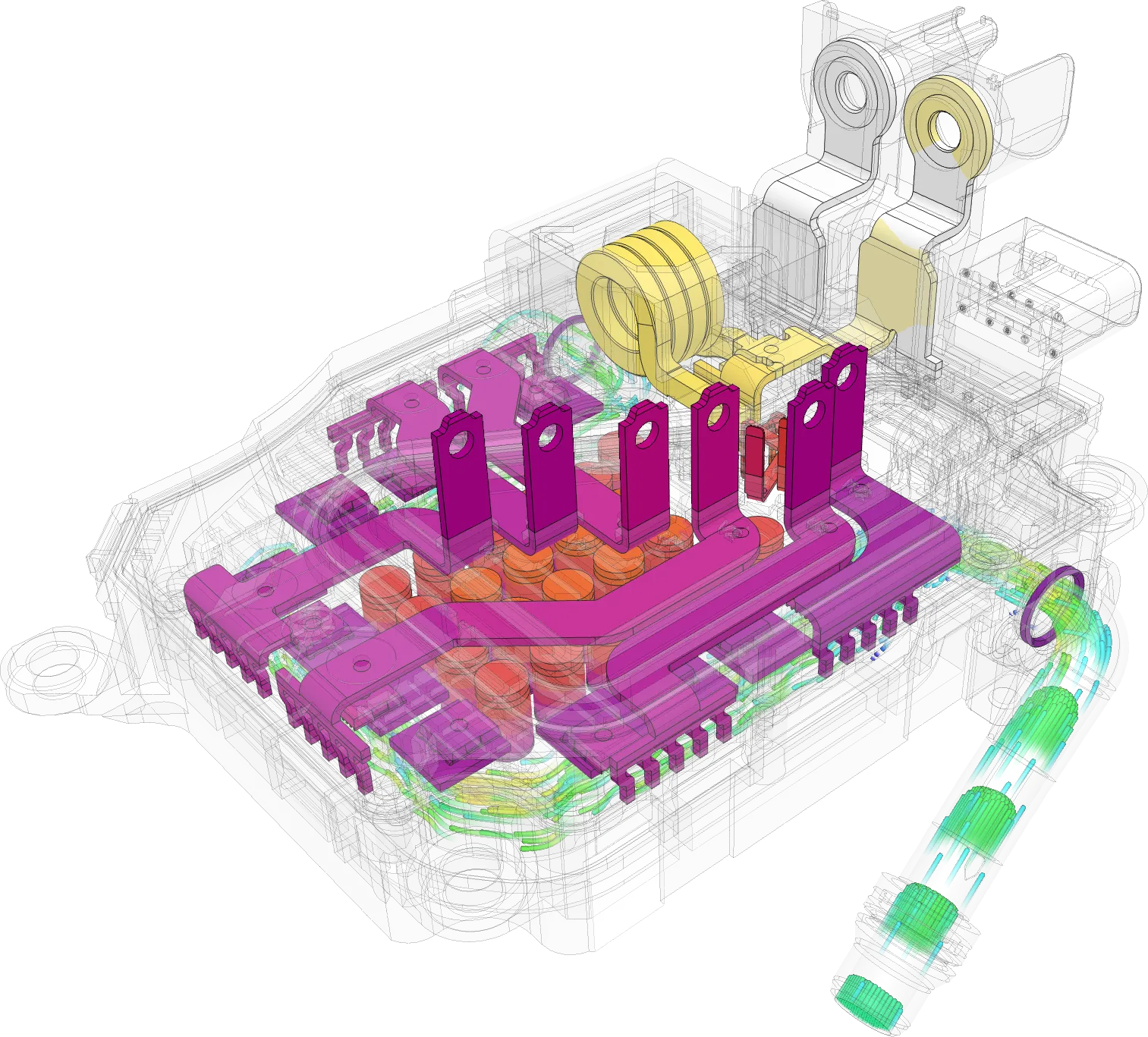
Inverter and power electronics thermal management
Predict IGBT and SiC MOSFET temperatures at peak load, compare single- and double-sided cooling, and size cold-plate channels and pin fins against pressure drop. Joule heating shows where current crowding in DC links and busbars adds heat.
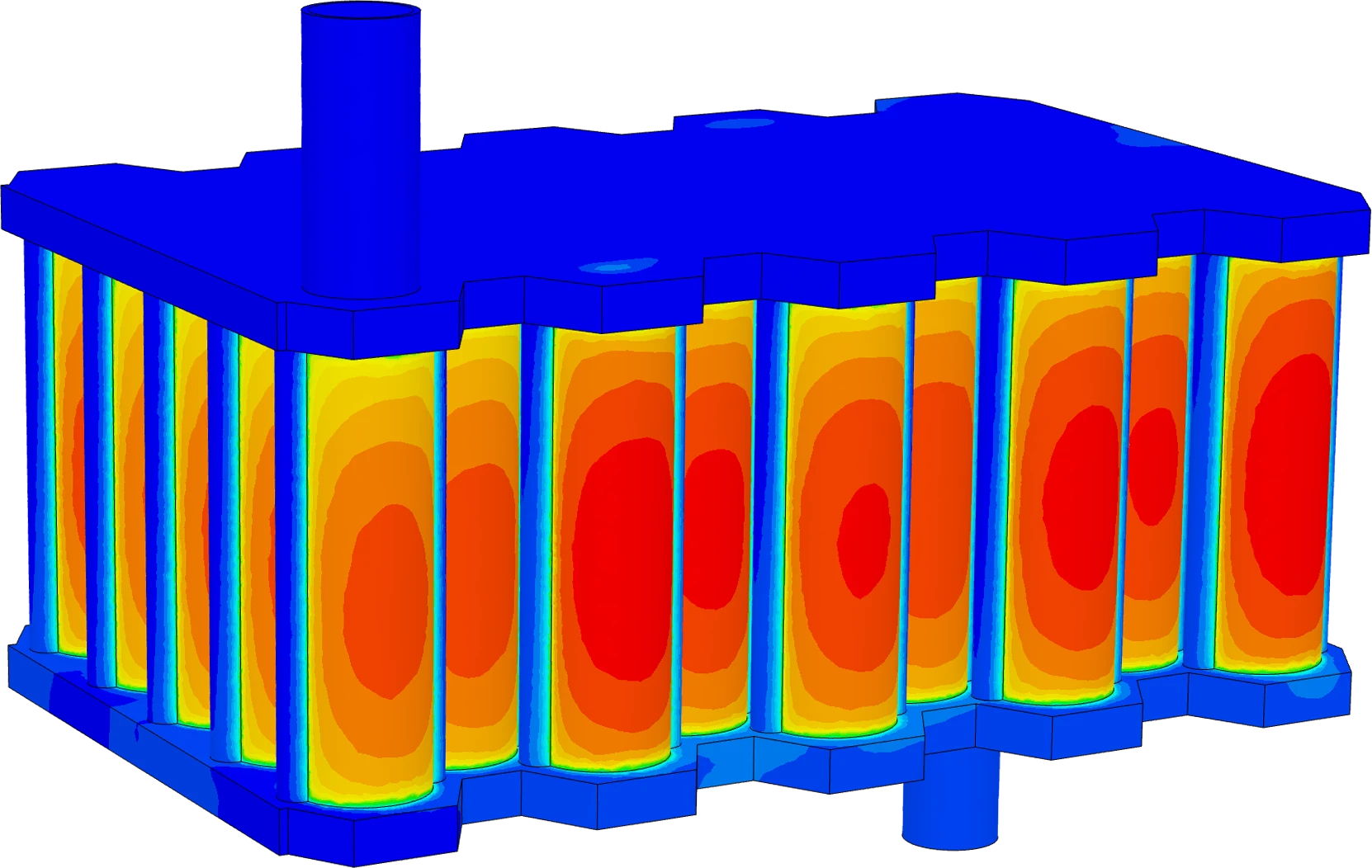
Battery pack and BMS thermal management
Predict cell temperatures, thermal gradients, and coolant pressure drop across drive and charge cycles. Check that BMS boards and contactors stay inside their limits, and catch hot spots before the prototype pack reaches the climate chamber.
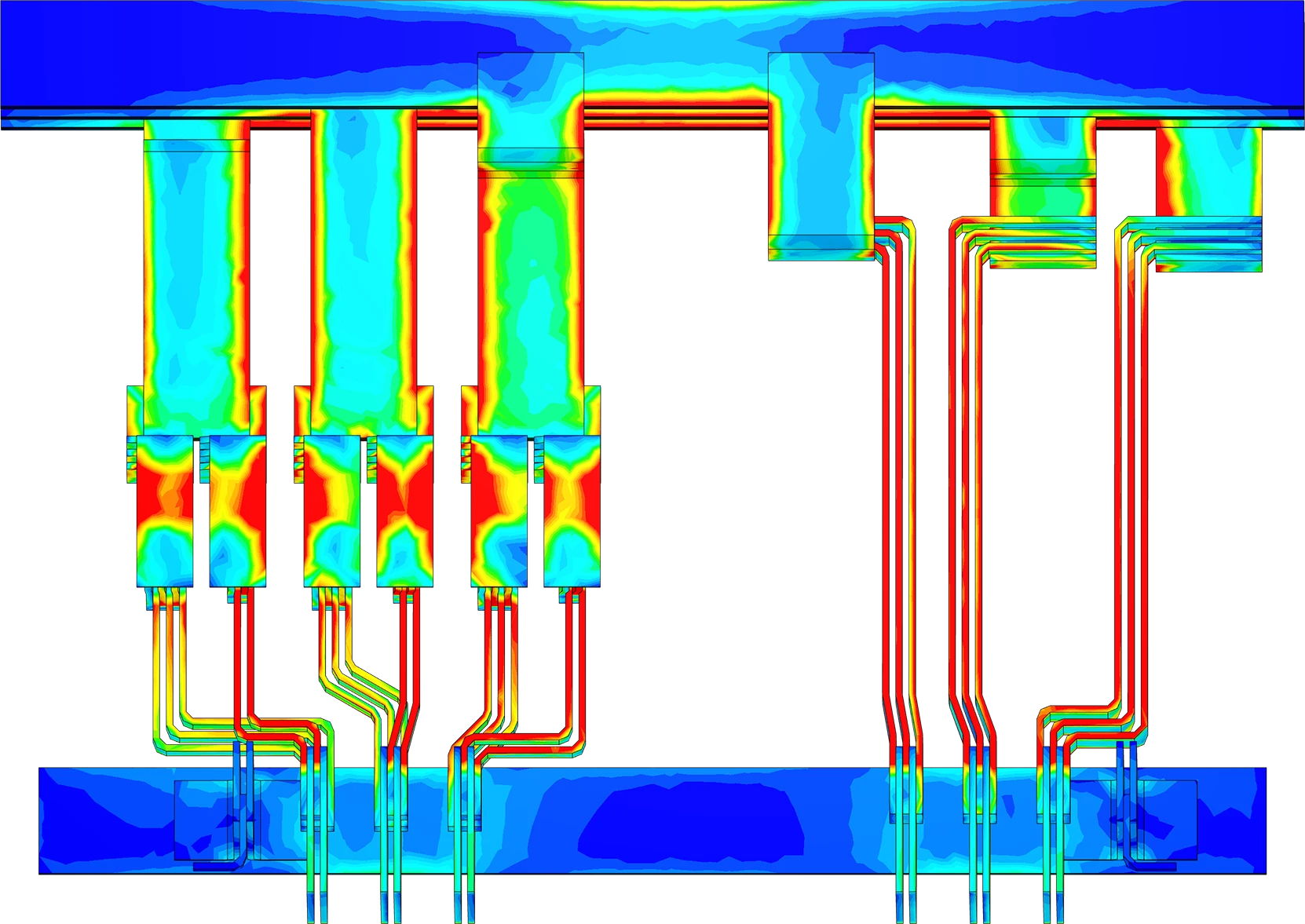
Busbars, inductors, and magnetic components
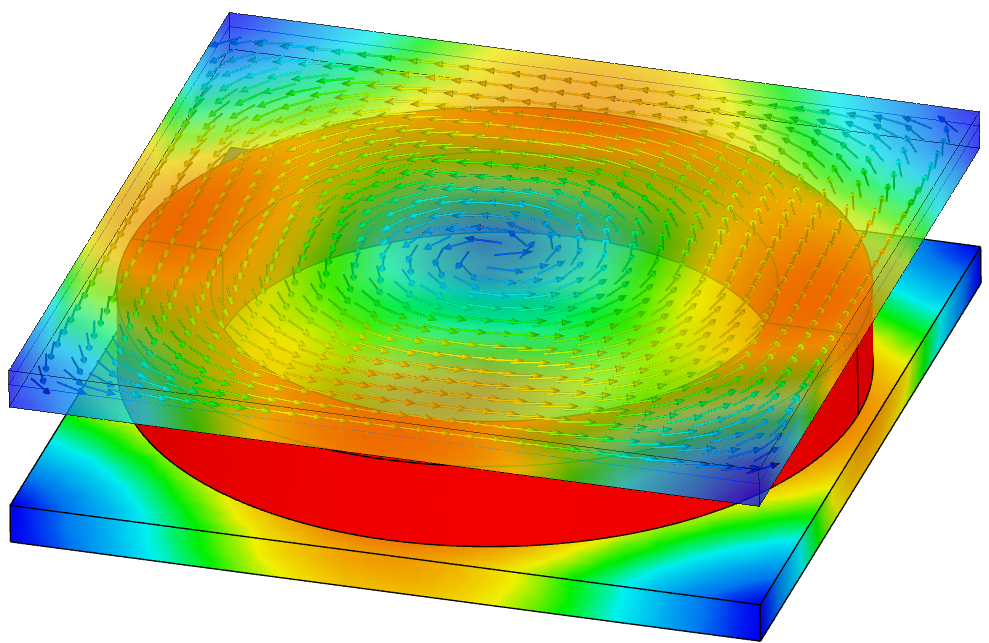
Simulate current density, voltage drop, and Joule heating in busbars and connectors, plus inductance and magnetic losses in inverter inductors and DC-DC magnetics. Refine conductor cross-sections and materials before the first board is built.
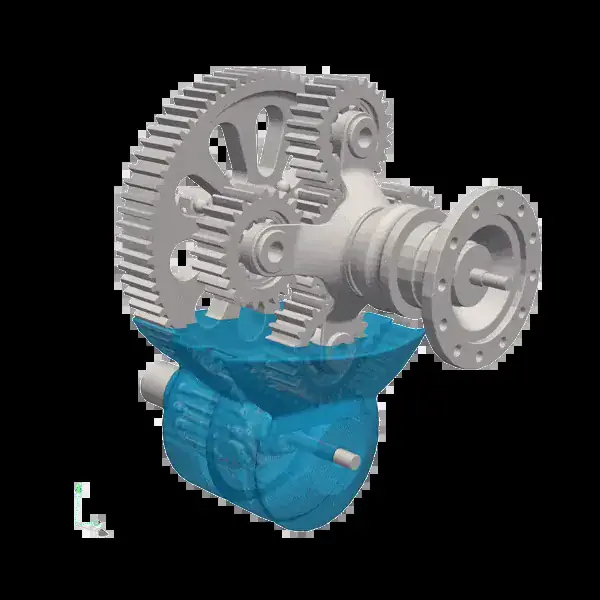
E-axle and gearbox lubrication and cooling
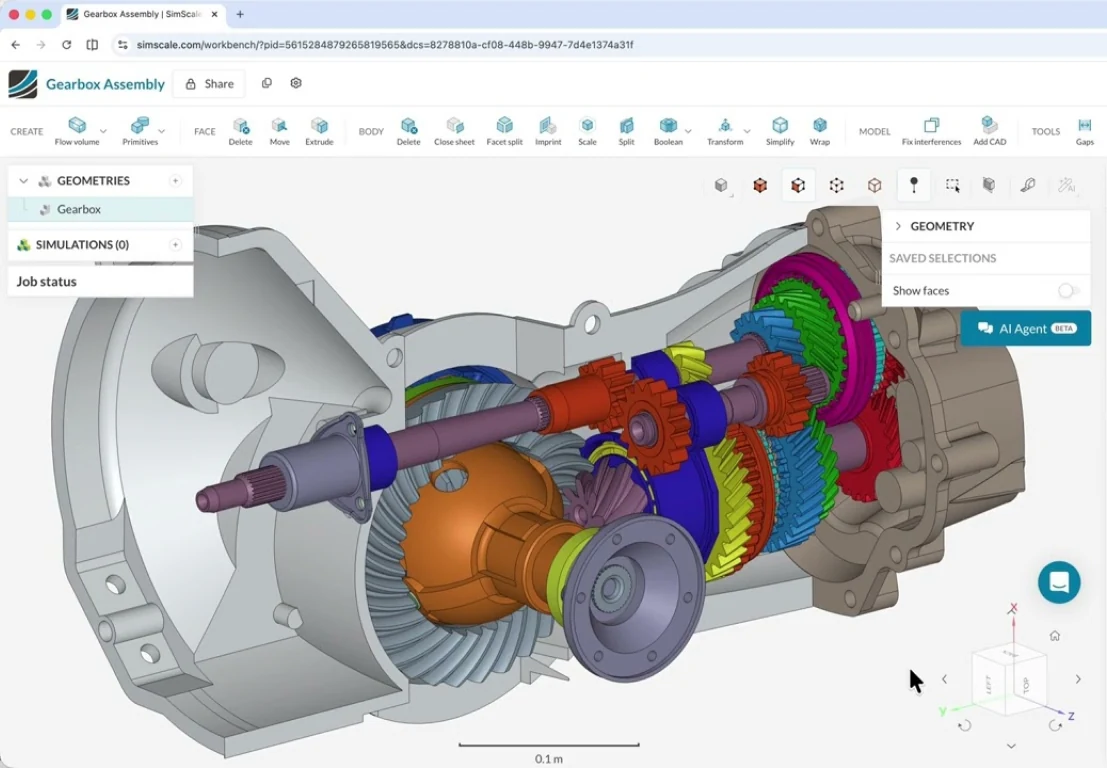
Model oil churning, splash, and film distribution in reduction gearboxes and oil-cooled motor housings with SPH. Then check water-jacket and oil-spray cooling with conjugate heat transfer, and spot lubrication starvation before the dyno run.
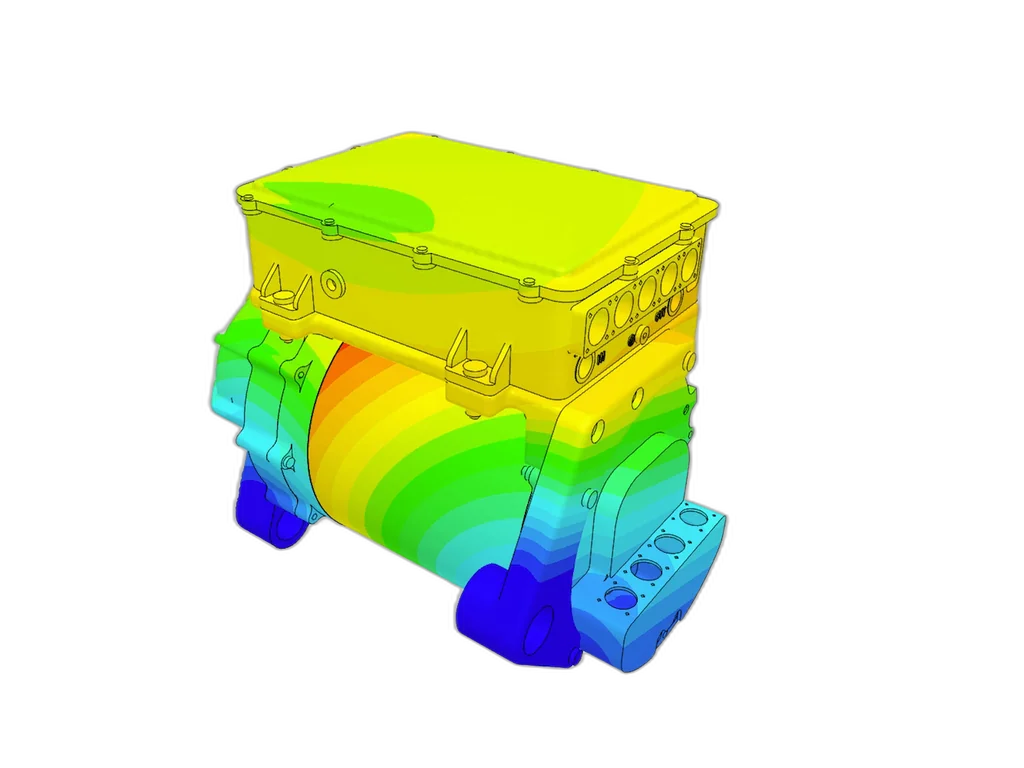
Housing, mount, and NVH analysis
Run static, thermomechanical, modal, and harmonic FEA on motor housings, inverter casings, and mounting brackets. Find resonances that line up with electromagnetic excitation, the main source of e-motor whine, and fix stiffness before hardware is cut.
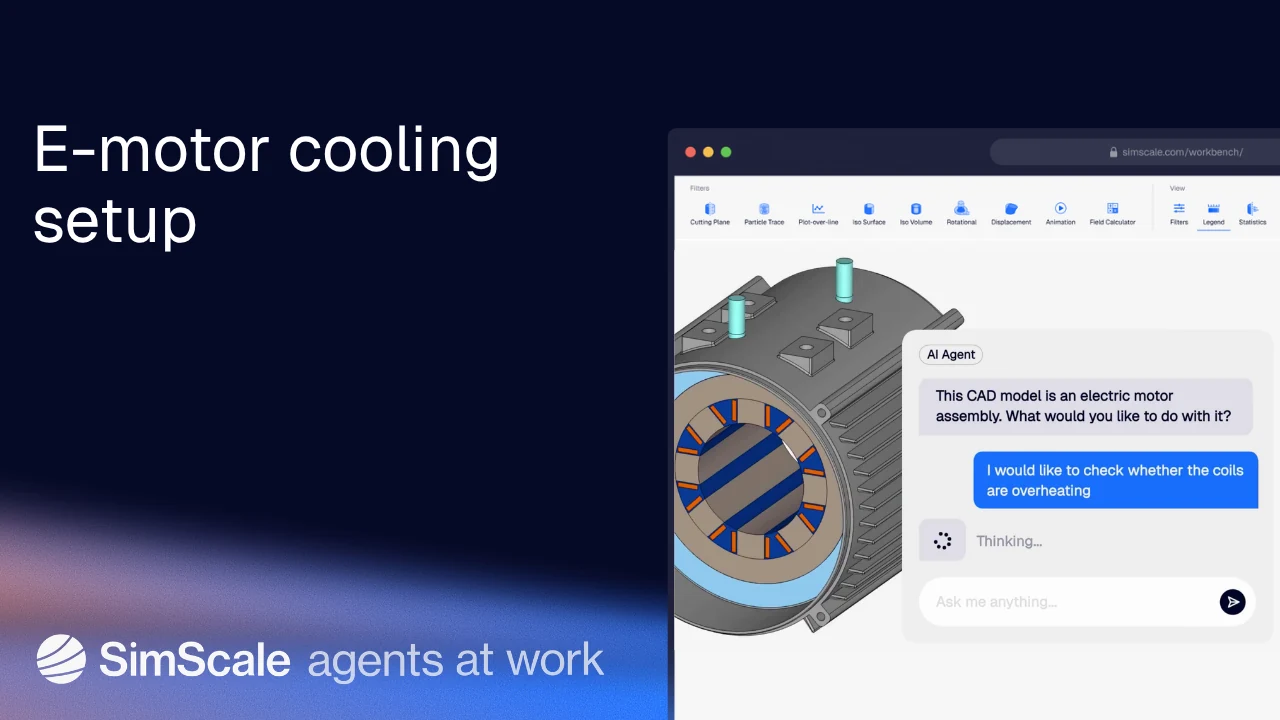
E-motor cooling simulation from a single prompt
Watch the SimScale AI agent prepare an e-motor model, assign materials and boundary conditions, and run the cooling study from one prompt.

2x
faster iteration cycles on a magnet-free axial flux EV motor
“If we didn’t use simulation to the extent that we’re using it, we would have to build at least one more full prototype.”
Maximilian Güttinger, CEO & Co-founder at Emil Motors

Concept to production
thermal-to-structural sign-off for Saietta’s AFT140 axial flux motor and e-axle
“Using legacy tools we would have had to purchase several software packages and locally transfer/format CAD files continuously whilst being fixed to a workstation.”
Peter Coysh, Aero-thermal Engineer at Ingenium Aero Consultancy

96%
less simulation time running 30 battery cooling studies in parallel
“Using SimScale in the early R&D stages of the product, we were able to fully leverage simulation capabilities into our product design process.”
Antonio Radenić, Battery System Engineer at Rimac Automobili

Within 5°C
of physical tests on a high-current automotive control unit
“By testing a few options in simulation up front, I could be confident that we didn’t need a full metal enclosure.”
Andrew Ashby, Mechanical Engineering Manager at Pektron

100+
CHT simulations to pick a motorsport EV battery cooling concept
“The main advantage we find in simulation is the speed at which we can try different ideas and design parameters.”
Bernat Carreras, Director at Bold Valuable Technology
Resources for electric powertrain simulation
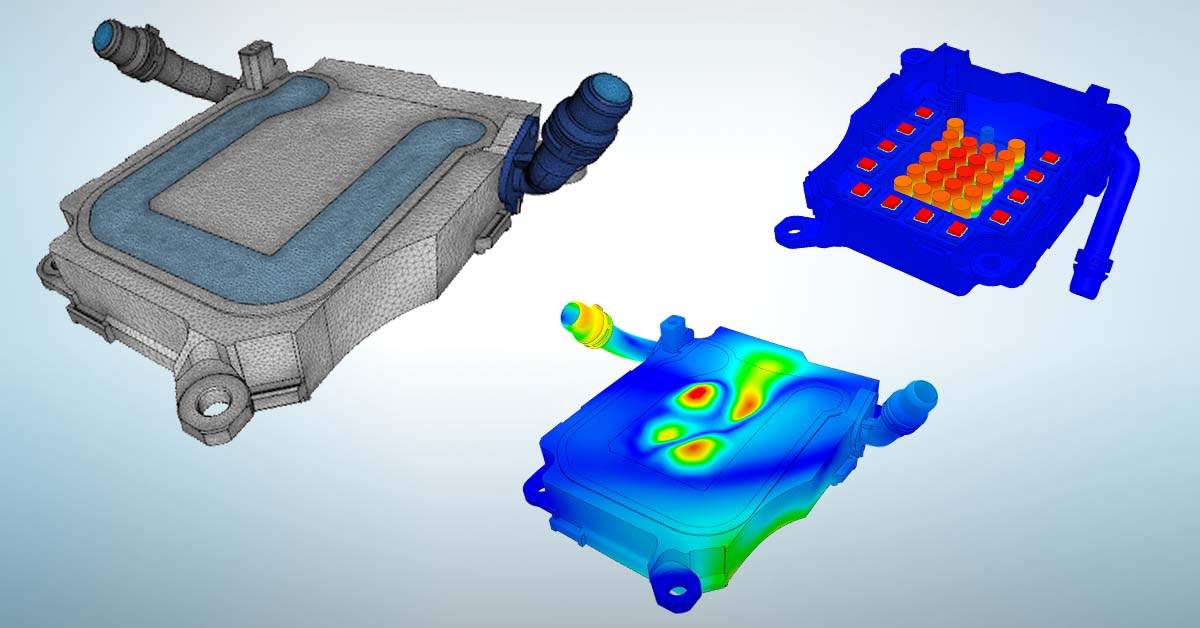
Multiphysics Simulation of an EV Inverter
Learn how to conduct a multiphysics investigation of an EV inverter with SimScale. We simulate three physics in under 30 minutes.

Nur Ozturk
December 27, 2021
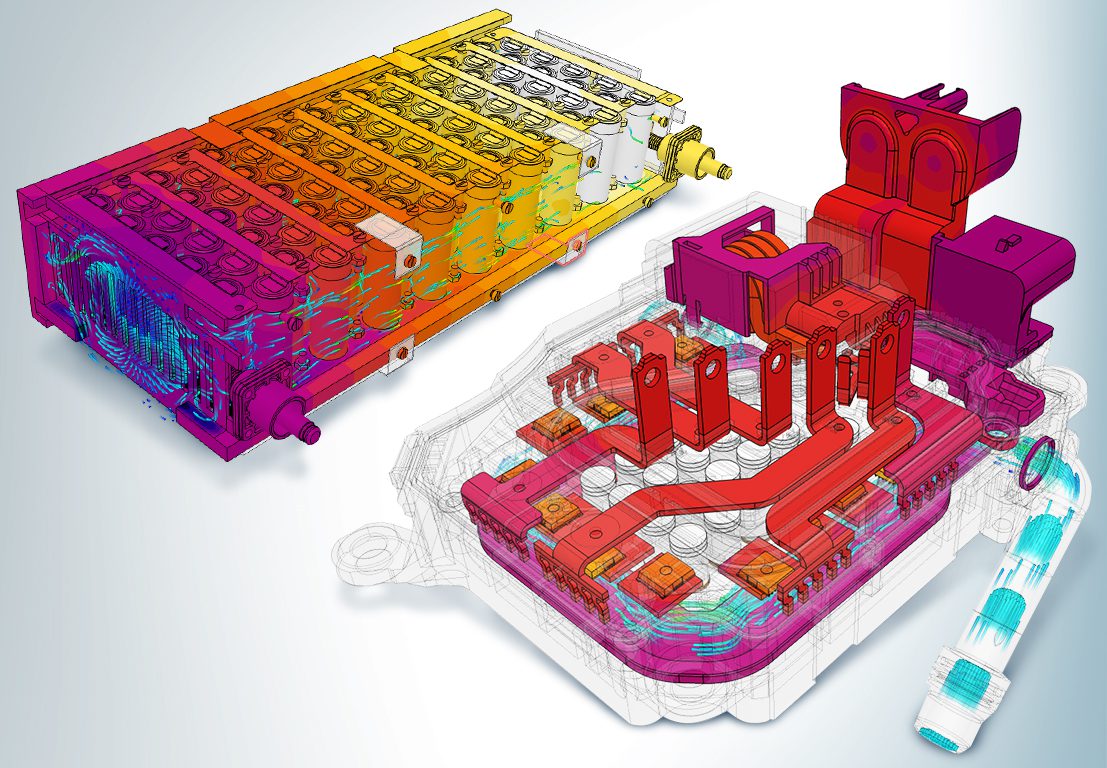
SimScale Launches Joule Heating Simulation to Accelerate Innovation in Power Electronics
SimScale has launched Joule Heating Simulation to accelerate innovation in power electronics: EV batteries, resistors, fuse boxes, and more.

Alexander Fischer
March 3, 2023
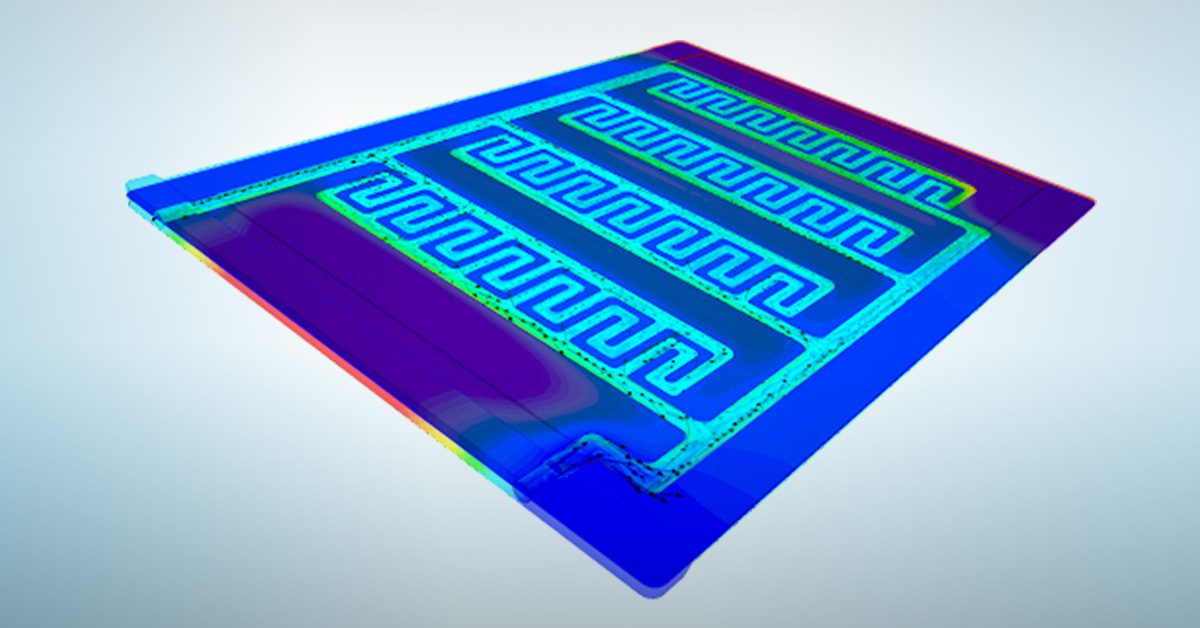
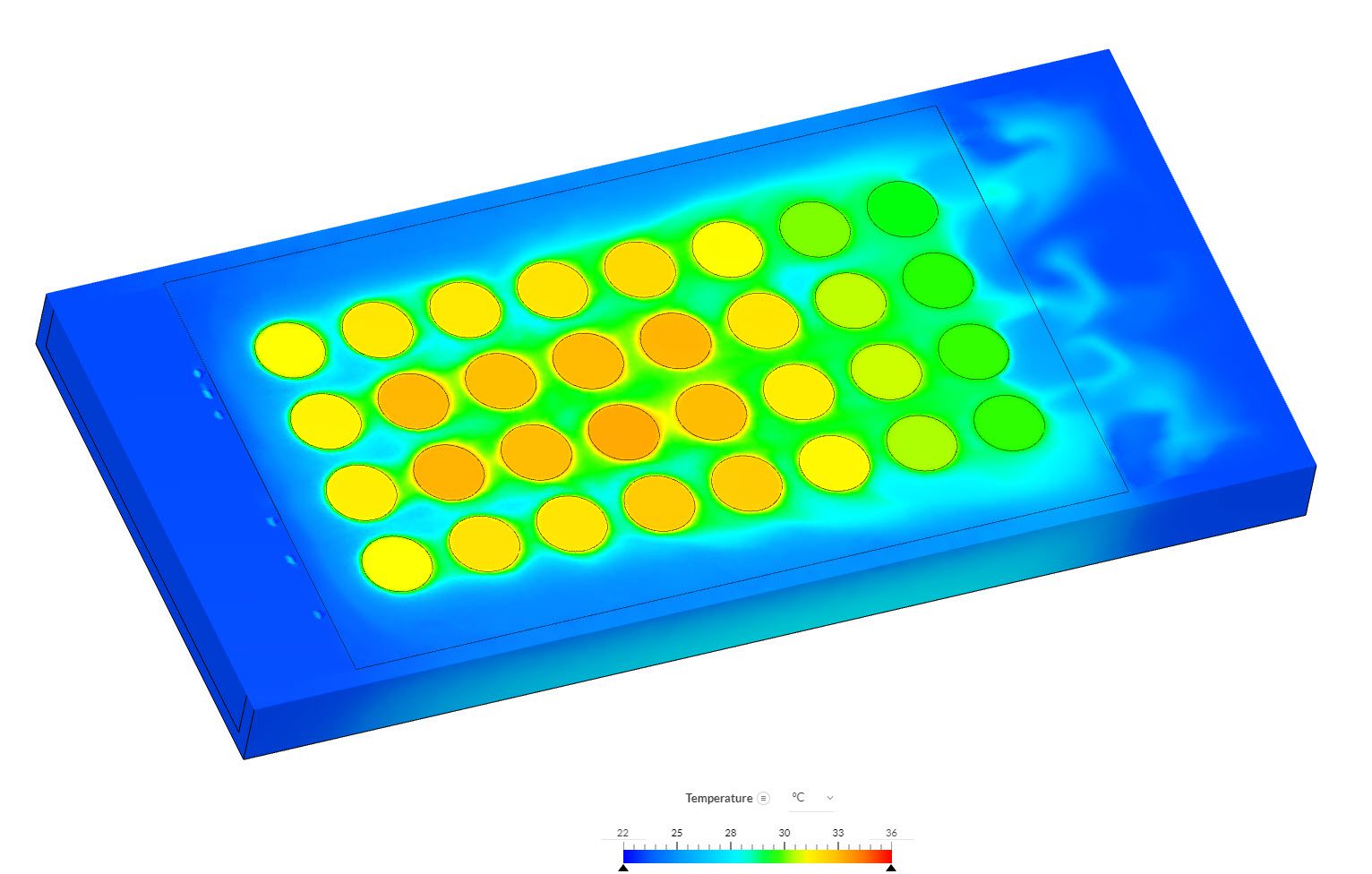
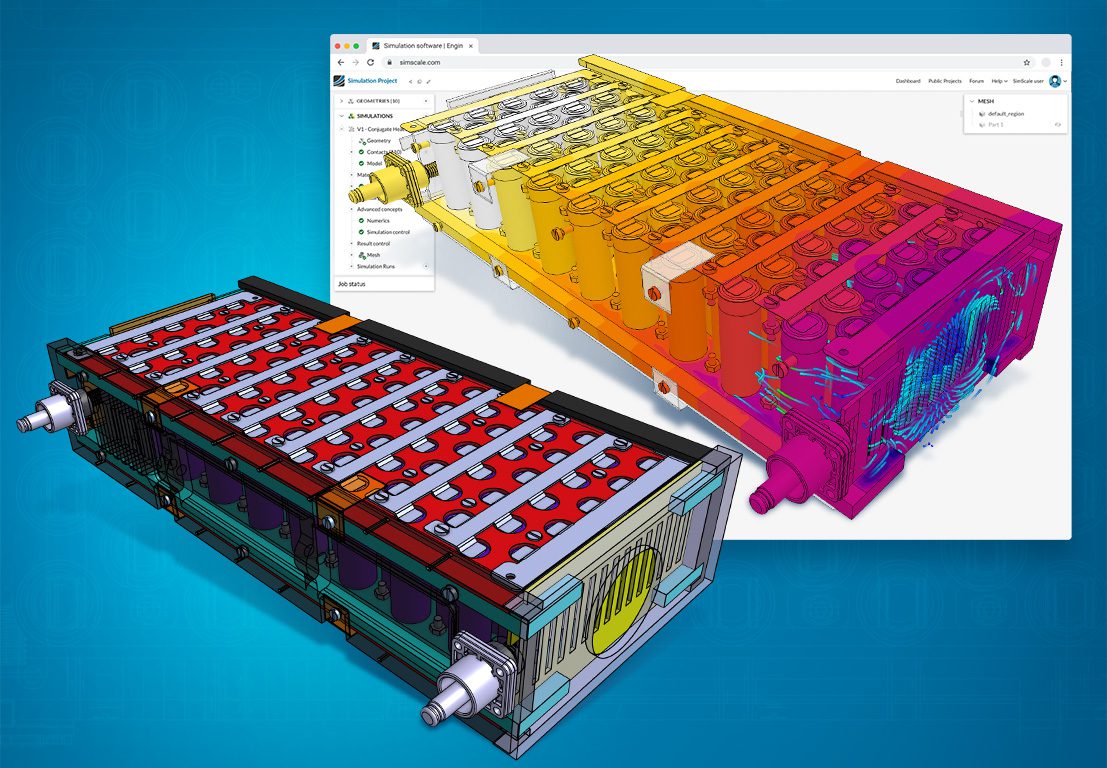
Simulating and Optimizing an Electric Vehicle Battery Cold Plate
Optimize cold plate design for electric vehicle battery packs using CFD and engineering simulation in the cloud.

Naghman Khan
June 13, 2022

Peter Selmeczy
May 25, 2021

Ricardo Gasparini
August 11, 2025

Luis Goncaves
January 27, 2026
Alexander Fischer
April 27, 2023
Alexander Fischer
September 8, 2021
Naghman Khan
April 15, 2024

Carolina Giavedoni
October 28, 2021
Carolina Giavedoni
September 16, 2021
Peter Selmeczy
March 23, 2026
Peter Selmeczy
October 26, 2026

Samir Jaber
September 18, 2024
Frequently asked questions about electric powertrain simulation
New to powertrain simulation or evaluating SimScale? Here are the questions we hear most.
ContactElectric powertrain simulation predicts how the battery, inverter, e-motor, and e-axle behave thermally, structurally, and electromagnetically before hardware exists. The powertrain is the full system that turns battery energy into wheel torque; the drivetrain is the subset after the motor, typically the gearbox, axle, and driveshafts.
Radial and axial flux e-motors (permanent magnet, induction, and switched reluctance), inverters and DC-DC converters, battery packs and BMS hardware, busbars and inductors, reduction gearboxes and e-axles, and the housings and mounts around them. CFD, FEA, thermal, and electromagnetic analyses all run on the same CAD.
Most EV teams pair 1D system tools such as MATLAB®/Simulink® or GT-SUITE for drive-cycle, range, and controls work with 3D physics simulation for component design. SimScale is the 3D layer, cloud-native and browser-based, and its temperatures, pressure drops, and losses can be exported to calibrate system models.
Yes. Joule heating and core losses from the electromagnetic solve map directly as heat sources into a conjugate heat transfer simulation. That shows how losses in the windings, magnets, and busbars drive the temperatures your cooling system has to handle.
Conjugate heat transfer solves coolant flow, solid conduction, and heat generation together on the real CAD. Engineers model water-glycol jackets, direct oil cooling on stator windings, and inverter cold-plate channels to predict coil temperatures, hot spots, and continuous torque limits before the first prototype.
CAD from Onshape, SolidWorks, CATIA, and STEP files imports directly in the browser. With Onshape, geometry changes sync, so you can update the design and rerun thermal, structural, or electromagnetic studies without manual export.
Most engineers run their first simulation within an hour of signing up, starting from a public e-motor, busbar, or cold-plate project. Real-time support sits inside the project for setup, meshing, and physics questions, with no install, no VPN, and no on-prem HPC.