Thermodynamics
Cloud-Native Thermal Simulation: Predict Heat Transfer & Optimize Thermal Performance
Accelerate product development by analyzing conduction, convection, radiation, and conjugate heat transfer behavior across electronics, batteries, heat exchangers, and more.
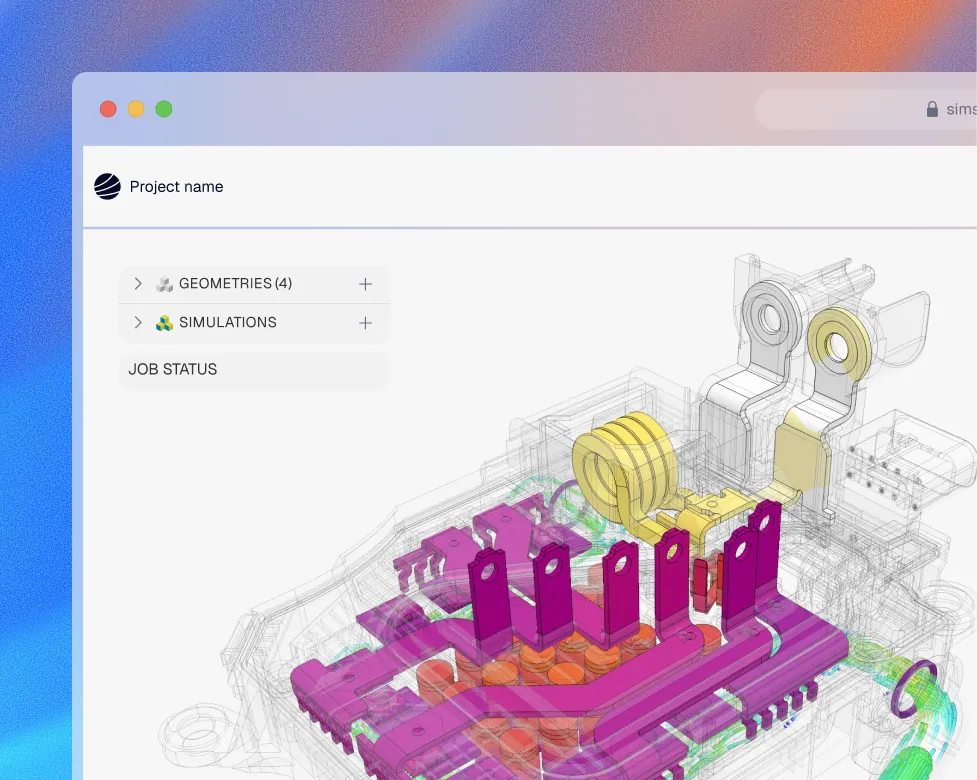












From heat transfer to fully coupled workflows, accessible from your browser
From component-level conduction to conjugate heat transfer across fluid and solid domains, SimScale covers the thermal analysis your engineering team needs.

Steady-state & transient heat transfer
Model how heat builds up and dissipates over time across solid components and assemblies, using conduction, convection, and radiation — with the solver accuracy your validation requirements demand.
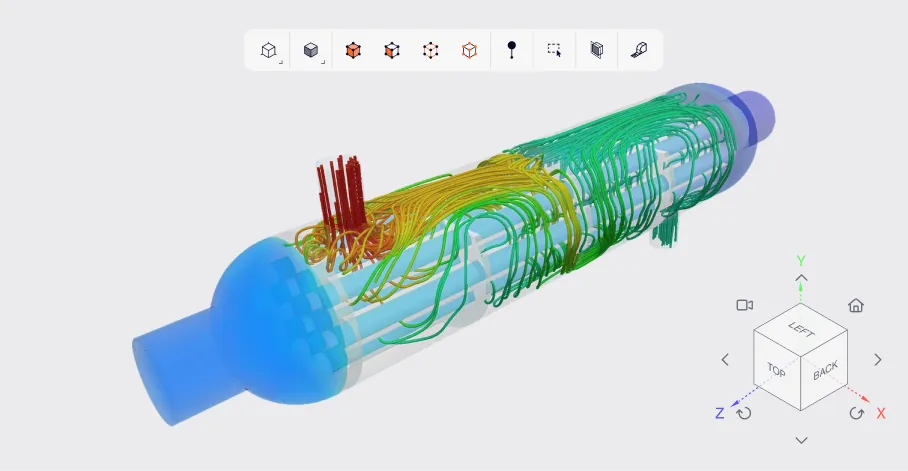
Conjugate heat transfer (CHT)
Capture the full interaction between fluid flow and solid heat transfer in a single simulation. Optimize cooling channels, heat exchangers, and enclosure designs without splitting your workflow across tools.
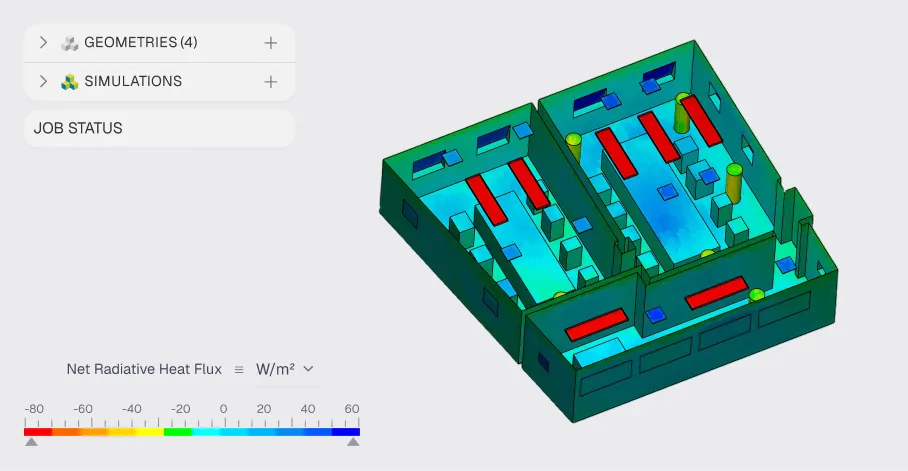
Thermal radiation
Account for radiative heat exchange between surfaces using view factor methods — critical for accurate thermal prediction in vacuum environments, high-temperature equipment, and space applications.
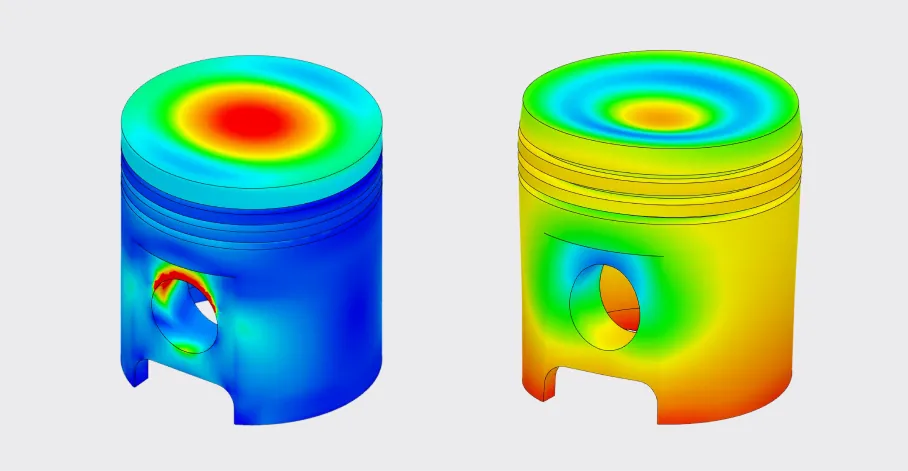
Thermomechanical coupling
Connect thermal and structural physics to predict thermal stress, deformation, and fatigue under operating temperature loads — surfacing failure risks before physical testing begins.
Thermodynamics in action
From product validation to design exploration, thermodynamic simulation accelerates decisions across the full development lifecycle.
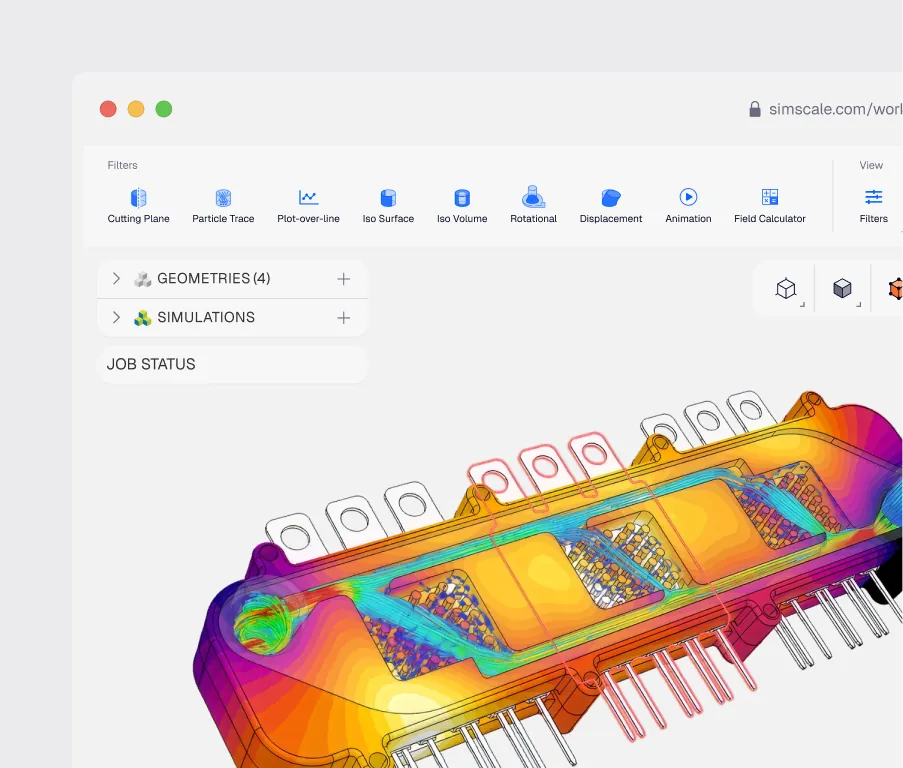
Electronics thermal management
Predict temperature distribution in PCBs, power electronics, and enclosures to prevent hotspots and component failure.
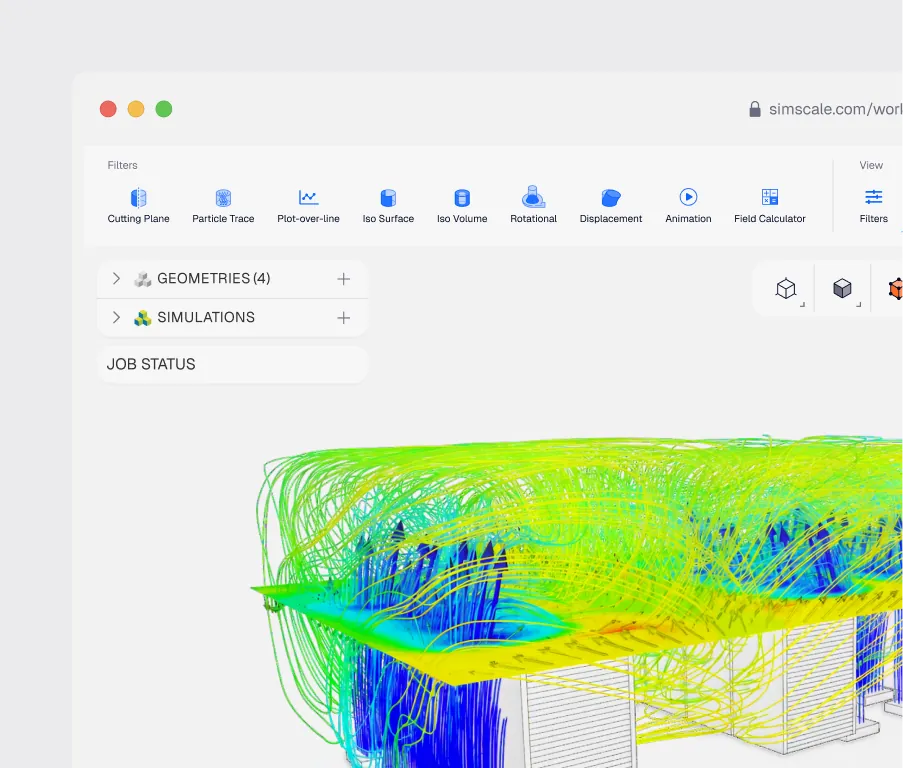
Indoor environment
Simulate heating, cooling, and airflow distribution in buildings and data centers to optimize comfort and energy performance.
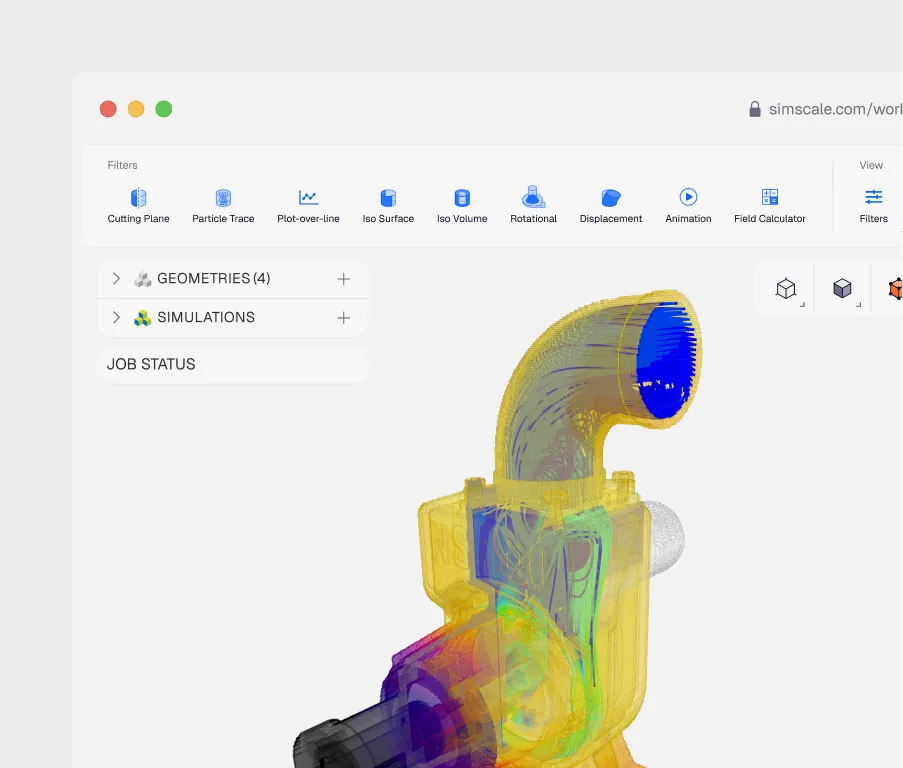
Turbomachinery
Model thermal loads and heat exchange in pumps, fans, compressors, and turbines for accurate performance prediction.
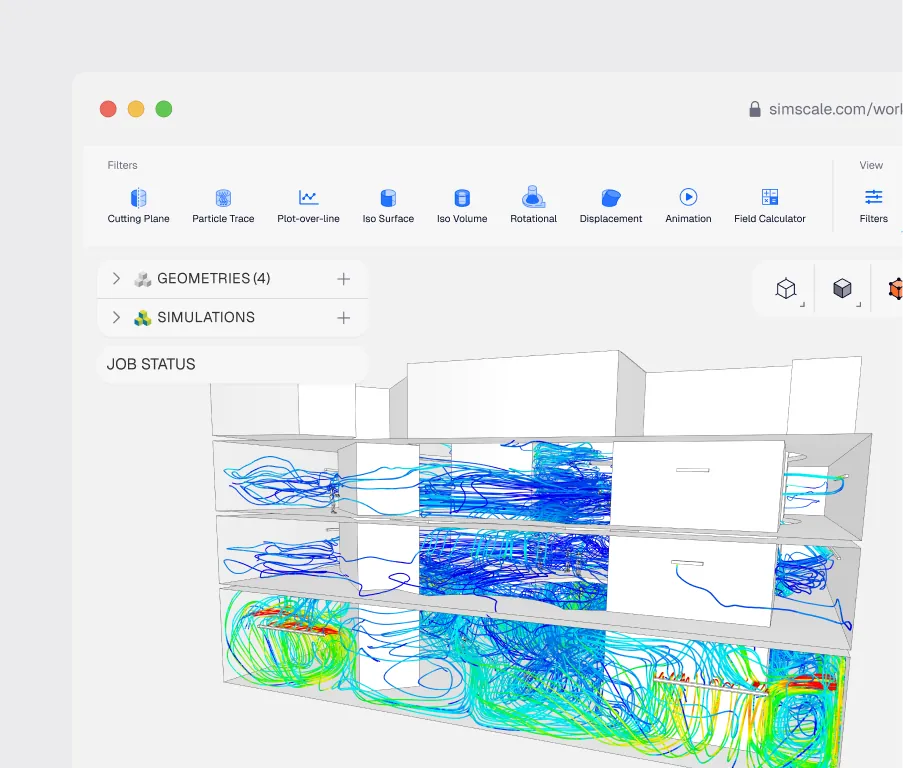
HVAC
Optimise duct layouts, diffuser placement, and system configurations in parallel — with thermal comfort criteria built in for direct compliance validation.
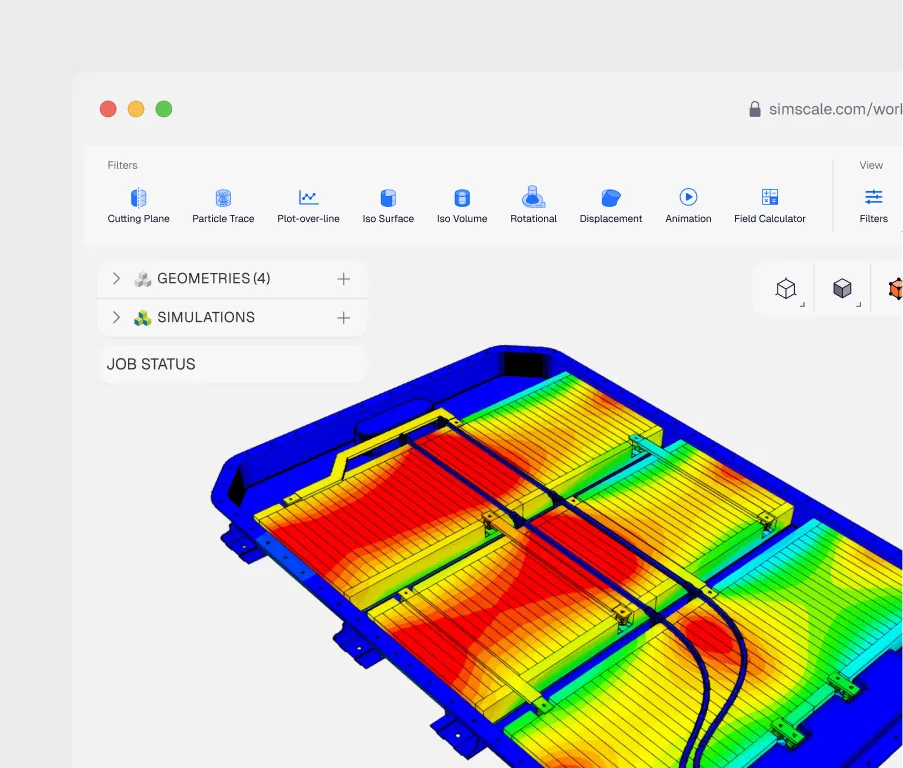
Battery simulation
Model heat generation, dissipation, and thermal runaway risk across battery cells and packs for EV and energy storage systems.
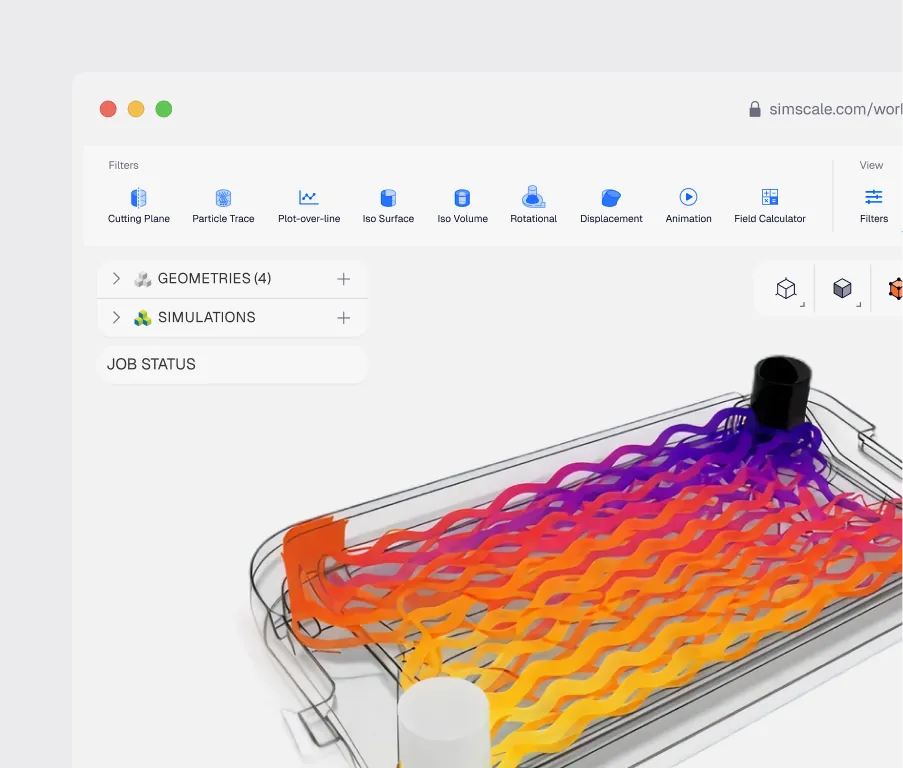
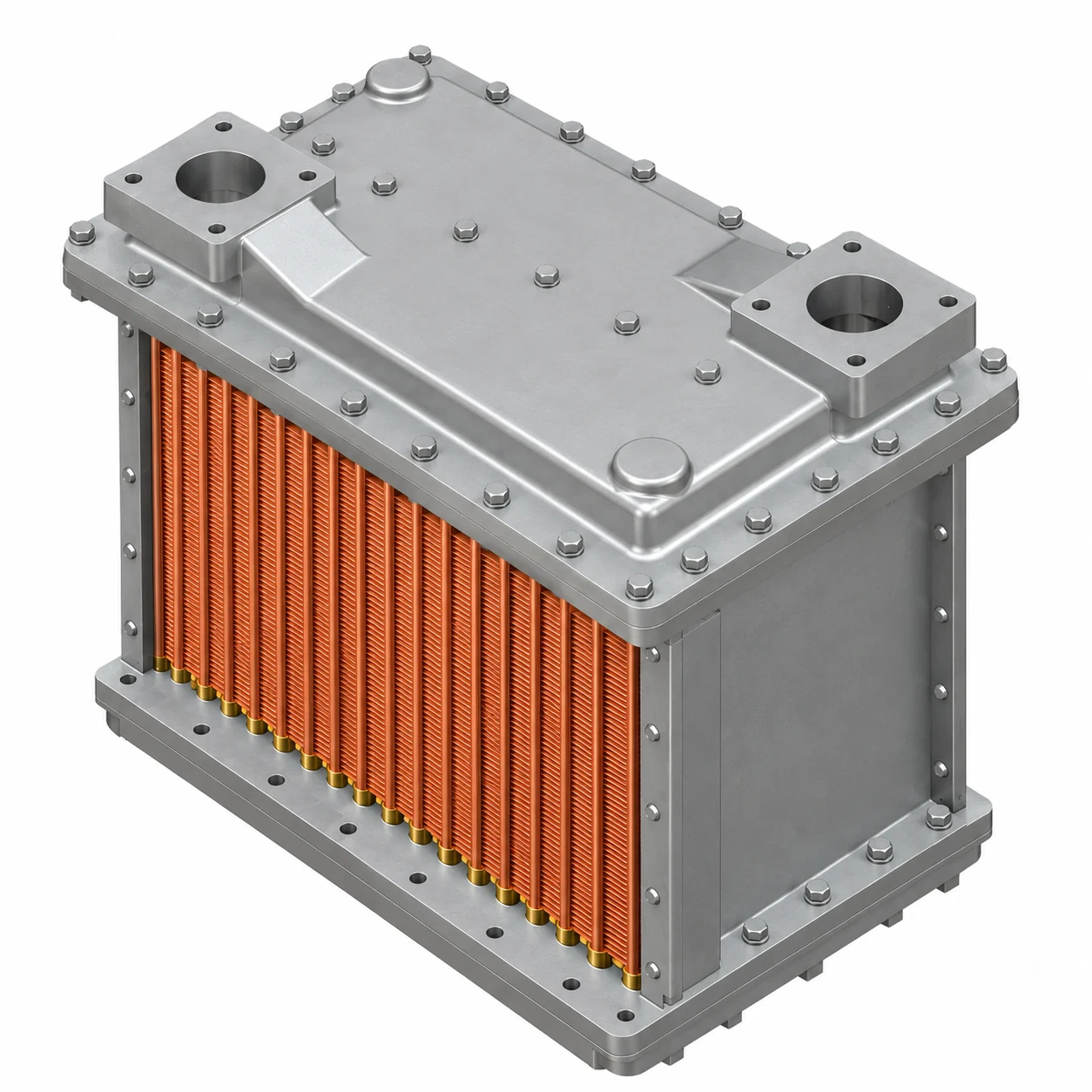
Heat exchanger simulation
Sweep flow rates, generate performance maps, and balance thermal effectiveness with pressure drop.
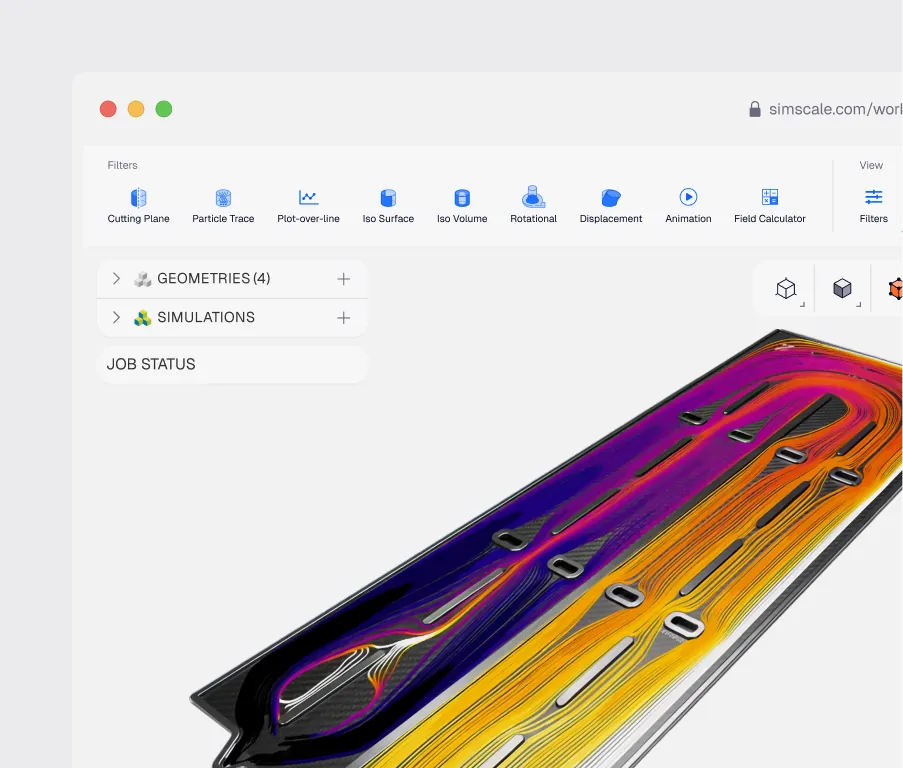
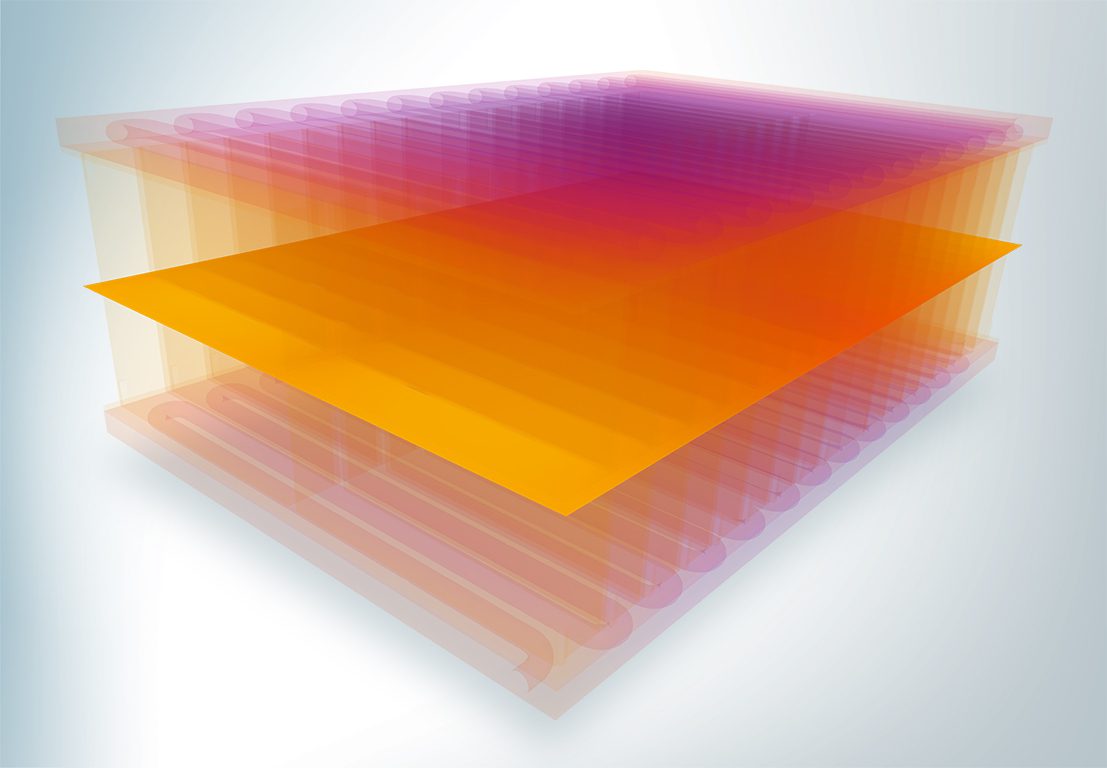
Cold plate simulation
Leverage advanced design and manufacturing technologies like microchannels, implicit modelling and topology optimization to get the edge over your competitors.
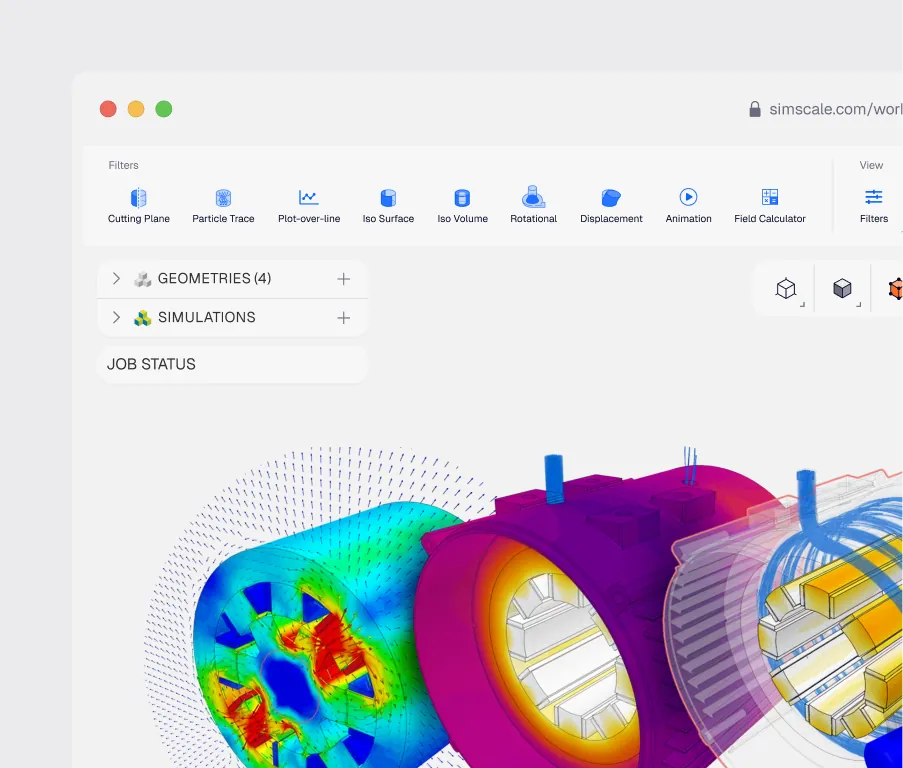
Electric motor simulation
Design & Simulate Electric Motor Electromagnetics, Thermal Performance, and Structural Integrity
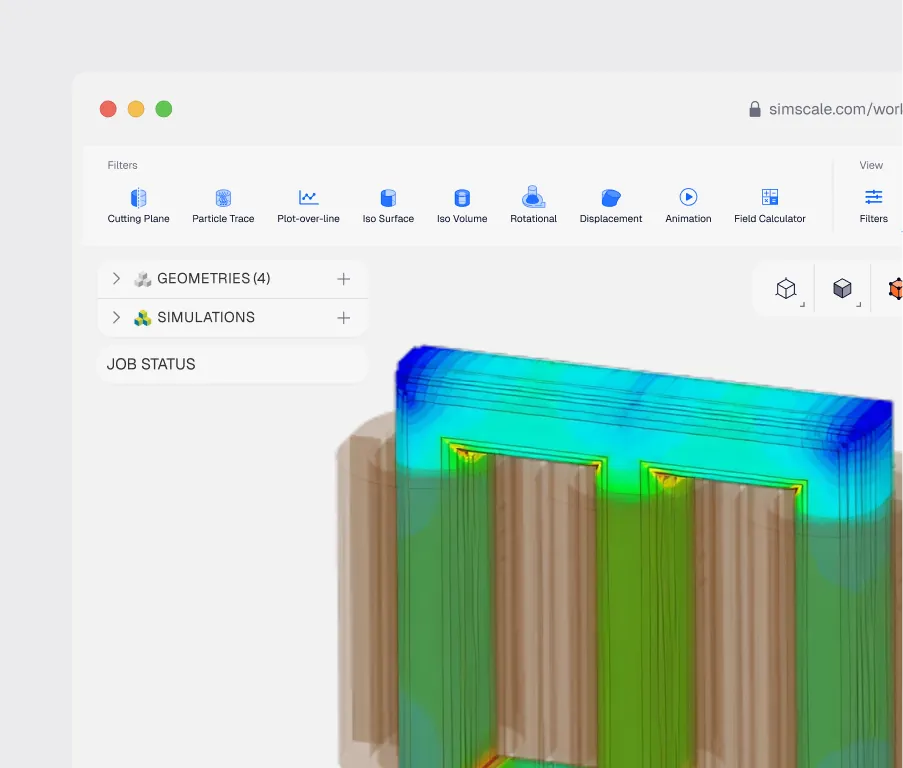
Transformer design software
Cut transformer losses and optimize thermal performance faster with cloud-native transformer simulation!
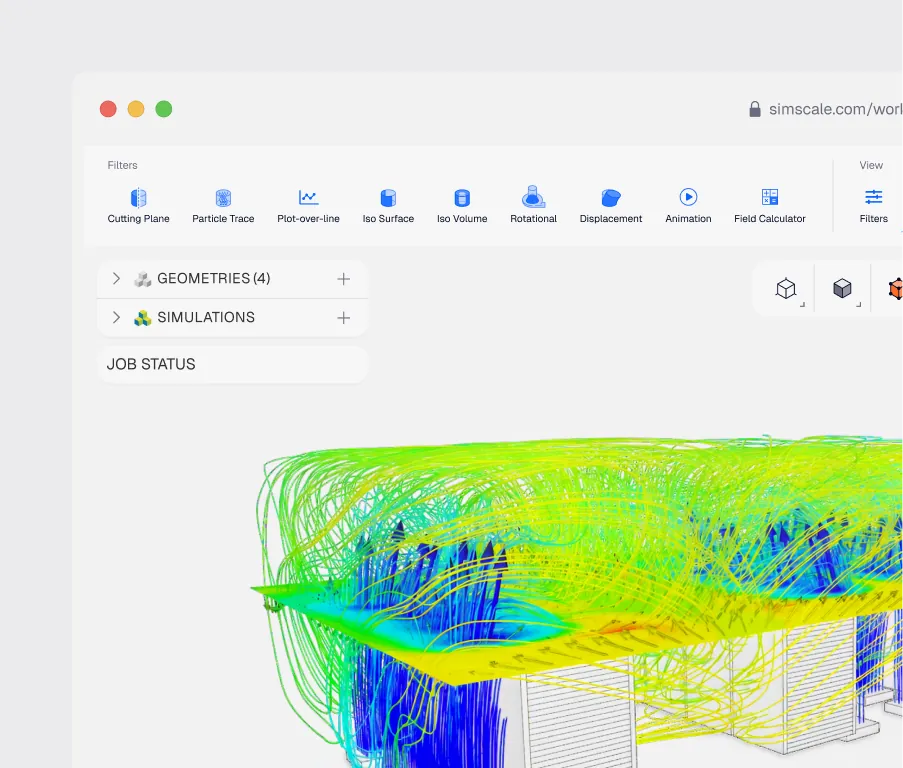
Data center cooling
Model airflow, containment strategies, and temperature distribution in data centers using cloud-native CFD to minimize PUE and ensure SLA compliance.
Industry use cases
See how companies are cutting costs and accelerating development with cloud-native CFD.
See all solutions
100%
CFD modelled airflow, CO2, and thermal comfort in a Passivhaus classroom design
"CFD is a required tool to better understand the building physics within a space and the building envelope, beyond what thermal modelling alone can evaluate."


seconds
Direct simulation on implicit geometry cuts import times for additively-manufactured heat exchangers
"Implicit modeling and direct simulations on implicit geometry is a real step change in speed and robustness of optimization workflows, necessary to unlock the potential of additive manufacturing."


96%
Time saving on battery thermal studies — 30 CHT simulations in 13 hours vs ~300 in serial
"Cloud-native simulation enables Rimac to accelerate and enhance their design and development process, exploring the full design space with the desired accuracy."


-80 hours
Parallel thermal runs replaced 80 hours of serial work, optimizing LED heatsink designs
"Being able to copy the mesh settings and substitute geometry from one analysis to another was very helpful and time-saving, letting the team run all simulations at once."


4-6 weeks saved
Four thermal design iterations in about a week, avoiding prototyping each enclosure
"It was a lot more cost-effective than getting a seat and having it sit there for months. We might use a simulation for two solid weeks every six months."


25%
Cost reduction on new food-processing equipment, saving 120 hours and 2-3 months per product
"Verifying performance in SimScale is now the de-facto workflow before prototype and manufacturing. It has enabled a first-time-right approach in our product development."


increased certainty
CFD validated a low-tech classroom ventilation design across winter and summer conditions
"Working with SimScale gave us the possibility to inspect which architectural and technical solutions work best and give us certainty about our decisions."


under 9 hours
Per parallel run on 96 cores, verifying auditorium thermal comfort at Qatar University
"SimScale made the visualization of thermal comfort conditions possible, helping us propose a new design to achieve acceptable indoor thermal environments."


60%
Reduction in heat-flux variation in a lab reactor, saving 28 weeks and ~10,000 CHF
"Considering we went through 4 virtual prototypes with SimScale, we saved 28 weeks of delivery time for prototypes, plus roughly 10,000 CHF in manufacturing costs."


96% saved
Transient thermal runs replaced climate-chamber testing for biodegradable cooling boxes
"SimScale and simulation are essential so we can have confidence that our solution will fit our clients' needs before we commit to tooling that could cost over 100 thousand euros."


unlimited runs
Cloud simulation removed physical-test limits for hovercraft components across conditions
"Using SimScale has given us significant cost and time savings by reducing the need for physical testing. There is no limit to the number of simulations that can be run."

Related resources

Nur Ozturk
March 31, 2022
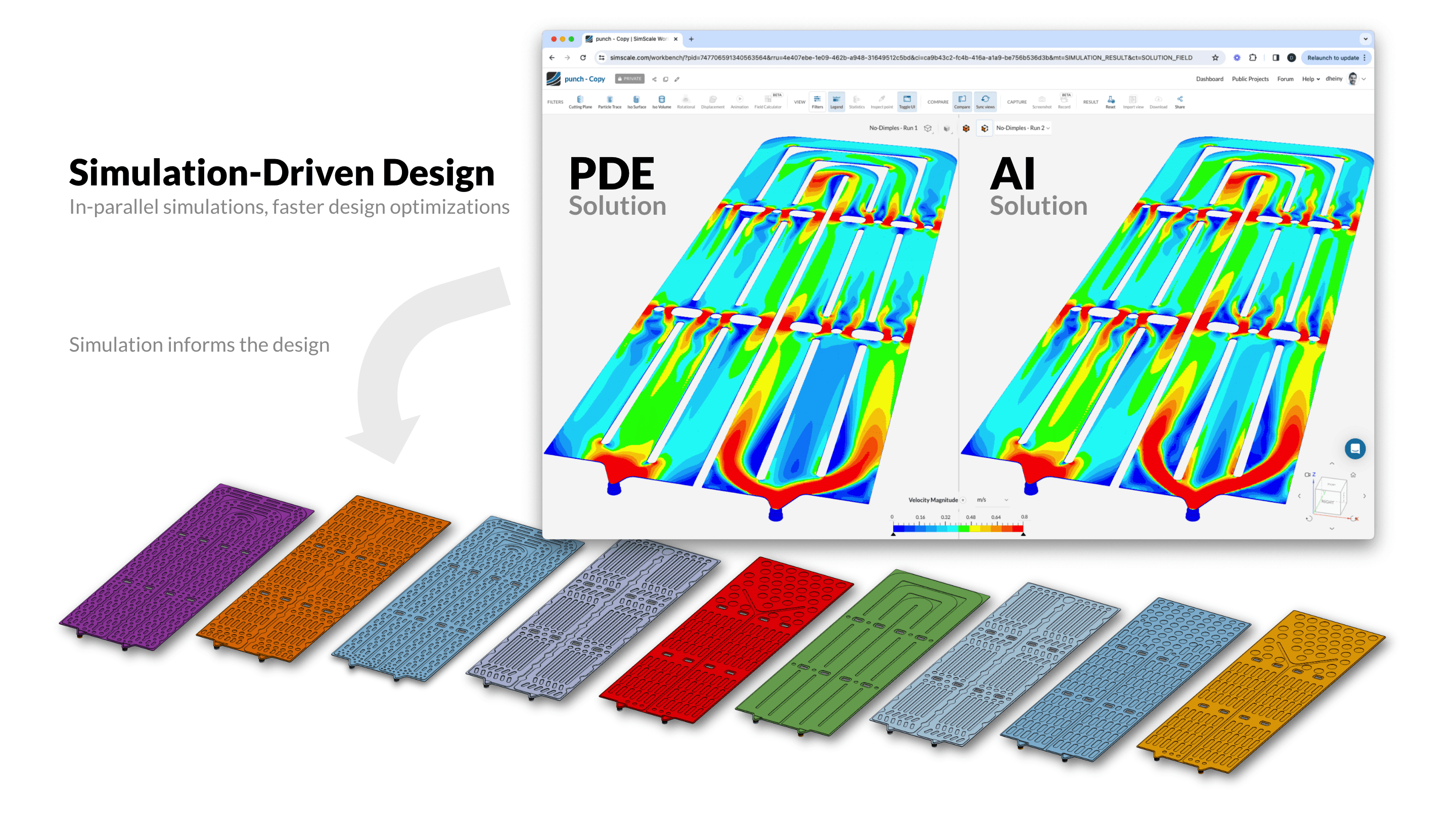
AI Simulation: The Convergence of AI and Engineering Simulation
What AI simulation is, how AI-assisted simulation and simulation-assisted AI differ, how Physics AI models are trained and validated, and where they fit next to CFD and FEA.

Steve Lainé
September 16, 2026
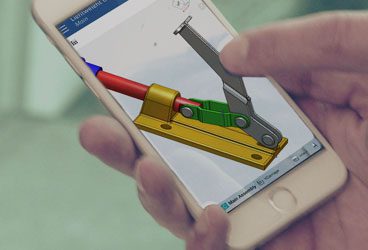
Onshape CFD simulation: how to run CFD and FEA on Onshape models
How to run CFD, thermal and FEA simulation on Onshape models in the browser with SimScale, including a six-step CFD workflow.

Guillermo Giraldo
September 11, 2026



Luis Goncaves
August 4, 2026
Luis Goncaves
June 18, 2026
Luis Goncaves
January 27, 2026

Alex Graham
September 15, 2026
Alex Graham
August 4, 2026
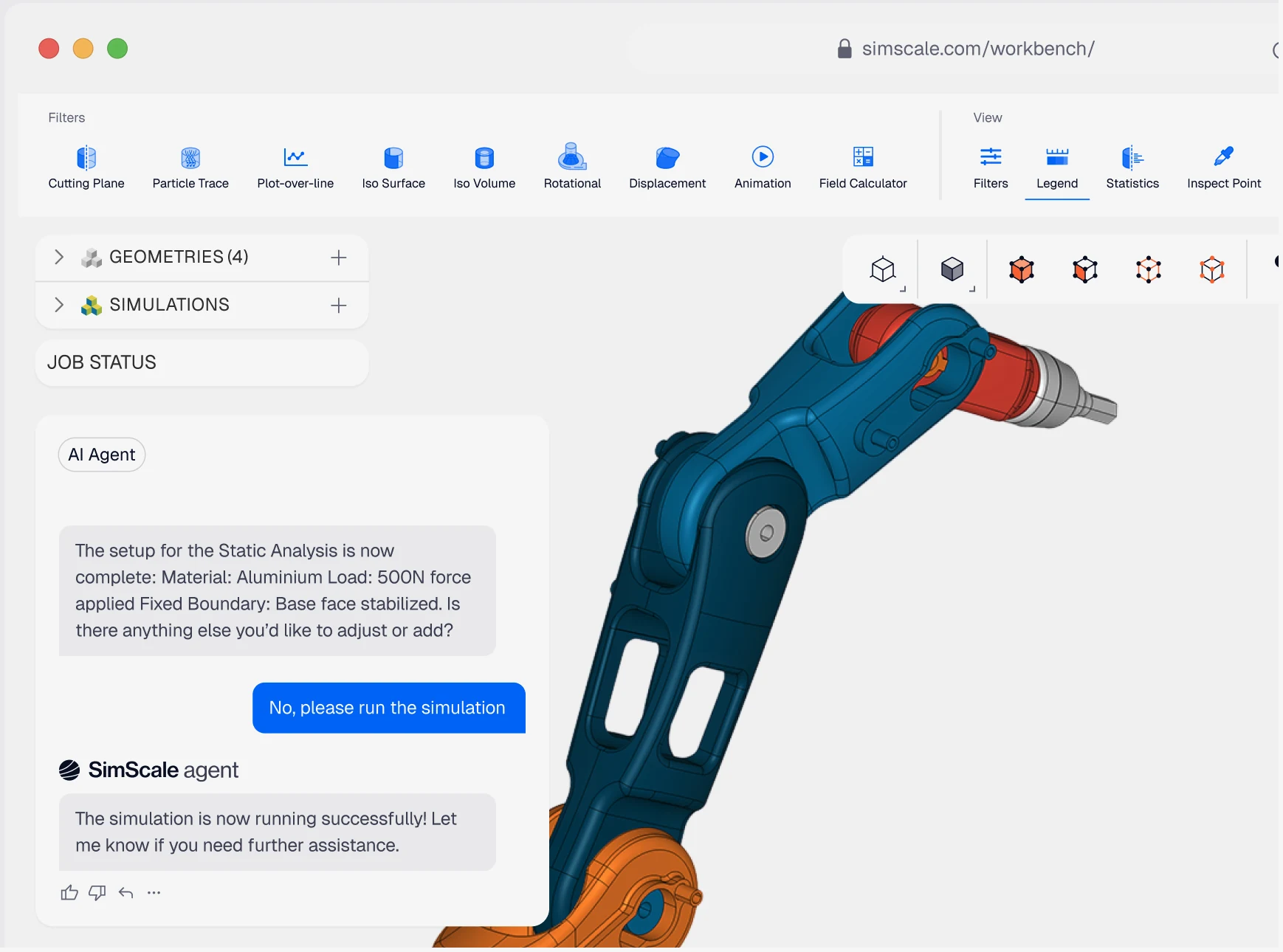
Steve Lainé
July 6, 2026

Peter Selmeczy
July 9, 2026
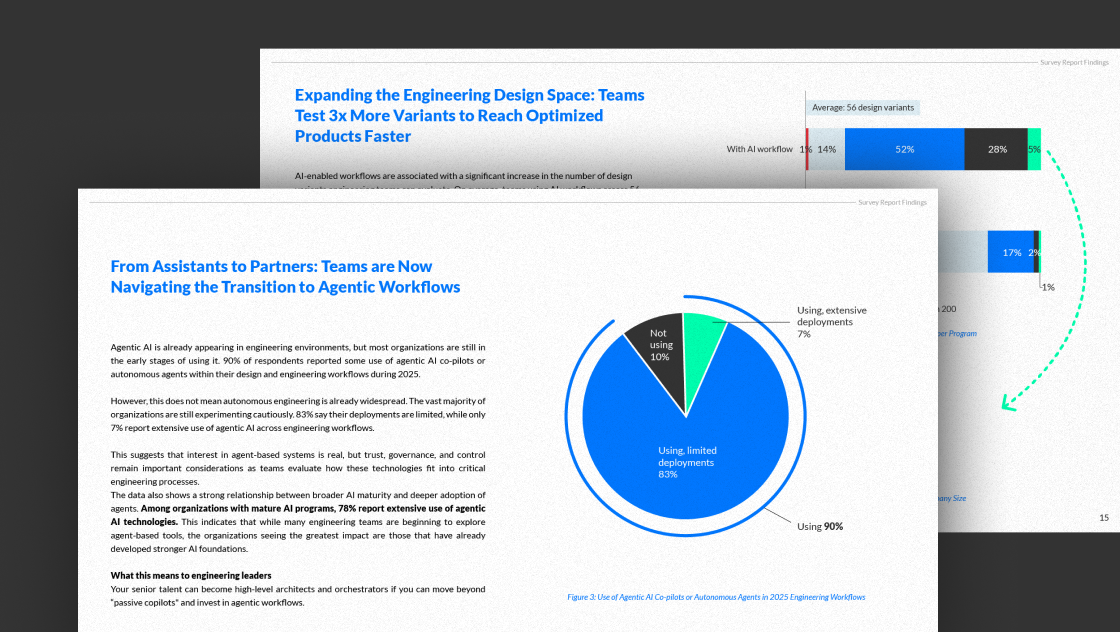
Peter Selmeczy
March 24, 2026

Peter Selmeczy
September 10, 2025
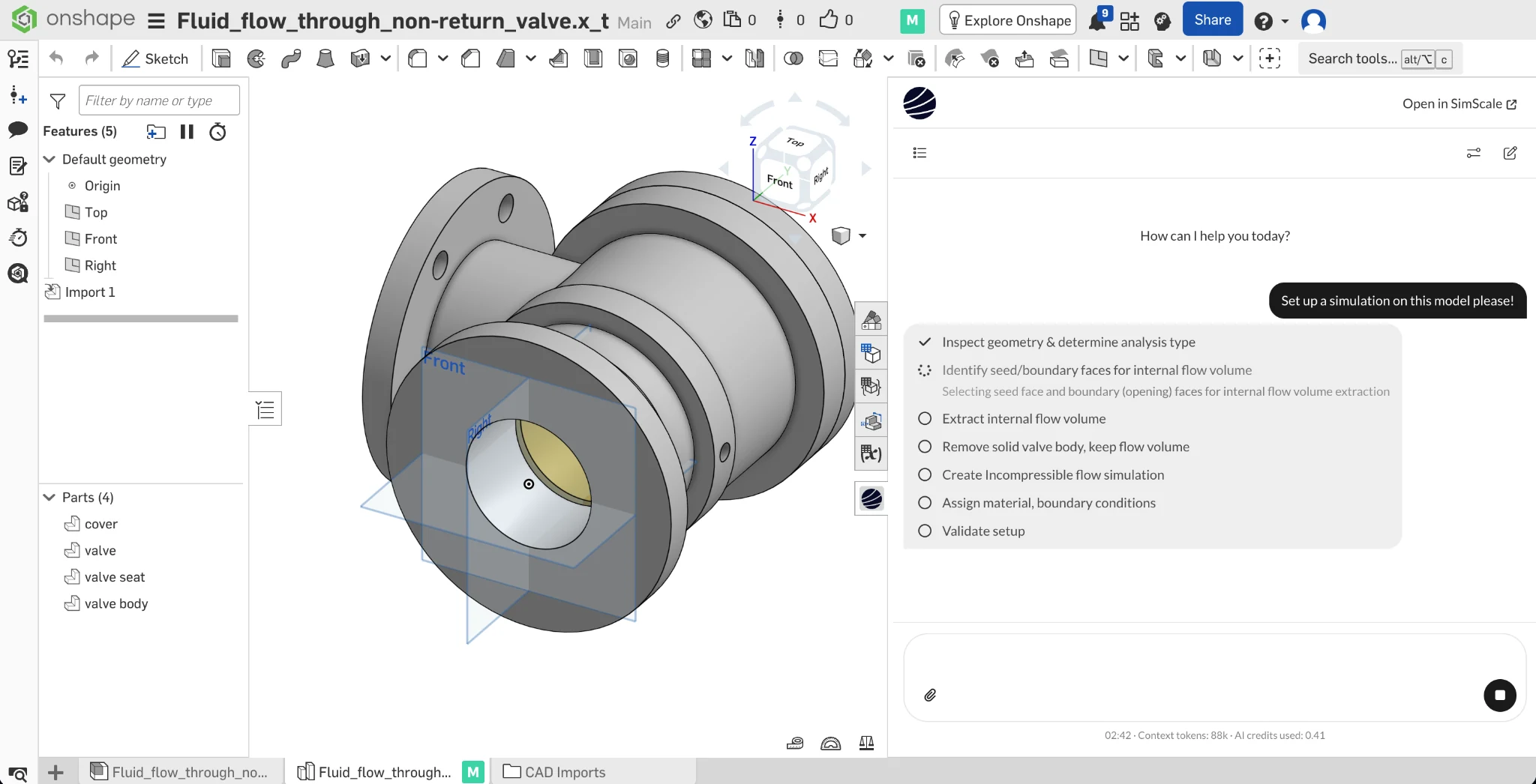

jwebster
September 15, 2026
Peter Selmeczy
September 3, 2026
SimScale covers all three modes of heat transfer: conduction (through solids, including anisotropic materials like PCBs), convection (forced, natural, and mixed — with air or liquid cooling), and radiation (surface-to-surface and solar loading). These can be simulated individually or coupled together for a complete thermal picture.
Yes. SimScale can couple thermal and structural physics to assess how thermal expansion and temperature-dependent material properties affect structural integrity. This is relevant for components like valves, pipes, PCBs, pressure vessels, and polymer parts that experience thermal loading in operation.
SimScale's AI-native architecture includes Physics AI models for fast early-stage thermal insights — enabling near-instant design exploration without running full simulations — and agentic Engineering AI that automates workflow setup and execution. The combination allows engineers to iterate faster while preserving solver accuracy for validation runs.
SimScale supports direct import from all major CAD tools with one-click geometry updates for design variations. Engineers can choose Cartesian mesh-based solving for rapid early-stage modeling or high-accuracy body-fitted meshing for detailed analysis. Results are available through SimScale's integrated post-processing.
SimScale runs entirely in a web browser — no installation, no local hardware requirements, no IT setup. Simulations execute on cloud infrastructure, which also means there are no hardware bottlenecks when running large or detailed thermal models.
Explore our core technologies
Physics AI works alongside Engineering AI and cloud-native simulation — three technologies, one integrated platform.
Fluid Dynamics
Simulate airflow, turbulence, and fluid behavior across internal and external flows to make smarter design decisions earlie
Structural Mechanics
Manage heat transfer across conduction, convection, and radiation - for electronics cooling, HVAC, thermal packaging, and more.
Electromagnetics
Model electromagnetic fields and coupled thermal effects for motors, sensors, transformers, and power electronics design.
Multiphysics
Couple thermal, structural, and fluid effects to capture real-world interactions single-physics analysis misses.
Start simulating in minutes, not weeks
Get started today with AI-native engineering simulation