Fan Design Software
Industrial and commercial fan simulation with cloud-native CFD and FEA
Predict pressure rise, efficiency, and rotor torque for centrifugal, axial, and cross-flow fans in your browser, with CFD and FEA in one cloud-native platform.

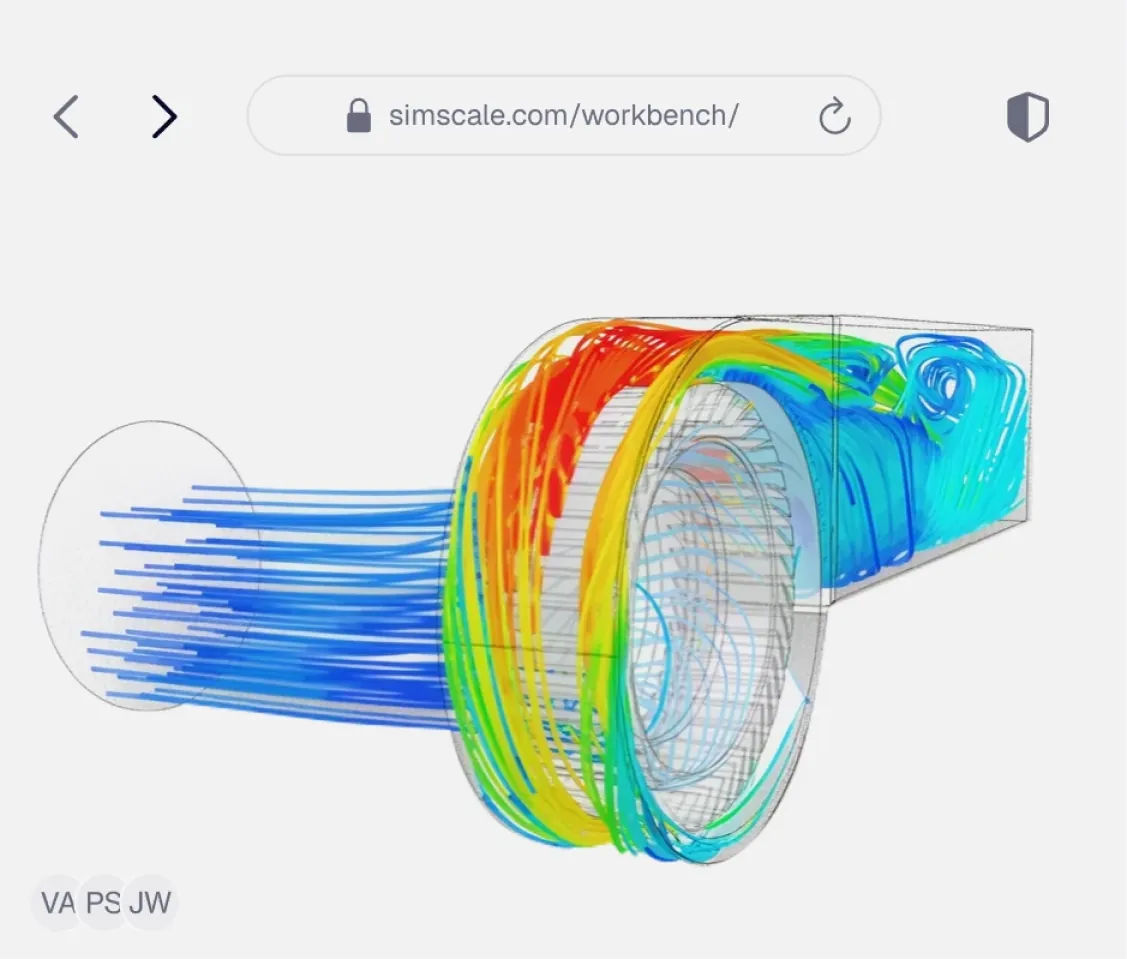






Fan efficiency rules such as FEI in ASHRAE 90.1 and the EU ecodesign regulation shape every new design, and the classical Design, Build, Test, Redesign loop is slow and expensive. SimScale lets fan designers virtually test, assess aerodynamics, and compare variants with CFD and FEA, so fewer physical prototypes reach the test rig.
Fan simulation that covers your full design challenge

Multiphysics fan simulation: CFD, FEA, thermal, and EM in one platform
Fan design crosses physics domains. Run rotating-zone CFD for aerodynamics, FEA for blade stress and vibration, conjugate heat transfer for motor cooling, and electromagnetic analysis for EC motors, all on the same geometry with no exports.
AI-native fan design optimization
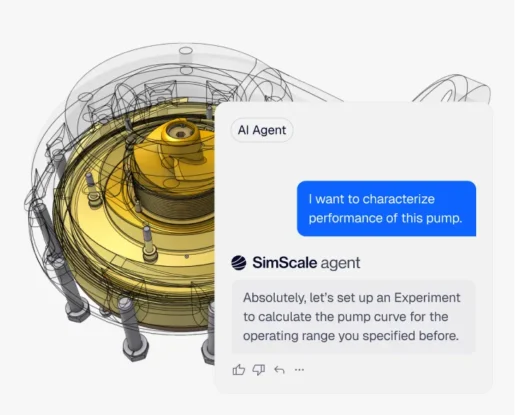
Engineering AI automates rotating-zone setup, meshing, and post-processing on impellers and housings. Physics AI delivers near-instant predictions trained on high-fidelity simulation data, so you can screen blade angle, inlet cone, and tip clearance variants in seconds.
Cloud simulation: more operating points, faster
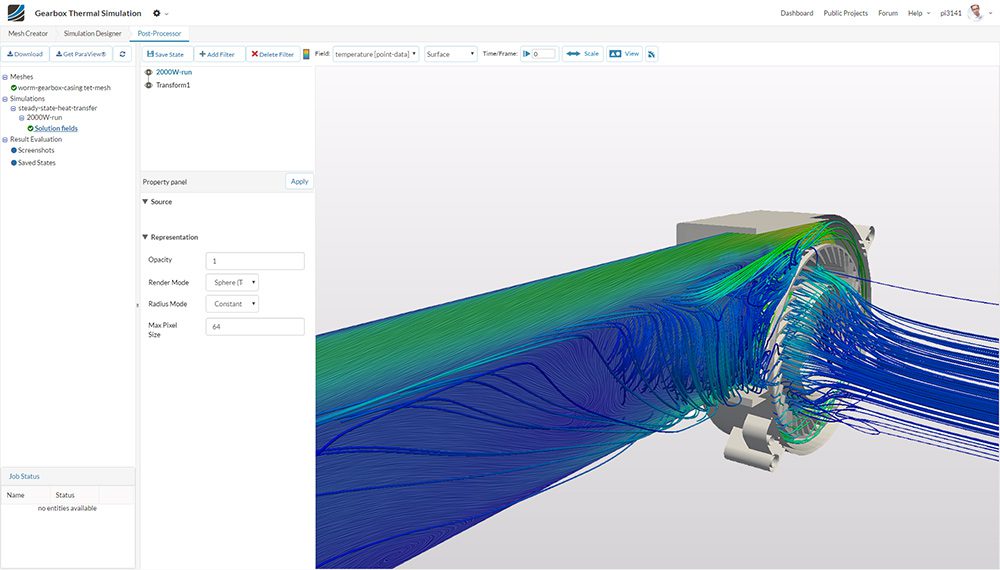
Run every point on the fan curve in parallel instead of one after another. Cloud-native compute scales per project with no HPC, VPN, or per-seat license ceilings, so your team compares impeller and housing variants side by side.

Flow rates, pressure rise, and fan performance curves
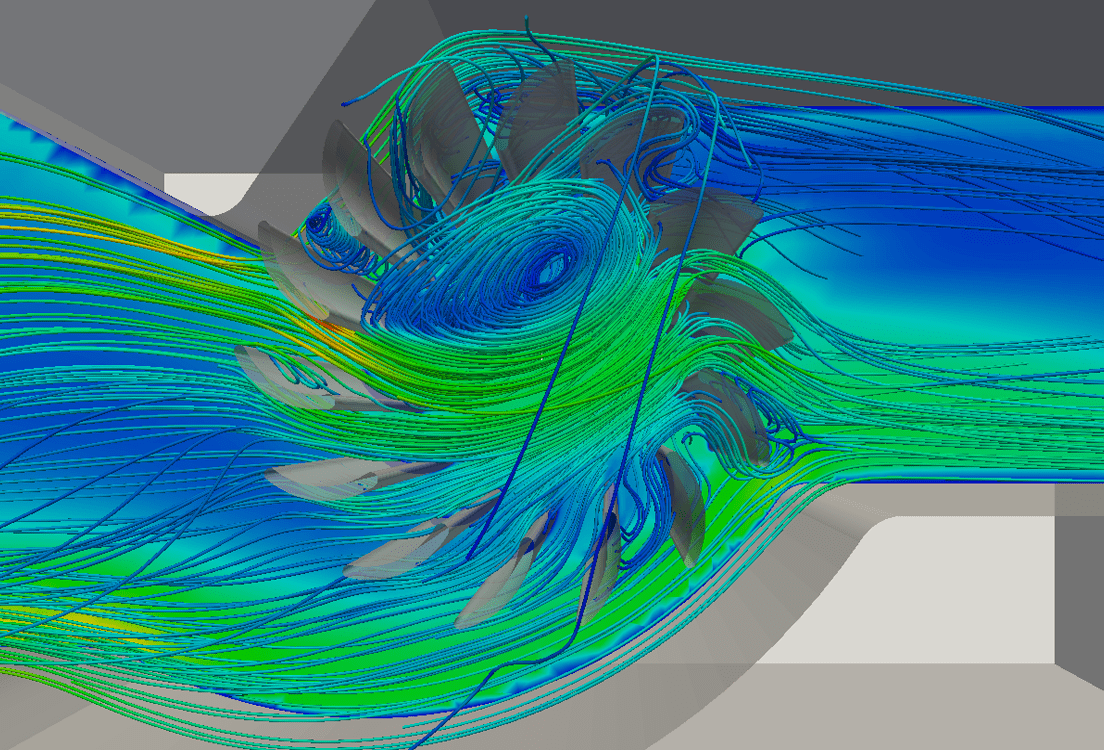
CFD enables you to predict the 3D flow field distribution for your fan design and determine the output velocities and flow rates for different operating conditions. Plot static and total pressure rise across the flow range to see whether the design meets the requirements.

Static and total fan efficiency
Evaluate the static and total fan efficiency for an existing design at different flow rates to determine the peak operating condition. Use the results to raise efficiency at the duty point and cut energy cost over the fan’s service life.

Aerodynamic forces, moments, and rotor torque
Calculate the aerodynamic forces and moments acting on the rotor to determine the torque for various flow rates and RPMs. Size the motor and shaft against the net torque across the full operating speed range.
Centrifugal fan and blower design
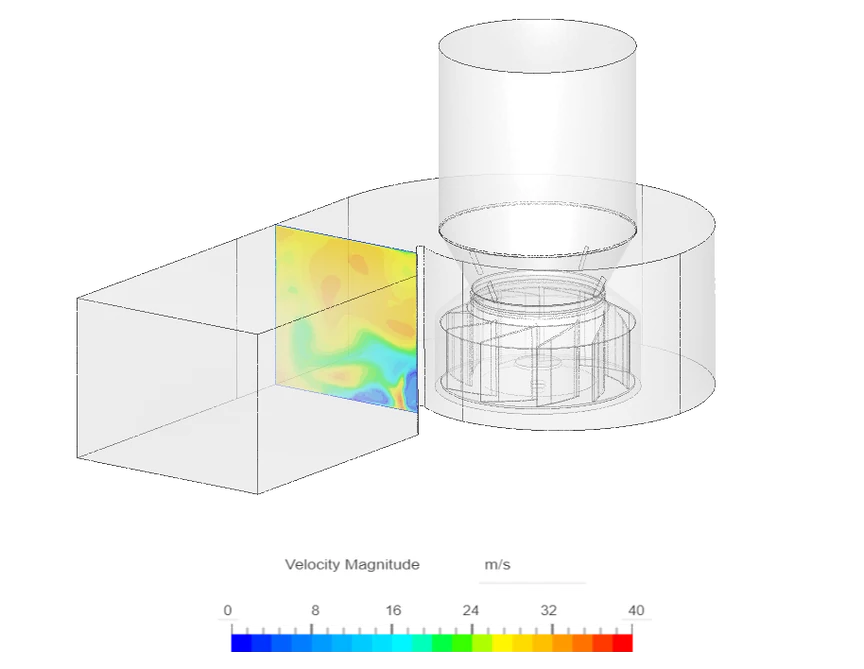
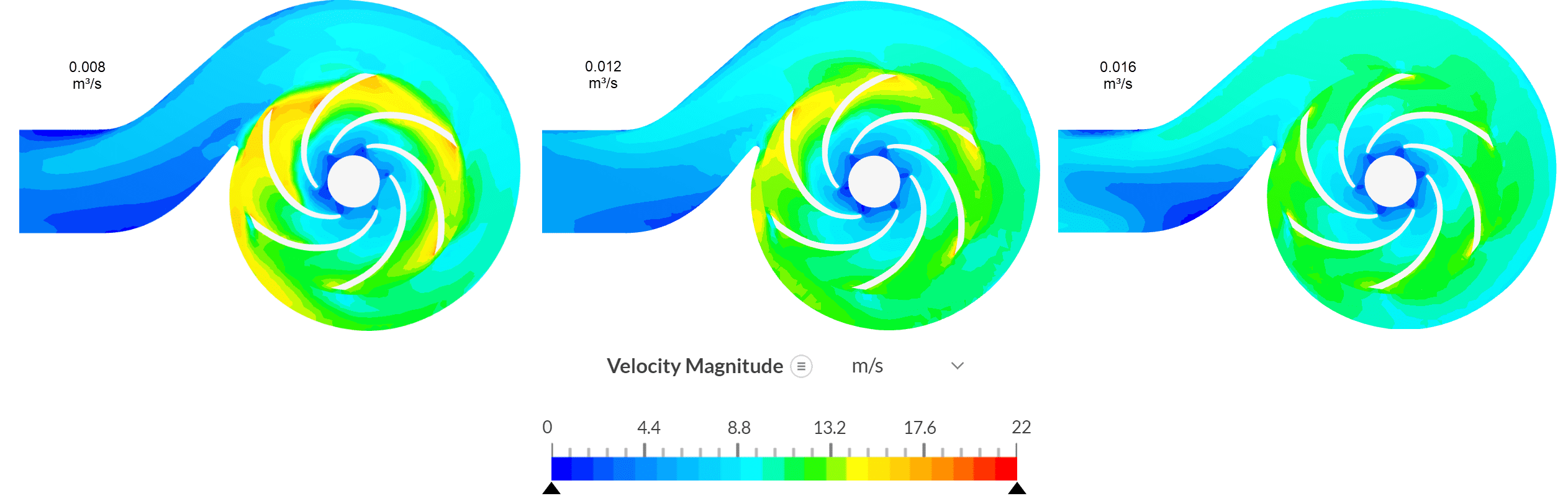
Many engineers choose centrifugal fans for HVAC applications for their energy efficiency, durability, and ease of maintenance. SimScale’s CFD lets centrifugal fan and blower designers calculate flow rate, static and total pressure, static, total, and peak total efficiency, plus forces and moments.
Axial fan design
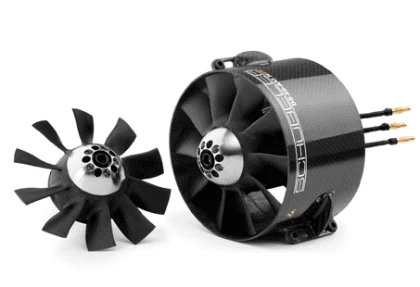
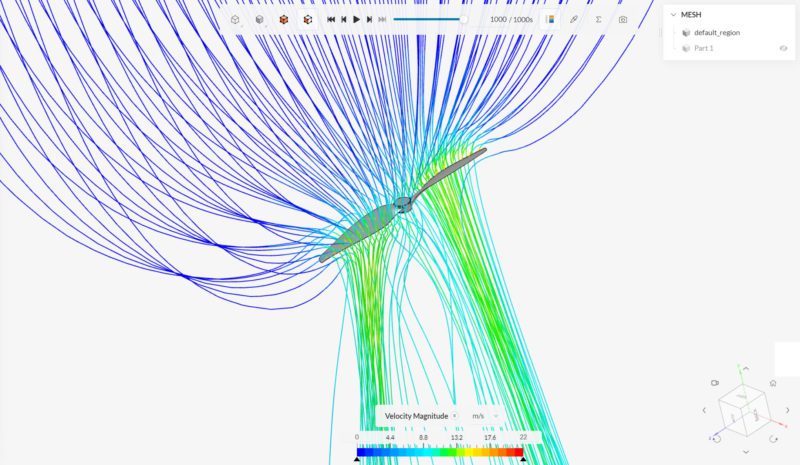
Compare blade pitch, hub-to-tip ratio, and tip clearance on axial and propeller fans. Resolve tip leakage and outlet swirl with rotating-zone CFD, then check whether guide vanes recover static pressure at your duty point.

Cross-flow fan design
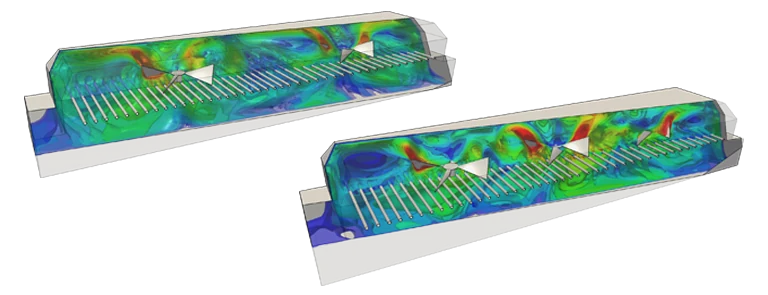
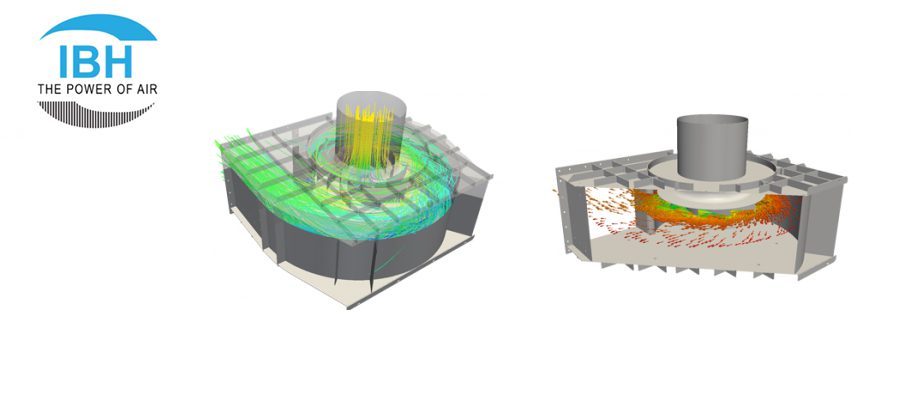
Producing an even, wide airflow and allowing horizontal or vertical mounting, a cross-flow fan prevents the overheating of electronic components. Virtually test cross-flow fans early for efficiency and performance, and predict their aerodynamics long before creating a physical prototype.
Blade stress, vibration, and modal analysis
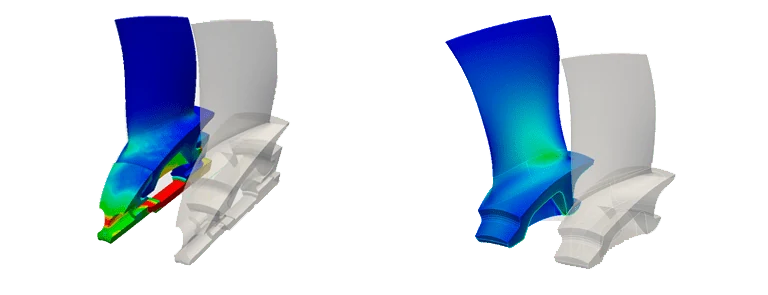
Check blades, hubs, and housings against centrifugal and aerodynamic loads with FEA. Run modal analysis to find natural frequencies near operating speed and blade-pass frequency, and confirm a lighter blade is still safe at speed.
Fan curves in system-level airflow simulation
Model a fan by its manufacturer curve instead of its blades when the system is the question: air handling units, electronics enclosures, ovens, and vehicle cabins. Fan boundary conditions and momentum sources keep the mesh light and the airflow realistic.

Fan efficiency compliance: FEI and EU ecodesign
Fans need to meet strict efficiency regulations: FEI under ASHRAE 90.1 and the IECC, and Regulation (EU) 2024/1834 in Europe. Predict efficiency at the selection point early, so the design you send to the test lab is the one most likely to pass.

Days to hours
per centrifugal fan comparison vs a dedicated local workstation
“SimScale’s ability to simulate multiple CAD variants of a fan design in parallel has been critical in saving time and to quickly arrive at a converged design solution for my client.”
Richard Knighton, Owner at FanMechanics

21 min
nonlinear fan blade assembly analysis at 50,000 rpm on 32 cores
“The main advantage to use SimScale for us is to have a fast and simple way to get FEM calculation results.”
Sandro Pinent, Managing Partner at Schübeler Technologies
40%
above expected furnace performance after CFD confirmed a three-fan, 12-inch blade layout
“We assumed that setting up and interpreting a simulation of airflow and temperature would be beyond our capability. However the assistance provided by SimScale and specifically Dr. Pawel Sosnowski allowed us to get meaningful results in a couple of weeks.”
Craig LaMotte, Engineer at Furnace Fixers
1
physical prototype for the Terra V air handling unit with ECM direct-drive fans
“The simulations were used as the decisive factor in determining geometry and layout.”
Ethan Quisias, Product Development Engineer at Oxygen8
$1,000s
saved per design iteration while comparing axial and blower fan options
“My team and I can run multiple CAD geometries in parallel in SimScale to evaluate airflow, pressure drop, and room air diffusion at once to quickly converge on a near-final product variant.”
Jared Raulston, Senior Mechanical Engineer at Pura
Resources for fan simulation


Andreea Zaharia
March 3, 2017
Andreea Zaharia
March 3, 2017
Andreea Zaharia
March 22, 2017

Rishabh Shah
December 19, 2018

sblock
June 29, 2022

Fillia Site
June 10, 2021


Kanchan Garg
May 19, 2023
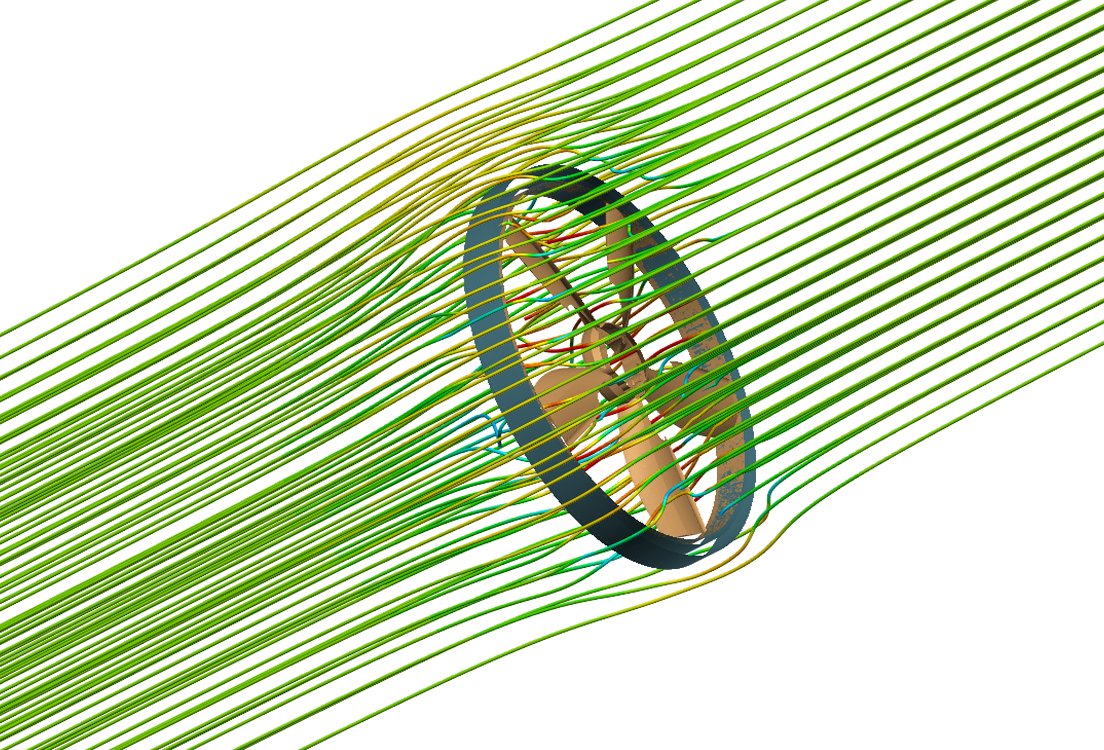

David Short
May 22, 2019
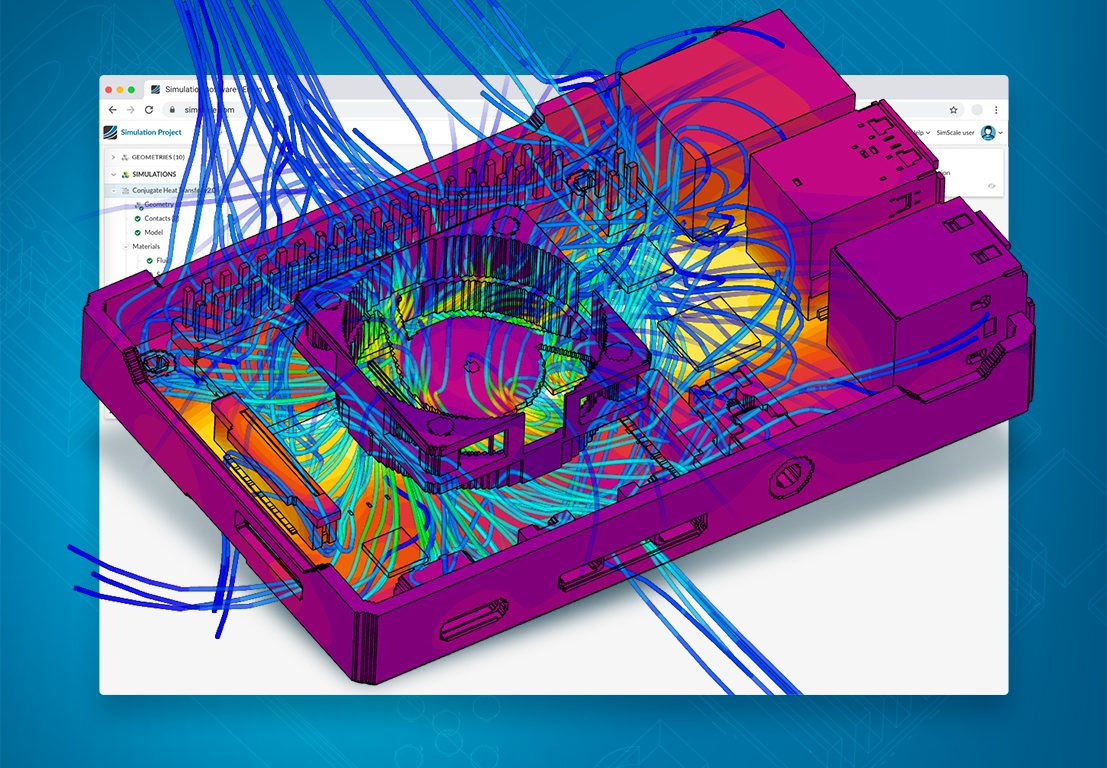

Alexander Fischer
July 6, 2022
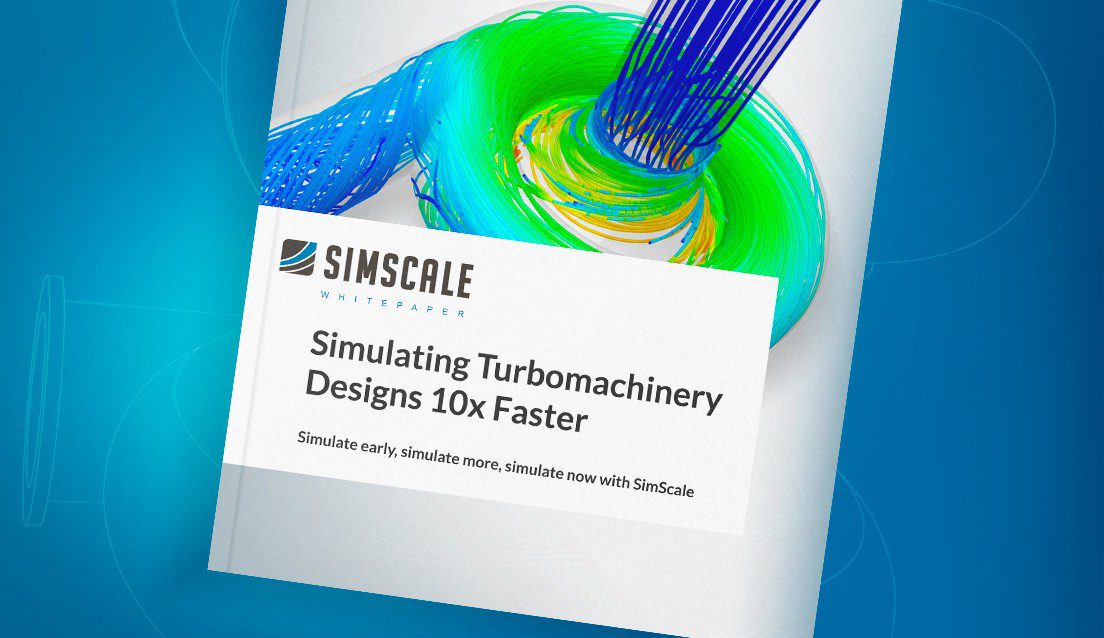

Carolina Giavedoni
August 18, 2021

Kanchan Garg
June 12, 2024
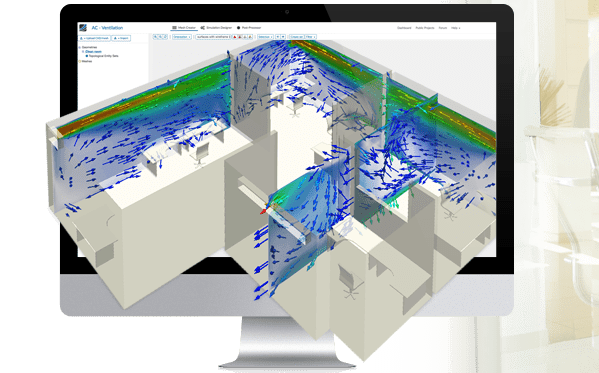
Andreea Zaharia
September 13, 2016

Peter Selmeczy
July 9, 2026


Peter Selmeczy
September 23, 2026
Frequently asked questions about fan simulation
New to fan simulation or evaluating SimScale? Here are the questions we hear most.
ContactFan simulation uses CFD to predict how air moves through a fan's impeller and housing, giving flow rate, static and total pressure rise, efficiency, and torque at each operating point before a prototype exists. FEA adds blade stress and vibration checks on the same geometry.
Centrifugal (radial) fans and blowers, axial and propeller fans, mixed-flow fans, and cross-flow fans. That covers small electronics cooling fans through to industrial fans for air handling units, process plants, and ovens.
Each operating point runs as a rotating-zone CFD simulation at a set flow rate and speed, and all points run in parallel in the cloud. The results give static and total pressure rise and efficiency curves, so you can locate the peak efficiency point quickly.
Use Multiple Reference Frame (MRF) for steady-state performance sweeps; it's fast and accurate enough for most design decisions. Use sliding mesh when transient blade-to-housing interaction matters, such as volute tongue effects in centrifugal fans or rotor-stator interaction.
Yes, as a design tool. CFD predicts efficiency at the selection point early, so you can refine the impeller before rating tests. Official FEI and EU efficiency ratings still come from standardized lab tests such as AMCA 210 or ISO 5801.
Import geometry from Onshape, SolidWorks, CATIA, or STEP files directly in the browser. Fan selection and design tools that export STEP, such as FanMechanics' Centrix, hand geometry straight to SimScale for CFD.
Most engineers run their first fan simulation within a day of sign-up. Real-time support sits inside the project for rotating-zone setup, meshing, and physics questions, with no install, no VPN, and no on-prem HPC.