Data Center Cooling Simulation Software
Design data centers from site to silicon with cloud-native CFD and FEA
Simulate site wind, the cooling plant, white-space airflow, power equipment and chip-level cold plates in one platform. Prove ASHRAE compliance and failure resilience before you build.

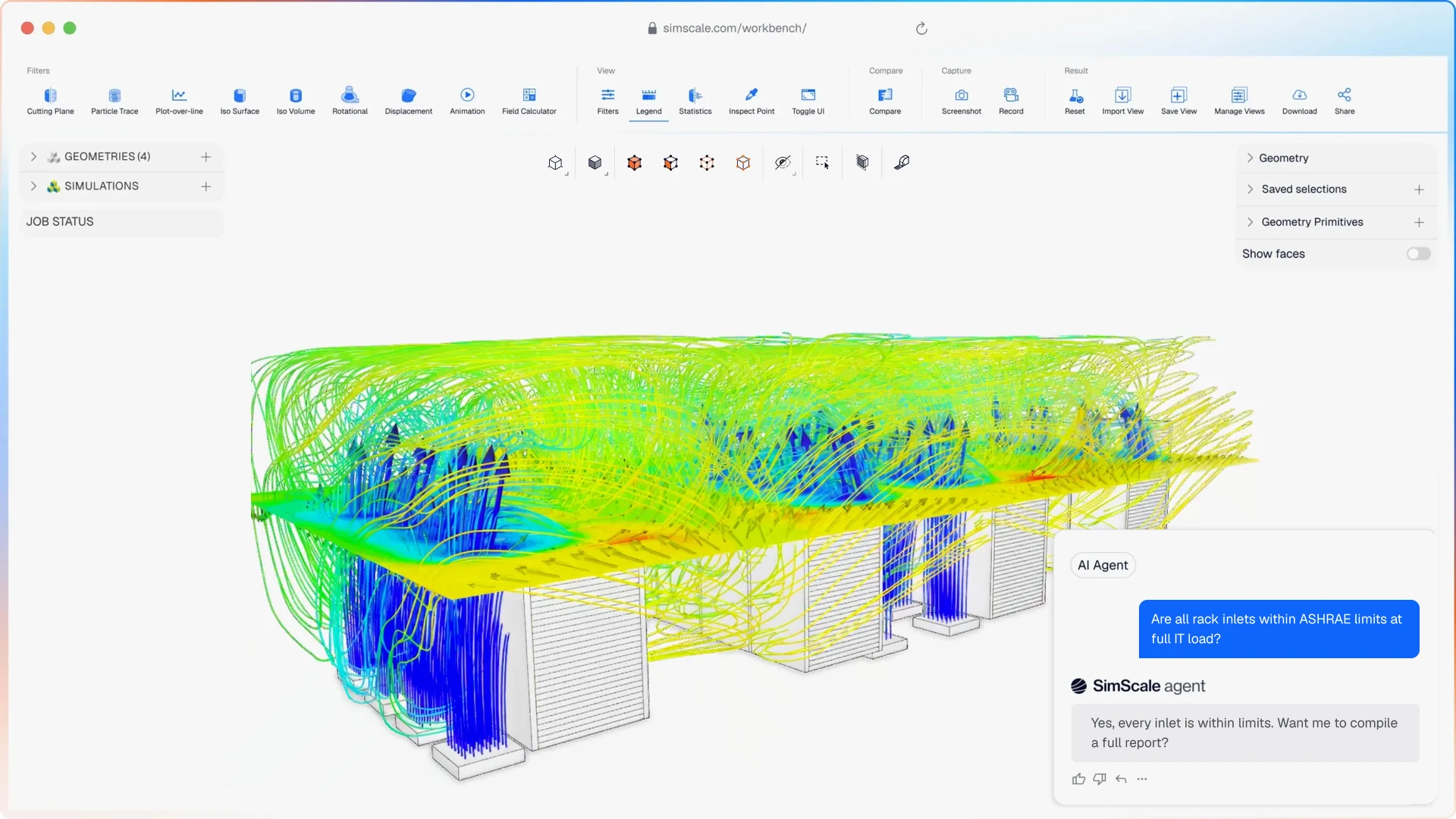








Simulate airflow, heat transfer and structural loads for data centers in one AI-native platform. Predict rack inlet temperatures, check ASHRAE 90.4 performance and size liquid cooling in hours, not weeks, without waiting on mockups or outsourced CFD studies.
Data center simulation that covers your full design challenge
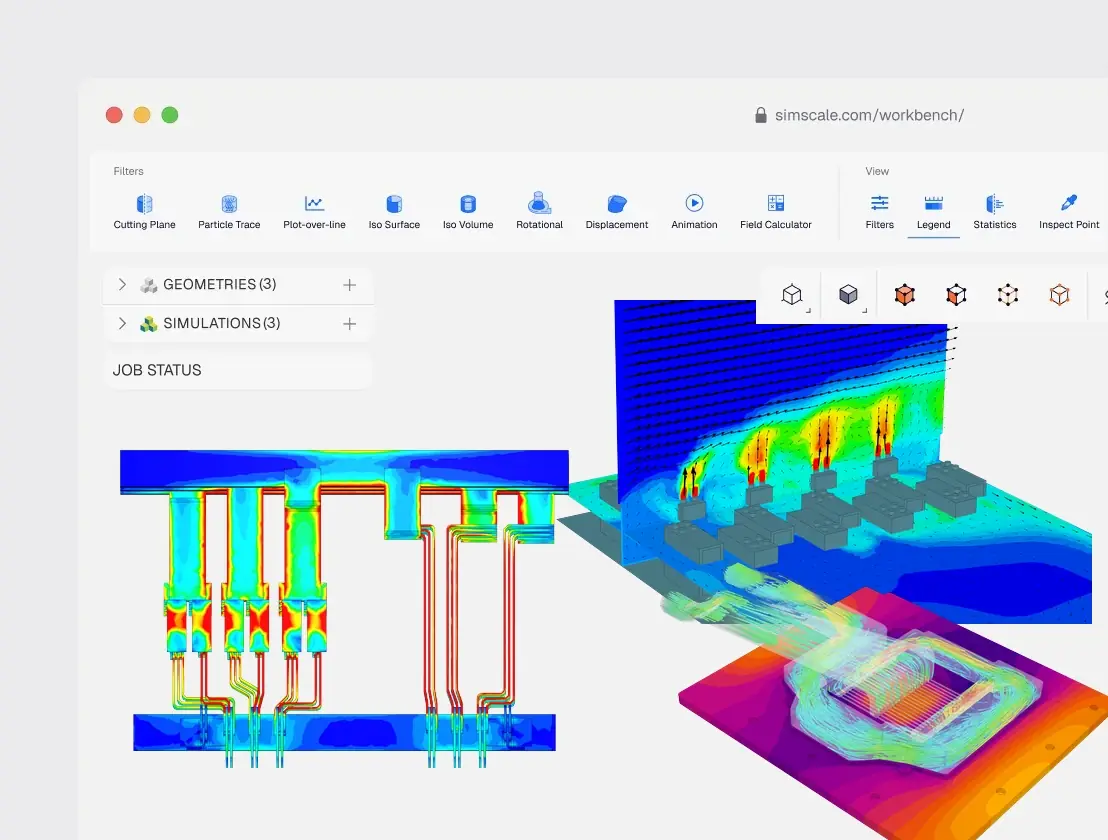
Multiphysics at any scale, from site to silicon
Run CFD, conjugate heat transfer, FEA and electromagnetic analysis in one platform, from campus wind to losses in transformers and busbars and cold plates at the chip. Check rack and floor loading alongside airflow without switching tools.
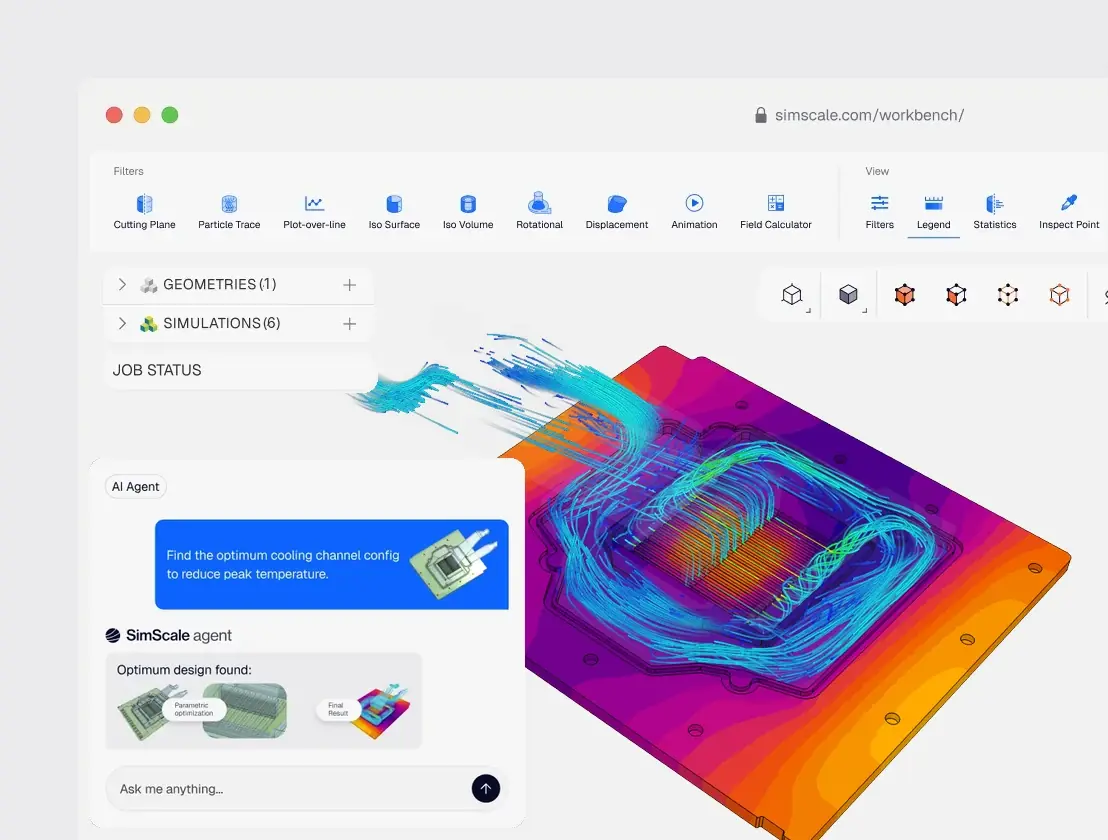
AI-native data center cooling optimization
Engineering AI builds models from BIM and CAD, including racks, servers and their heat loads from a prompt, and meshes complex rack and containment geometry. Physics AI then predicts results across hundreds of CRAH layouts, containment options and supply temperatures in minutes.
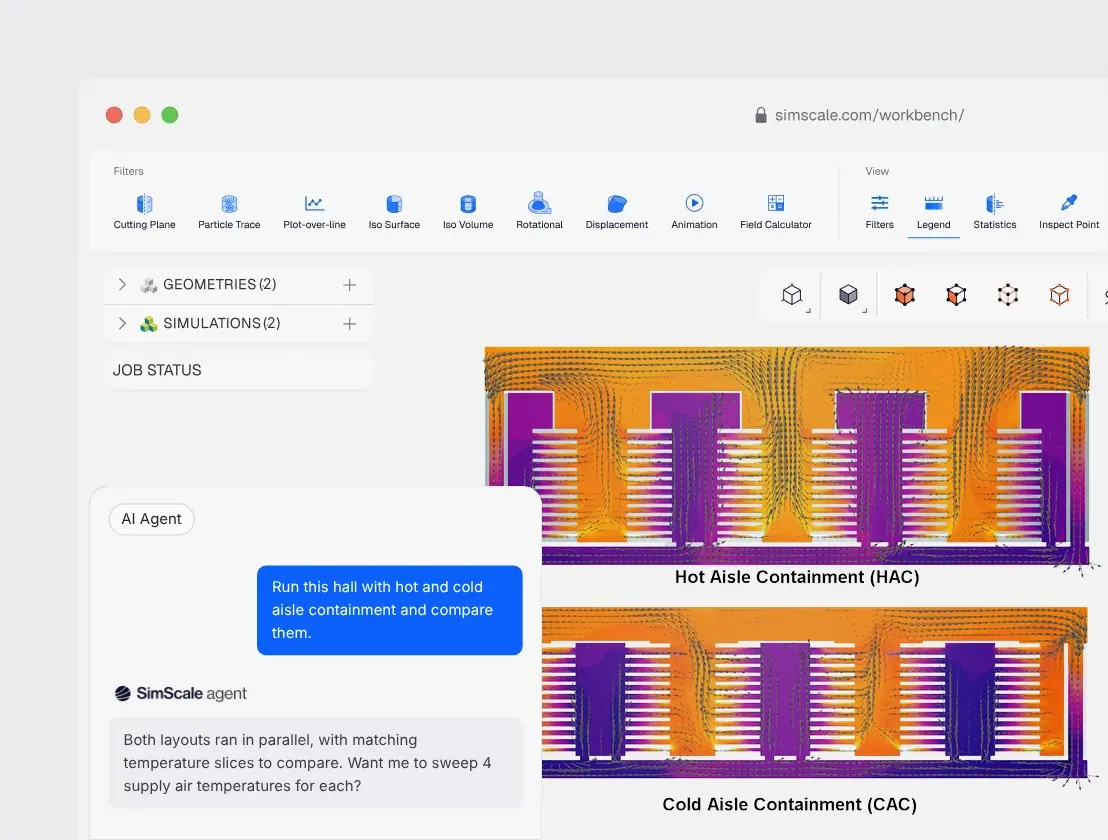
Cloud-native scale: more scenarios, faster
Run every cooling scenario in parallel from a browser, with no HPC, VPN or installs. Share live results with clients and reviewers, and give every engineering team, whatever layer it designs, access to the same platform.
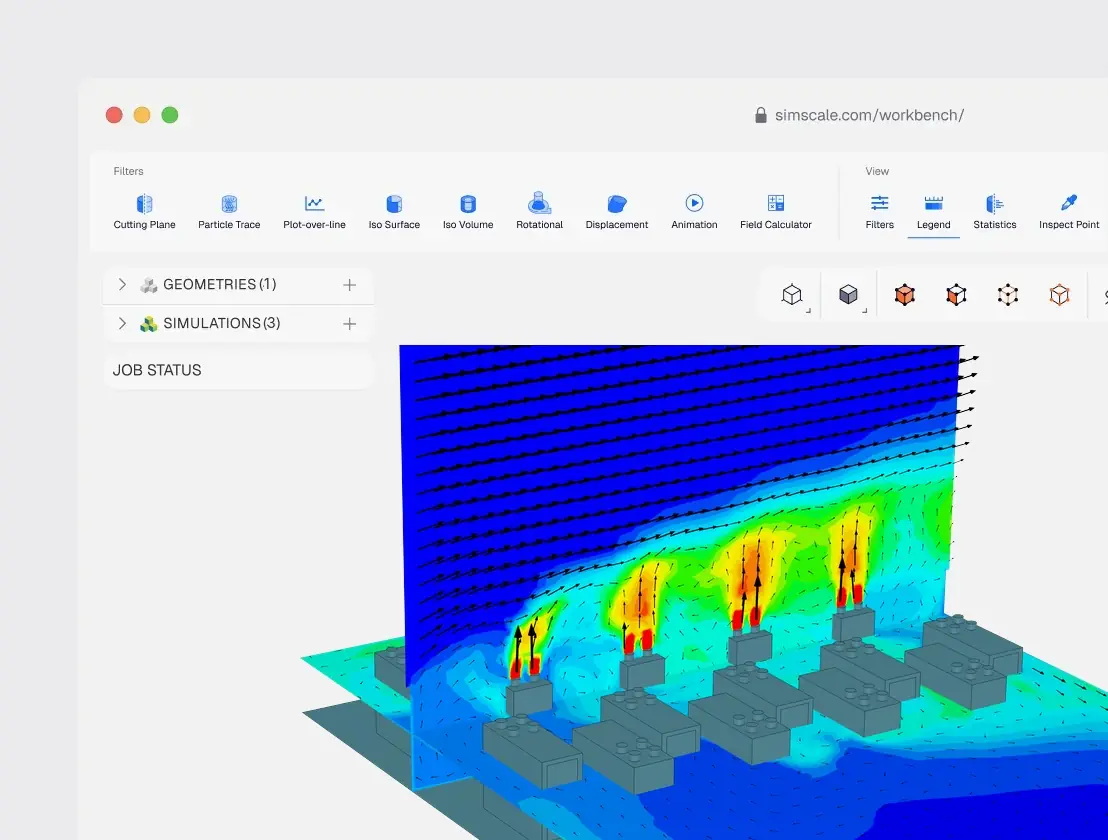
Site wind and exhaust re-entrainment
Model wind around the campus, pollutant and exhaust dispersion, and plume re-entrainment at air intakes. Decide where rooftop chillers and dry coolers go and check their wind loads and heat rejection before the site layout is fixed.
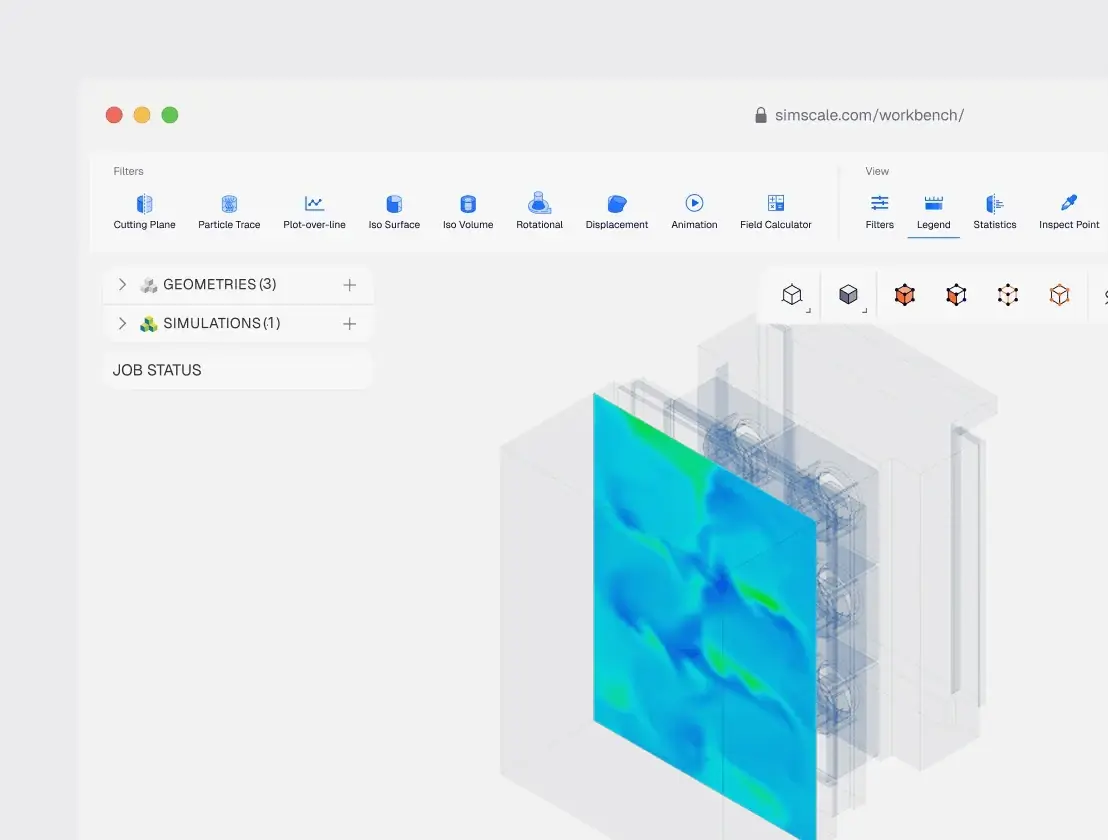
Cooling plant and air-side equipment
Design cooling towers, chillers, coils, AHUs, CDUs and rear-door heat exchangers with CFD and conjugate heat transfer. Check heat rejection, coil performance, drift eliminator pressure drop and primary-loop hydraulics before equipment is built or the plant is sized.
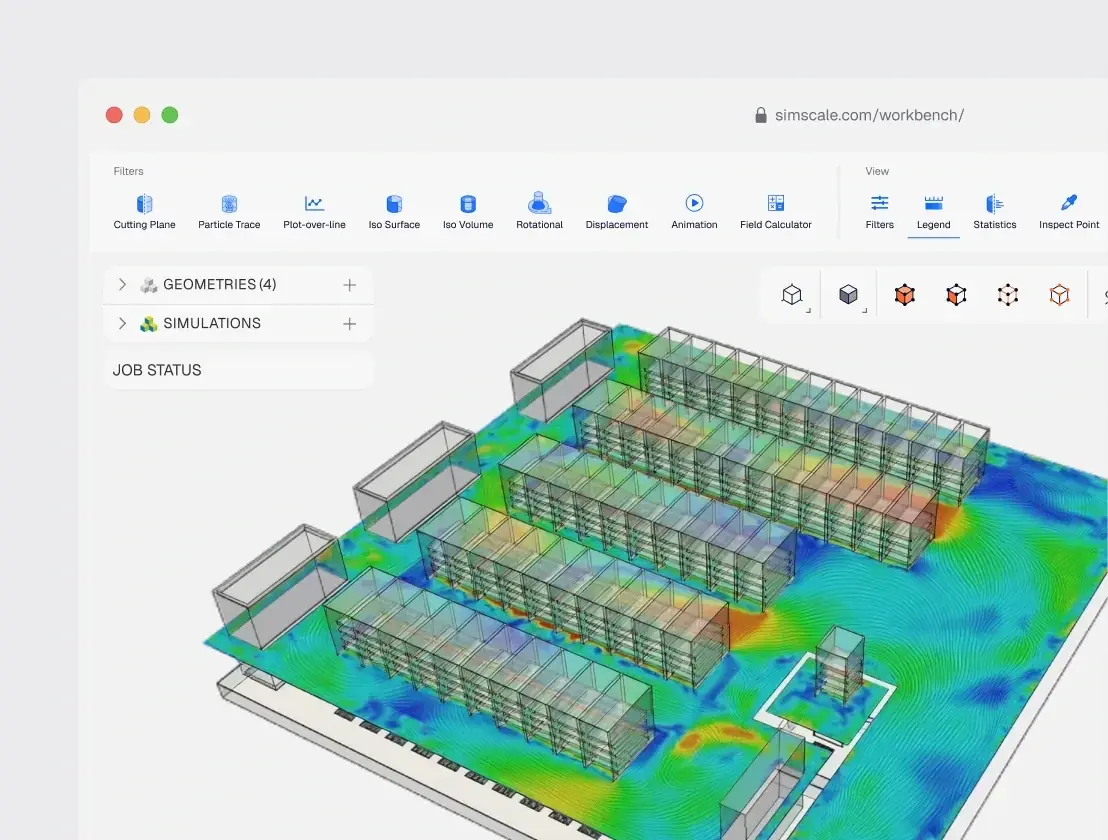
White-space airflow and ASHRAE compliance
Predict rack inlet temperatures, hot air recirculation and bypass airflow across the hall. Compare containment and CRAH layouts, check against ASHRAE TC 9.9 and 90.4, and find the supply temperatures that cut PUE.
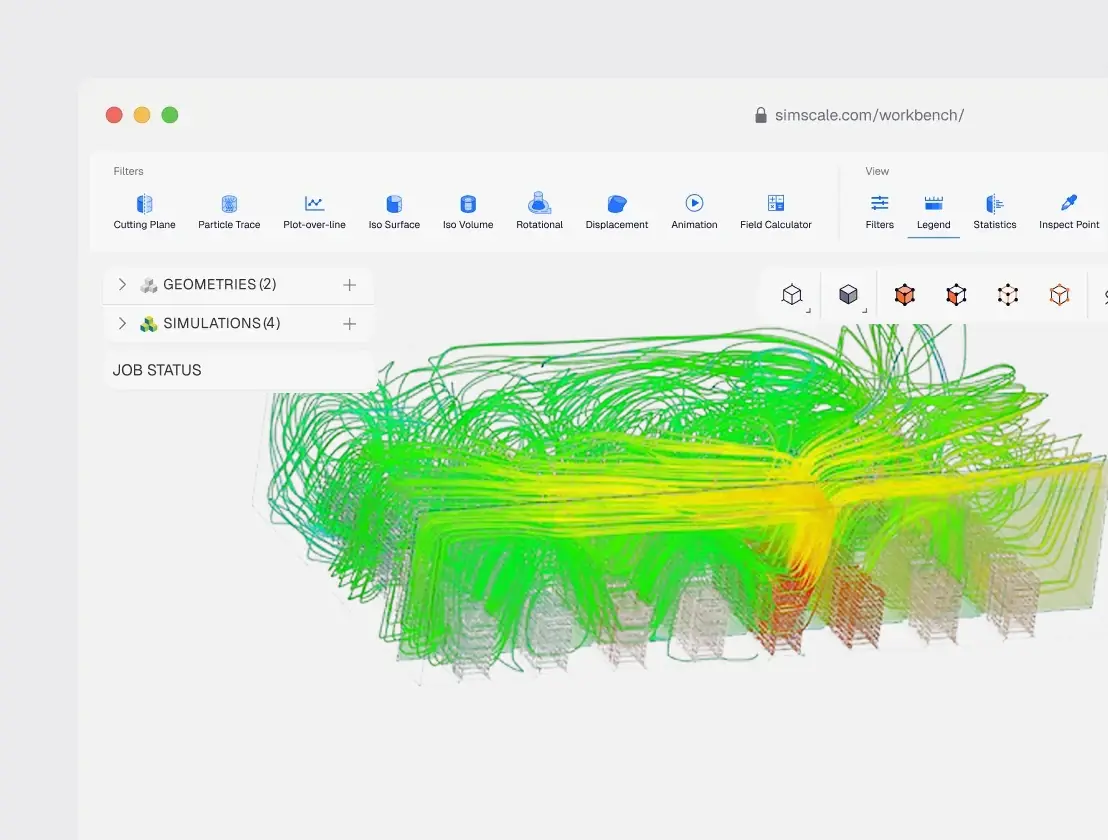
Cooling failure, fire and smoke
Run transient simulations of a CRAH, chiller or water supply failure to see how fast inlet temperatures rise and how long operators have to respond. Model smoke spread from a fire in the hall to size smoke extraction.
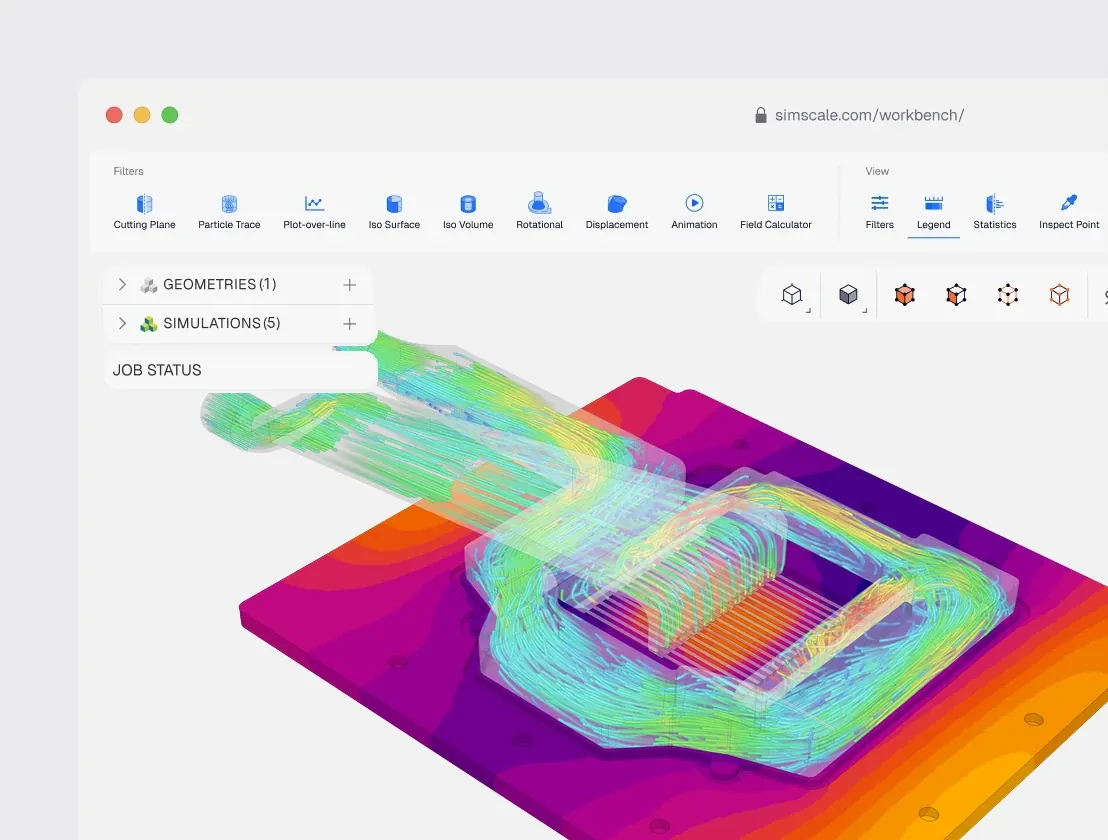
Direct-to-chip and immersion cooling
Size cold plates, manifolds and immersion tanks for AI and HPC rack densities. Compare coolants and channel layouts, and check pressure drop and junction temperatures before building hardware.
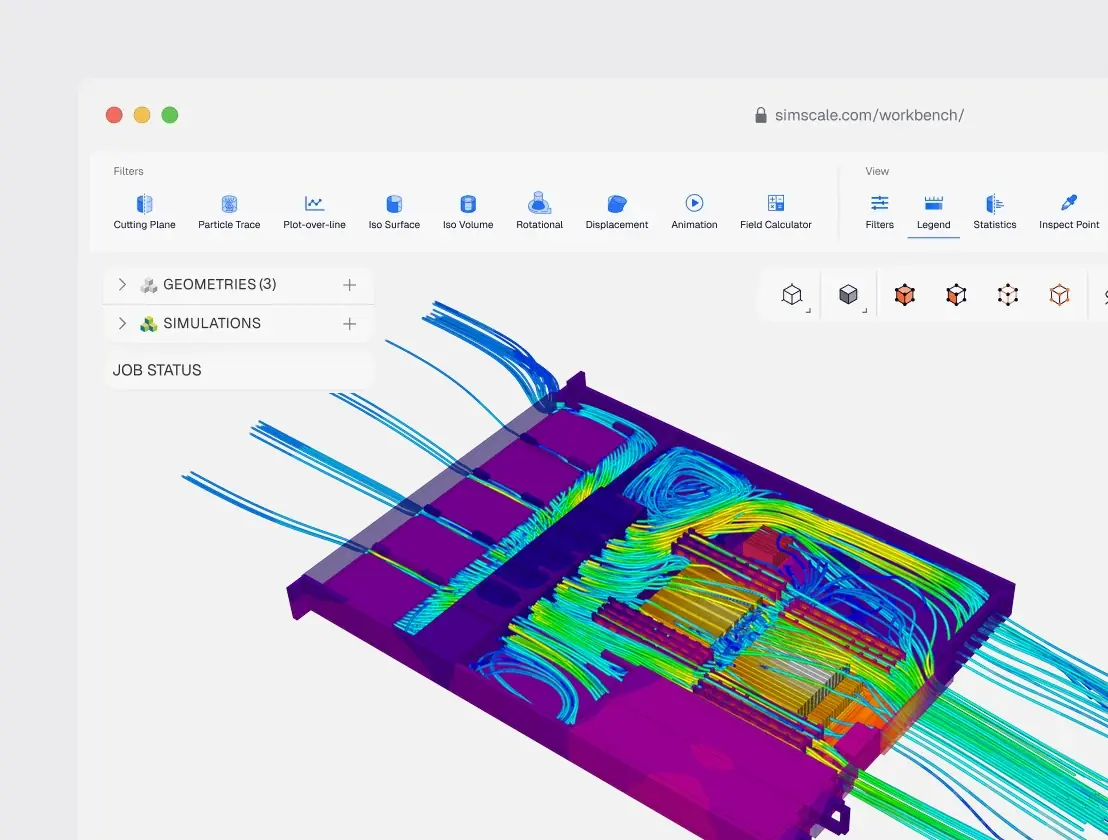
Servers, power and networking hardware
Simulate server boards, heat sinks, switches and optical transceivers, plus the UPS units and battery racks that power them, under forced airflow or liquid cooling. Keep components inside their thermal limits as links move from copper to optical.

16 minutes
time to intervene after a cooling supply failure
“We use CFD simulation to prove to our clients how resilient our cooling systems are.”
Herbert Radlinger — CTO, NDC-GARBE

50%
less product development and testing time and cost
“Months of engineering work can now be done in an evening.”
Shane McConn — Lead Mechanical Design Engineer, Silent-Aire

35%
saving on labor costs per project
“Being able to utilize a web-based software package significantly reduces computation time and increases productivity.”
Ryan J. Wanko — Mechanical Engineer, DMG
95%
lower cooling energy cost vs. traditional air cooling (SmartPod immersion)
“SimScale has allowed us to be quick and responsive to our product demands.”
Jaime Pita — Engineer, Submer Technologies
400 W
heat dissipated by an AI edge enclosure
“SimScale has enabled our engineers to make informed design choices earlier in the design cycle than ever.”
Christian Powell — Project Manager and Mechanical Engineer, One Stop Systems
Resources for data center cooling simulation
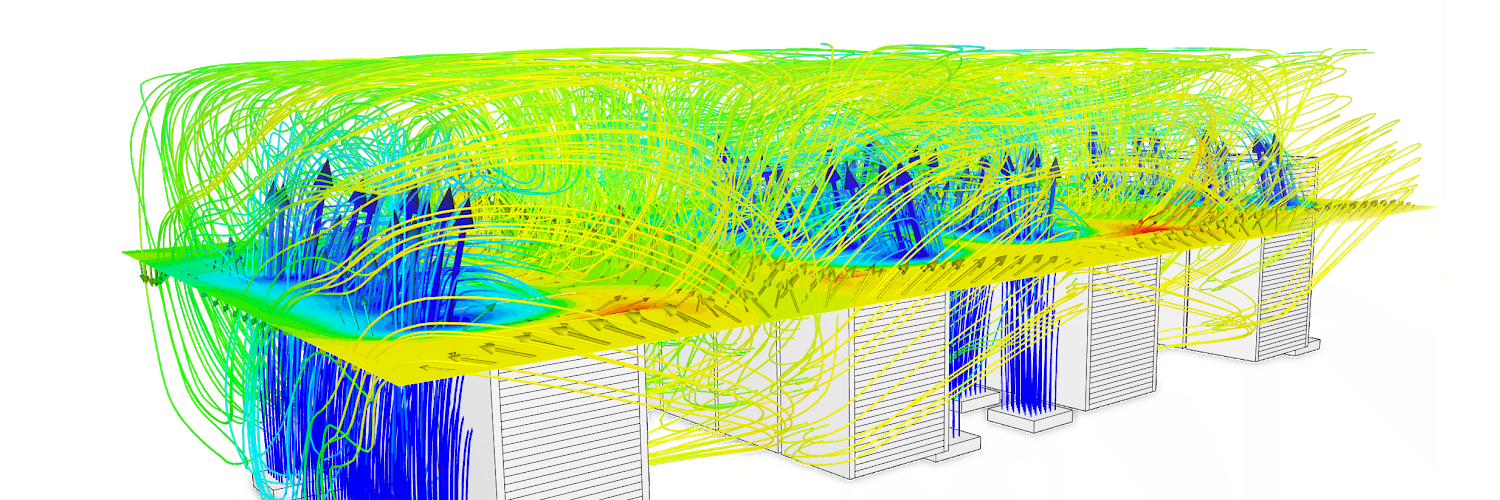
Data Center Cooling: Four Lessons from Teams That Simulate Before They Build
Four engineering teams slashed costs and prevented costly failures by simulating data center cooling before building — discover their playbook for the AI era.

Alex Graham
May 19, 2026

How to design a data center cooling system for ASHRAE 90.4
What ASHRAE 90.4 requires for data center cooling design, the MLC and ELC calculations, TC 9.9 temperature classes, and verifying compliance with CFD.

Peter Selmeczy
September 1, 2026


Anastasia Churazova
May 23, 2018

Ricardo Gasparini
February 26, 2021

tparikh
September 12, 2018

Rishabh Shah
December 16, 2018

Naghman Khan
January 27, 2021


Milad Mafi
May 24, 2018

Carolina Giavedoni
September 16, 2021

Megan Jenkins
June 3, 2019

Andreea Zaharia
September 13, 2016
Peter Selmeczy
July 9, 2026
Peter Selmeczy
March 24, 2026

Peter Selmeczy
September 10, 2025
Frequently asked questions about data center cooling simulation
What engineers ask before their first data center study.
ContactYes. SimScale supports direct-to-chip liquid cooling, cold plate optimization, immersion cooling and hybrid air-liquid systems, including heat exchanger performance and coolant flow for high-density AI and HPC workloads.
Yes. SimScale accepts geometry via IFC, STEP, IGES and other standard formats from Revit, AutoCAD, Fusion 360, Rhino, Onshape and all major BIM and CAD tools.
Yes. The same platform covers site wind and exhaust recirculation, white-space airflow, cooling and power equipment such as AHUs, CDUs, busbars and transformers, and components like cold plates, server boards and optical transceivers.
SimScale calculates equipment inlet temperatures, thermal gradients and airflow patterns, so you can check designs against ASHRAE TC 9.9, ASHRAE 90.4 and EN 50600 before construction begins.
Hours, not weeks. Import your CAD model, set thermal and airflow parameters, run scenarios in parallel and generate reports, typically within a single working day for standard data center layouts.