Cleanroom Simulation Software
Validate cleanroom designs before construction begins
Predict airflow uniformity, contamination risk, and ISO compliance from a standard web browser, without physical mockups or specialist hardware. SimScale’s AI-native platform automates setup and eliminates solve time, so you can explore more design decisions before construction begins.

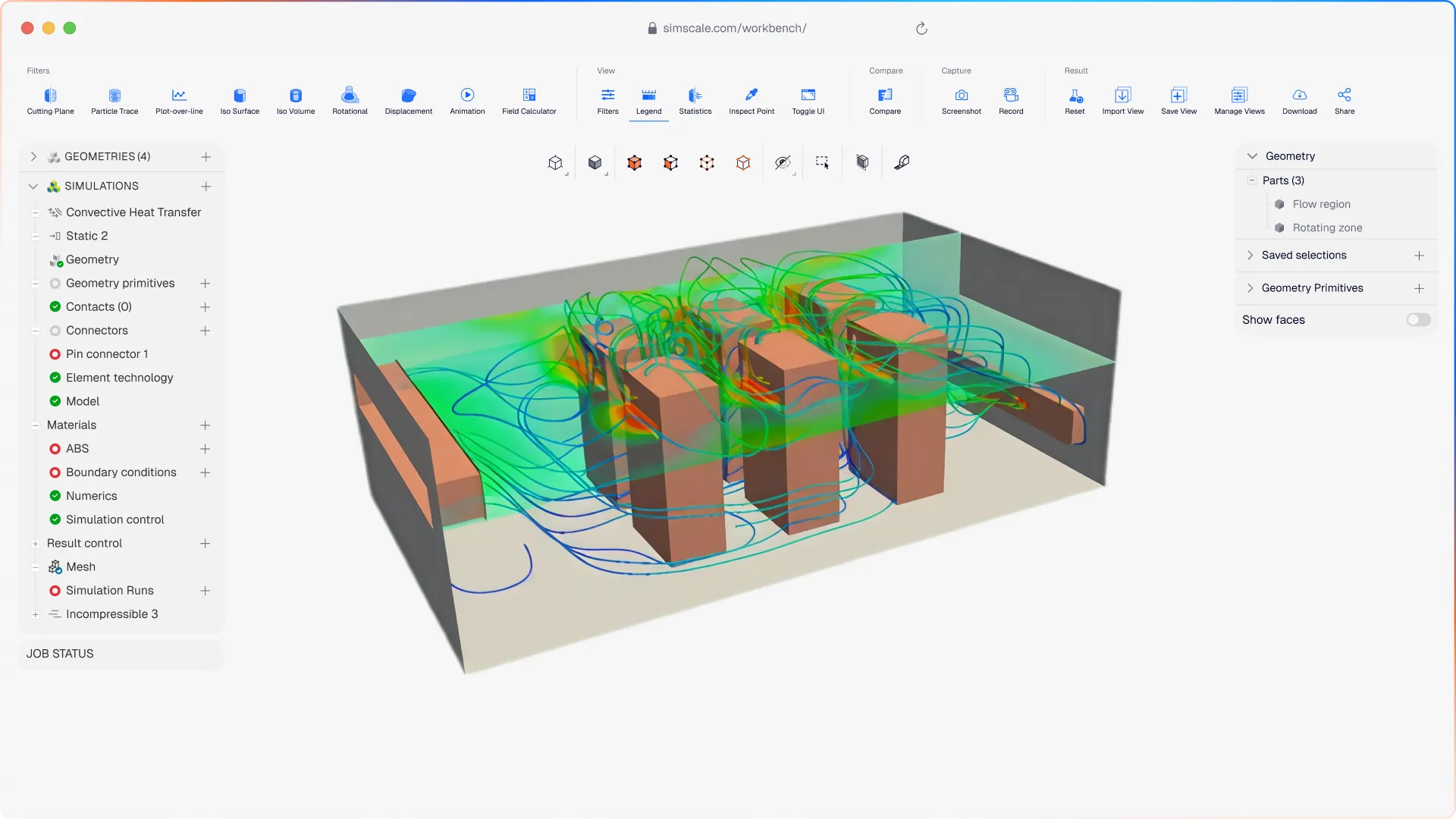




Contamination risks and compliance gaps found after construction are expensive to fix. SimScale unifies airflow and thermal simulation on one cloud platform. Verify ISO 14644 and EU GMP compliance before ground is broken..
Cleanroom simulation that covers your full design challenge
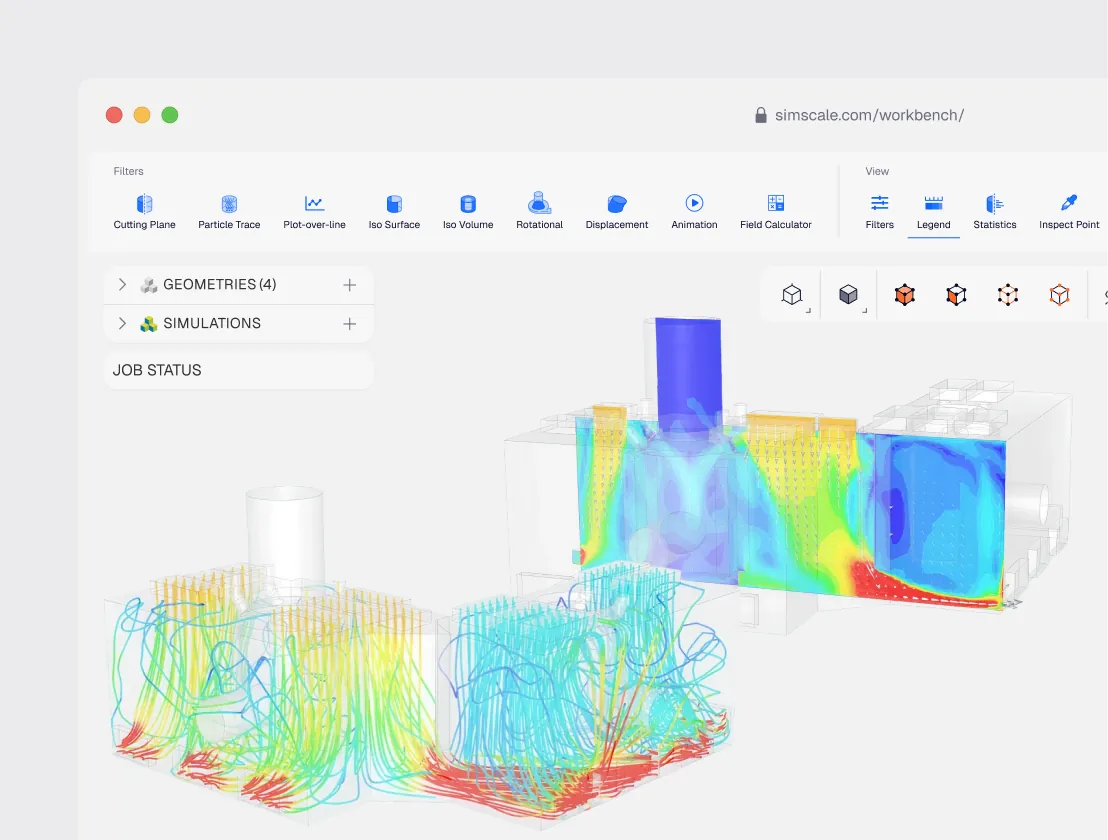
Airflow, thermal, and contamination analysis in one platform
Simulate unidirectional and turbulent airflow across the full cleanroom envelope, track particle transport from identified sources, and evaluate temperature uniformity across occupied zones — independently or combined. Couple CFD with thermal analysis to assess HVAC energy efficiency, and add structural FEA for equipment validation as needed.
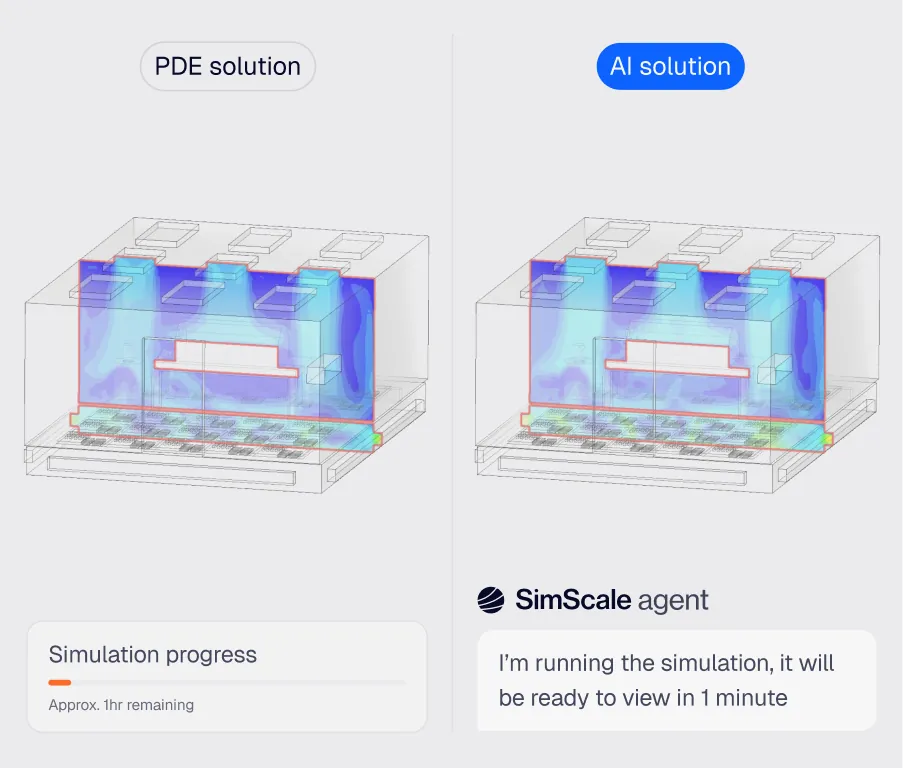
Faster design iteration with AI
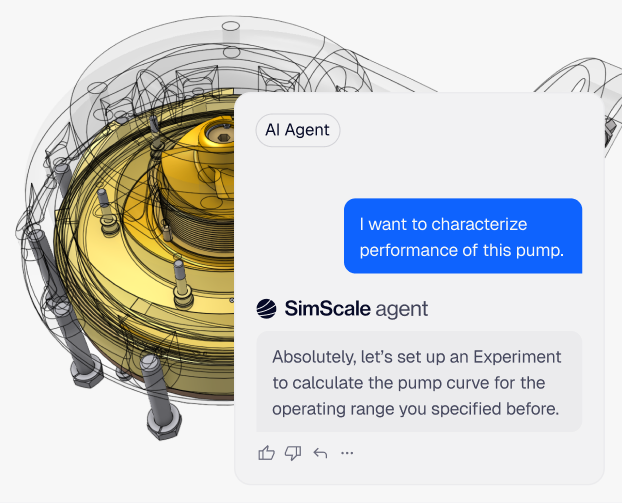
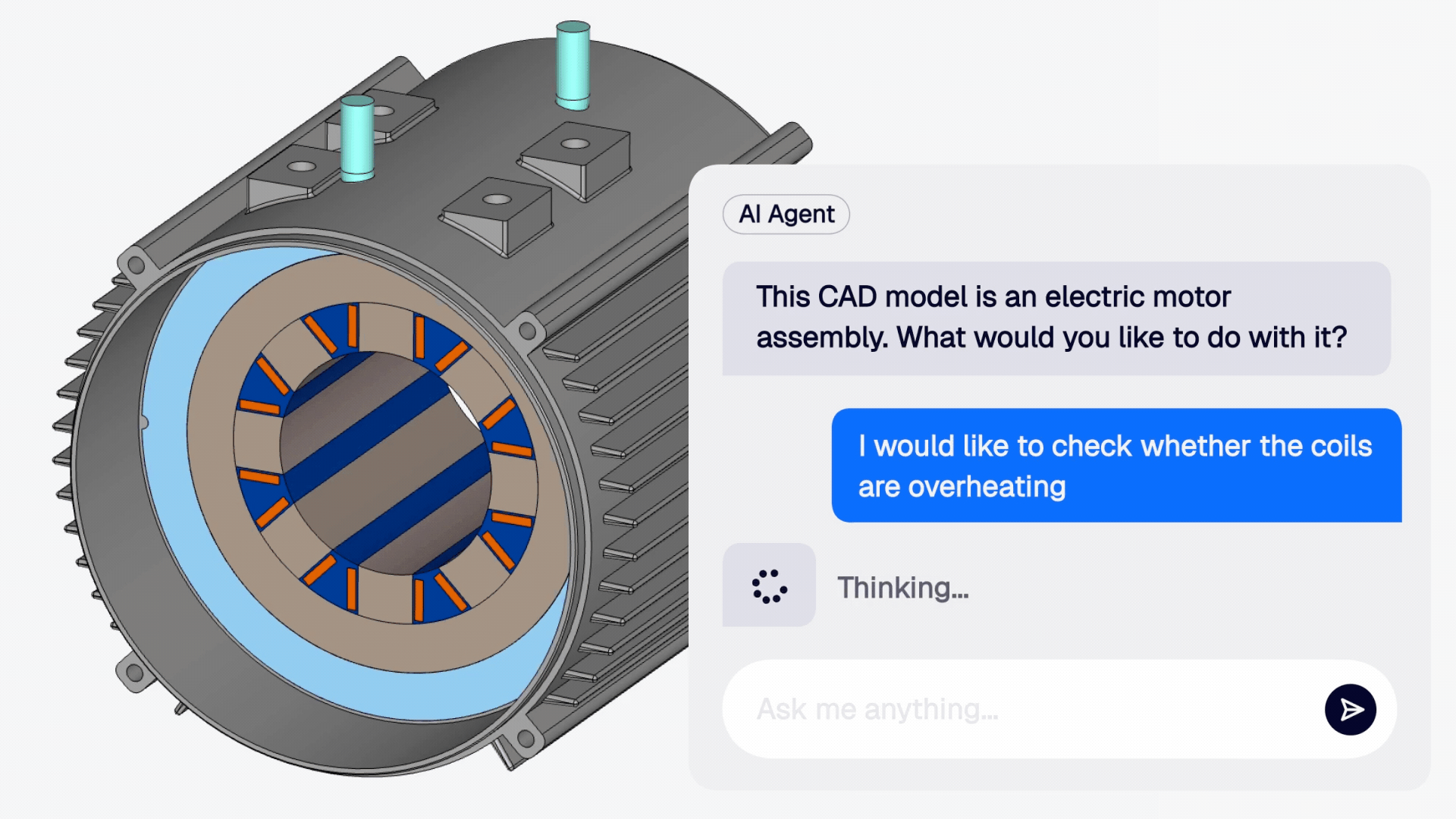
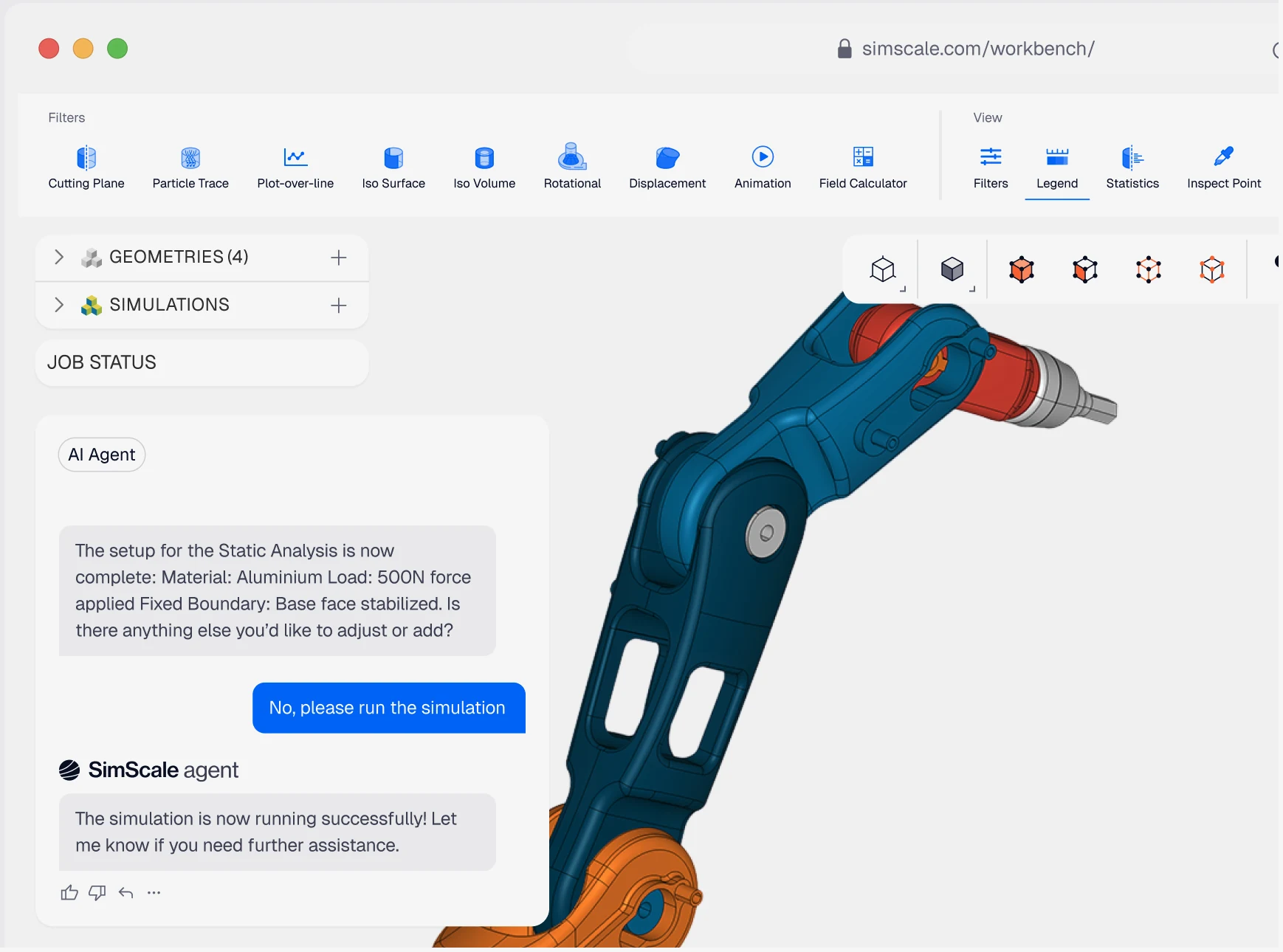
Physics AI delivers rapid airflow and contamination predictions for early-stage layout decisions on HEPA filter placement, supply/return configurations, and pressurization strategies. Engineering AI automates meshing and setup for complex cleanroom geometries including equipment layouts and pass-through chambers.
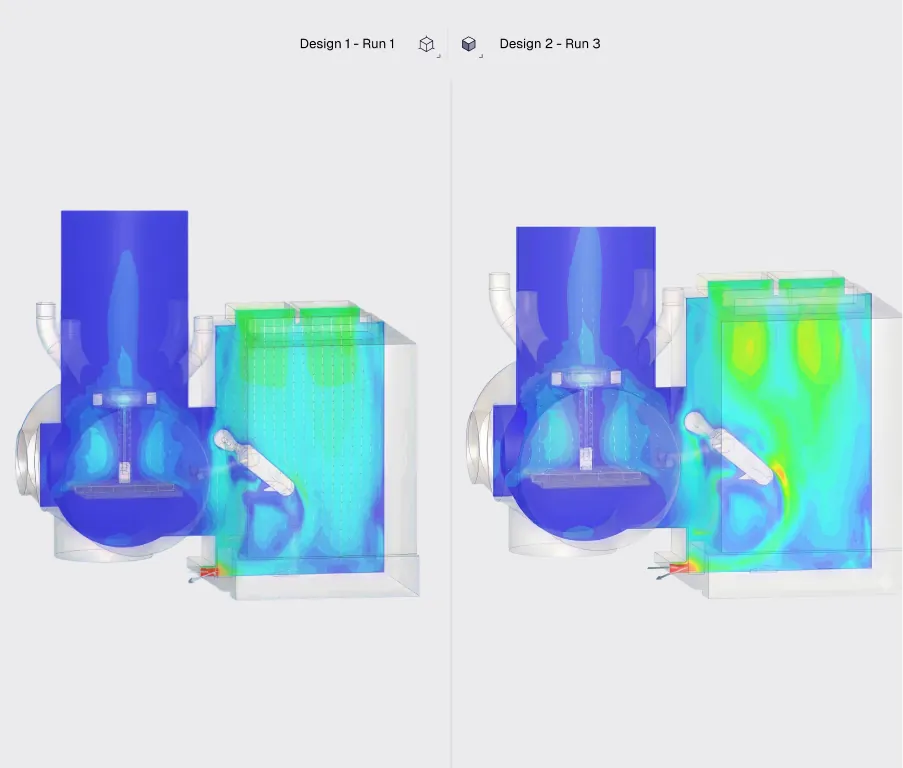
Simulate multiple layouts in parallel
Import directly from Revit, AutoCAD, or any standard CAD format and run multiple design configurations simultaneously. Compare HVAC layouts, test different filter configurations, and evaluate pressurization strategies in a single session, then share validated compliance reports with clients or regulators.
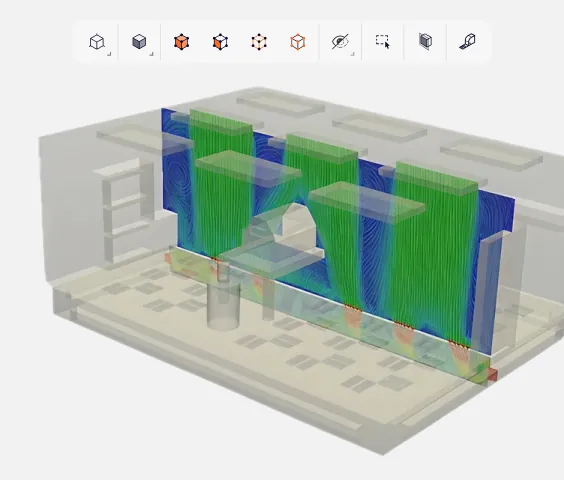
ISO classification & air change validation
Predict air change rates, flow uniformity indices, and particle concentration levels to virtually validate ISO 14644 Class 1–9 and EU GMP Grade A–D compliance before construction. Identify under-ventilated zones and optimize supply air distribution to meet classification requirements at the lowest possible energy cost.
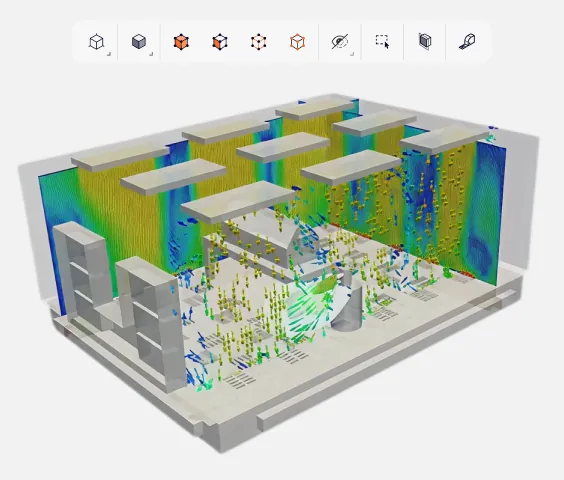
Contamination risk & particle tracking
Simulate particle transport from equipment, personnel, and process sources to identify contamination pathways before they compromise product or patient safety. Optimize airflow patterns, pressurization differentials, and garment protocols to eliminate high-risk zones.
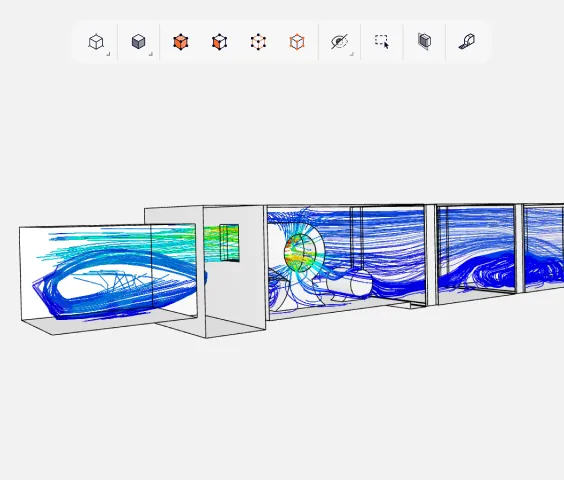
HVAC energy optimization
Cleanrooms consume up to 50 times more energy than standard facilities. Simulate supply air temperatures, recirculation ratios, and fan configurations to minimize energy consumption while maintaining required cleanliness classifications and pressurization.

2–3 months
saved per design cycle
“We are looking for overall quality of air circulation. We don’t want to see turbulence, which introduces unpredictability, but we also don’t want any dead spots, where dust particles can settle out. The only way to engineer a solution is with a 3D flow simulation that is easy to explore and iterate with.”
Julien Gargiulo — Vacuum Engineer, EGO

8 flow
configurations tested in a single session
“Thanks to our CFD study with SimScale, we were able to create an optimal and very sophisticated HVAC system for an extremely sensitive cutting-edge lab equipment.”
Gabor Petrika — Lead Designer, Thermo-Consult
Physical
testing replaced with validated CFD methodology
“One of the standout features of SimScale is its collaboration tools. As a mechanical engineer, I was able to share the project and discuss the results with my colleagues who are pharmacists and machine operators. They could easily access the project and quickly understand the results.”
Jonas Brügmann — Mechanical Engineer, Fette Compacting
Related resources


pselmeczy_AI
September 19, 2026
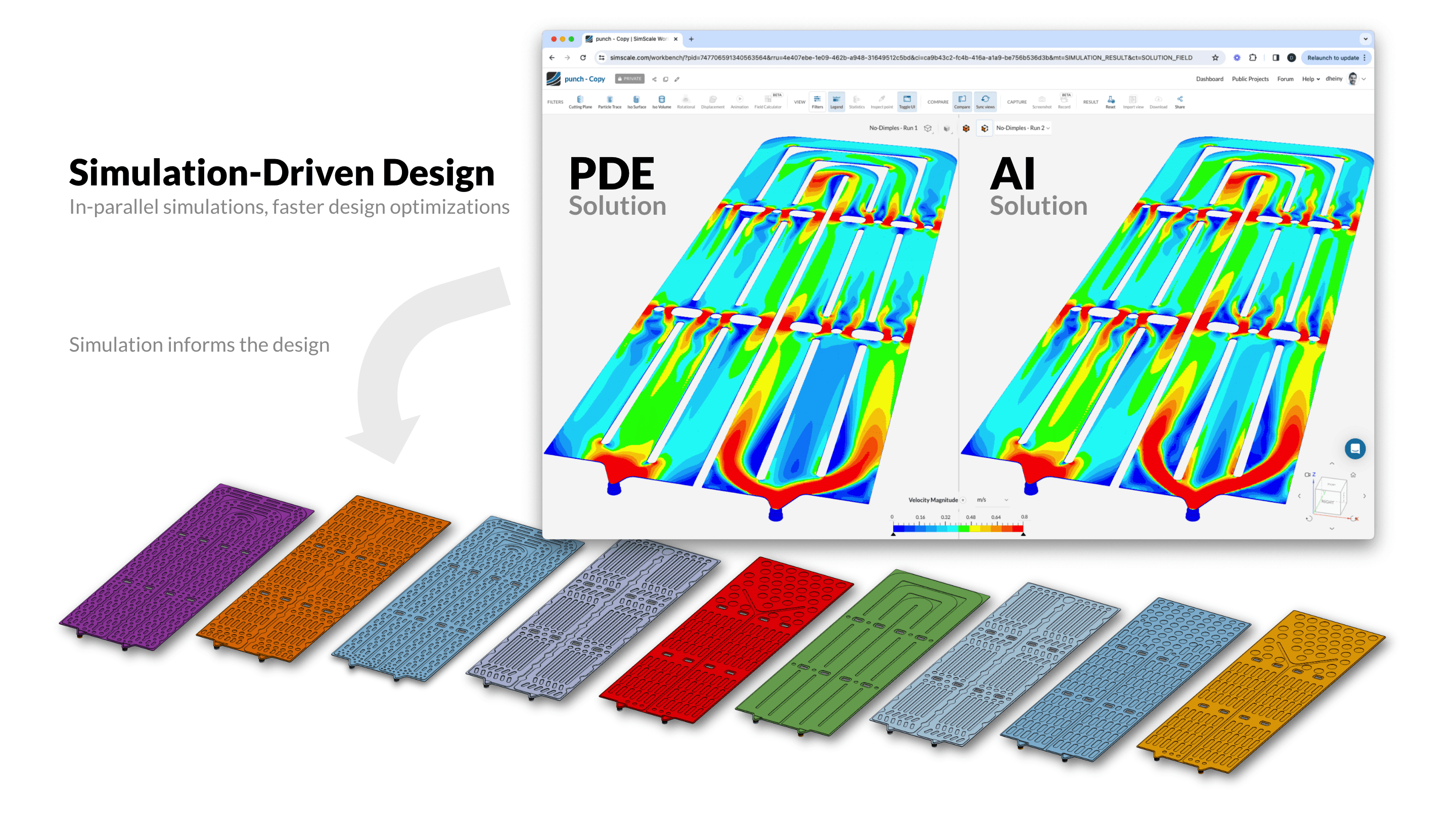
AI Simulation: The Convergence of AI and Engineering Simulation
What AI simulation is, how AI-assisted simulation and simulation-assisted AI differ, how Physics AI models are trained and validated, and where they fit next to CFD and FEA.

Steve Lainé
September 16, 2026
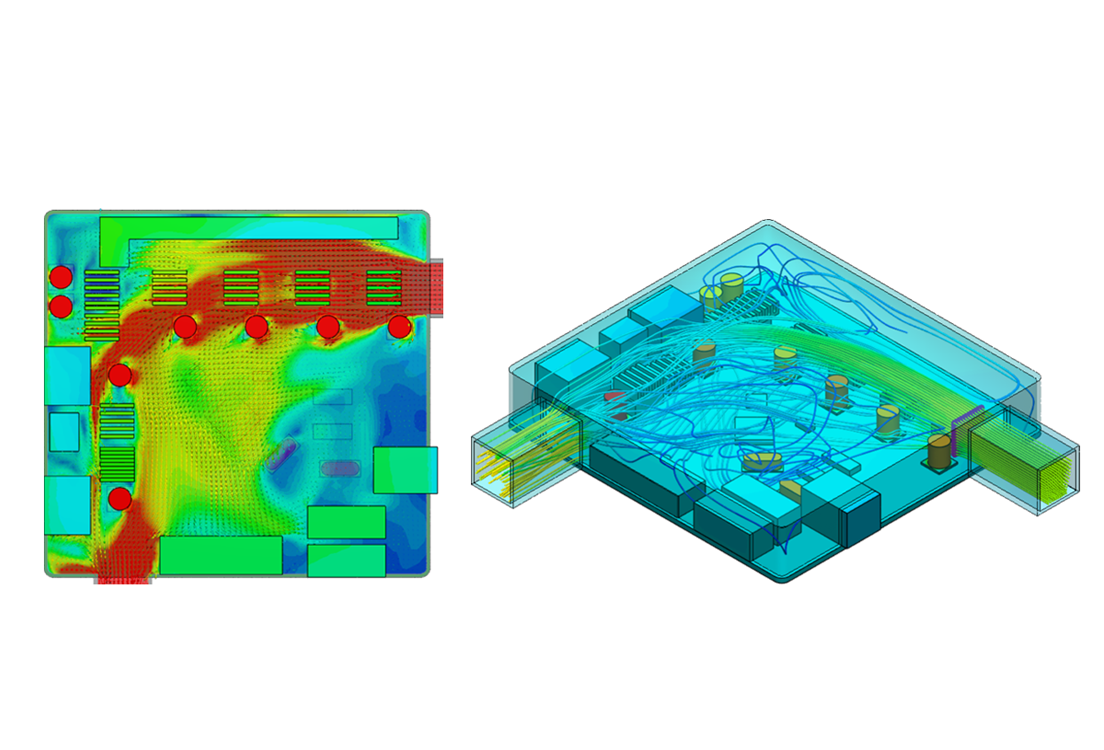
How to run a conjugate heat transfer (CHT) simulation
A step-by-step CHT simulation walkthrough: the full setup sequence, validation against physical test, and worked SimScale examples in air and liquid.

Alexander Fischer
September 13, 2026



Luis Goncaves
August 4, 2026
Luis Goncaves
June 18, 2026
Luis Goncaves
January 27, 2026

Alex Graham
September 15, 2026
Alex Graham
August 4, 2026
Steve Lainé
July 6, 2026

Peter Selmeczy
July 9, 2026
Peter Selmeczy
March 24, 2026

Peter Selmeczy
September 10, 2025

jwebster
September 15, 2026
Peter Selmeczy
September 3, 2026
FAQs
New to cleanroom simulation or evaluating SimScale? Here are the questions we hear most.
ContactSimScale supports validation against ISO 14644-1 (Class 1–9), EU GMP Annex 1 (Grade A–D), and ASHRAE 170 for healthcare facilities. Air change rates, flow uniformity indices, and particle concentration outputs can be mapped directly against classification thresholds.
Yes. SimScale supports laminar (unidirectional) flow modeling for ISO Class 1–5 environments and turbulent mixing flow for Class 6–9 and GMP Grade C/D facilities. Both HEPA ceiling coverage and localized laminar flow units (LFUs) can be modeled.
SimScale allows particle injection from defined sources including personnel movement paths, process equipment, and material transfer points. Passive scalar or particle tracking analysis predicts transport pathways and concentration levels across the facility.
Yes. Multi-zone pressure differential modeling is supported, allowing engineers to validate that pressurization cascades between Grade A/B/C/D or ISO classification zones prevent cross-contamination under normal and upset conditions.
SimScale accepts CAD geometry directly from Revit, AutoCAD MEP, or standard formats. HVAC components including AHUs, HEPA banks, supply diffusers, and return plenums can be modeled explicitly, and results feed directly into energy performance and compliance reporting.