Challenges
Results
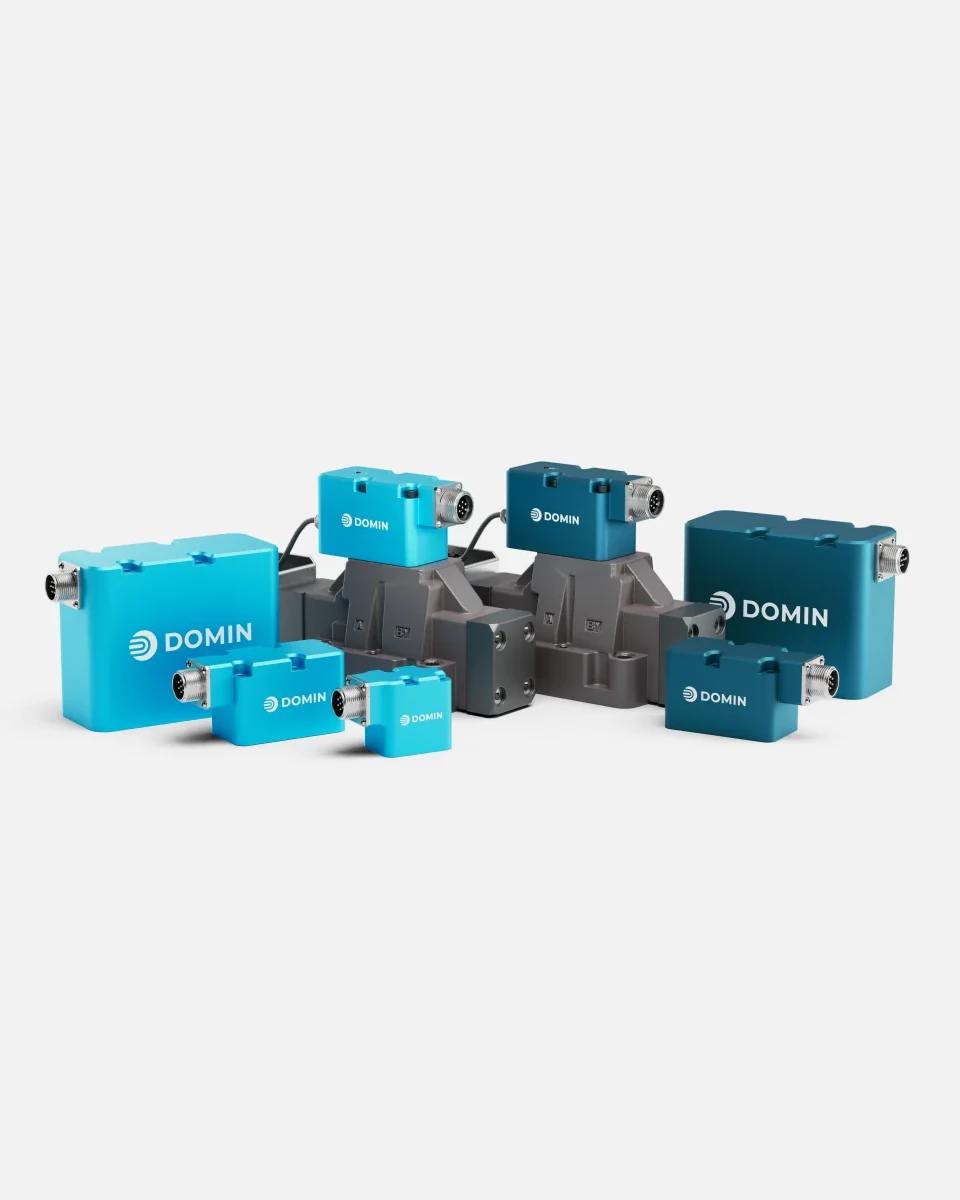
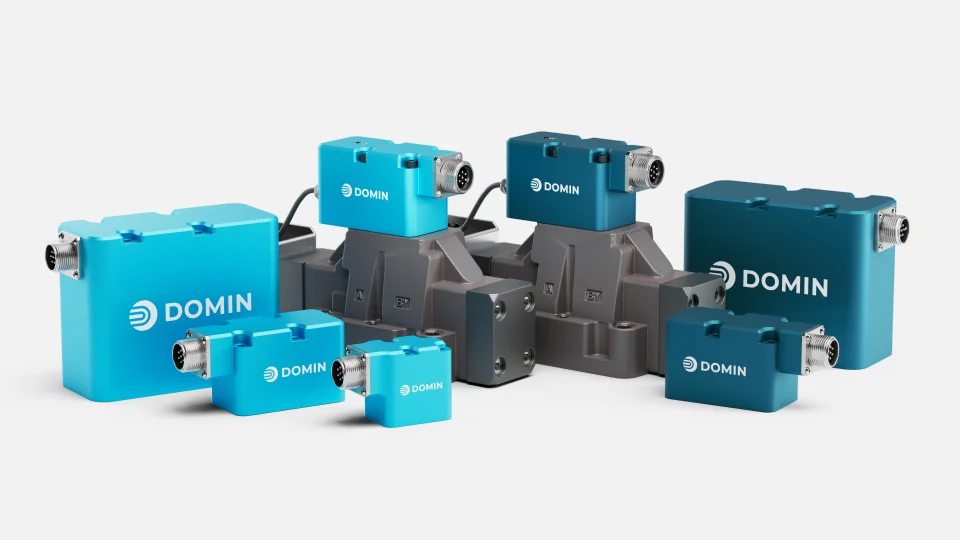
Domin is a Bristol-based engineering company transforming motion control. Their hydraulic servo valves, suspension actuators and power packs are among the most compact, high-performance products in the industry, achieved through additive manufacturing, proprietary design methodology, advanced electronics and an uncompromising commitment to pushing the limits of what hydraulic technology can do. Founded in 2011, Domin’s innovative products are now to be found in thousands of applications across aerospace, defence, industrial automation, and motorsport, where the demands on component performance leave no room for conservative engineering.
Domin’s Design team owns every stage of product development, from first concept through to handing an industrialised product to Manufacturing for series production. The team performs all of its own CAE analysis: designers wholly own their components, running and interpreting simulation as an integrated part of the design process. Sam McKee, Design Manager at Domin, joined the company from the automotive industry and leads the team with a clear philosophy: “For me, winning is unlocking more than an improvement, going further than a step change — it’s achieving a quantum leap beyond anything that went before.”
Why Domin Chose SimScale
Before adopting SimScale, Domin’s simulation work was fragmented. Structural analysis and CFD ran in separate tools with files stored on local machines, slowing access to any given simulation and limiting throughput by the capacity of on-premises hardware. The company wanted to address these challenges with a single platform for all their simulation needs: FEA and CFD under one roof, with solver accuracy they could trust and results accessible to the entire team. They also needed a licensing approach that could grow with the business without adding cost barriers to new users.
SimScale met all of those requirements. Its licensing model, based on simulating and meshing core hours only with no charge for setup, post-processing, or viewing, meant that anyone in the company could access simulation data at no additional cost. The cloud-native architecture removed the need for local hardware, and the browser-based interface made it practical for designers, approvers, and V&V engineers alike to engage with results directly. “The move from using different and disparate and locally stored simulations to having a one-stop shop for all mechanical and fluids analysis,” Sam explains, “has been probably the biggest advantage.”
Today, around a third of Domin’s employees hold SimScale accounts, with the majority of users doing simulation work sitting in the Design team. There are also several non-simulating users: design engineers peer-reviewing colleagues’ work, Verification and Validation engineers investigating product performance and failure modes, and design approvers and engineering leaders studying analyses as part of formal sign-off. As Domin’s engineering team and product range grow, so too does the breadth of simulation activity: “pretty much every month we’re using SimScale for something different,” Sam says. The team recently benefited from their SimScale support engineer visiting to deliver a full day workshop, bringing new users up to speed, refining Domin’s simulation practice further and exploring new applications together.
That relationship with SimScale has also mattered. Sam describes it as relational rather than transactional, an approach that aligns with how Domin prefers to do business. SimScale application engineer Antoni has worked closely enough with the Design team to develop a deep familiarity with their products, providing proactive support through the platform’s live chat and setting up cases himself when a problem warrants it. “Antoni knows a lot about our products from having been quite deeply involved in developing them with our team,” Sam notes. “That is also quite rare.”

Sam McKee
Design Manager, Domin

“One of Domin’s key strengths is our ability to rapidly design and validate innovative solutions for our customers. To do this well, we need slick, flexible software solutions which enable a team to collaborate without barriers and make high-quality decisions efficiently. We found SimScale a great fit for these requirements.”
From Siloed Files to Company-Wide Access
Before introducing SimScale, design reviews took the form of static reports, with the designer producing screenshots, summaries and conclusions; there wasn’t a truly efficient way for reviewers to look deeper, interrogate boundary conditions, or explore the results from a different angle.
Using SimScale, approvers and peers can open projects directly to verify setup and boundary condition details, and interrogate results in any way they need. “The documentation becomes lighter and faster to produce, but our ability to review is better alongside it,” Sam says, “which suits us, because we’d rather be designing the next thing.”
The breadth of access has changed the quality and pace of design reviews at every level. When a pressure vessel component designed two years ago recently needed to be modified to support a new test, Sam went directly to the archived FEA study rather than re-running anything. “I just went into the FEA that had been done a couple of years ago. Am I worried about this part if we remove material from here? No. It took me less than five minutes to gain confidence because I’ve got easy access to that data.”
FEA: Designing to the Limits of the Material
Domin’s products operate at high pressure, and often into industries that are extremely sensitive to mass and package size. The suspension actuator is a prime example: a component where every gram and every cubic millimetre counts, and where the margin between a confident design and an overbuilt one is the difference between a product that wins on the spec sheet and one that doesn’t.
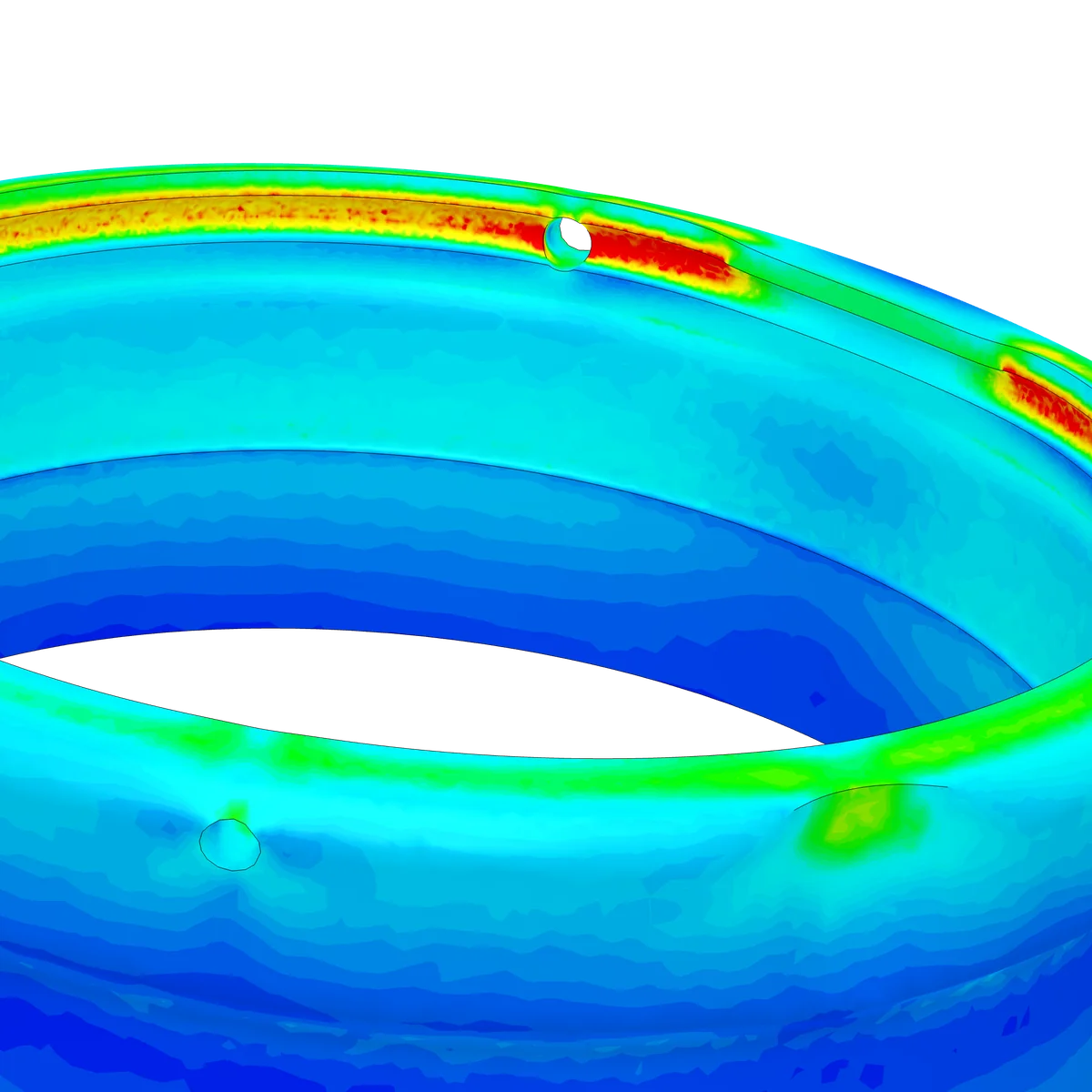
The team uses SimScale for all FEA, covering linear analysis under pressure and structural loads and non-linear cases for intentionally flexible components. The solver accuracy they have achieved allows them to design closer to material limits, with confidence.
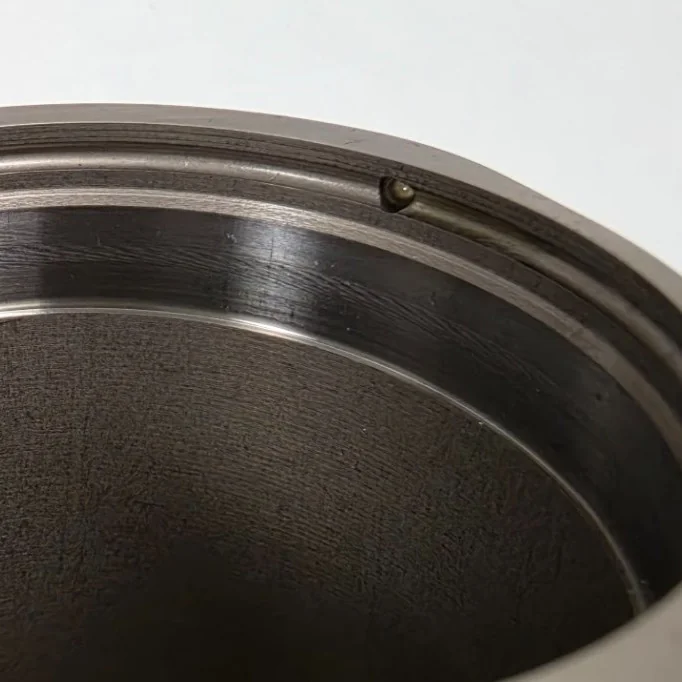
During the analysis of a particular accumulator housing, the FEA in SimScale predicted that the part would reach the yield strength of the material at an operating pressure of 330 bar. The geometry was not straightforward: the highest stress concentration occurred in a snap ring groove used to retain the accumulator in the housing, requiring a complex set of boundary conditions to model accurately. On test under controlled conditions, the part failed at 340 bar — a prediction accurate to within 3%.

“Predicting yield to 3% accuracy at a relatively complex interface is a real asset,” Sam notes. “This allows us to deliver more compact and lower cost products to our customers without compromising on durability.”
CFD: Flow Forces, Distribution, and Pressure Drop
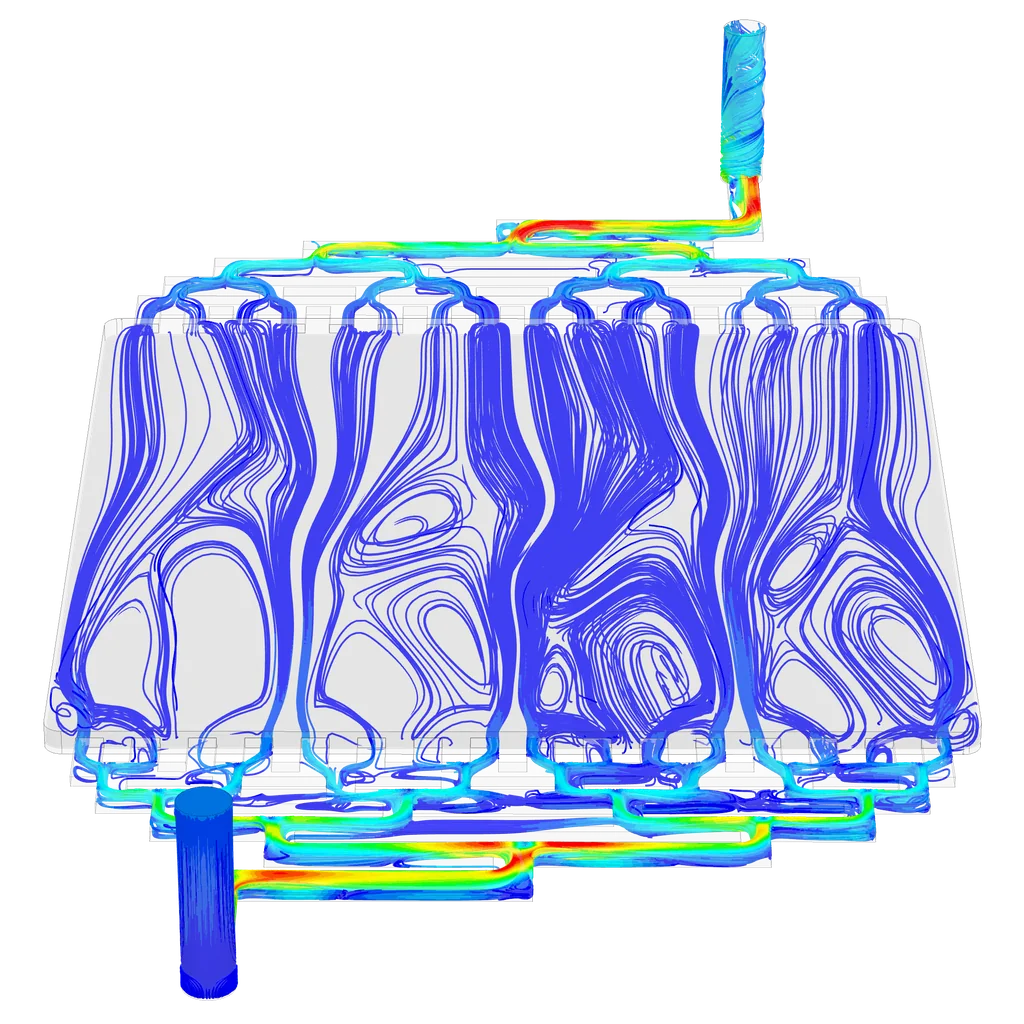
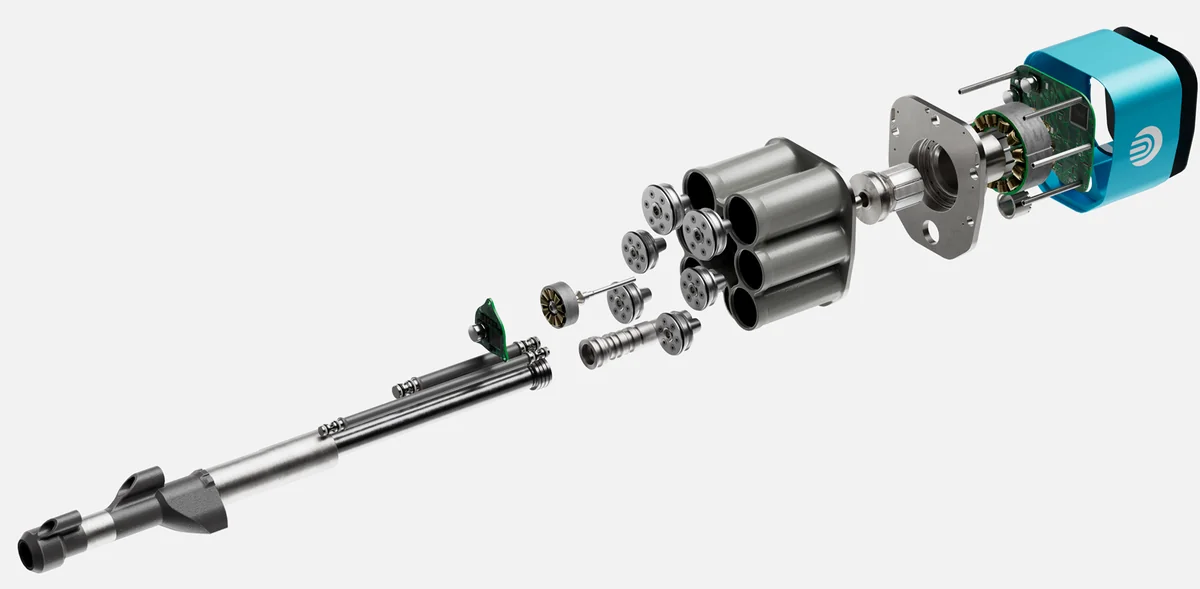
Domin’s primary CFD use cases centre on flow forces acting on internal valve components, flow distribution through valve passages, and pressure drop across assemblies. Getting these right defines the hydraulic performance of a product.
When qualifying a design, the team takes a pragmatic approach that balances accuracy with engineering velocity. As Sam explains, “sometimes we are able to qualify based on similarity with existing, tested designs, but we rely heavily on simulation to gain the insight needed to take the next design step”. Even though Domin can print test parts using their standard manufacturing process, Sam describes physical prototyping as “a last resort, the slowest and most expensive way to get information”.
Domin also uses simulation and physical testing together as a means of cross-checking results and building confidence in the analysis. This is especially important when using different test facilities. Sam recalls using an external testing rig for a new product which could not be fully tested in-house. Initially. results diverged from simulation predictions in a way that was difficult to explain. Working through the discrepancy with Antoni, the team eventually traced the issue to the measurement setup on the external rig, not the analysis. Sam explains: “We’ve improved that now, and we’ve got results which are both more credible and more closely aligned with the simulation.”
Conjugate Heat Transfer: Responding to the Unexpected
A thermal challenge emerged mid-programme on one recent project, a requirement that had not been anticipated at the outset. The team needed to model heat transfer from a component that would now operate under significant thermal load, and conjugate heat transfer analysis was not a methodology they had used before.
Working with Antoni, they learned and applied the analysis entirely within the original development schedule. “Being able to seamlessly start modeling that and get results inside the intended development time was a massive benefit,” Sam says. “I think we’d have had to consult on it instead. That would have been the only other option.” Domin holds its IP closely, and the ability to expand into a new physics domain without leaving the platform meant the team retained both control and timeline.
Ready for the Next Challenge
SimScale has given Domin’s engineering team the ability to do serious, high-confidence analysis without friction getting in the way. Simulation at Domin runs across the whole Design team, expands into new physics domains as the products demand it, and feeds directly into design reviews at every level of the organisation. For a company whose products are defined by how hard they push the limits of what hydraulic technology can do, that kind of access is a structural advantage.
“We are capable of running and reviewing more simulations in parallel, without the need for high-performance computing onsite and without compromising the other work designers can do while simulations are running. For a growing company with many opportunities to make a huge impact with our products, sharing knowledge easily and reducing the opportunity cost of doing high-quality analysis is a strong enabler.”