Cold Plate Simulation
Design liquid cold plates that hit thermal targets without pressure-drop penalties
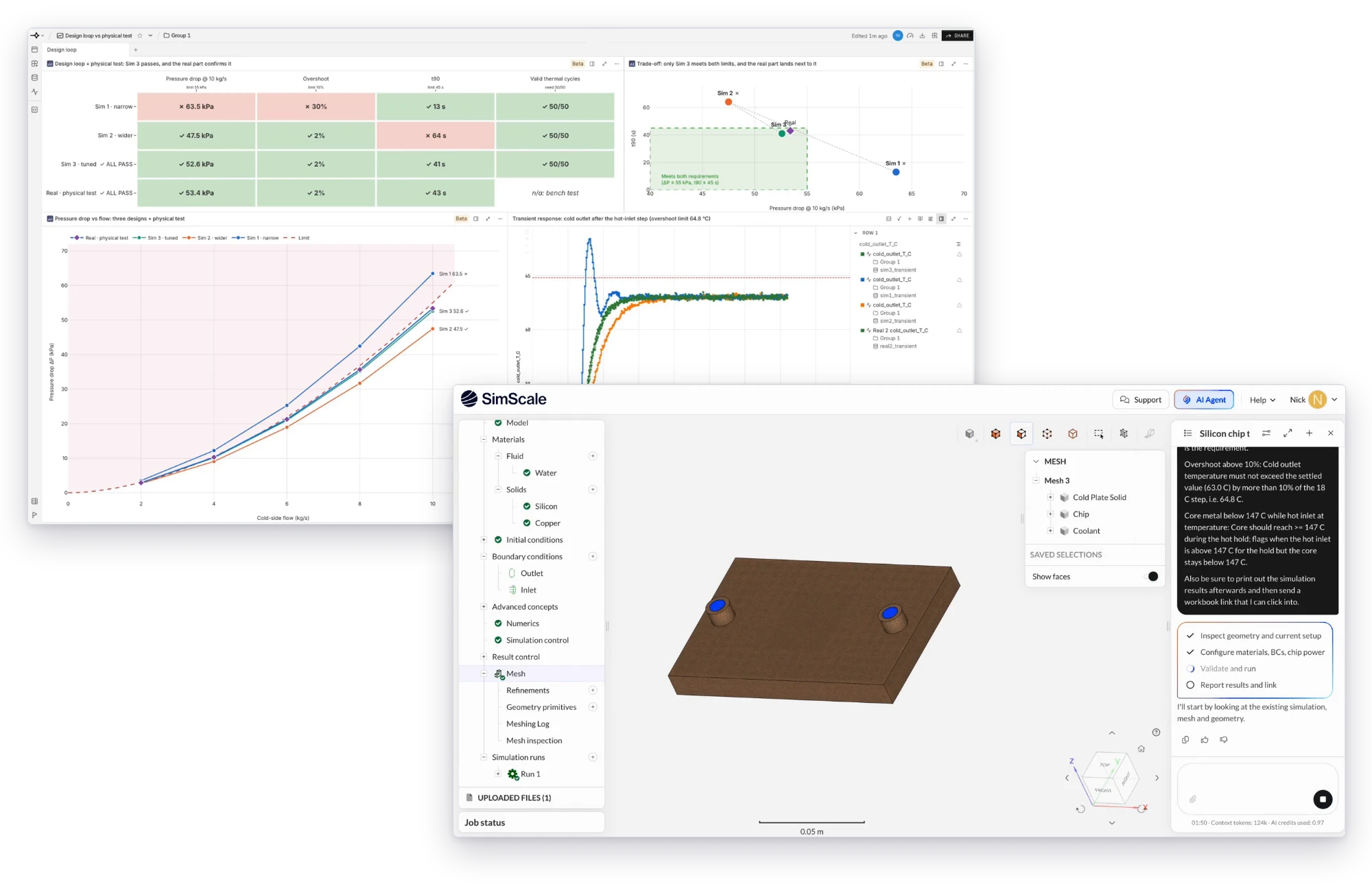
SimScale runs conjugate heat transfer and CFD on cold-plate geometries for EV batteries, power electronics, inverters, and HPC servers in a cloud-native browser-based platform. Sweep channel layouts, coolant choices, and manifold designs in parallel without on-prem HPC.

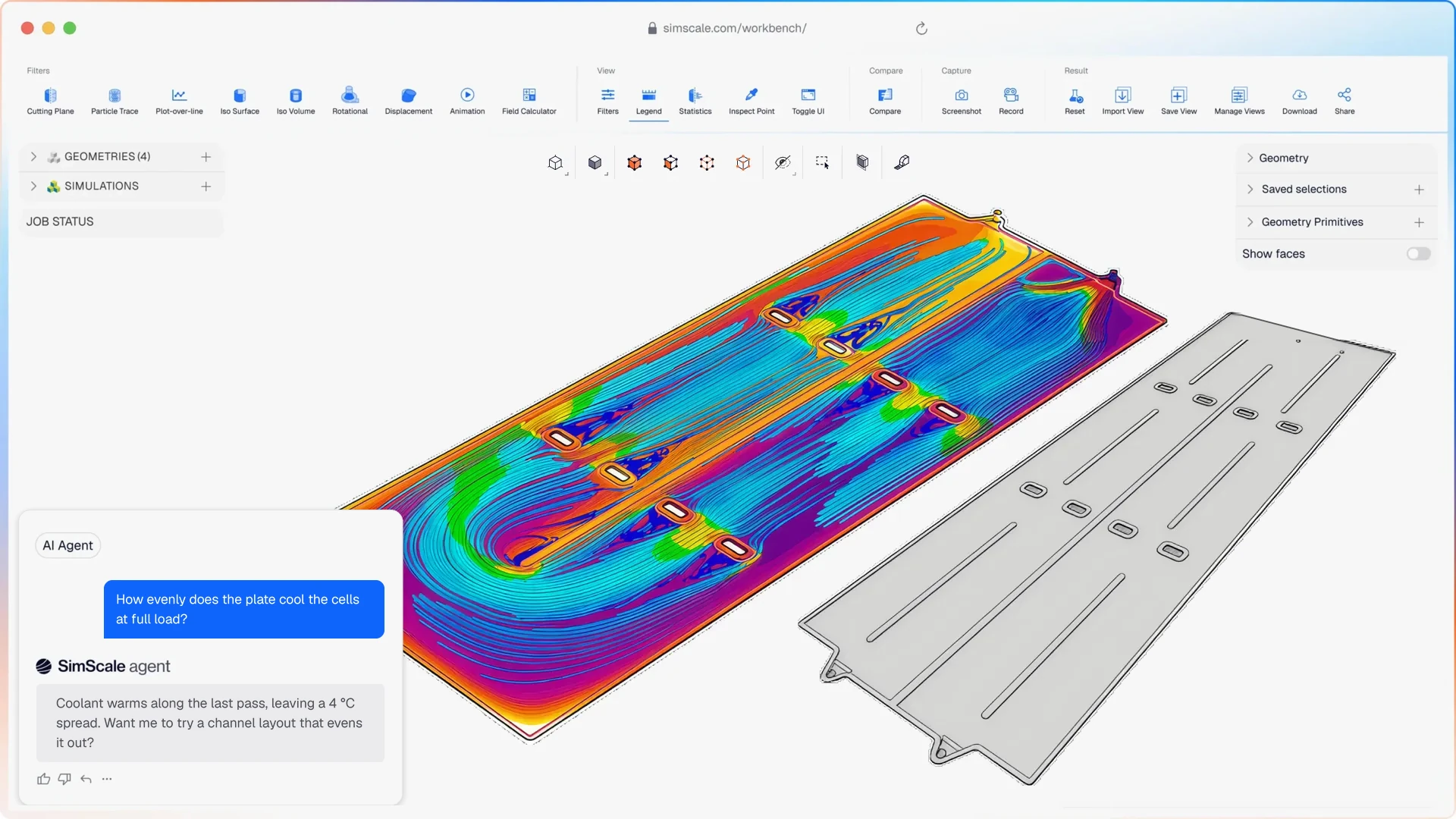




Cold plate performance hinges on flow distribution. Uneven coolant flow leaves hotspots that hand calculations miss. SimScale lets teams predict cell temperatures, pressure drop, and flow distribution across designs before any plate is machined.
Cold plate simulation that covers your full design challenge
All physics, one platform
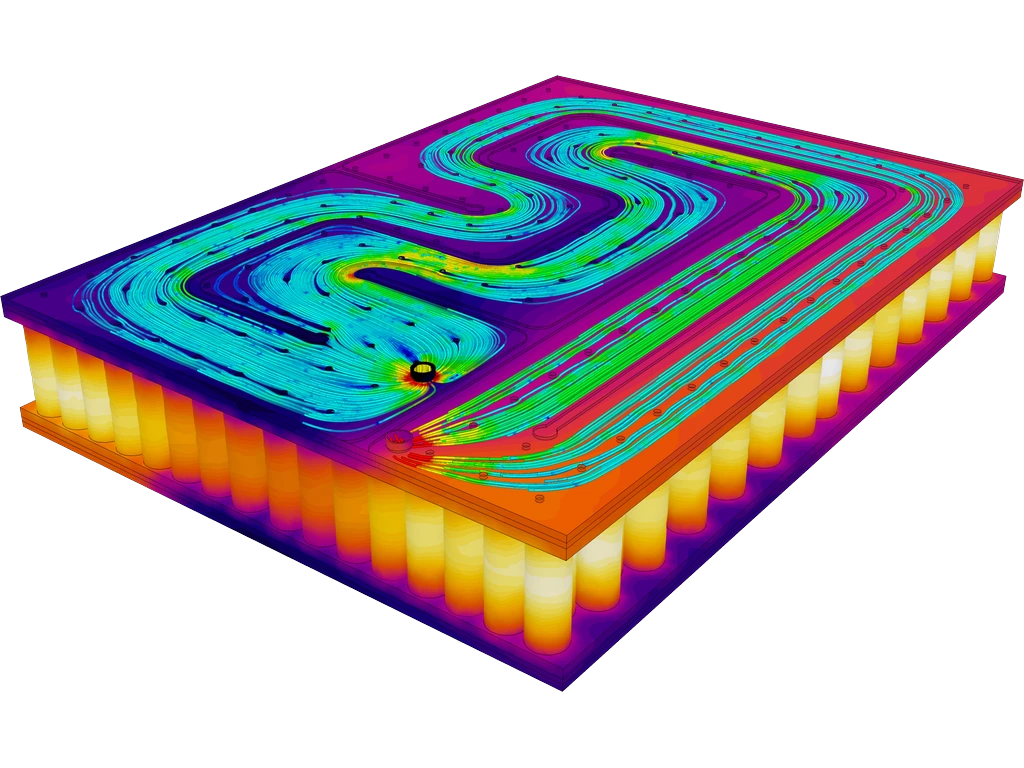
Cold plates fail in coupled domains — a poorly distributed flow leaves hotspots, hotspots warp the plate, warpage opens a leak path. SimScale couples CFD, conjugate heat transfer, and structural FEA on the same geometry: one mesh, one results store. Validate flow split, temperature rise, channel deformation under pressure, and brazed-joint integrity in a single project.
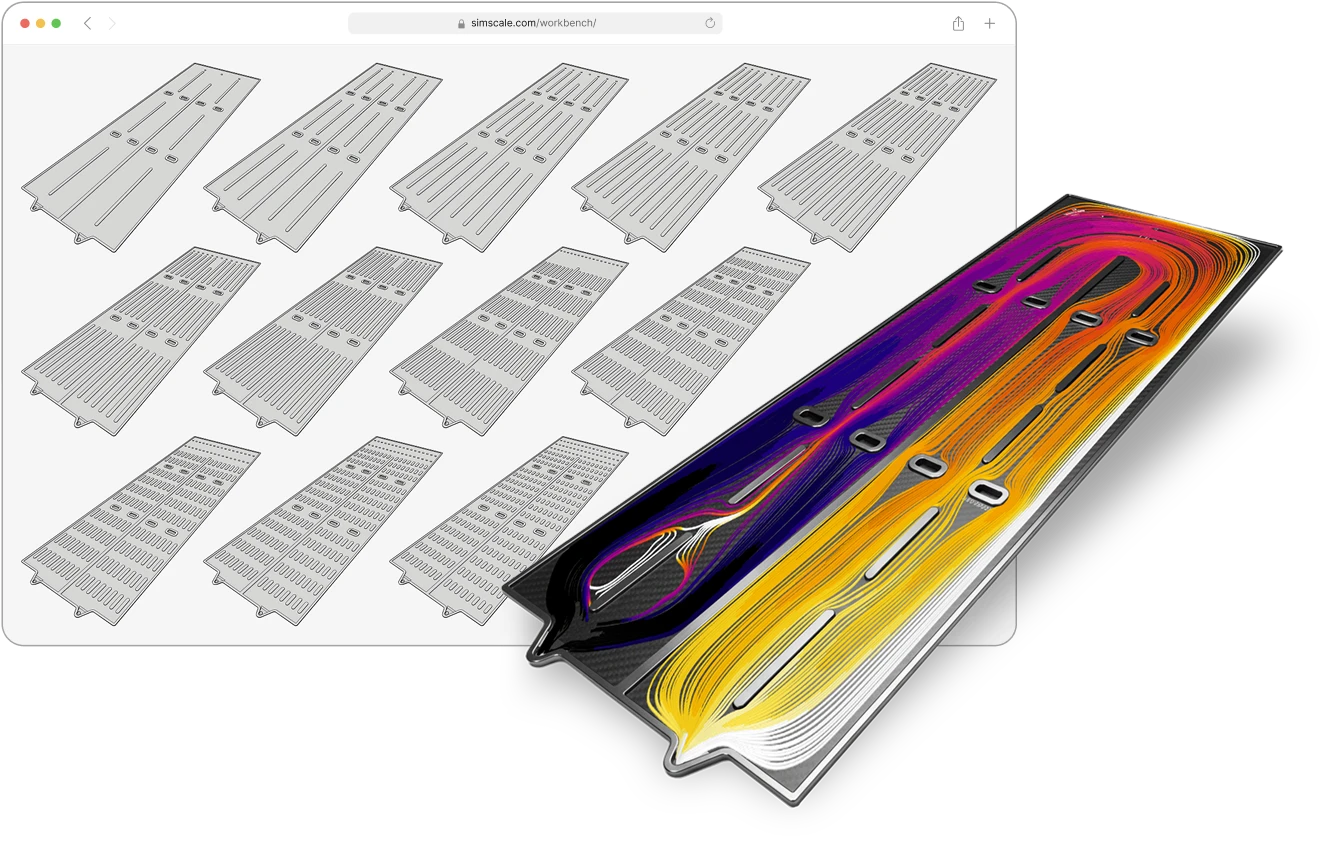
AI-native cold plate design optimization
Physics AI delivers near-instant predictions on channel geometry sweeps. Explore serpentine, parallel, and pin-fin topologies in seconds, then promote the strongest candidates to full CHT before committing to tooling.
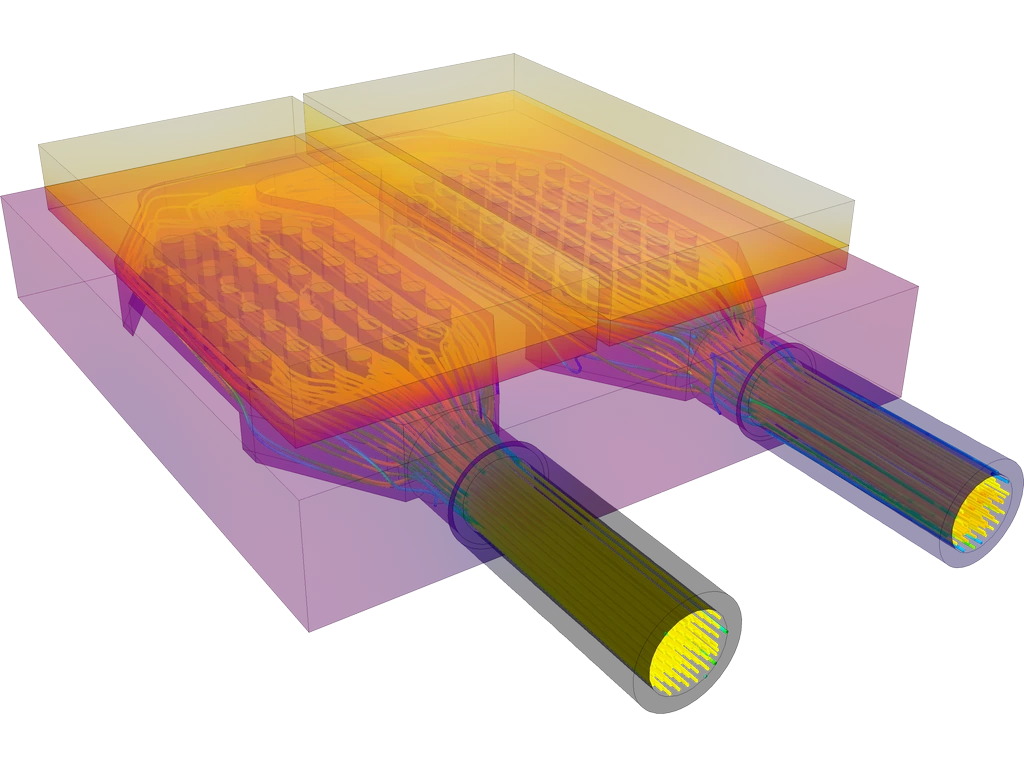
Cloud-native scale: more variants, faster
No on-prem HPC, no VPN, no licence ceiling. Elastic compute scales per project so a battery team can sweep hundreds of channel layout variants in parallel — without queuing for shared hardware.

Channel layout and topology optimization
Compare serpentine, parallel, pin-fin, microchannel, and lattice-structure topologies for uniform flow and thermal distribution. Predict pressure drop, dead zones, and cell-to-cell temperature variance across drive cycles. Validate manufacturability against thermal performance trade-offs before additive manufacturing.
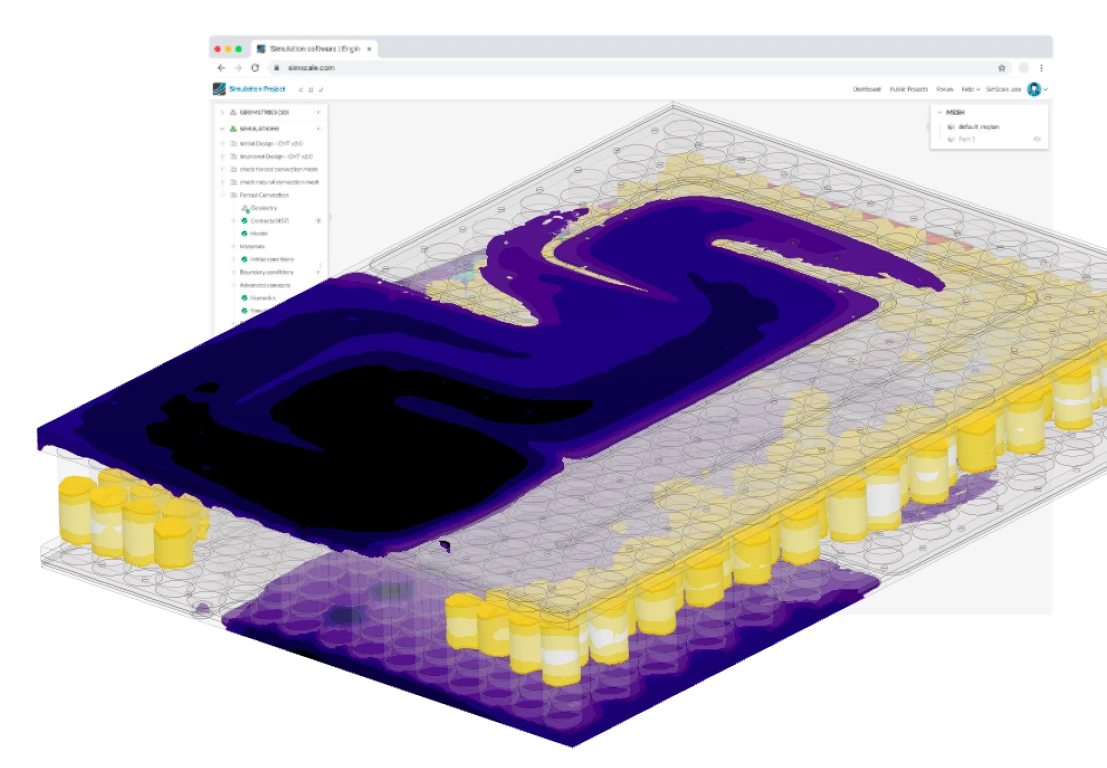
EV battery cold plate sizing and validation
Predict pack-level cooling performance across charge and discharge cycles. Validate cold-plate placement under prismatic, cylindrical, and pouch cell architectures.
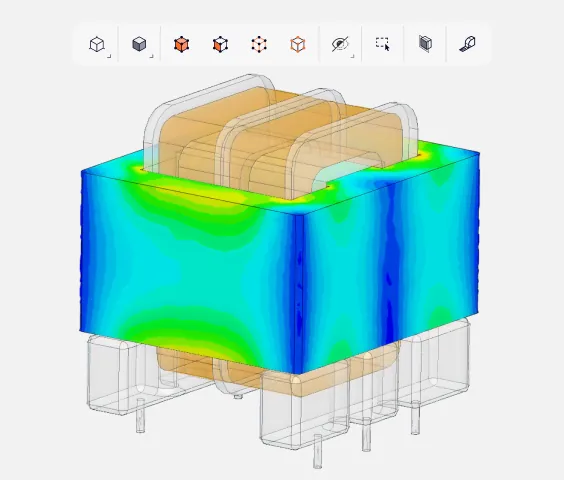
Power electronics and inverter cooling
Design cold plates for SiC and GaN inverters, IGBT modules, and motor drives. Map junction-temperature hotspots to cold-plate channels and resize fins or flow rate to hit thermal limits.
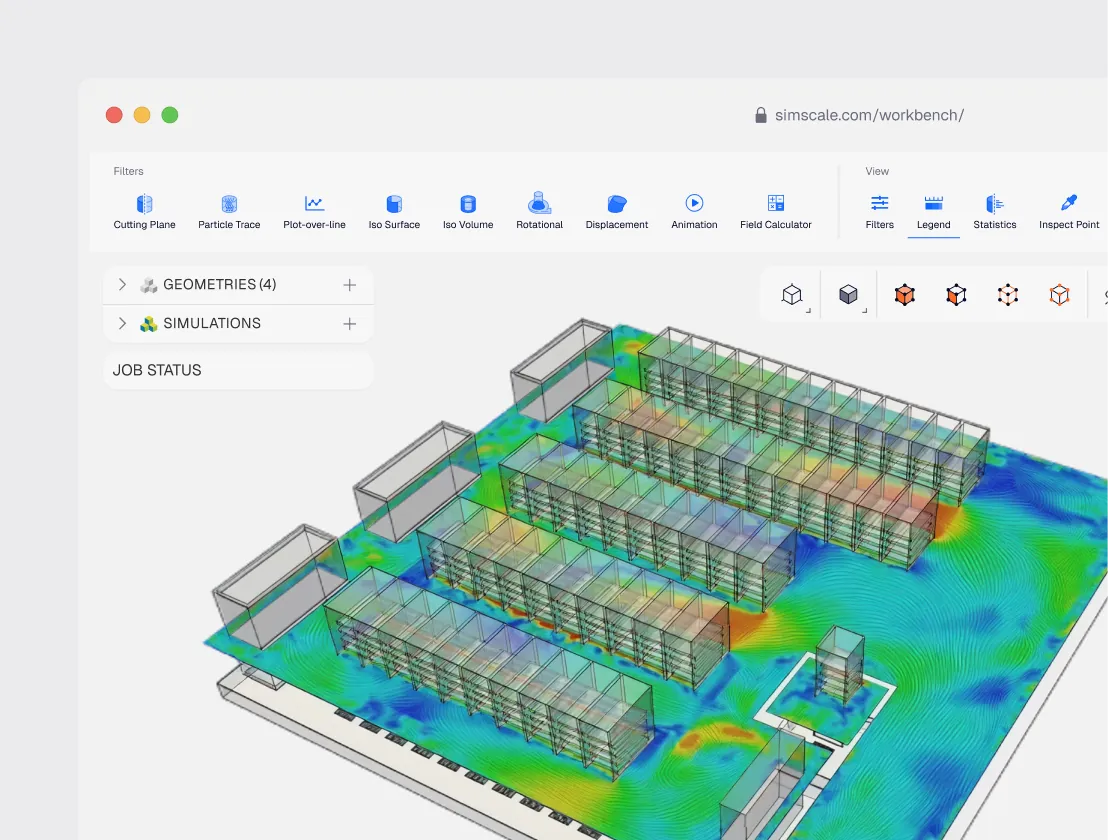
Data center and HPC cold plate design
Direct-to-chip liquid cooling for CPU, GPU, and server rack applications. Validate rack-level thermal architectures and coolant distribution before deployment.
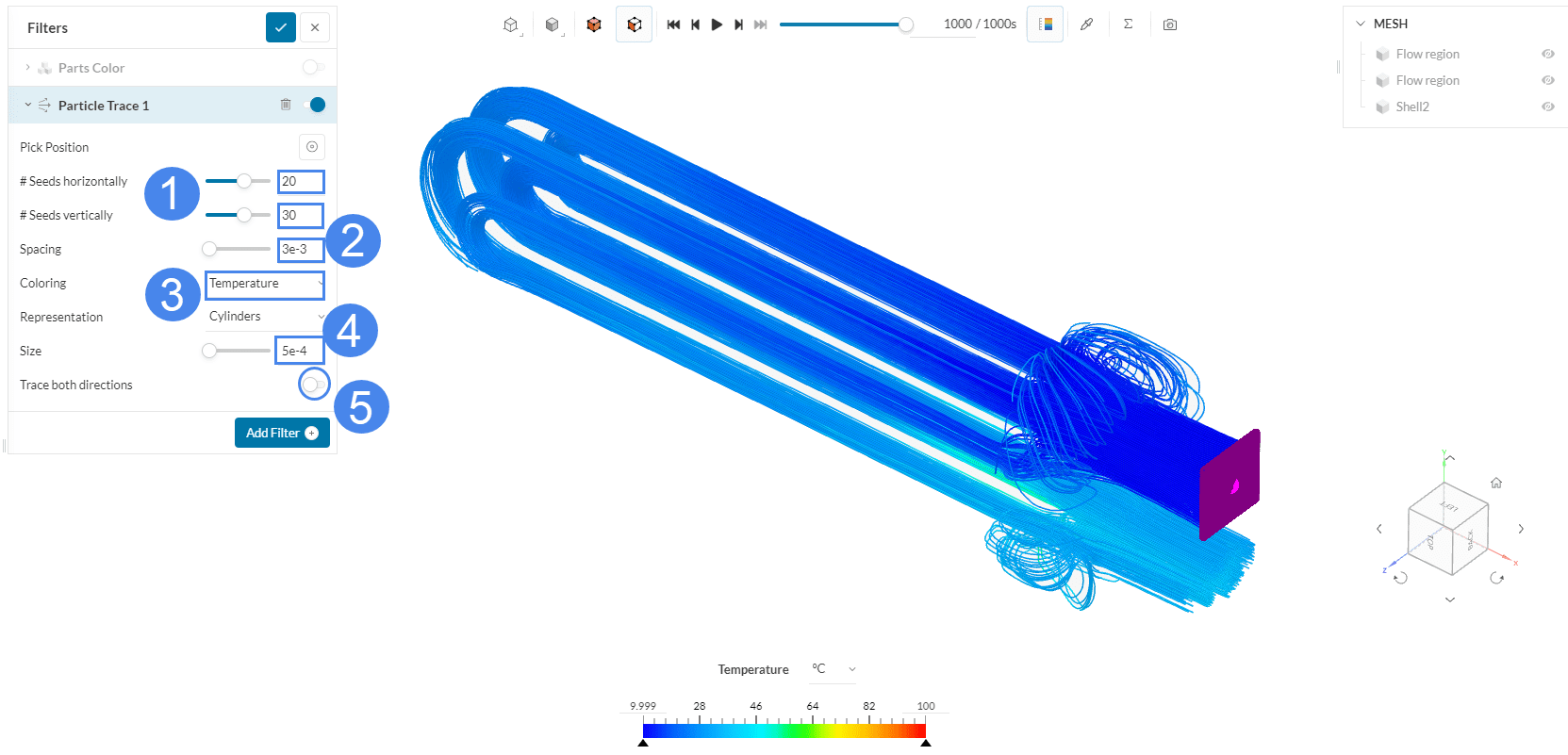
Coolant selection and dielectric immersion
Compare water-glycol, dielectric fluids, and two-phase coolants with their property dependencies. Run parametric sweeps on coolant temperature and flow rate to find the operational envelope that meets thermal targets at acceptable pumping power.

100+
compared in CHT
“Bold has been able to provide valuable solutions to our high-end motorsport customer using conjugate heat transfer simulations, that would have not been possible with other software due to cost and computational resources required. The SimScale team has been very helpful every step of the way.”
Bernat Carreras, Director Bold Valuable Technology

11%
temperature reduction on heat-sink unit
“The final iteration reduced temperatures in all areas of the device and peak temperature from 109℃ down to 104℃ inside the transformer and from 80℃ down to 71℃ inside the heat sink. The proprietary design has advanced to the tooling stage.”
Davis Tolley, Product Design Engineer at Cobalt Design

100+
simulation runs on EV battery and server cooling
“This pushed the team at Forwiz to start conducting CAE simulations, leading them to SimScale’s cloud solution. The results from the simulation gave the team insights into the parameters to be optimized, ultimately facilitating discussions with future clients on proposed concepts.”
Seongsu Park, Researcher at Forwiz System Co., Ltd
Related resources
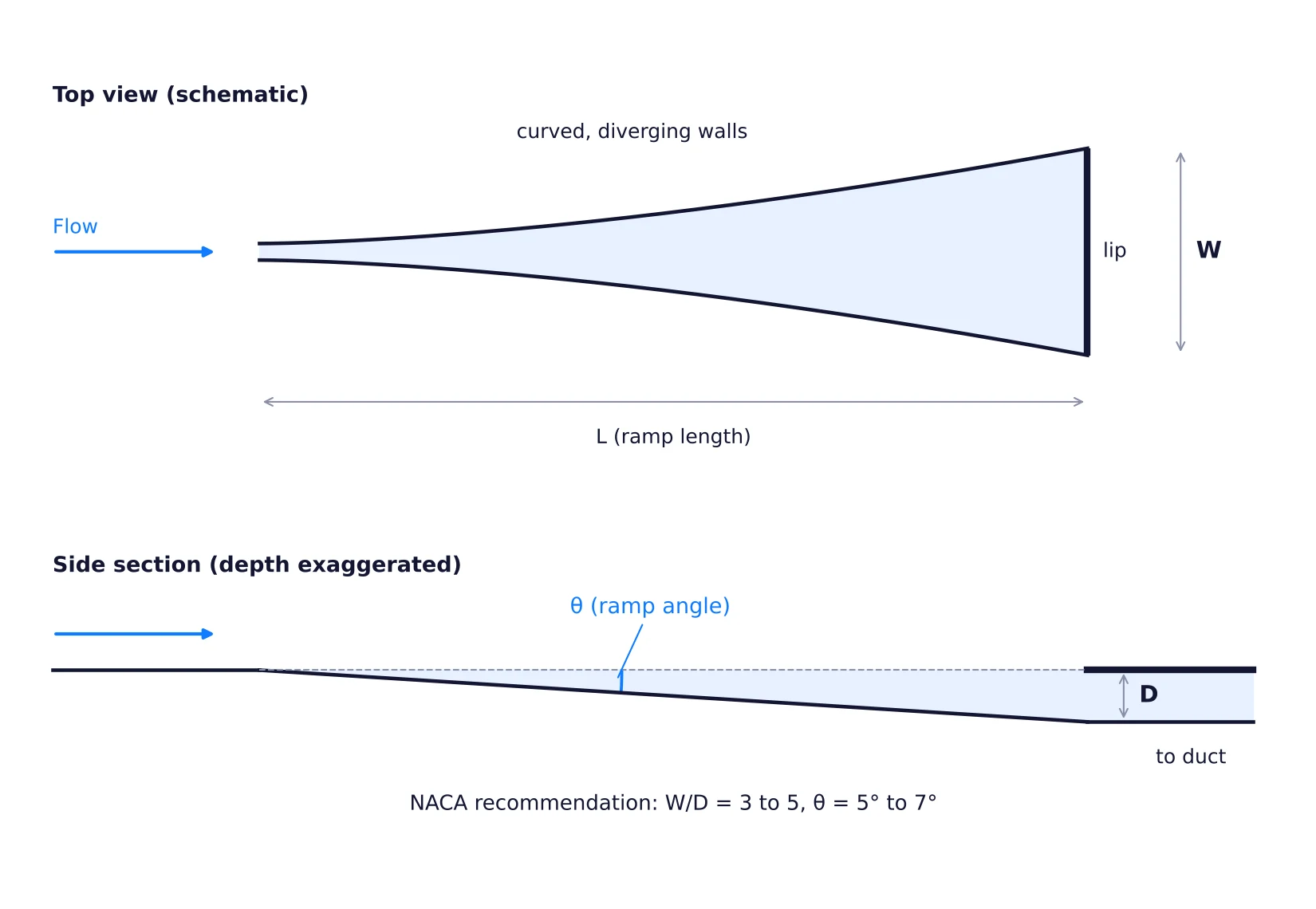
What is a NACA duct? How it works, design rules and CFD
How a NACA duct pulls air through a flush inlet, the original NACA rules for width, ramp angle and walls, and how to test a duct with CFD.

Peter Selmeczy
November 27, 2026
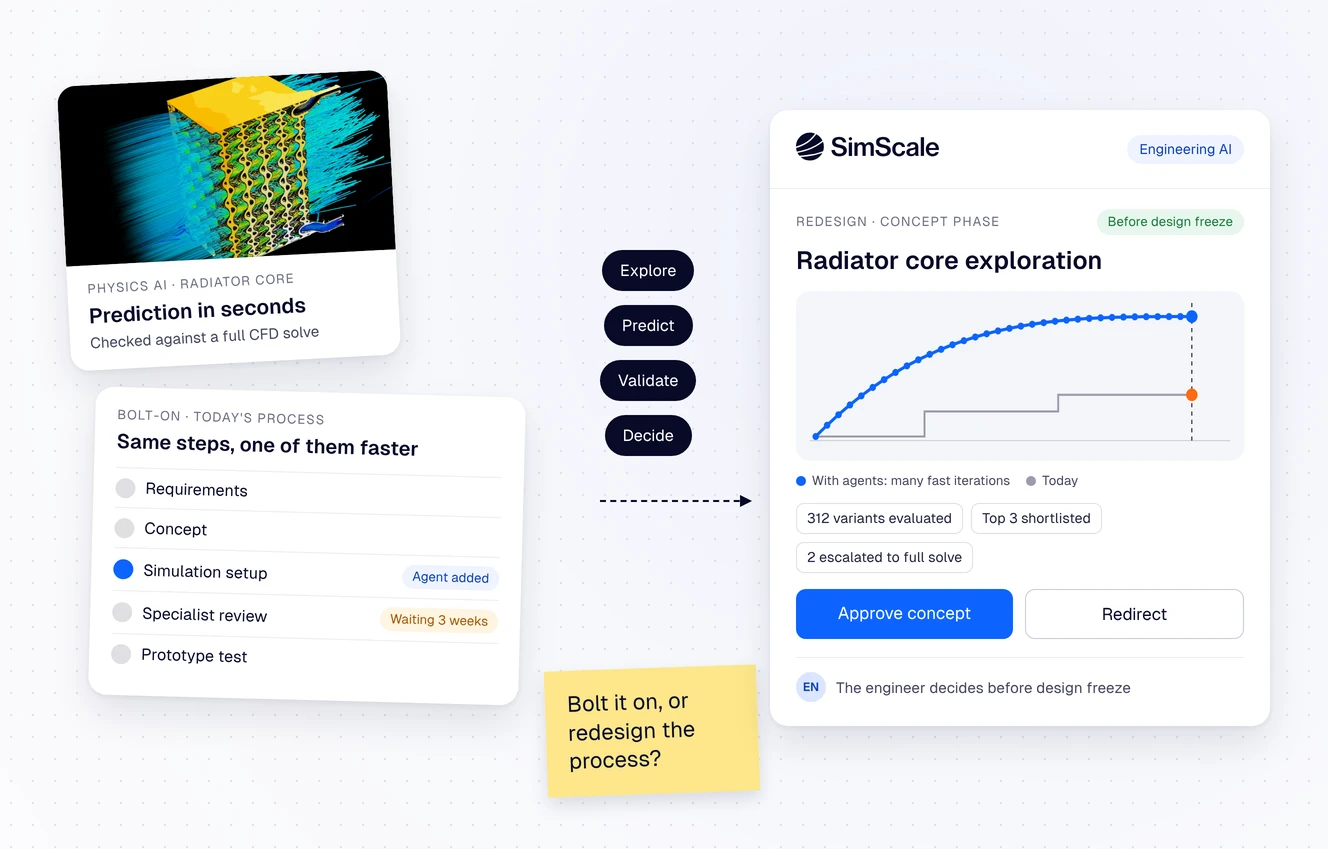
AI in product development: bolt-on or redesign?
Siemens, NVIDIA, Capgemini and Dolphin on whether AI should bolt onto your product development process or redesign it, and how to choose.

Alex Graham
November 27, 2026
AI implementation in engineering: how to scale from pilot to production
A 6-step AI implementation roadmap for engineering teams, built from what Capgemini, Siemens, NVIDIA, Dolphin and others shared at Agentic Unlocks 2026.
Peter Selmeczy
November 27, 2026

Luis Goncaves
August 4, 2026
Luis Goncaves
June 18, 2026
Luis Goncaves
January 27, 2026

Taylor Keen
November 23, 2026

Steve Lainé
October 28, 2026
Steve Lainé
October 9, 2026


Peter Selmeczy
July 9, 2026
Peter Selmeczy
March 24, 2026

John Webster
November 27, 2026
Peter Selmeczy
November 19, 2026
Serpentine, parallel-channel, pin-fin, microchannel, manifold microchannel, and lattice-structure cold plates. CFD, CHT, and structural FEA run in one project on the same geometry.
Onshape, SolidWorks, CATIA, and STEP imports land directly in SimScale through the browser. Geometry updates re-run automatically against your saved simulation setup, so iterations don't lose progress.
Yes. Run incompressible CFD with custom fluid property tables for water-glycol, dielectric fluids, and refrigerants. Two-phase analysis covers boiling and immersion-cooling scenarios with temperature-dependent properties.
Run a single CHT analysis with all parallel channels resolved and post-process flow rate and outlet temperature per channel. Sweep manifold geometry to balance distribution before tooling commits the plate.
Sign up for free, open a public cold-plate project, and run your first simulation within an hour. Real-time support sits in the project for setup, meshing, and solver questions.