-
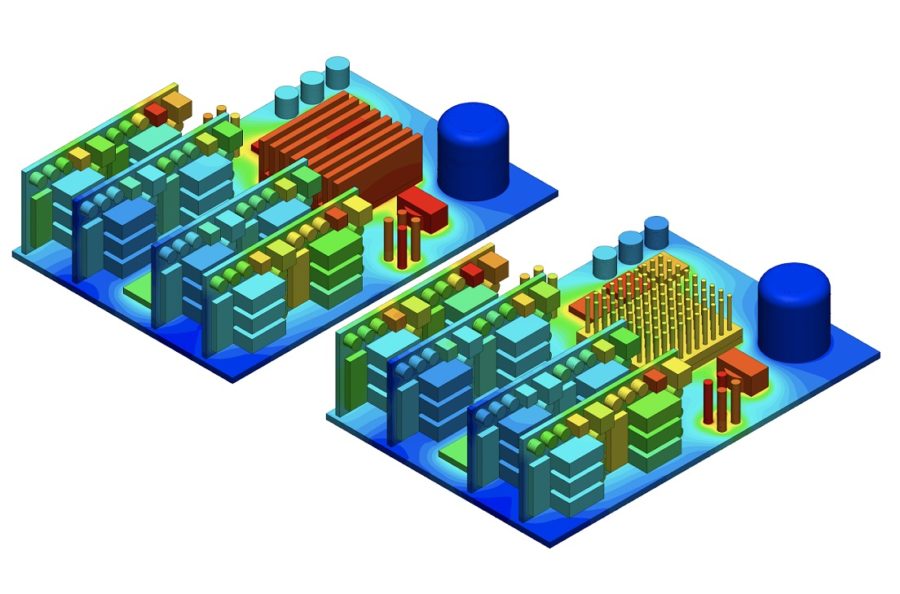
Thermal Design for Electronics with Cloud-Based Engineering Simulation
The miniaturization of electronics is creating new challenges in the thermal design of electronic components. Read this article to learn how to use cloud-based engineering simulation to ensure their thermal performance. (infographic included)
-
How Virtual Prototyping Can Benefit Your Product Design Process
Many product designers still cling to Excel spreadsheets and physical prototypes for testing. Here's why you should integrate virtual prototyping into your workflow.
-
Validating Passive Ventilation in Building Design with Fluid Flow Simulation
Passive ventilation is becoming increasingly popular in building design. But how can you validate your design decisions and accurately predict the thermal comfort and indoor air quality? Carrying out a fluid flow analysis might be the answer.
-
CFD Simulation for Architecture, Engineering and Construction (AEC)
CFD holds great promise for the AEC industry, enabling engineers to optimize the performance of buildings—download the infographic to learn more!
-
How to Reduce Data Center Power Consumption With CFD
In 2016, global data centers used roughly 3% of the total electricity, and this consumption is expected to double every four years. This trend is a cause for concern, and reducing data center power consumption is becoming one of the most pressing issues for data center operators and engineers to address.
-
Learn to Solve Fluid Flow Problems with SolidProfessor and SimScale
This new course, offered by SolidProfessor and SimScale, aims to help you get started on your journey to learn the theory and practical applications of CFD.
-
Fluid Dynamics: What is Static Pressure?
The term static pressure is widely used for many applications within fluid dynamics and thermodynamics, ranging from aerodynamics to plant design. Read this article to learn more about it.
-
Pedestrian Wind Comfort Validation: SimScale CFD vs. Wind Tunnel Experiments
CFD simulations are widely used for the prediction and assessment of pedestrian wind comfort and building aerodynamics. But to have full confidence in the results, extensive verification and validation are necessary. We used experimental data from the AIJ to validate the wind analysis data gained from SimScale.
-
Green Building Design: How to Obtain LEED Certification with CFD
CFD simulation can be highly beneficial for green building design projects and LEED certification, where sustainable design, optimized energy performance, and air comfort play a crucial role. Read this article to learn more.
-
What Is the Venturi Effect?
What is the Venturi effect, and what applications can it be used for? This article explains the Venturi effect and its applications. See how fluid dynamics simulations can help analyze it in wind engineering.
-
Engineering Consulting Services vs In-House Simulation: Which Is Better?
As more companies embrace CAE, they need to carefully consider what resources they have in-house, and which functions they may need to outsource to a consultant. Here are the factors you need to consider before choosing to buy the simulation software or using engineering consulting services for CFD or FEA.
-
How To Comply With EN 15251 and EPBD – Thermal Comfort & More
The indoor environment of any building determines the health, productivity, and comfort of its occupants, making thermal comfort a critical factor in HVAC design. Complying with different thermal comfort standards such as EN 15251 and with the EPBD has become a lot easier since the emergence CFD simulation technology.