Cold Plate Simulation
Design liquid cold plates that hit thermal targets without pressure-drop penalties
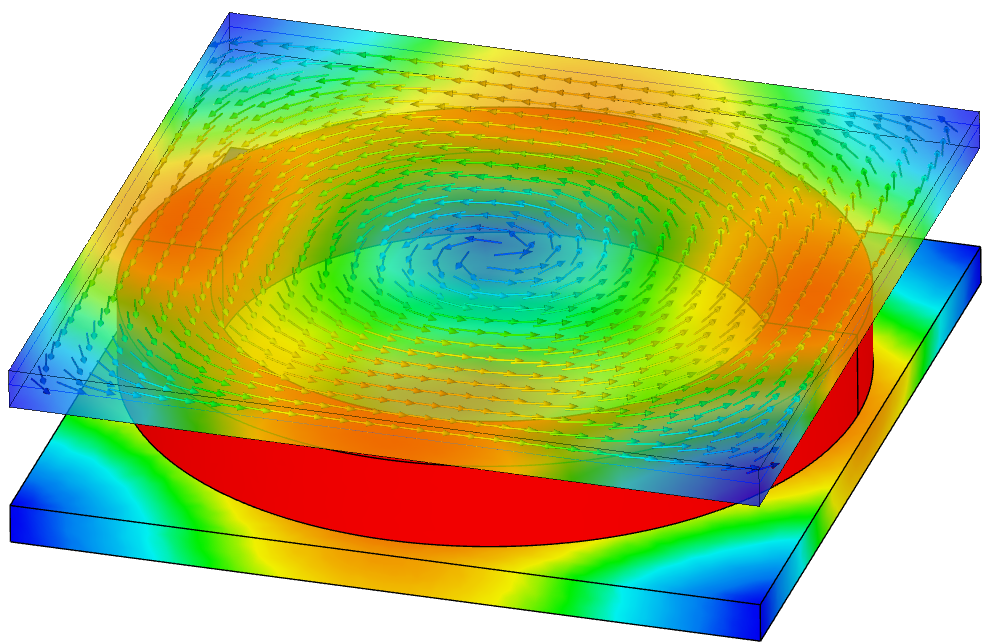
SimScale runs conjugate heat transfer and CFD on cold-plate geometries for EV batteries, power electronics, inverters, and HPC servers in a cloud-native browser-based platform. Sweep channel layouts, coolant choices, and manifold designs in parallel without on-prem HPC.
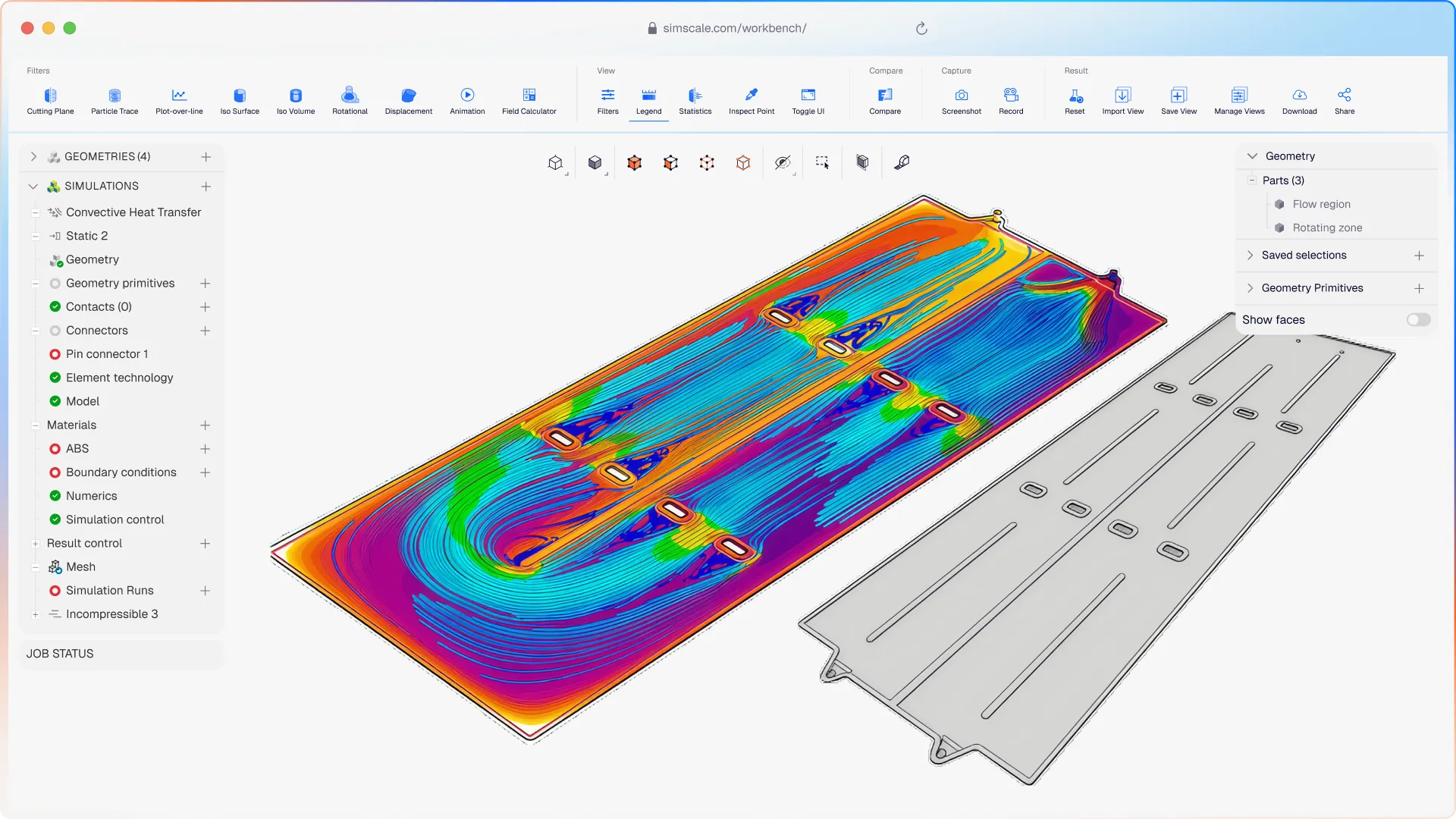




Cold plate performance hinges on flow distribution. Uneven coolant flow leaves hotspots that hand calculations miss. SimScale lets teams predict cell temperatures, pressure drop, and flow distribution across designs before any plate is machined.
Cold plate simulation that covers your full design challenge
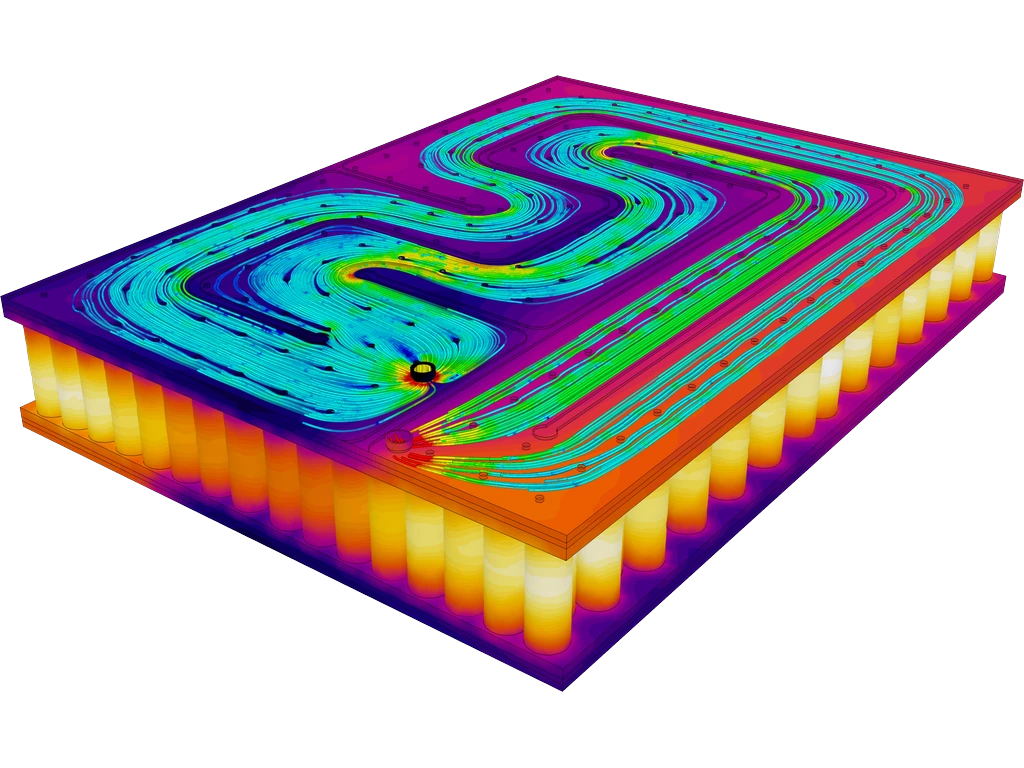
All physics, one platform
Cold plates fail in coupled domains — a poorly distributed flow leaves hotspots, hotspots warp the plate, warpage opens a leak path. SimScale couples CFD, conjugate heat transfer, and structural FEA on the same geometry: one mesh, one results store. Validate flow split, temperature rise, channel deformation under pressure, and brazed-joint integrity in a single project.
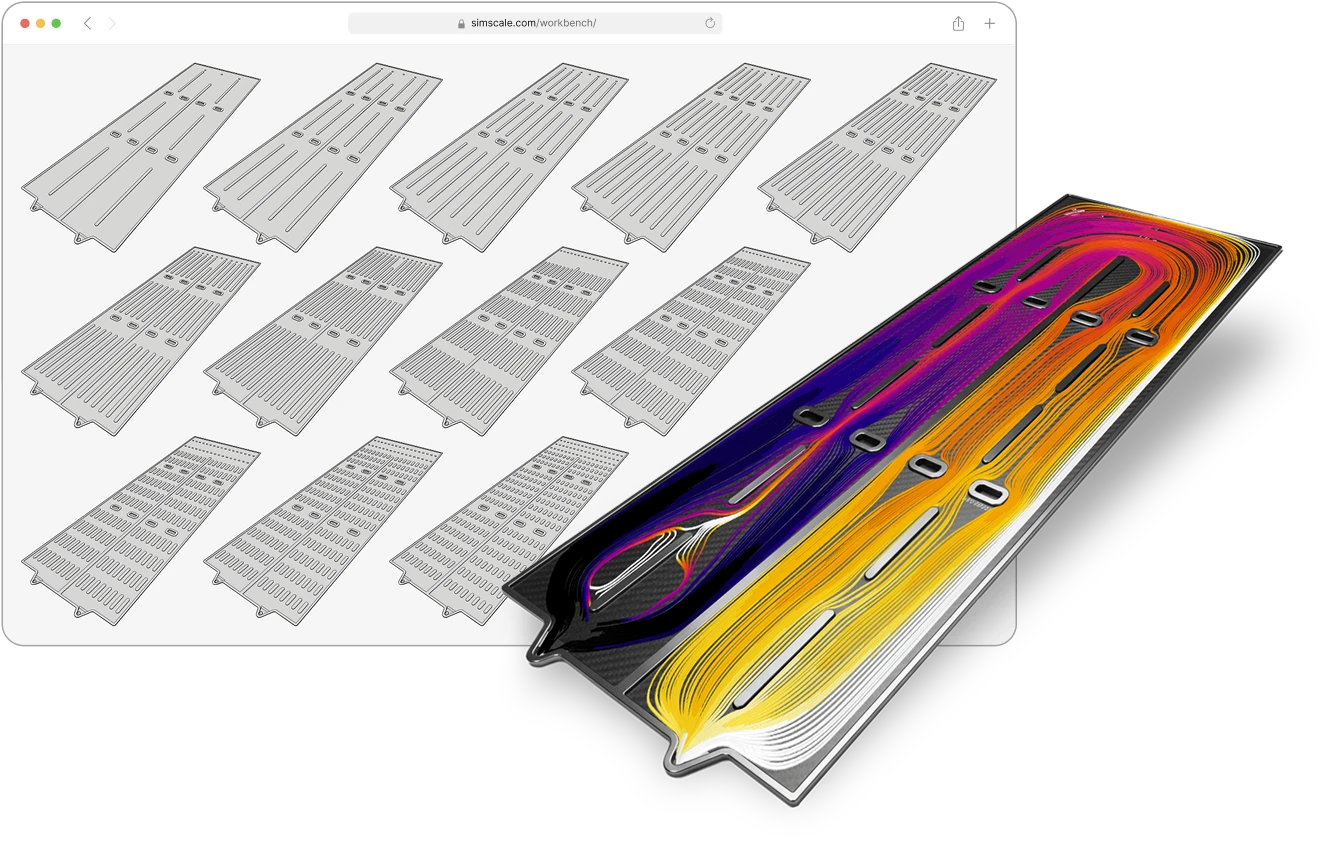
AI-native cold plate design optimization
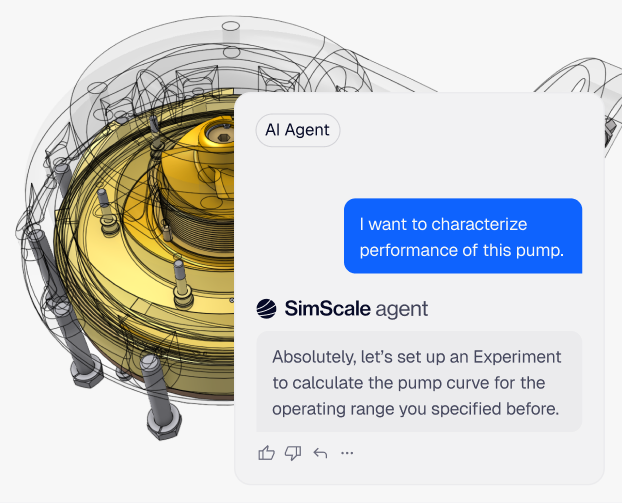
Physics AI delivers near-instant predictions on channel geometry sweeps. Explore serpentine, parallel, and pin-fin topologies in seconds, then promote the strongest candidates to full CHT before committing to tooling.
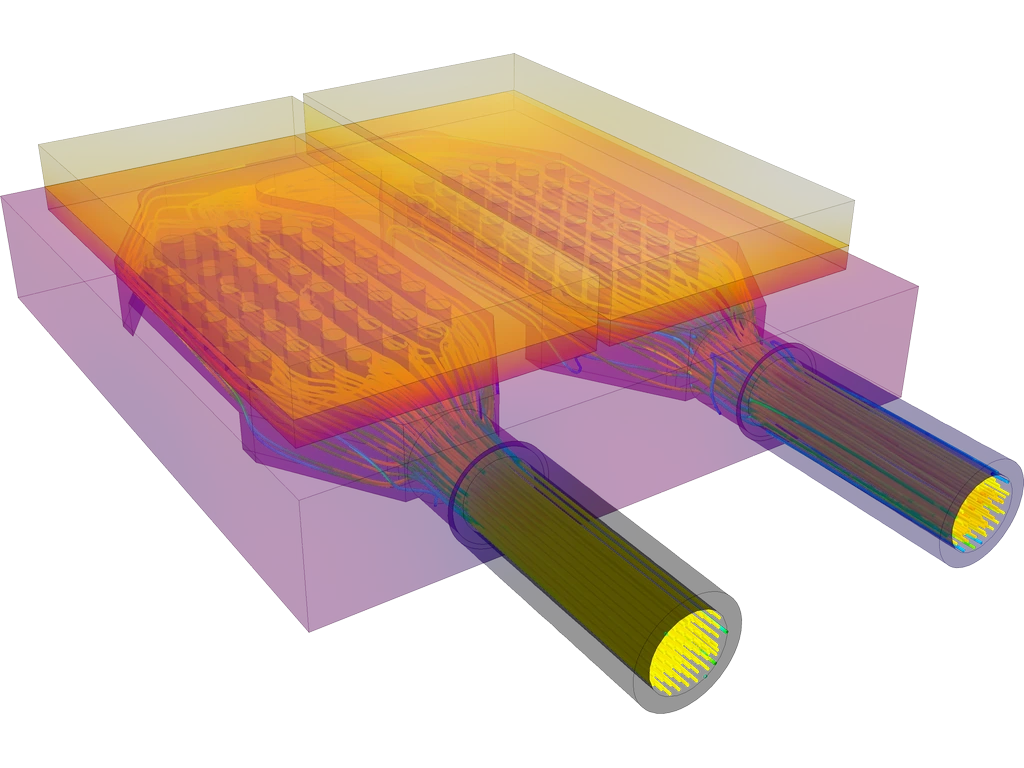
Cloud-native scale: more variants, faster
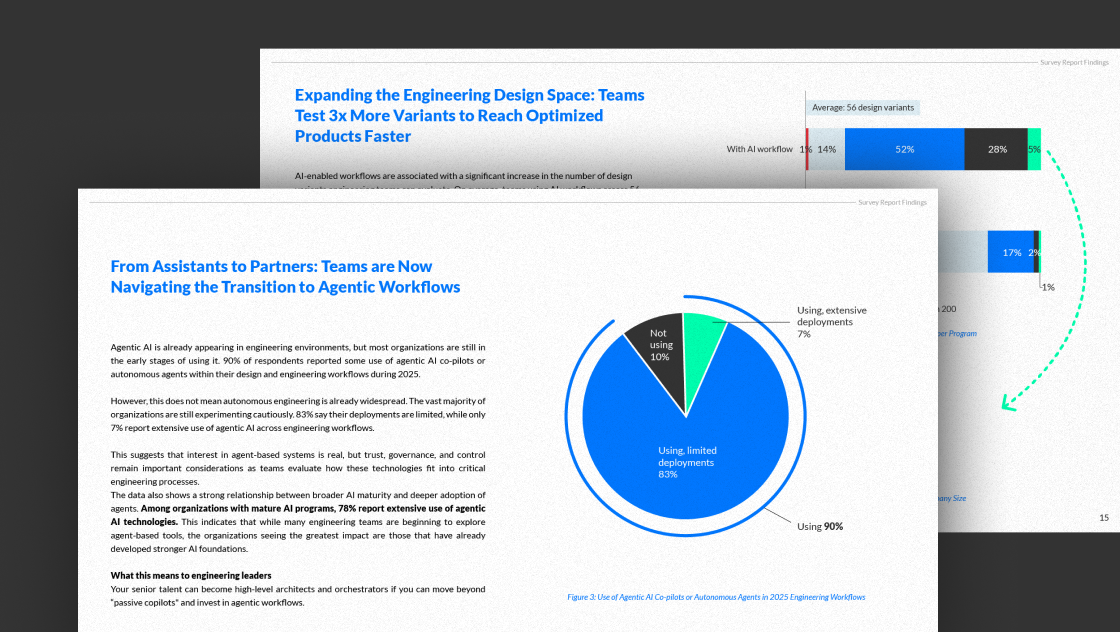
No on-prem HPC, no VPN, no licence ceiling. Elastic compute scales per project so a battery team can sweep hundreds of channel layout variants in parallel — without queuing for shared hardware.

Channel layout and topology optimization
Compare serpentine, parallel, pin-fin, microchannel, and lattice-structure topologies for uniform flow and thermal distribution. Predict pressure drop, dead zones, and cell-to-cell temperature variance across drive cycles. Validate manufacturability against thermal performance trade-offs before additive manufacturing.
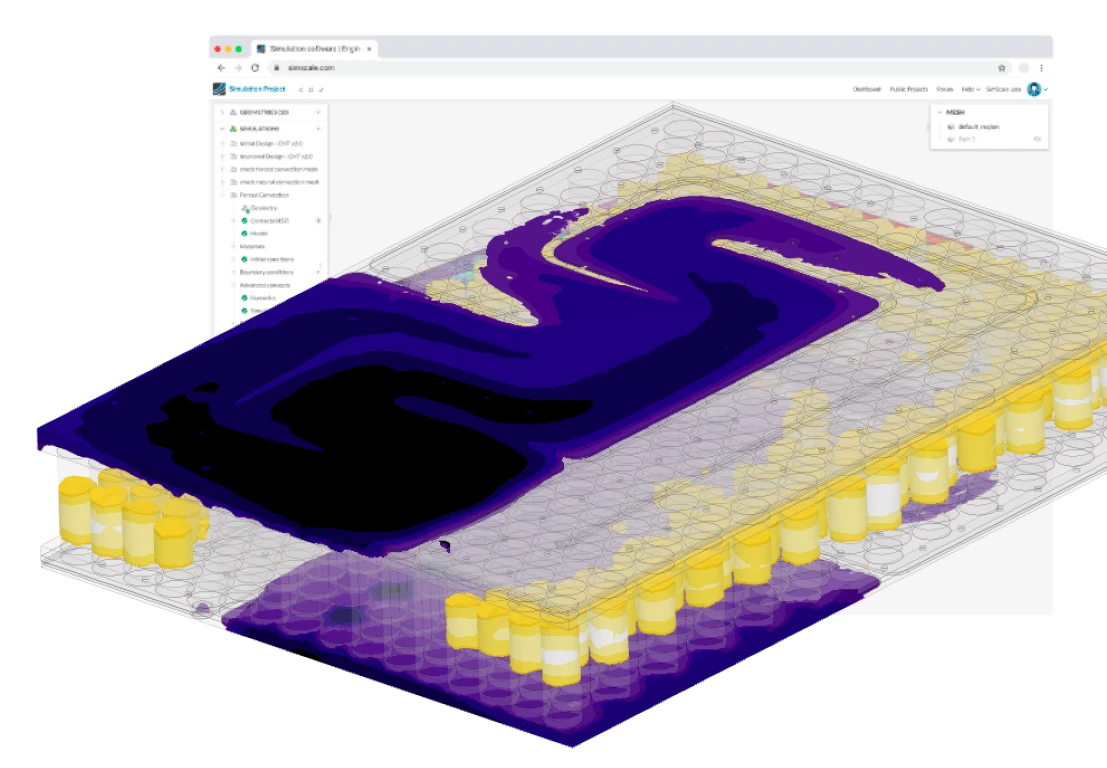
EV battery cold plate sizing and validation
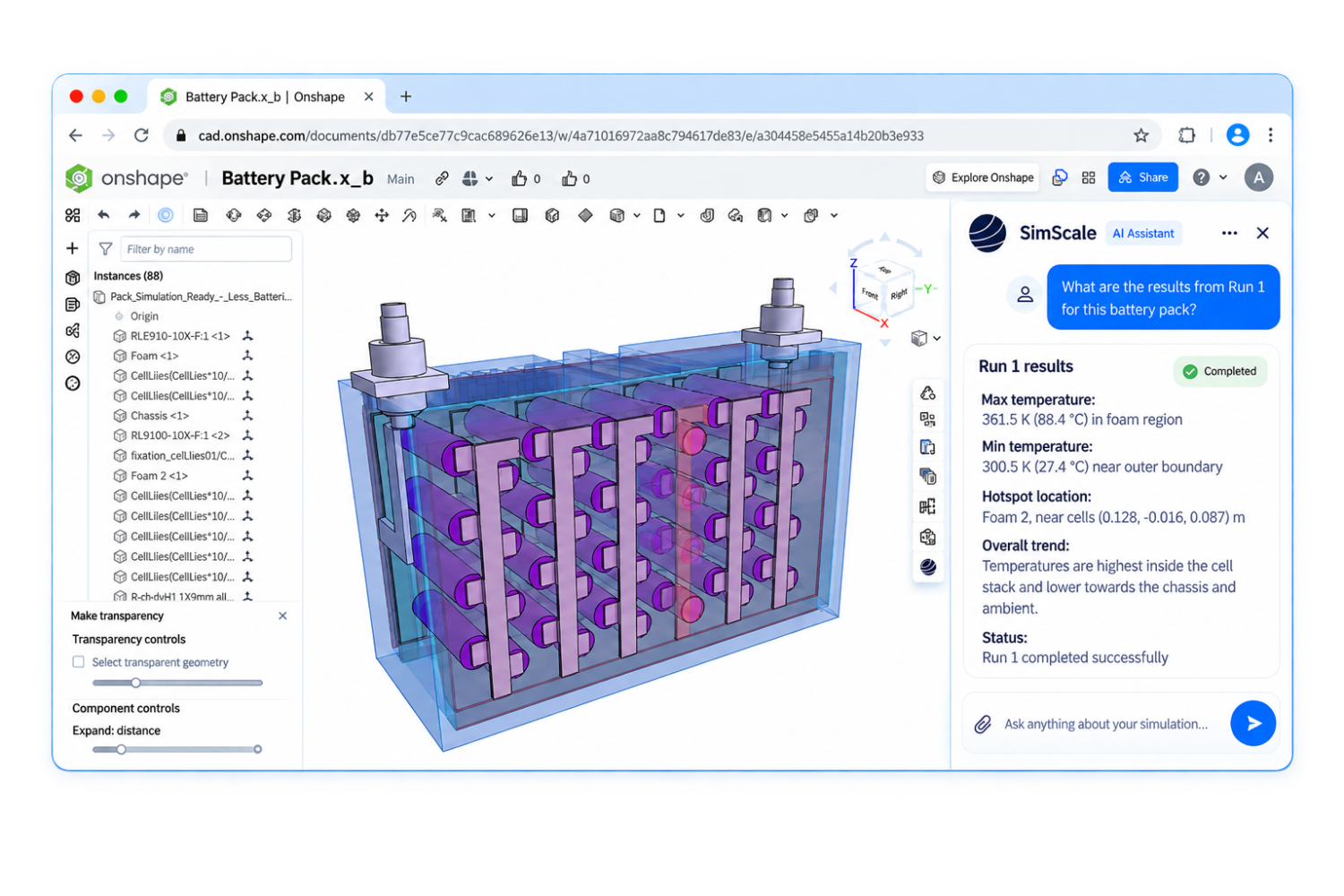
Predict pack-level cooling performance across charge and discharge cycles. Validate cold-plate placement under prismatic, cylindrical, and pouch cell architectures.
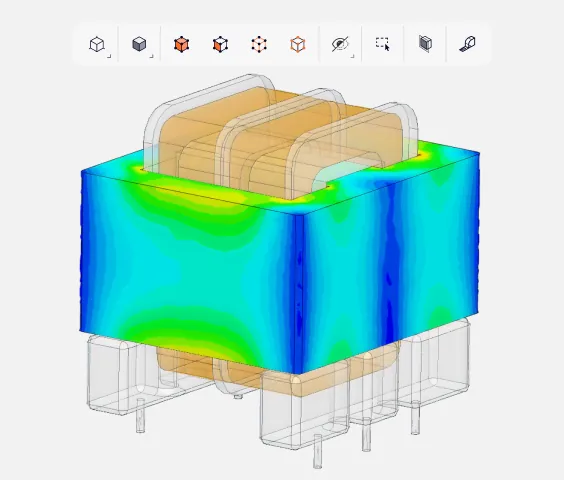
Power electronics and inverter cooling
Design cold plates for SiC and GaN inverters, IGBT modules, and motor drives. Map junction-temperature hotspots to cold-plate channels and resize fins or flow rate to hit thermal limits.
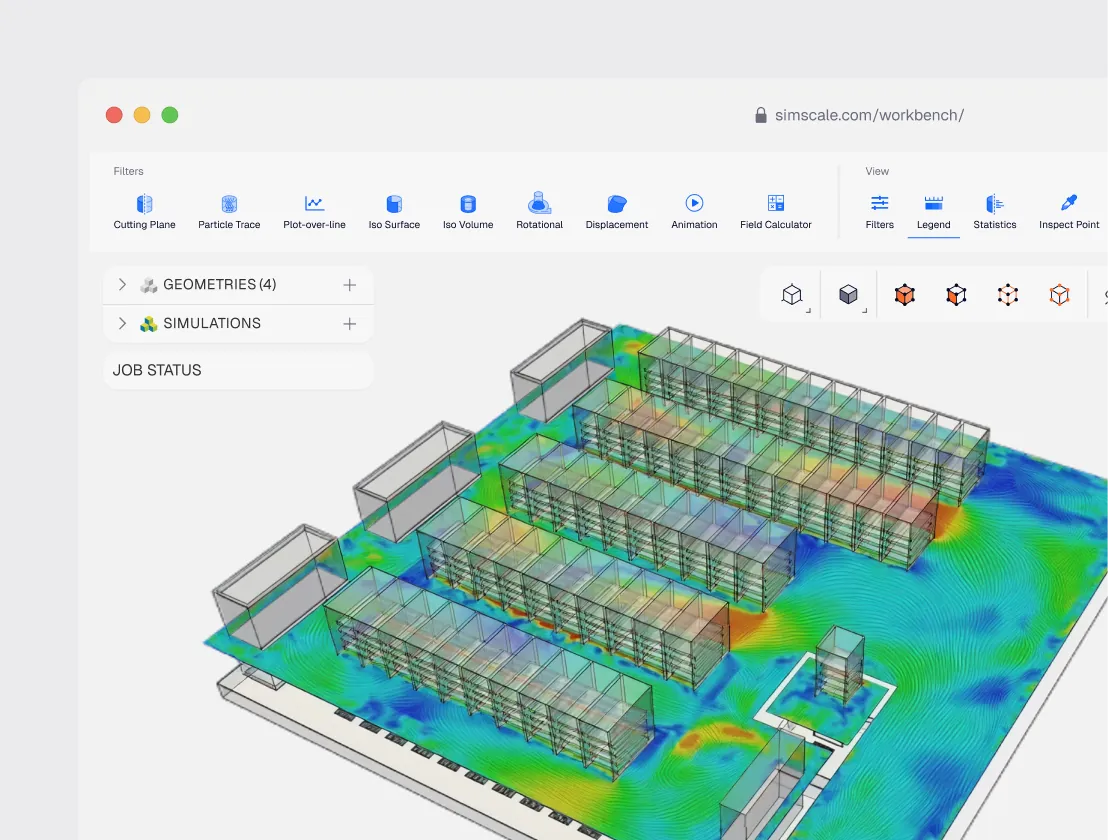
Data center and HPC cold plate design
Direct-to-chip liquid cooling for CPU, GPU, and server rack applications. Validate rack-level thermal architectures and coolant distribution before deployment.
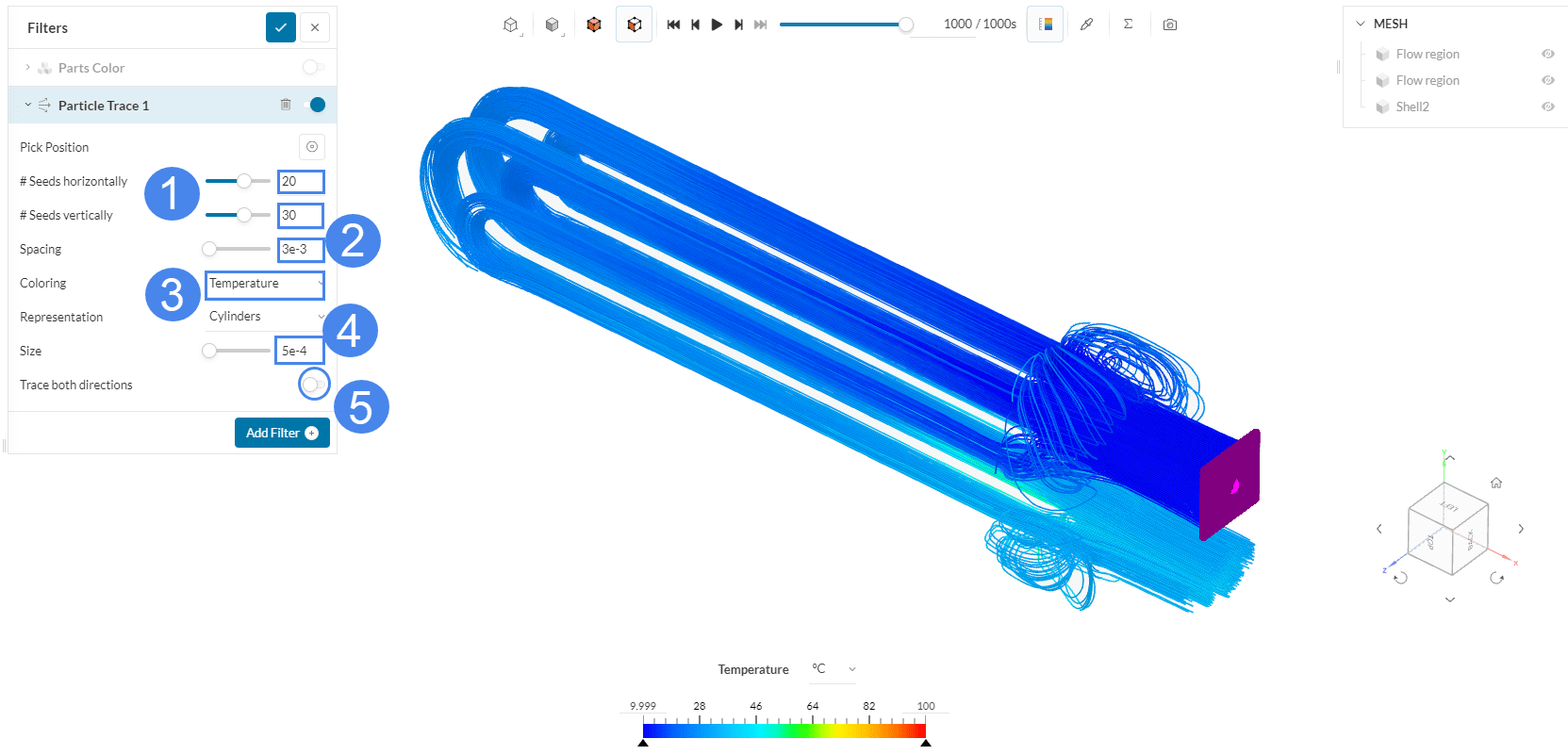
Coolant selection and dielectric immersion
Compare water-glycol, dielectric fluids, and two-phase coolants with their property dependencies. Run parametric sweeps on coolant temperature and flow rate to find the operational envelope that meets thermal targets at acceptable pumping power.

100+
compared in CHT
“Bold has been able to provide valuable solutions to our high-end motorsport customer using conjugate heat transfer simulations, that would have not been possible with other software due to cost and computational resources required. The SimScale team has been very helpful every step of the way.”
Bernat Carreras, Director Bold Valuable Technology

11%
temperature reduction on heat-sink unit
“The final iteration reduced temperatures in all areas of the device and peak temperature from 109℃ down to 104℃ inside the transformer and from 80℃ down to 71℃ inside the heat sink. The proprietary design has advanced to the tooling stage.”
Davis Tolley, Product Design Engineer at Cobalt Design

100+
simulation runs on EV battery and server cooling
“This pushed the team at Forwiz to start conducting CAE simulations, leading them to SimScale’s cloud solution. The results from the simulation gave the team insights into the parameters to be optimized, ultimately facilitating discussions with future clients on proposed concepts.”
Seongsu Park, Researcher at Forwiz System Co., Ltd
Related resources
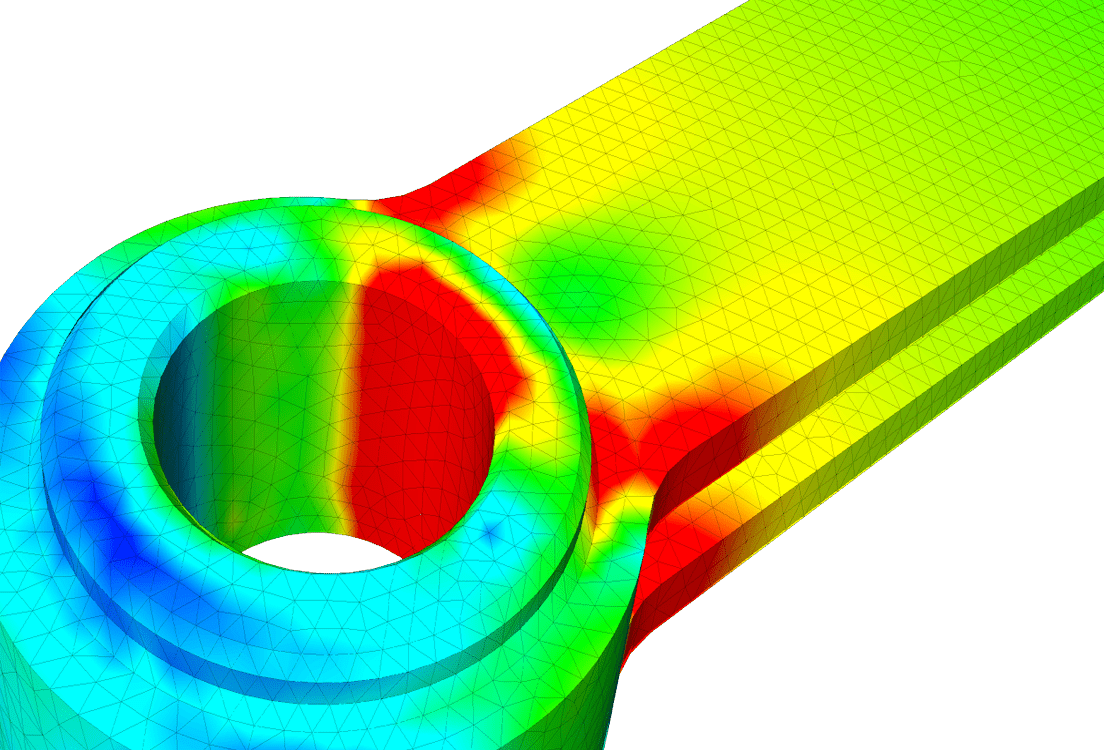
FEA basics: How to learn finite element analysis as a beginner
FEA basics for beginners: how finite element analysis works, stress and strain, use cases and industries, plus a learning path with books, courses, and validation cases.

Guillermo Giraldo
October 3, 2026
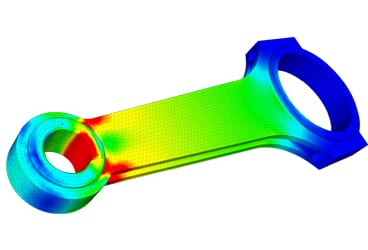
What Is FEM? The Finite Element Method and FEA Explained
What the finite element method is, how FEM differs from FEA, the PDEs and weak form behind it, discretization, solvers, and FEM variants.

Peter Selmeczy
October 2, 2026

Agentic Unlocks recap: 6 lessons from companies putting AI agents to work
Highlights from Agentic Unlocks: engineering leaders from Capgemini, Siemens, NVIDIA, Convion and more on moving AI from pilot to production.

Alex Graham
October 1, 2026



Luis Goncaves
August 4, 2026
Luis Goncaves
June 18, 2026
Luis Goncaves
January 27, 2026

Steve Lainé
October 9, 2026

Peter Selmeczy
September 28, 2026
Alex Graham
September 15, 2026
Peter Selmeczy
July 9, 2026
Peter Selmeczy
March 24, 2026

Peter Selmeczy
September 10, 2025
Peter Selmeczy
September 23, 2026

jwebster
September 15, 2026
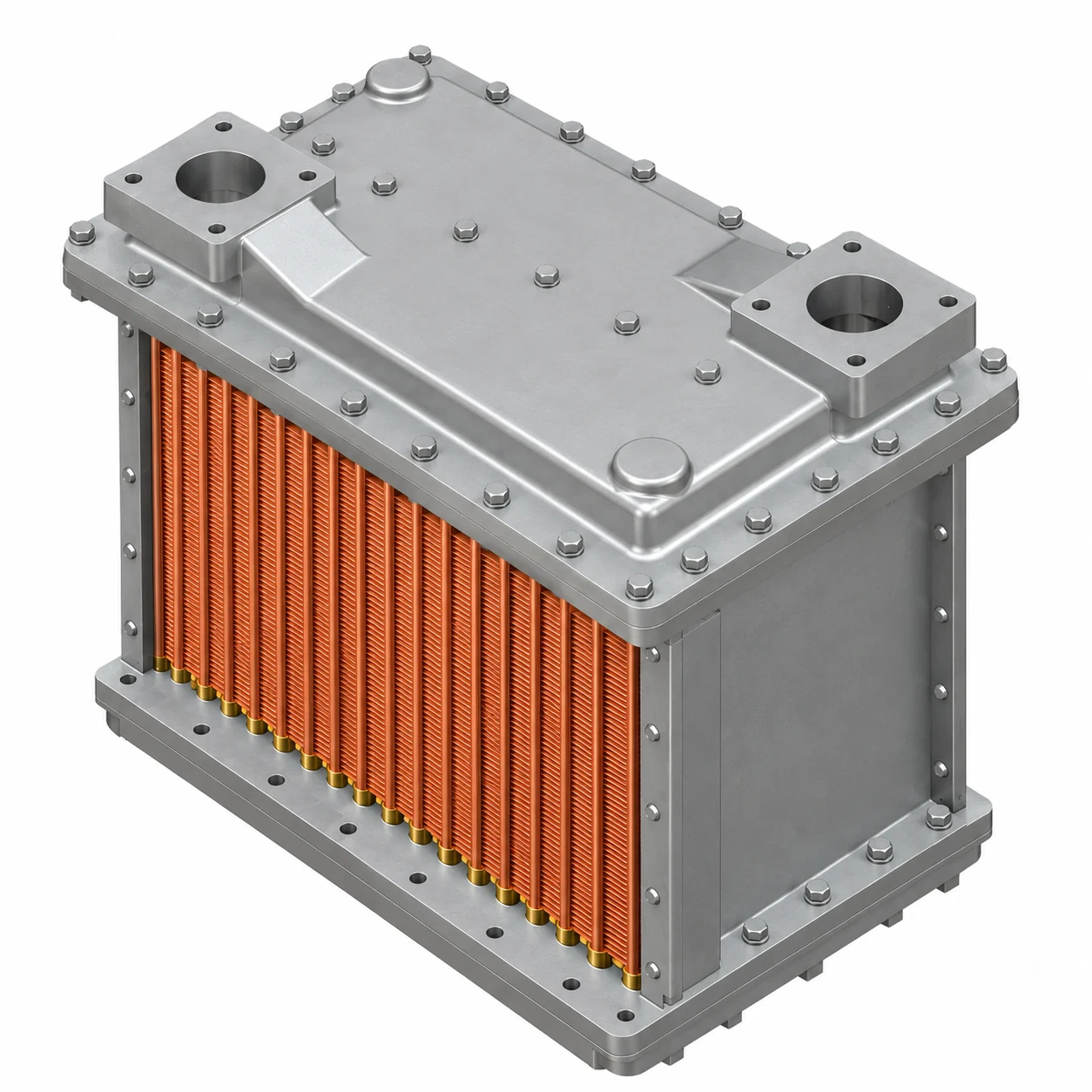
Serpentine, parallel-channel, pin-fin, microchannel, manifold microchannel, and lattice-structure cold plates. CFD, CHT, and structural FEA run in one project on the same geometry.
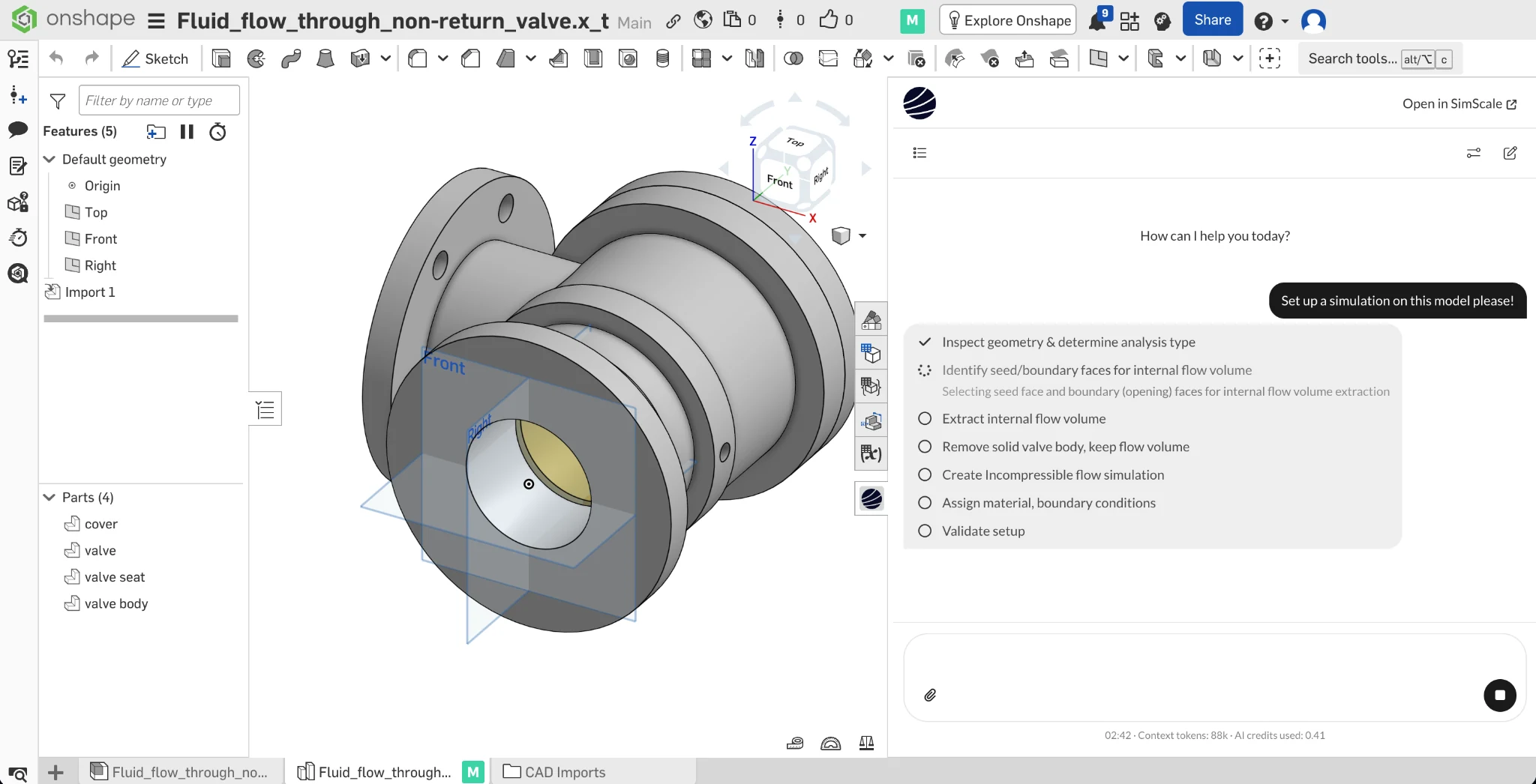
Onshape, SolidWorks, CATIA, and STEP imports land directly in SimScale through the browser. Geometry updates re-run automatically against your saved simulation setup, so iterations don't lose progress.
Yes. Run incompressible CFD with custom fluid property tables for water-glycol, dielectric fluids, and refrigerants. Two-phase analysis covers boiling and immersion-cooling scenarios with temperature-dependent properties.
Run a single CHT analysis with all parallel channels resolved and post-process flow rate and outlet temperature per channel. Sweep manifold geometry to balance distribution before tooling commits the plate.
Sign up for free, open a public cold-plate project, and run your first simulation within an hour. Real-time support sits in the project for setup, meshing, and solver questions.