-
Designing a Safety-Critical Device Using FEA with SimScale
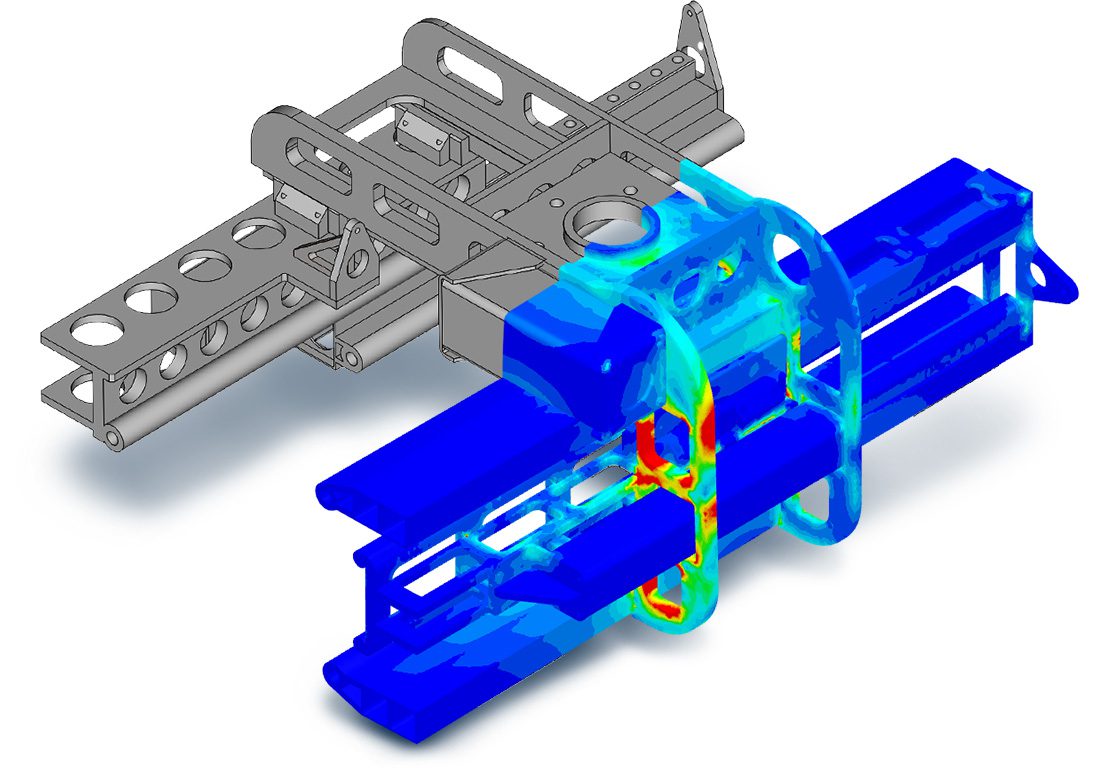
A structural analysis for a safety-critical device was carried out on SimScale for a professional consultancy project. Discover its results.
-
The Power of Cloud-Based Finite Element Analysis Software
Discovering the power of web-based finite element analysis software through a case study. Simulation performed with SimScale, 100% in the cloud.
-
Structural Analysis Software Without a Large Investment in Hardware
This article explains the benefits of cloud-based structural analysis software for testing and optimizing designs without a large investment and no need for special computers.
-
Engineering Consultant? There’s Something You Need To Know
Being an engineering consultant is a job that many of us perform with passion. We do it because we like the new challenges and problems that every project brings. As engineers, we thrive on the constant process of learning and improving, and we pride ourselves on bringing excellent results to our customers. Part of this…
-
Where to Place Ventilation for Maximum Comfort in a Building
In general, human comfort in homes, offices, commercial spaces, theaters, and other buildings is one of the most important goals in building design and HVAC. Several studies have revealed that the proper placement and setting of room ventilation has a great effect on human cognitive performance and focus. Therefore, one of the current engineering challenges…
-
Formula Racing Miskolc Unveils Aero Package Design with SimScale
Formula Racing Miskolc is a student-organized Formula Student Team from the University of Miskolc in Hungary. Founded just 4 years ago, the team has already built three cars, with a constant focus on improving their design. This year, the team’s goal was to design an aero package for their 2017 vehicle, a first in the team’s history.…
-
Thermal Packaging for Cold Chain: Insulated Shipping Box Design
Imagine a world where you are limited to food that is grown locally. Until the late 1800s—before the invention of the refrigerator truck—products couldn’t travel far before spoiling. Sophistication is an integral part of today’s transport refrigeration units, which are shipping over 36 million loads of refrigerated products annually, worldwide. To preserve perishable goods on the long…
-
The CFL Condition and How to Choose Your Timestep Size
Everything about the CFD condition (Courant–Friedrichs–Lewy), for stability of unsteady numerical methods that model convection or wave phenomena.
-
Air Conditioning Design: Improving Server Room Cooling
As an HVAC engineer, you routinely go through the process of analyzing the designs being forwarded to you from the design department. Imagine having a Eureka moment! You think of a novel air conditioning design that would significantly enhance the overall performance, with just a minor design change. Here comes the real challenge—how would you convince…
-
Truck Design: 3 CFD Simulations for Improving Truck Aerodynamics
Truck design is an area where engineering simulation can be used extensively. Performed for virtually testing different vehicle components, as well as the entire truck aerodynamics, FEA and CFD simulations are essential in this industry. Engineering Simulation in Automotive The largest automotive manufacturers use engineering simulation software as a mandatory tool in their design processes.…
-
How to Improve Indoor Air Quality for Your Designs with CFD
In the early days of construction, wind tunnel tests were the standard method for investigating the indoor air quality (IAQ) of industrial and commercial buildings, hospitals or laboratories. With the advent of computer-aided engineering (CAE), advanced tools—particularly CFD—have become the principal method to quickly and effectively resolve these issues. CFD now plays an important role in…
-
Tank Farm Wind Load Analysis using Computational Fluid Dynamics
Wind load is one of the main concerns in construction codes. In addition to gravitational loads, earthquakes, and other factors, wind gusts-induced loads can be key factors that cause failure in structures. These failures are mostly due to lateral forces, induced turning moments, and pressure/suction on roof and walls, all of which deviate from the…