
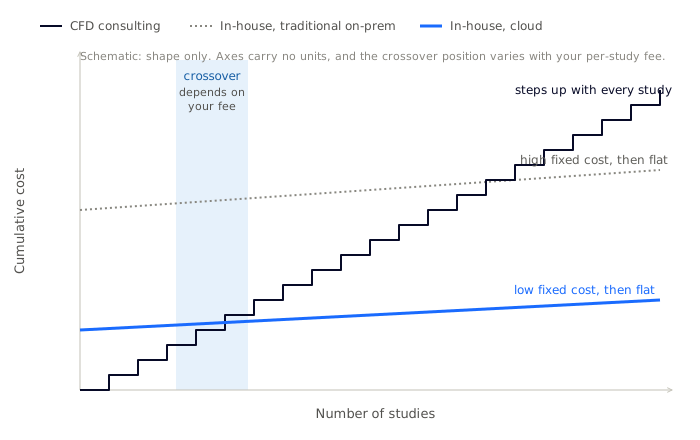
Buying CFD from a consultancy works well until the volume picks up. Each study carries a fee and a lead time, so teams commission the analyses they can justify and let the smaller design questions go unanswered.
That rationing usually decides the outsource-or-build question, more than the headline rate on either quote. The studies a team chooses not to run never appear in the comparison.
Working out your own crossover takes one division: annual platform cost divided by your average fee per outsourced study. Published customer figures put that fee in the tens of thousands per project, so the ratio is worth checking before renewing a consulting arrangement.
The comparison most teams run
Framed as a cost comparison, outsourcing wins nearly every time. That’s why many engineering organizations have run on consultants for years without revisiting the decision.
A consulting engagement has a defined scope and a fee that fits a budget line. No hiring, no software, no infrastructure, no ramp-up.
An internal capability means software, compute, and someone who can drive it. Bigger commitment, harder to justify against one project.
The cost that appears on neither quote
Per-project pricing rations simulations, and the unasked questions carry the real cost. Not a policy decision, just ordinary judgment about budget and schedule.
An engineer with a design question has to weigh whether the answer justifies a scoping call, a purchase order, and a two-week wait. Usually it doesn’t, so the decision gets made on experience instead. That’s normally fine. Occasionally it’s a design that reaches tooling with a problem in it.
An unevaluated variant never appears in a budget. It surfaces later as a late design change, a warranty claim, or a product that performs adequately when it could have performed well.
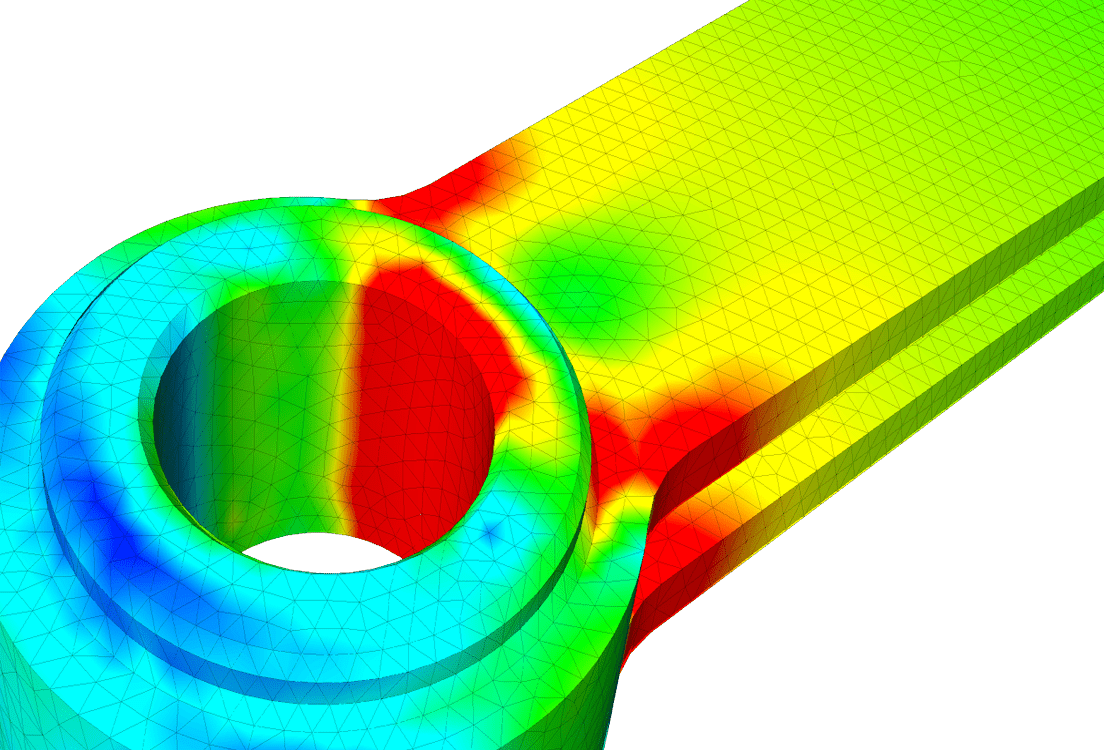
Harcourt Industrial, an aerospace tooling supplier, describes the trade-off plainly. With FEA outsourced at tens of thousands of dollars per project, the team committed to a design after 1 or 2 iterations and built in extra margin so a fixture would pass verification first time. A sound call given the constraints, and one that carried material cost into each unit. With the analysis in-house they had room to test alternatives, and took 9% of material cost out of a fixture design.
Outsourcing sets a ceiling on how much your team is willing to learn about its own designs.
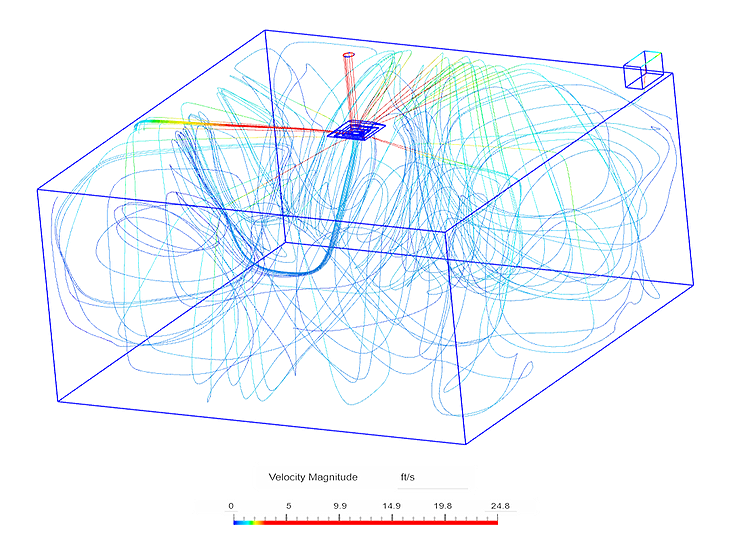
The ceiling also limits what a firm can offer its own clients. DMG designs data center cooling systems and used to buy CFD from specialist suppliers.

Katie Bahnck
Design Engineer at Design Management Group

“In the past, we have frequently outsourced computational fluid dynamics tasks to specialized companies. Due to cost constraints and project budgets, only a select few clients were willing to pay for the additional service.”
They brought CFD in-house and now report a 35% saving on labor costs per project against outsourcing, while extending the service to clients whose budgets never justified it before. The capped throughput was costing them revenue as well as engineering insight.
Where consulting is genuinely the right call
Outsourcing is the right answer in these cases, whatever your volume.
Specialized physics. Combustion, cavitating multiphase flow, aeroacoustics, reacting flows with detailed chemistry. These take years of specific experience. Hiring for them rarely makes sense unless they’re central to your product.
Independent verification. Some certification paths and customer contracts require analysis signed by a third party. An internal report doesn’t satisfy that, regardless of quality.
Genuinely rare work. One flow study to close out a design, with nothing similar expected for 18 months. Building a capability for that is waste.
Capacity spikes. A capable team is fully committed and a program can’t wait. Consultants absorb peaks well, and that’s a good use of them.
Speed to first result with no existing capability. Building takes months. Buying takes weeks. If the deadline is this quarter, that settles it.
Consulting handles work that is rare, highly specialized, or needs an outside signature. It works poorly as a substitute for everyday engineering capacity.
What three years of outsourcing does to an organization
You pay repeatedly for judgment you never own. A consulting engagement delivers a document; the reasoning stays with the consultant: why that modeling approach, why the mesh was refined where it was, which configurations were discarded and on what evidence.
Eighteen months later a different engineer hits a similar problem. They have the PDF. They don’t have the method. So you scope another engagement and fund the same judgment twice.
Internal work compounds instead. Every study leaves a setup, an approach, and a validated result the next engineer starts from. One is an operating expense, the other builds an asset on your team.
There’s a delivery-side benefit to owning the capability as well. When a study is cheap to run, more of the checking happens in the model rather than after commissioning.

Alex Meredith
Engineer at Aquabio

“One of the key benefits of having SimScale in-house is risk mitigation on our projects. In the past, we built and installed plants, and during the operation phase, we had issues of reactor tank mixing efficacy which lowered the overall efficiency and hence ROI of the plant. Mitigation was a huge cost that could take weeks of work to rectify. We can now confidently test various designs and operating modes at the simulation stage before we build anything.”
There’s a counterpoint worth taking seriously. Internal knowledge concentrates too. If one analyst owns every simulation and leaves, that loss can hurt more than a consultant relationship ending, because you believed you had the capability. Retention works only if the work lives somewhere the team can reach, which argues for shared platforms over individual workstations.
The comparison, side by side
Consulting wins on upfront cost. Cloud in-house wins on the dimensions that compound.
| Dimension | CFD consulting | In-house, traditional on-prem | In-house, cloud |
|---|---|---|---|
| Cost structure | Variable, per project | High fixed, low marginal | Low fixed, low marginal |
| Cost of the next question | Full project fee | Near zero | Near zero |
| Time to first result | Weeks, including scoping | Months, including procurement and training | Days |
| Turnaround per design question | Days to weeks | Hours to days, subject to queue | Hours |
| Effect on time-to-market | Adds scoping and wait cycles | Depends on internal capacity | Shortest loop |
| Simulations per quarter | Budget-capped | Capped by licenses and cluster | Run in parallel |
| Simulation timing in the design cycle | Late, validating a fixed design | Varies | Early, while geometry is still changing |
| Internal expertise needed | Enough to scope and interpret | Dedicated analyst | Guided workflows extend use beyond specialists |
| Where capability accumulates | With the supplier | With one or two specialists | With the team |
| Main watch-out | Dependency, capped throughput | Underused fixed investment | Lower: mainly how widely the team adopts it |
| Best fit | Rare, specialized, certification work | High-volume work, infrastructure already owned | Frequent studies, distributed teams, early exploration |
Why building in-house used to be a bad bet
Before cloud, in-house CFD took a year and a capital budget: a perpetual CAE software license, an HPC cluster, a dedicated simulation engineer, then months of ramp-up before results you’d stake a program on.
At that cost structure, only organizations simulating continuously could cross the break-even. Everyone else was right to outsource.
What changed
What changed is the fixed cost, not the consulting fee. The capability that needed a year and a cluster now needs a subscription and a few weeks, and it reaches the design engineers making decisions rather than one analyst validating them afterward. Three shifts did it.
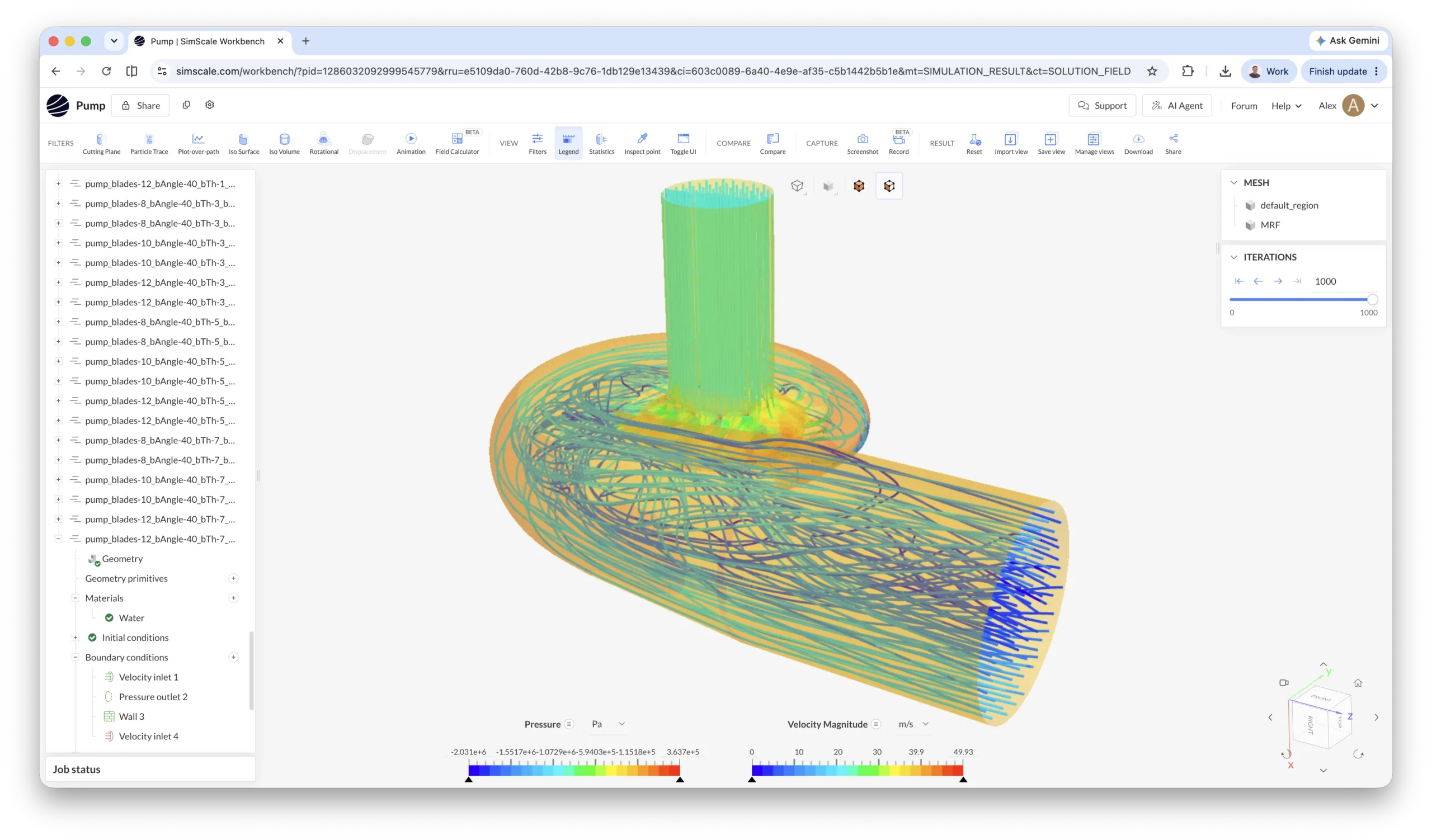
Compute stopped requiring hardware. Cloud-native simulation means paying for the simulations you run rather than provisioning for peak and idling the rest of the year. No cluster, no VPN, no remote desktop, no queue. The fixed investment that used to gate the decision is mostly gone.
Setup stopped requiring a specialist for every case. Engineering AI automates much of the manual work in simulation setup and encodes proven methods into reusable templates. A design engineer can run a credible standard study without first becoming a CFD specialist. Your specialists review and take the hard physics instead of building every case by hand, which is a better use of scarce expertise.
Solve time stopped gating exploration. Physics AI produces predictions trained on high-fidelity simulation data, so screening many design variants becomes practical and full solves get reserved for the candidates worth them.
See what in-house CFD costs when there is no hardware to buy
Talk to an engineer about your simulation volume and we will walk through the numbers with you.
What it looks like in practice
Every organization below moved CFD or FEA from an outside supplier to their own team.
- Aquabio was outsourcing CFD to consulting firms and now runs it internally early enough to use simulation while bidding for tenders.
- DMG reports a 35% saving on labor costs per project compared with outsourcing.
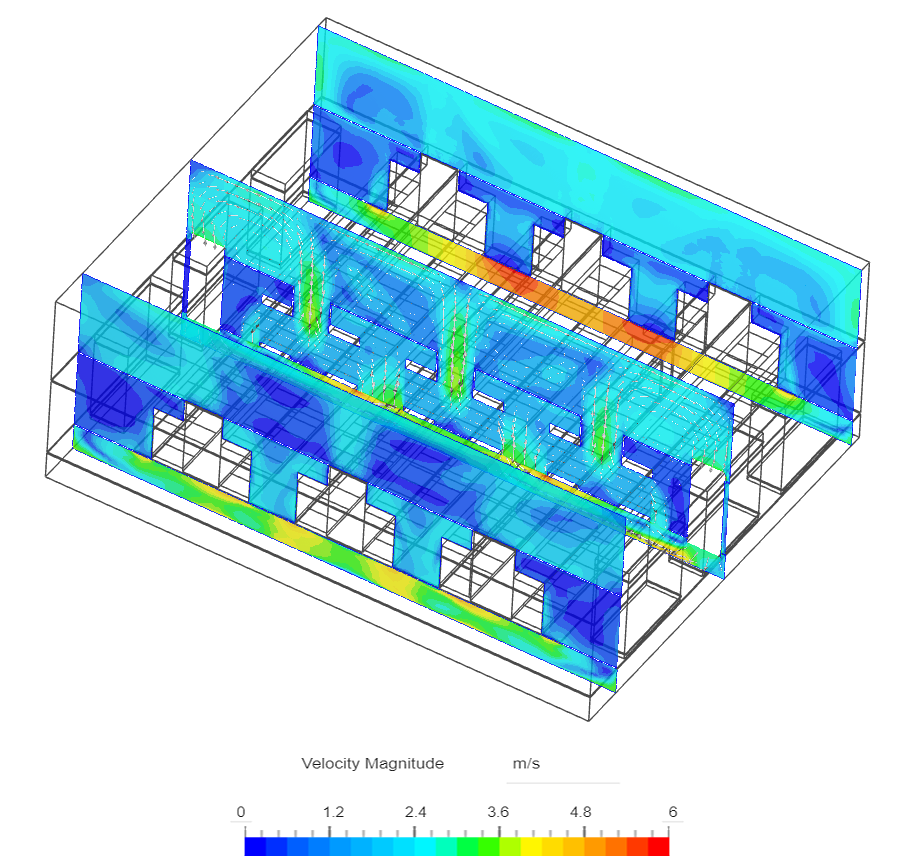
- EGO, the European Gravitational Observatory, saves an estimated 2 to 3 months of engineering time and tens of thousands of euros in consultancy fees on each cleanroom project.
- Harcourt Industrial replaced all outsourced FEA with an internal capability, reached full productivity in 60 days, then took 9% of material cost out of a fixture design.
- Europack moved from external consultants to in-house thermal simulation, evaluating 25 design variants where a climate chamber needed 3 to 4 days per test.
- Liljewall Arkitekter gets faster turnaround than external consultants and can now run analysis for competition bids on short deadlines.
- Coolrite used to outsource CFD modeling to a third-party consultant and puts payback at a few months.

Kenneth Barredo
FEA Engineer at Harcourt Industrial

“We no longer have to pay a company to run that analysis for us. We can do it internally and we are now using it heavily so we can explore every way to make sure we’re giving our customer the best product while minimizing costs. The quality of our product has just gone up tenfold.”
The mechanism is the same in every case. Once the marginal cost of a simulation drops, teams run far more of them, and the extra studies are where the cost and quality gains come from. Per-project consulting fees discourage exactly that behavior.

A decision framework for engineering leaders
Work these in order. If the first two point the same direction, that’s your answer.
- How many CFD questions will your teams have over the next 24 months? Not the project in front of you. Count across programs and product lines, multiply by your per-study fee, and compare the total against a platform quote. Rare and specialized work points to a consultant. Recurring work across programs points in-house.
- Is CFD confirming designs or shaping them? Validating frozen geometry works fine with a supplier. Influencing geometry while it’s still soft is structurally too slow to outsource.
- How many people need answers? One analyst producing reports for others suggests a consultant or a single seat. A design team that each needs to test their own ideas suggests a platform.
- Which physics do you actually need? Standard external flow, internal flow, conjugate heat transfer, and HVAC and ventilation are within reach of a capable design engineer following a standard CFD workflow. Reacting flows, cavitation, and aeroacoustics still want a specialist, internal or hired.
- Does any customer or standard require independent analysis? If yes, that’s a consultant regardless of internal capability.
- What is the wait worth? Multiply the turnaround difference by the number of design questions per program. If it lands in weeks of schedule, that figure outweighs the software line by a wide margin.
Frequently Asked Questions
Four common pricing models: hourly rate, day rate, fixed-scope project fee, or a retainer for ongoing capacity. The figure depends on physics complexity, model size, how many design variants you want evaluated, whether transient behavior needs resolving, and how much validation documentation you require. Fixed-scope quotes suit well-defined studies; open-ended investigations usually run hourly.
Ask specifically what happens to the fee when the first result raises a follow-up question, because that’s where budgets tend to move.
For a small number of specialized studies, outsourcing is almost always cheaper. As frequency rises, in-house becomes cheaper, and cloud platforms have pulled that crossover point down a long way by removing hardware cost and shortening time-to-productivity.
Published figures give a sense of the gap. DMG reports a 35% saving on labor costs per project after bringing CFD in-house from specialist suppliers. EGO estimates it avoids 2 to 3 months of engineering time and tens of thousands of euros in consultancy fees on each project.
Compare total cost over 24 months including your own internal hours on outsourced work, rather than comparing an invoice against a license quote. SimScale pricing is a reasonable starting point for the in-house side of that model.
There’s no universal number, and anyone quoting one is guessing at your consulting rate. Take your annual platform cost and divide it by your average fee per outsourced study; the result is your break-even in studies per year. Harcourt Industrial and the European Gravitational Observatory both put outsourced project fees in the tens of thousands, so run the division against your own invoices rather than a rule of thumb.
Judgment pulls the answer in both directions from there. Simulation that should be informing designs still in flux is worth more than the same study run late, which pushes toward in-house. And a team running only a handful of studies a year won’t build much fluency between them, since skills that sit unused for months need re-learning, which pushes back toward a consultant.
Counting isn’t the sharpest test anyway. Compare how many iterations you’d want against how many you approve. Harcourt Industrial worked to 1 or 2 outsourced FEA iterations per proposal and added design margin to suit. If that pattern is familiar, the constraint is probably costing more than the software would.
Not necessarily. Guided workflows, validated templates, and AI-assisted setup let design engineers run credible studies in areas like external aerodynamics, internal flow, electronics cooling, and ventilation. Specialist review is still worth having for unfamiliar physics or high-stakes results, and difficult physics still needs genuine expertise.
At EGO, the cleanroom airflow work was run by a vacuum engineer rather than a full-time analyst. At Harcourt Industrial, the engineer taking FEA in-house was at full productivity within 60 days. Many teams start with existing engineers, working up from the fundamentals of CFD analysis, and add a specialist later as volume grows.
Throughput gets capped by budget approvals rather than engineering need, so the number of simulations your organization runs has little to do with how many it should run. Alongside that, capability never accumulates internally: each new problem restarts at zero while your supplier gets steadily better at your products than your own team is.
Yes, and it’s the common outcome. Run routine studies internally for speed, bring in a consultant for specialized physics or independent verification. Teams that split it this way usually see consulting spend fall while total simulation volume rises sharply.
Conclusion
Run both: consultants for the rare and specialized, internal capability for the daily work of finding out whether a design is any good. Where that line sits is the decision, and for most engineering teams it hasn’t been re-examined since the cost of building moved.
If you outsource everything today, try this. Count the CFD questions your teams would ask over the next two years if asking were free, then compare that against how many you’ll actually pay for. The gap between those two numbers is the decision.
See what in-house CFD costs when there is no hardware to buy
CFD, FEA, thermal, and electromagnetics in one browser-based platform. Elastic compute, guided workflows, no HPC.