Multiphase Flow simulation software
Simulate gas, liquid, and solid interactions in one cloud-native CFD platform
Model multiphase flow – from sharp gas-liquid interfaces and free surfaces to two-phase pipe flow, sloshing, and free-surface mixing – using SimScale’s browser-based VOF, SPH, and porous-media solvers. Run dozens of design variants in parallel on the cloud, from any browser, with no HPC, license server, or installation overhead.












Multiphase flow is notoriously hard to iterate on: transient runs are slow, and any geometry change typically means starting over. SimScale removes both constraints. Teams can explore more design variants without being bottlenecked by solver restarts or hardware.
Multiphase analysis that covers your full design challenge
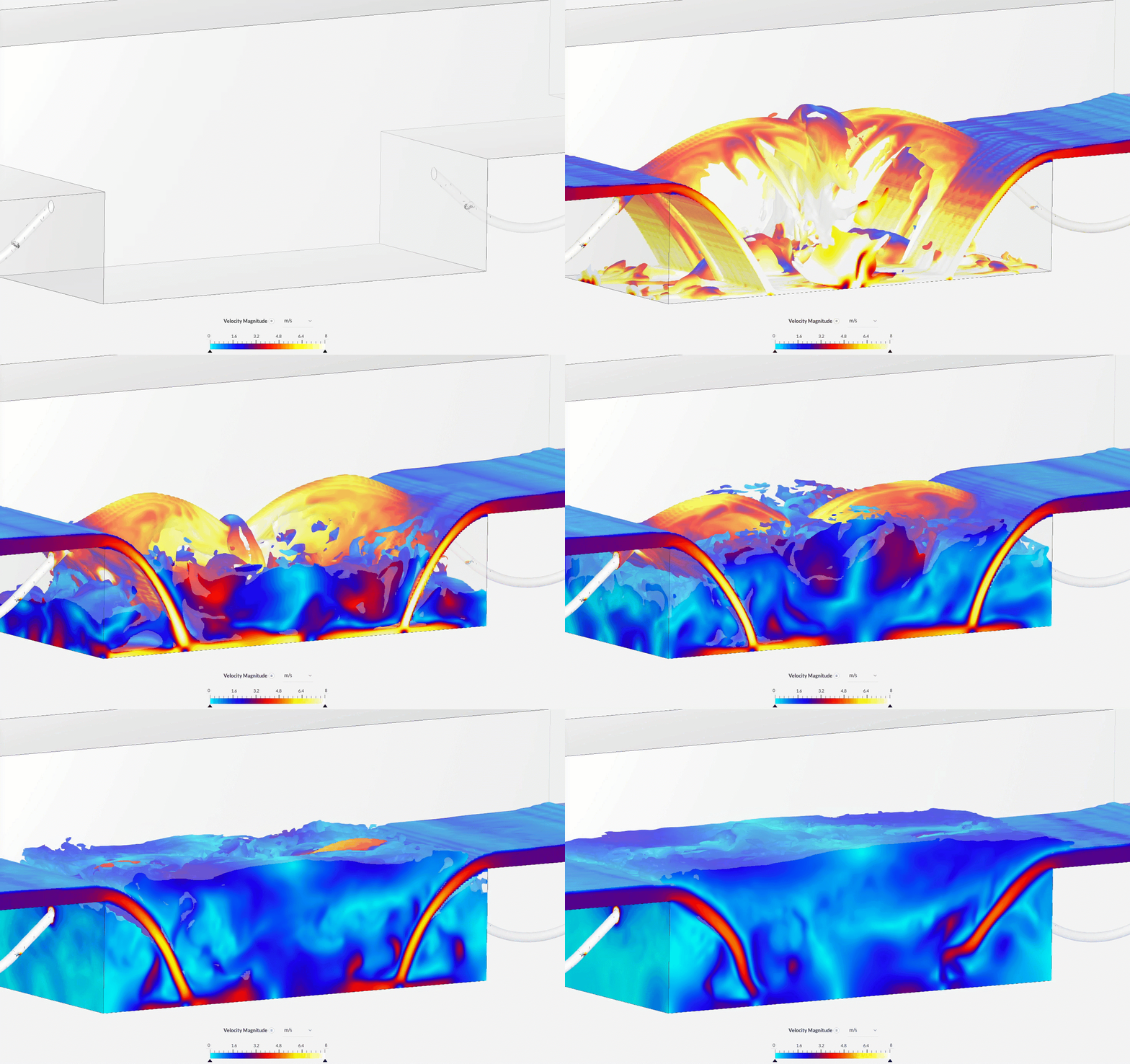
Cloud-native multiphase CFD that scales with your design space
SimScale's multipurpose and incompressible solvers handle the multiphase regimes engineering teams actually care about — VOF for sharp gas-liquid interfaces and free surfaces, SPH for meshless free-surface and moving-geometry problems, and MRF and porous-media definitions for rotating machinery and packed beds.
VOF and SPH in one platform
Run both mesh-based and meshless methods in a single environment. Combining VOF for sharp gas-liquid interfaces and two-phase flow, and GPU-accelerated SPH for violent free surfaces and moving geometries.
AI-accelerated design
SimScale's Engineering AI lets teams parameterize geometries, automate variant exploration, and accelerate convergence — so the iteration loop that once took weeks can run overnight.
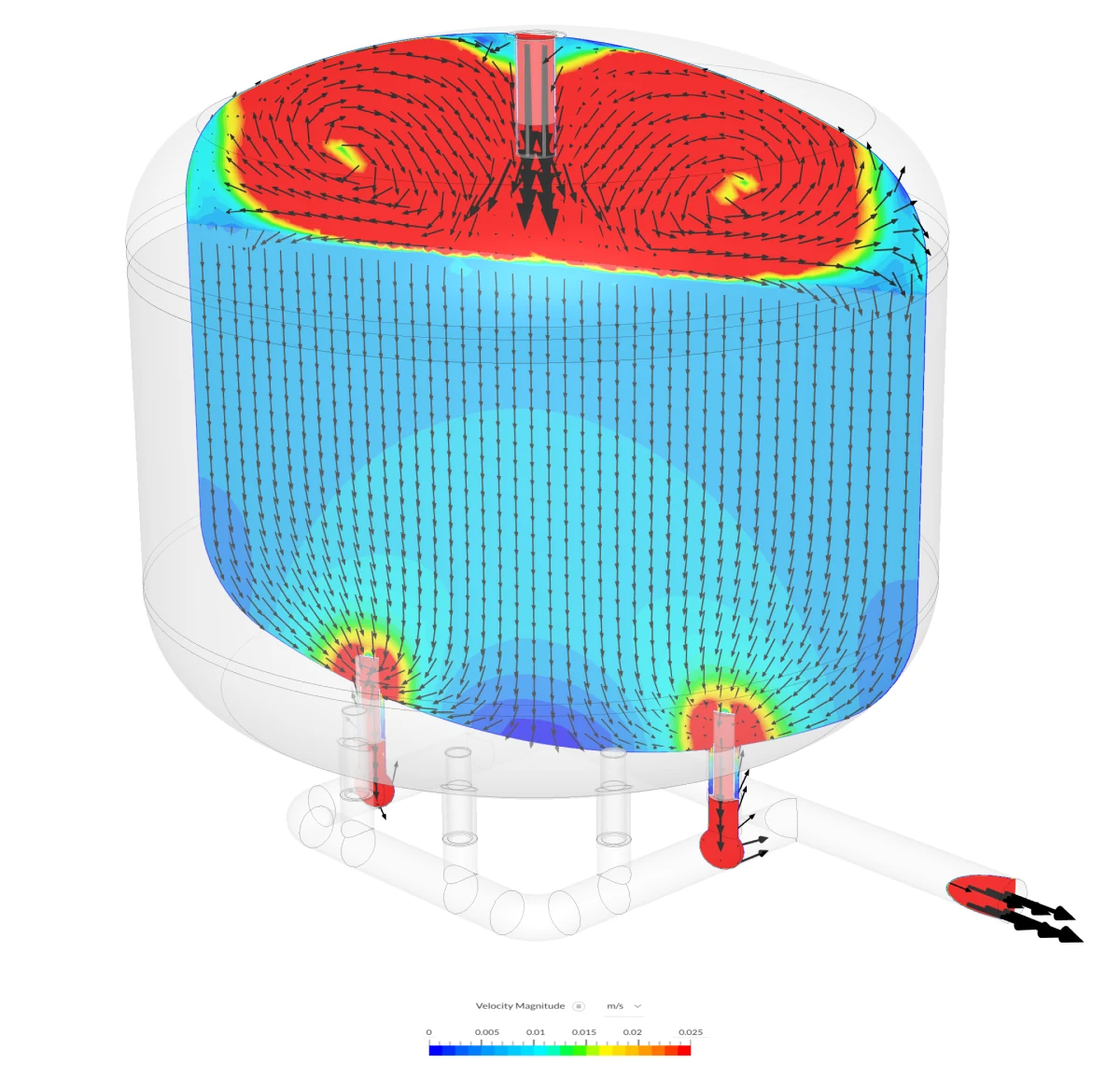
Filtration & process vessels
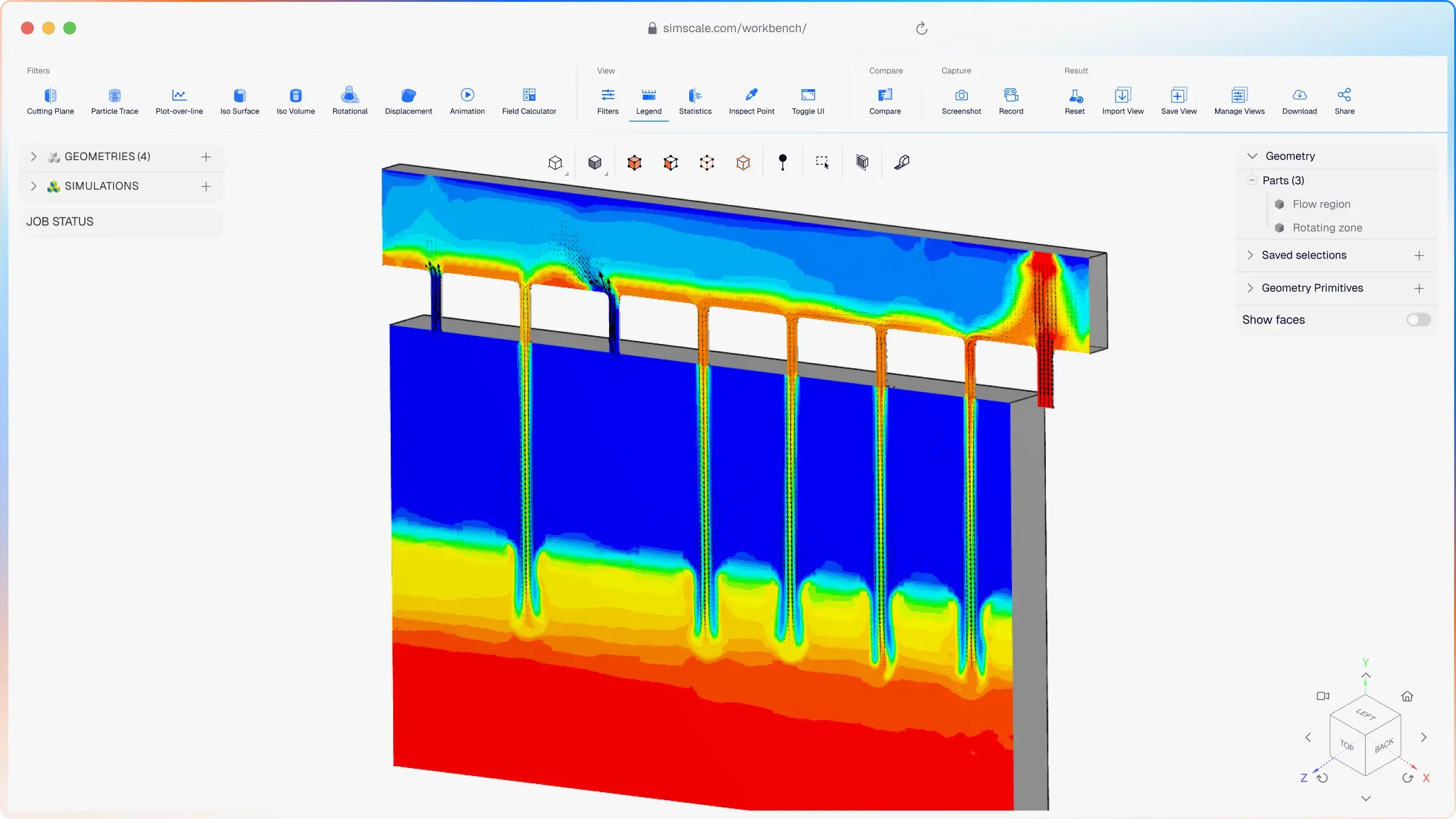
Use VOF and porous-media definitions to characterize flow distribution through GAC, ion-exchange, and PFAS filtration beds. Evaluate dozens of vessel design variants in parallel to engineer out dead zones and optimize media lifespan.
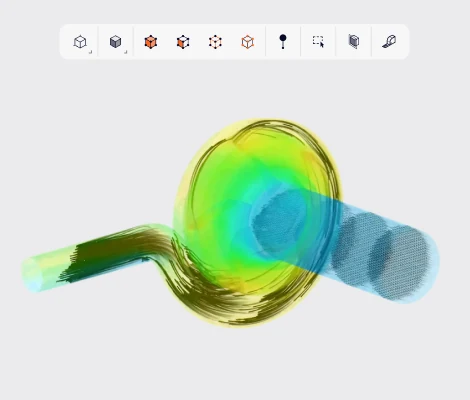
Pumps & rotating machinery
Simulate impellers, volutes, and full pump assemblies with cloud-native MRF and steady-state RANS. Validate performance curves against test-bench data — without weeks of meshing or HPC queueing.
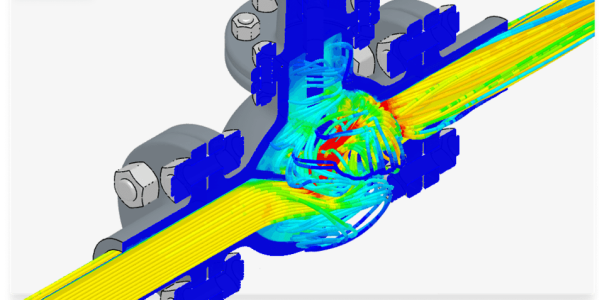
Water & wastewater treatment
Model buffer tanks, baffle configurations, and circulation patterns to eliminate dead zones and minimize mean water age. Run multiple baffle configurations in parallel to converge on a final layout without serial iteration.
Oil & gas separators and pipe flow
Investigate two-phase pipe flow, cyclonic gas-liquid separation, and separator vessels. SimScale's VOF solver covers separator residence times, slug formation, and entrainment without specialist oil-and-gas-only software.
Mixing tanks & stirred reactors
Model agitator-driven mixing, suspended-solids transport, and bubble-driven aeration in stirred vessels. Run rotating-zone CFD with multiphase inputs to validate mixing time, dead-zone elimination, and shear distribution. For impellers with complex geometry or tight clearances, SimScale's SPH solver is a meshless alternative that handles moving boundaries without remeshing.
Free-surface, sloshing & marine
Use VOF to track sharp liquid-gas interfaces in sloshing tanks, marine hull hydrodynamics, and dam-break / spillway studies. Where problems involve large moving geometries, oil splash, or fragmenting surfaces — gearbox churning, fuel tank sloshing, wave overtopping — SimScale's GPU-accelerated SPH solver handles these without remeshing, running up to 20x faster than mesh-based CFD.

99%
quicker
“SimScale drastically changed our R&D landscape regarding time (99.9% quicker), cost (no HPC and data storage) and simulation accuracy. It allows us to complete development cycles within days instead of months which gives us a massive advantage to our competition. I would say that this software is not evolutionary but rather disruptive. My recommendation to use SimScale for anyone in the engineering design space cannot be higher.”
Benjamin van der Walt, Engineering Manager, Hazleton Pumps

30%
reduction in deadzones
“SimScale provided detailed insights into flow behavior, allowing for a high degree of confidence in our design. The ability to troubleshoot potential issues at an early stage reduced the risk of operational inefficiencies and allowed for a data-driven comparison of design options, moving beyond traditional engineering rules of thumb. Being cloud-native enabled my team to set up, run, and analyze simulations anytime, anywhere, without hardware limitations, which is critical when working on continent-wide projects and travelling often.”
Mohamed Amine Rabitateddine, Chief Process Engineer, JESA Group

75+
design variants explored in 6 weeks
“If we were running the simulations locally, it would have been impossible. I think it's just the coolest thing about SimScale that we can just run all the simulations we need concurrently in the cloud. The iterative speed enabled us to rapidly evaluate concept designs and guided us to come up with a novel design that solves multiple pain points of the PFAS system and saves municipalities millions of dollars annually.”
Abishek Arumugam Navukkarasan, Lead Engineer, Catalytic Consulting
Related resources

Jon Wilde
November 17, 2023

itsavlidis
April 5, 2023



Luis Goncaves
August 4, 2026
Luis Goncaves
June 18, 2026
Luis Goncaves
January 27, 2026

Taylor Keen
August 4, 2026

Peter Selmeczy
July 6, 2026

Jon Wilde
June 16, 2026
Peter Selmeczy
July 9, 2026
Peter Selmeczy
March 24, 2026
Peter Selmeczy
September 10, 2025

Peter Selmeczy
July 30, 2026
Peter Selmeczy
July 30, 2026
SimScale handles the most common sharp-interface and free-surface multiphase regimes: VOF (Volume of Fluid) for gas-liquid interfaces, two-phase pipe flow, sloshing, and free-surface mixing; SPH (Smoothed Particle Hydrodynamics) for meshless free-surface problems with moving geometries, fragmentation, or violent splash dynamics; and porous-media definitions for packed-bed and filtration flows. All three run in parallel on the cloud from a browser, with MRF available for rotating machinery with multiphase content.
Both VOF and SPH resolve free-surface and sharp-interface multiphase flow, but through fundamentally different approaches. VOF (Volume of Fluid) is mesh-based and Eulerian: it tracks the fraction of each fluid in each mesh cell to locate the interface between two immiscible phases — the standard approach for two-phase pipe flow, sloshing tanks, separator design, and free-surface mixing. SPH (Smoothed Particle Hydrodynamics) is meshless and Lagrangian: fluid is represented as a cloud of moving particles, so complex moving geometries, violent surface fragmentation, and oil splash are handled without remeshing, and it runs GPU-accelerated. As a practical guide: start with VOF for most free-surface and two-phase problems; use SPH when the geometry moves significantly, the free surface fragments, or repeated remeshing would be required mid-run.
Yes. SimScale's VOF solver has been benchmarked against physical test-bench data across pump performance curves, flow distribution, and process vessel design — with results consistently within engineering acceptance tolerances. Customers in regulatory-driven engineering (PFAS filtration under EPA standards, ASME-stamped pressure vessels, ASHRAE-compliant ventilation) routinely take simulation results into manufacturing. See the case studies above for validation specifics.
Yes. Two-phase pipe flow, slug formation, and stratified-flow regimes are within scope of SimScale's VOF solver. While dedicated oil-and-gas pipeline tools like OLGA specialize in long-pipeline transient dynamics, SimScale's strength is modeling the equipment around the pipe — separators, manifolds, valves, pump intakes — where multiphase flow interacts with rotating machinery, porous media, or vessel geometry, all in the same cloud-native environment as your structural and thermal analyses.
It depends on geometry, mesh, and physics, but cloud parallelism changes the calculus. Full steady-state performance curves that previously took weeks on local hardware can be completed in minutes on SimScale's cloud. Teams routinely run multiple design variants per day, shifting the question from "how long is one run?" to "how many variants can I explore this week?"