Multiphysics Simulation
Multiphysics simulation, the way engineering really works.
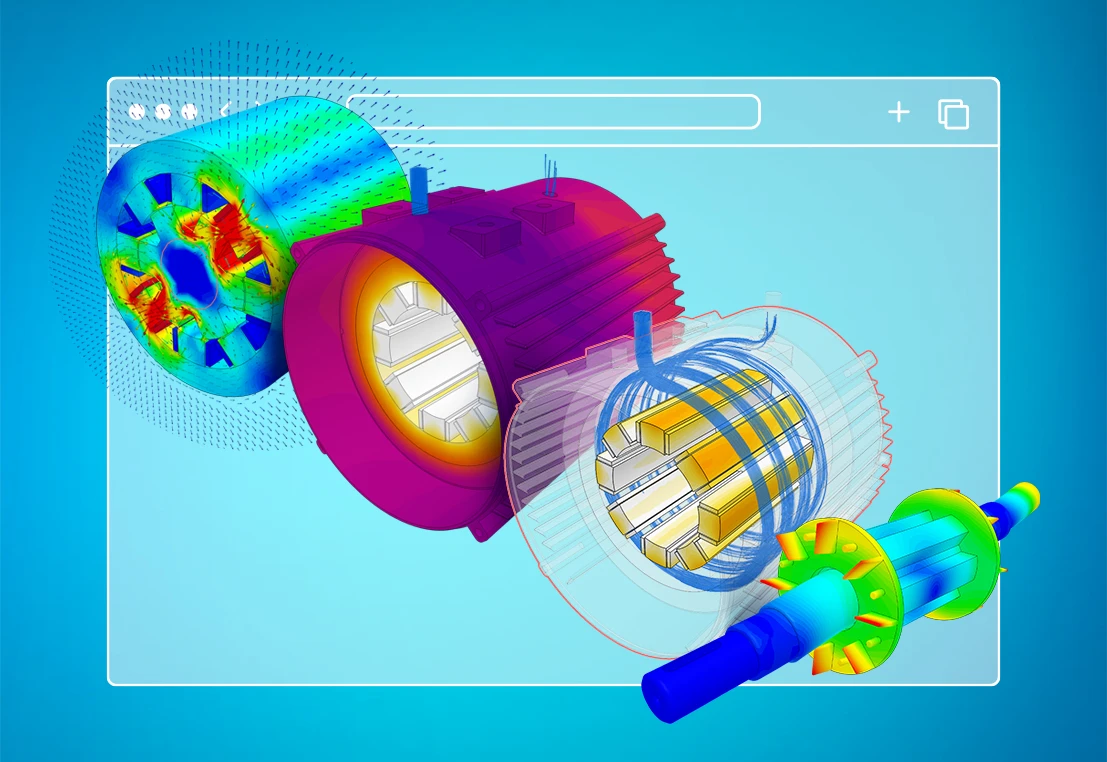
SimScale brings fluid dynamics, heat transfer, structural mechanics, and electromagnetics together in one cloud-native platform, so you can study how your product actually behaves in the real world.
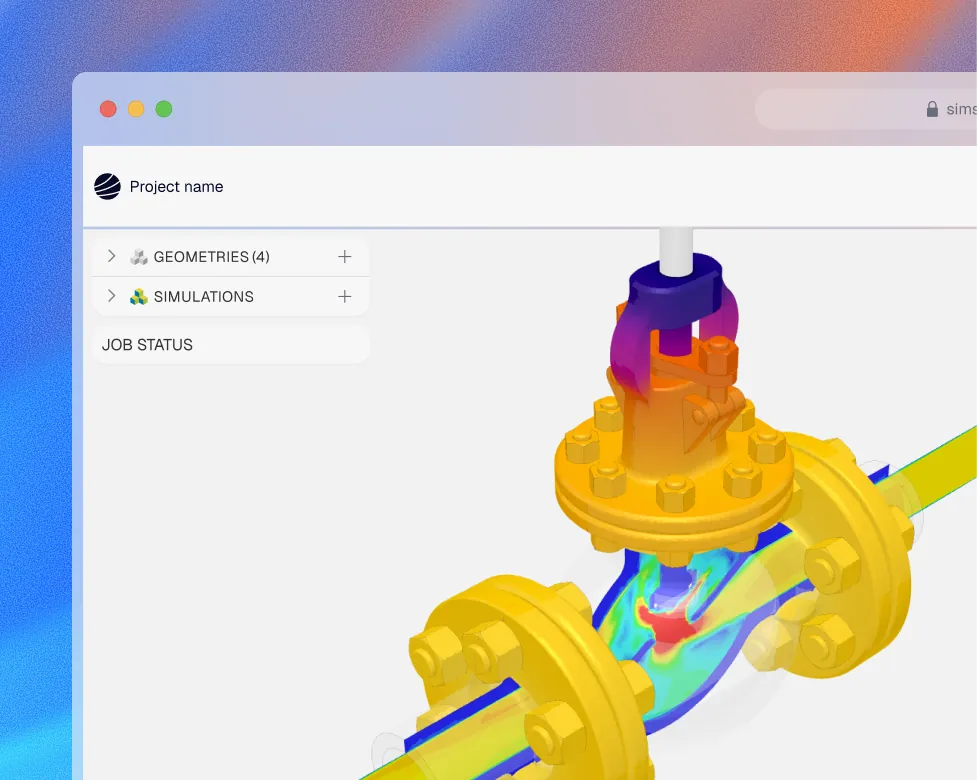












Where physics domains meet
Real engineering problems don't respect physics boundaries. SimScale couples fluid, thermal, structural, and electromagnetic solvers in a single environment — so you capture the interactions that single-physics analysis misses.
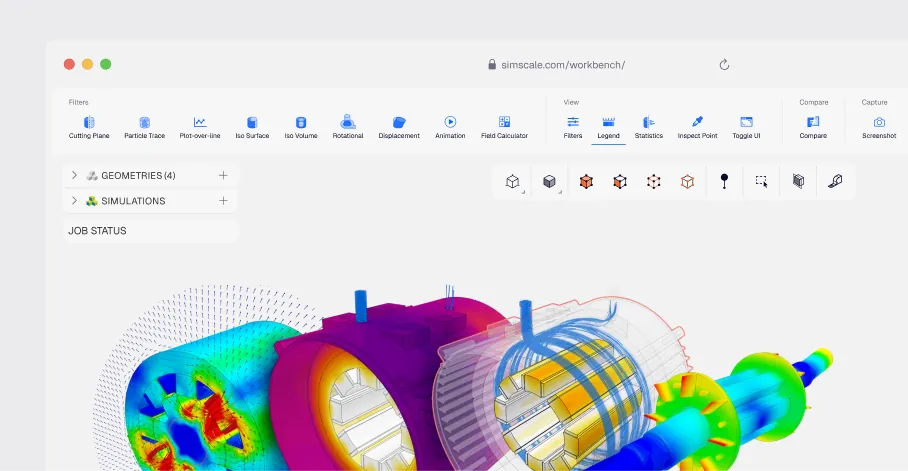
AI accelerated, multi-domain simulation
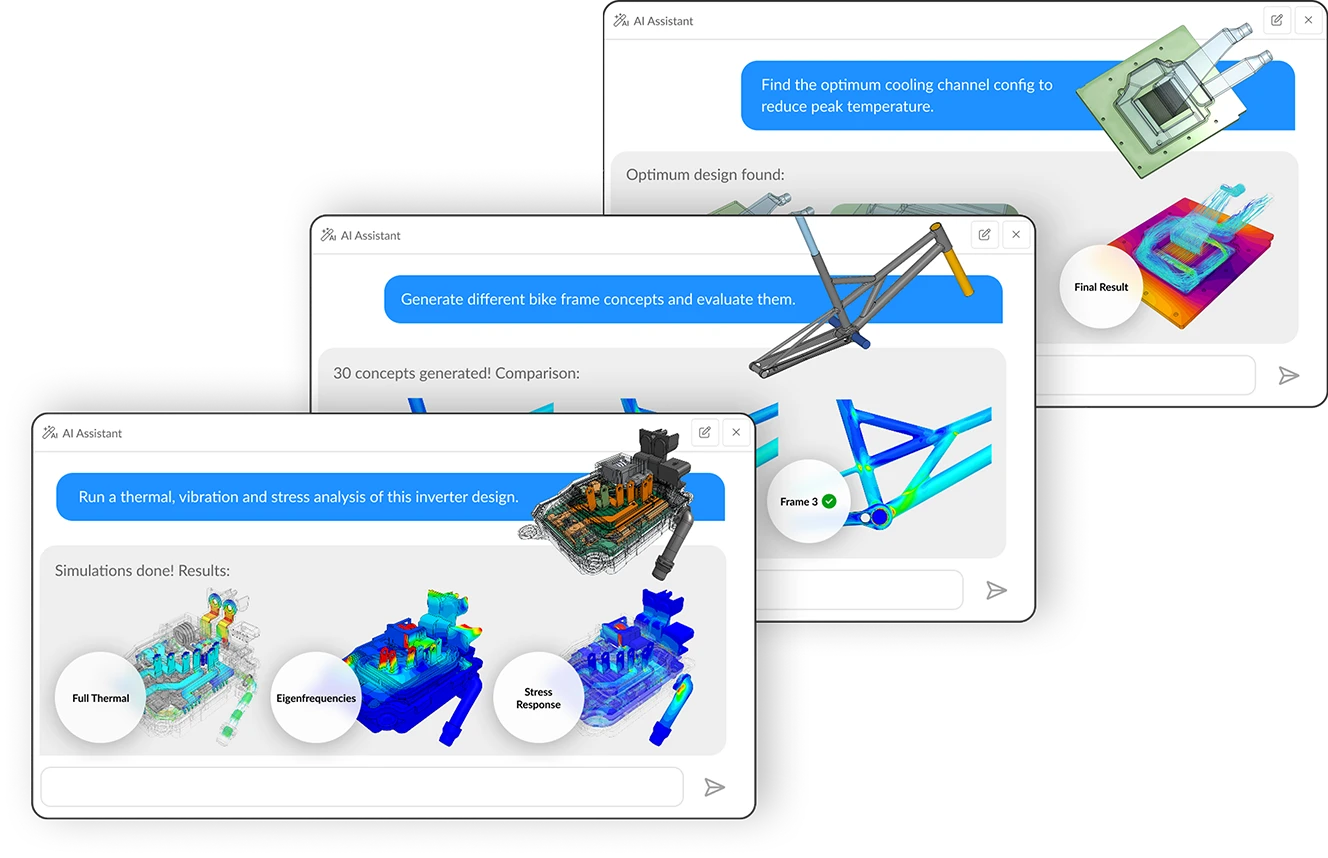
Run CFD, FEA, thermal, and EM analyses in a single browser-based workspace with built-in Physics AI model training and inference.
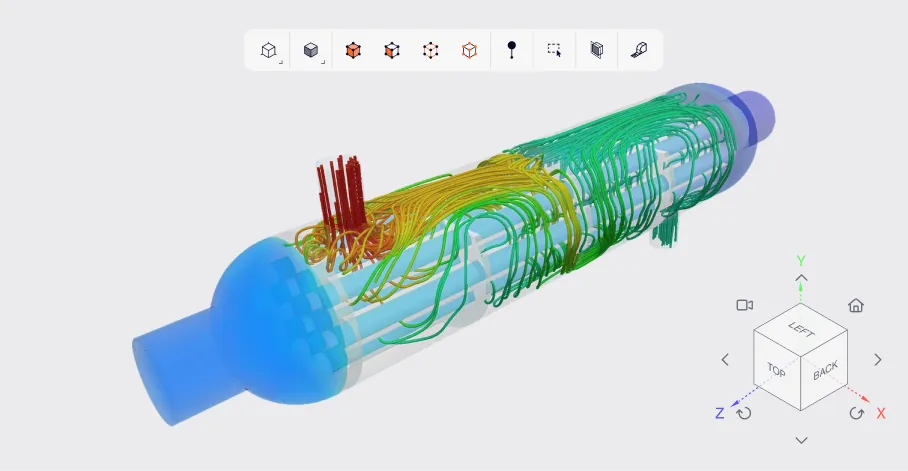
Conjugate heat transfer
Simultaneously solve fluid flow and solid heat transfer to get accurate, system-wide temperature distributions.
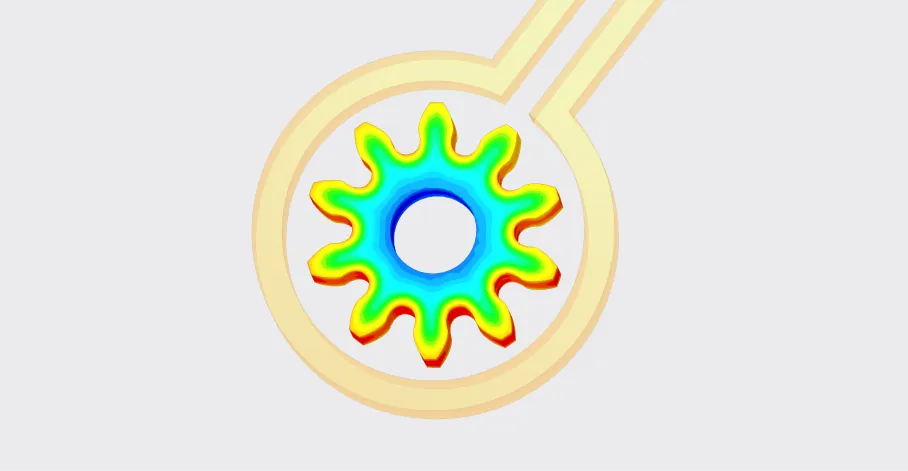
Electromagnetic–thermal coupling
Map electromagnetic losses directly as heat sources in a thermal analysis of your motor, transformer, or power electronics.
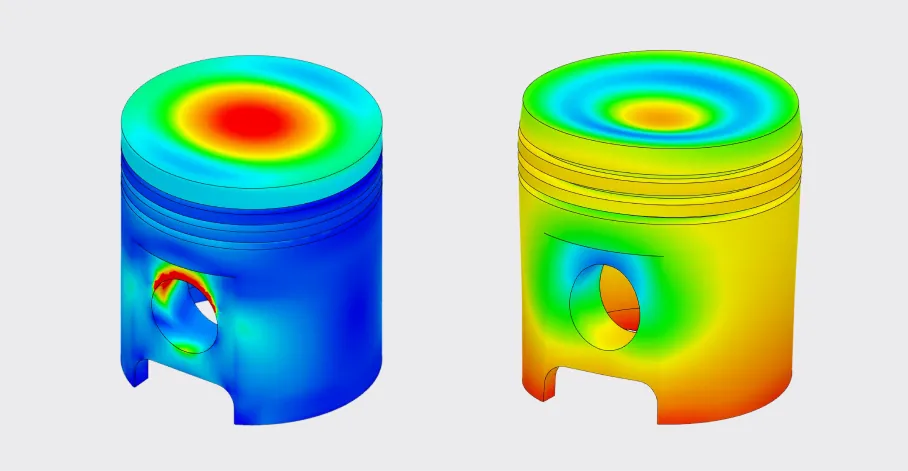
Thermomechanical analysis
Couple thermal and structural solvers to predict how temperature gradients drive deformation, stress, and fatigue risk under real operating conditions.
Multiphysics in action
From product validation to design exploration, multiphysics simulation accelerates decisions across the full development lifecycle.
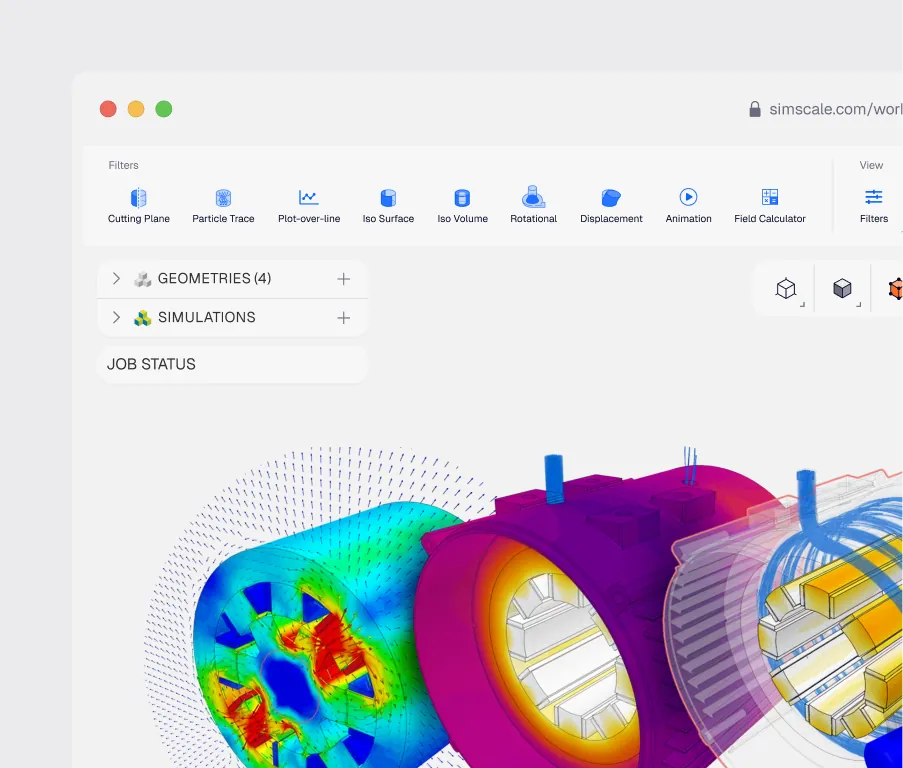
Electric motor simulation
Couple electromagnetic loss calculations, thermal analysis, and structural modal response in a single workflow — capturing how heat buildup and electromagnetic excitation interact to affect motor efficiency, cooling requirements, and fatigue life.
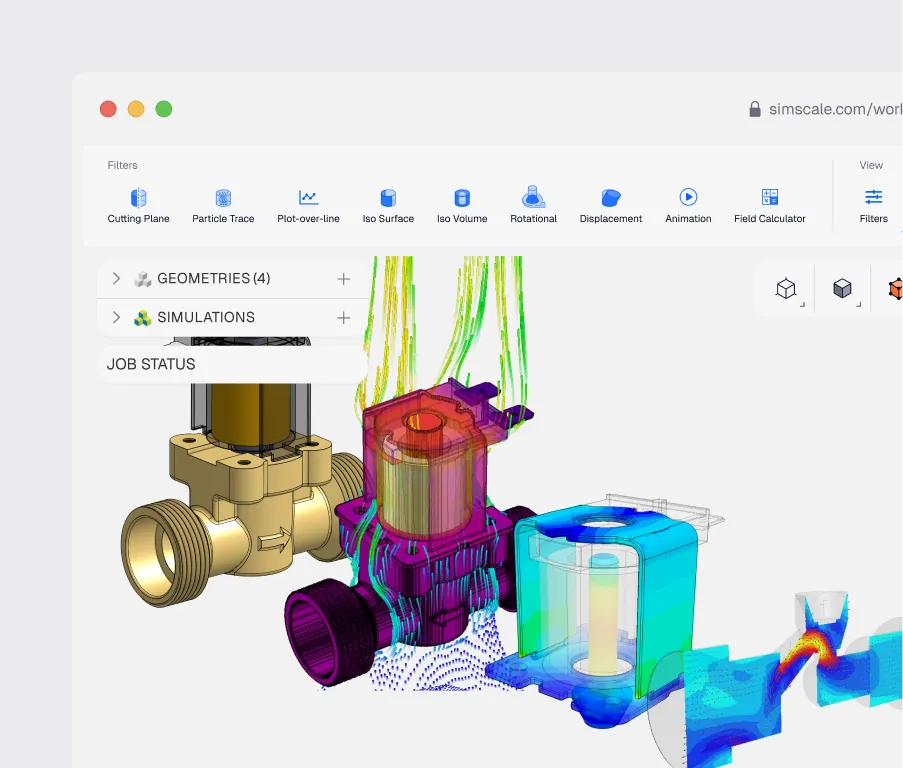
Solenoid simulation
Optimize your solenoid behaviour using a multiphysics approach.
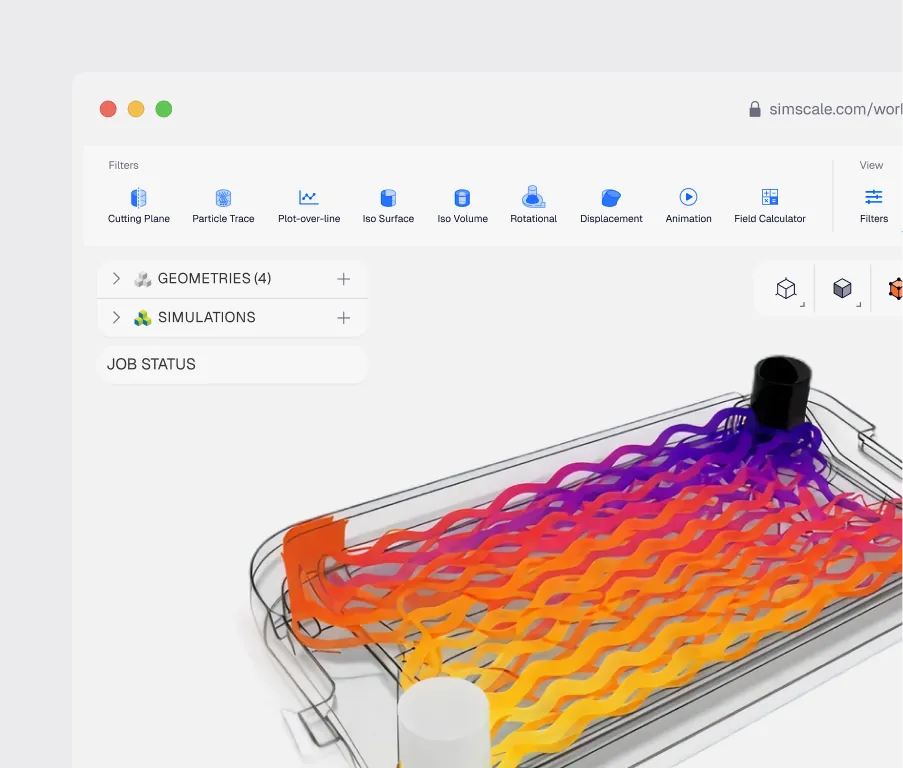
Heat exchanger simulation
Solve fluid flow and solid heat transfer simultaneously with conjugate heat transfer analysis — capturing the full thermal interaction between coolant and structure to optimise heat transfer efficiency and pressure drop in a single coupled simulation.
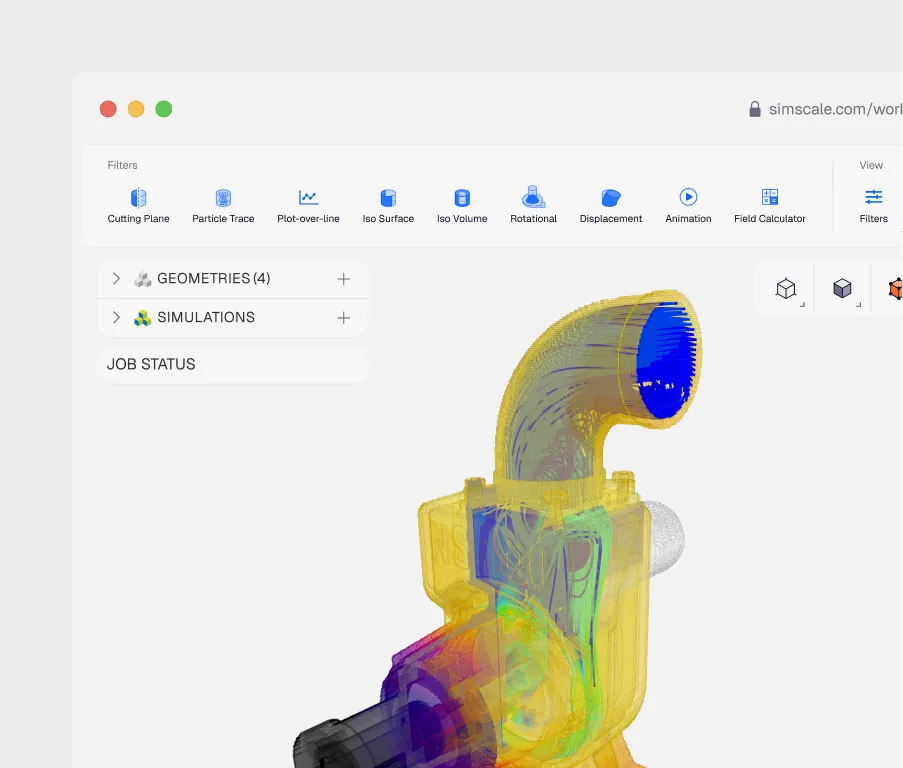
Turbomachinery
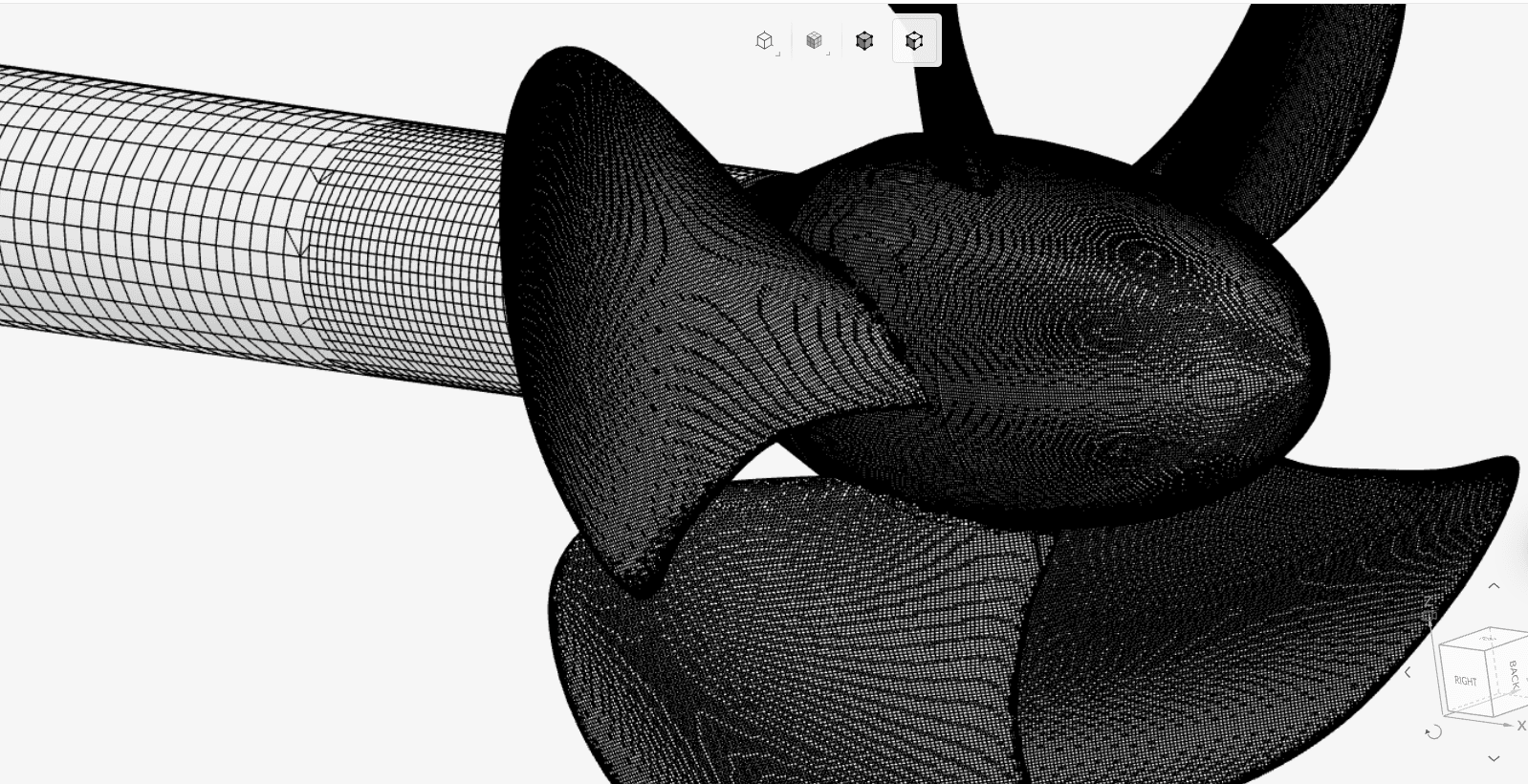
Transfer aerodynamic pressure loads from CFD directly onto structural meshes to assess blade stress, fatigue, and deformation under real operating conditions — without moving data between tools.
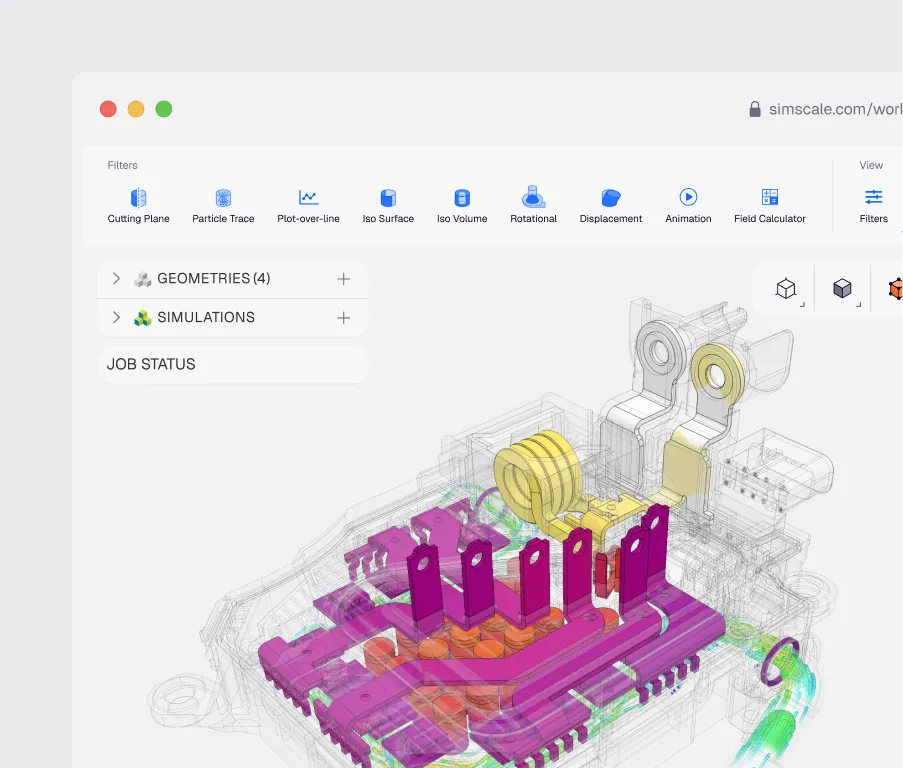
Electronics thermal management
Couple airflow or liquid cooling CFD with solid conduction to predict component temperatures across PCBs, enclosures, and power electronics — identifying hotspots and validating cooling strategies before a prototype is built.
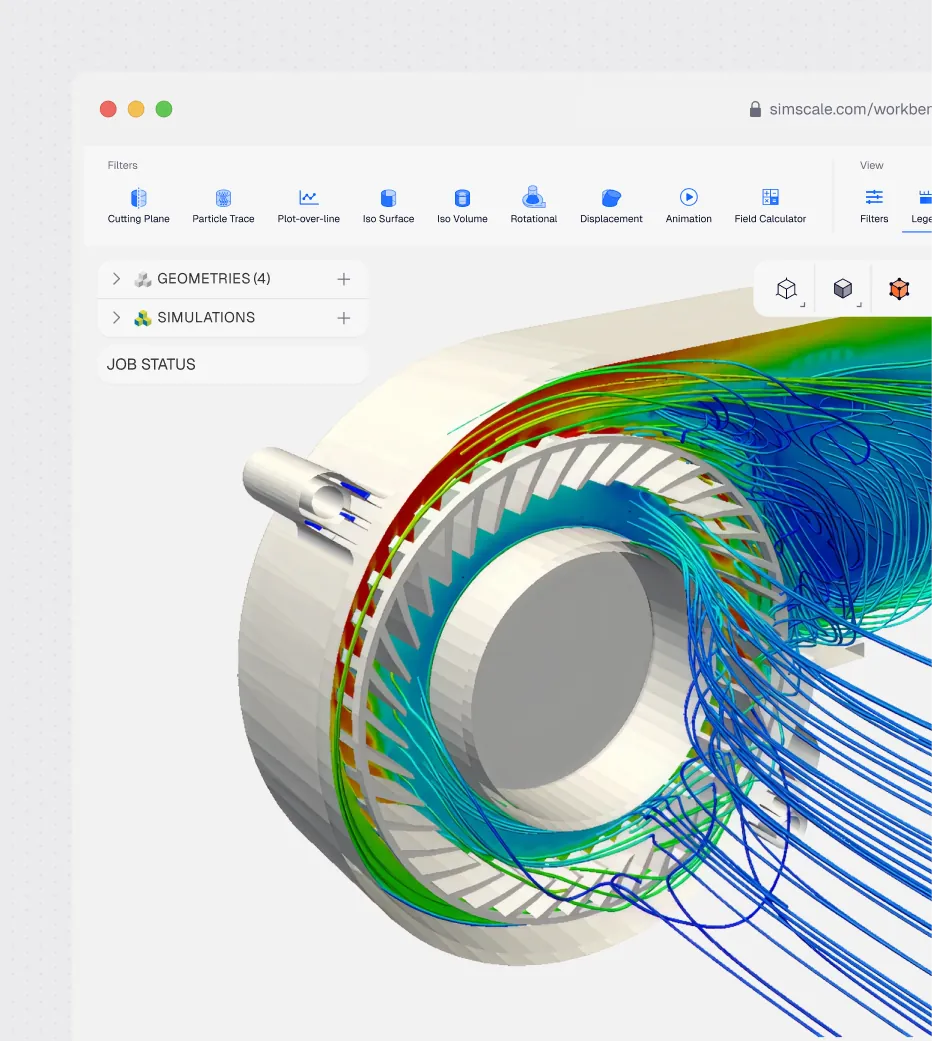
Valve simulation
Analyse flow-induced pressure forces, structural deformation, and thermal effects across valve body and seat geometries — capturing the coupled behaviour that determines sealing performance, wear, and fatigue life under operational loads.
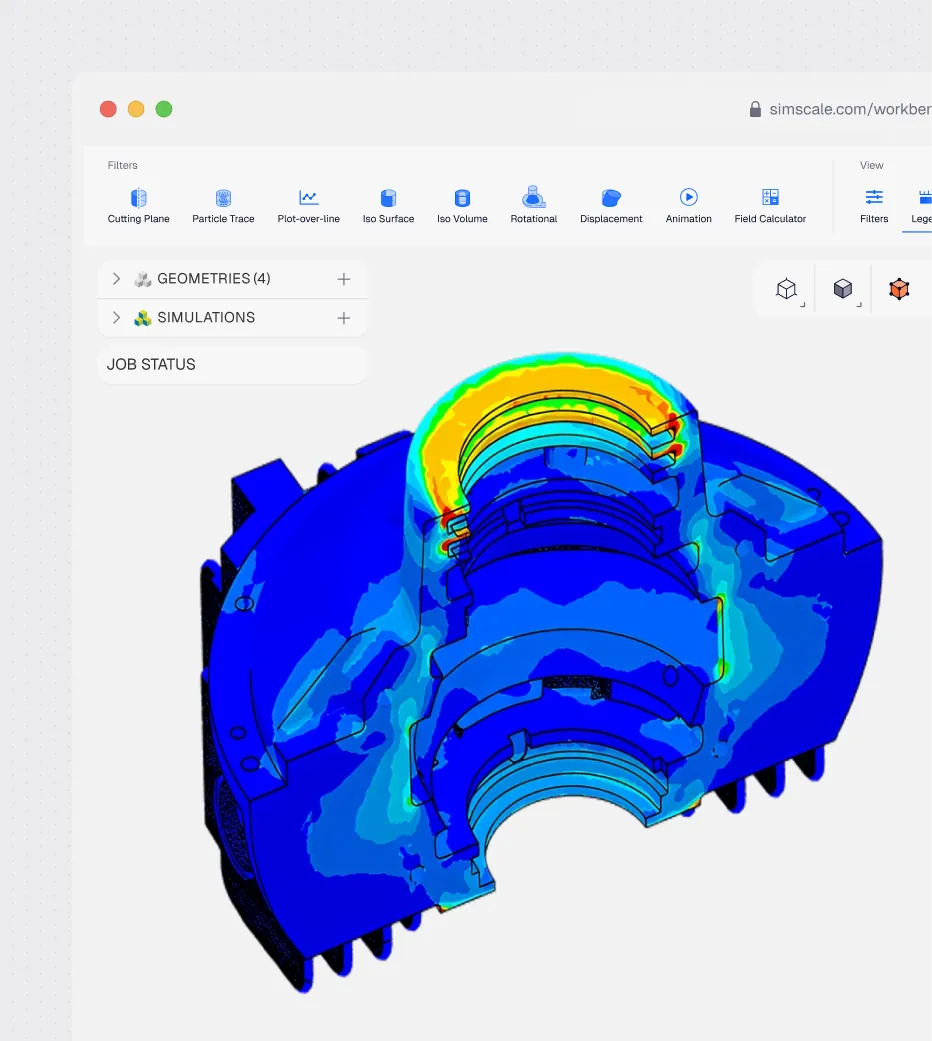
Rotating machinery simulation
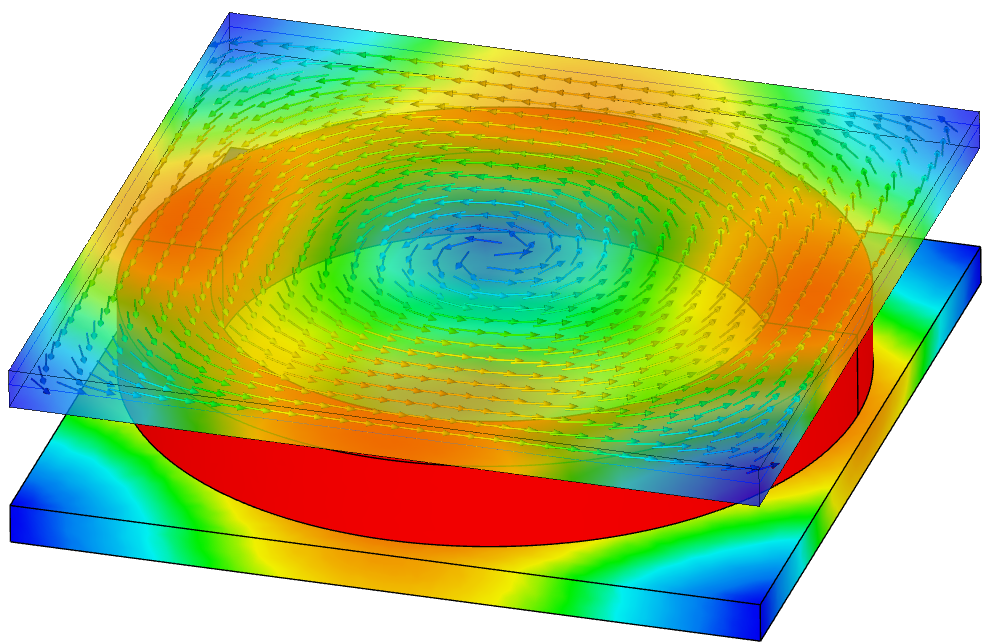
Analyze and optimize pumps, fans, turbines, and motors with high-fidelity cloud simulation across CFD, FEA, and EM domains.
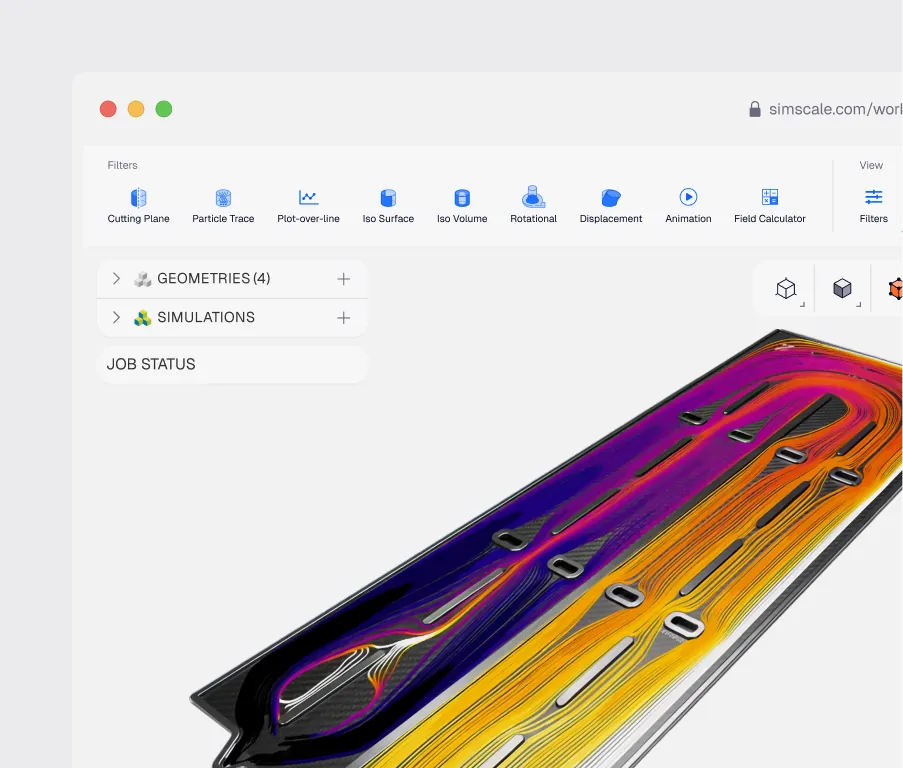
Cold plate simulation
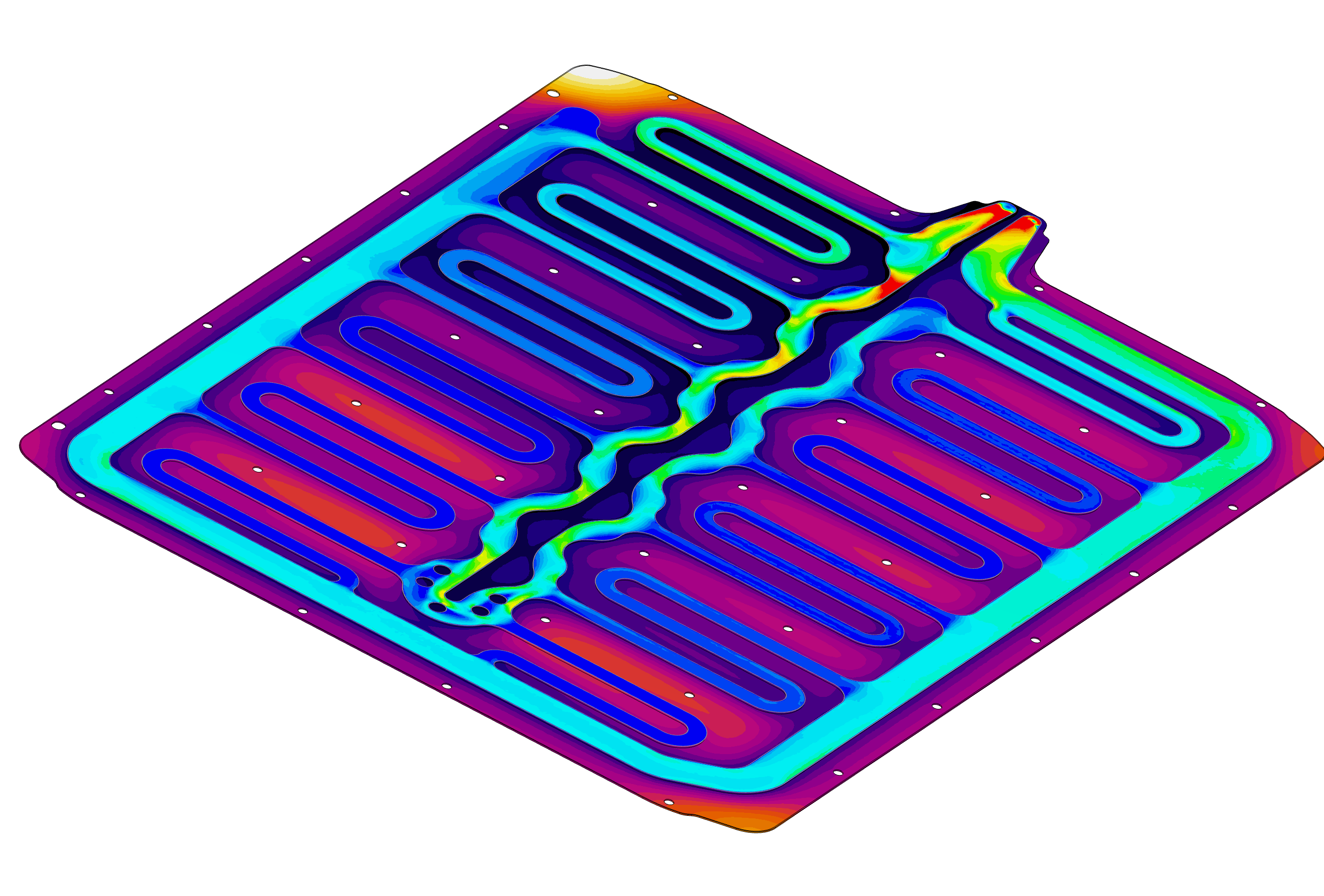
Leverage advanced design and manufacturing technologies like microchannels, implicit modelling and topology optimization to get the edge over your competitors.
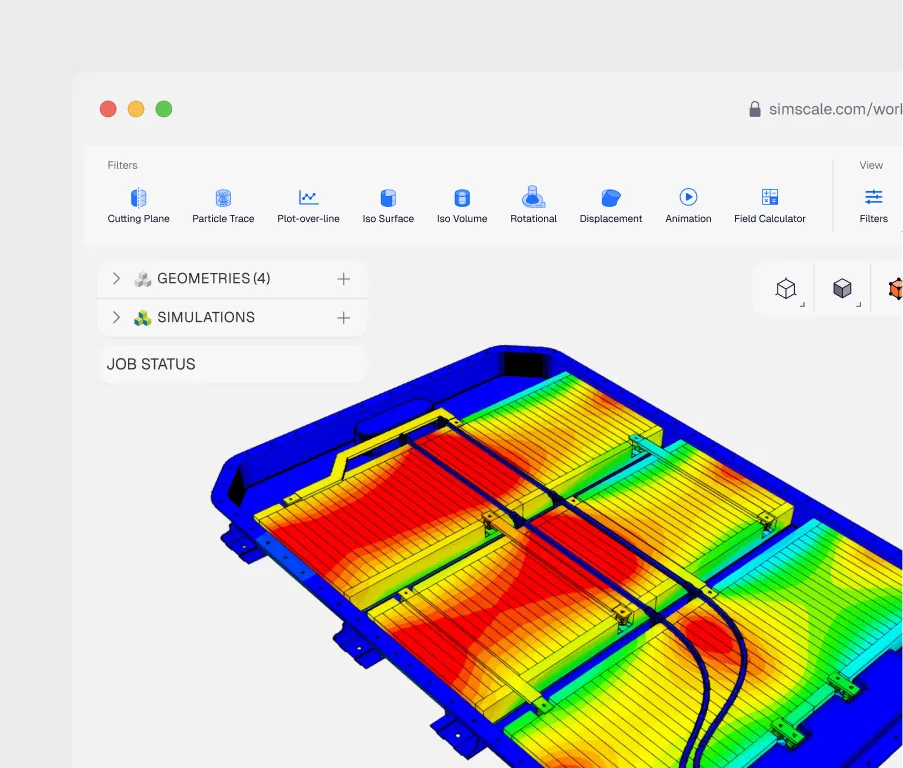
Battery simulation
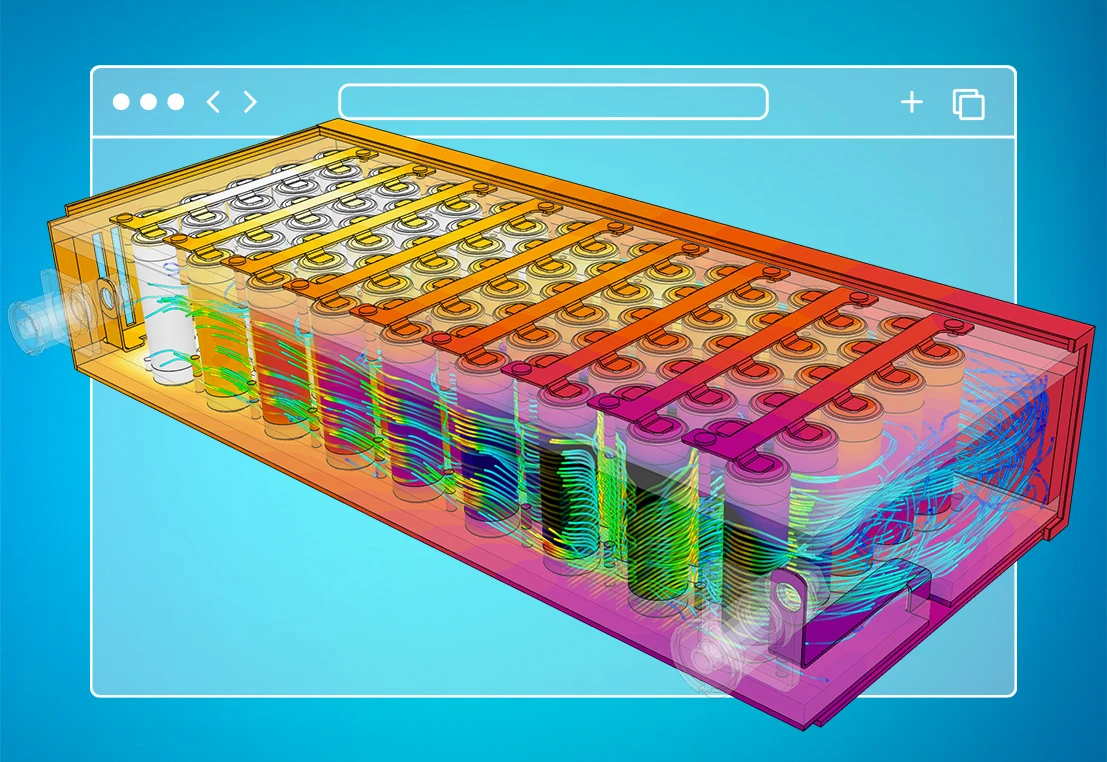
Revolutionize battery simulation and design with SimScale’s AI-powered simulation software. Achieve unparalleled speed and accuracy.
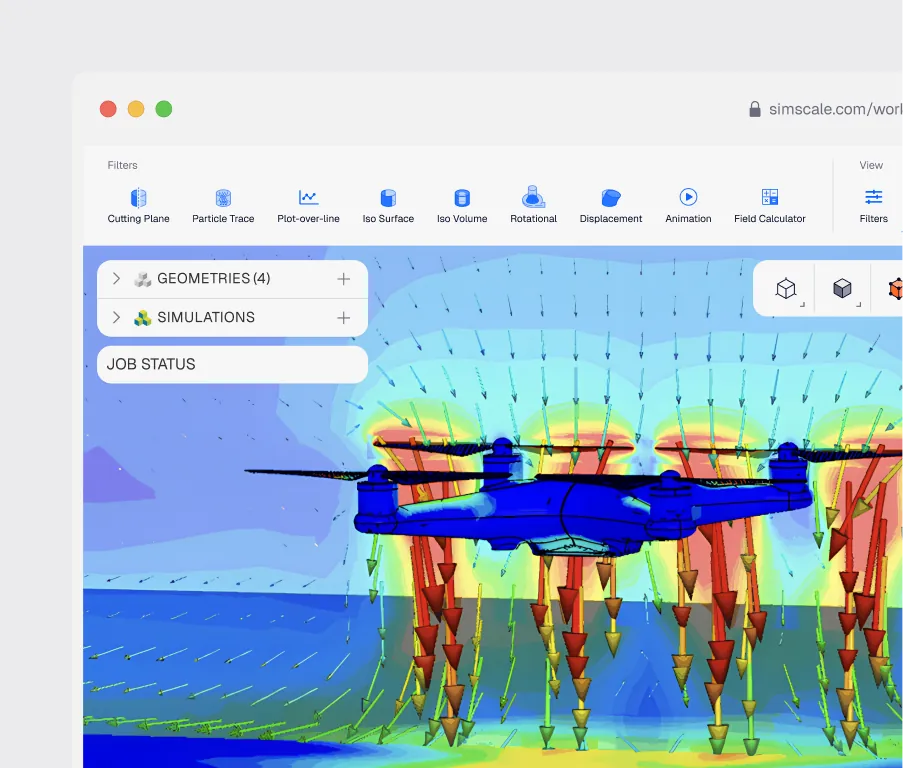
Drone simulation
Simulate rotor aerodynamics and flight performance from hover to forward flight using cloud-based CFD and FEA.
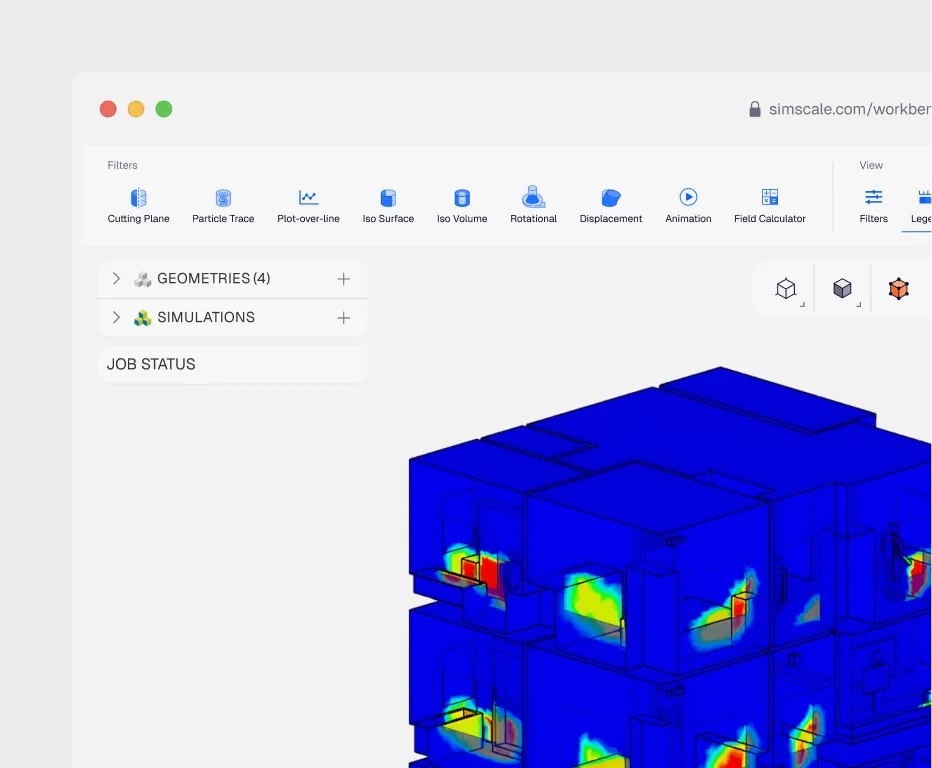
HVAC simulation
Optimize HVAC systems for thermal comfort, energy efficiency, and air quality using cloud-based CFD, conjugate heat transfer, and FEA.
Industry use cases
See how companies are cutting costs and accelerating development with cloud-native multi-physics.
See all solutions
1% the cost
Beamlink builds telecoms tower hardware with coupled thermal + structural simulation
"SimScale has significantly impacted our workflow by reducing the need for physical testing and 3D prototyping, empowering our team to experiment more freely and innovate faster."


hours to seconds
Direct simulation on implicit geometry cuts import times for additively-manufactured parts
"Implicit modeling and direct simulations on implicit geometry is a real step change in speed and robustness of optimization workflows."


96%
Time saving on coupled battery thermal-fluid studies — 30 CHT runs in 13 hours vs ~300 serial
"Cloud-native simulation enables Rimac to accelerate and enhance their design and development process, exploring the full design space with the desired accuracy."


80 to 5 hours
Parallel thermal runs replaced 80 hours of serial work, optimizing LED heatsink designs
"Being able to copy mesh settings and substitute geometry from one analysis to another was very helpful and time-saving, letting the team run all simulations at once."


5 designs
Cooling solutions evaluated with coupled CHT and convective solvers in tight, untestable spaces
"SimScale enables us to simulate anywhere in the world, with no restrictions on our hardware. Swift responses and actions are what we seek."


micro-hydropower
Coupled fluid-structure simulation optimized the Energyfish micro-hydropower plant
"The simulation workflow has yielded significant design insights for the structural and material properties used in our Energyfish design."


20%
Higher rated load on downhole tools using nonlinear, contact, and plasticity analysis
"Using SimScale allowed us to increase the rated load of several tools by up to 20%. In a competitive market, that gives our clients the edge they need."


30%
Fewer dead zones and 50% lower mean water age in a wastewater treatment tank design
"SimScale provided detailed insights into flow behavior, allowing for a high degree of confidence in our design and a data-driven comparison of design options."


10x
Longer product lifetime — from 100,000 to 1,000,000 operating cycles — via coupled simulation
"Samco engineers were able to make slight but significant modifications to the design based on the analysis, which increased the product lifetime by 10 times."

60 variants
Studied in two weeks by a simulation newbie after company-wide cloud rollout
"By using simulation during the design process, we can speed up mechanical and process development by weeks or months. For us, simulation is about getting it right the first time."


unlimited runs
Cloud simulation removed physical-test limits for hovercraft components across conditions
"Using SimScale has given us significant cost and time savings by reducing the need for physical testing. There is no limit to the number of simulations that can be run."

Related resources

Alex Graham
June 16, 2026
Multi-agent workflows: key takeaways from Design & Simulation Week 2026
SimScale and CoLab demonstrated live AI agent collaboration at Design & Simulation Week 2026, cutting engineering review and simulation lead times dramatically.
Alex Graham
June 12, 2026

SimScale Workflows: Why we are opening up the platform (& why you should care)
SimScale Workflows opens its platform to custom solvers and tools, enabling automated, AI-driven multi-step engineering simulation pipelines for any organization.
Alex Graham
May 29, 2026



Luis Goncaves
June 18, 2026
Luis Goncaves
January 27, 2026

Paras Ghumare
December 4, 2025


Jon Wilde
June 16, 2026


David Heiny
June 15, 2026
Jon Wilde
June 3, 2026

Peter Selmeczy
March 24, 2026

Peter Selmeczy
September 10, 2025
Peter Selmeczy
June 25, 2025
Peter Selmeczy
May 29, 2026
SimScale supports fluid dynamics (CFD), structural mechanics (FEA), thermodynamics, and electromagnetics — and any combination of these within a single workflow. Common pairings include conjugate heat transfer (CFD + thermal), thermomechanical analysis (thermal + structural), electromagnetic-thermal coupling (EM + thermal), and CFD-FEA one-way coupling where aerodynamic pressure loads are transferred directly onto a structural mesh. All physics domains share the same geometry, mesh, and results infrastructure — no manual data transfer between tools required.
SimScale supports both tightly coupled and one-way coupled multiphysics workflows. In one-way coupling — the most common approach — results from one analysis are transferred as inputs to another: CFD pressure loads mapped onto a structural mesh for blade stress analysis, or electromagnetic losses used as heat sources in a thermal model. For tightly coupled problems like conjugate heat transfer, fluid and solid thermal equations are solved simultaneously within a single simulation. Both approaches run within the same platform, sharing geometry and mesh infrastructure, so there's no manual data transfer between tools.
Any industry where products operate under combined physical loads. Electronics and high-tech teams use EM-thermal coupling to prevent component failure in power electronics. Automotive and EV engineers combine CFD, FEA, and thermal analysis across battery packs and drivetrains. Turbomachinery and energy sector teams use CFD-FEA coupling to validate blade integrity under aerodynamic and thermal loads. AEC engineers combine airflow and thermal analysis for building comfort and energy performance. If a product generates heat, moves, or carries current — multiphysics applies.
Running multiphysics on traditional desktop tools typically means separate licenses, separate tools, and manual data transfer between them — introducing both overhead and error risk. SimScale manages all physics domains within a single cloud-native environment, sharing geometry, mesh, and results infrastructure. Engineers can run coupled analyses without switching tools, and cloud HPC means the additional computational cost of coupling solvers doesn't create hardware bottlenecks.
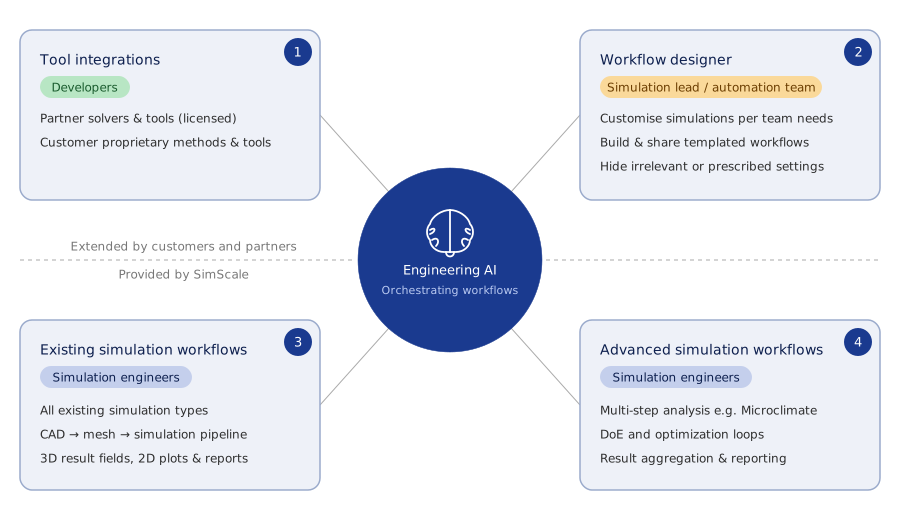
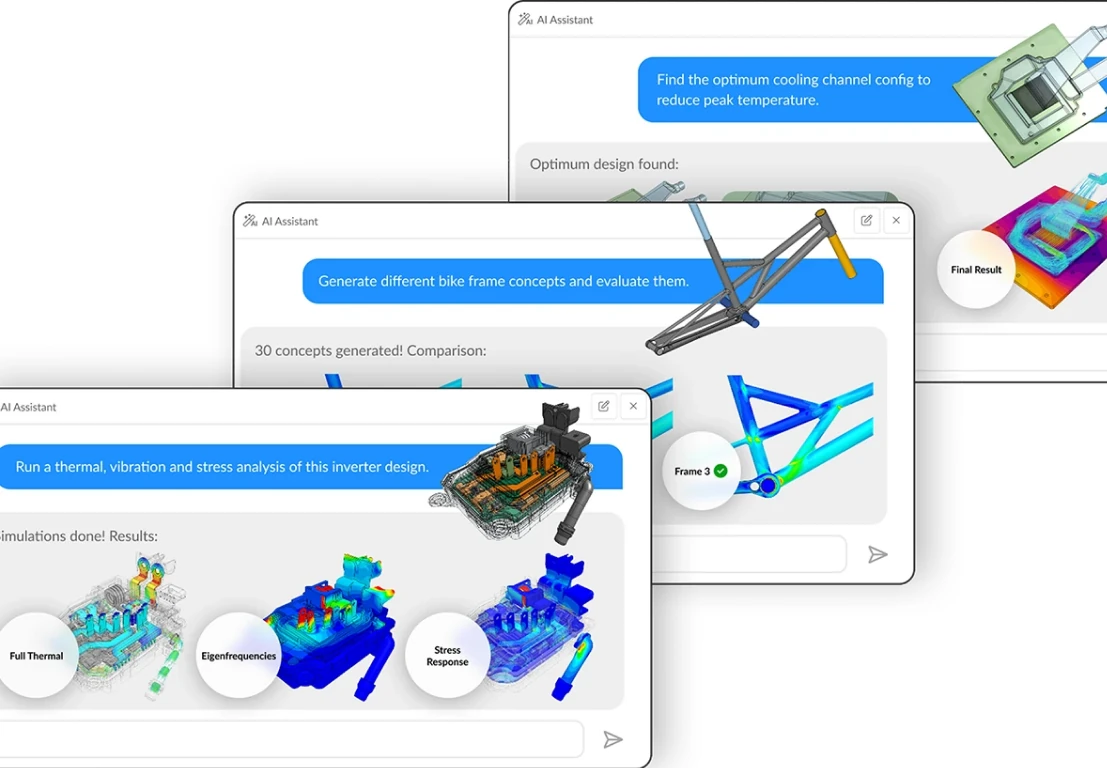
SimScale's Physics AI supports multiphysics workflows through surrogate models trained on coupled simulation datasets — delivering near-instant predictions for problems that would otherwise require hours of solver time. Engineers can train Physics AI models on their own multiphysics results and deploy them for rapid design space exploration across coupled domains. Engineering AI handles the workflow orchestration — automated meshing, boundary condition setup, and solver configuration — reducing the specialist knowledge typically required to set up a coupled simulation correctly.
Explore our core technologies
Physics AI works alongside Engineering AI and cloud-native simulation — three technologies, one integrated platform.
Structural Mechanics
Assess stress, fatigue, and deformation under real-world loads - from lightweight components to large structural assemblies.
Thermodynamics
Manage heat transfer across conduction, convection, and radiation - for electronics cooling, HVAC, thermal packaging, and more.
Electromagnetics
Model electromagnetic fields and coupled thermal effects for motors, sensors, transformers, and power electronics design.
Fluid Dynamics
Simulate airflow, turbulence, and fluid behavior across internal and external flows to make smarter design decisions earlier.
Start simulating in minutes, not weeks
Get started today with AI-native engineering simulation