Battery Simulation Software
Simulate, validate, and optimize battery packs in one cloud-native platform
From cell-level thermal runaway to pack-level structural integrity, simulate every aspect of battery performance directly in your browser, without hardware or installation.

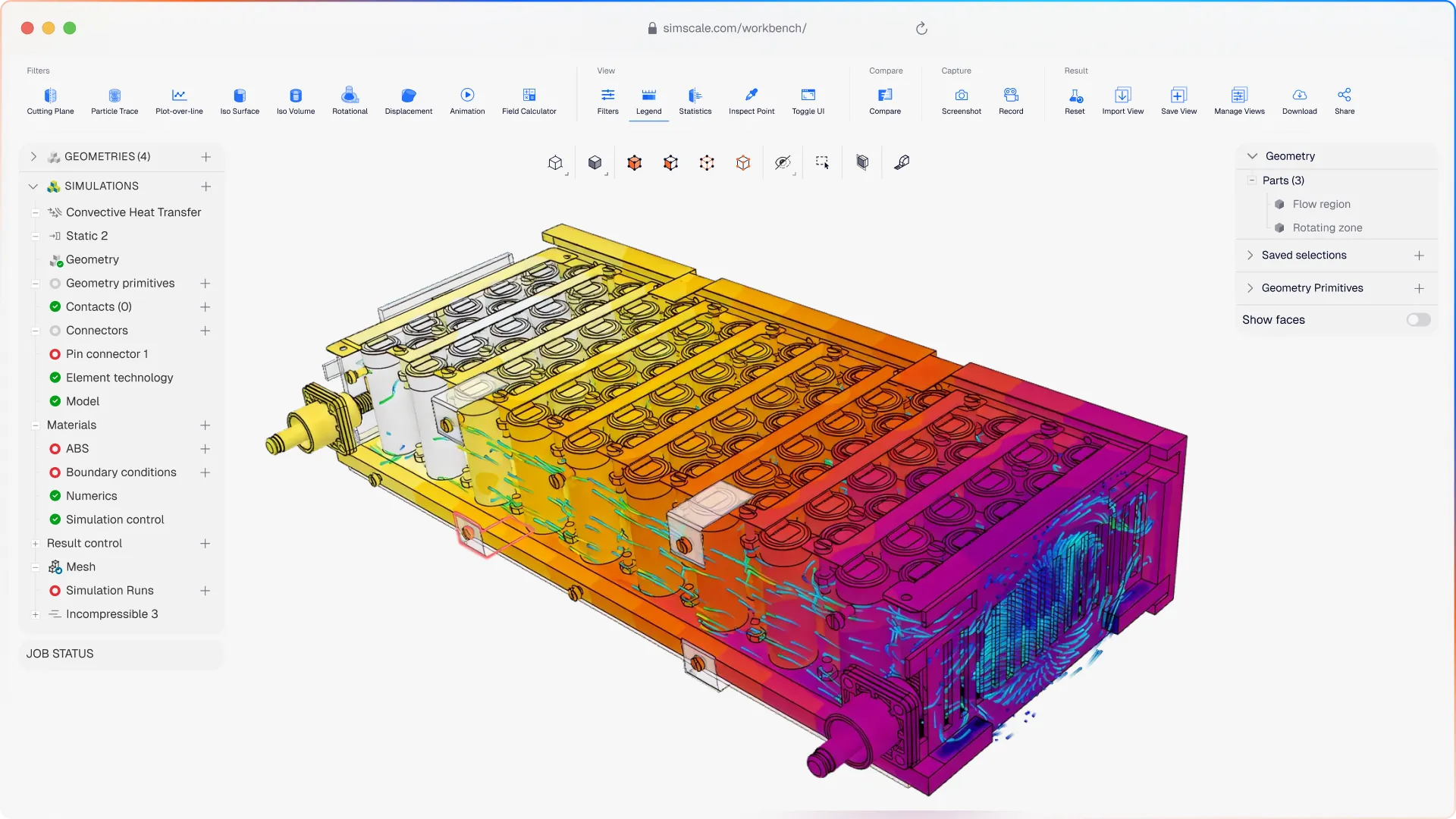












Physical prototypes and siloed tools slow battery design when thermal-runaway risk can't wait. SimScale unifies CFD, conjugate heat transfer, and FEA on one cloud platform so battery engineers predict cell temperatures, coolant flow, and structural integrity in hours, not weeks.
Battery simulation that covers your full design challenge
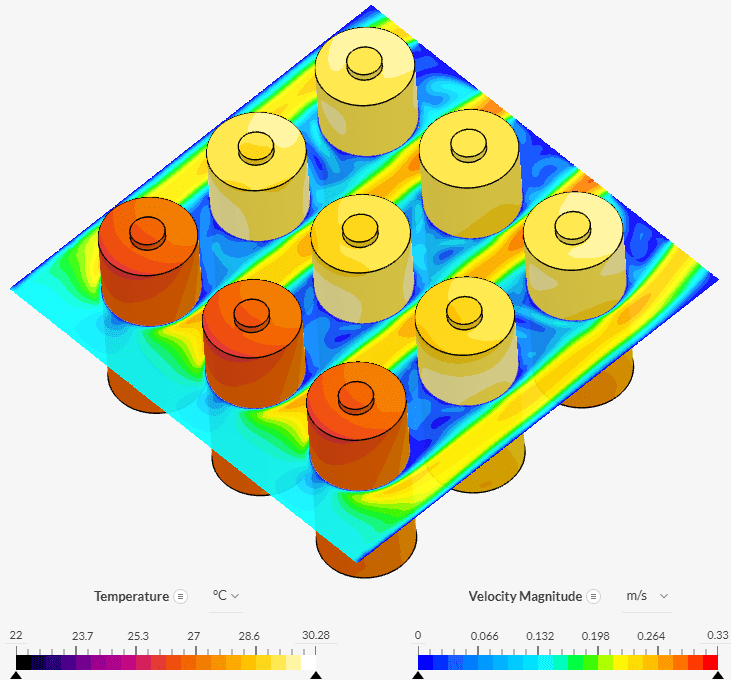
Multiphysics battery simulation: CFD, CHT, FEA, and EM in one platform
Battery design crosses physics domains. SimScale couples conjugate heat transfer, CFD, FEA, and electromagnetic analysis on the same cell, module, or pack geometry, no exports, no tool switching, no licensing overhead. Predict coolant flow, hotspots, busbar stress, and enclosure deformation in a single project.
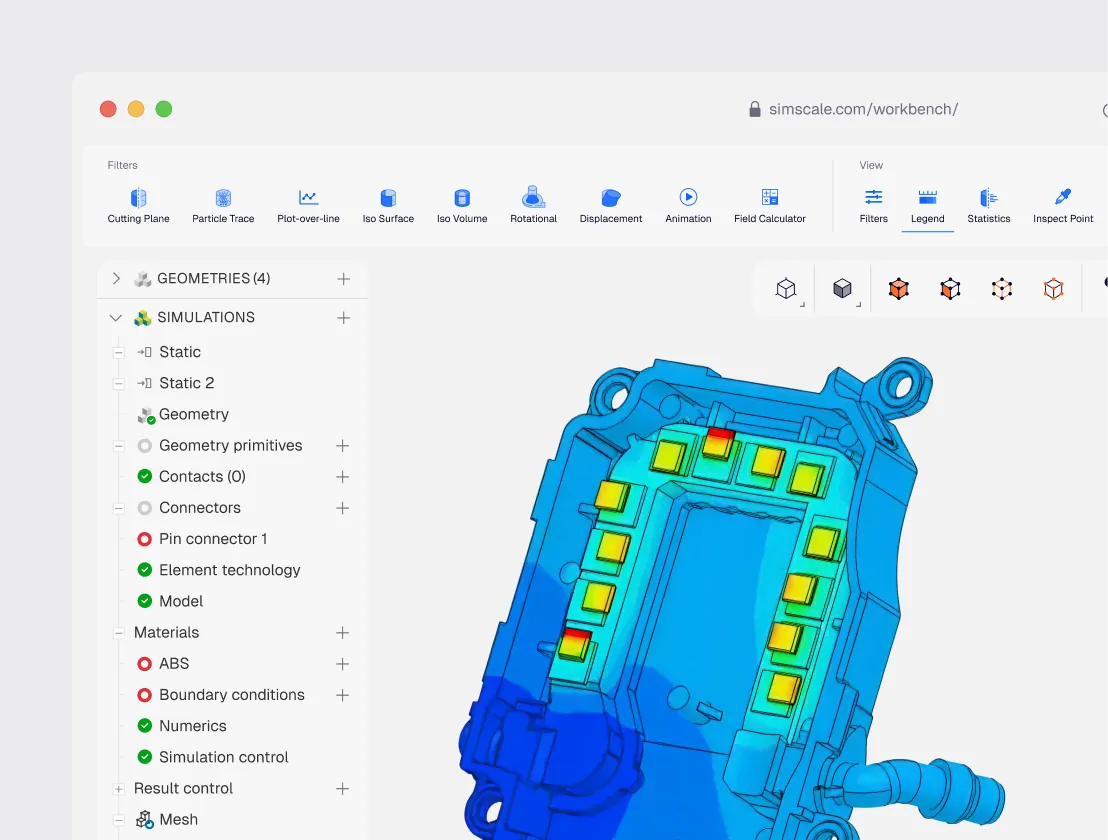
AI-native battery design optimization
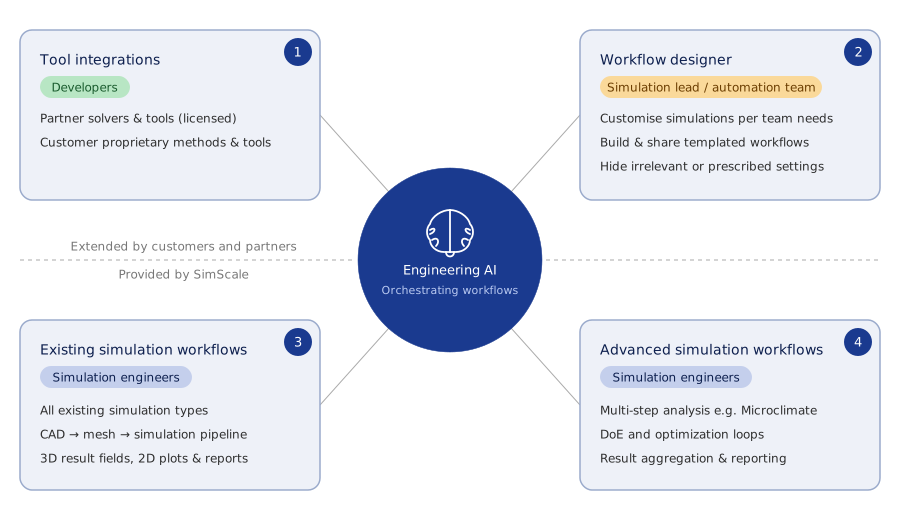
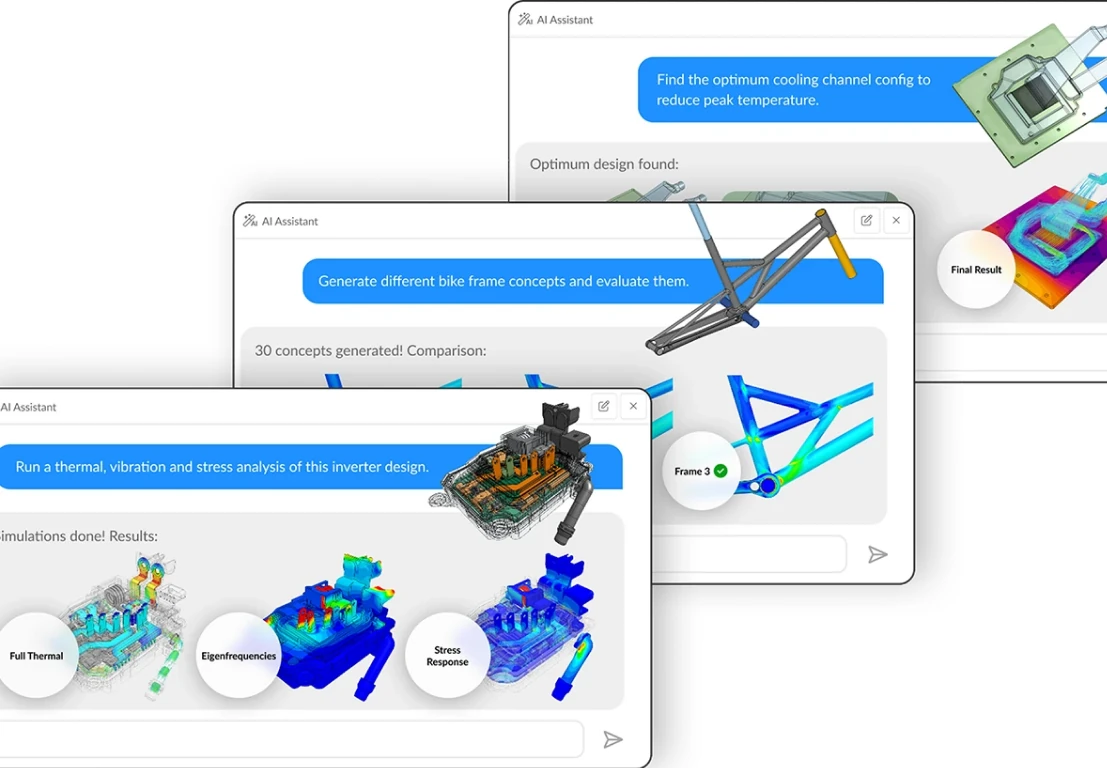
Engineering AI automates simulation setup, meshing, and post-processing on battery packs. Physics AI delivers near-instant predictions trained on high-fidelity simulation data, so engineers can sweep cooling channel, gap-filler, and cell-spacing variants in seconds before committing to a full CHT run.
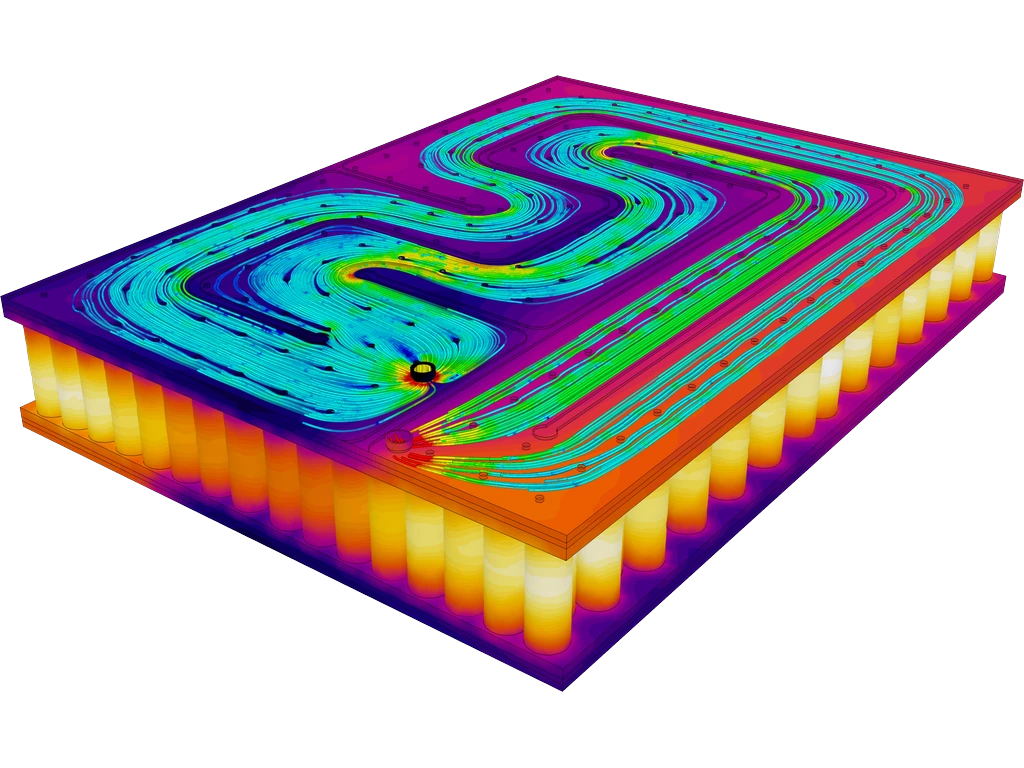
Cloud simulation: more variants, faster
Run hundreds of battery cooling simulations in parallel without on-prem HPC, VPN, or per-seat licence ceilings. Cloud-native compute scales per project so a battery team can sweep dozens of cooling geometries, cell spacings, and gap-filler configurations side by side.
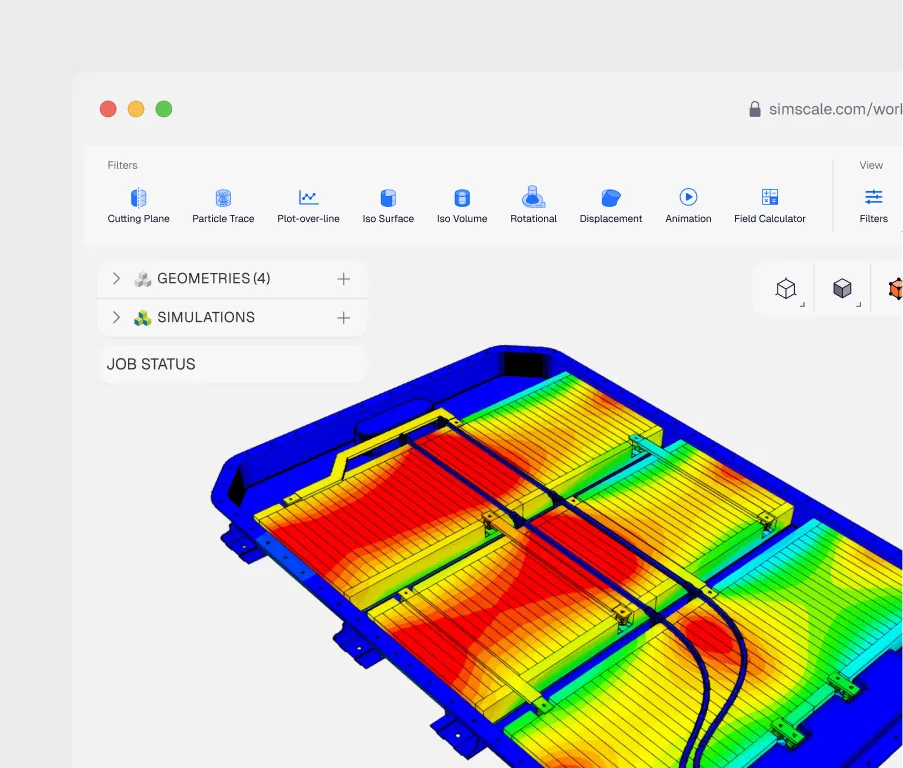
Battery thermal management and cooling-system design
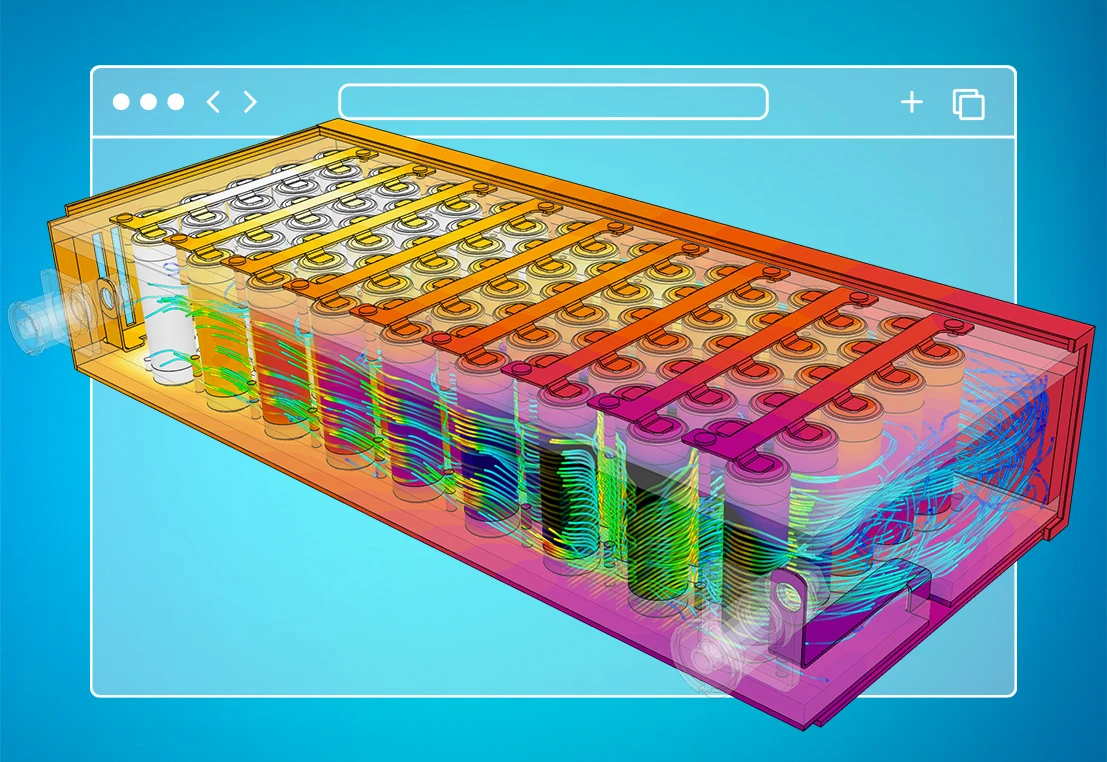
Predict cell temperatures, coolant flow, pressure drop, and thermal gradients across drive cycles or ESS operating envelopes. Run conjugate heat transfer on cold plates, immersion cooling, gap fillers, and air-cooled architectures. Catch hot spots before the prototype pack hits the climate chamber.
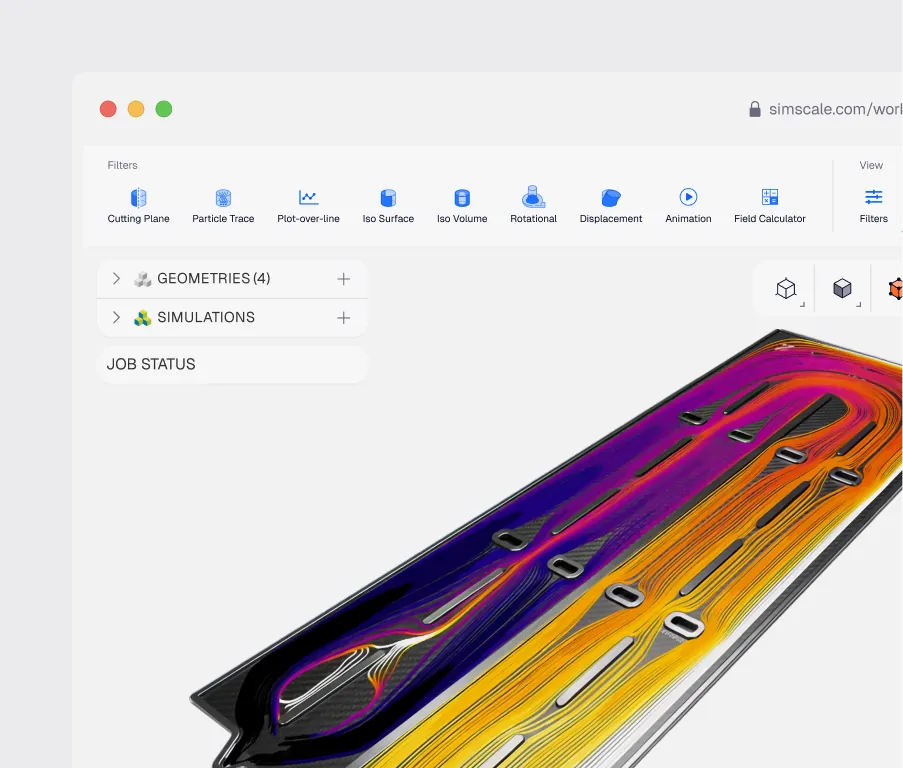
Battery cold plate and liquid cooling design
Design liquid cold plates for EV traction batteries, ESS modules, and power electronics. Optimise channel geometry, manifold flow split, and coolant choice. Balance pressure drop against thermal duty across operating envelopes.
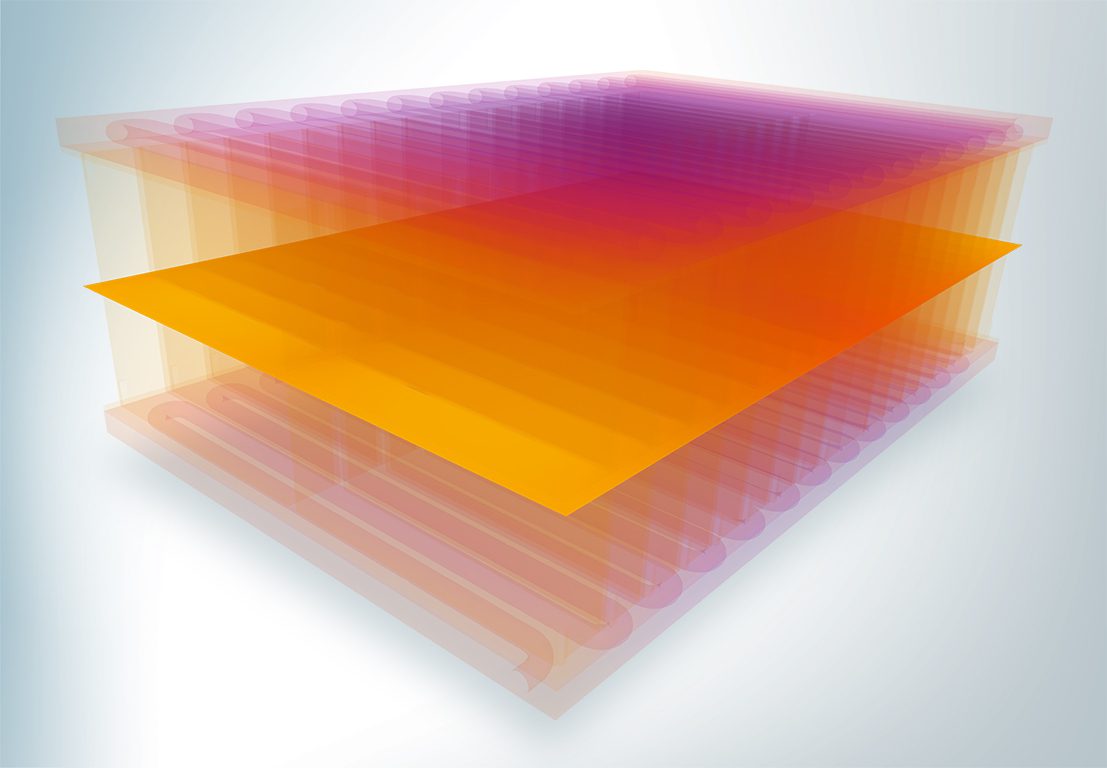
Gap filler and thermomechanical analysis
Model gap-filler compression, thermal conductivity, and mechanical fatigue under cell swelling and pack vibration. Validate gap-filler material selection against thermal-runaway containment and long-term cycling.
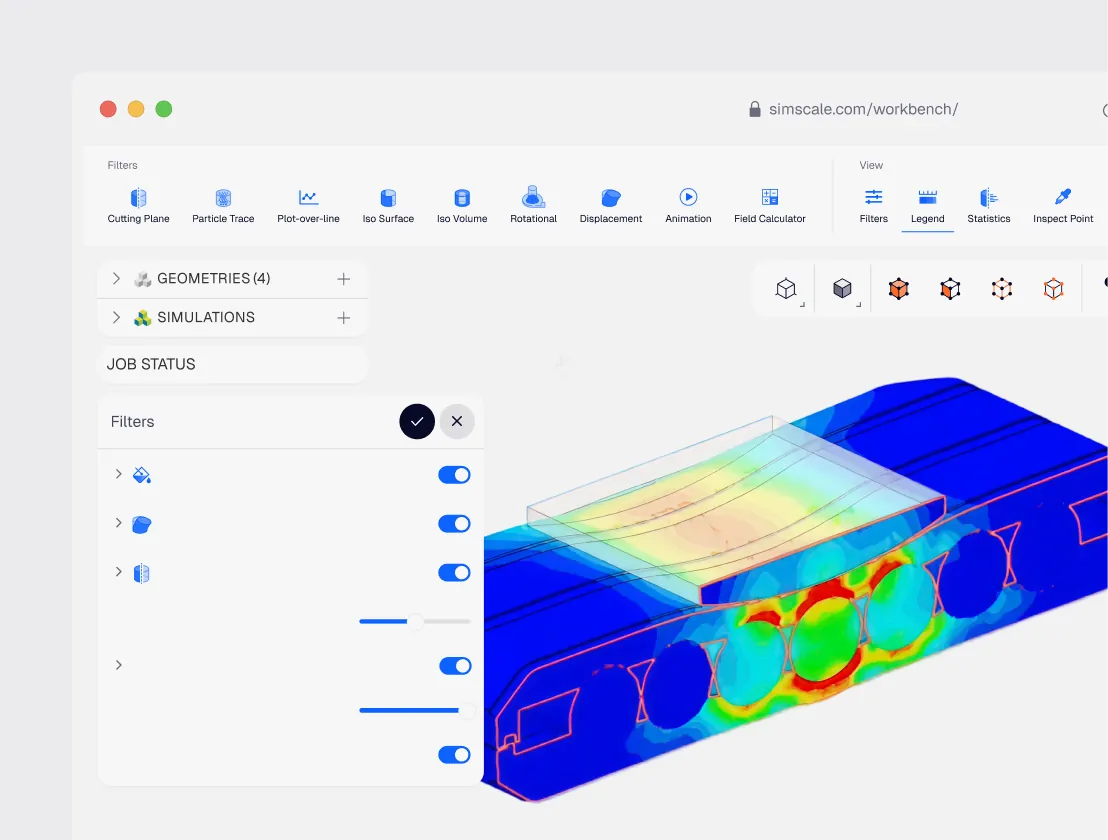
Battery pack structural and vibration analysis
Run nonlinear FEA and modal analysis on battery enclosures, busbars, and cell-fixing structures under crash, drop, and vibration loads. Validate enclosure stiffness and resonance behaviour to automotive and ESS standards before tooling.
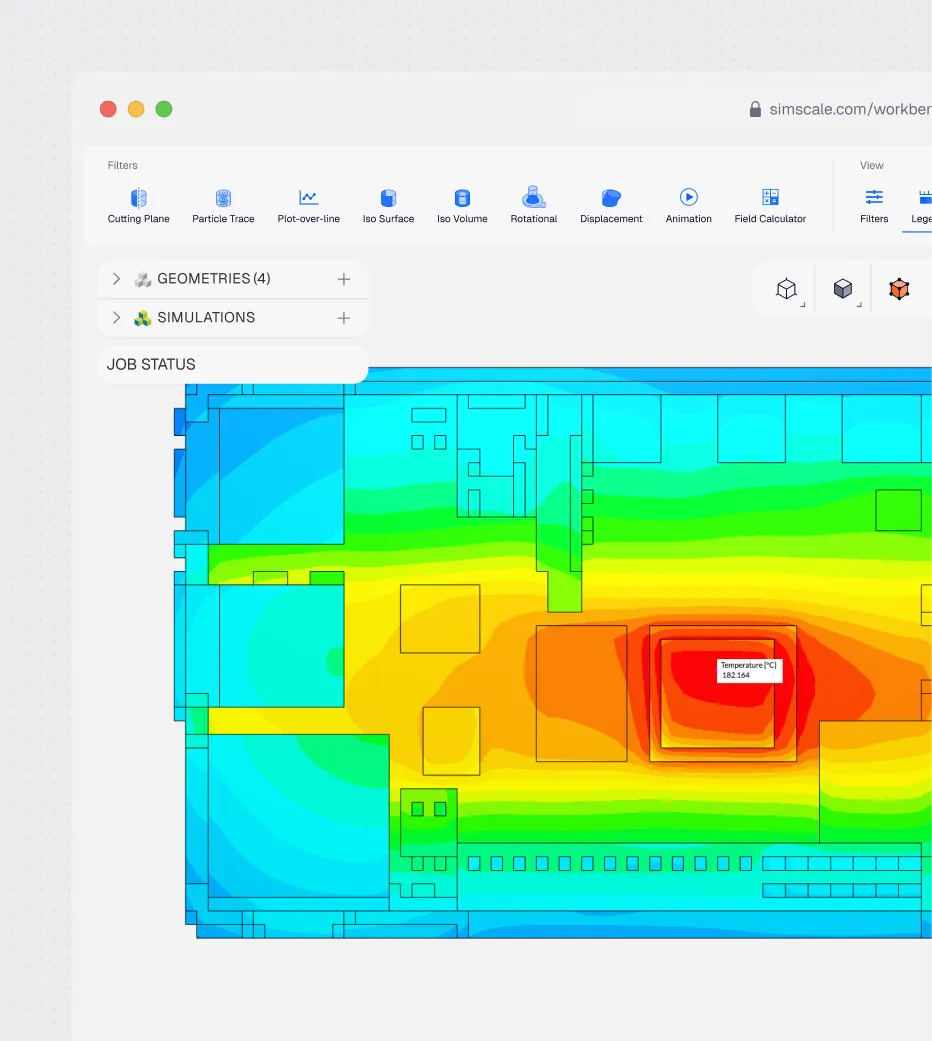
Consumer electronics battery thermal design
Predict battery temperatures, board-level thermal interaction, and enclosure heat dissipation for laptops, smartphones, wearables, and power tools. Couple with surrounding electronics thermal analysis to design battery placement, vents, and heat pipes.
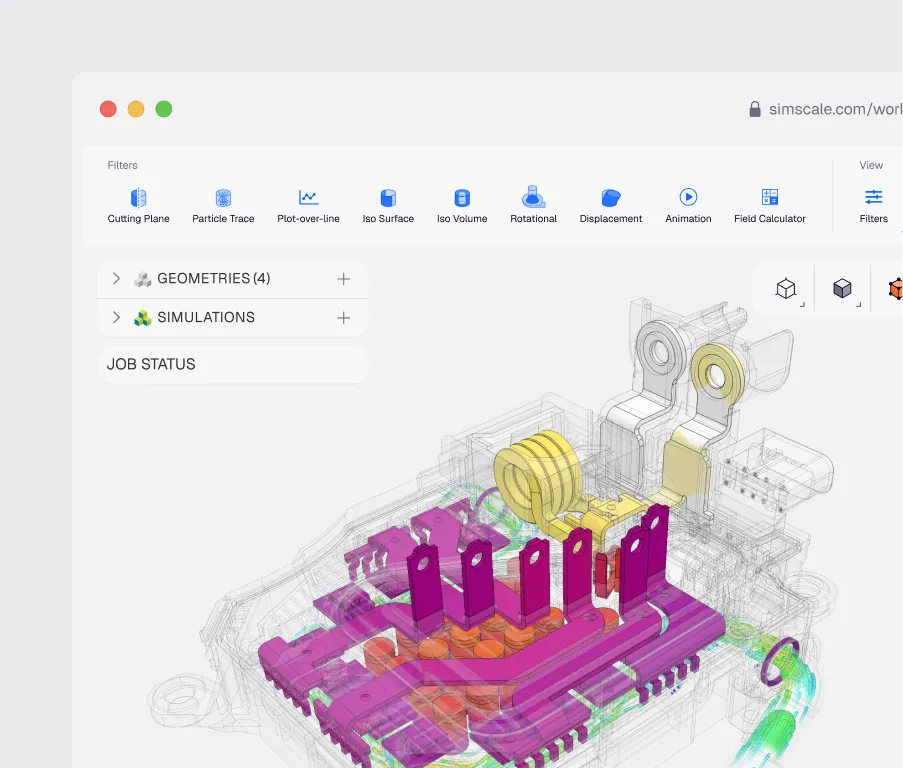
Busbar and electrical interconnect design
Simulate current density, resistive heating, and voltage drop across busbars, tabs, and cell-to-cell interconnects. Identify hot spots from contact resistance or asymmetric current paths and optimise conductor geometry and material selection before manufacturing.

100+
simulations compared in cloud-based CHT
“The difficulties in accurately predicting the thermal behavior and pumping losses in the cooling system were only possible to tackle using CFD tools. The main advantage we find in simulation is the speed at which we can try different ideas and design parameters.”
Bernat Carreras, Director at Bold Valuable Tech

Weeks to days
with 5°C thermal accuracy
“By testing a few options in simulation up front, I could be confident that we didn't need a full metal enclosure, so in this case we could select a much more cost-effective solution without sacrificing reliability.”
Andrew Ashby, Mechanical Engineering Manager at Pektron

100+
simulation runs on EV battery and server cooling
“Since we are able to provide the clients with realistic data incorporating reasonable numbers generated with the relevant simulation, it has become much easier to discuss the problem to solve in the initial stage, thus expanding business opportunities.”
Seongsu Park, Researcher at Forwiz System Co
Related resources

Alex Graham
June 16, 2026
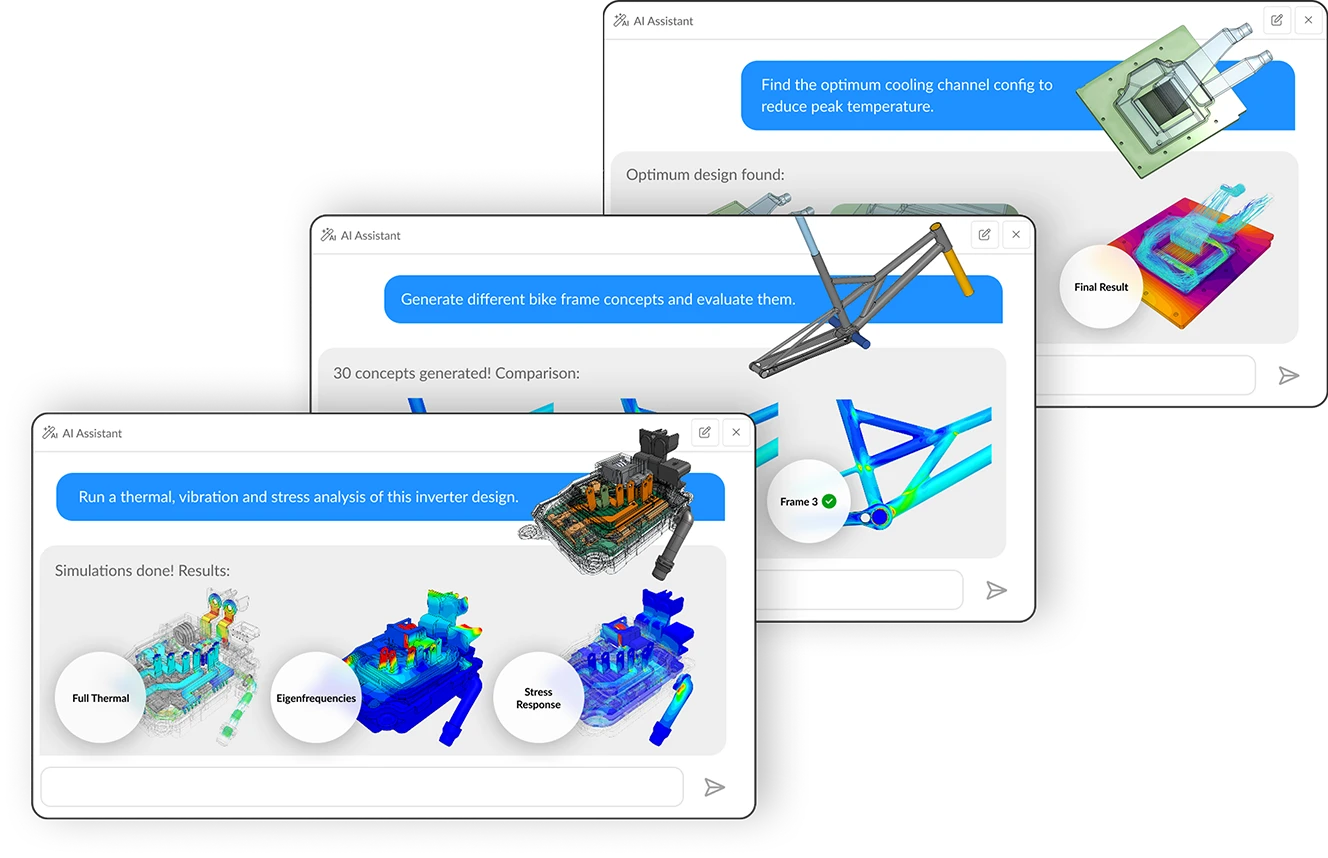
Multi-agent workflows: key takeaways from Design & Simulation Week 2026
SimScale and CoLab demonstrated live AI agent collaboration at Design & Simulation Week 2026, cutting engineering review and simulation lead times dramatically.
Alex Graham
June 12, 2026

SimScale Workflows: Why we are opening up the platform (& why you should care)
SimScale Workflows opens its platform to custom solvers and tools, enabling automated, AI-driven multi-step engineering simulation pipelines for any organization.
Alex Graham
May 29, 2026



Luis Goncaves
June 18, 2026
Luis Goncaves
January 27, 2026

Paras Ghumare
December 4, 2025


Jon Wilde
June 16, 2026


David Heiny
June 15, 2026
Jon Wilde
June 3, 2026

Peter Selmeczy
March 24, 2026
Peter Selmeczy
September 10, 2025
Peter Selmeczy
June 25, 2025
Peter Selmeczy
May 29, 2026
Yes. SimScale runs cell-level CHT, module-level coolant flow, and pack-level structural and thermal analyses in the same project, from individual cell geometry through to full module and pack assemblies.
CAD models import from Onshape, SolidWorks, CATIA, and STEP files directly into SimScale through the browser. Geometry changes sync automatically, so engineers can iterate on CAD and re-run simulations without manual export steps.
EV battery packs (cylindrical, prismatic, pouch), consumer-electronics batteries (laptop, smartphone, wearable), and grid-scale energy-storage systems (ESS). Cooling architectures cover cold plates, immersion cooling, air cooling, and gap-filler thermomechanical analysis.
SimScale runs transient conjugate heat transfer to model worst-case cell-to-cell heat transfer, gap-filler performance under fault, and pack-enclosure thermal containment. Combine with structural FEA on the enclosure to evaluate venting and structural integrity under abuse scenarios.
Engineers run their first battery simulation in the browser within an hour of sign-up. Real-time support sits inside the project for setup, meshing, and physics questions. No install, no VPN, no on-prem HPC.