Rotating Machinery simulation software
Simulate rotating machinery with AI-native CFD, FEA, and electromagnetic analysis
Map pump curves, identify resonance risks, and validate motor efficiency before the first prototype is built. CFD, FEA, thermal, and electromagnetic simulation in one cloud-native platform.
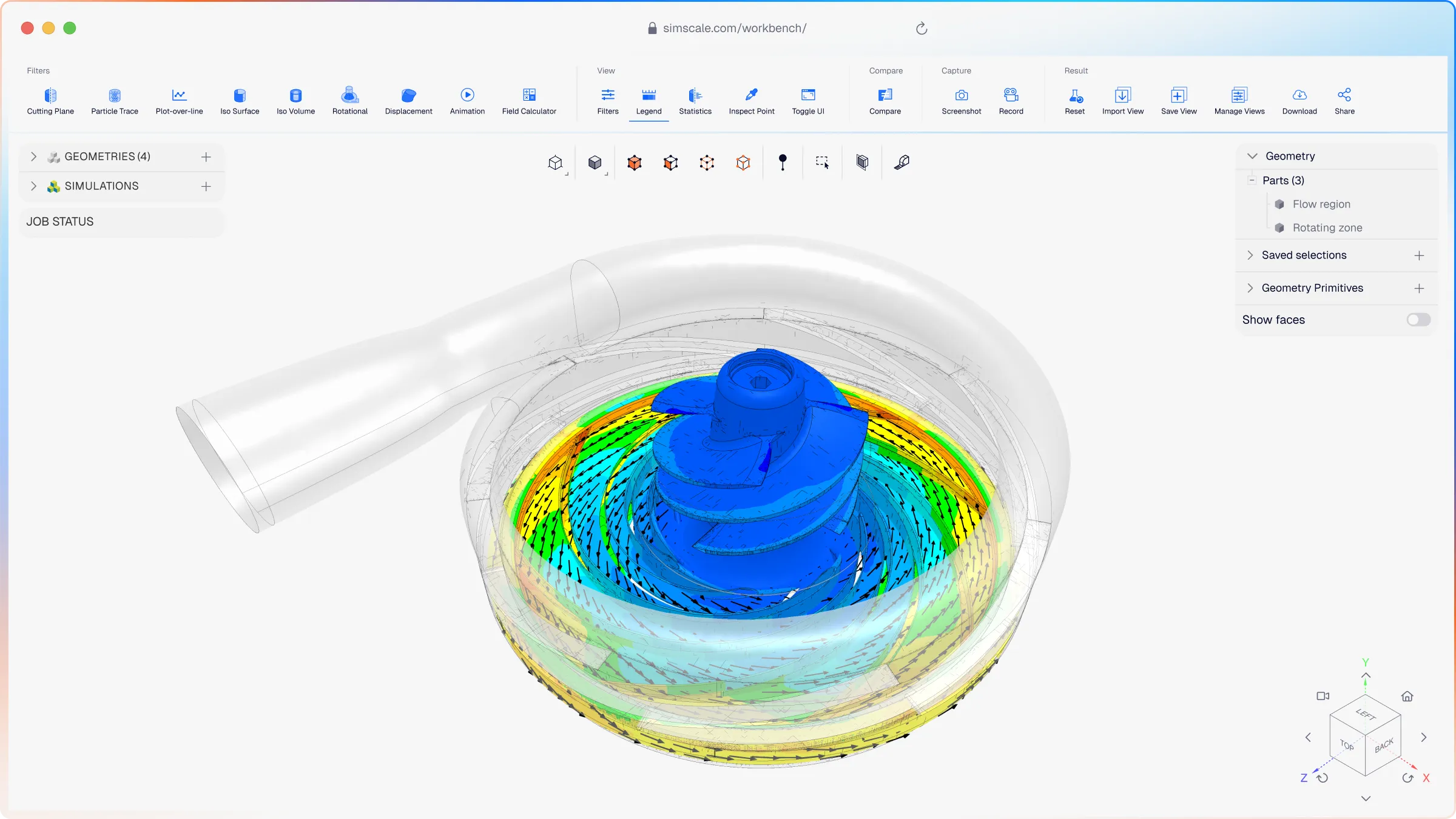












Rotating machinery demands fluid, structural, thermal, and electromagnetic analysis. SimScale unifies all four on the same geometry in the cloud, so any design engineer can run the full analysis without switching platforms or waiting in line.
Rotating machinery simulation that covers your full design challenge
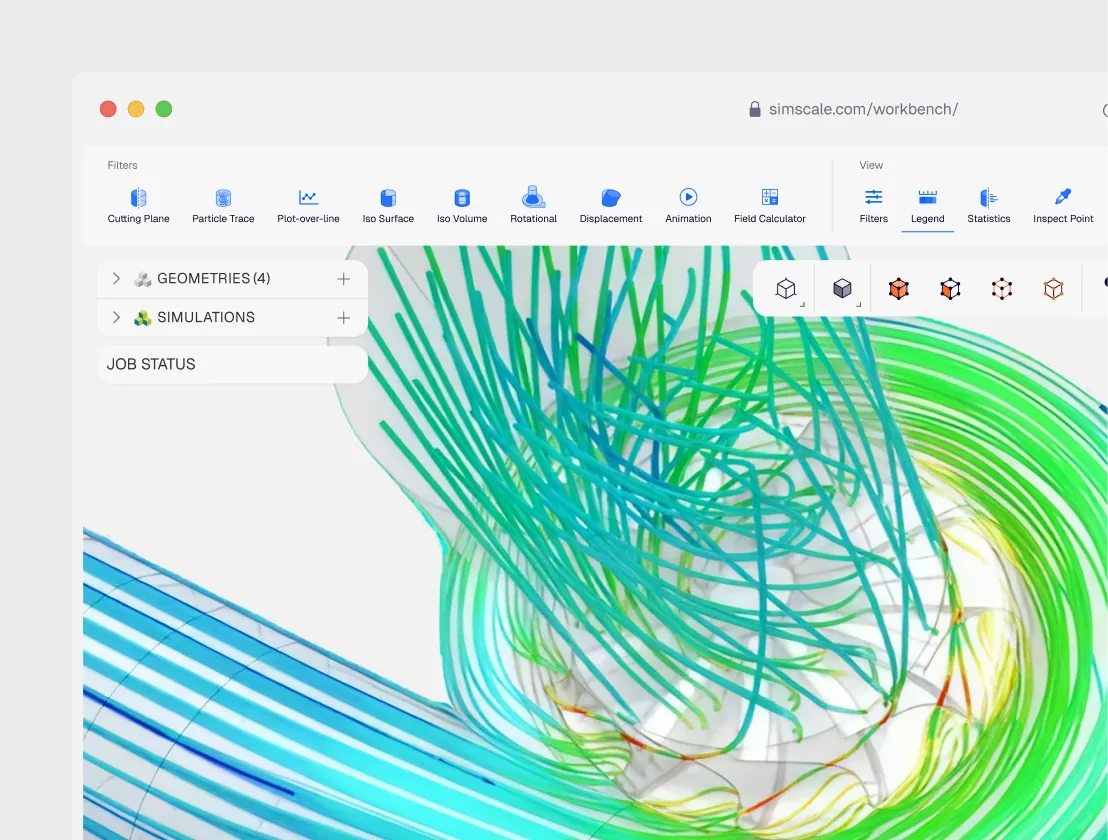
All the physics rotating machinery demands, in one simulation
Rotating machinery fails at physics boundaries: fluid loads stress the blade, electromagnetic losses heat the winding, vibration cycles fatigue the shaft. SimScale couples CFD, FEA, thermal, and electromagnetic solvers on the same geometry so your analysis captures how the machine actually behaves.
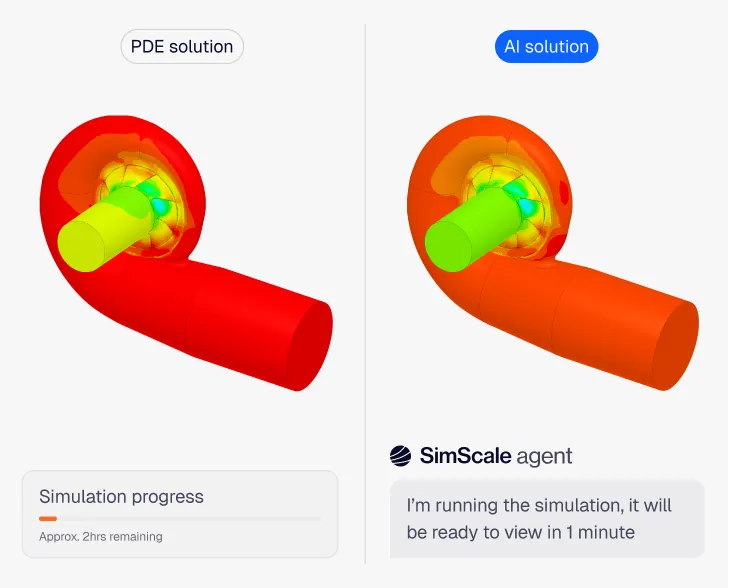
AI-native rotating machinery design optimization
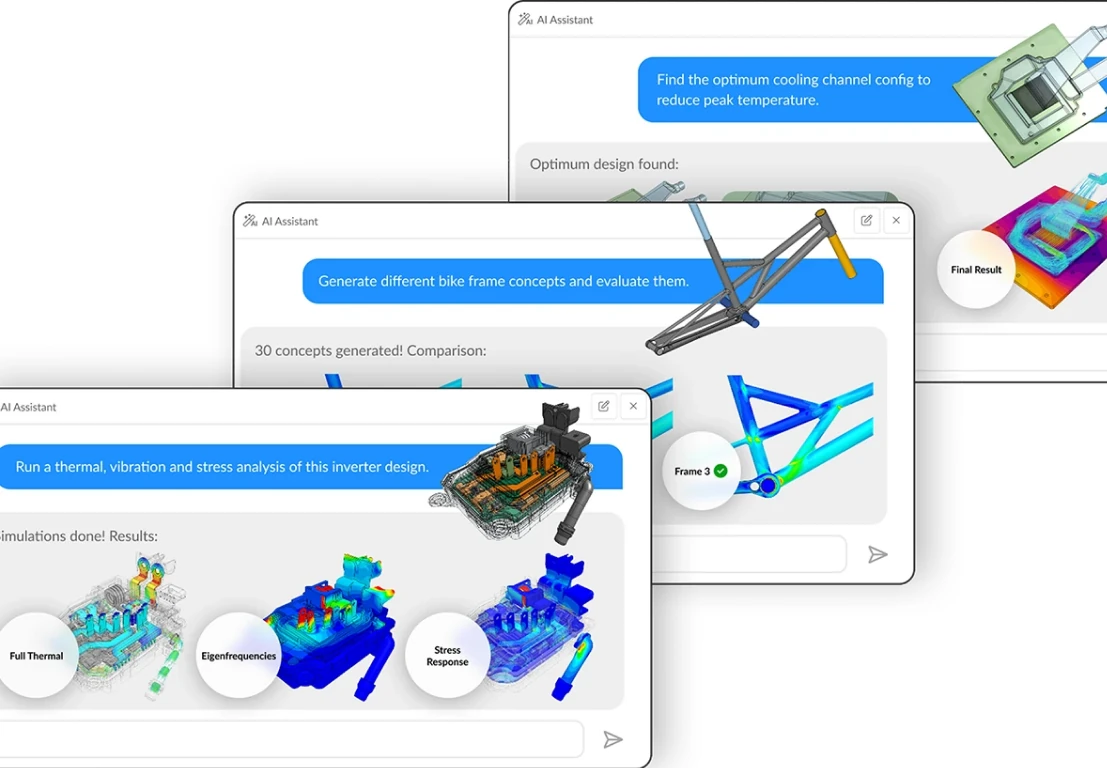
Engineering AI automates mesh setup, convergence monitoring, and post-processing across complex rotating geometries. Physics AI delivers near-instant performance predictions for pump curve sweeps and motor efficiency maps. Explore hundreds of design variants in the time it once took to set up one run.
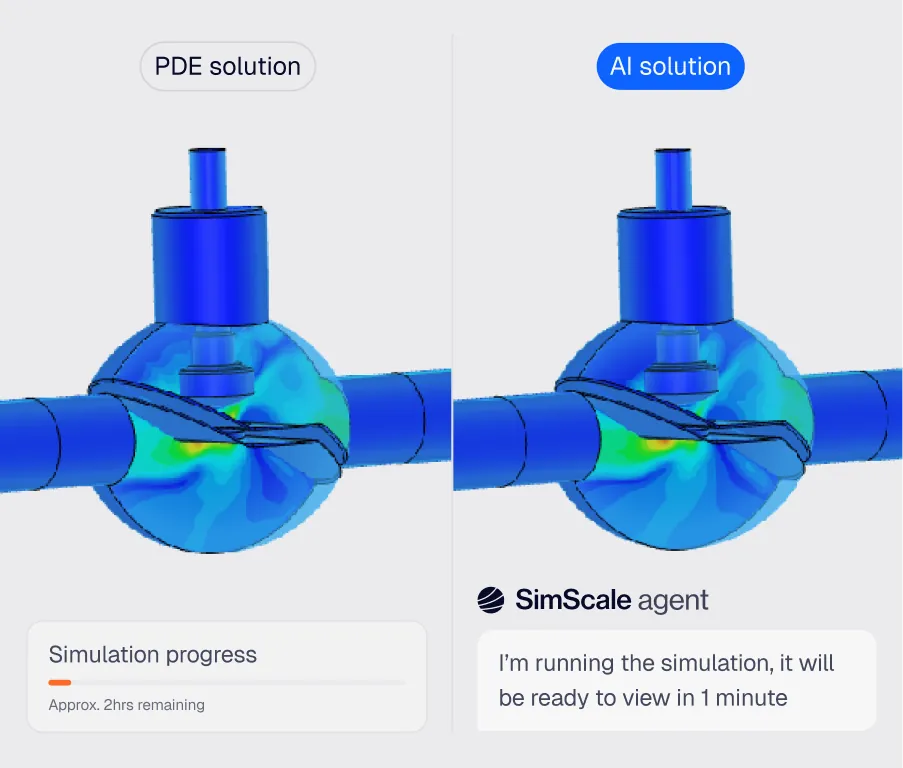
More operating points, in parallel: no HPC bottlenecks
Run dozens of speed points, flow rates, or load cases simultaneously from your browser. Elastic cloud compute scales to any case with no queue waits and no IT overhead. Your team accesses the same models and results in real time, wherever they are.
Rotational flow: MRF and sliding mesh simulation
Map the complex fluid dynamics of pumps, fans, turbines, and mixers with the right fidelity for the job. Run rapid performance sweeps with Multiple Reference Frame (MRF) or capture transient wake interactions with full Sliding Mesh (AMI). Multiphase flows and cavitation risk are handled in the same setup.
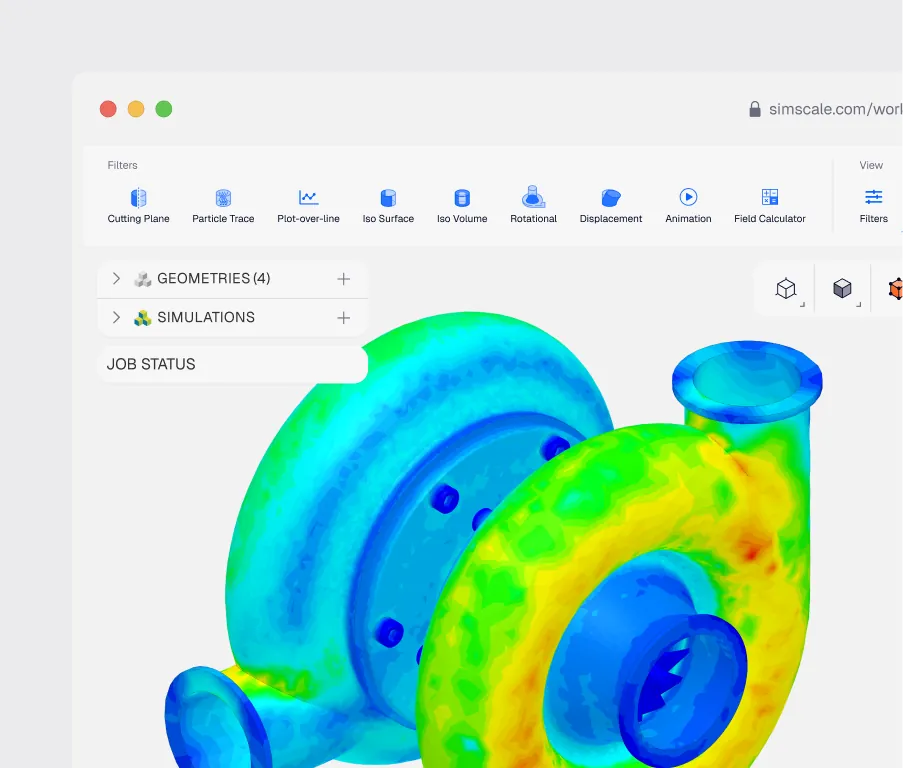
Structural analysis and rotordynamics
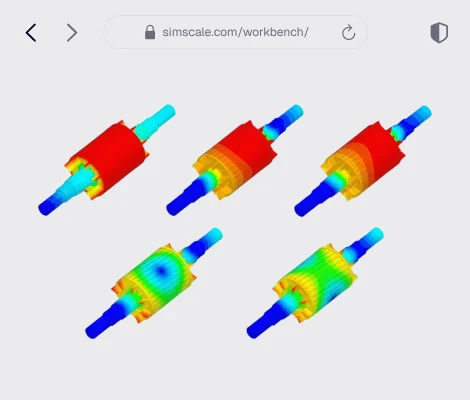
Assess vibration, thermal stress, and fatigue on high-speed rotors. Generate Campbell diagrams to spot critical resonance speeds before hardware testing. Validate casings, volutes, and baseplates against dynamic loads from unbalance, shock, and cyclic pressure.
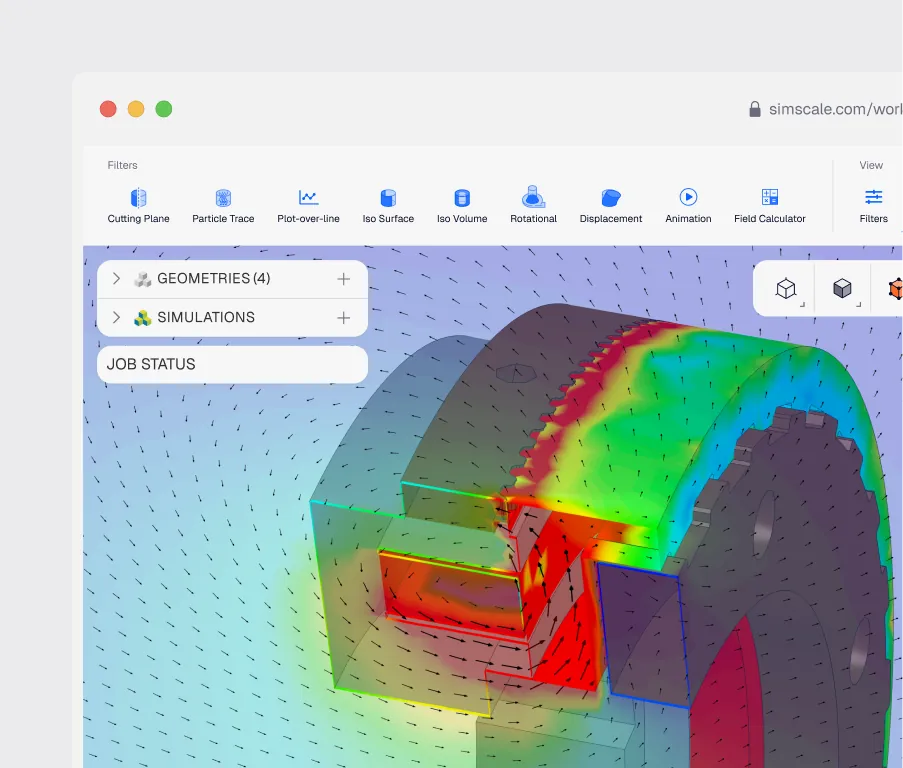
Electromagnetic simulation for motors and generators
Visualize static magnetic fields and capture eddy current phenomena. Calculate hysteresis and core losses to maximize efficiency, and define permanent magnet magnetization to reduce torque ripple. Purpose-built solvers for rotating electrical machine design.

99.9%
reduction in simulation time
“It allows us to complete development cycles within days instead of months, which gives us a massive advantage over our competition.”
Benjamin van der Walt — Engineering Manager, Hazleton Pumps
€10k
saved per pump design project
“The insight obtained from CFD simulations in SimScale is like looking inside a transparent machine using a laser doppler velocimeter. It is priceless!”
Guerreiro Romani — Freelance Industrial Engineer & Designer

5×
more turbine models run simultaneously
“We can drive simulation insights into mechanical design and run five times the number of models at the same time compared to legacy systems.”
John Tuttle — Chief Engineer, Emrgy
Related resources

Alex Graham
June 16, 2026
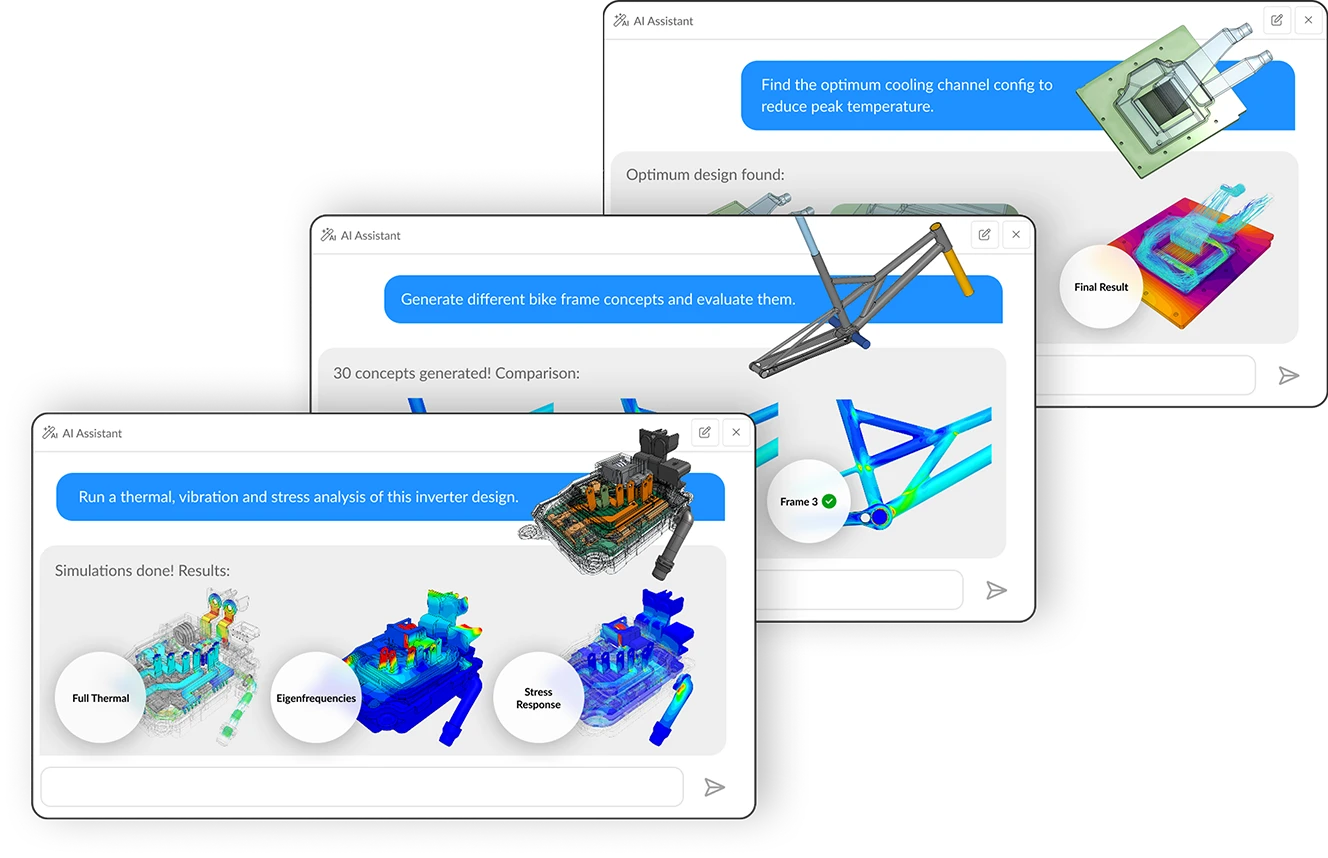
Multi-agent workflows: key takeaways from Design & Simulation Week 2026
SimScale and CoLab demonstrated live AI agent collaboration at Design & Simulation Week 2026, cutting engineering review and simulation lead times dramatically.
Alex Graham
June 12, 2026

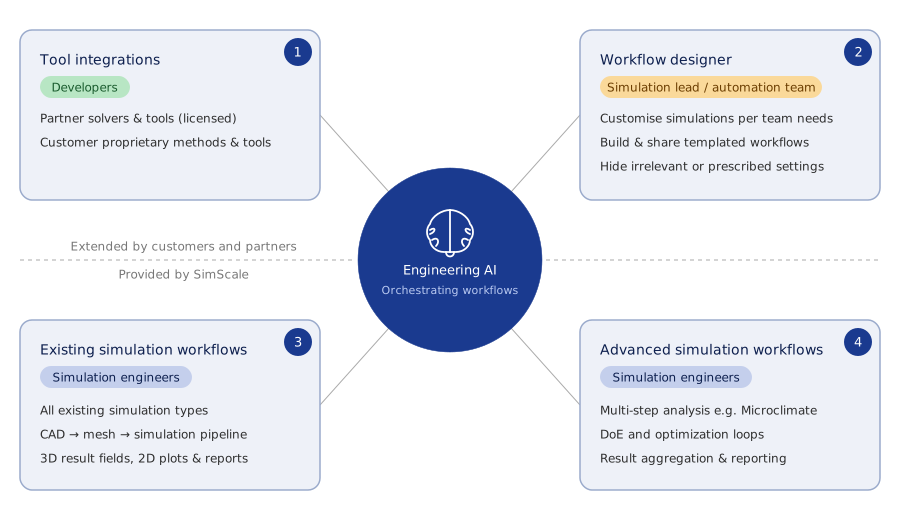
SimScale Workflows: Why we are opening up the platform (& why you should care)
SimScale Workflows opens its platform to custom solvers and tools, enabling automated, AI-driven multi-step engineering simulation pipelines for any organization.
Alex Graham
May 29, 2026



Luis Goncaves
June 18, 2026
Luis Goncaves
January 27, 2026

Paras Ghumare
December 4, 2025


Jon Wilde
June 16, 2026


David Heiny
June 15, 2026
Jon Wilde
June 3, 2026

Peter Selmeczy
March 24, 2026

Peter Selmeczy
September 10, 2025
Peter Selmeczy
June 25, 2025
Peter Selmeczy
May 29, 2026
FAQs
New to rotating machinery simulation or evaluating SimScale? Here are the questions we hear most.
ContactYes. SimScale runs CFD, FEA, thermal, and electromagnetic simulations on the same geometry. You can analyze fluid forces on the rotor, structural response under those loads, heat distribution through the winding, and electromagnetic losses in one platform, without transferring geometry between tools.
SimScale imports standard CAD formats directly in the browser: STEP, IGES, STL, Parasolid. You keep working in SolidWorks, CATIA, Siemens NX, or whatever you use, and bring geometry into SimScale for simulation without a conversion step. Results export to common formats for downstream reporting and design review.
Centrifugal and axial pumps, fans, compressors, Kaplan and Francis turbines, mixers, and both radial and axial flux electric motors. Structurally, you can simulate shafts, rotors, casings, volutes, and impellers. The electromagnetic solver covers static magnetic fields, eddy currents, core losses, and permanent magnet configurations.
MRF is the right choice for steady-state performance sweeps: pump curves, efficiency maps, fan operating points. It runs fast and is accurate enough for most design decisions. Use Sliding Mesh when the transient interaction between rotating and stationary components matters: rotor-stator interference, pressure pulsation analysis, or cases where flow asymmetry drives the result. SimScale supports both in the same platform.
Most engineers run their first simulation within a day. SimScale provides guided templates for common rotating machinery cases: pump curve sweeps, fan performance, motor thermal analysis. Browser-based access means no HPC license to negotiate, no VPN, and no IT queue.