Nonlinear Structural Analysis Software
Explore thousands of nonlinear FEA decisions in seconds, entirely in the cloud.
Predict large deformation, plastic yield and contact behaviour in hours — entirely in the browser, on cloud HPC, with no install and no queue.
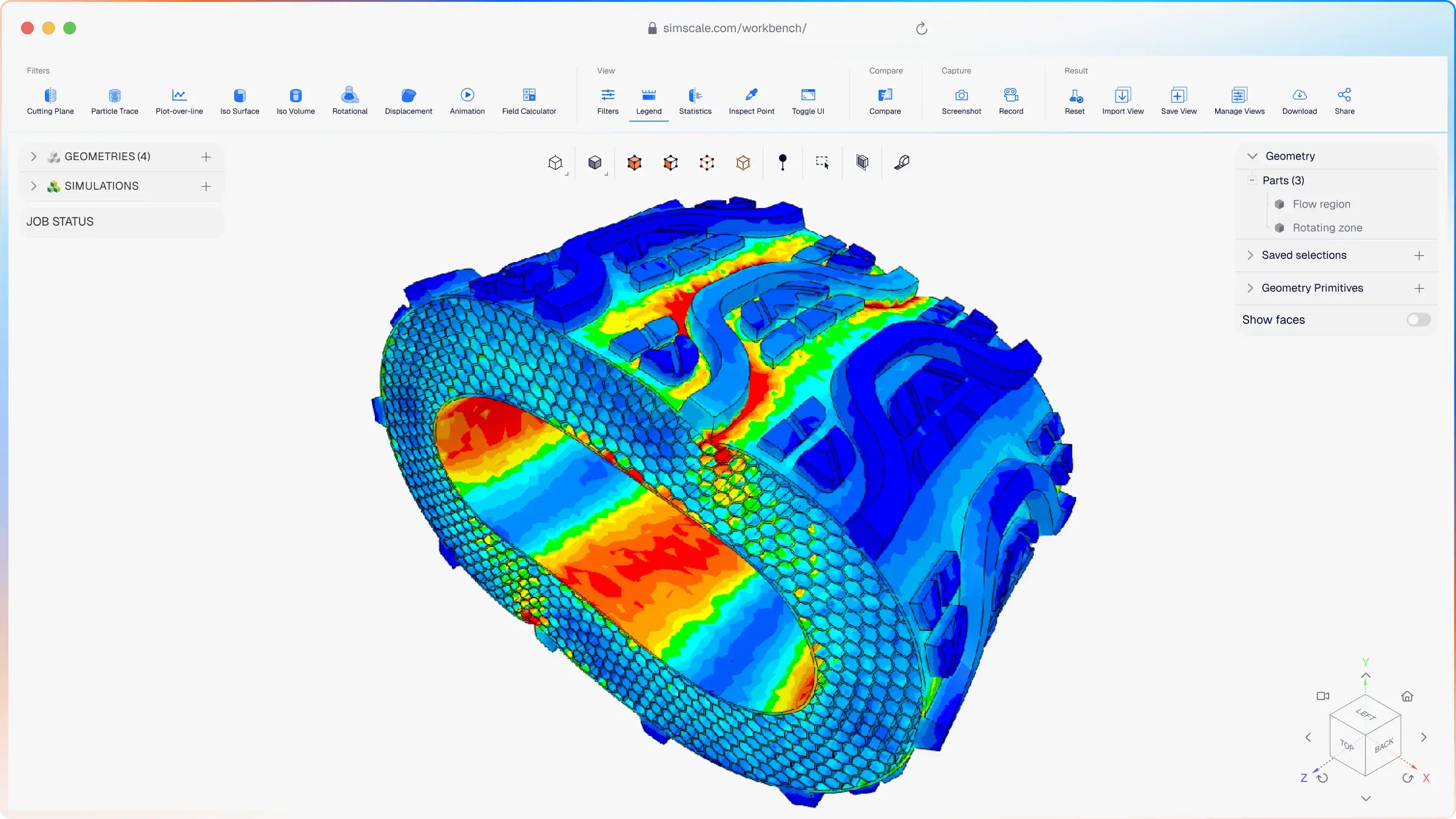












Linear FEA breaks down when stresses exceed yield, parts come into contact, or geometry deforms significantly. SimScale runs all three nonlinearity types in the cloud. Physics AI cuts solve time. Cadence's Marc solver handles advanced material and contact requirements.
Nonlinear structural analysis that covers your full design challenge
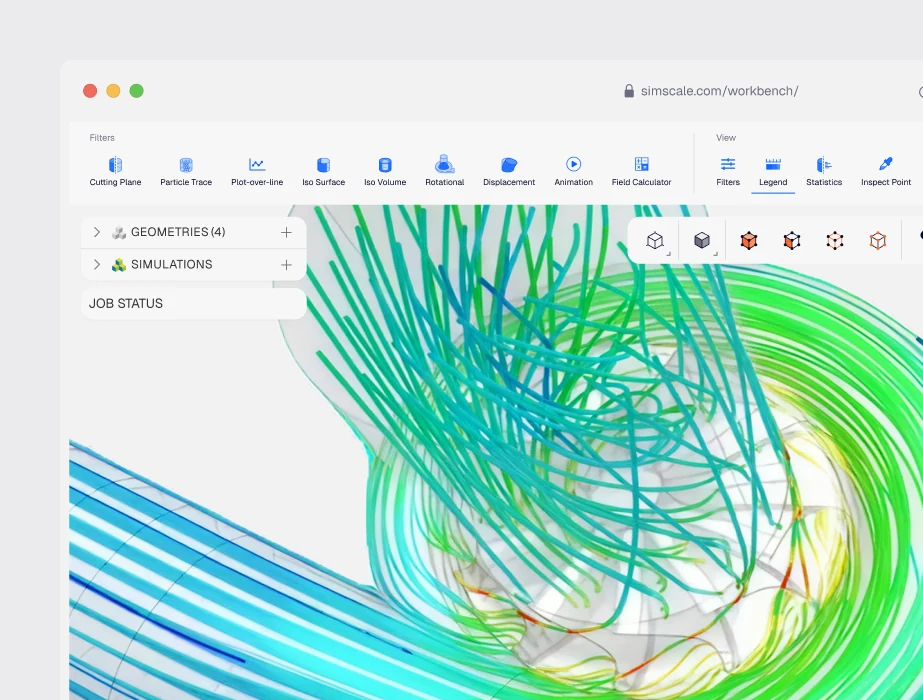
Multiphysics — all the physics your engineers need
Combine nonlinear FEA with thermal, CFD and electromagnetic analyses on the same CAD geometry, in one platform, with all results in a shared project. Couple plastic deformation to thermal expansion, or contact stress to heat generation, without exporting between tools.
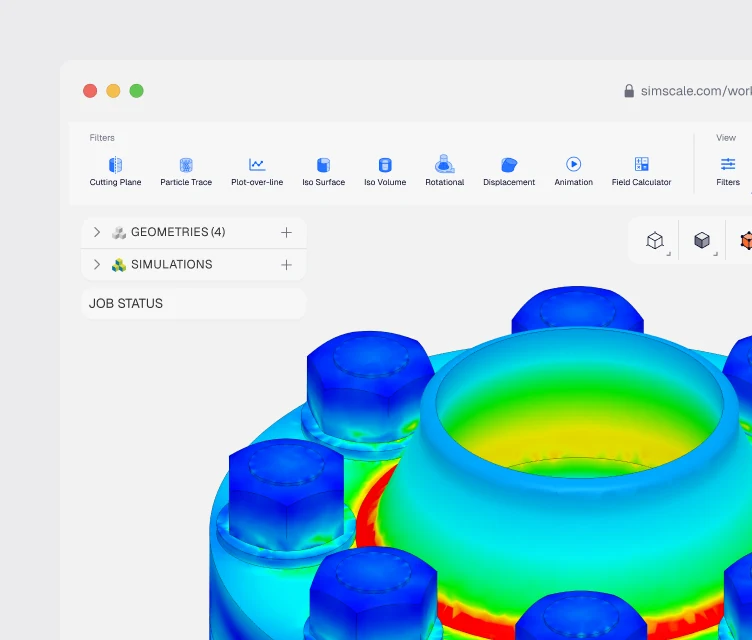
AI-native nonlinear design optimization
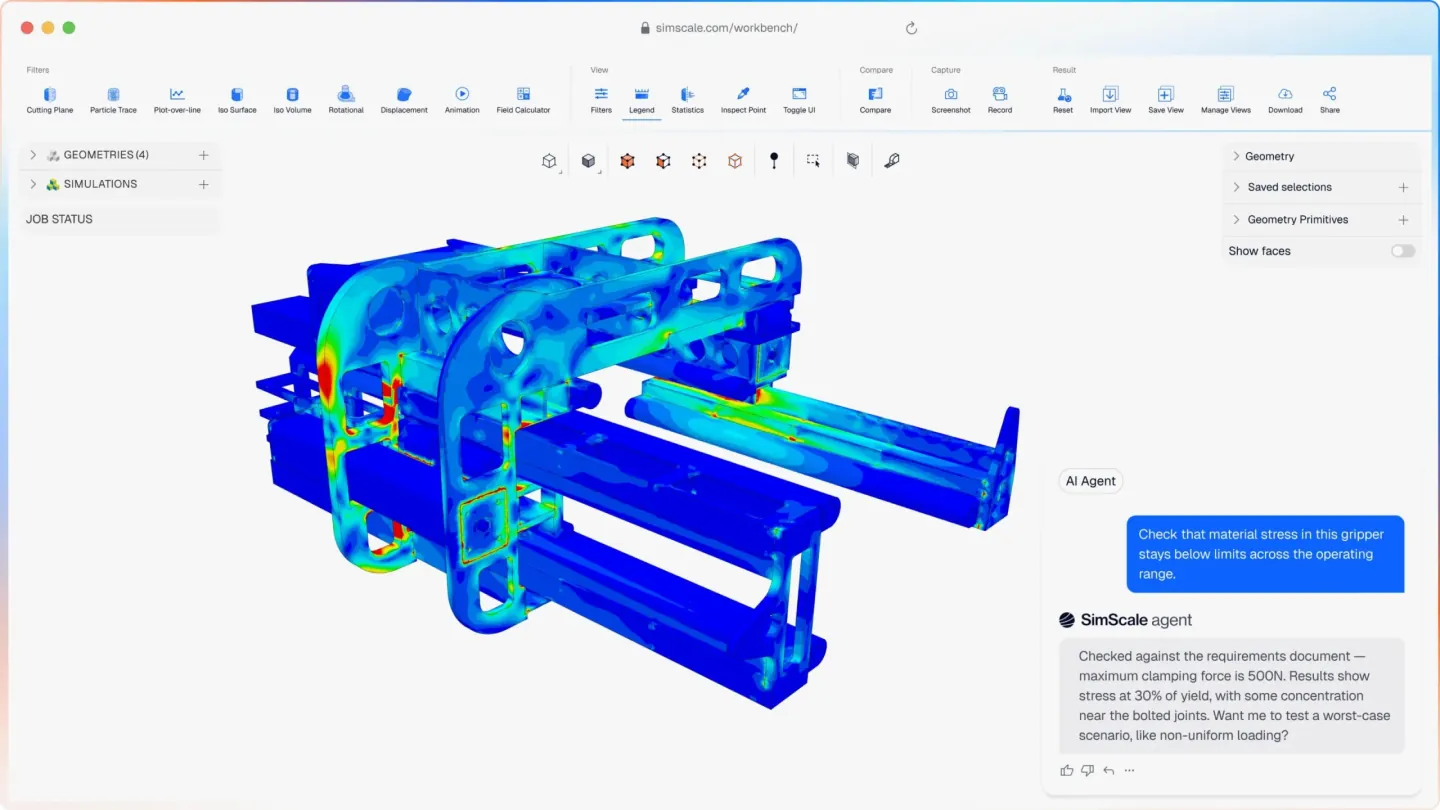
SimScale's Engineering AI accelerates nonlinear runs by suggesting solver settings, predicting convergence, and running parameter sweeps across material model variants in parallel — so engineers test more design concepts in the same timeframe. Physics AI cuts solve time on the most computationally demanding nonlinear analyses, so teams can iterate on designs without waiting for overnight convergence runs. Together, they shift nonlinear FEA from a specialist bottleneck to a standard part of the design workflow.
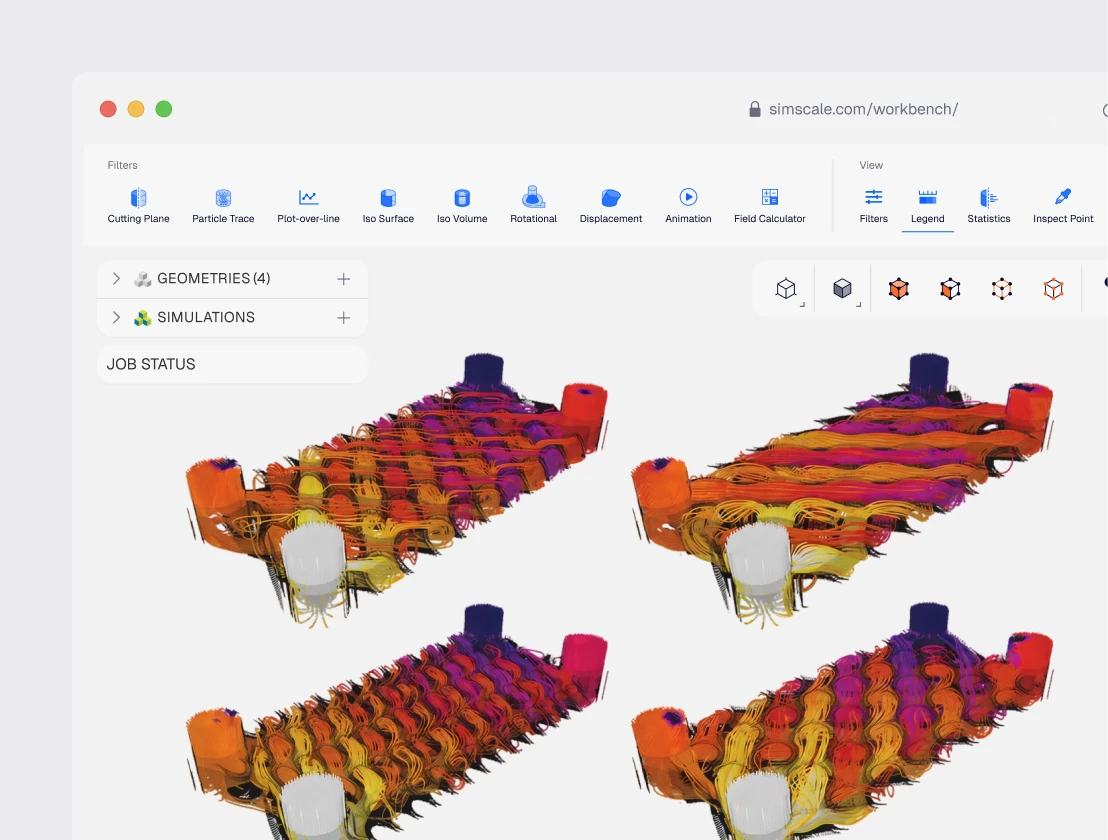
Cloud-native scale — more variants, faster
Run dozens of nonlinear simulations in parallel on elastic cloud HPC — no install, no VPN, no waiting for a workstation to free up. Engineering AI uses that parallel capacity to sweep design variants and loading scenarios simultaneously, surfacing the best-performing configurations without manual re-runs. Every simulation, result and report is accessible from any browser, and shareable with the full team via a single link.
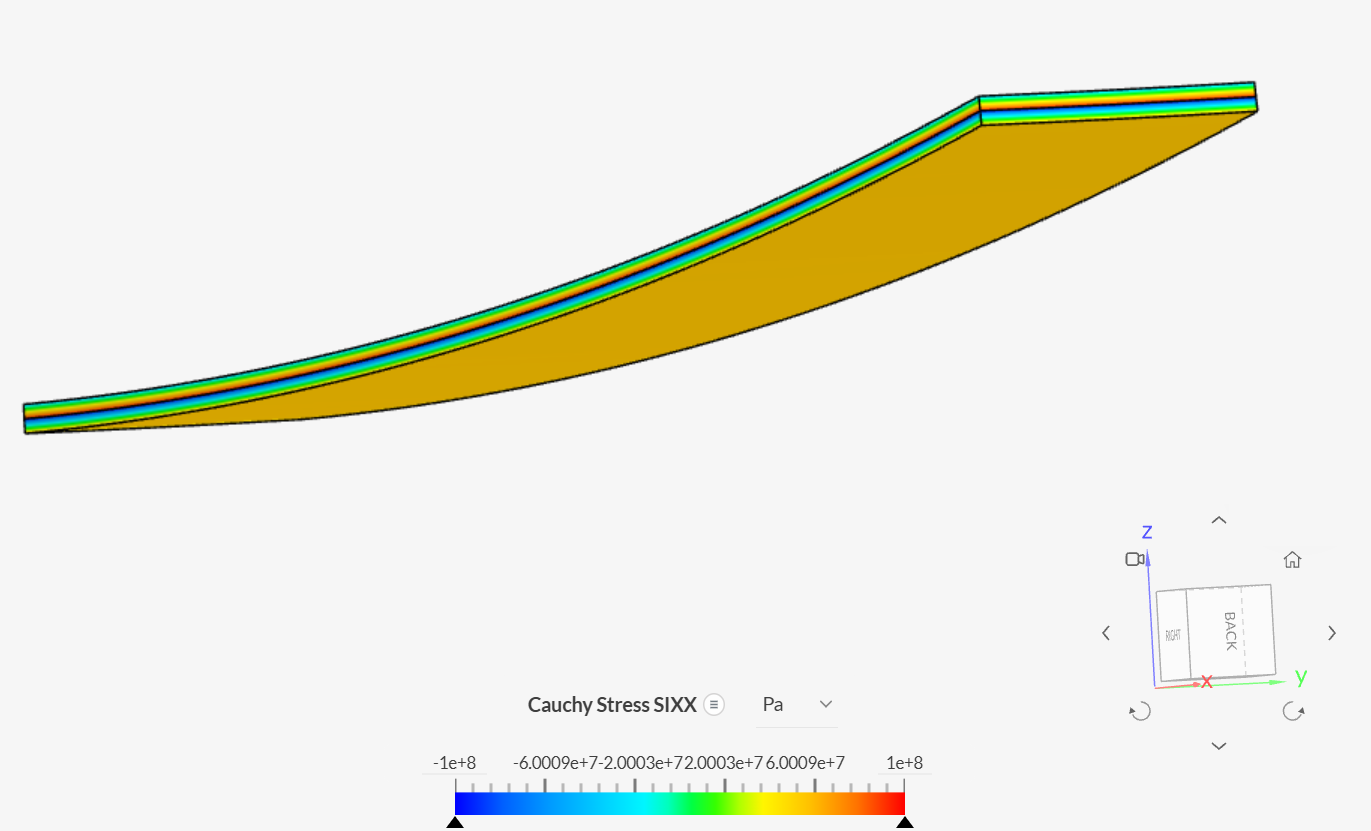
Geometric nonlinearity & large deformation
Capture buckling, post-buckling, snap-through and large displacement in slender structures — brackets, springs, packaging, medical devices. Predict deformation accurately when parts no longer behave like rigid bodies. Engineering AI guides step-size selection and convergence settings for large-displacement runs, cutting setup time for challenging geometries.
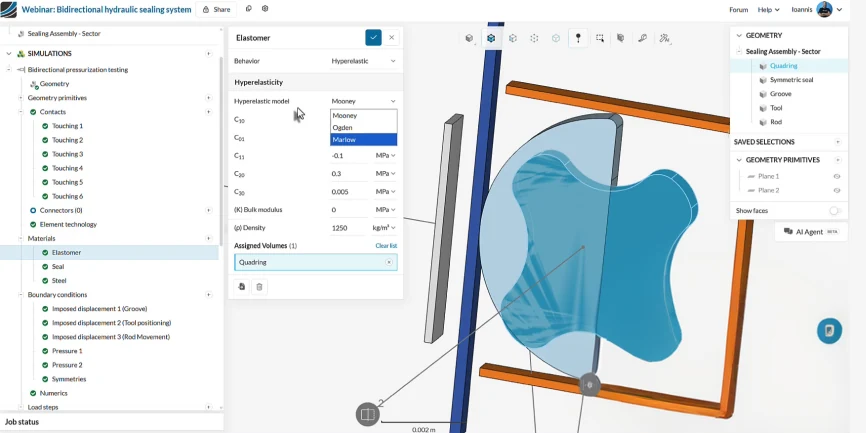
Material nonlinearity — elastoplastic, hyperelastic, viscoelastic
Validated constitutive models including von Mises plasticity, Mooney-Rivlin, Ogden, and viscoelastic polymer behaviour. Cover metals beyond yield, rubbers, foams, biomaterials, with creep and damage extensions. Cadence's Marc solver is available for the most demanding constitutive model requirements.
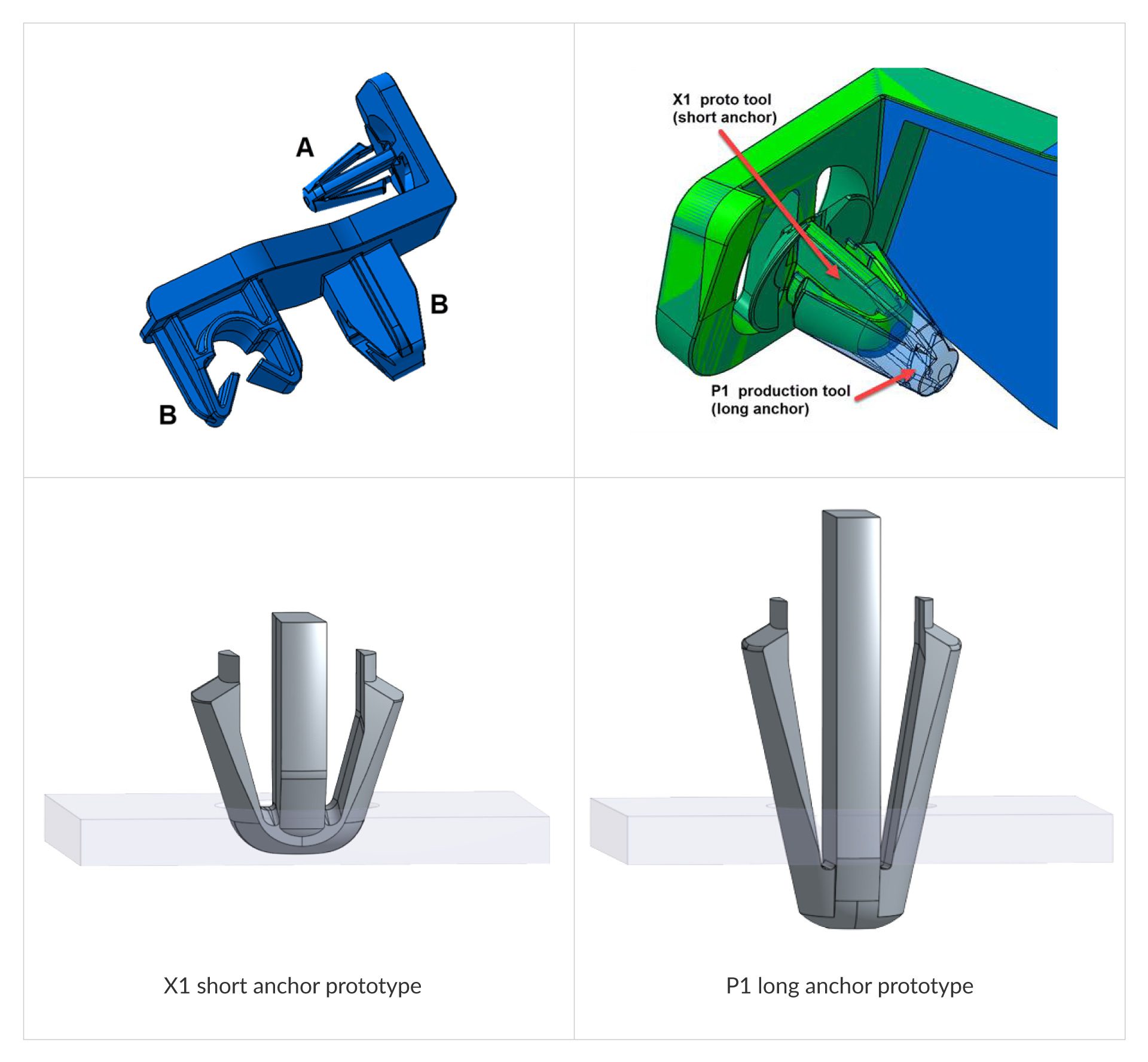
Contact nonlinearity — assemblies, snap-fits, gears
Model friction, separation and load transfer across multiple parts in contact — fasteners, bearings, sealing surfaces, threaded joints. Predict insertion force, contact pressure and stress concentrations without smoothing the physics. Engineering AI detects likely contact pairs and suggests surface definitions for multi-body assemblies, reducing manual setup time.
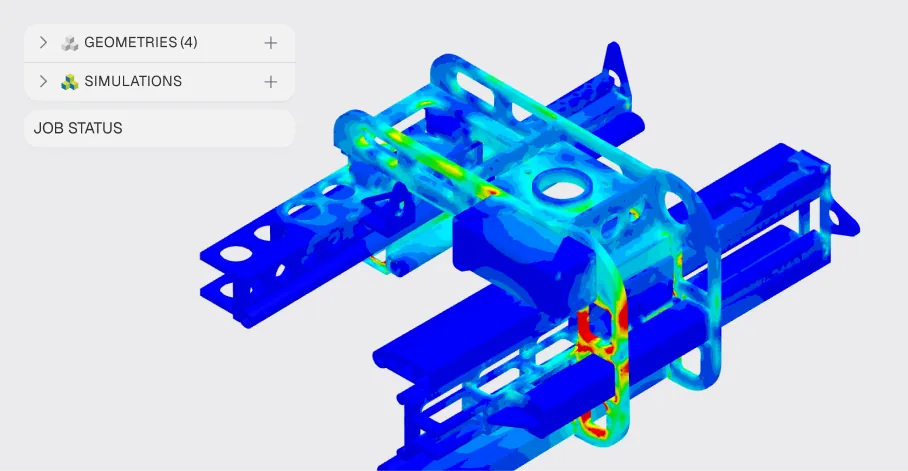
Nonlinear static & quasi-static analysis
Solve incremental load-stepped problems with Newton-Raphson and arc-length methods. Suitable for product validation, structural certification, ISO compliance testing and design-by-analysis workflows.
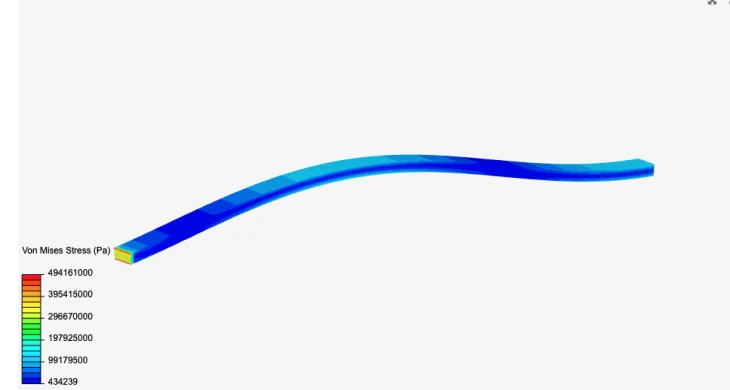
Buckling & post-buckling
Linear buckling for eigenvalue checks; nonlinear post-buckling to track load-deflection beyond the critical point. Used in aerospace structures, civil components, slender packaging and consumer products.
Drop test, impact & crash
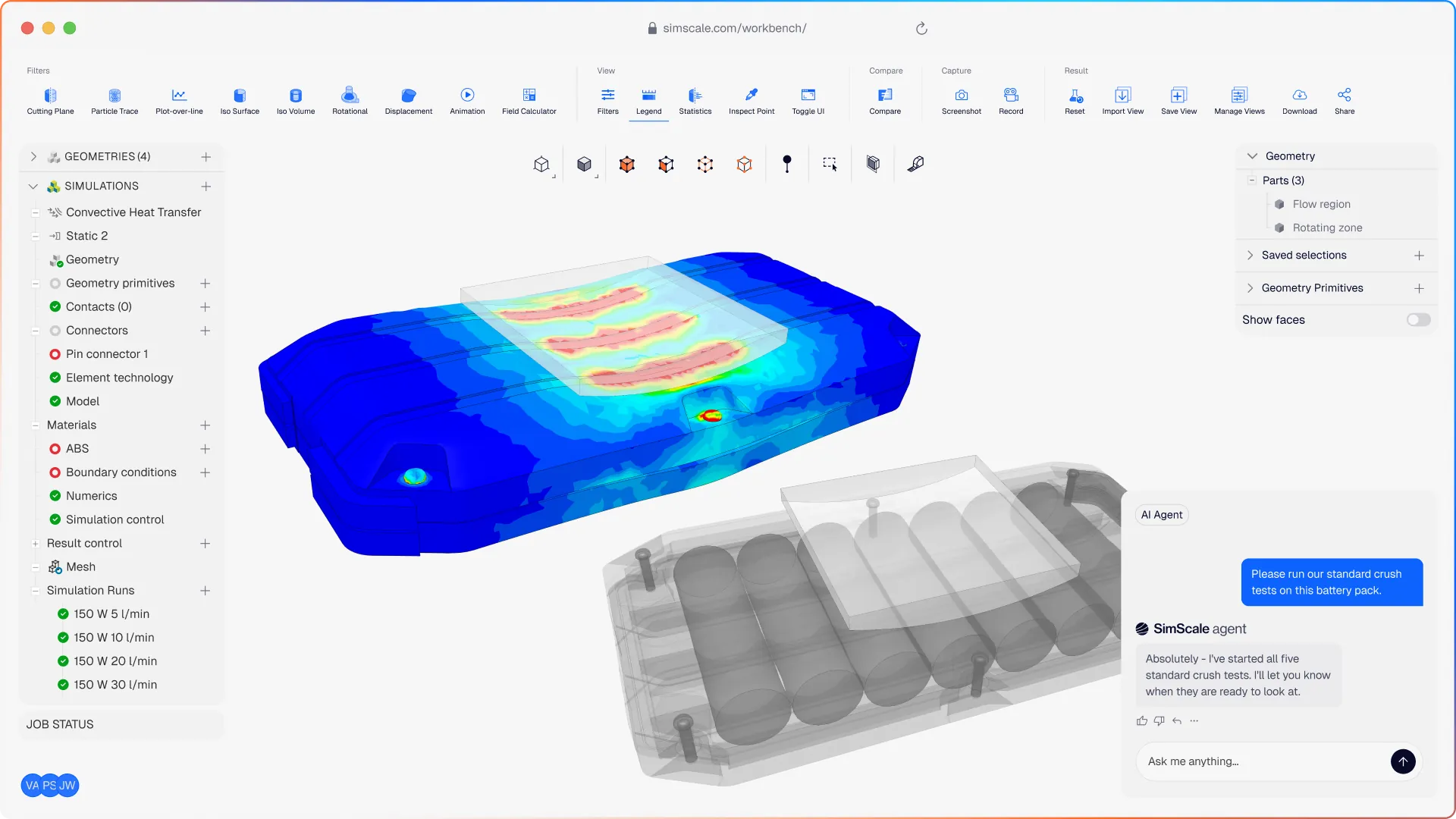
Quasi-static and dynamic nonlinear simulation for ISO drop tests, packaging validation, consumer-product certification and component impact analysis. Account for plastic deformation, contact and energy absorption in one run.

85%
insertion-force reduction on snap-fit fastener
“Just by looking at result visualizations in SimScale, it teaches you a lot and engineers can quickly discern hints on evolving designs. The key advantage of using SimScale for us is to extract fast design insights at the early stages. We can then arrive at a final design faster and have more confidence when moving to the physical prototyping stage.”
Massimo Savi, — Mechanical Design Engineer, ITW Automotive

10%
material cost reduction on snap-fit fastener assembly
“Simscale is constantly developing and optimizing their platform, without us ever needing to update or maintain anything. We chose SimScale because it is cloud-native, there is no software maintenance, it offers fast support through the platform and has a user-friendly interface.”
Mikkel Böhme, — Founder & Managing Director, BÖHME

50%
added loading capacity on reinforced box pallet
“Working with analysis software like SimScale has saved us considerable time on conducting field experiments. In practice, the analyses are not supposed to replace field experiments, but they have significantly shortened the process since we can reduce the number of prototypes that are physically manufactured and tested. In situations where there are dilemmas between different types of design, the analysis can be very helpful in making critical decisions quickly.”
Ofir Akiva, — Mechanical Design Engineer, Dolav
Related resources

CFD consulting vs. in-house simulation: what the cost comparison misses
Why the outsource-or-build decision for CFD comes down to engineering capacity rather than project cost, and how cloud simulation moved the break-even point.

Alex Graham
August 21, 2026

Feel Recognized at SimScale
How SimScale turned survey feedback into a recognition culture: Appreciation Week, peer-nominated annual awards, and an internal Hall of Fame.

Matias Degiuseppe
August 18, 2026
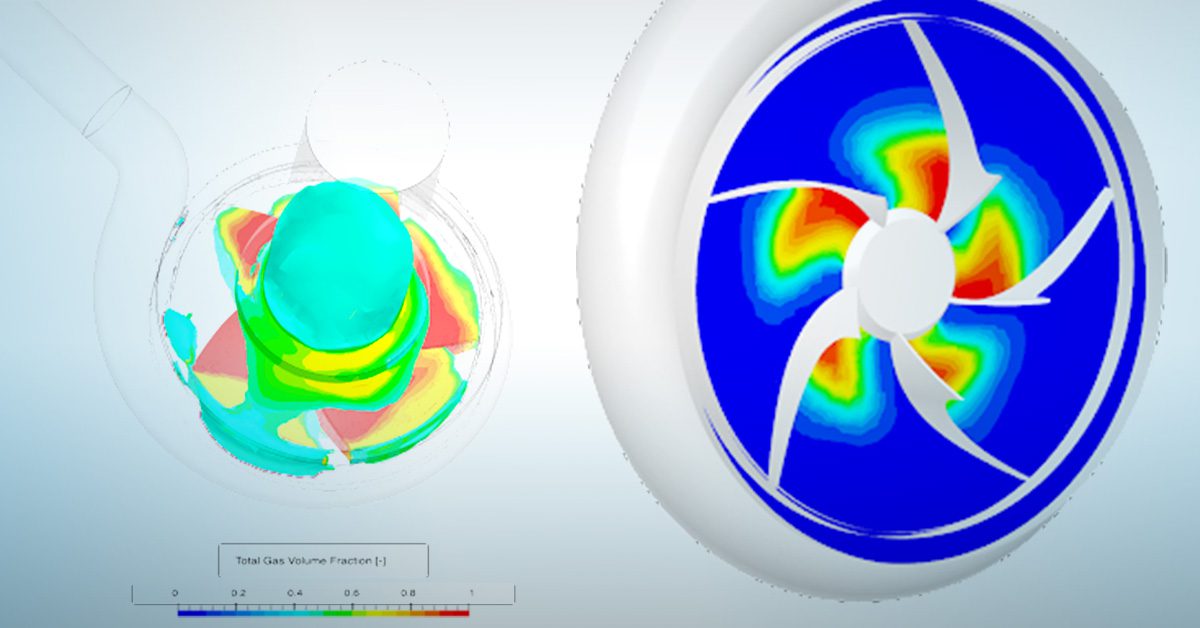
Diagnose and eliminate pump cavitation with CFD
How to identify which of five cavitation mechanisms is damaging a pump, calculate NPSH margin correctly, and predict cavitation in CFD.

Peter Selmeczy
August 14, 2026



Luis Goncaves
August 4, 2026
Luis Goncaves
June 18, 2026
Luis Goncaves
January 27, 2026

Taylor Keen
August 4, 2026
Peter Selmeczy
July 6, 2026


Jon Wilde
June 16, 2026
Peter Selmeczy
July 9, 2026
Peter Selmeczy
March 24, 2026
Peter Selmeczy
September 10, 2025

Peter Selmeczy
July 30, 2026
Peter Selmeczy
July 30, 2026
SimScale covers the three canonical nonlinearity types: geometric (large deformation, buckling, post-buckling), material (elastoplastic, hyperelastic Mooney-Rivlin and Ogden, viscoelastic, creep, damage) and contact (friction, separation, multi-body assemblies). You can combine all three in a single run. For the most demanding material and contact cases, SimScale integrates Cadence's Marc solver for high-fidelity nonlinear analysis validated against industry benchmarks.
Switch to nonlinear when stresses exceed the material's yield strength, when displacements are more than a few percent of the smallest dimension, when parts interact through contact, or when thermal effects significantly change material properties. Most FEA work is linear — nonlinear is the right call when those assumptions no longer hold.
SimScale supports von Mises plasticity for elastoplastic metals, Mooney-Rivlin and Ogden for hyperelastic rubbers and foams, viscoelastic models for polymers, and extensions for creep, damage and strain-rate dependency. Material models are validated against industry benchmarks.
Contact is modelled with friction, separation and surface-to-surface load transfer. The solver uses incremental load stepping with Newton-Raphson iteration and arc-length continuation for post-buckling. Engineers get convergence diagnostics in the browser and can run multiple solver configurations in parallel to find the most efficient setup.
Upload CAD directly from Onshape, SolidWorks, Autodesk Inventor, Creo, CATIA, NX and other formats. SimScale runs entirely in the browser — no install, no VPN, no per-seat licence on the workstation. Results are shareable by URL across distributed teams.