Real-Time Digital Twins
Connect Simulation with Real-World Data
Connect simulation with live data using Physics AI. SimScale enables real-time digital twins for instant insight, predictive intelligence, and continuous improvement.
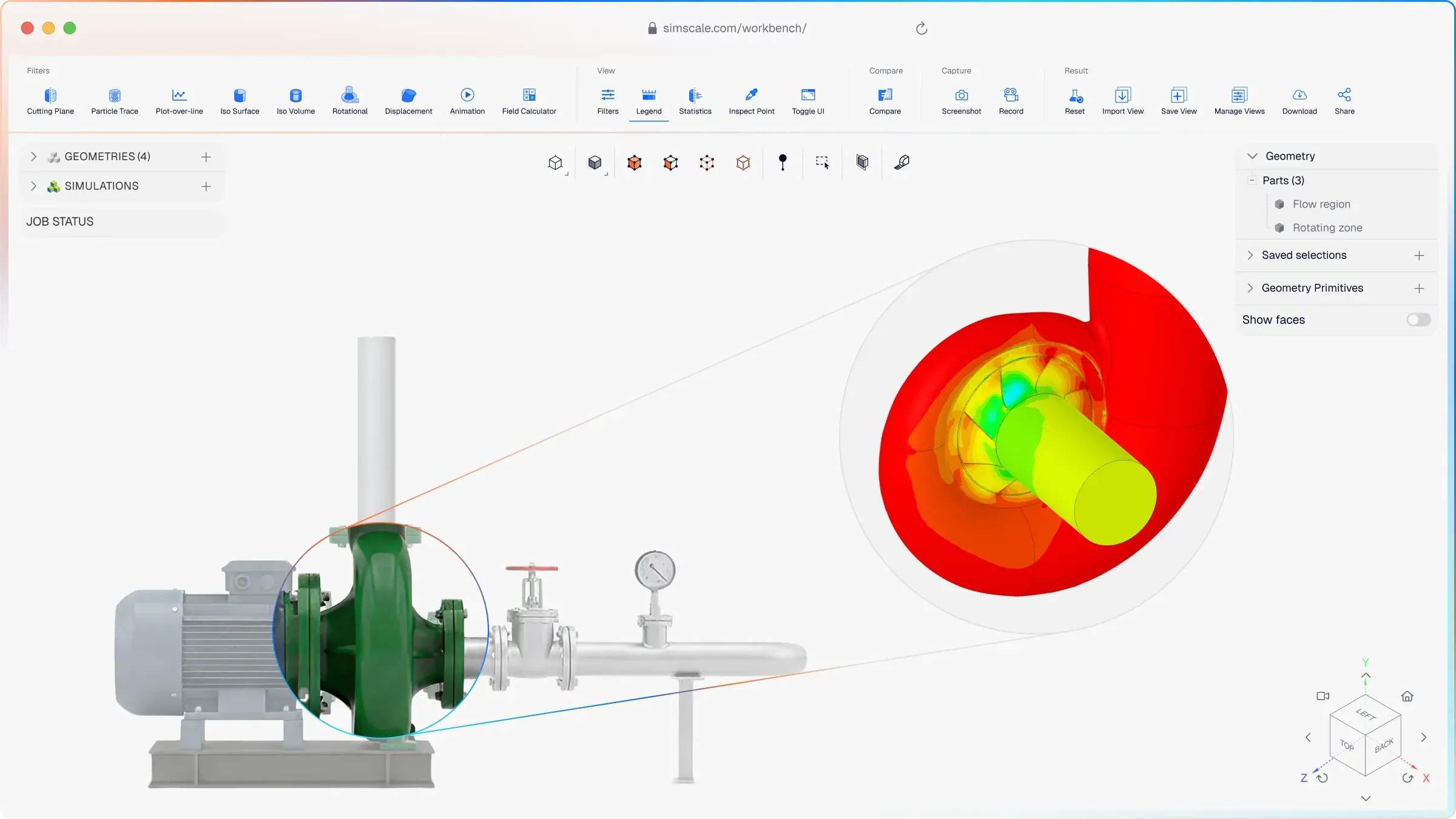












Too many engineering decisions are made on delayed or incomplete data. Leaving teams unable to detect performance issues until it’s too late.
Faster insights
Move from delayed analysis to real-time understanding of system performance.
Improved operational reliability
Predict maintenance needs and optimize performance to prevent downtime.
Reduced operational risk
Detect performance degradation and potential failures before they occur.
Continuous product improvement
Feed real-world data back into engineering to improve future designs.
Optimize system performance
Continuously monitor and adjust operating conditions based on predictive insight.
Scale monitoring across assets
Apply digital twins across fleets, systems, and global operations.

Real-world impact
Critical design decisions in large-scale industrial operations
“I have been using SimScale in my product development routine (weekly) and it has been a game changer in critical design decisions where industrial equipment is used in large scale industrial operations.”


99.9%
quicker simulation turnaround vs. traditional methods
“Simulation drastically changed our R&D landscape regarding time (99.9% quicker), cost (no HPC and data storage), and simulation accuracy. It allows us to complete development cycles within days instead of months, giving us a massive advantage compared to our competition. I would say that this is not evolutionary but rather disruptive.”


Weeks to hours
Design and verification timelines
“Embedding simulation in my workflow has enabled me to solve my clients’ maintenance and reliability challenges quickly.... I have leveraged SimScale to compress design and verification timelines from weeks to just hours.”

Connect your simulations to real-world systems
Physics AI models trained on high-fidelity simulation data deliver instant predictions in real time, fast enough to run continuously alongside live operations, where traditional solvers are too slow to keep up.
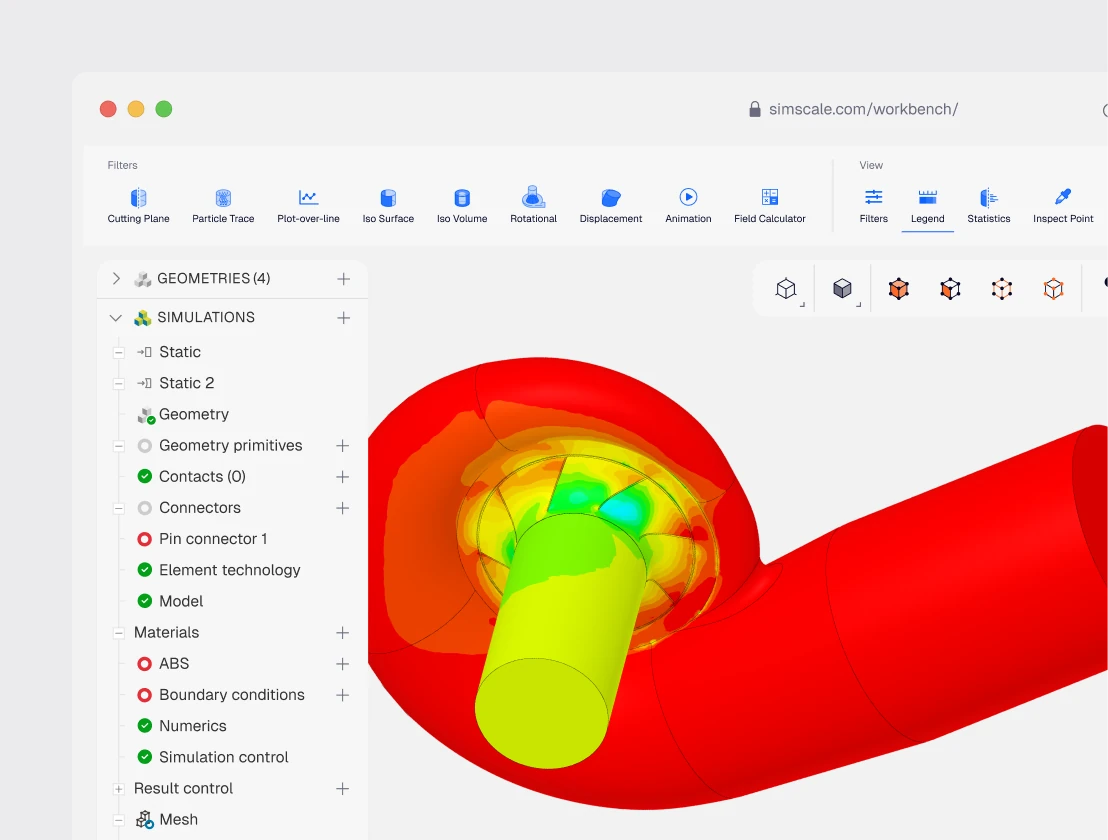
Deploy Physics AI surrogates
Deploy lightweight, AI-powered models trained on high-fidelity simulation data. These reduced order models run in real time, providing instant performance predictions without the computational cost of a full physics simulation, making them suitable for continuous operational monitoring and live control applications.
Connect live operational data
Connect live sensor data streams from your operational assets or system-level models directly to Physics AI surrogates via our open API. This creates a closed loop where real-world conditions continuously inform and update your digital twin, keeping your digital twin calibrated to actual operating conditions at all times.
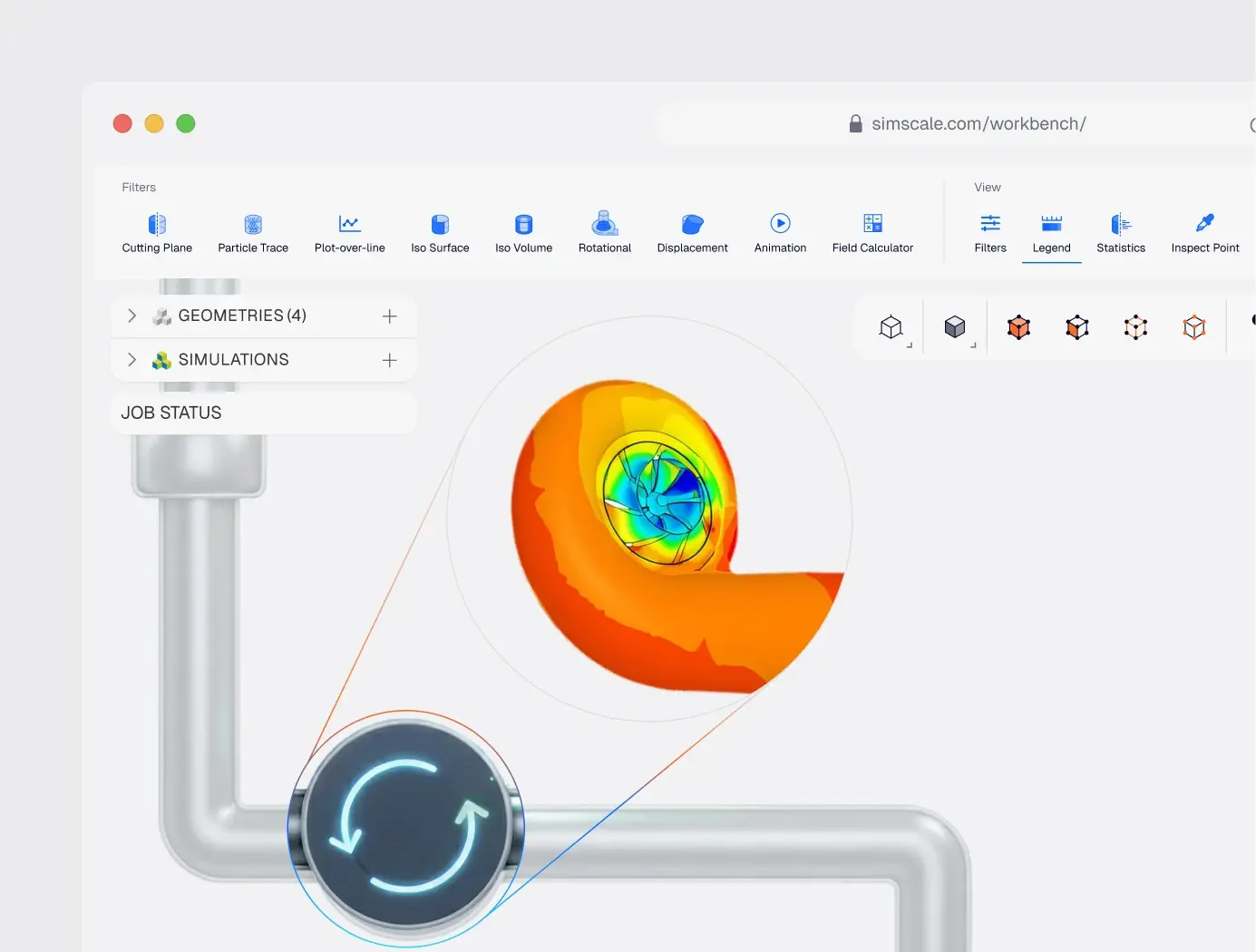
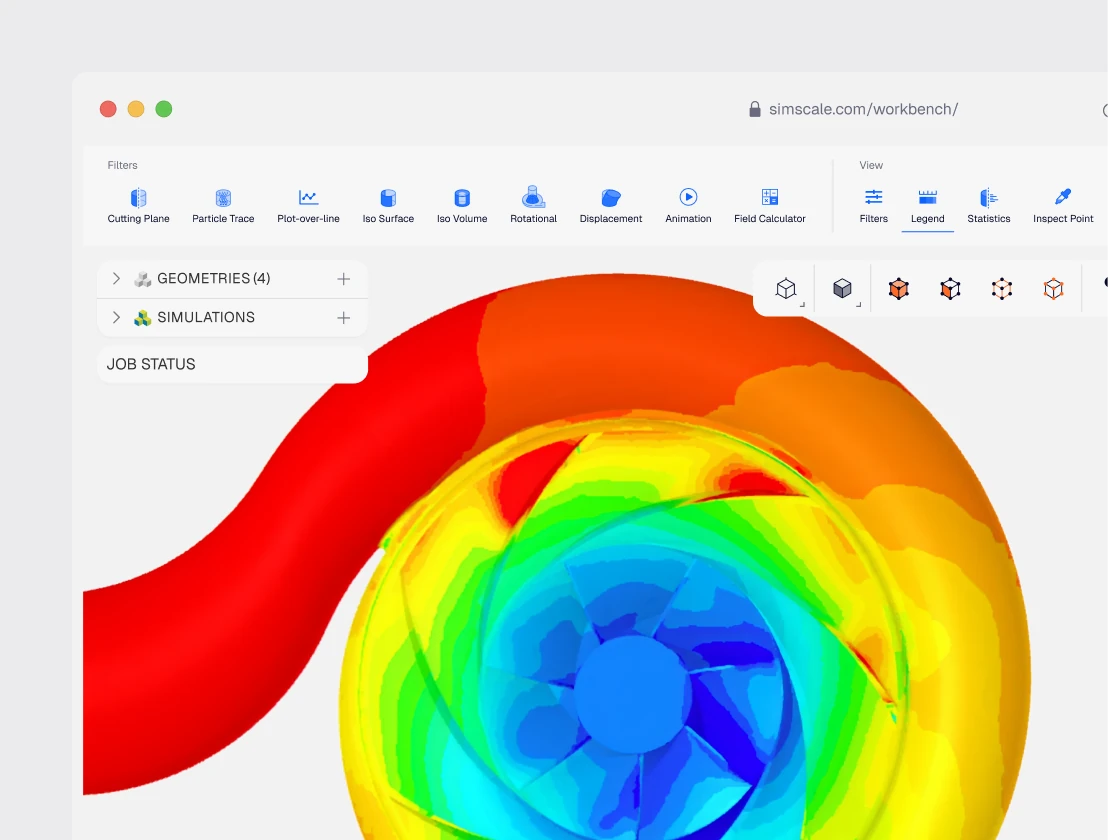
Gain predictive insights
Move from reactive maintenance to predictive operations. By combining live data and hardware-in-the-loop (HiL) setups with AI models, you can forecast performance degradation and potential failures before they occur, preventing costly downtime and improving asset reliability.
FAQs
New to real-time digital twins or evaluating SimScale? Here are the questions we hear most.
ContactSimScale uses Physics AI surrogates — lightweight AI models trained on high-fidelity simulation data — to deliver instant performance predictions without the computational cost of running a full physics simulation in real time. These reduced order models connect to live sensor data streams via SimScale’s open API, creating a continuously updated digital twin that mirrors real-world conditions.
SimScale supports live sensor data streams from operational assets and hardware-in-the-loop (HiL) setups, connected via its open API. System-level models can also feed data into the Physics AI surrogates, allowing teams to build digital twins that incorporate both physical sensor readings and modeled system behavior.
By combining live sensor data with Physics AI models, SimScale digital twins can forecast performance degradation and identify potential component failures before they occur. This shifts maintenance from reactive — fixing things after they break — to predictive, where teams can schedule interventions at the optimal time, preventing unplanned downtime and extending asset life.
Any application where physical assets operate continuously and failures are costly — industrial equipment, pumps and rotating machinery, HVAC systems, power generation, and manufacturing lines. Vale, for example, uses SimScale for critical design decisions on industrial equipment used in large-scale mining operations, where reliability is paramount.
Traditional simulation is used offline, during the design phase, and requires expert setup time for each run. SimScale’s real-time digital twin capability runs continuously in the background, connected to live data, and responds instantly — making it a tool for operations teams and asset managers, not just simulation engineers.
Get started today
Start exploring simulation, Engineering AI, and Physics AI in one platform today — no setup required.