Electromagnetic Simulation
Accelerate electromagnetic simulation & design, cut costly prototyping cycles
Simulate low-frequency electromagnetic phenomena — from magnetostatics to EM-induced heating — in a cloud-native platform that connects directly to your thermal and structural workflows.
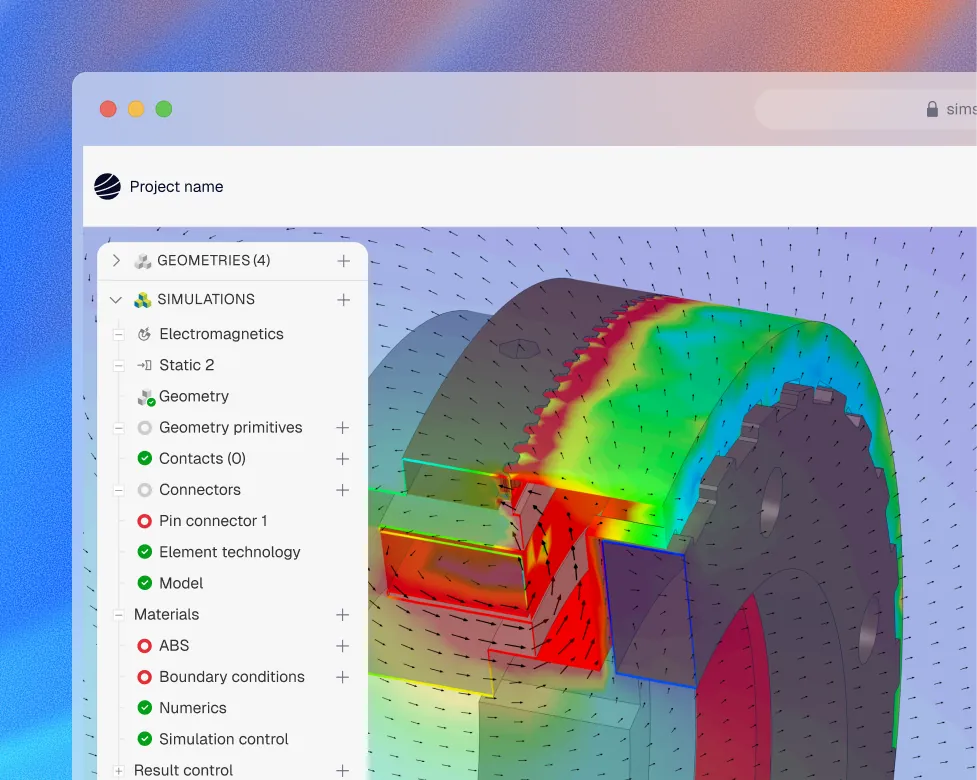












Low-frequency electromagnetics simulation, accessible from your browser
Clean and honest. Now for the subhead — following the formula: From magnetostatics and time-harmonic analysis to Joule heating and coupled thermal workflows, SimScale covers the low-frequency electromagnetics your engineering team needs.
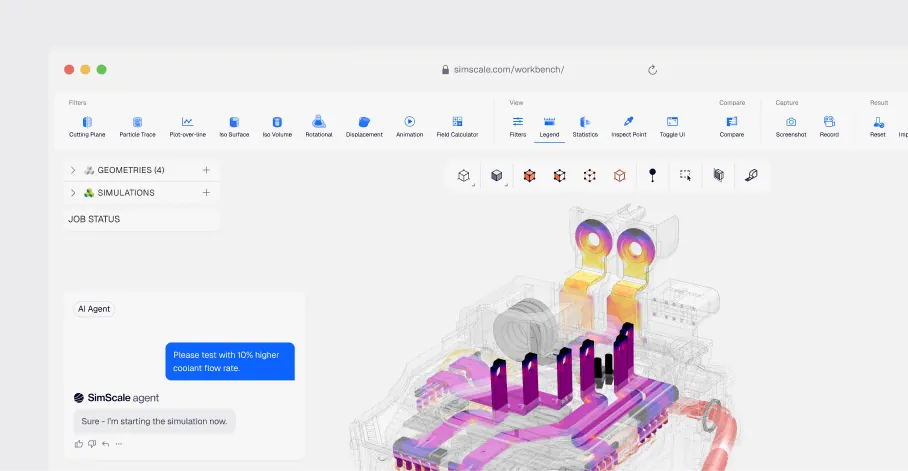
AI-accelerated electromagnetic simulation
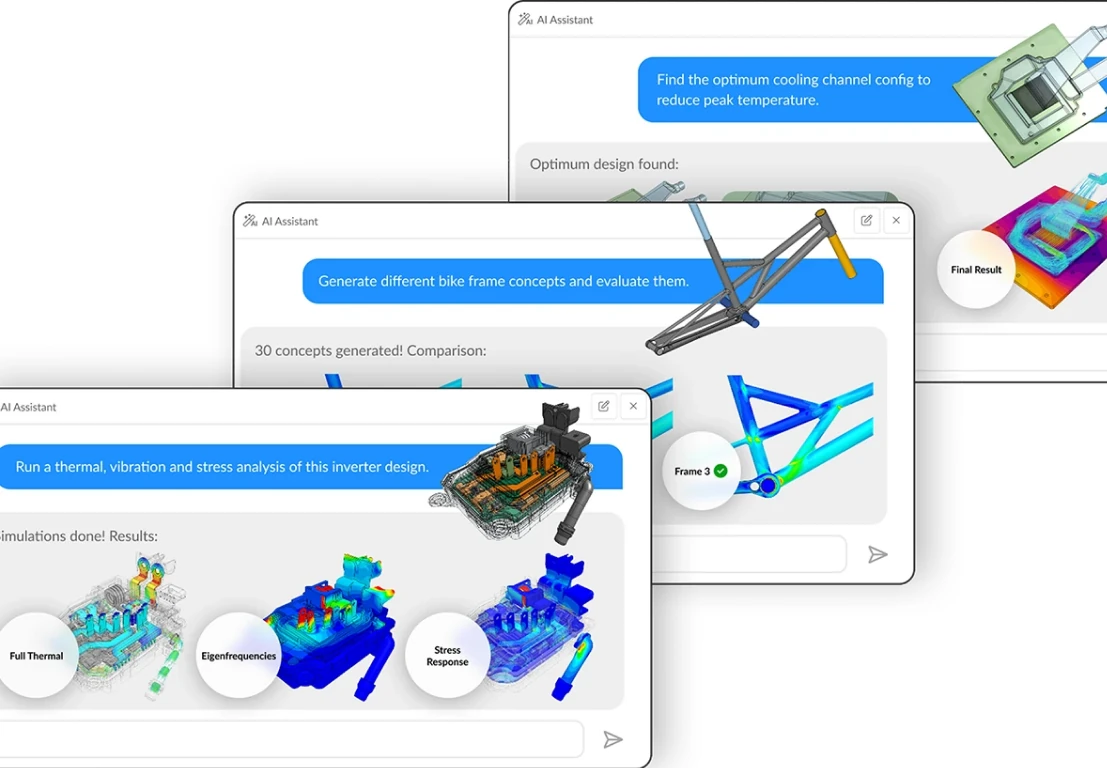
SimScale's AI capabilities accelerate every stage of the simulation workflow, from automated setup and guided modeling to instant predictions across design variants, so your team spends less time configuring simulations and more time acting on results.
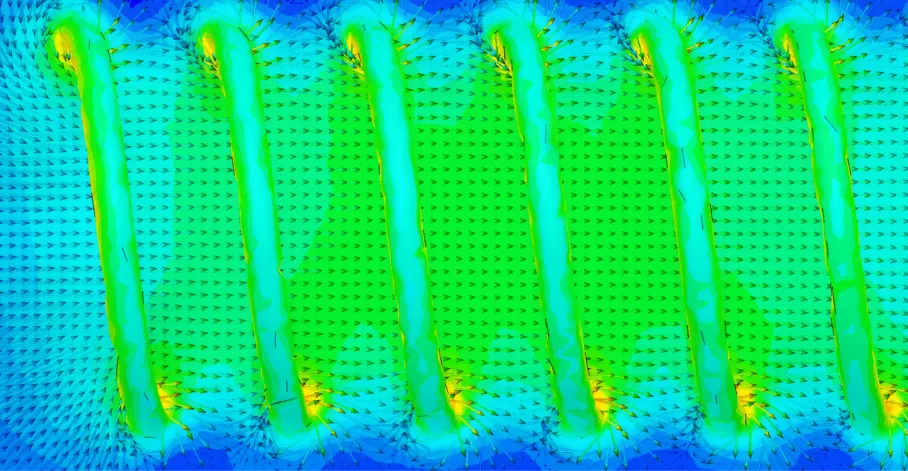
Magnetostatics
Model static magnetic fields in coils, magnets, and ferromagnetic assemblies to predict force, torque, flux density, and inductance — without the overhead of time-domain solvers when frequency effects are negligible.
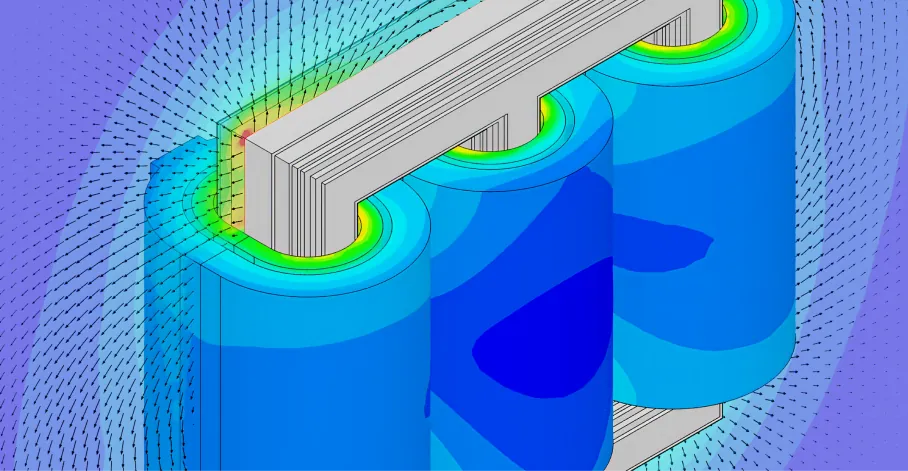
Time-harmonic analysis
Simulate AC electromagnetic phenomena at a fixed frequency to accurately predict eddy currents, skin effects, and impedance in motors, transformers, and power electronics operating under sinusoidal excitation.
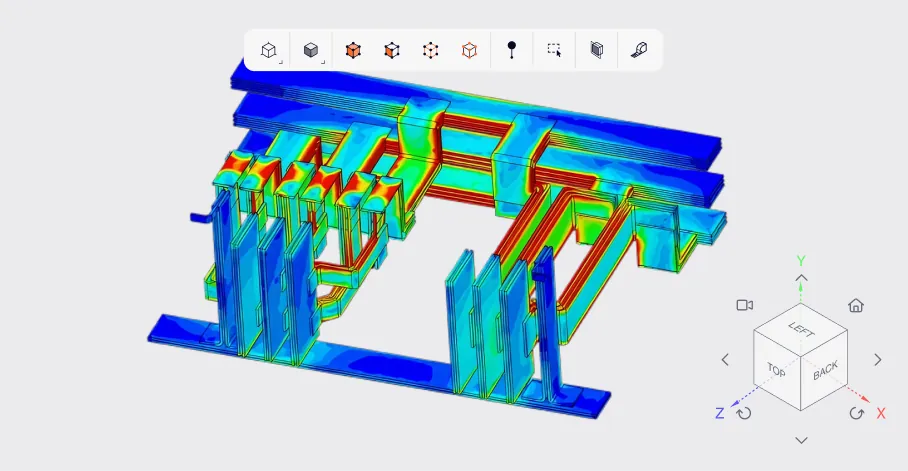
Joule heating and thermal coupling
Quantify resistive heating from induced currents in conductive components, then carry those losses directly into a thermal simulation — giving you a complete picture of how electromagnetic effects drive component temperatures, in a single workflow.
Electromagnetics in action
From product validation to design exploration, electromagnetic simulation accelerates decisions across the full development lifecycle.
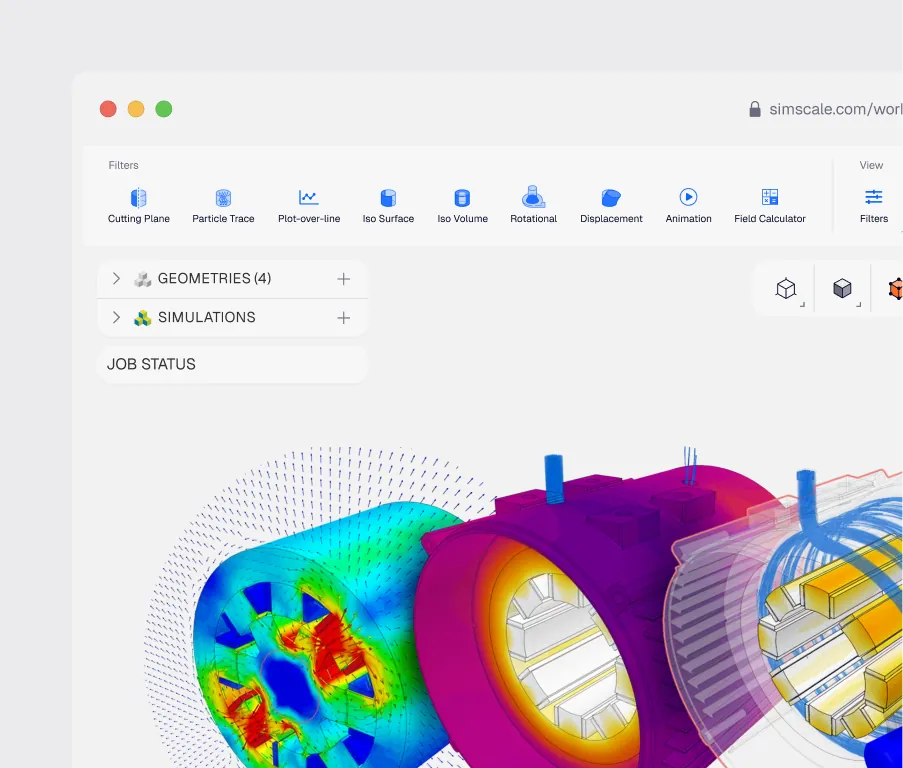
Electric motor simulation
Predict torque, efficiency, eddy current losses, and winding impedance across operating points — coupled with thermal analysis to assess temperature rise and cooling requirements under real load conditions.
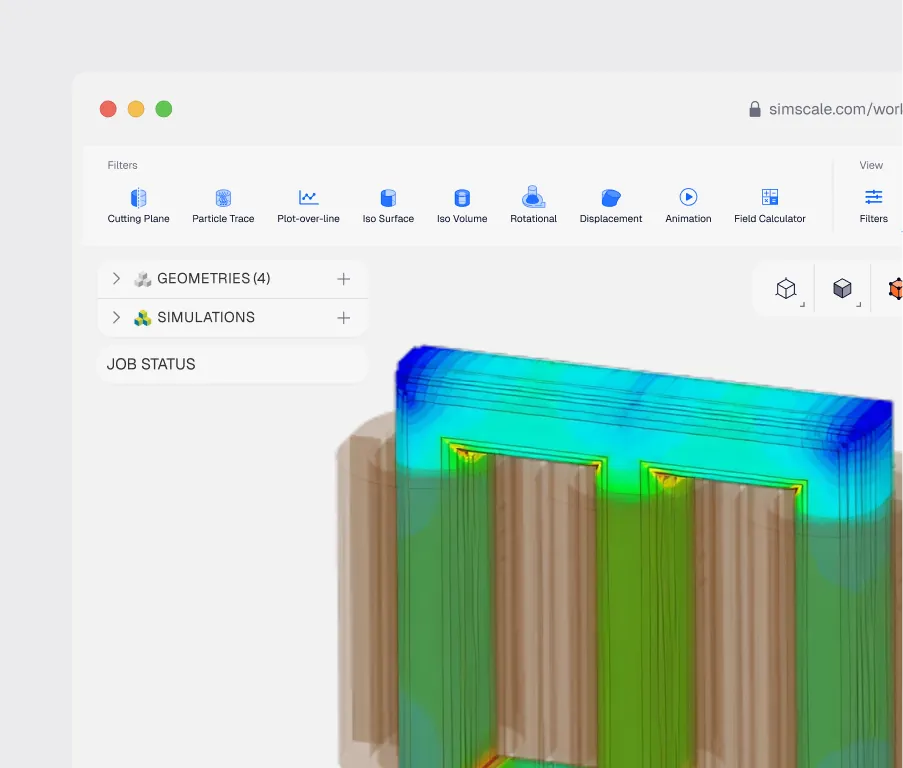
Transformer simulation
Model core losses, winding inductance, and flux distribution to optimise transformer efficiency — with direct coupling to thermal simulation for temperature rise and oil-cooling performance assessment.
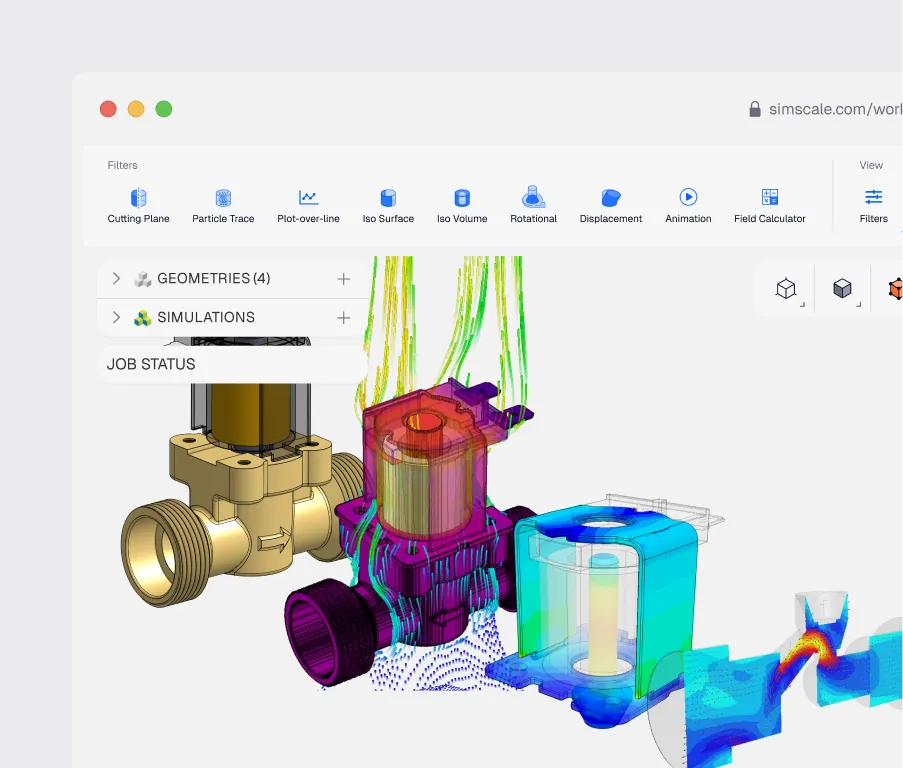
Solenoid simulation
Optimise force-stroke curves, predict Joule heating in coil windings, and validate magnetic circuit performance across the full actuation range — for actuators, valves, and motion control systems.
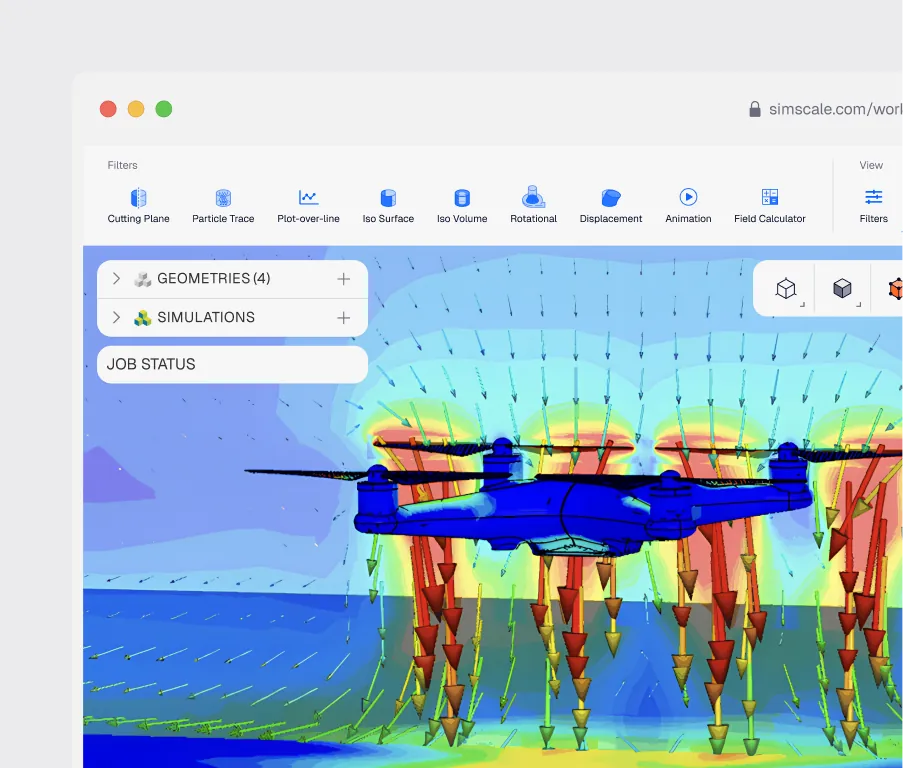
Drone Simulation
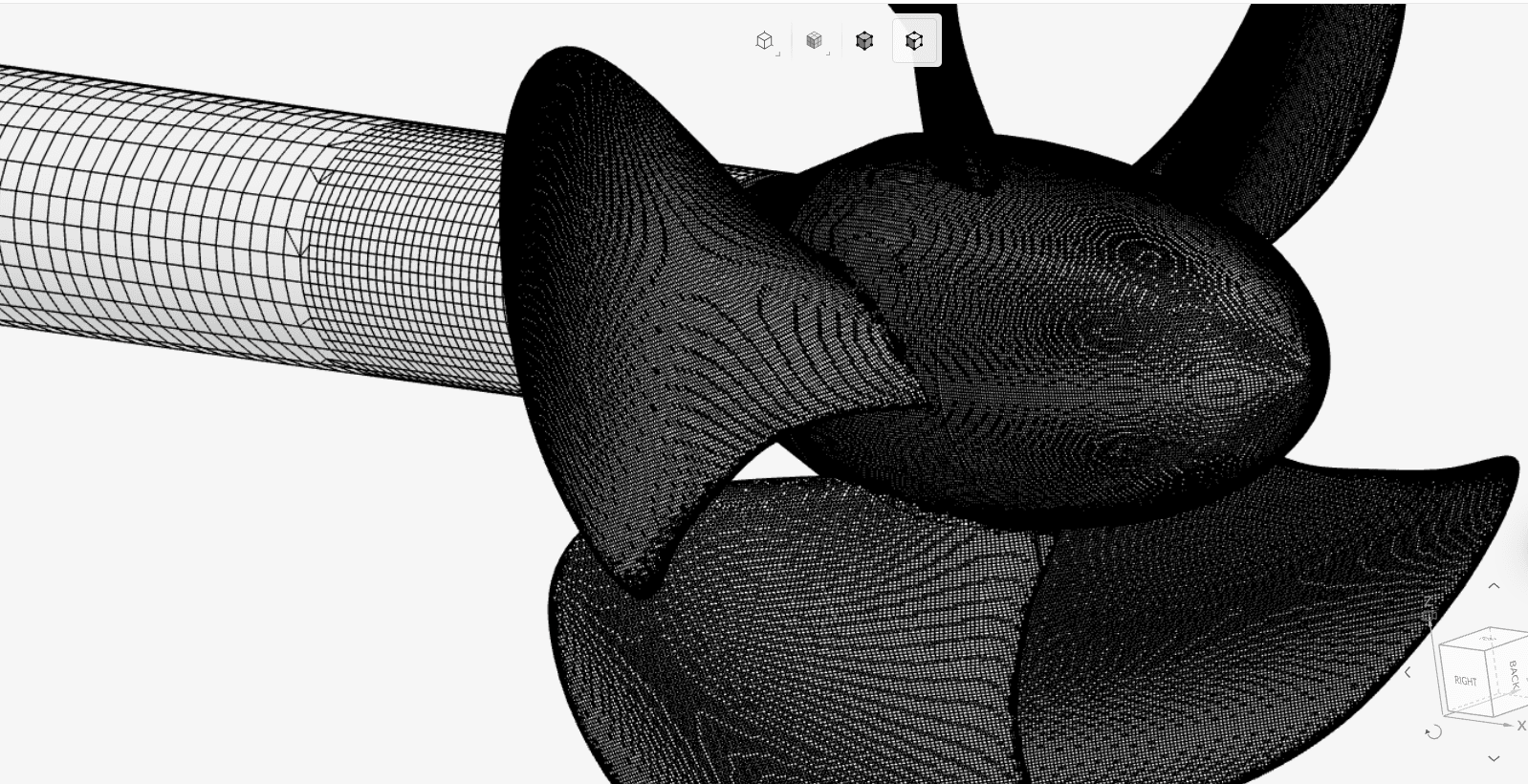
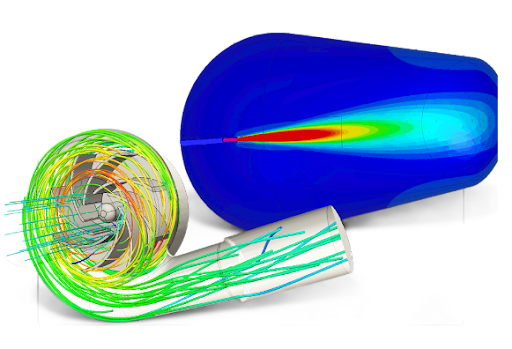
Simulate rotor aerodynamics and flight performance from hover to forward flight using cloud-based CFD and FEA.
Electronics thermal
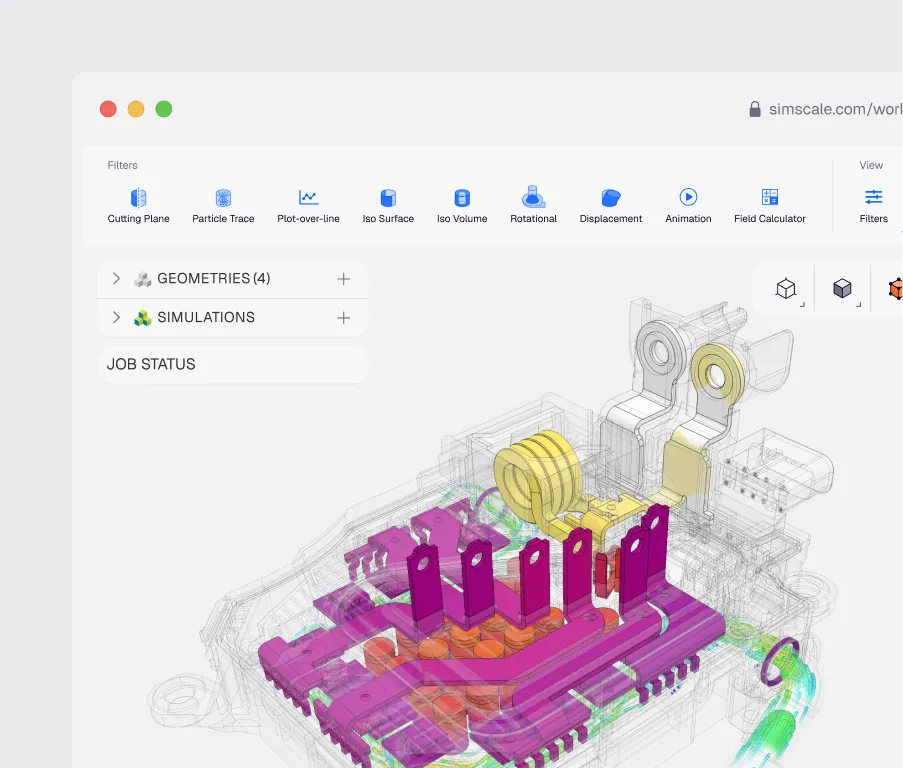
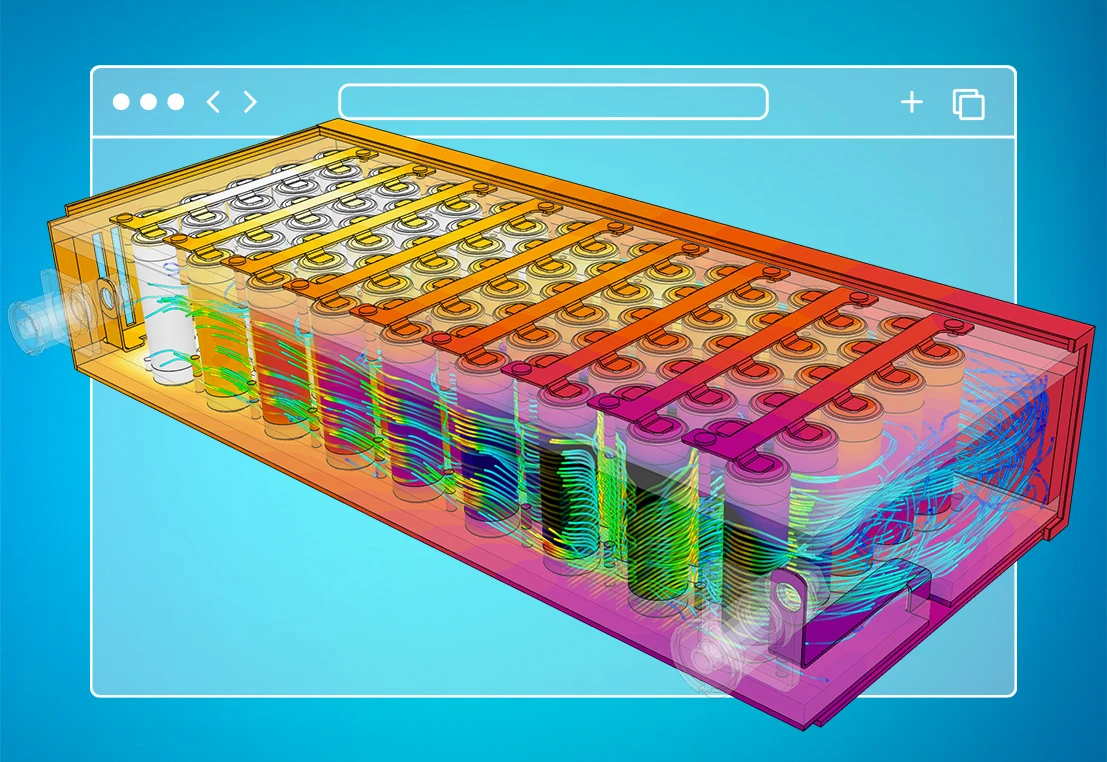
Quantify resistive and inductive heating in PCBs, power modules, and busbars — then couple EM losses into conjugate heat transfer simulation to identify hotspots and validate cooling strategies.
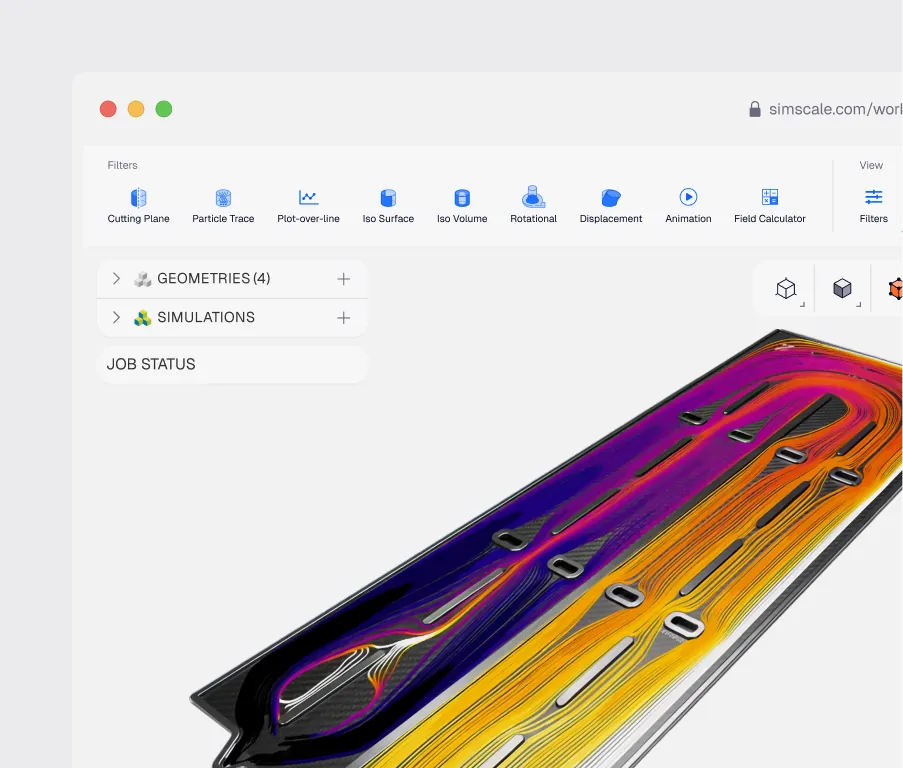
Cold Plate Simulation
Leverage advanced design and manufacturing technologies like microchannels, implicit modelling and topology optimization to get the edge over your competitors.
Industry use cases
See how companies are cutting costs and accelerating development with cloud-native EM simulation
See all solutions
1% the cost
Beamlink builds telecoms tower hardware (PCBs, RF, enclosures) at a fraction of the cost
"SimScale has significantly impacted our workflow by reducing the need for physical testing and 3D prototyping, empowering our team to experiment more freely and innovate faster."


322 GHz
Integrated-photonics transceivers for THz-band UAV comms, developed with cloud simulation
"PHIX collaborates across a 12-partner EU consortium to revolutionize transceiver modules using integrated photonics for ultra-high-frequency wireless data transmission."


2x
Faster iteration cycles designing high-performance EV drives across EM, thermal, and structural physics
"If we didn't use simulation to the extent that we're using it, we would have to build at least one more full prototype — that would be tens of thousands of euros more."


44%
Component material savings on an LED heat sink, plus 3 weeks saved on physical prototyping
"Embedding early-stage simulation has delivered a significant reduction in physical prototyping costs and a fuller design space exploration via parametric modeling."


10x
Faster meshing on mmWave electronics housings using the immersed boundary method
"Since moving to SimScale the simulation runs are much faster as many can run in parallel in the cloud, and we have reduced the number of physical prototypes in our product development."


prototype-free
Validated thermal interface library lets TEGnology predict performance without prototyping each iteration
"It was a surprise how simplified the interface is and how much faster and easier you can set up the simulation compared to legacy tools."


natural ventilation
CFD validated a low-tech building ventilation design across winter and summer conditions
"Working with SimScale gave us the possibility to inspect which architectural and technical solutions work best and give us certainty about our decisions."


under 9 hours
Per parallel run on 96 cores, verifying auditorium thermal comfort at Qatar University
"SimScale made the visualization of thermal comfort conditions possible, helping us propose a new design to achieve acceptable indoor thermal environments."


60%
Reduction in heat-flux variation in a lab reactor, saving 28 weeks and ~10,000 CHF
"Considering we went through 4 virtual prototypes with SimScale, we saved 28 weeks of delivery time for prototypes, plus roughly 10,000 CHF in manufacturing costs."


3 hrs vs 3-4 days
Transient thermal runs replaced climate-chamber testing for biodegradable cooling boxes
"SimScale and simulation are essential so we can have confidence that our solution will fit our clients' needs before we commit to tooling that could cost over 100 thousand euros."


unlimited runs
Cloud simulation removed physical-test limits for hovercraft components across conditions
"Using SimScale has given us significant cost and time savings by reducing the need for physical testing. There is no limit to the number of simulations that can be run."

Related resources

Alex Graham
June 16, 2026
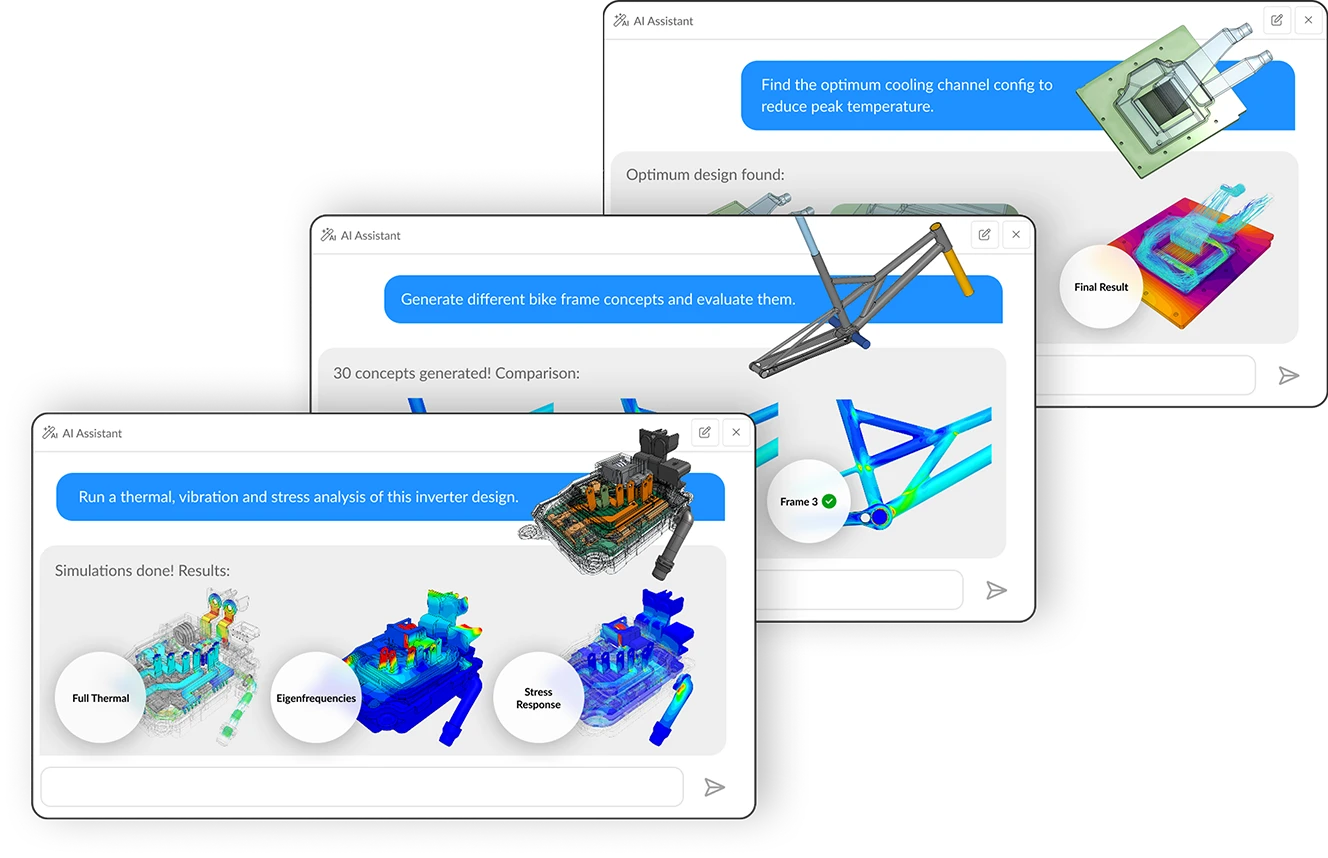
Multi-agent workflows: key takeaways from Design & Simulation Week 2026
SimScale and CoLab demonstrated live AI agent collaboration at Design & Simulation Week 2026, cutting engineering review and simulation lead times dramatically.
Alex Graham
June 12, 2026

SimScale Workflows: Why we are opening up the platform (& why you should care)
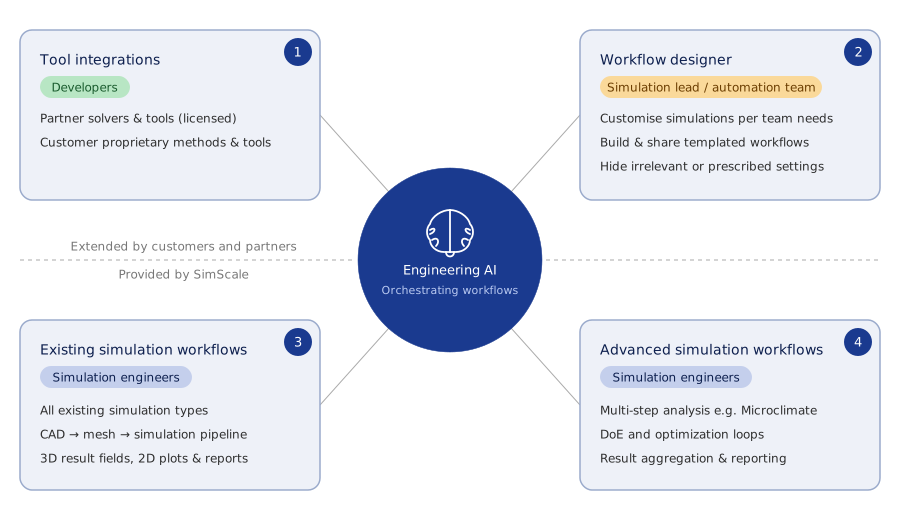
SimScale Workflows opens its platform to custom solvers and tools, enabling automated, AI-driven multi-step engineering simulation pipelines for any organization.
Alex Graham
May 29, 2026



Luis Goncaves
June 18, 2026
Luis Goncaves
January 27, 2026

Paras Ghumare
December 4, 2025


Jon Wilde
June 16, 2026


David Heiny
June 15, 2026
Jon Wilde
June 3, 2026

Peter Selmeczy
March 24, 2026

Peter Selmeczy
September 10, 2025
Peter Selmeczy
June 25, 2025
Peter Selmeczy
May 29, 2026
SimScale supports low-frequency electromagnetic simulation including magnetostatics, time-harmonic (AC) analysis, and electromagnetic heating via Joule heating. These can be run standalone or coupled with thermal simulations to capture EM-induced heat generation and dissipation.
Magnetostatics models static or very slowly varying magnetic fields where frequency effects can be ignored — ideal for permanent magnets, DC coils, and relays. Time-harmonic analysis solves for AC fields at a fixed frequency, capturing eddy currents, skin effects, and AC losses in motors, transformers, and power electronics.
Yes. SimScale supports EM-thermal coupled workflows where Joule heating losses computed from an electromagnetic simulation are used as heat sources in a thermal or conjugate heat transfer analysis — giving a complete picture of how electromagnetic losses drive component temperatures.
Electronics and high-tech manufacturers designing power electronics, motors, and transformers; automotive and EV engineers working on charging systems and electric drivetrains; industrial equipment teams designing actuators, solenoids, and induction heating systems; and consumer appliance engineers working on EM-driven devices.
SimScale removes the installation, licensing, and hardware constraints of traditional desktop EM tools. Engineers access the same physics accuracy through a browser, with elastic compute that scales to the problem — and results feed directly into thermal and structural workflows on the same platform.
Explore our core technologies
Physics AI works alongside Engineering AI and cloud-native simulation — three technologies, one integrated platform.
Structural Mechanics
Assess stress, fatigue, and deformation under real-world loads - from lightweight components to large structural assemblies.
Thermodynamics
Manage heat transfer across conduction, convection, and radiation - for electronics cooling, HVAC, thermal packaging, and more.
Fluid Dynamics
Simulate airflow, turbulence, and fluid behavior across internal and external flows to make smarter design decisions earlier.
Multi-physics
Couple thermal, structural, and fluid effects to capture real-world interactions single-physics analysis misses.
Start simulating in minutes, not weeks
Get started today with AI-native engineering simulation