Electric Motor Simulation Software
Design better electric motors faster with AI-native EM, thermal, and FEA
SimScale lets motor and powertrain engineers couple electromagnetic, thermal, structural, and NVH analysis on the same e-motor geometry in the cloud. Run BLDC, PMSM, induction, switched reluctance, and axial flux motor simulations in the browser.
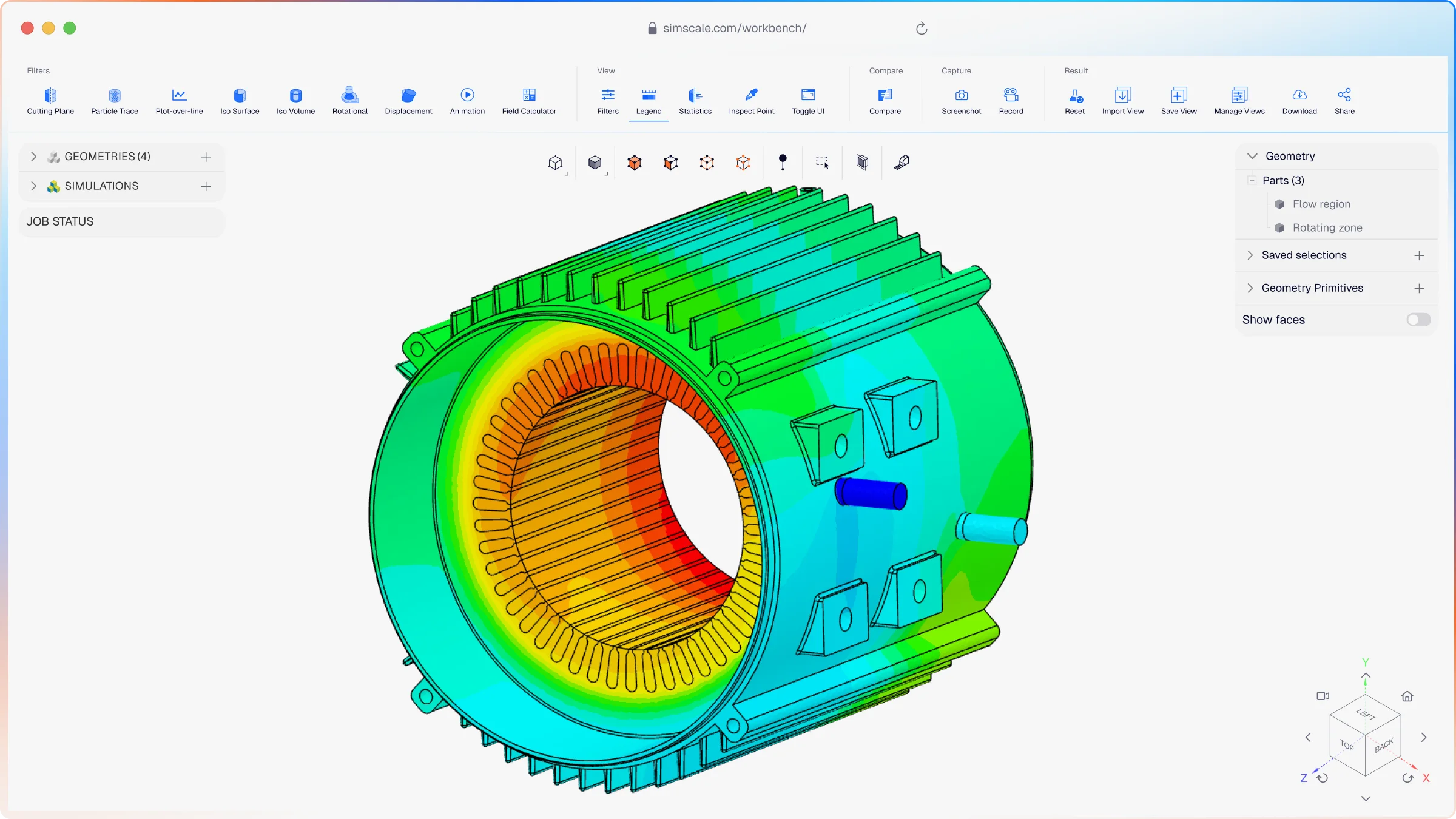




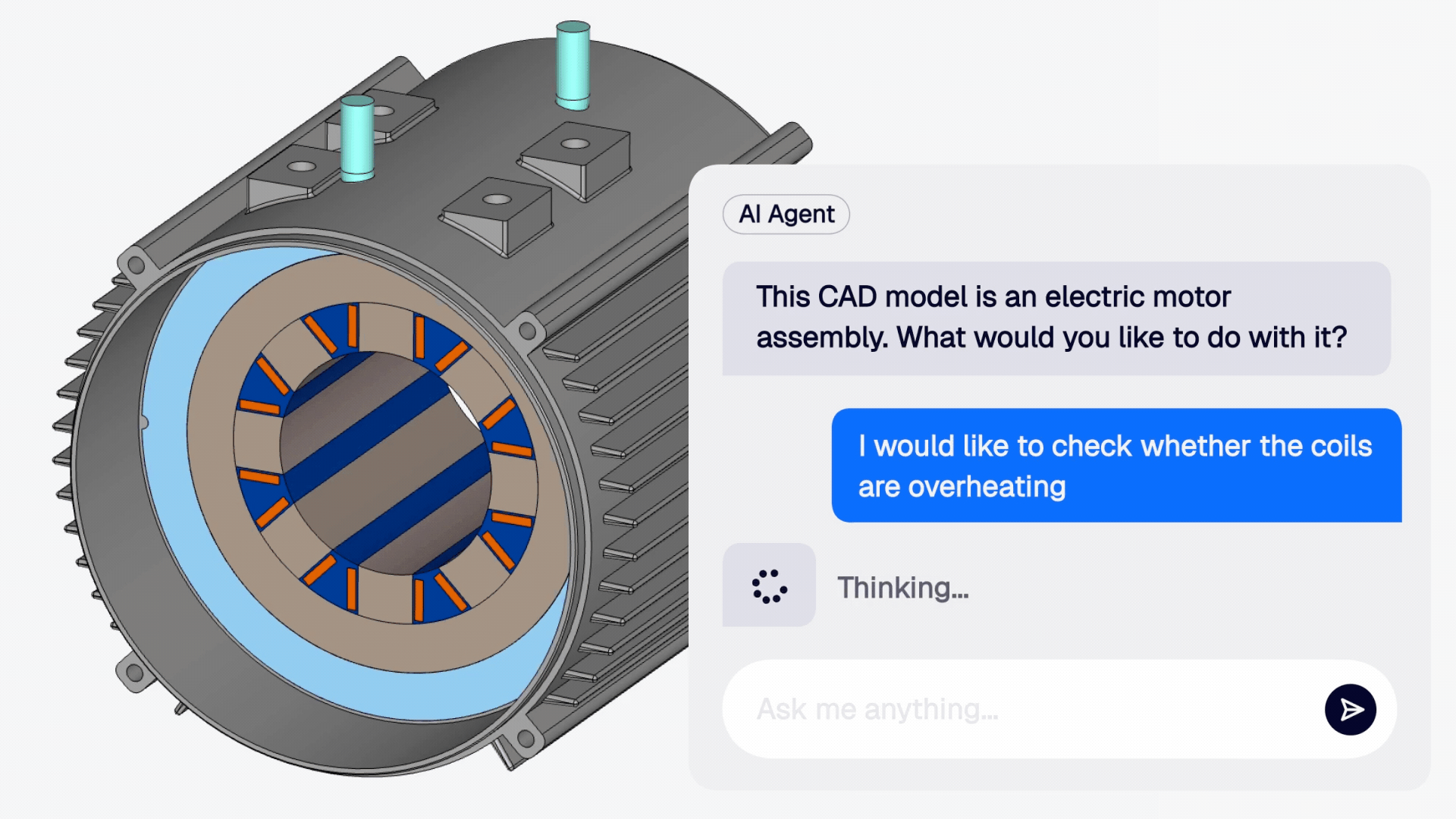
Most teams model EM, thermal, and structural effects in isolation, catching failures only in hardware. SimScale couples all three, so engineers predict flux density, winding temperatures, and resonance risk before a prototype is built.
Electric motor simulation that covers your full design challenge
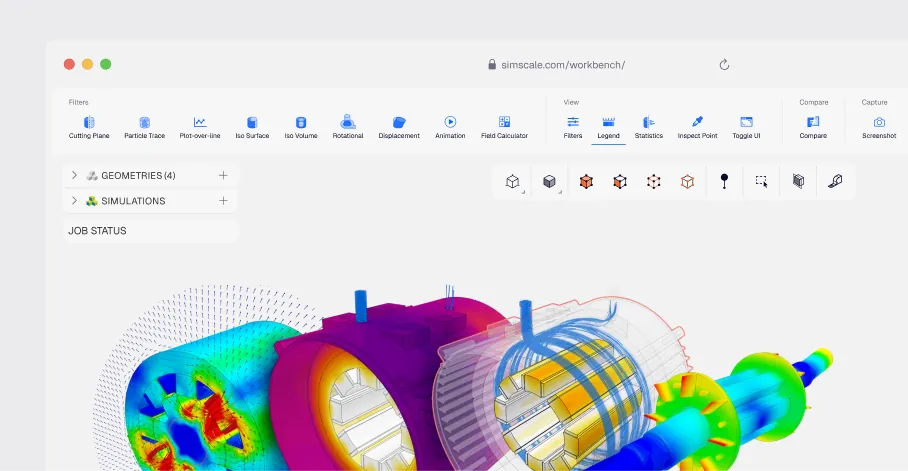
Multiphysics: EM, thermal, structural, NVH on the same motor
Electric motors fail in domains that interact: a winding hot spot shifts resistivity, which changes flux density, which excites a structural mode that becomes whine. SimScale couples magnetostatics, thermal, structural, and NVH analysis on the same geometry and mesh — one platform, one results store, no exporting between tools.
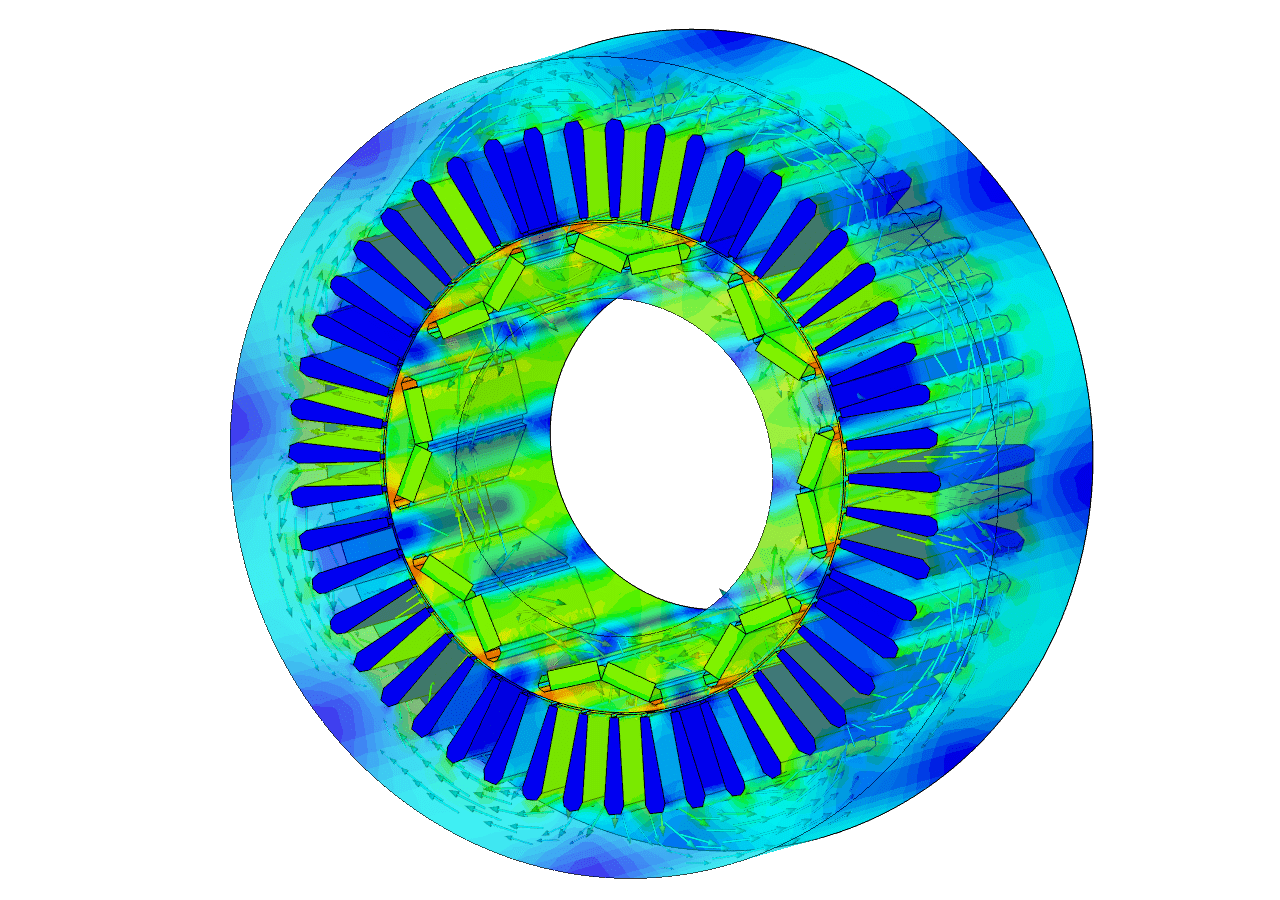
AI-native electric motor design optimization
Engineering AI automates simulation setup and meshing so engineers spend time on decisions, not configuration. Physics AI surrogates then deliver near-instant performance predictions on motor geometry — sweeping thousands of winding configurations, rotor geometries, and magnet placements in seconds to identify the strongest candidates before committing to full electromagnetic and thermal simulation.
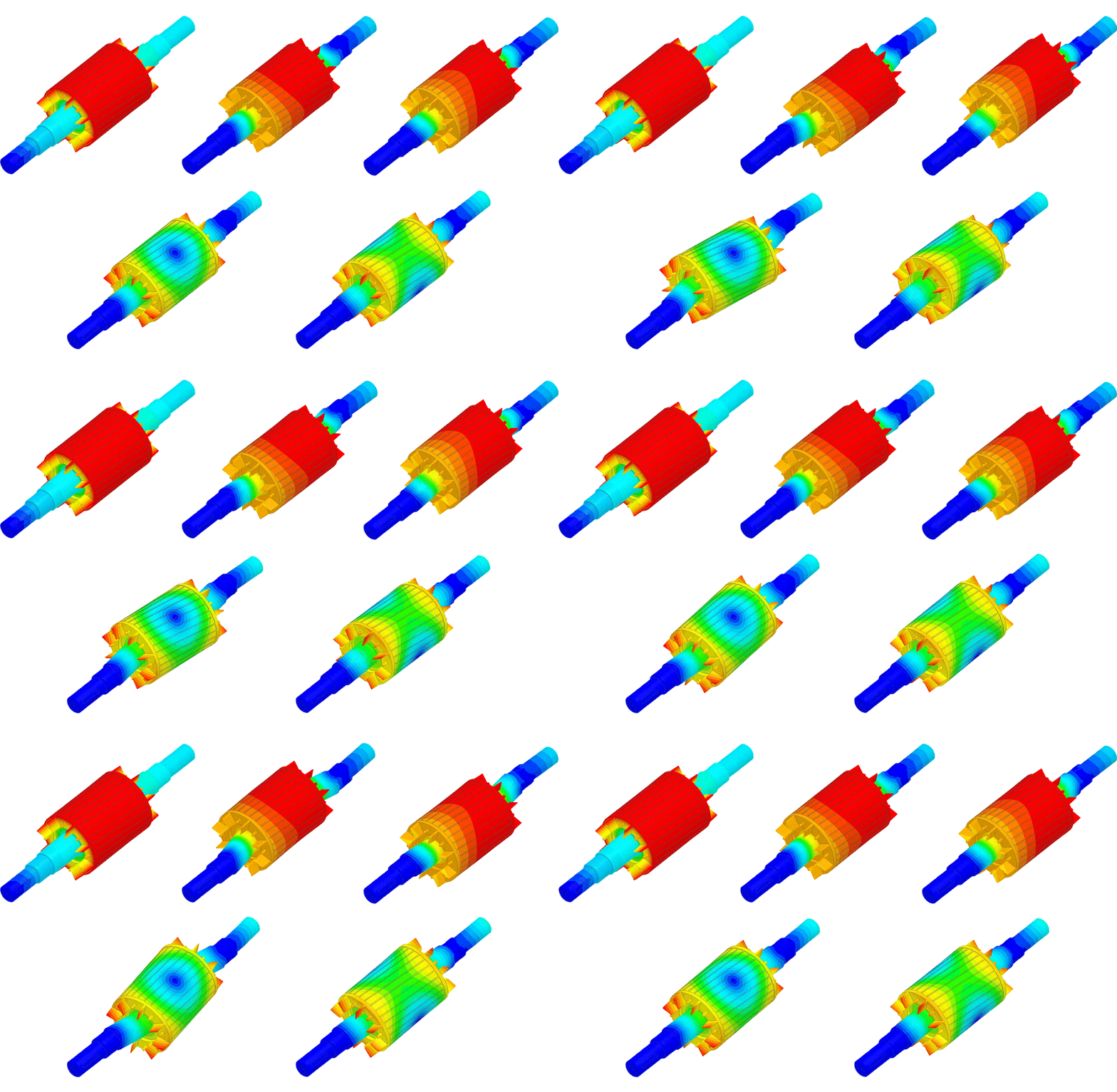
Cloud-native scale: more variants, faster
No on-prem HPC, no VPN, no per-seat licence cap. Elastic compute scales per project so a motor team can sweep dozens of stator or rotor variants in parallel, condensing years of R&D into a single cloud-native workflow.
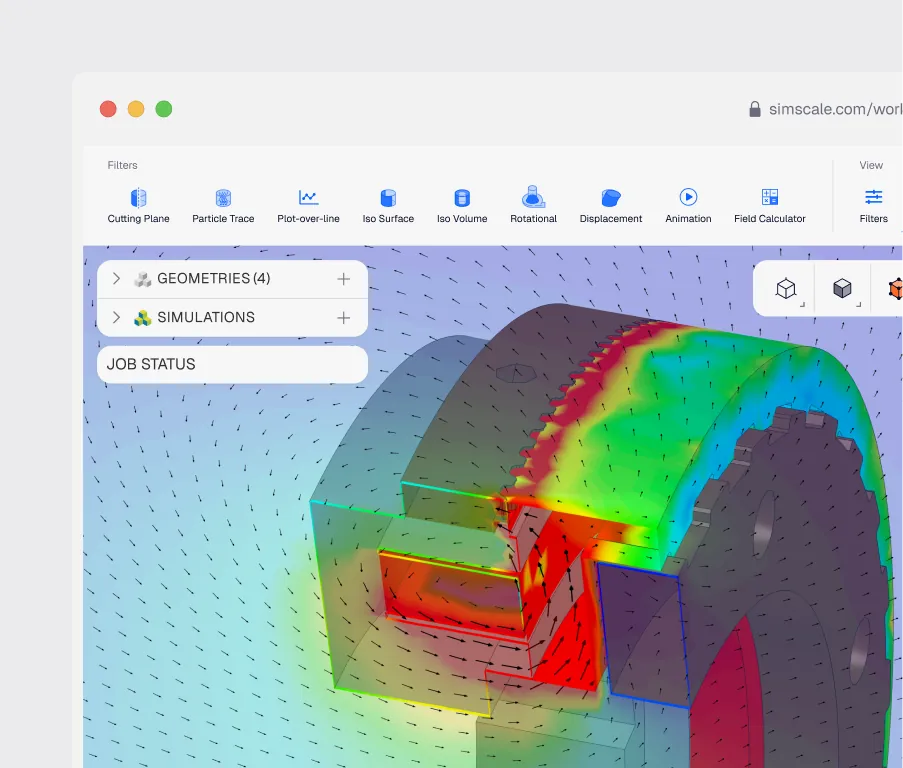
3D electromagnetic analysis: flux density, losses, stray fields
Visualise flux density, calculate cogging torque and back-EMF, and locate stray-loss sources across BLDC, PMSM, induction, switched reluctance, and axial flux topologies with magnetostatic and time-harmonic 3D solvers. Identify where field leakage hits structural components before the design is locked.
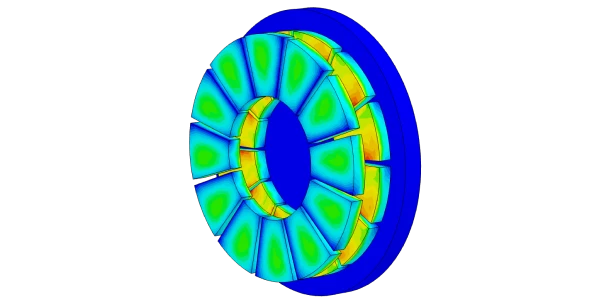
Electromagnetic-thermal coupling for motor cooling design
Automatically map Joule heating and core losses as heat sources into a conjugate heat transfer simulation. Two-way coupling captures how rising temperatures shift resistivity and permeability. Validate water-jacket, oil-spray, and air-cooled architectures across operating envelopes.
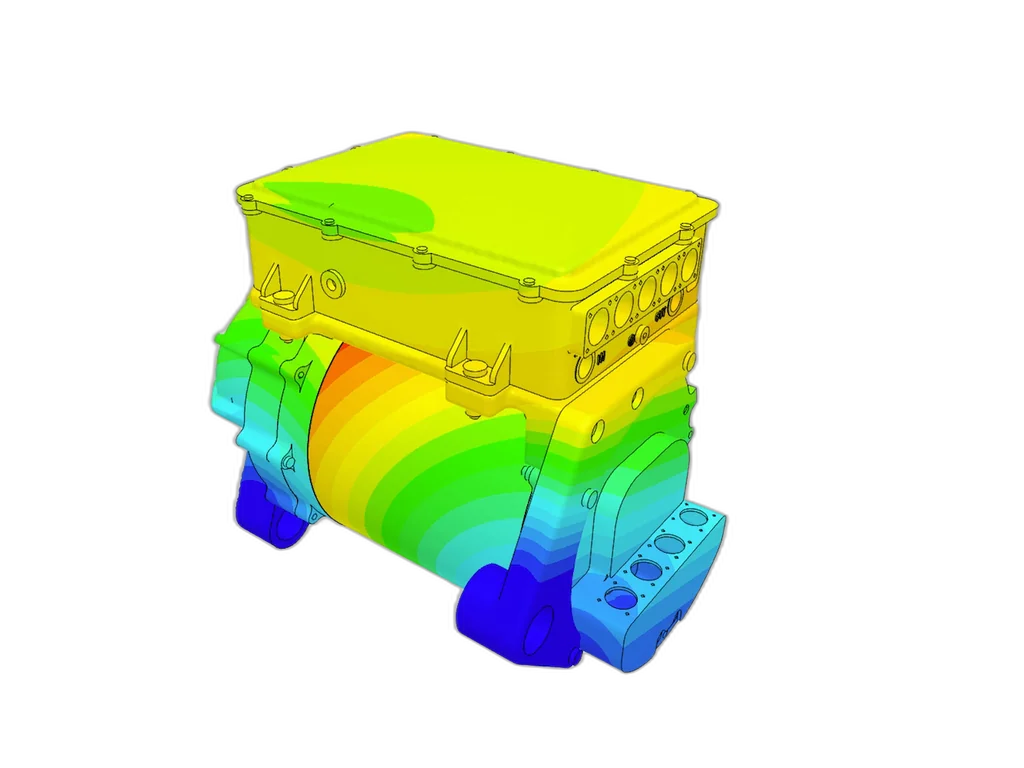
NVH: modal, harmonic, and motor-whine prediction
Identify natural frequencies of housing, stator, and brackets, then evaluate harmonic response under electromagnetic excitation forces. Predict and tune motor whine before prototype build with global damping and structural redesign.
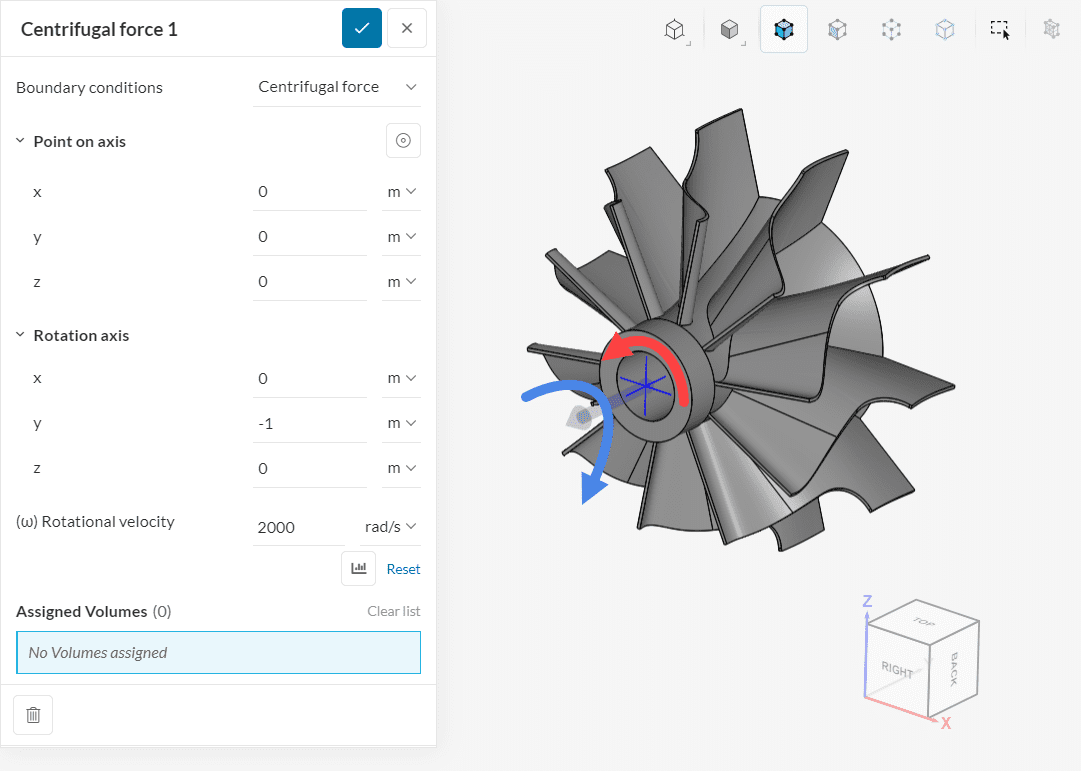
Centrifugal load and high-RPM structural analysis
Run centrifugal load FEA on shafts and rotors at extreme RPM. Quantify shaft deformation, rotor stress, and air-gap closure risk at speeds where small displacements destroy bearings.
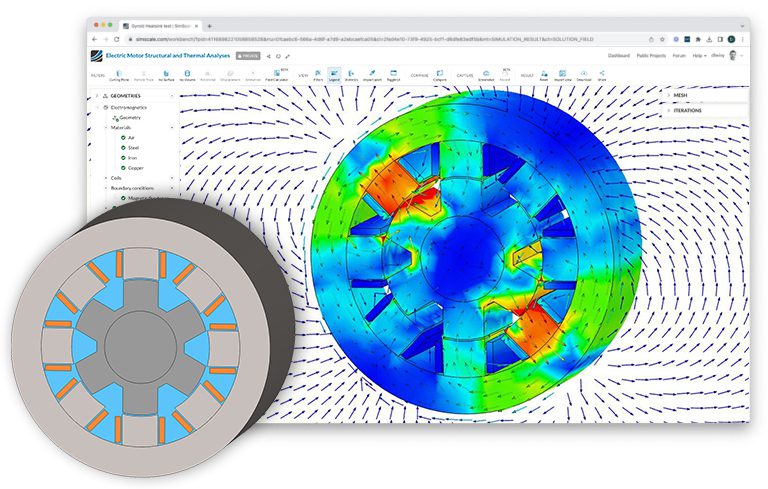
Induction, switched reluctance, and axial flux topology coverage
Simulate induction motors with slip and starting torque, switched reluctance motors with torque ripple analysis, and axial flux machines including segmented and coreless designs. Rare-earth-free topologies are a first-class use case.

Aerodynamic windage and rotor drag losses
Quantify windage drag on rotors and reduce annular-clearance turbulence with internal aerodynamic CFD. At high RPM the air gap behaves like a viscous fluid, and rotor clearance directly drives motor efficiency.

2x
iteration speed, halved development cost, no rare earth
“If we didn’t use simulation to the extent that we’re using it, we would have to build at least one more full prototype. That would be tens of thousands of euros more. And ultimately, you can’t improve a design if you don’t understand the effects that are defining performance.”
Maximilian Güttinger, CEO & Co-founder, Emil Motors

<1%
match to on-road testing on e-motorcycle
“Using legacy tools we would have had to purchase several software packages and locally transfer/format CAD files continuously whilst being fixed to a workstation. Using the cloud-native features in SimScale, we have access to a growing feature and physics set whilst accessing the software using a simple login from a web browser.”
Peter Coysh, F1-veteran aerodynamicist, Ingenium Aero Consultancy

50% fewer prototypes
on a 180,000 RPM motorised spindle
“The FEA simulations performed in the cloud with SimScale gave Carbomech’s team valuable insights into the mechanical performance of their high-speed spindle. The team had to build 50% less prototypes for physical testing than usual by adding SimScale to the design phase.”
Fabrizio Pauri, CEO & Chief Engineer, Carbomech
Related resources
![CFD Ventilation Simulation for HVAC Systems and Buildings [MKTN-11903 consolidated draft]](https://frontend-assets.simscale.com/media/2021/11/HVAC-Suppliers-PRG-Webinar-featured-image-1107-x-768.jpg)
CFD Ventilation Simulation for HVAC Systems and Buildings [MKTN-11903 consolidated draft]
CFD ventilation simulation for HVAC components and buildings: pressure drop, CO2, thermal comfort, and the standards each result evidences.

Peter Selmeczy
September 21, 2026
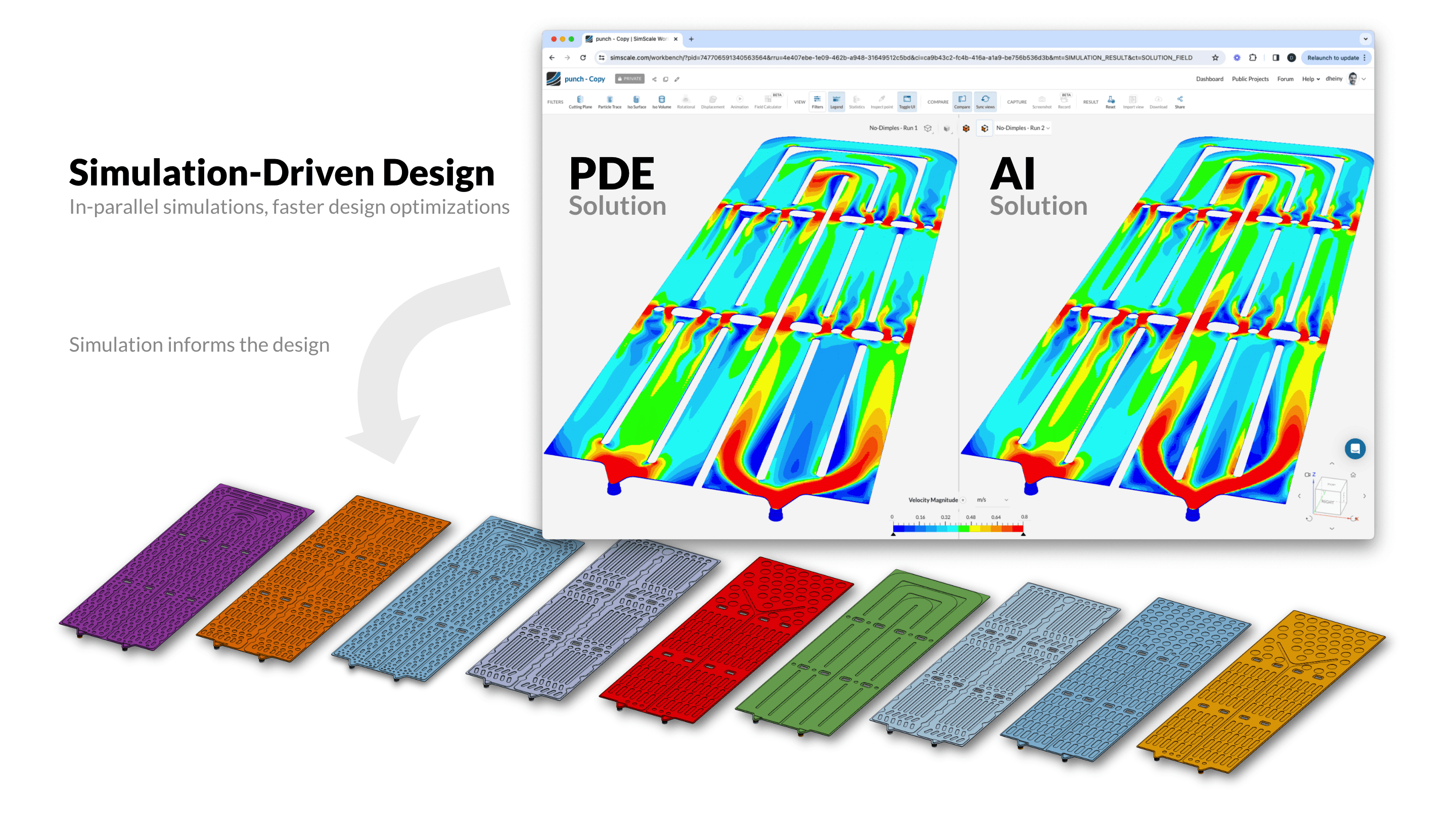
AI Simulation: The Convergence of AI and Engineering Simulation
What AI simulation is, how AI-assisted simulation and simulation-assisted AI differ, how Physics AI models are trained and validated, and where they fit next to CFD and FEA.

Steve Lainé
September 16, 2026
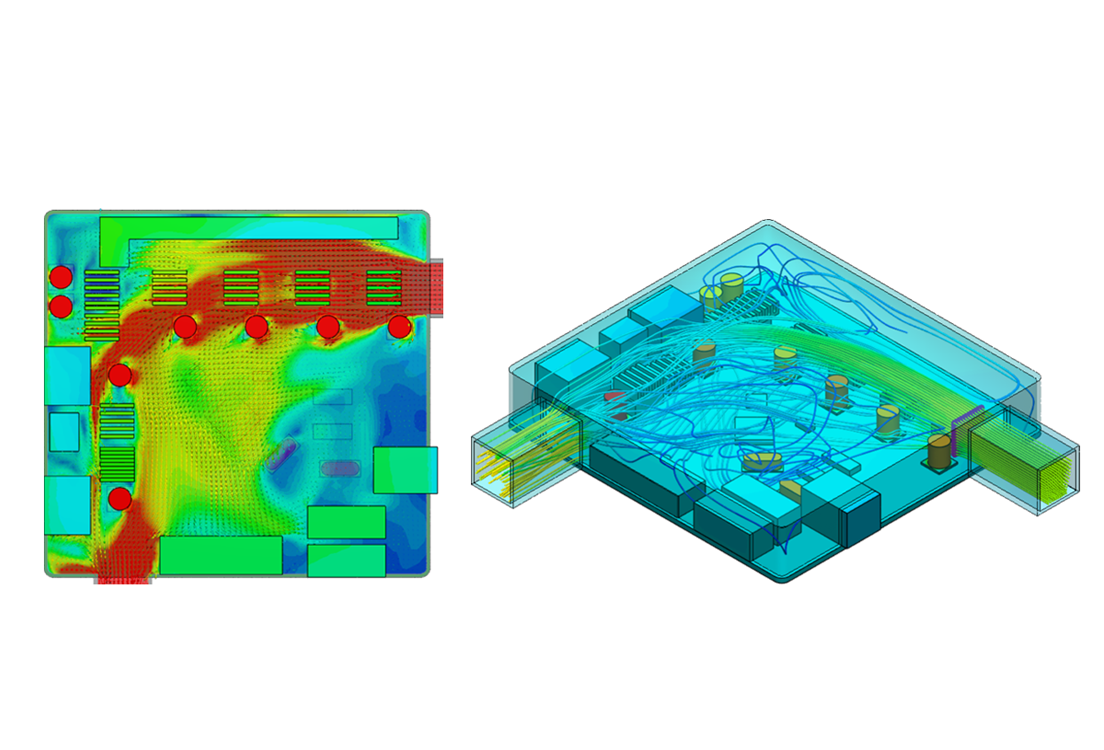
How to run a conjugate heat transfer (CHT) simulation
A step-by-step CHT simulation walkthrough: the full setup sequence, validation against physical test, and worked SimScale examples in air and liquid.

Alexander Fischer
September 13, 2026



Luis Goncaves
August 4, 2026
Luis Goncaves
June 18, 2026
Luis Goncaves
January 27, 2026

Alex Graham
September 15, 2026
Alex Graham
August 4, 2026
Steve Lainé
July 6, 2026
Peter Selmeczy
July 9, 2026
Peter Selmeczy
March 24, 2026

Peter Selmeczy
September 10, 2025
Peter Selmeczy
September 23, 2026

jwebster
September 15, 2026
SimScale covers BLDC, permanent magnet synchronous (PMSM), induction (single- and three-phase), switched reluctance, and axial flux motors. Each can be analysed for electromagnetic performance, thermal behaviour, structural integrity, and NVH in one project.
CAD imports from Onshape, SolidWorks, CATIA, and STEP files land directly in SimScale through the browser. Motor teams integrating SimScale with their CAD tool of choice run thermal, structural, fluid, and electromagnetic analyses end-to-end in a single cloud-native workflow.
Yes. SimScale automatically maps Joule heating and core losses as heat sources into conjugate heat transfer analyses, and structural modes can be coupled with electromagnetic excitation frequencies for harmonic response. This is the multi-physics coverage that fragmented legacy tools require separate licences for.
3D electromagnetic analysis maps flux density across the active core and surrounding structural components, revealing eddy-current losses in the housing, backplate, and shaft that 2D analysis misses. Modal and harmonic solvers identify natural frequencies that coincide with electromagnetic excitation, which is the primary cause of EV motor whine.
Sign up for a free Community account and open one of SimScale's public electric motor projects to explore a pre-configured simulation setup. Modify the geometry, adjust operating parameters, and run your first electromagnetic or thermal simulation within minutes from the browser.