HVAC Simulation Software
Cloud-native CFD for HVAC design. From ductwork and fan performance to thermal comfort
Size ductwork, derive fan curves, and validate thermal comfort, all in a cloud-native platform that runs CFD, heat transfer, and FEA from a standard web browser.
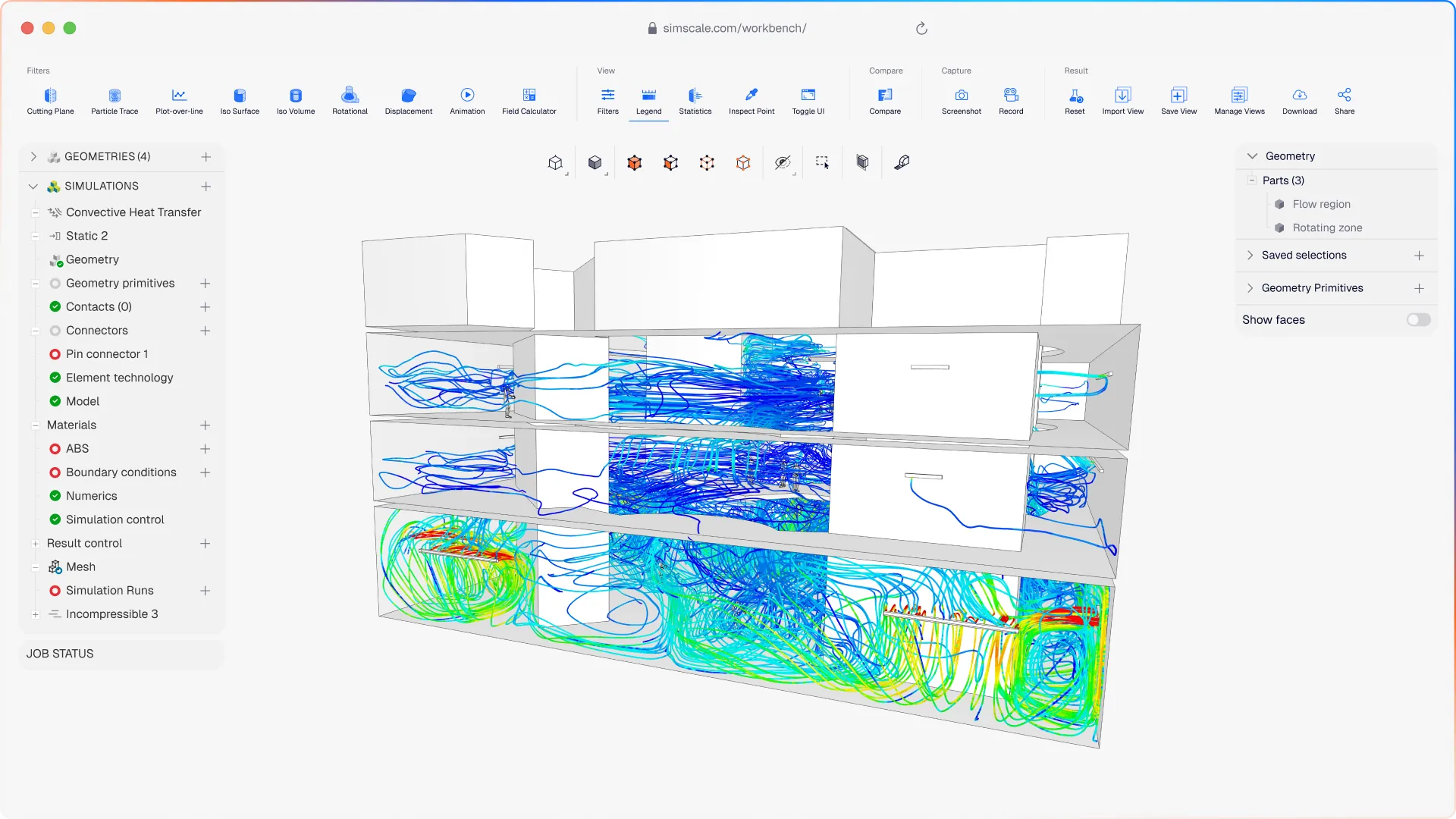




HVAC teams lose time to physical balancing rework and fragmented simulation tools. SimScale unifies airflow, thermal comfort, ductwork, and fan performance on one cloud platform, so engineers meet ASHRAE, LEED, and BREEAM requirements without costly prototypes.
HVAC simulation that covers your full design challenge
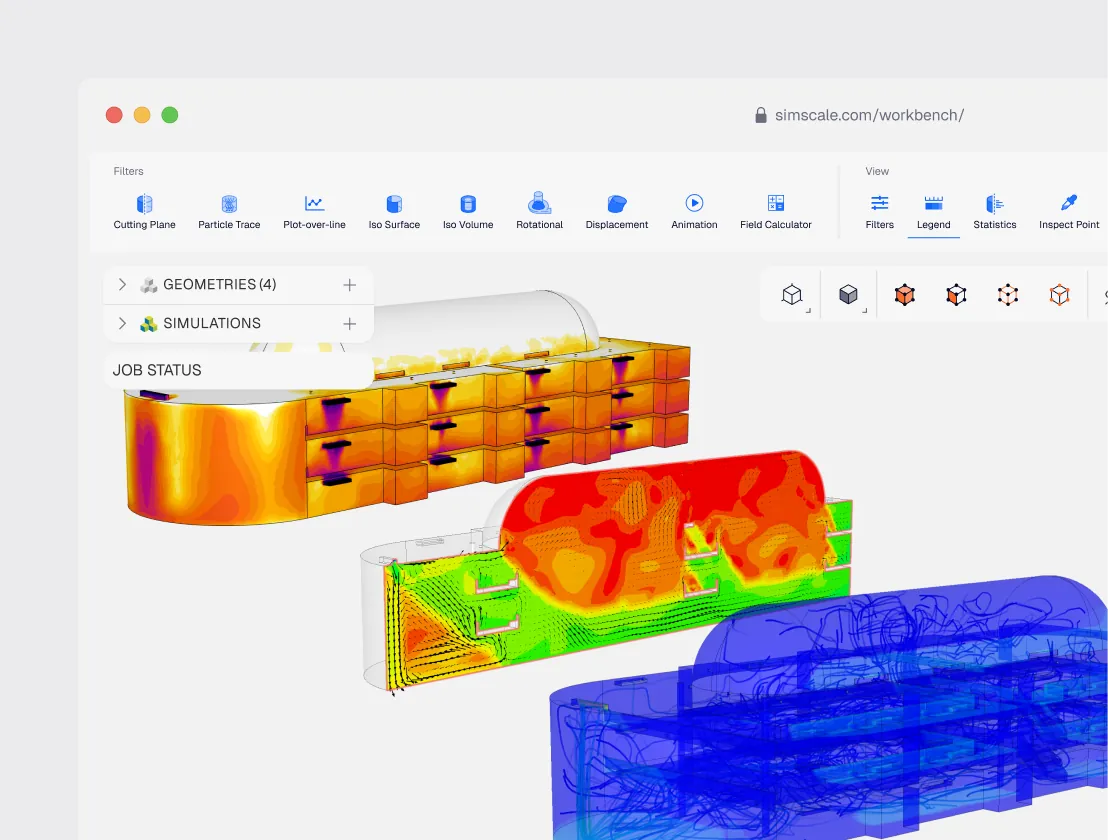
Airflow, thermal, and structural analysis in one platform
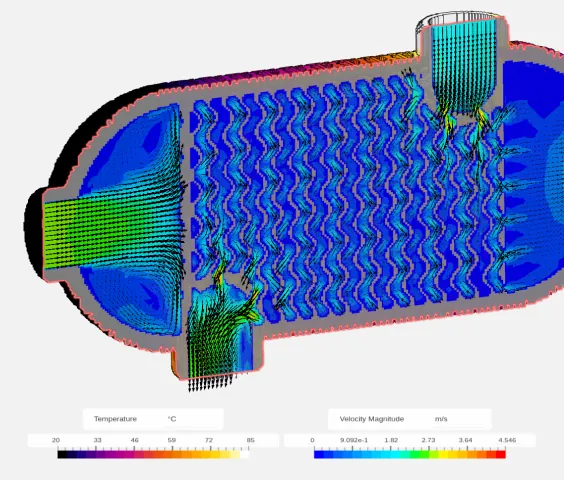
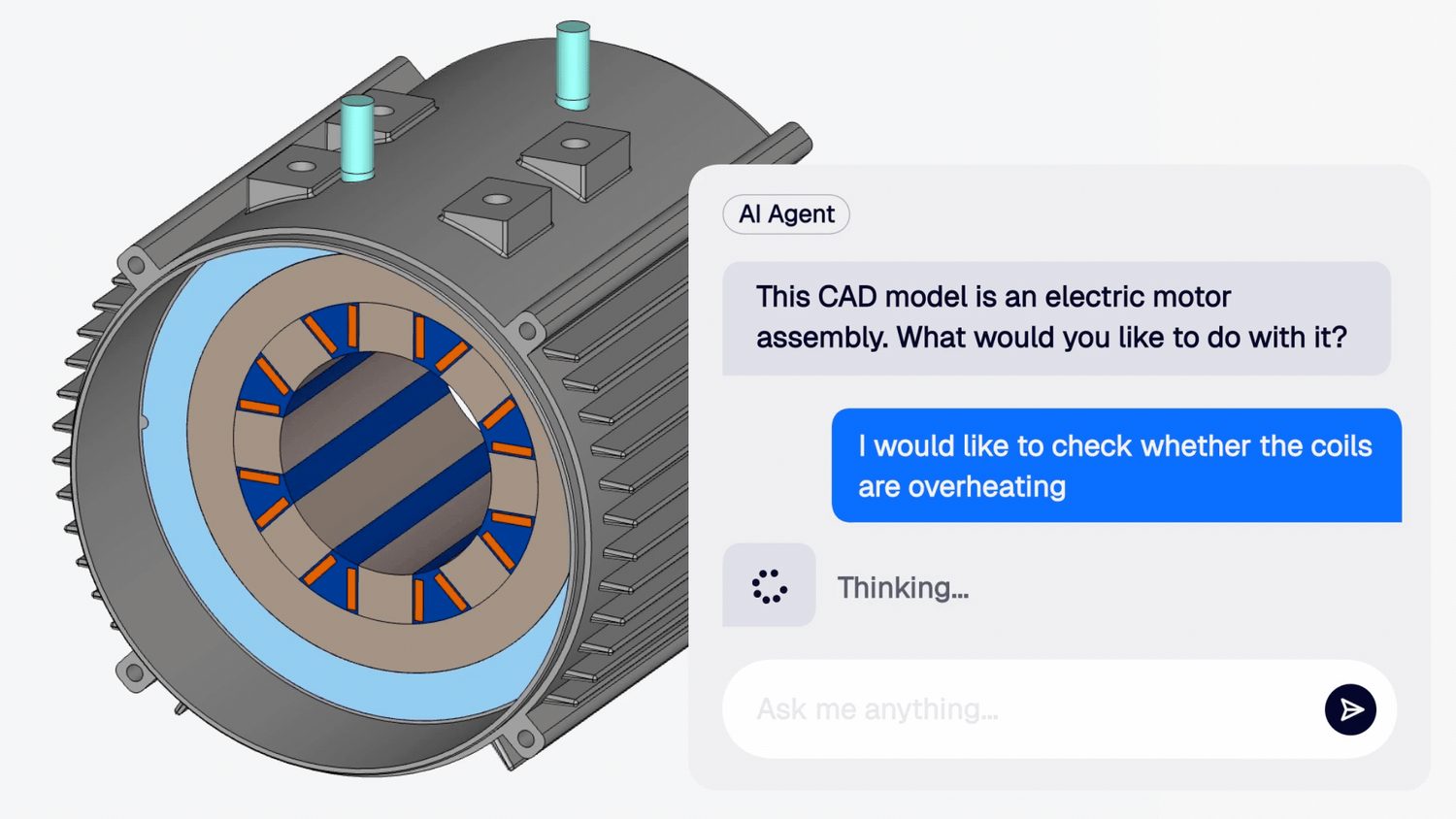
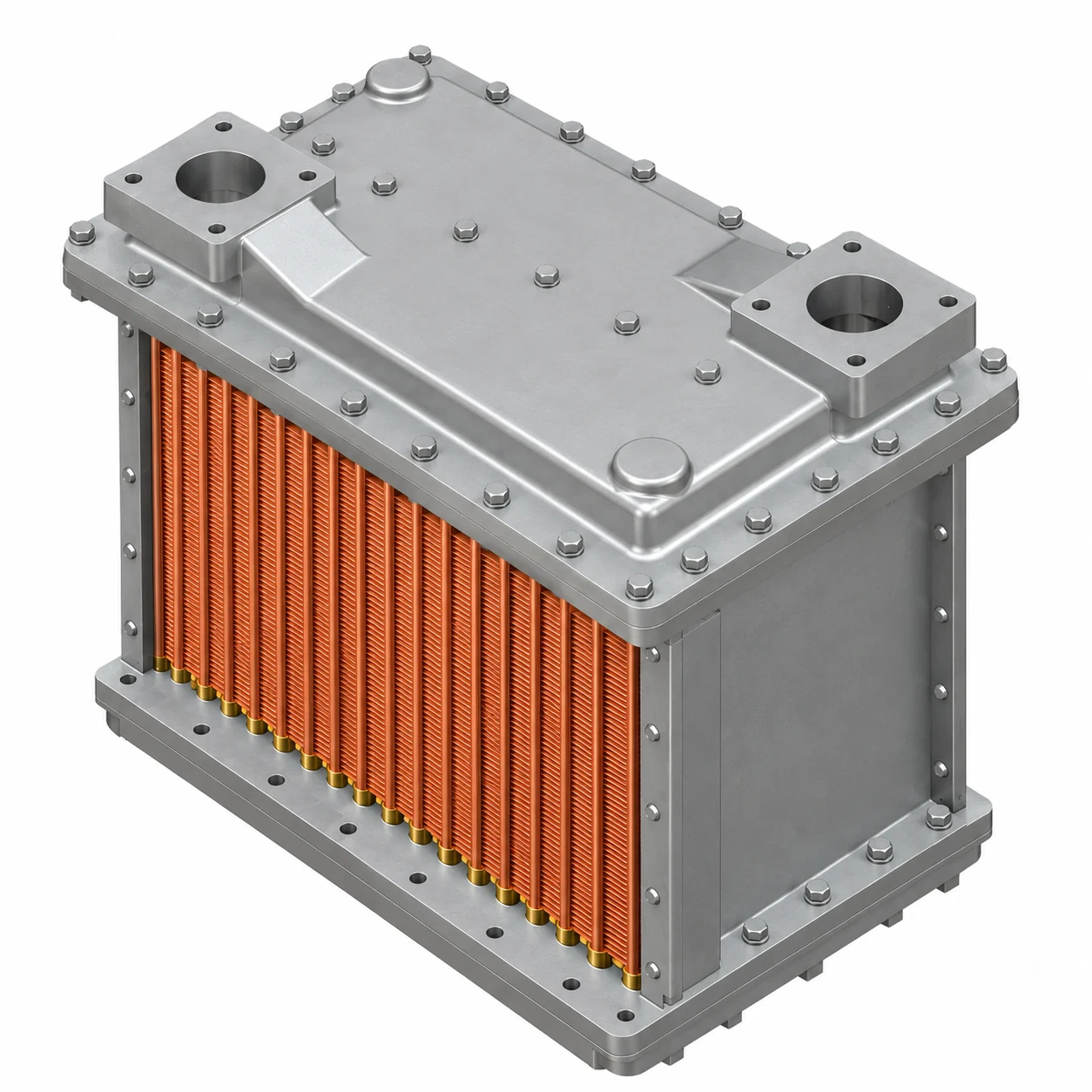
Simulate airflow distribution, thermal comfort, fan performance, and equipment structural integrity — independently or combined. Evaluate PMV and PPD per ASHRAE 55, model conjugate heat transfer in heat exchangers and fan coil units, and couple electromagnetic analysis for motor-driven components.
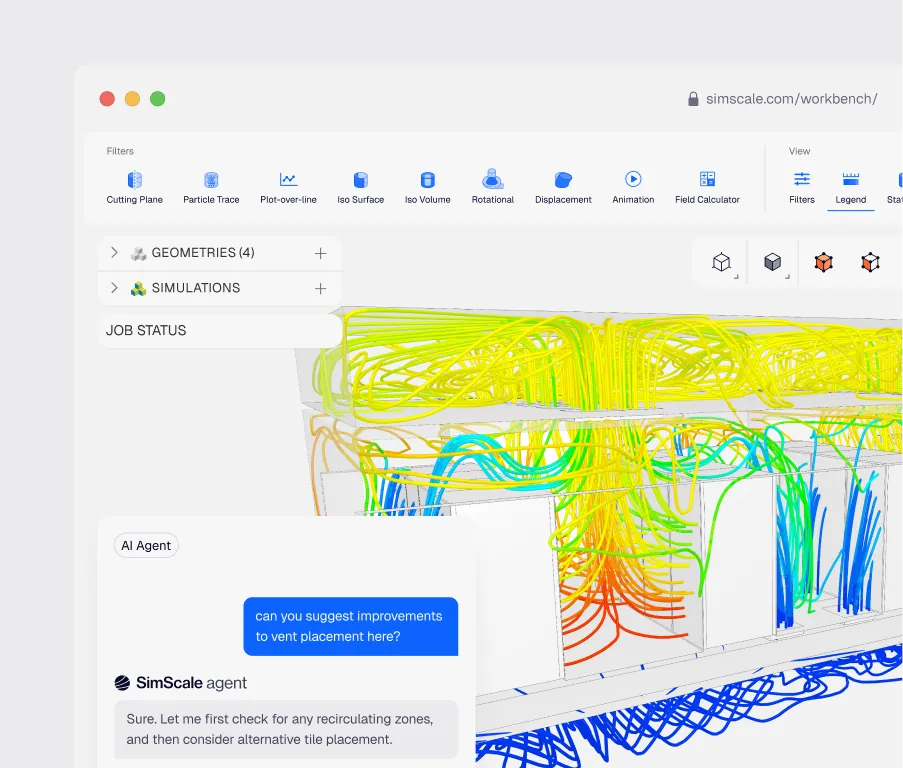
AI-native HVAC design optimization
Physics AI delivers rapid airflow and thermal predictions for early-stage decisions on duct routing, diffuser placement, and equipment sizing. Engineering AI automates meshing and setup for complex duct networks, impeller geometries, and room models, so any engineer can run accurate HVAC simulations.
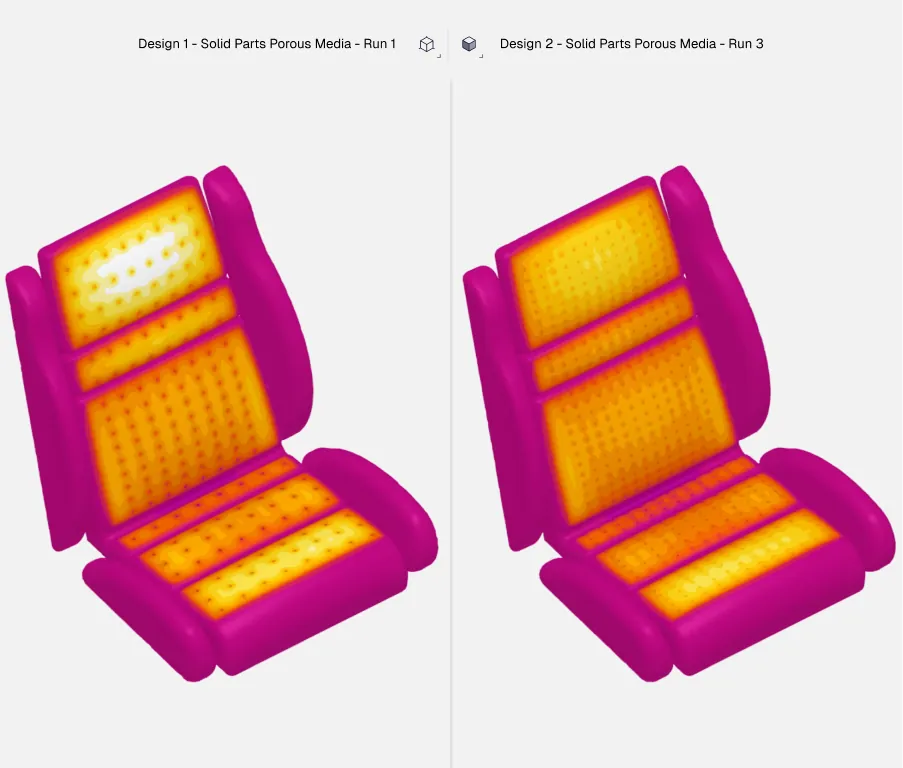
Run every HVAC scenario in parallel
Compare duct layouts, test fan blade geometries, and evaluate competing equipment selections simultaneously in a single session. Share results directly with clients, planning authorities, or project partners without exporting files.
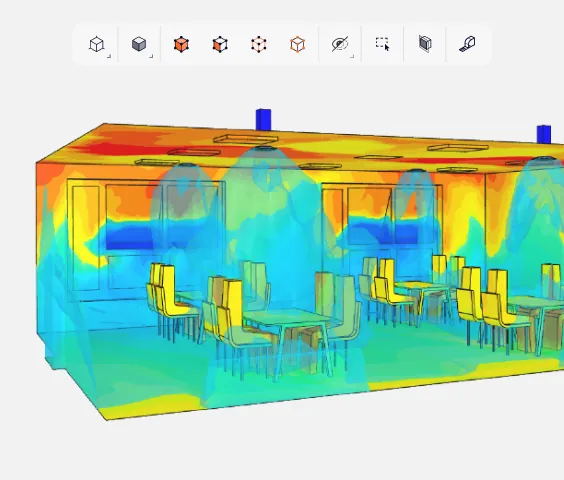
Thermal comfort & ASHRAE compliance
Predict PMV and PPD values and assess compliance with ASHRAE 55, ISO 7730, LEED, and BREEAM. Optimize supply air temperature, diffuser placement, and airflow to achieve comfortable, code-compliant indoor environments.
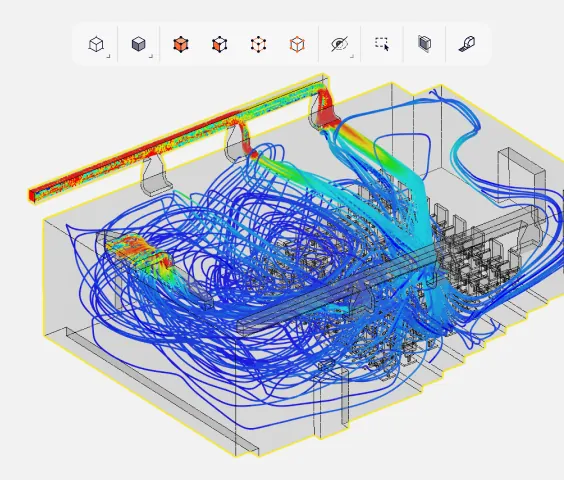
Ductwork design: pressure drop, air balancing & noise
SimScale runs CFD across full ductwork networks. Predicting pressure drop, flow splits, and diffuser throw before commissioning. Identify turbulent zones at elbows and take-offs, then reshape them virtually before fabrication.
Fan performance curves & aerodynamic optimization
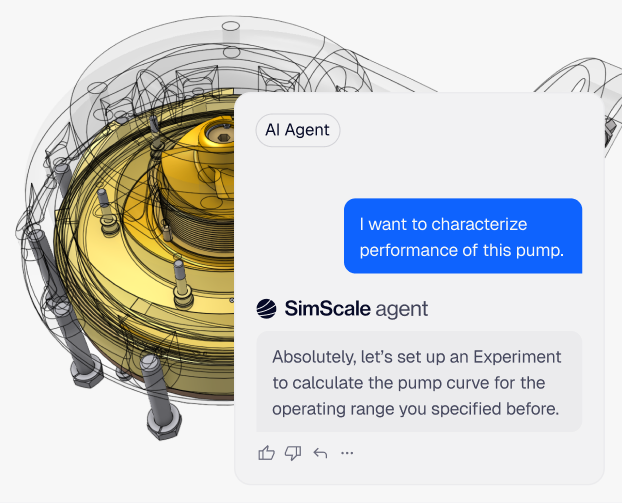
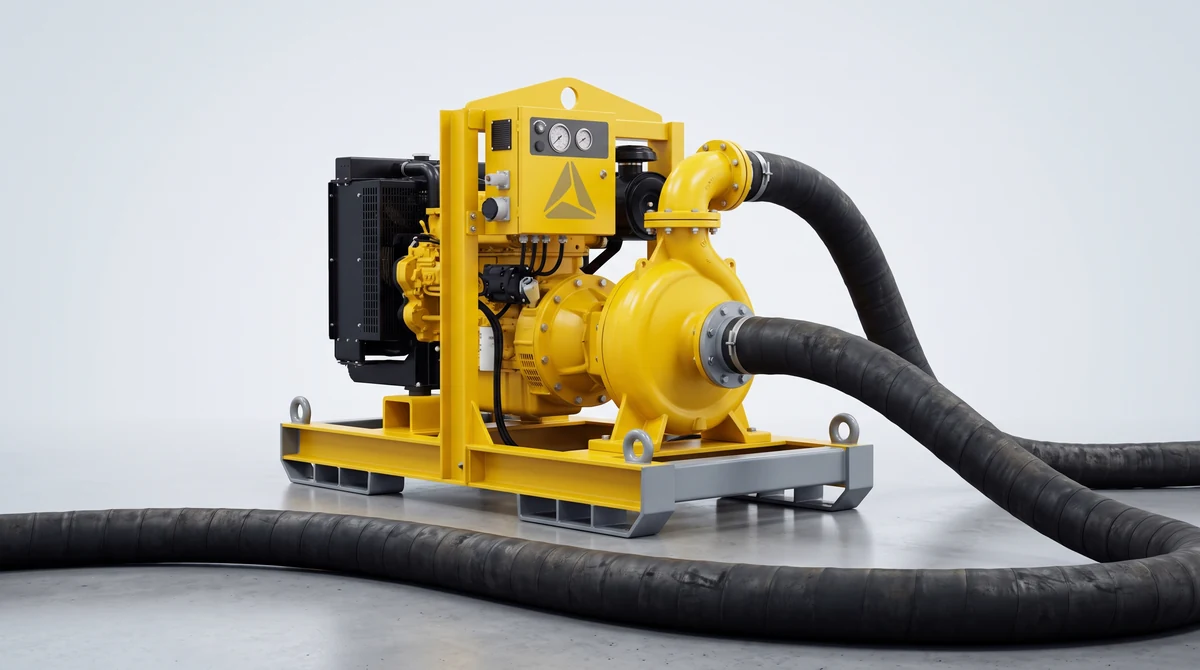
Sweep mass flow rate across the operating envelope to derive full P-Q and η-Q curves, pinpoint the Best Efficiency Point, and optimize blade profiles, inlet cones, and volute geometry. All paired with FEA to confirm stress at speed. Schübeler Technologies validated a weight-optimized blade assembly at 50,000 rpm in just 21 minutes.

90%
reduction in required prototypes
“Using SimScale’s HVAC CFD, we dramatically improved our ventilation exhaust pipe design, eliminated noise concerns, and optimized airflow, all in less than one working day.”
Sebastian Glanzner, Founder at Glanzner Dynamics

One
prototype iteration on the Terra V AHU
“By adopting SimScale as a core design and validation tool, we have reimagined how ventilation systems are developed. From rapid concept evaluation to final optimization, cloud-native simulation enabled faster iteration, better decision-making, and superior product performance during the entire development process.”
Ethan Quisias — Product Development Engineer, Oxygen8

310 kW
Centrifugal fan redesign to hit 310 kW power ceiling
“The geometry requirements and speed of SimScale’s incompressible analyses are fantastic. I simply could not do these comparisons using TCFD on my AMD Ryzen Threadripper PRO 3975WX in an acceptable time. The difference would be many days instead of hours for SimScale.”
Richard Knighton — Owner, FanMechanics
Related resources
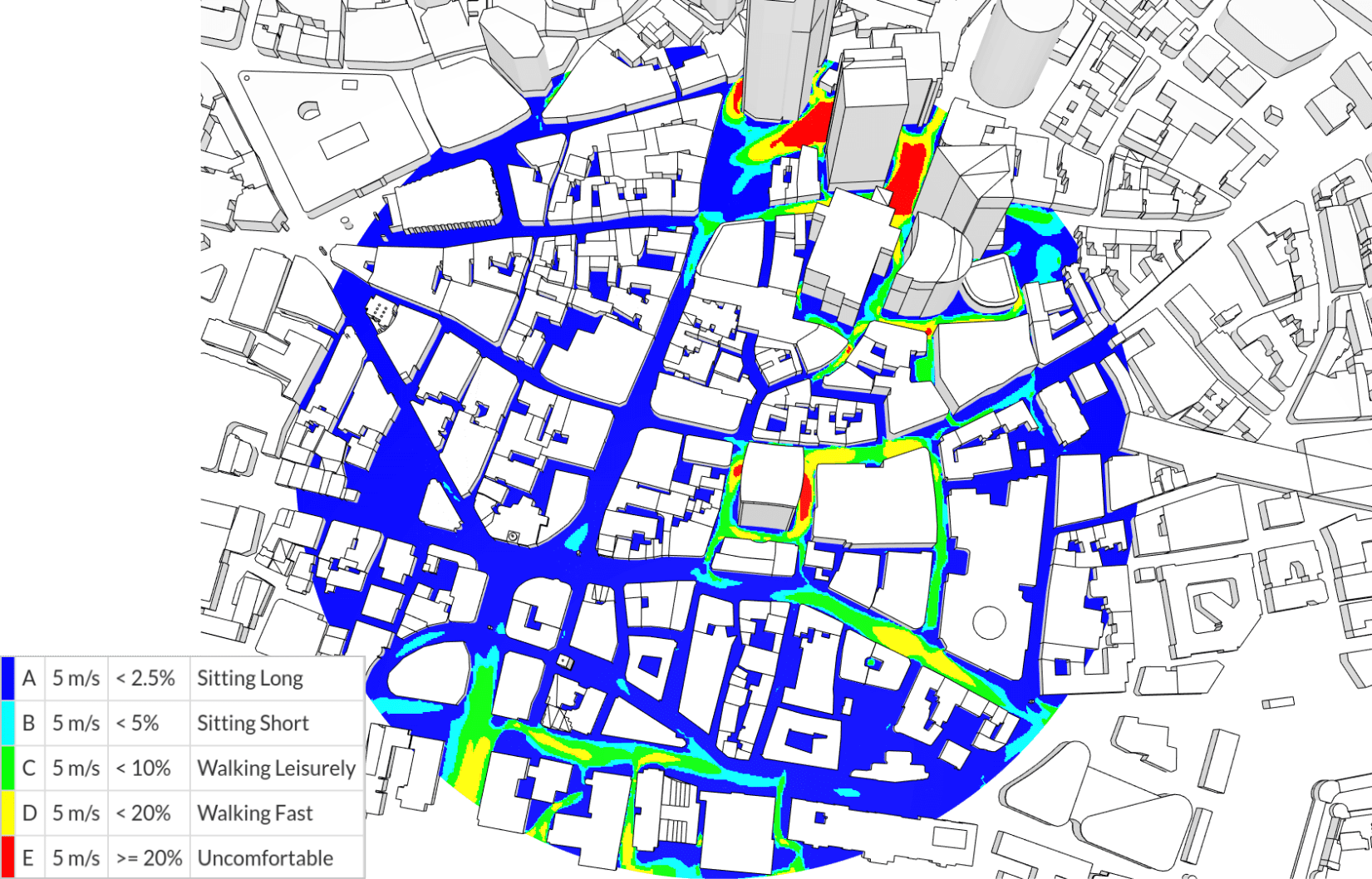
NEN 8100: the Dutch wind comfort and wind danger criteria explained
The Dutch NEN 8100 standard scores pedestrian wind comfort in five classes from one 5 m/s threshold, with a separate 15 m/s danger criterion.

Guillermo Giraldo
September 25, 2026

ASCE 7-22: What the Standard Requires for Wind Loads, and Where CFD Fits
ASCE 7-22 explained for wind design: editions, the Directional, Envelope and Wind Tunnel Procedures, what changed, and where CFD fits.
Guillermo Giraldo
September 23, 2026

Alex Graham
September 22, 2026



Luis Goncaves
August 4, 2026
Luis Goncaves
June 18, 2026
Luis Goncaves
January 27, 2026
Alex Graham
September 15, 2026
Alex Graham
August 4, 2026


Steve Lainé
July 6, 2026

Peter Selmeczy
July 9, 2026
Peter Selmeczy
March 24, 2026

Peter Selmeczy
September 10, 2025
Peter Selmeczy
September 23, 2026

jwebster
September 15, 2026
Yes. SimScale is used for both: equipment-level CFD (fan performance, heat exchanger optimization, duct pressure drop) and building-level analysis (room airflow, thermal comfort, IAQ). The same platform handles both scales.
Yes. SimScale calculates thermal comfort parameters including PMV and PPD per ASHRAE 55 and ISO 7730. Results can be used to support LEED and BREEAM certification submissions.
Supply and return ductwork, exhaust and fume extraction runs, AHU internals, smoke control pressurisation, kitchen extraction, and full multi-zone building networks. CFD, thermal, and structural analysis run on the same geometry in a single project. Import via IFC, Revit, or STEP — mesh automation handles complex MEP geometry without manual cleanup.
SimScale sweeps mass flow rate across the operating envelope using MRF analysis for steady-state aerodynamics and sliding-mesh for unsteady transient effects. This produces complete P-Q and η-Q curves, identifies the Best Efficiency Point, and generates performance tables for fan selection software — all exportable from the browser.
Yes. SimScale supports both natural ventilation (buoyancy-driven, wind-driven, and mixed-mode) and mechanical HVAC systems. This includes passive ventilation strategies such as stack effect, cross-ventilation, and night purging.