SPH Simulation Software
SPH Simulation. Sloshing, Free-Surface & Wave Impact in the Cloud
Simulate sloshing, wave impact, and free-surface flow with smoothed particle hydrodynamics. GPU-accelerated simulation in the browser, with Engineering AI and Physics AI orchestrating every run.













SimScale handles moving geometries, fragmenting free surfaces, and complex rigid body motion natively: no mesh to build, no mesh to rebuild. Our GPU-accelerated SPH runs up to 20x faster than mesh-based CFD. Browser-based. Elastic cloud compute. No queue.
Why SimScale for SPH Simulation
Multiphysics
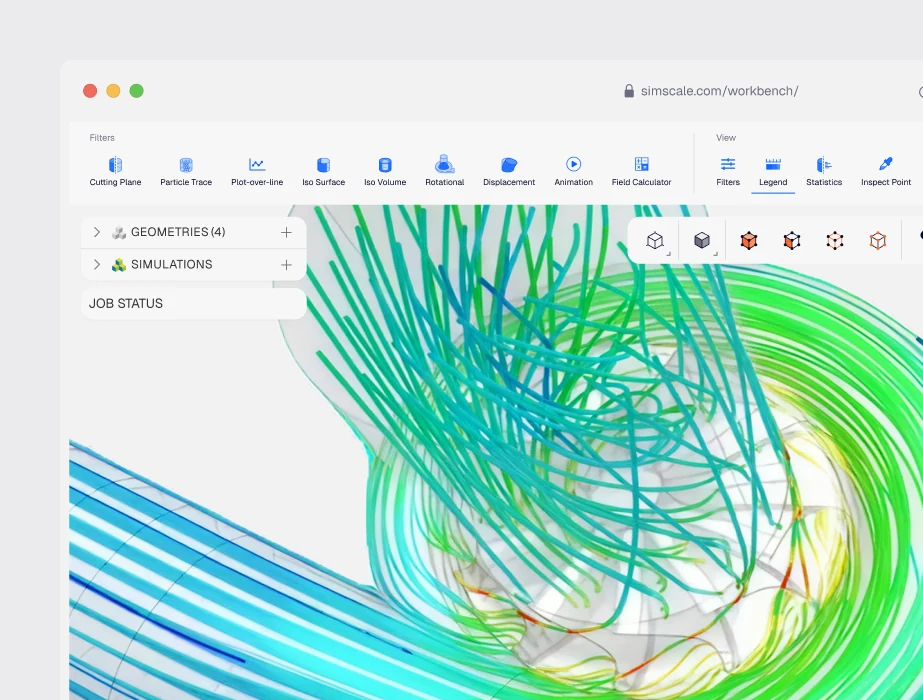
Free-surface, multiphase, and FSI in one platform. Capture air-fluid interfaces, splashing, and fluid-structure interaction alongside SimScale's mesh-based CFD and structural solvers — pick the right method per problem, no second tool.
AI-accelerated
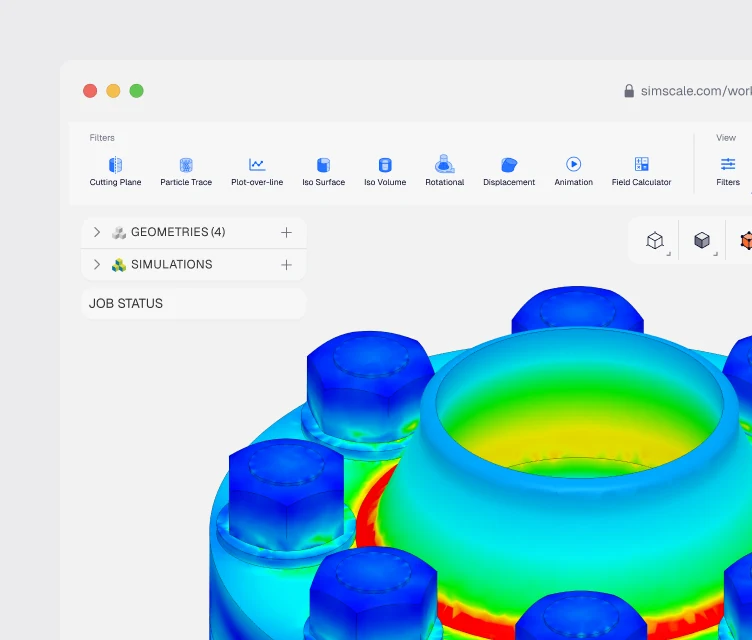
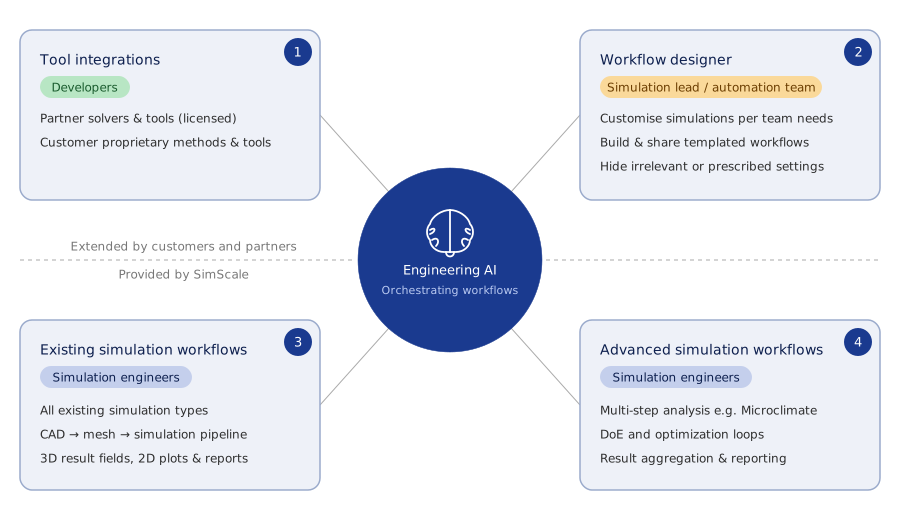
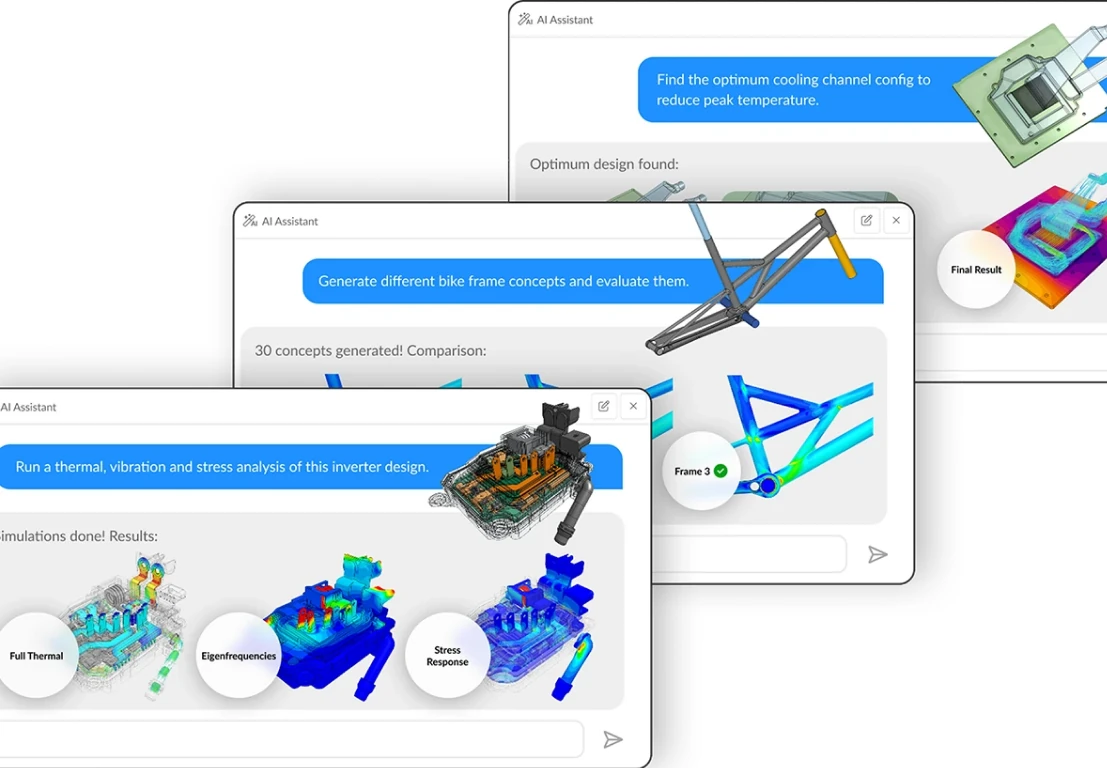
AI-orchestrated SPH workflow. Engineering AI configures particle resolution, time step, and boundary conditions from your geometry and intent. Physics AI delivers instant outcome predictions on trained design spaces, so the first iteration takes hours, not days.
Cloud-native scale
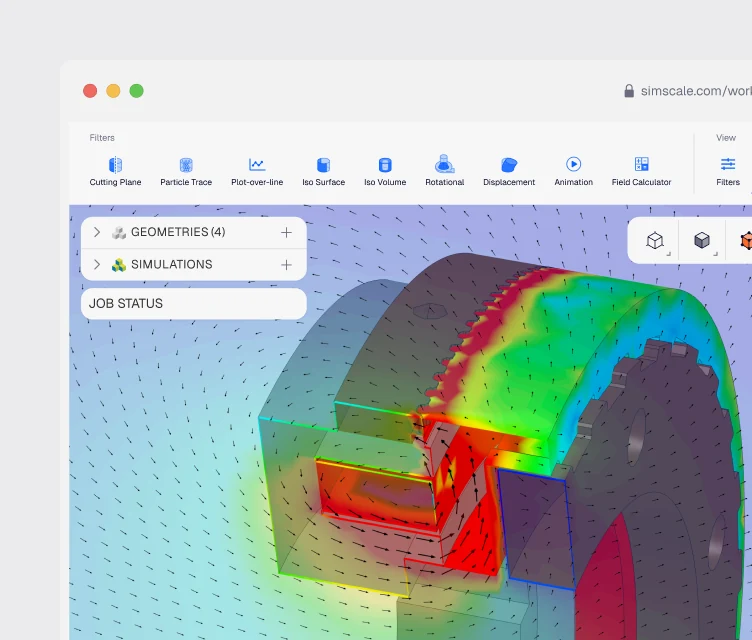
Cloud, parallel, instant. Run SPH cases on elastic cloud compute — browser-based, instant scale-out, no queue. Share the live project link with the team for review, no install required.

Gearbox and e-motor oil churning
Predict oil distribution, film formation, and thermal behaviour in gearboxes, differentials, and electric motor housings. SPH captures churning, splashing, and free-surface oil dynamics at realistic rotational speeds — diagnosing lubrication starvation and hotspots without geometry simplification.
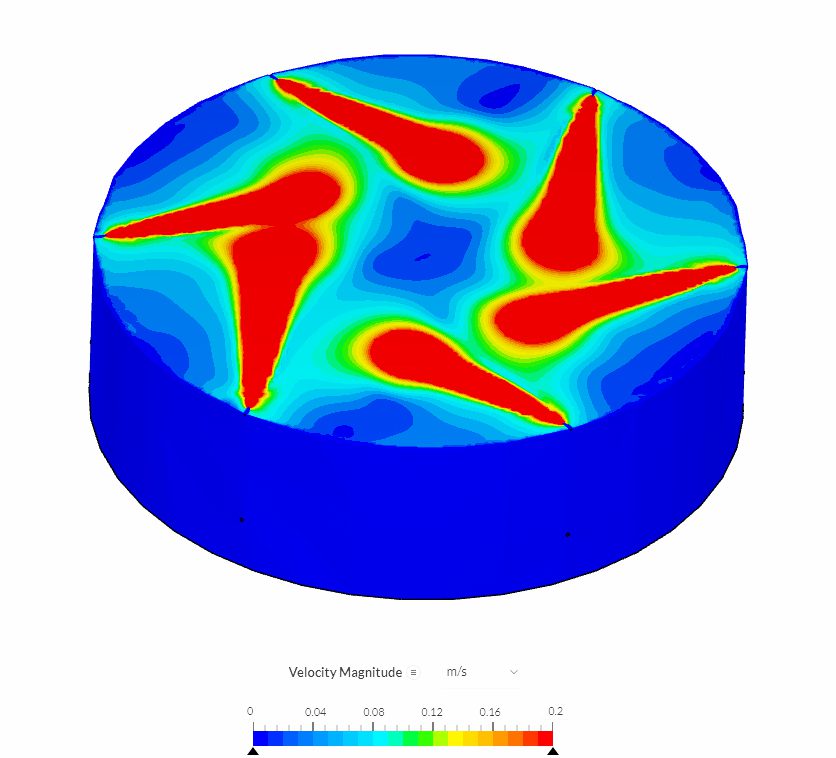
Tank and vessel sloshing
Predict free-surface motion in fuel tanks, road tankers, and offshore vessel holds. Quantify pressure on baffles and walls under transient excitation, including roll, pitch, and acceleration profiles.
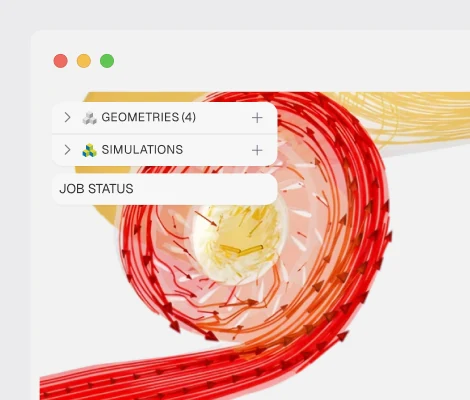
Open-channel and hydraulic flow
Simulate spillways, dam break, river hydraulics, and overtopping where the air-water interface is the primary unknown. No interface tracking, no remeshing.
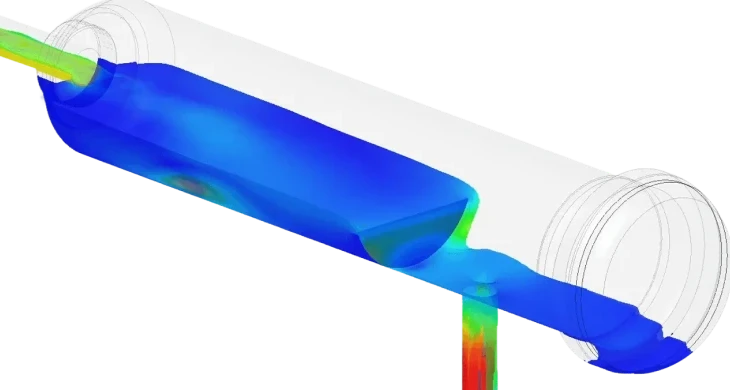
Mixing and stirred-tank flow
Resolve impeller-driven mixing and stirred-tank flow with free-surface and multiphase capture. SPH avoids the meshing pain of moving impellers and small clearances.
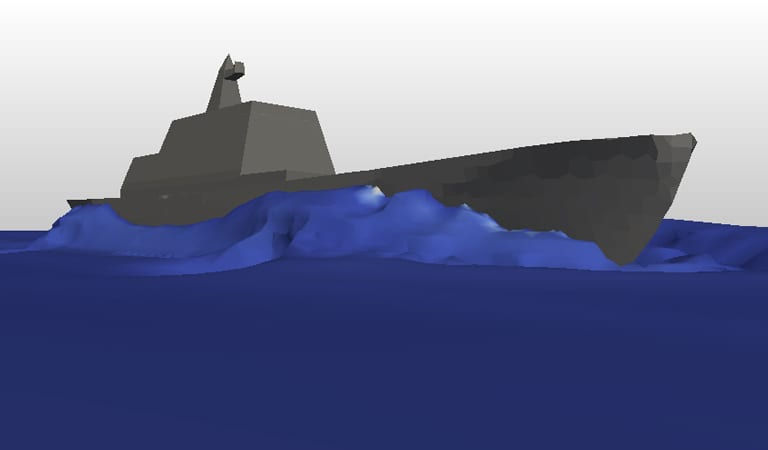
Wave impact and water entry
Model green-water loading, slamming, and water-entry events on hulls, offshore structures, and coastal defences. Capture violent free-surface breakup and impact pressure that mesh-based methods struggle to resolve.
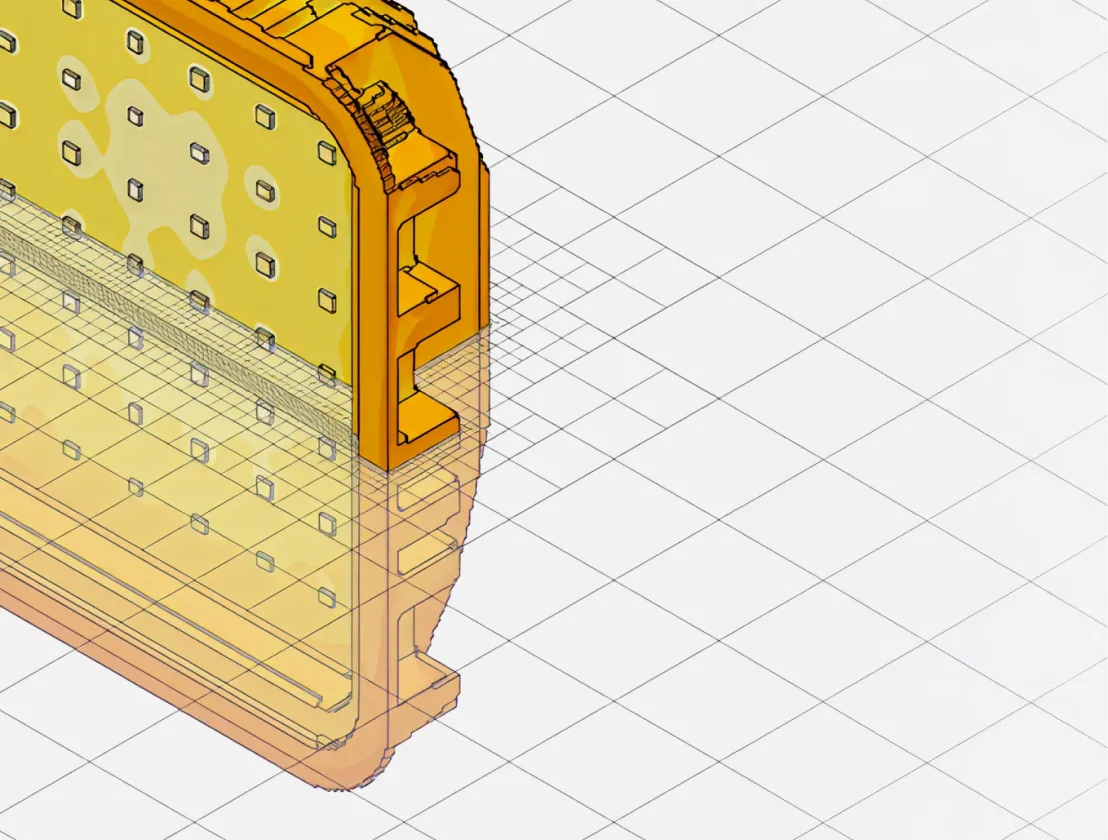
SPH vs mesh-based CFD method selection
Not sure SPH is the right method? Run free-surface and large-deformation cases in SPH and confined, steady-state flows in mesh-based CFD on the same platform — and compare results directly before committing.

15%
reduction in planned development time
“We were able to reduce the motor power consumption by 20% by easily applying powerful flow analysis in SimScale to optimize the impeller design.”
Beatrice Sileno, Founder & CEO of Nantoo

risk mitigation
improved due to faster, more advanced simulation capabilities
“We can now confidently test various designs and operating modes at the simulation stage before we build anything.”
Alex Meredith — Engineer at Aquabio

30%
reduction in deadzones
“SimScale provided detailed insights into flow behavior, allowing for a high degree of confidence in our design... Being cloud-native enabled my team to set up, run, and analyze simulations anytime, anywhere, without hardware limitations.”
Mohamed Amine Rabitateddine — Chief Process Engineer at JESA Group
Related resources

Alex Graham
June 16, 2026
Multi-agent workflows: key takeaways from Design & Simulation Week 2026
SimScale and CoLab demonstrated live AI agent collaboration at Design & Simulation Week 2026, cutting engineering review and simulation lead times dramatically.
Alex Graham
June 12, 2026

SimScale Workflows: Why we are opening up the platform (& why you should care)
SimScale Workflows opens its platform to custom solvers and tools, enabling automated, AI-driven multi-step engineering simulation pipelines for any organization.
Alex Graham
May 29, 2026



Luis Goncaves
June 18, 2026
Luis Goncaves
January 27, 2026

Paras Ghumare
December 4, 2025


Jon Wilde
June 16, 2026

David Heiny
June 15, 2026
Jon Wilde
June 3, 2026

Peter Selmeczy
March 24, 2026
Peter Selmeczy
September 10, 2025
Peter Selmeczy
June 25, 2025
Peter Selmeczy
May 29, 2026
SimScale runs free-surface and multiphase SPH for sloshing, oil churning, wave impact, dam break, open-channel hydraulics, water entry, and stirred-tank mixing — capturing splashing, breakup, and moving boundaries without remeshing or interface reconstruction.
SPH is a mesh-free, Lagrangian numerical method that represents fluids and solids as a cloud of particles carrying mass, velocity, and other properties. Each particle's value is computed by smoothing over its neighbours through a kernel function. SPH is used where free surfaces, large deformations, or multi-phase flows make mesh-based methods break down.
Yes. SPH is one branch of computational fluid dynamics, alongside finite volume (FVM) and finite element (FEM). The difference: SPH is mesh-free and Lagrangian (particles move with the flow), where FVM and FEM are mesh-based and typically Eulerian. SPH is preferred for free-surface, multi-phase, and large-deformation problems; FVM remains the default for steady-state and confined flows.
Choose SPH when the flow has a free surface or air-water interface, when the geometry deforms significantly, or when multi-phase mixing and splashing matter to the result. Stick with mesh-based CFD for steady-state internal flows, aerodynamic external flows, and cases where the Reynolds number is high and the mesh resolves the boundary layer well.
Real-time SPH is possible for low particle counts (under ~100,000) on GPU-accelerated hardware, used mostly in graphics and visualisation. Engineering-grade SPH (millions of particles, accurate kernels, validated against experiment) runs in batch, not real time. SimScale's cloud compute keeps batch turnaround within hours rather than days — the practical equivalent for design iteration.