LED Lighting Fixture Design simulation software
Design LED fixtures that stay cool, last 50,000 hours, and ship on schedule.
Cloud-native CFD and FEA in one platform — run conjugate heat transfer on the full fixture, optimize the heat sink and driver placement, and validate optical mounts under thermal loading. Every variant in parallel, no workstation per engineer.
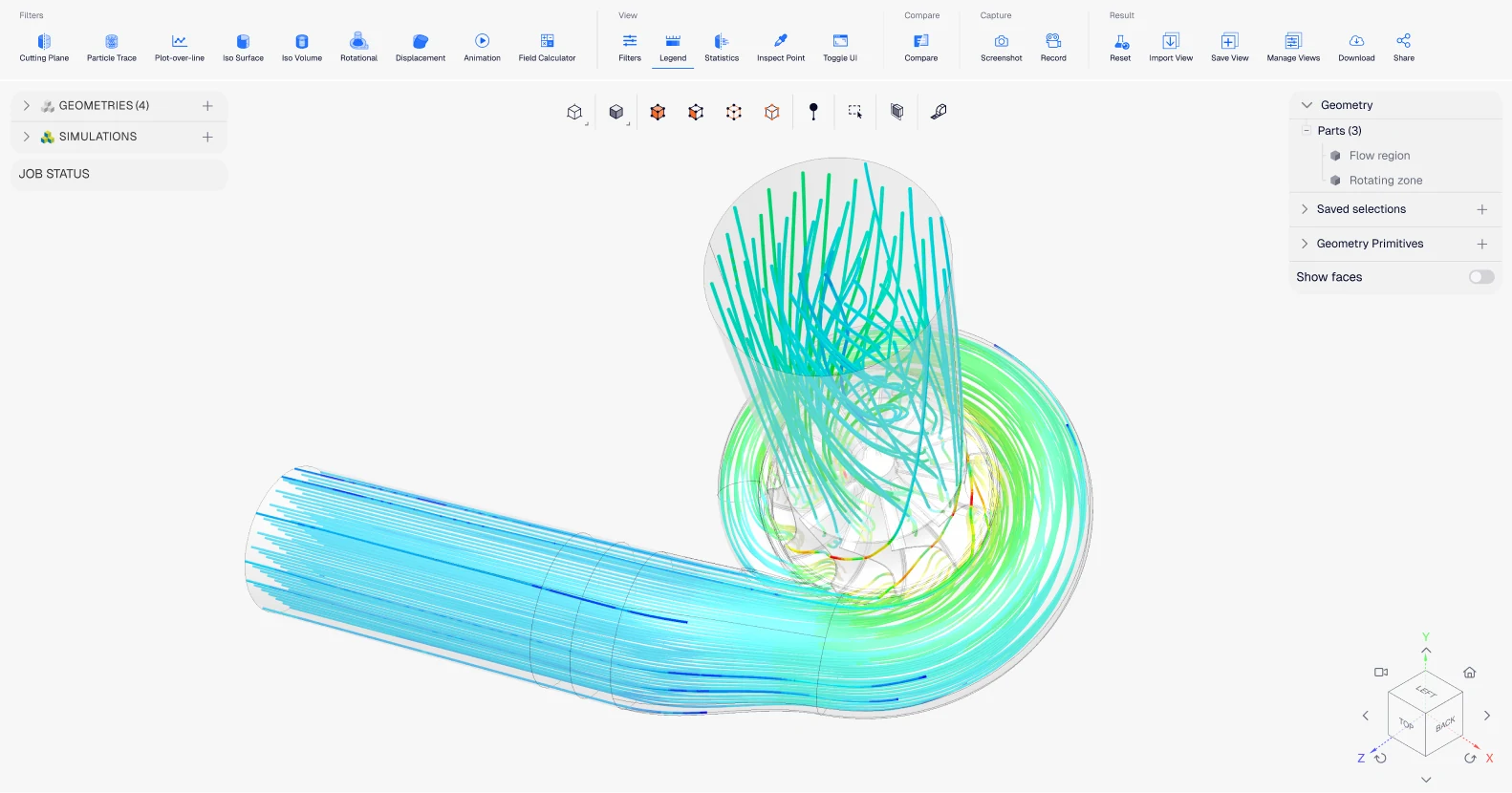












Thermal failure and structural issues found late mean expensive tooling changes. SimScale runs CFD and FEA in parallel on one cloud platform. Iterate heat sink geometry, validate mechanics, and verify thermal budgets before any aluminum gets cut.
Valve simulation that covers your full design challenge
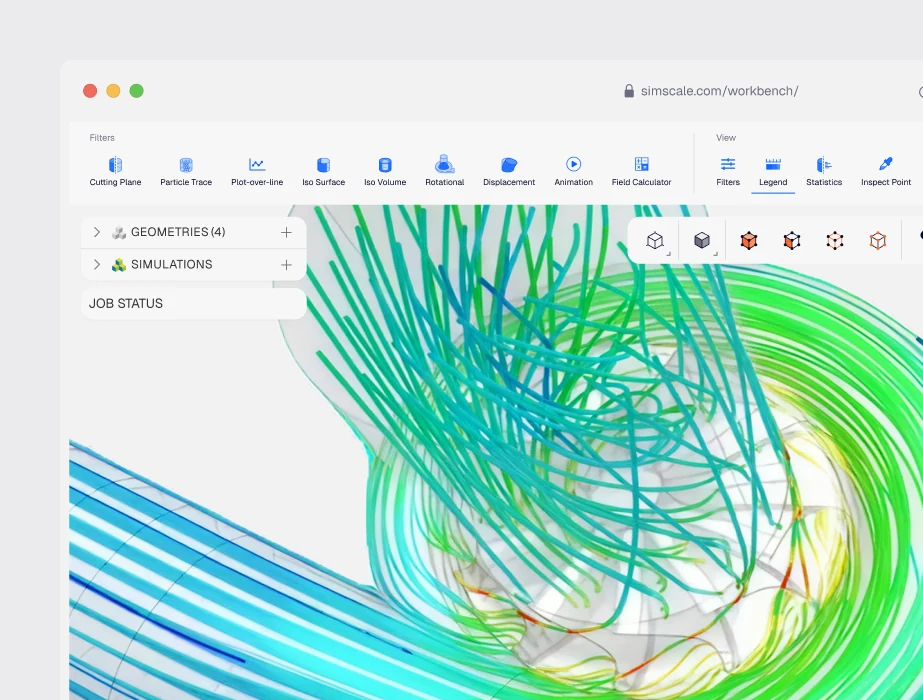
Full-physics LED fixture design —
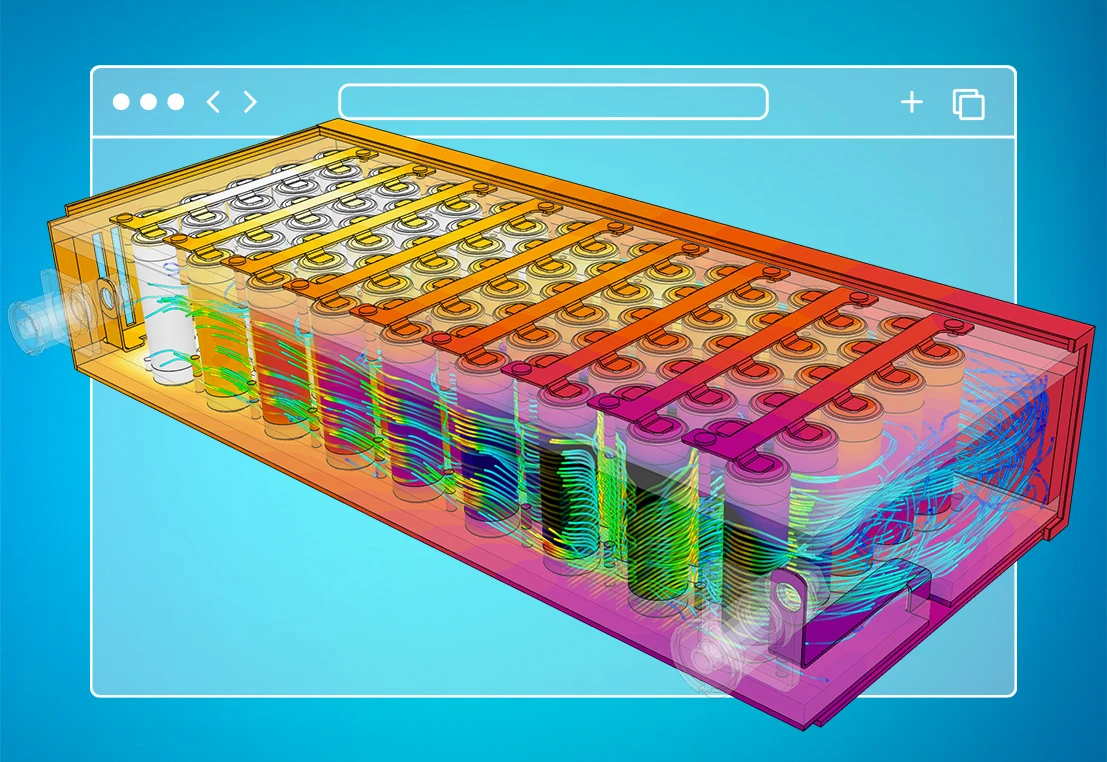
CFD, FEA, and conjugate heat transfer in the cloud (wide card) Simulate the complete fixture from CAD upload to validated thermal map in a browser. Run conjugate heat transfer (CHT) across the LED package, heat sink, driver, housing, and surrounding air. Couple thermal results with FEA on optical mounts and reflector assemblies to confirm mechanical integrity under operating temperature — the same approach Kichler used for value engineering and Lazer Lamps used to validate a screwless headlamp mount.
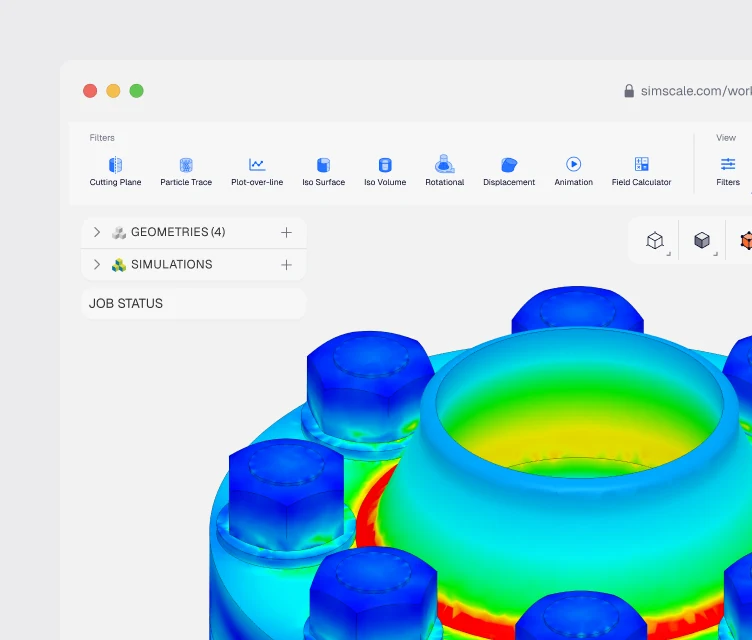
Multiphysics: CFD +
FEA in one platform Run conjugate heat transfer on the full fixture, then FEA on the reflector mount, lens housing, or heat sink fins inside the same environment. Capture thermal expansion, creep, and stress on optical components alongside junction temperature and airflow.
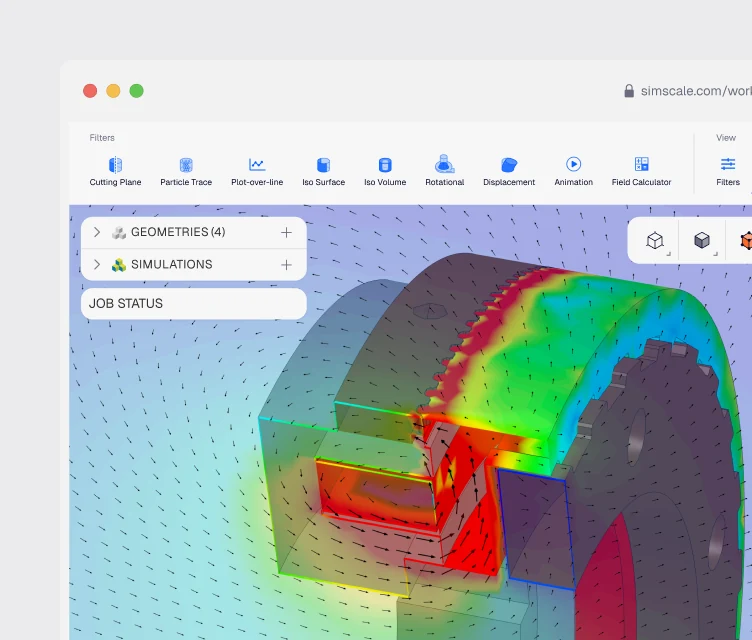
AI: Faster setup, faster iteration
Use AI-assisted meshing and setup to handle complex fin arrays, driver enclosures, and lens geometries. Move from CAD upload to first thermal result in hours, not days — IGS uses this workflow to baseline new Growth Tray with Lights designs against physical test data.
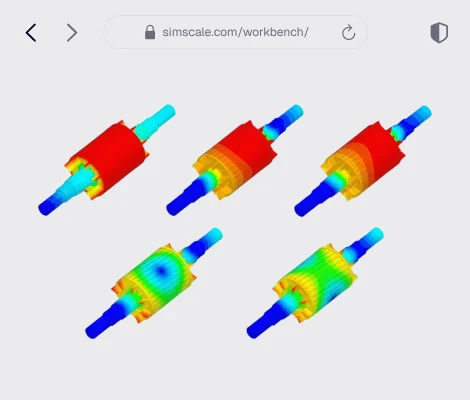
Cloud: Every variant runs in parallel
No queue, no dedicated workstation. Run dozens of heat sink fin patterns, driver placements, and housing variants simultaneously. Kichler's all-cloud product development stack pairs SimScale with Onshape so globally distributed engineering teams iterate continuously without file-sharing overhead.
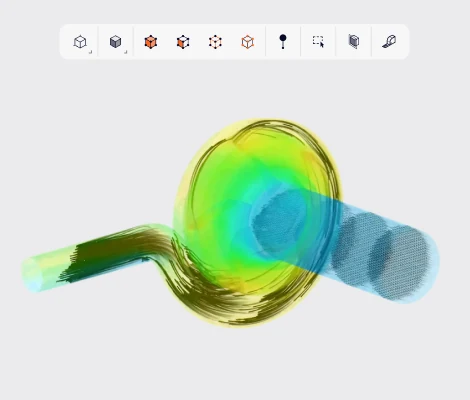
Heat sink optimization and material reduction
Iterate fin geometry, base thickness, and fin spacing against junction-temperature and housing-temperature constraints. Kichler reduced an outdoor wall-sconce heat sink from 58,000 mm³ to 32,800 mm³ — a 44% material saving — while staying inside the thermal envelope, by running geometric variants through SimScale CFD and heat transfer.
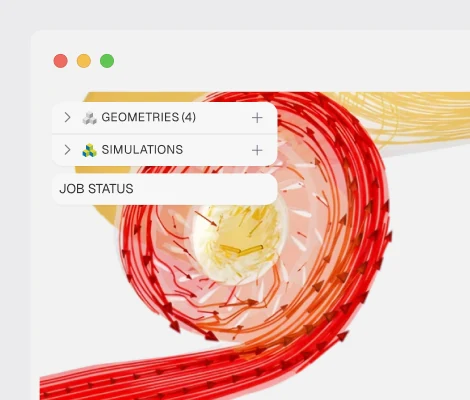
Driver placement and AC/DC trade-offs
Simulate the thermal interaction between LED package heat and driver heat inside a single assembly. Test where the driver sits, how much it adds to the heat sink platform temperature, and whether a switch from DC to AC onboard driver changes the fixture-level thermal budget — without building a prototype.

** All-cloud product development across globally distributed engineering teams
CASE STUDY
“The customer support team is extremely helpful and quick to respond. We've been able to speed up our learning curve by communicating heavily with the SimScale team while creating simulations. They review our projects in real time and provide feedback as we make improvements.”
Josh Levine, Lead Engineer in Kichler's value engineering department, used SimScale alongside Onshape as part of an all-cloud engineering software stack to optimize LED heat sink designs across distributed teams. The combined workflow embedded early-stage simulation into Kichler's design and testing process, cut physical prototyping costs, and accelerated CAD-to-simulation handoff — supporting both faster product innovation and lower hardware/software spend. > "The customer support team is extremely helpful and quick to respond. We've been able to speed up our learning curve by communicating heavily with the SimScale team while creating simulations. They review our projects in real time and provide feedback as we make improvements."
** Screwless LED motorsports headlamp mount validated with FEA
CASE STUDY
“We now have an AI model that can generate a new optimized design in under an hour, and I have complete confidence in the results.”
The engineering team at Lazer Lamps — a British manufacturer of automotive auxiliary lighting — used SimScale FEA to validate a new screwless design for an LED motorsports headlamp, holding the reflector in place with a plastic spring instead of mechanical fasteners to reduce assembly weight and complexity. The team uploaded an extracted CAD component, generated a high-quality mesh automatically inside SimScale, and adapted material properties from an existing public project as a template.
** Digital-twin baseline for vertical-farming Growth Tray with Lights
CASE STUDY
“”
Relume
Related resources

Alex Graham
June 16, 2026
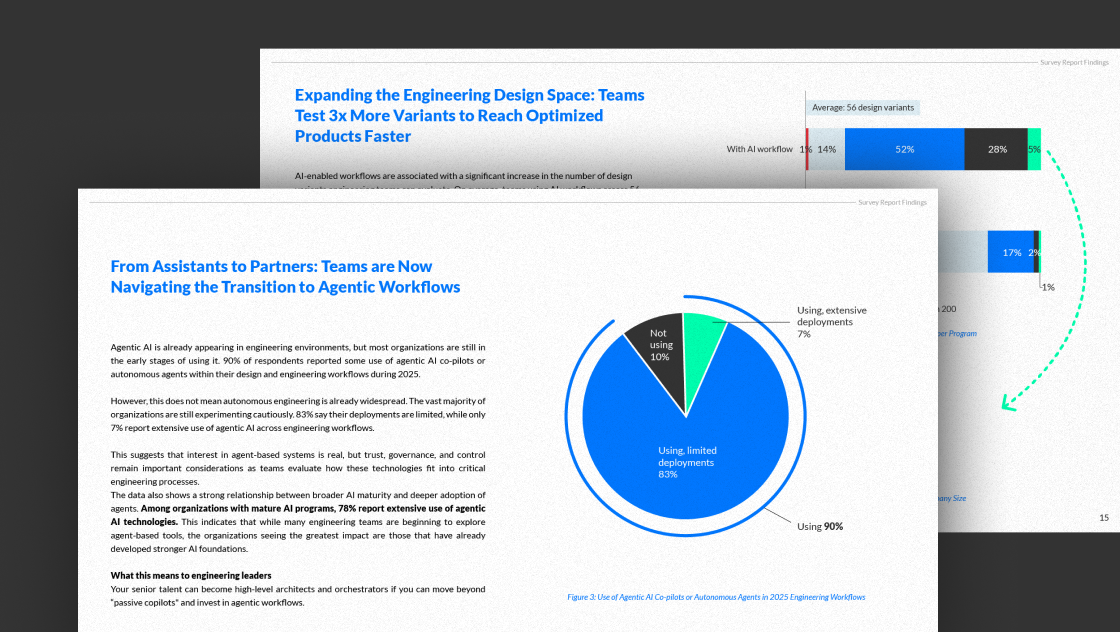
Multi-agent workflows: key takeaways from Design & Simulation Week 2026
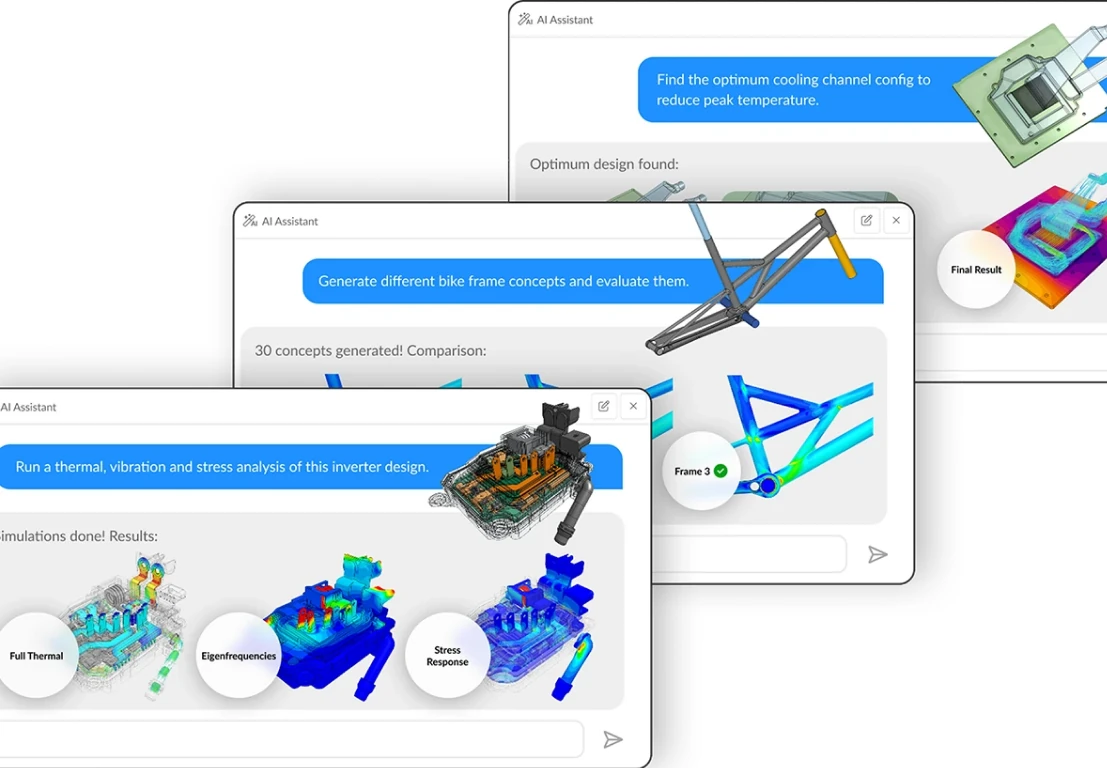
SimScale and CoLab demonstrated live AI agent collaboration at Design & Simulation Week 2026, cutting engineering review and simulation lead times dramatically.
Alex Graham
June 12, 2026

SimScale Workflows: Why we are opening up the platform (& why you should care)
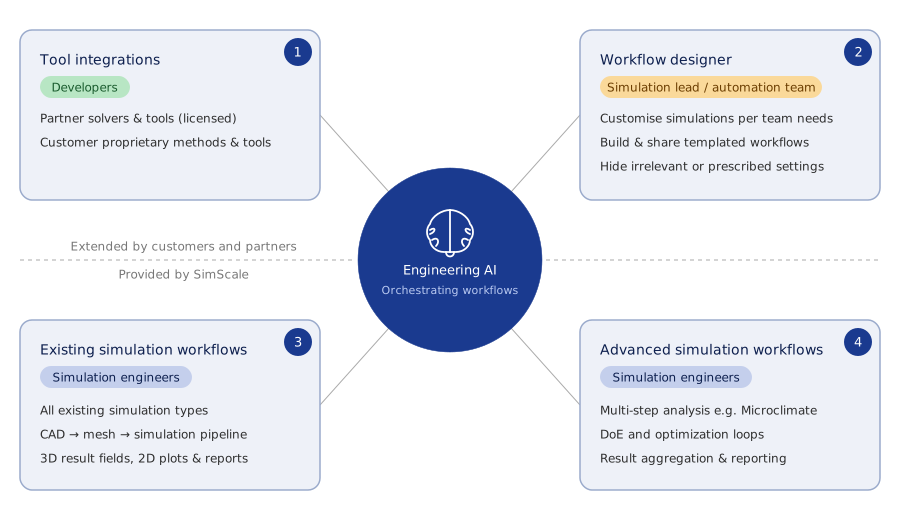
SimScale Workflows opens its platform to custom solvers and tools, enabling automated, AI-driven multi-step engineering simulation pipelines for any organization.
Alex Graham
May 29, 2026



Luis Goncaves
June 18, 2026
Luis Goncaves
January 27, 2026

Paras Ghumare
December 4, 2025

Jon Wilde
June 16, 2026

David Heiny
June 15, 2026
Jon Wilde
June 3, 2026

Peter Selmeczy
March 24, 2026
Peter Selmeczy
September 10, 2025
Peter Selmeczy
June 25, 2025
Peter Selmeczy
May 29, 2026
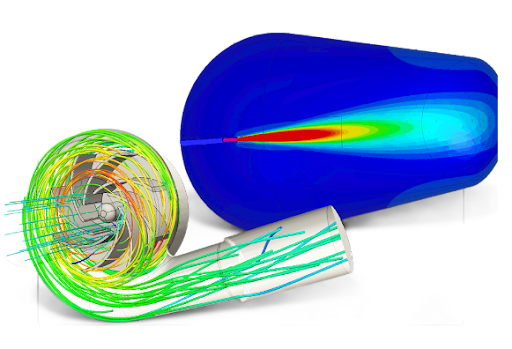
SimScale supports laminar and turbulent flows, incompressible and compressible flows, multiphase flows using the volume of fluid (VoF) method, passive scalar and species transport, and conjugate heat transfer.
SimScale uses multiple solvers depending on the analysis type. For multiphase flow, it uses OpenFOAM's interFoam solver. For high-speed transient simulations, it offers a GPU-accelerated Lattice Boltzmann Method (LBM) solver.
The Lattice Boltzmann Method solver runs on multiple GPUs in parallel, delivering turnaround times 20–30 times shorter than standard CFD methods. Transient simulations that once took days now complete in hours.
SimScale supports several turbulence models including k-omega SST, k-epsilon, Smagorinsky, SST-DDES, and Hybrid SST-IDDES. The LBM solver in particular supports scale-resolving turbulence models for high-fidelity transient analysis.
Yes. SimScale includes conjugate heat transfer (CHT) and convective heat transfer analysis, enabling thermal modeling of conduction and convection together with the flow field in a single coupled simulation.