Challenges
- Every candidate rim shape needed its own €5,000 mold, and a full prototype round ran to roughly four months.
- Simulation demand spikes during lineup redevelopment every two to three years and falls close to zero in between.
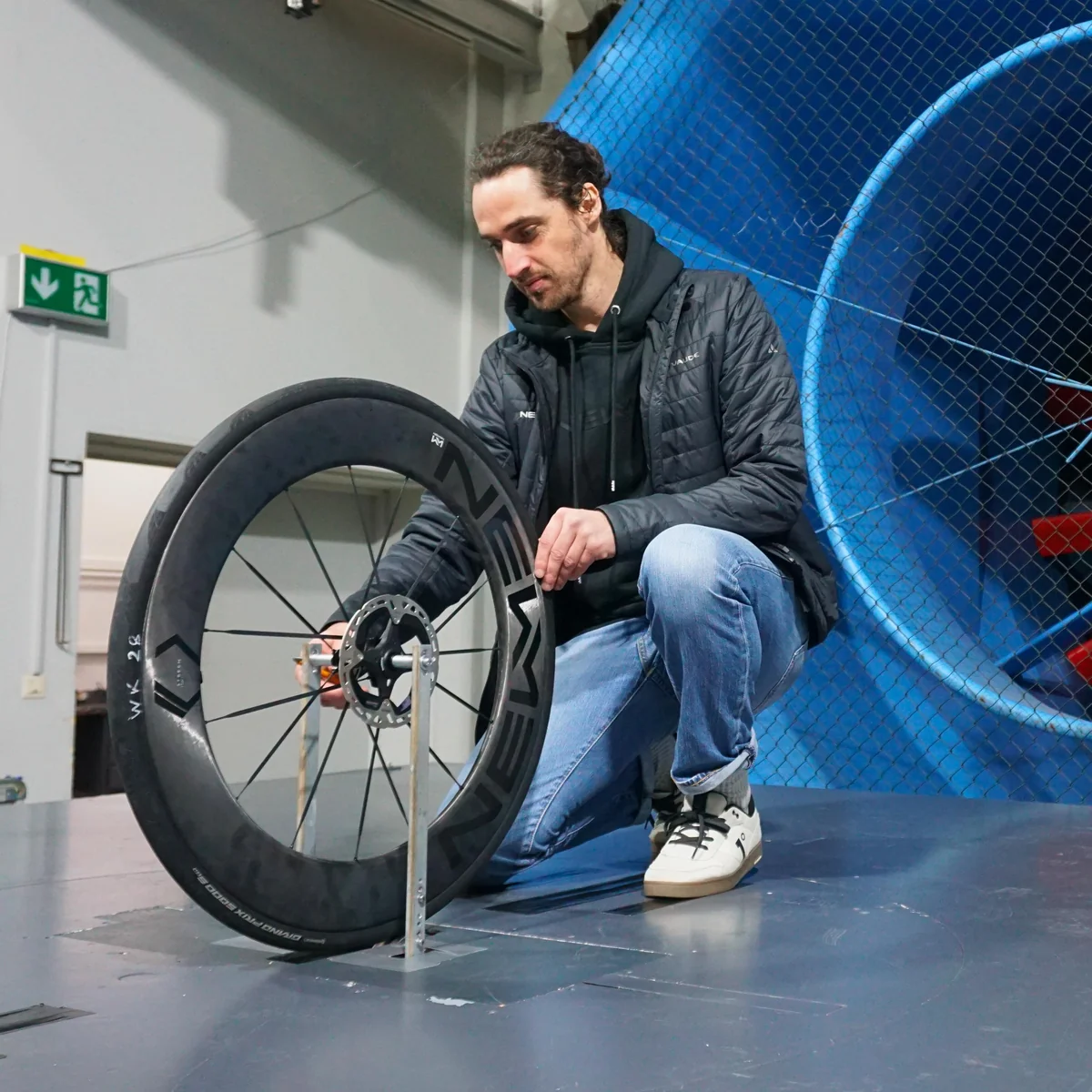
- Wind tunnel data measures wheel performance but it is not easy to understand the underlying mechanisms and how a design can be improved.
Results
- Shapes are screened digitally before anything is tooled, cutting the shape decision from a year to a month and targeting one mold prototype per rim.
- Cloud-native compute scales with the development cycle, with no in-house HPC hardware to buy or leave idle.
- Flow separation, pressure distribution, and wake development are visible across the yaw sweep, driving the front and rear profile choices.
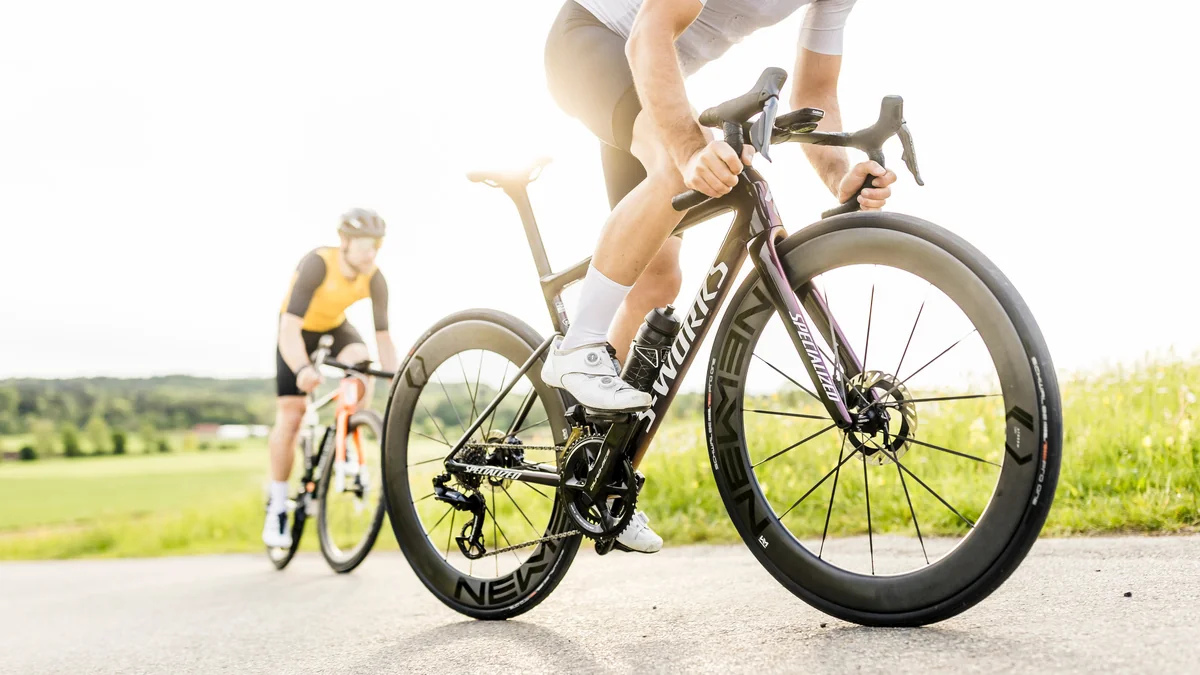
Newmen designs and manufactures wheels, rims, hubs, handlebars, stems, and cranks for road, gravel, and mountain bikes. Founded in 2016 and headquartered in Wiggensbach in the Allgäu region of southern Germany, the company keeps around 90 percent of its product development in house, builds on the order of 400,000 wheels a year, and qualifies every product in its own test laboratory.
Dominik Euba is a Product Engineer at Newmen, responsible for the design, simulation, prototyping, and validation of wheels, rims, and hubs from first concept through to series production. His work spans hub and wheel design, the design of custom test stands, and the aerodynamic optimization of rim profiles using both CFD and wind tunnel testing.
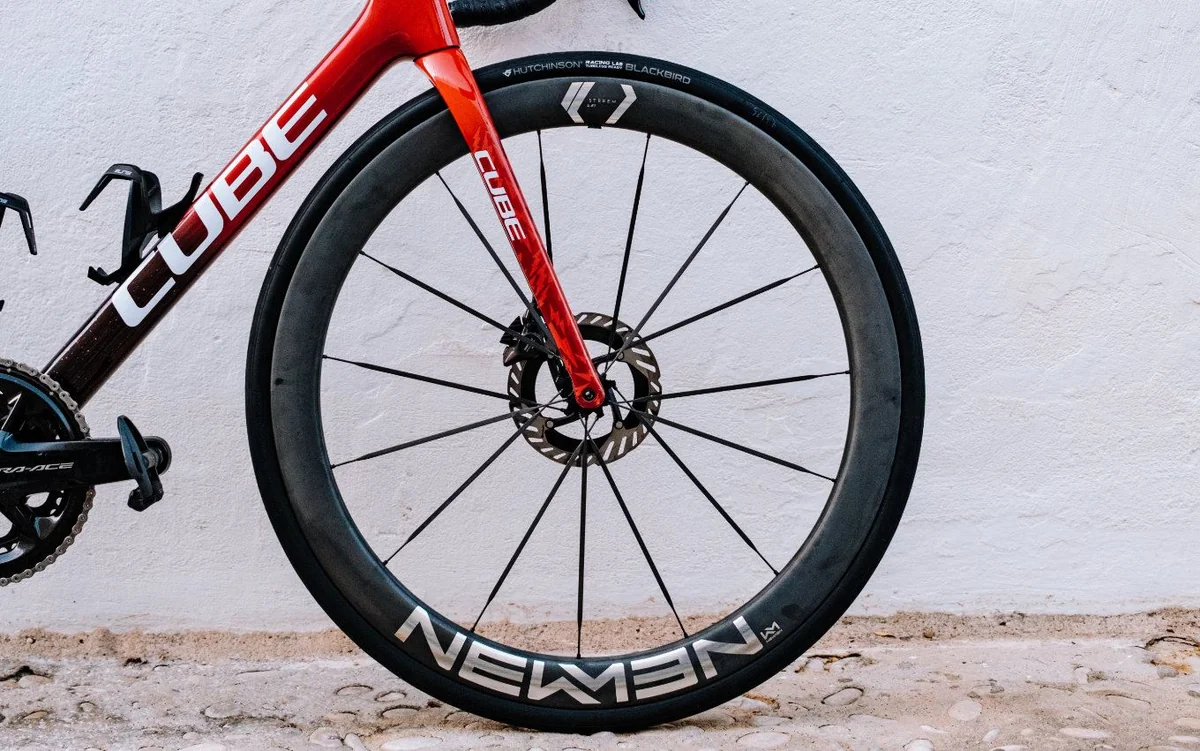
Newmen’s road range is built around the Streem platform, with distinct shapes for climbing, all-round riding, sprinting, and time trial use, and each one is developed for a particular tire width and a particular kind of riding. “A rim is not a single optimization problem”, as Dominik explains. “Every shape has to balance drag in a straight line against the handling a rider feels when the wind comes from the side.”
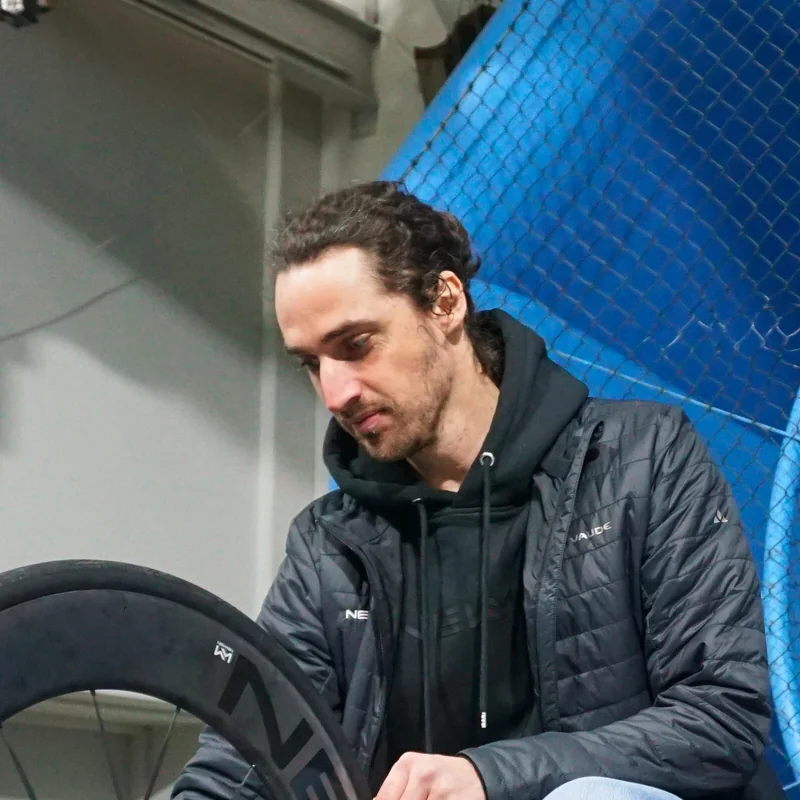
Dominik Euba
Product Engineer, Newmen

“Wind tunnel testing tells you whether a shape is good. Simulation tells you why. Once you can see the separation and the wake, you stop guessing at what to change next.”
Introducing simulation-driven design practices
The company’s lineup of wheelsets is refreshed every 2-3 years, meaning that aerodynamic development work follows a similar cycle. Demand for simulation and testing is very high during the design phase, dropping off afterwards until the next one begins.
The case for introducing simulation was clear: physical testing of bike wheels is time consuming and costly. A completed lineup includes eight rim designs, with each rim mold costing around €5,000 and taking two to three months to produce. Wind tunnel testing consumes a further month. Working in this way, two or three candidate shapes per rim were built in parallel and taken to the wind tunnel for comparison, before selecting the best candidate and starting on the next iteration. As Dominik describes it, “the time that gets lost is the waiting for new samples, and we knew that simulation could make a tremendous difference.”
Dominik evaluated an established on-premises solver before selecting SimScale, running a comparison study across both to see which suited the way that the new product development process worked at Newmen. The conclusion was that SimScale’s cloud-native platform matched both the technical requirement and the operational pattern. Compute scales up when a lineup is in development and costs nothing when it is not, meaning that the team can always run the simulations they need, when they need them.
“For our case, SimScale was much quicker to set up and run the simulations, it is genuinely easy to work with,” Dominik explains. “What mattered was cloud computing, a setup process that does not get in the way, and a technical support team that responds really fast.”
CFD: Building a virtual wind tunnel
Newmen were not looking to completely eliminate the wind tunnel from their development process, but to use simulation to increase engineering velocity and product performance by testing more options virtually, while significantly reducing the number of prototype designs they took to the tunnel. Simulation sits at a defined point in the chain: profile concept, CFD comparison and optimization, design selection, prototype, wind tunnel validation, final design.
With this in mind, Dominik built the digital test bench to mirror the physical one, targeting the same numbers and using the same testing protocol. “The majority of our simulations are steady-state analyses of simplified geometries, at the standard angles of attack covering the 0 to 20 degree range”, he explains, “we extract forces in the X and Y directions and plot them into the same curve format the tunnel produces”. Dominik also uses SimScale’s GPU-accelerated Lattice Boltzmann Method solver for transient, scale-resolved simulations, which capture the wheel wake development and shedding.
By validating the approach using previously designed and tested wheels, Dominik was able to confirm that the simulations captured the shape of the curves: the same trends, the same crossover points, the same ranking between profiles. As Dominik puts it, “that is the point at which the model is validated for what we use it for. If the trend is right, I can compare shapes against each other and know which one is going to be good in the tunnel before we ever build it.”
The team is deliberate about where those numbers carry weight. In the lower yaw range, before significant flow separation sets in, steady-state results are solid enough to rank profiles against one another. At higher yaw angles, where separation governs side force, steering moment and the resulting sail effect, the results are read as indicative and the wind tunnel settles the question.
Simulation took the waiting out of the front of that process. By comparing designs virtually, Newmen can narrow a lineup down to a single mold prototype per rim in the best case, cutting the shape decision from 12 months to one and saving on the order of €80,000 in tooling.
“I can go straight into physical prototyping now, because I am confident the shape is right. We still validate in the wind tunnel, and in the best case the rim is already where it needs to be.”
Seeing Between the Numbers
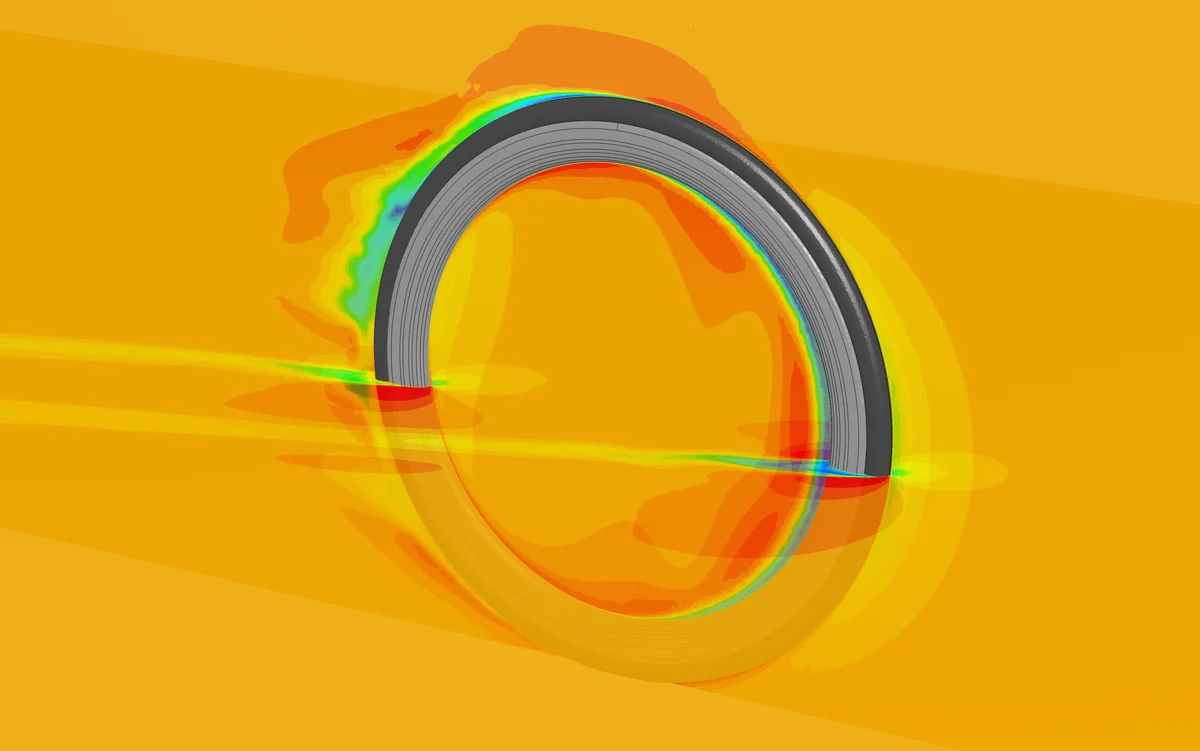
As well as speed, CFD provides crucial insight to the design team. While a wind tunnel measures forces, it does not reveal the flow that produced them, so a disappointing result arrives with no explanation and no obvious next move. A simulation of the same configuration returns the same force curves but also the pressure and velocity fields, the separation points, and the structure of the wake, helping the team to understand why they get the results they have in front of them.
This qualitative understanding of the flow behaviour across the aero map helps the team design for specific riding and handling characteristics, as well guiding the selecting front and rear rim profiles.
For example, the comparison below shows a Newmen sprint rim, with its relatively blunt profile, against a narrower competitor shape. At zero yaw the narrower profile carries a visibly tighter wake. At 10 degrees the picture changes: the narrower profile separates markedly, while the blunt profile holds attached flow further around the rim. The value here is not a drag number but the mechanism behind it, and what that implies for how each wheel behaves in a crosswind.
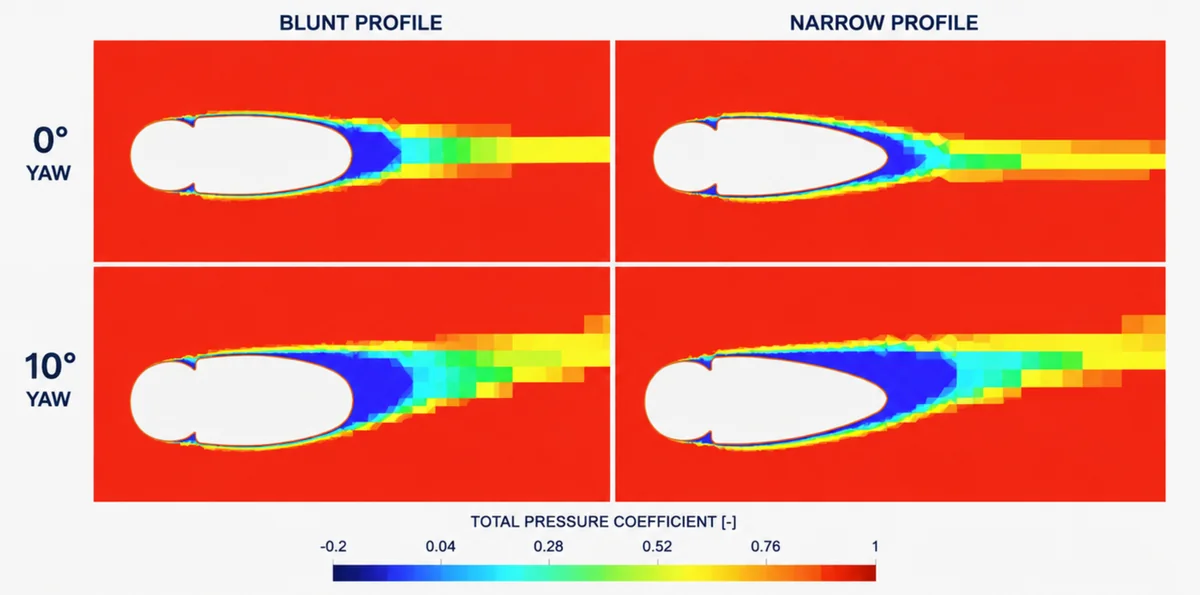
That understanding informs and drives the design direction. A more rounded profile benefits the front wheel more since steering moment and crosswind stability there is worth more than a small drag penalty. The rear can take a narrower profile, because it already sits in the wake of the rider and the frame. “The shape of each rim is designed specifically for the purpose, and for a specific tire width,” Dominik notes. “Simulation is how we find the right compromise for each one rather than applying the same shape everywhere and hoping it works.”
Conclusion
By building a virtual wind tunnel on SimScale’s cloud-native platform, Newmen has rebuilt aerodynamic development around a simulation-driven design process. Shape decisions that once took a year now take a month, prototype tooling rounds can be designed out of a lineup, and the flow behavior around each rim profile is understood before a single mold is ordered. The wind tunnel remains the decisive test, particularly at higher yaw angles where flow separation dominates and the real-world sail effect is measured. What has changed is that it now validates a shortlist rather than searching for one.
For the 2024 Streem lineup, the impact was clear to see. In a group test at an independent wind tunnel against the industry’s standard protocol, the sprint wheel recorded the lowest weighted average drag of the eight wheelsets tested from a range of manufacturers, more than a watt clear of the next best, and it was the lightest wheelset in the group. As Dominik sees it: “This result shows that simulation is not just a faster wind tunnel, but it gives us a competitive edge in terms of product performance as well.”
Looking ahead, Newmen plans to extend the scope from simulating individual wheels to complete bikes, where interactions between wheel, frame and even rider can be optimized for, with transient analysis playing a larger role as that work develops.
“Five years ago we had no simulation at all, and every aerodynamic question ended with building something. Now the design decisions are made before anything gets tooled, and the prototype exists to confirm what we already expect. That is a completely different way of developing a product.”