Challenges
Results
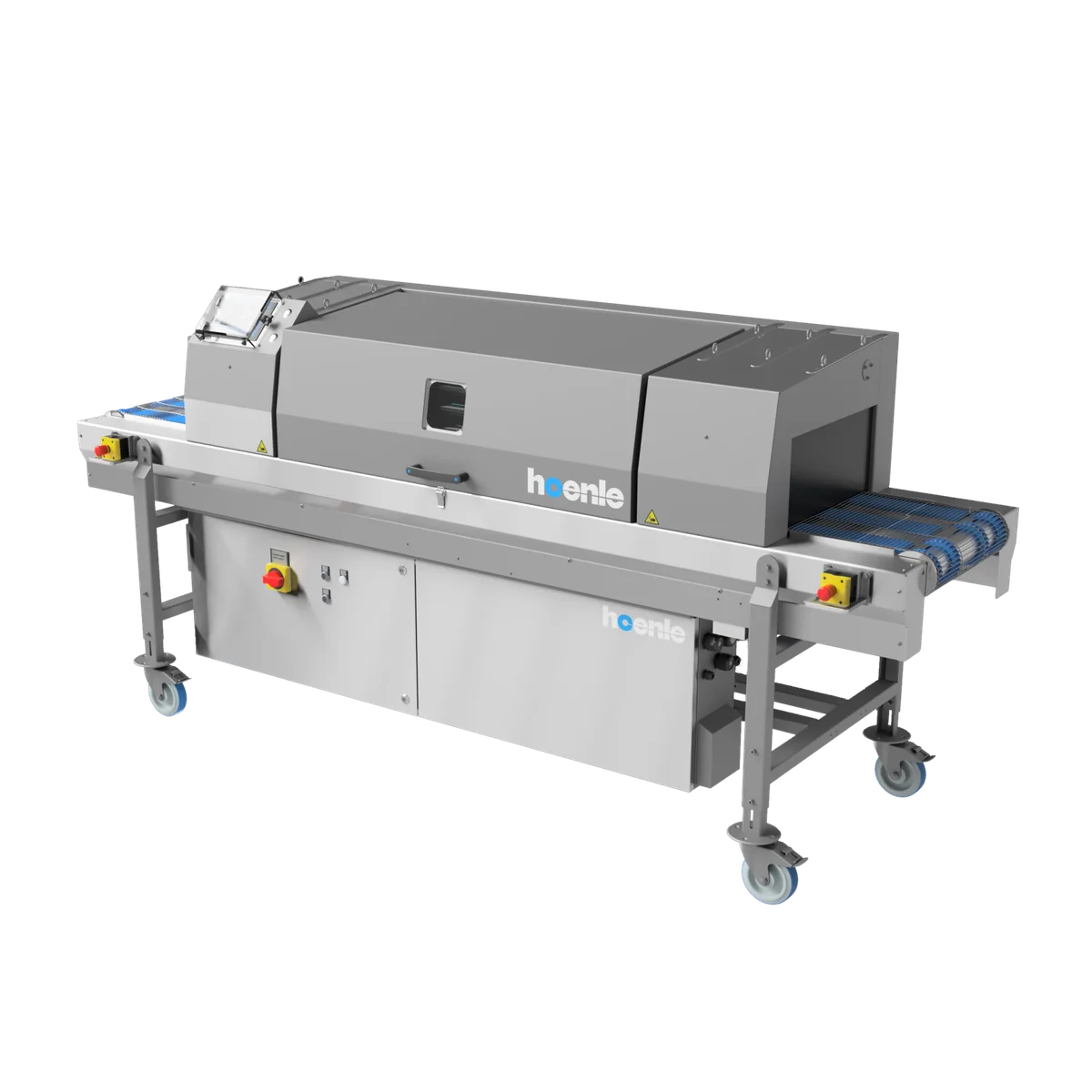
Hoenle has spent close to 50 years developing UV technology. Founded in 1976 and listed on the German stock exchange since 2001, the company is now one of the world’s leading suppliers of industrial UV curing, disinfection, and adhesive systems, headquartered in Gilching, near Munich, with subsidiaries across Europe, Asia, and the US.
The company’s Business Unit Curing produces UV curing equipment built on two distinct light-generation technologies: conventional mercury-vapor lamps and UV-LED sources. Both are used to cure adhesives and coatings across industries including electronics, medical technology, and automotive manufacturing, and customers can buy anything from a single emitter to a complete curing system. Hoenle’s engineering teams are split to match: one group focused on the established mercury lamp portfolio, another dedicated to newer LED-based emitters.
Christoph Winter is a Design Engineer on Hoenle’s LED-UV curing team. With a background in mechanical engineering and a focus that leans toward the electrical side of lamp design, he runs thermal simulations alongside his core development work to keep new, high-power LED emitters within their operating limits.

Christoph Winter
Design Engineer, Hoenle

“We wanted to build a new product with a lot more power, but still air cooled rather than water cooled. Due to heat management limitations, that combination is quite difficult.”
Julian Hoffmann is a Design Engineer on Hoenle’s conventional UV lamp team, also with a background in mechanical engineering. His remit covers the company’s established mercury lamp portfolio, including products designed years before simulation had any place in the process.
Julian Hoffmann
Design Engineer, Hoenle
“The design of the lamp holders, for example, is something someone worked out years ago. It worked well enough, and that was that — until now. With simulation we can understand the performance and even look for improvements.”
From outsourced analysis to in-house cloud simulation: Hoenle’s adoption of SimScale
The trigger for adopting simulation was a new LED lamp design with significantly more power than previous generations, cooled by air rather than water. High power and air cooling pull in opposite directions: as LED chips heat up, they become less efficient and need even more power to produce the same light output, which only compounds the heat problem. Hoenle had previously borrowed resources from a sister company for simulation work – relying on a single simulation expert to run a limited number of simulations using a complex, on-premises tool that ran on a single workstation. Christoph recalls. “It was faster than going to an external contractor, but it was still a funnel — every job went through one person. We tried running the same simulations that we now run in SimScale, and we could only reach about a quarter of the flow velocities before we ran out of hardware. Everything above that exceeded the power of our machine.”
The limitations of hardware and tool complexity meant that getting simulation results in a timely manner was a real challenge. The team wanted to bring simulation in-house, but they needed a solution that was easy to use for engineers who are not full-time simulation specialists, and that could deliver results much faster. Rather than invest in more powerful desktop hardware, Hoenle evaluated several CFD tools and selected SimScale for its combination of cloud-based processing power and a shorter learning curve. The team started on a test license, working closely with SimScale’s engineering team to learn how to build an efficient model for standard Conjugate Heat Transfer analysis with a body-fitted mesh, which cut computing time significantly.
Christoph and Julian found SimScale’s customer support, accessed directly through an in-platform chat, to be a further accelerant of their work. They can quickly share a project with Renan, their SimScale support engineer, so the two of them are looking at the same case rather than describing the issue or uploading screenshots and model files.
Christoph Winter
Design Engineer, Hoenle
“It’s not just that we get a response very quickly. Renan can look at the actual case with us, catch small errors we’d have missed, and show us tricks to make it run faster. That’s worth a lot more than just a fast reply.”
The cloud-native platform also removed a layer of internal friction that had nothing to do with the simulation itself. “We didn’t have to buy new hardware, so we were able to avoid the whole procurement process,” Christoph says. “We just work in the browser, and that’s one less thing to manage.” The same cloud architecture supports running variants in parallel: instead of testing one parameter change at a time, the team can set up three or four versions of a case and launch them together.
That shift also changed the team’s relationship with outsourced simulation work, which had previously been used to cover cases beyond their in-house capability. As Christoph recalls, “With a contractor, it was always a meeting, then a week of waiting, then another meeting just to ask for a small change. Cases that used to take four to eight weeks with a third party, we now get done in one or two.” Running simulations directly, rather than briefing and waiting on an external team, has also let the engineers build their own simulation competence rather than depending on it being held elsewhere.
Conjugate Heat Transfer: Uncovering hidden performance in a legacy mercury lamp
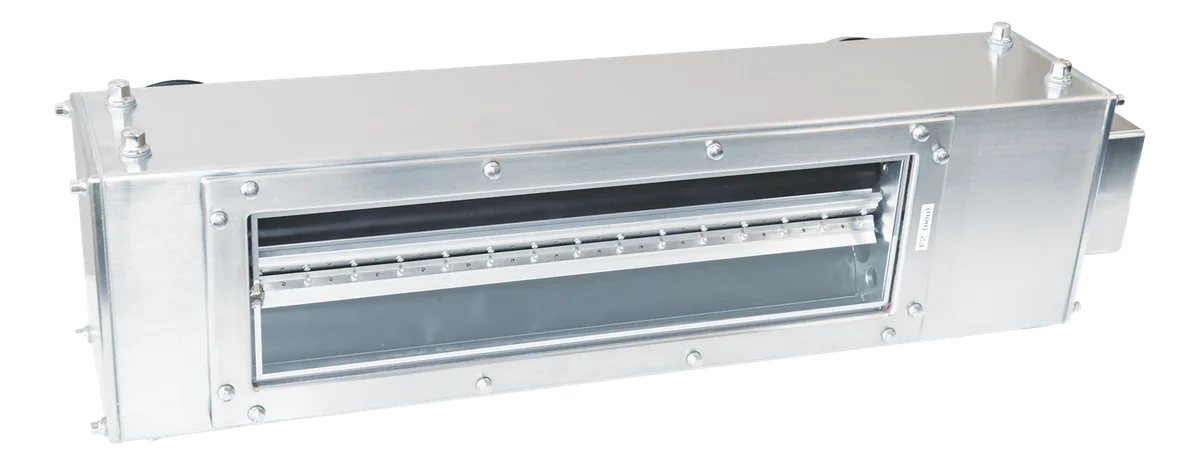
Julian is now revisiting an older mercury lamp emitter, a product originally developed through trial and error, long before simulation played any role in Hoenle’s design process. Bringing Conjugate Heat Transfer analysis to a design like this has its own reward: the chance to evaluate how much scope there is for optimization in a product that has already proven itself in the field.
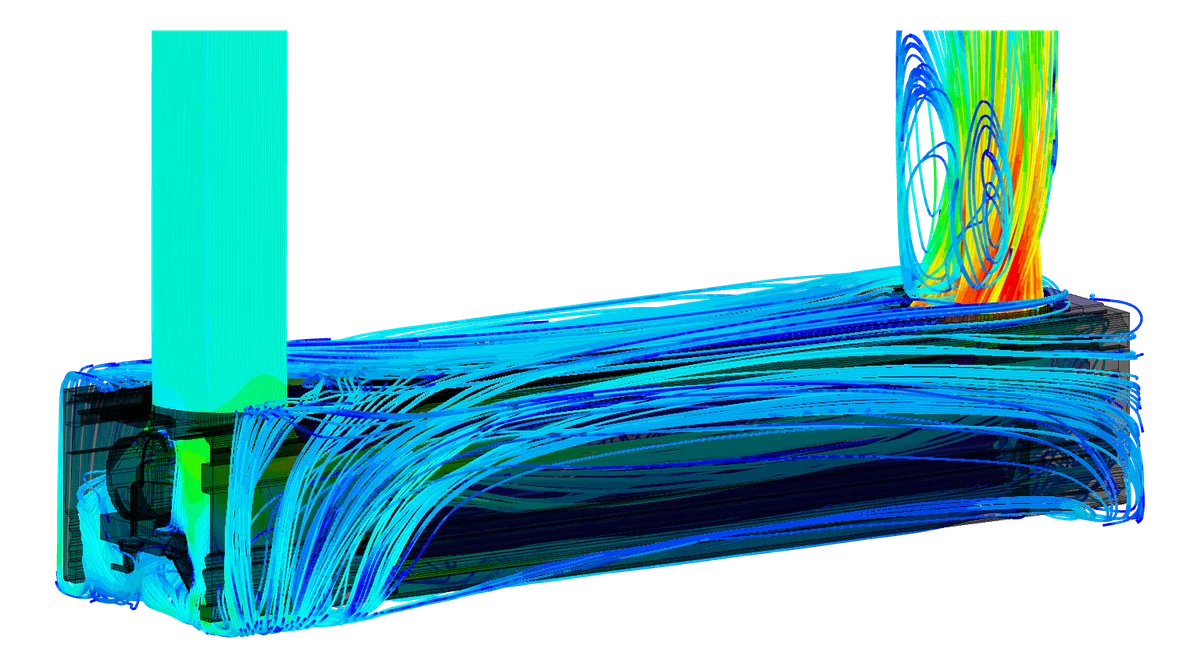
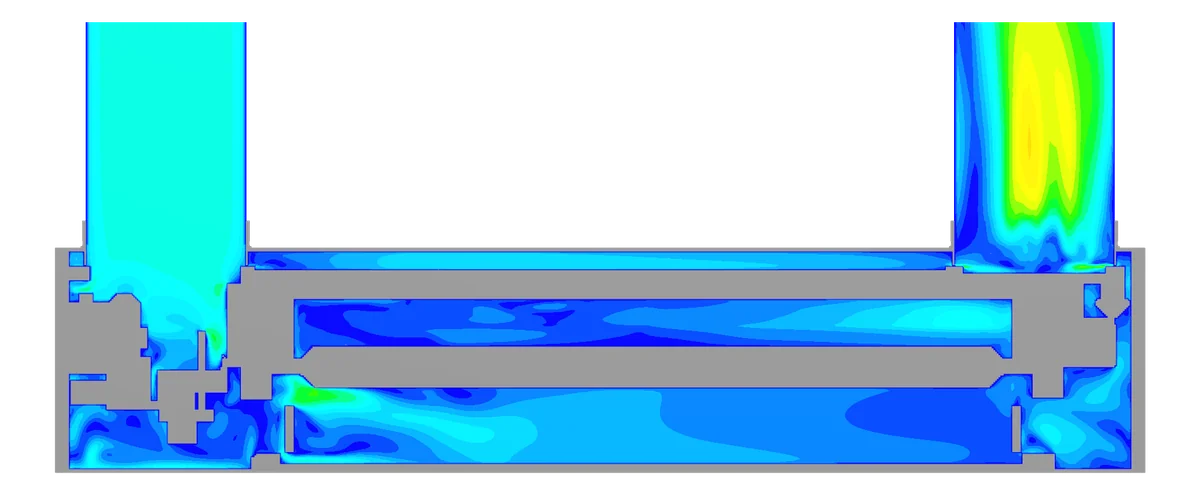
The engineering challenge is precise thermal control. Cold air enters the housing and has to cool the lamp’s electrical connections at each end, which must stay within a narrow operating window: too hot and lamp efficiency drops, too cold and the lamp cannot reach its specified operating voltage. Cooling air splits between the gap separating the outer and inner shells and the gaps between components inside the inner shell, however the exact split and flow distribution was not known. “We know how much airflow we need to cool the system for a given power input,” Julian explains. “What we didn’t know before is whether we could gain anything by changing the geometry around a few corners inside.”
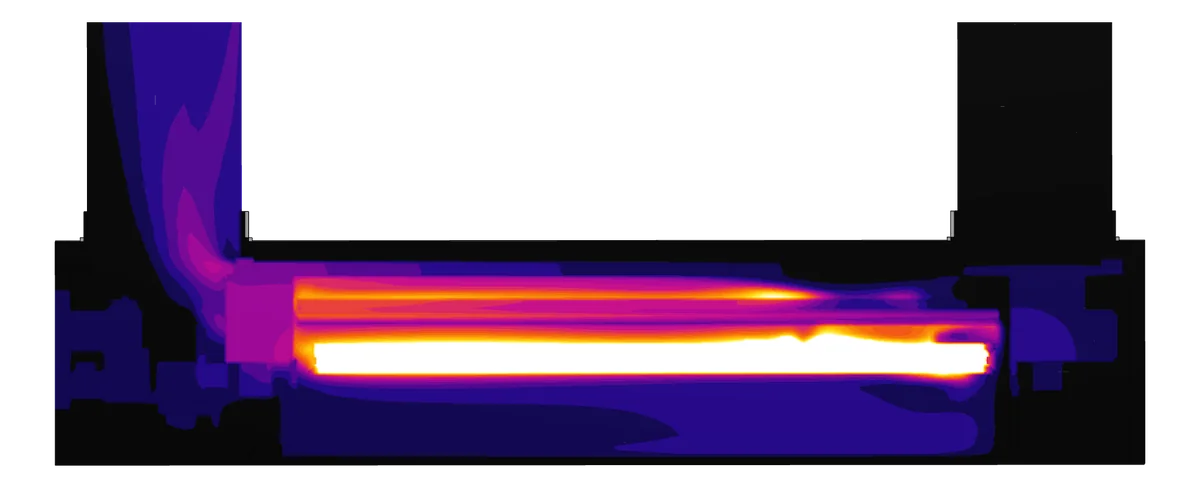
To find out, the team has built a Conjugate Heat Transfer simulation of the housing, with solid heat sources representing the lamp’s electrical connections, visualizing velocity, temperature, and pressure drop. The same simulation also lets the team explore whether the pressure difference needed to drive a given airflow through the housing can be reduced by adjusting components immediately upstream and downstream of the lamp.
Looking ahead
Hoenle’s adoption of SimScale is a story about where engineering capability sits. Before, simulation results depended on a shared license, one workstation, and outside teams who needed a full explanation of a case before they could return an answer weeks later. Now two design engineers, working simulation into their existing development roles rather than handing it to a specialist team, run and iterate their own cases in the browser.
That shift also means Hoenle can revisit a decades-old design with fresh eyes. This project stands to answer a question Hoenle’s engineers have never had the tools to ask before: whether a product that has always worked could be made to work even better.
Interest in simulation is starting to spread past the two engineers currently using it. Other colleagues in Hoenle’s development teams have asked about adopting SimScale for their own work, and Christoph sees room to extend it further, including to the water-cooled systems the company builds alongside its air-cooled products. At Hoenle, the question is no longer whether to simulate. It’s who picks it up next.
Christoph Winter
Design Engineer, Hoenle
“Every one of our development engineers could use this. It’s not just a tool for the two of us anymore — it’s something the whole team should have in their workflow.”