Urban Microclimate Simulation Software
Urban Microclimate Simulation. Pedestrian Wind & Outdoor Thermal Comfort in the Cloud
Run city-scale wind and thermal-comfort studies in the browser. Pedestrian wind comfort to Lawson and NEN 8100, natural ventilation, and ASHP dispersion, an order of magnitude faster.
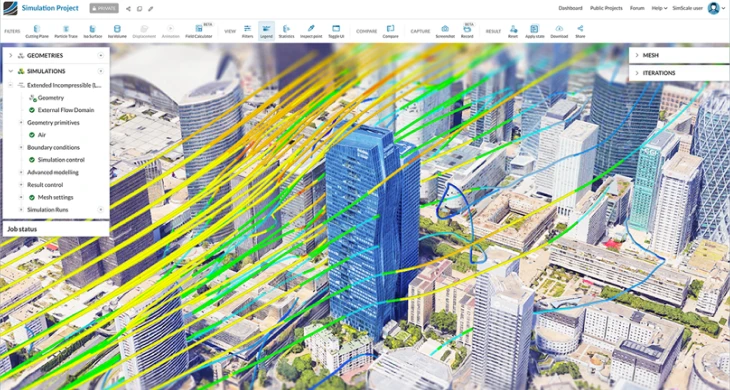












Microclimate conditions decide planning approvals, but conventional CFD demands clean geometry, specialist skills, and weeks of turnaround. SimScale removes all three. Rhino and Revit models import without cleanup, and competition-stage results come back in hours.
Why SimScale for Urban Microclimate Simulation
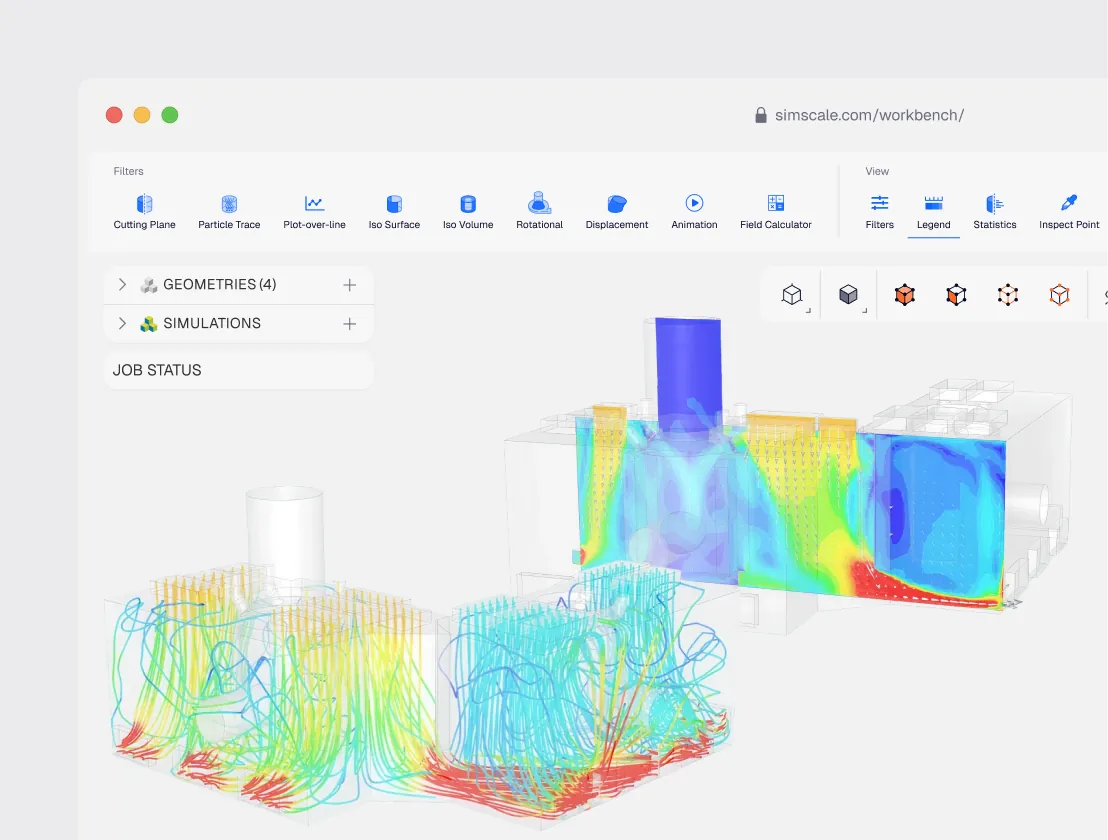
Multiphysics
Wind, thermal comfort, and ventilation in one platform. Combine pedestrian wind comfort, outdoor thermal comfort (airflow plus solar), and natural-ventilation studies on the same city model — no exporting between a wind tool and a thermal tool.
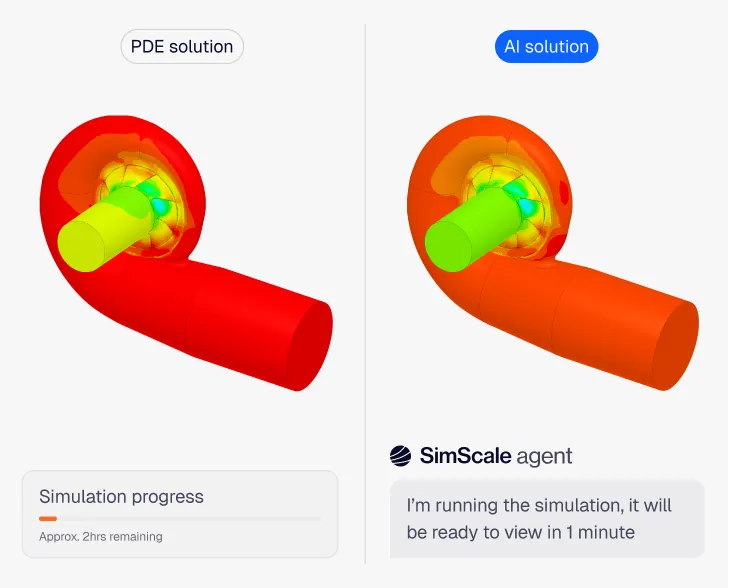
AI assisted
AI-assisted, architect-friendly workflow. Automated meshing and the integrated pedestrian-wind-comfort analysis type let architects and environmental designers — not dedicated CFD specialists — set up and read city-scale studies directly in the browser.
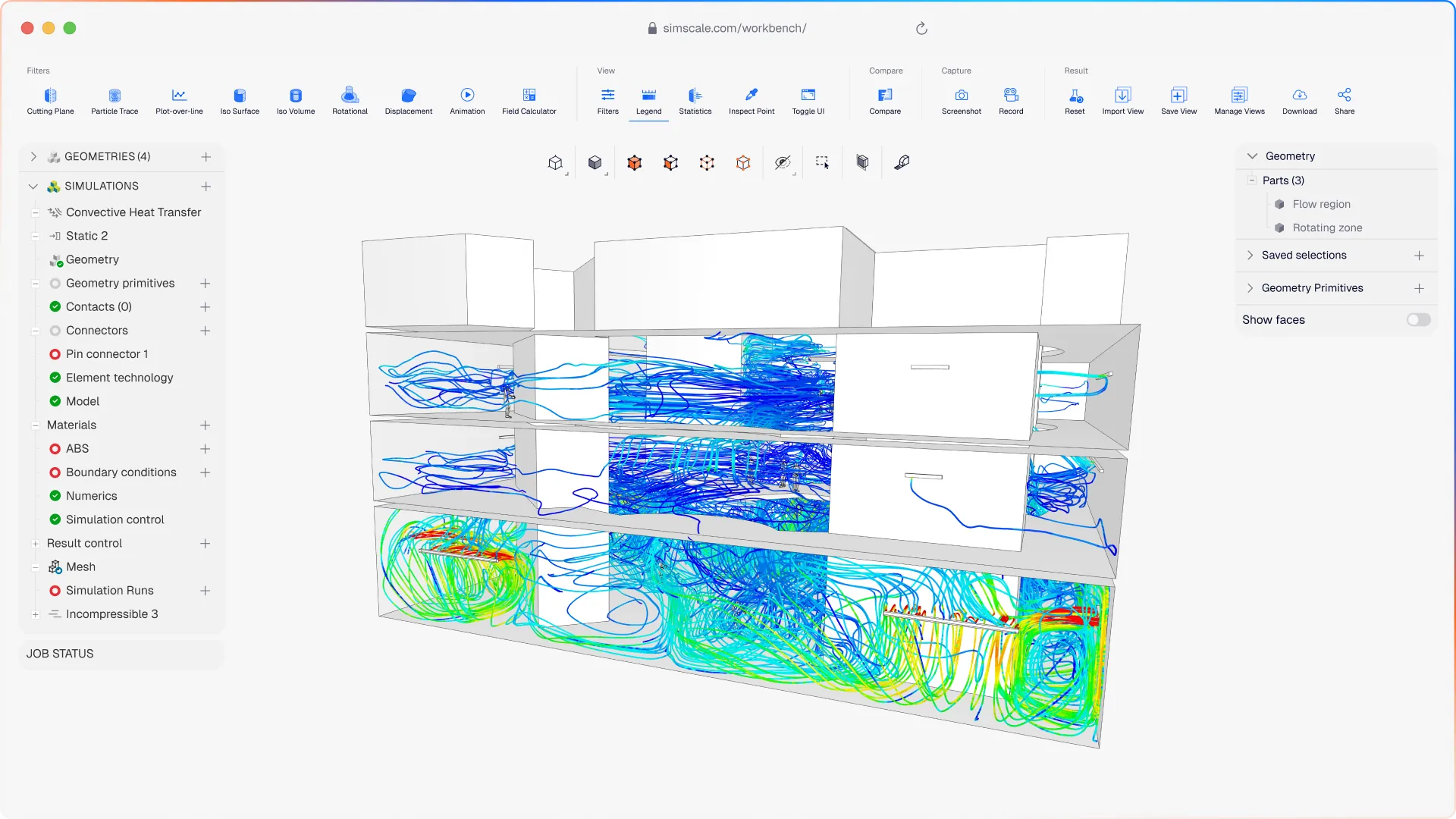
Cloud scale
Cloud, parallel, instant. Simulate all wind directions in parallel on cloud compute while local machines stay free. Import city-sized CAD in minutes, not days, and share a live project link with architects and planners for review.
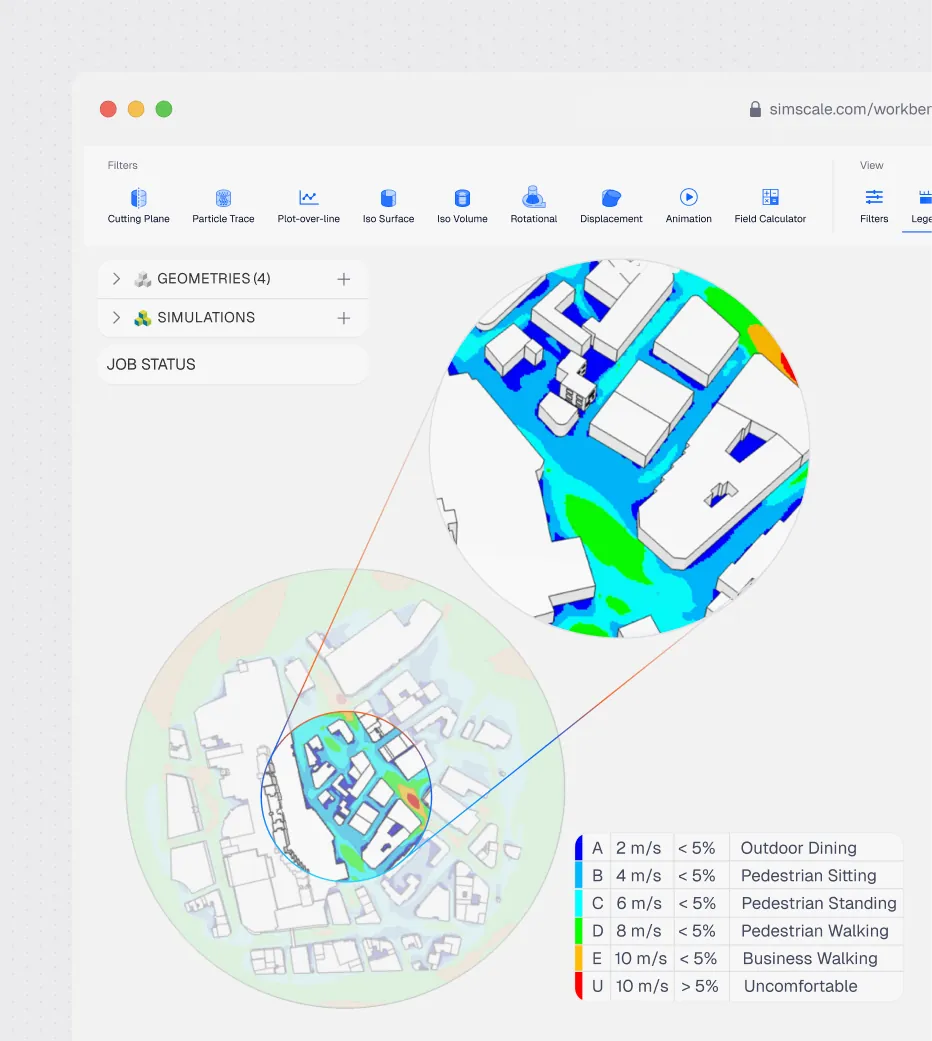
Pedestrian wind comfort
Assess pedestrian-level wind comfort and safety against Lawson, Davenport, and NEN 8100. Automatically simulate the 12 wind directions, weight results with a local wind rose, and flag uncomfortable zones early in design.
Outdoor thermal comfort
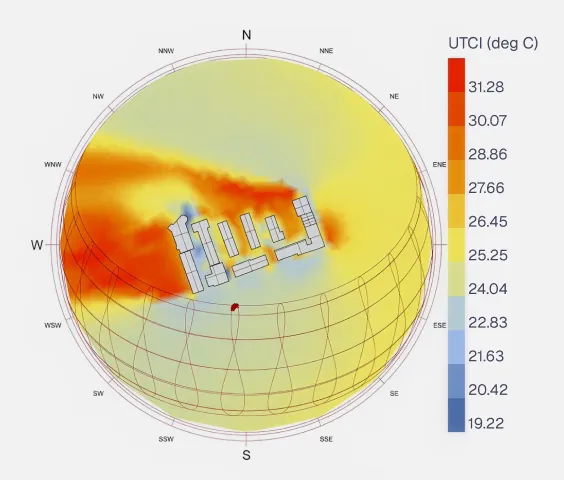
Evaluate outdoor and pedestrian thermal comfort by combining airflow with solar exposure, including indices such as UTCI. Understand how a building and its surroundings will feel across the year, not just how they perform in wind.
Natural & passive ventilation
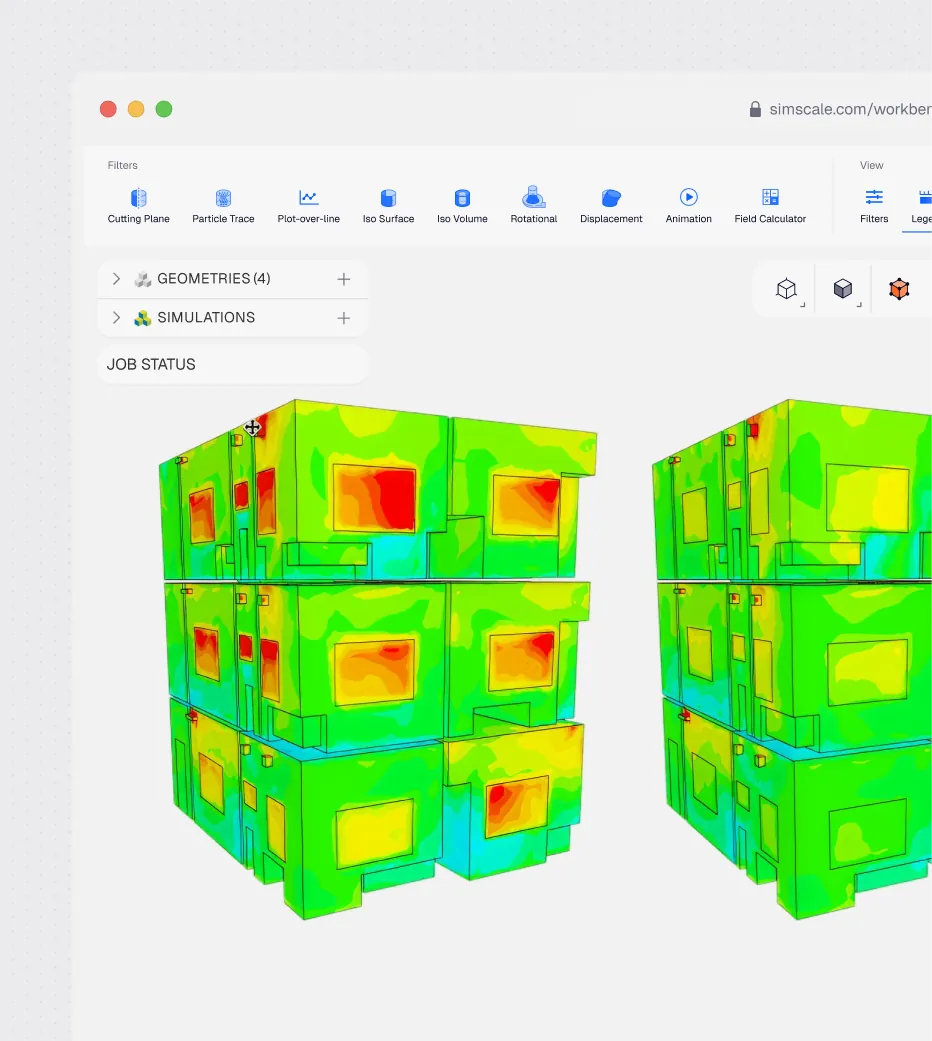
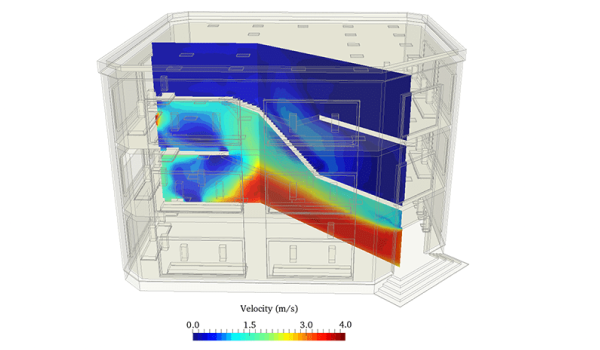
Analyze natural and passive ventilation performance early in the design cycle, without the cost of hardware or the learning curve of traditional on-premises tools. Test ventilation strategies before they are locked into the architecture.
Building aerodynamics
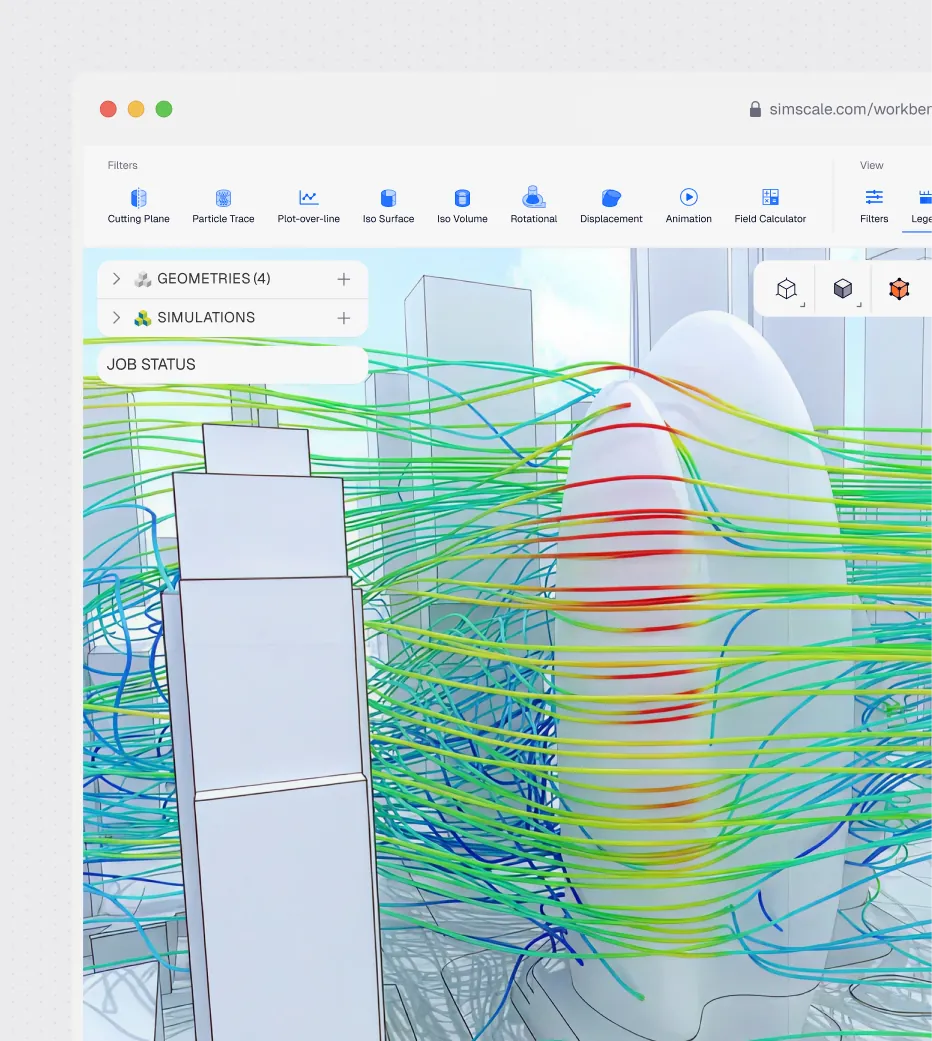
Study downwash, channeling, and cornering effects around towers and clusters, and quantify wind loads on facades and cladding. Identify the aerodynamic problems that drive mitigation before they reach a wind-tunnel review.
ASHP & heat dispersion
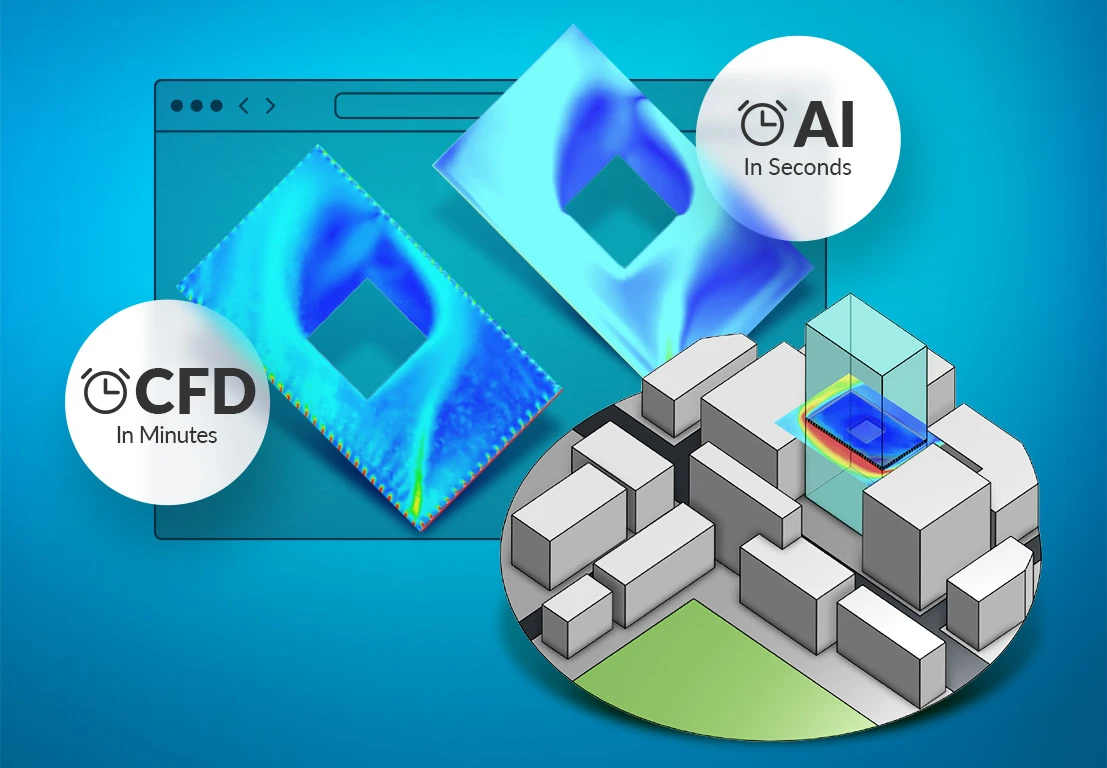
Model air-source-heat-pump siting in dense city centers — rejected-cold-air dispersion, recirculation risk, and plume behaviour — to prove performance and reduce pedestrian cold discomfort ahead of planning approval.
Early-stage competitions & bids
Deploy fast, accurate wind modeling in competitions and tenders where turnaround is tight. Compare the relative performance of competing massing options and converge on a final design before costly downstream wind-tunnel work.

3 months
Developed microclimate app in less than 3 months
“Using SimScale, we have developed our own wind modeling app for early-stage analysis. Our plan is to deploy this to over 100 architects globally, giving them access to fast and accurate microclimate analysis as and when needed.”
Elias Anka, Sustainable Design Lead at KPF

90,000
tons of CO2 saved over the project’s lifetime
“As with all ASHP installations in dense urban environments, our job is to ensure good dispersion of rejected cold air into the ambient environment, reduce the risk of air recirculation, and provide confidence in the ASHP's performance. Using SimScale to simulate these complex urban airflow interactions has been pivotal in proving their performance leading to project success and planning approvals.”
Sam Bromley, Founder at Element Design

automated
PWC analysis and cloud execution allows for quicker evaluation of design options to support more rapid iteration with clients
“We've had a very good relationship with SimScale over the last couple of years, especially where we have wanted to adjust things, given feedback, and been listened to. We're very happy with the point we are at, and we're able to use it really efficiently.”
William O'Donnell, Associate Director at IN2 Engineering
Related resources

Naghman Khan
August 16, 2022

Nolan Halliday
September 14, 2022
Naghman Khan
November 16, 2021



Luis Goncaves
June 18, 2026
Luis Goncaves
January 27, 2026

Paras Ghumare
December 4, 2025


Jon Wilde
June 16, 2026


David Heiny
June 15, 2026
Jon Wilde
June 3, 2026

Peter Selmeczy
March 24, 2026
Peter Selmeczy
September 10, 2025
Peter Selmeczy
June 25, 2025
Peter Selmeczy
May 29, 2026
SimScale covers pedestrian wind comfort and safety, outdoor and pedestrian thermal comfort, natural and passive ventilation, building aerodynamics (downwash, channeling, and cornering effects, plus facade wind loads), and air-source-heat-pump dispersion in city centers — all on city-scale models in the browser.
SimScale assesses pedestrian wind comfort against industry standards including Lawson, Davenport, and NEN 8100. The integrated Pedestrian Wind Comfort analysis automatically simulates the wind directions (typically 12) and weights the results using local wind-power and frequency data (a wind rose) to produce comfort categories.
Yes. Native Rhino files import without CAD cleanup, and Revit geometry imports via STL. Because the LBM solver does not require watertight geometry, imperfect models are handled directly — architects often cite this as the single biggest advantage. City-sized models import in minutes and simulate an order of magnitude faster than conventional CFD.
Yes. Beyond wind, SimScale evaluates outdoor thermal comfort by combining airflow with solar radiation, supporting indices such as the Universal Thermal Climate Index (UTCI), alongside solvers for solar radiation and related environmental variables — so a single platform covers both pillars of microclimate.
Yes. SimScale simulates the combined heat and airflow from rooftop and ground-level ASHP arrays to assess rejected-cold-air dispersion, recirculation risk, plume visibility, and pedestrian cold comfort — the workflow Element Design used to secure planning approval for the Greenwich Peninsula heat network.