Electric Powertrain simulation software
Design electric powertrains that run cooler, last longer, and squeeze more range from every kWh
SimScale runs CFD, FEA, conjugate heat transfer, and electromagnetics on full electric powertrains — e-motor, inverter, e-axle, gearbox, and battery integration — in a cloud-native, browser-based platform. Predict cooling performance, structural margins, NVH, and full-vehicle efficiency before tooling is committed.

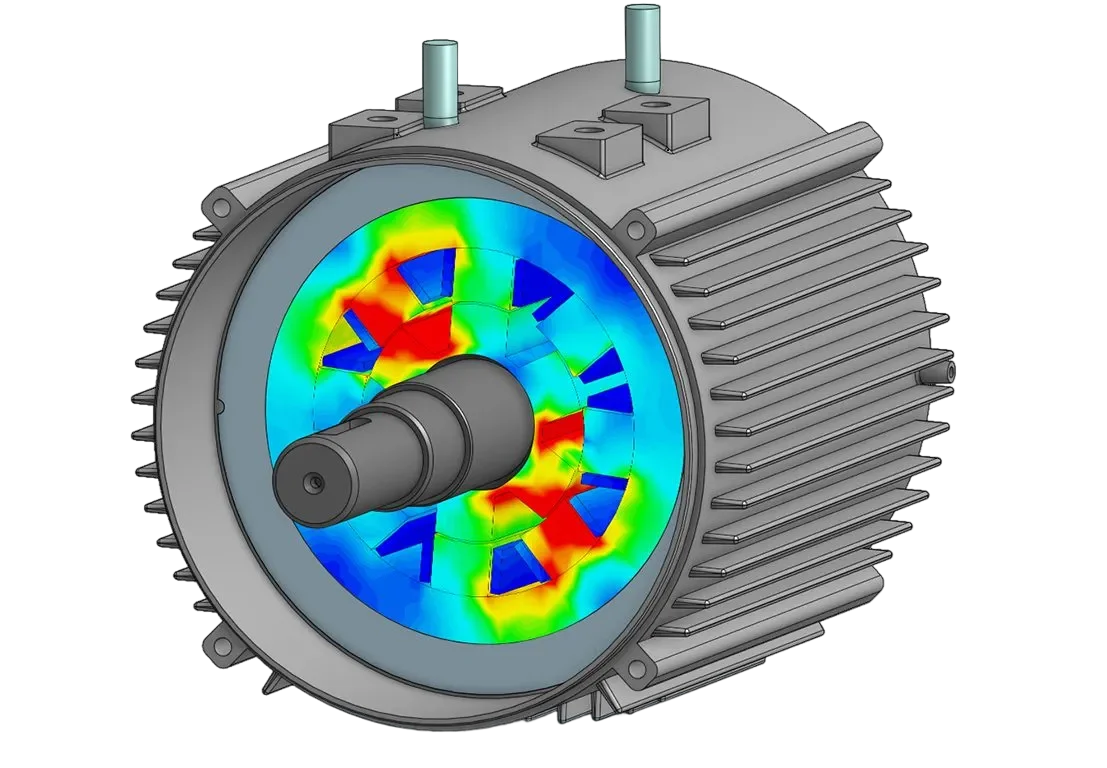












EV powertrain teams typically run analyses in separate tools, losing fidelity at every handoff. SimScale replaces that with one platform, so coil temperatures, junction limits, e-axle cooling, and structural margins are validated together, not in sequence.
Electric powertrain simulation that covers your full design challenge
All the physics your e-powertrain engineers need
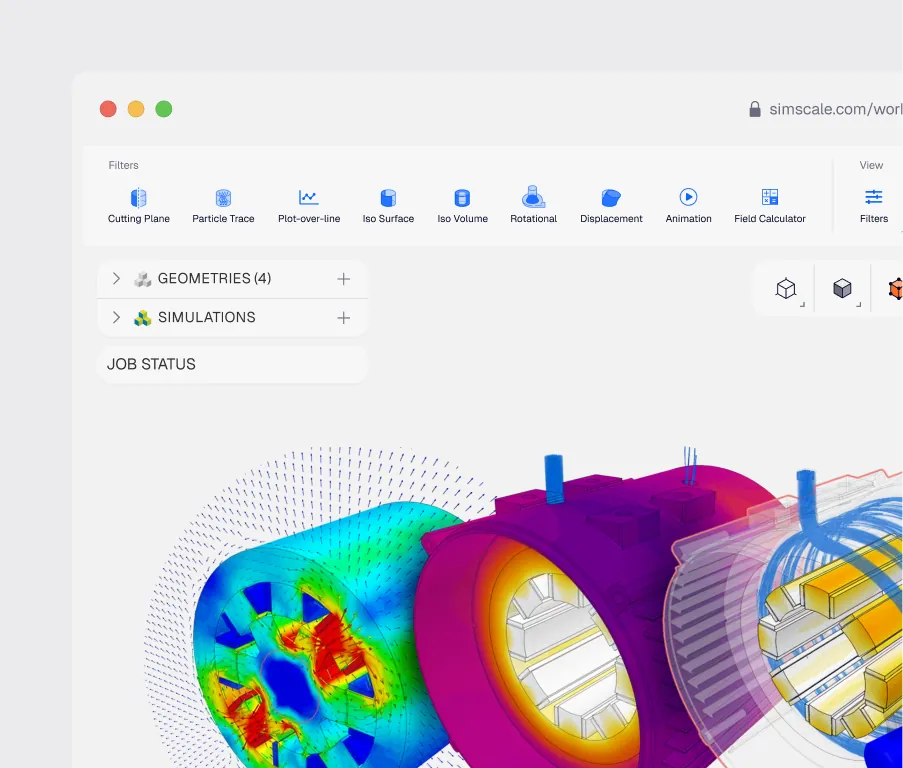
Electric powertrains fail in coupled domains: a motor that's too hot derates, a rotor without sufficient structural margin deflects at 16,000 RPM, an inverter that loses cooling flow shuts down the vehicle. SimScale runs incompressible and compressible CFD, structural and harmonic FEA, conjugate heat transfer, and 3D electromagnetics on shared geometry — so the engineer evaluates the real powertrain, not four disconnected approximations.
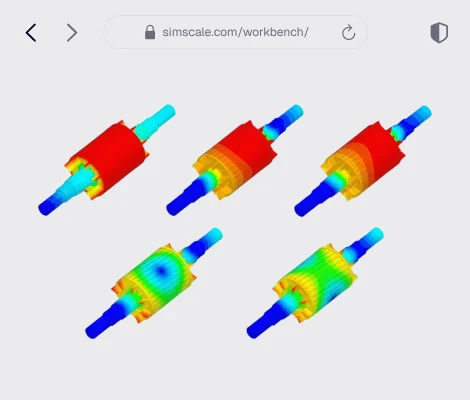
AI-native e-powertrain design optimisation
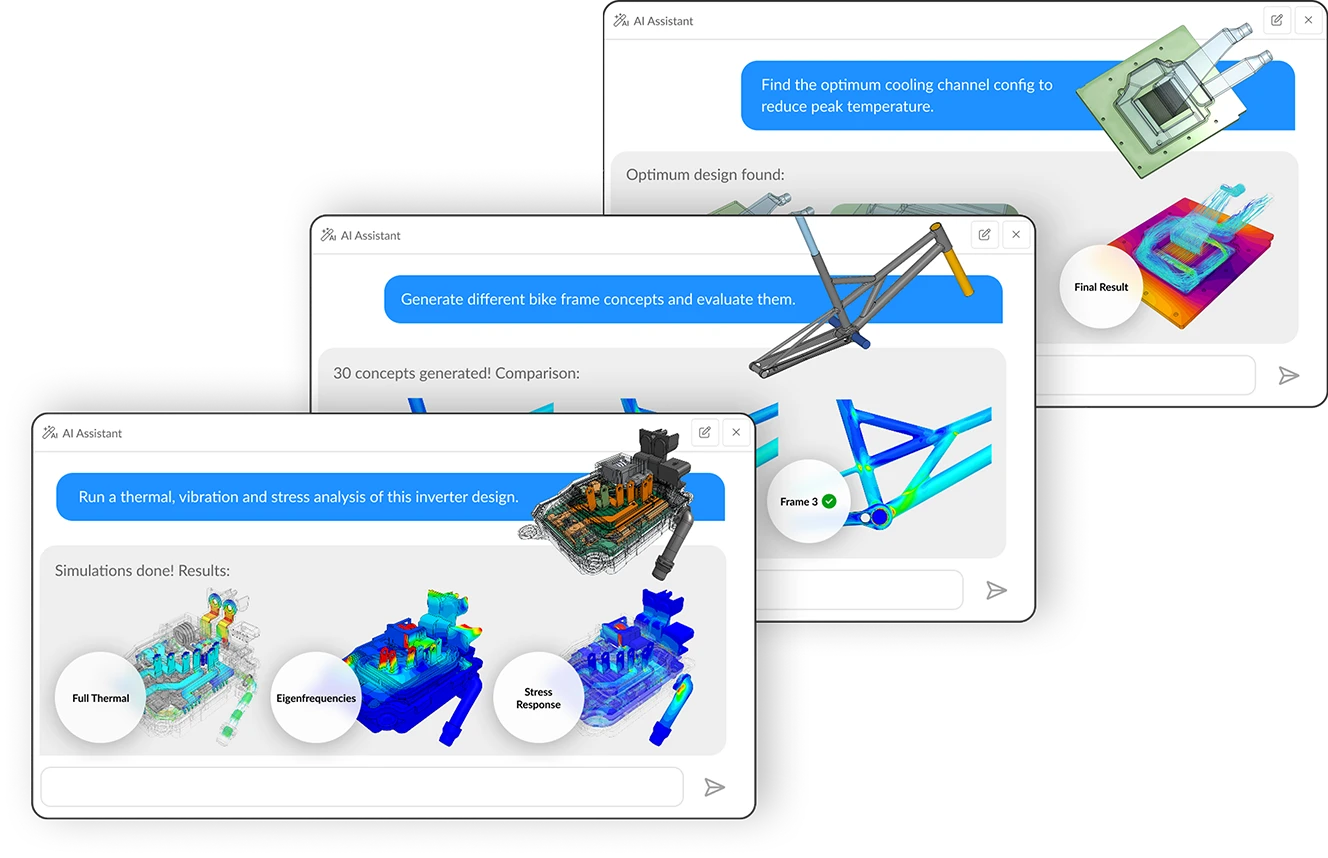
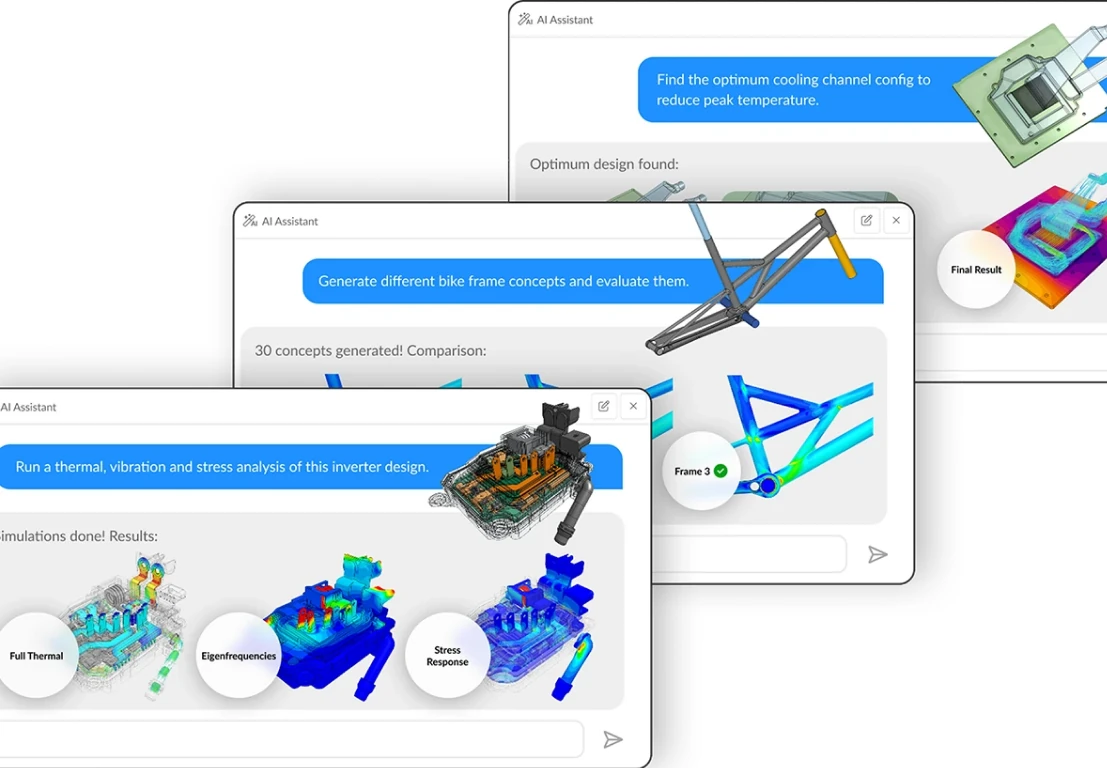
Physics AI delivers near-instant predictions on motor geometry, cooling-channel layout, and gearbox topology. Sweep dozens of stator slot, magnet, or oil-channel variants in seconds, then promote the strongest candidates to full CFD before committing to tooling. Find the torque / efficiency / temperature frontier without 200 manual runs.
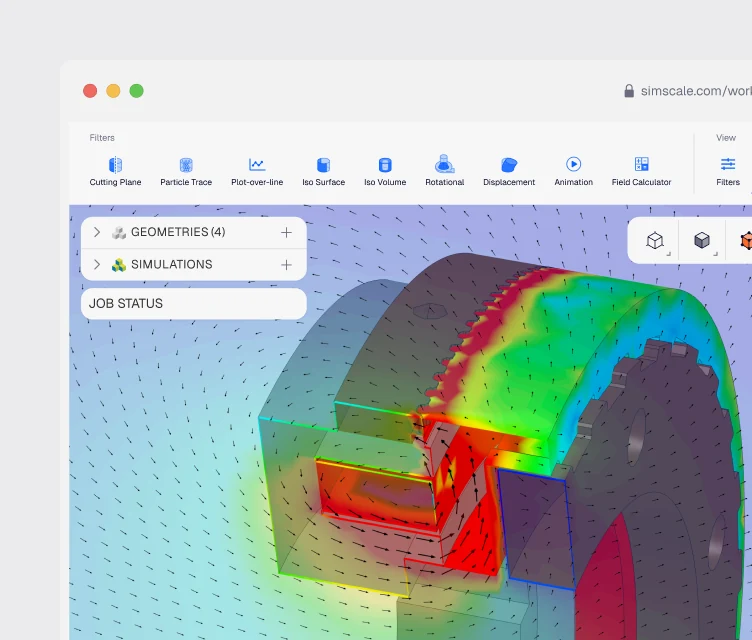
Cloud-native scale: parallel sweeps, elastic HPC
SimScale's elastic cloud infrastructure runs thermal, structural, and EM analyses on the same e-axle simultaneously — with simulations executing while the team iterates on other tasks. No on-prem HPC. No VPN. No licence ceiling. Scale from a single engineer to a global powertrain team without infrastructure changes.
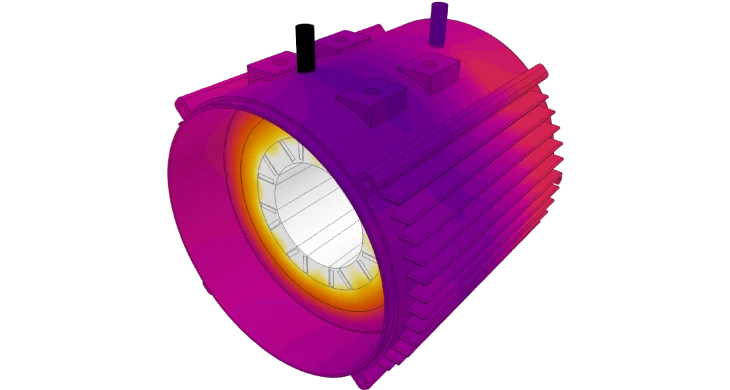
E-motor design: electromagnetics, thermal, and structural
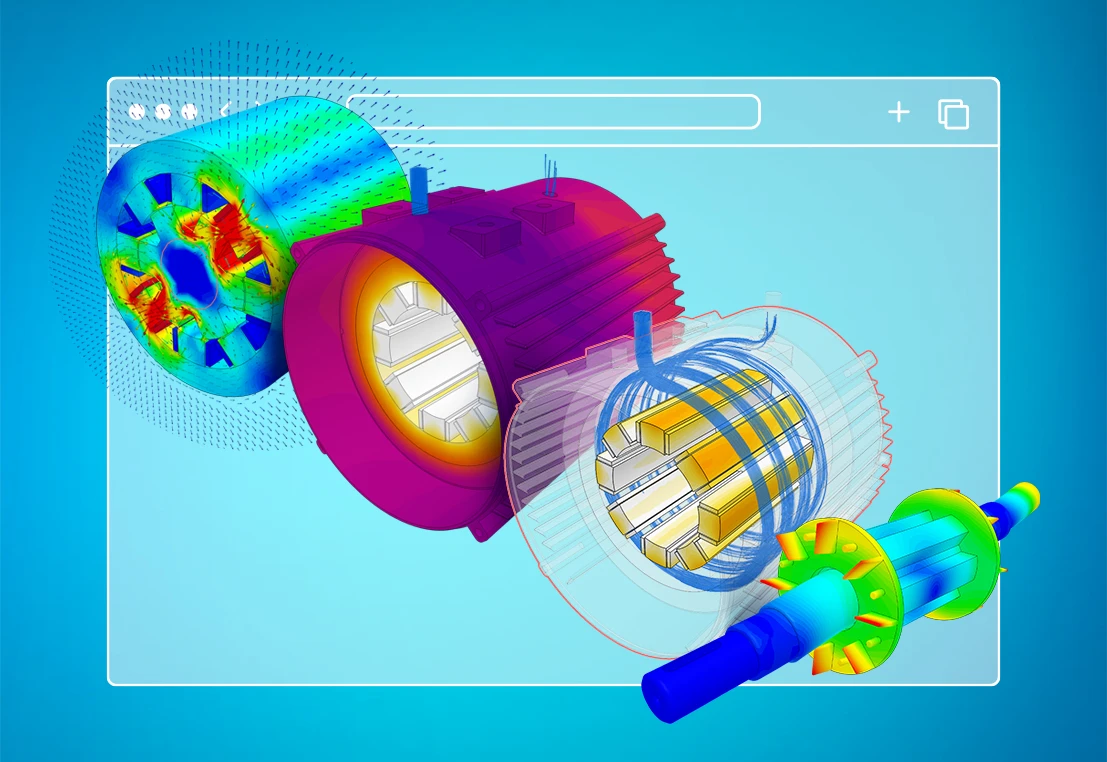
Simulate axial-flux and radial-flux motor architectures across EM, thermal, and structural domains on one shared geometry — torque ripple, cogging torque, eddy-current loss distributions, winding temperatures, and rotor integrity under centrifugal load. Surface the coupled effects between them — like EM losses heating stator windings — before the first prototype.
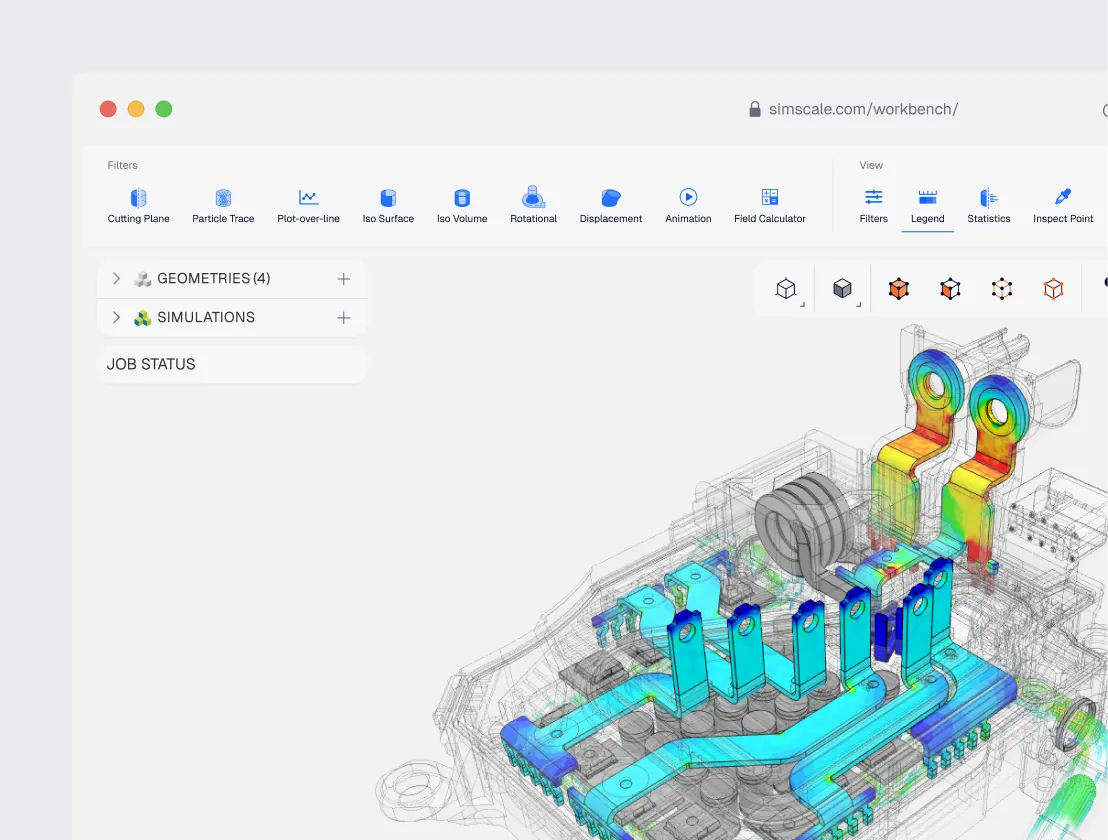
Inverter and power-electronics thermal management
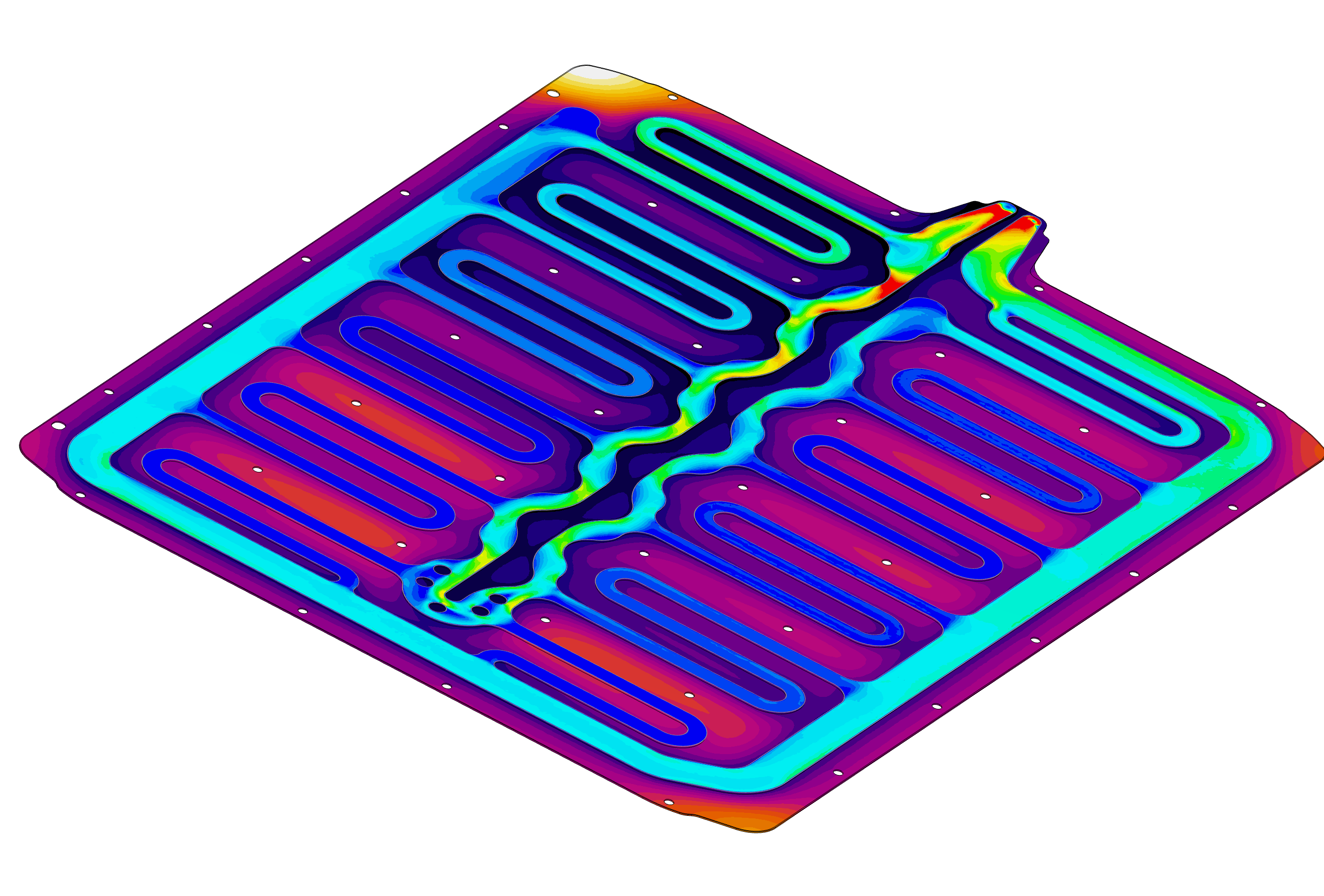
Predict IGBT and SiC MOSFET junction temperatures under peak load, validate single-sided and double-sided cooling architectures, and quantify thermal margin across drive cycles. Validate cold-plate flow channels and pin-fin geometries before the inverter package is committed.
Powertrain housing, casing, and mounting structural analysis
Validate motor housings, inverter casings, and mounting brackets under combined thermal expansion, mechanical preload, and vibration loading — predicting stress concentrations, fatigue margins, and deflections across peak torque events, thermal cycling, and road-load inputs. Iterate on wall thickness, rib geometry, and mounting point placement before hardware is cut.

2x speed-up
in iteration cycles, 40°C coil reduction, 99% accuracy vs test
“If we didn't use simulation to the extent that we're using it, we would have to build at least one more full prototype. That would be tens of thousands of euros more. And ultimately, you can't improve a design if you don't understand the effects that are defining performance.”
Maximilian Güttinger, CEO & Co-founder, Emil Motors
Concept to first customer vehicles
, CFD validated within <1% of on-road testing
“Using legacy tools we would have had to purchase several software packages and locally transfer/format CAD files continuously whilst being fixed to a workstation. Using the cloud-native features in SimScale, and the collaboration tools, we at Ingenium Aero Consultancy have access to a growing feature and physics set whilst accessing the software using a simple login from a web browser.”
Peter Coysh, Founder, Ingenium Aero Consultancy
10 new business opportunities
secured, Tier 1 supplier to major OEMs
“We have been using SimScale to modify and develop new solenoid valves. SimScale is one of our reliable computational tools to solve our fluid problems to make sure our solenoid-valves fluid performance is reliable.”
Chandru Rao, Simulation Manager, Solero Technologies
Related resources

Alex Graham
June 16, 2026
Multi-agent workflows: key takeaways from Design & Simulation Week 2026
SimScale and CoLab demonstrated live AI agent collaboration at Design & Simulation Week 2026, cutting engineering review and simulation lead times dramatically.
Alex Graham
June 12, 2026

SimScale Workflows: Why we are opening up the platform (& why you should care)
SimScale Workflows opens its platform to custom solvers and tools, enabling automated, AI-driven multi-step engineering simulation pipelines for any organization.
Alex Graham
May 29, 2026



Luis Goncaves
June 18, 2026
Luis Goncaves
January 27, 2026

Paras Ghumare
December 4, 2025


Jon Wilde
June 16, 2026


David Heiny
June 15, 2026
Jon Wilde
June 3, 2026

Peter Selmeczy
March 24, 2026

Peter Selmeczy
September 10, 2025
Peter Selmeczy
June 25, 2025
Peter Selmeczy
May 29, 2026
Axial-flux and radial-flux motor architectures, induction and permanent-magnet machines, integrated e-axles, gearboxes and reduction units, inverters and DC-DC converters, hydraulic control modules and solenoid valves, and full battery-to-wheel powertrains. CFD, FEA, conjugate heat transfer, and electromagnetics all run on the same geometry.
An electric powertrain is the complete propulsion system that converts battery energy into wheel torque: the battery pack, inverter, e-motor, gearbox or reduction stage, e-axle, and the cooling systems that keep all of them inside their thermal limits. The drivetrain is a subset — typically the motor, gearbox, axle, and driveshafts.
EV teams typically combine 1D system tools (Simulink, GT-SUITE, AVL Cruise) for drive-cycle and control logic with 3D physics tools (Ansys, Star-CCM+, Abaqus). SimScale sits in the 3D-physics layer — but cloud-native, browser-based, and unified across CFD, FEA, CHT, and electromagnetics.
Conjugate heat transfer couples fluid flow, solid conduction, and heat generation in a single solve. Engineers simulate water-glycol jackets, direct oil cooling on stator windings, and inverter cold-plate channels on the actual CAD geometry — predicting coil temperatures, hot spots, and continuous torque limits before the first prototype.
Simulating early with one CAD model across all physics — instead of serial point-tool workflows — eliminates redundant prototyping, compresses the design cycle, and reduces the number of physical prototypes required. Cloud-native parallel sweeps multiply the effect.