Cyclone Separator simulation software
Design cyclones that hit separation targets without paying for pressure drop
SimScale runs Lagrangian particle tracking and CFD on full cyclone geometries to predict cut-size, collection efficiency, pressure drop, and erosion hotspots across oil & gas, dust collection, and process filtration. Run from a browser with elastic compute, no on-prem HPC.
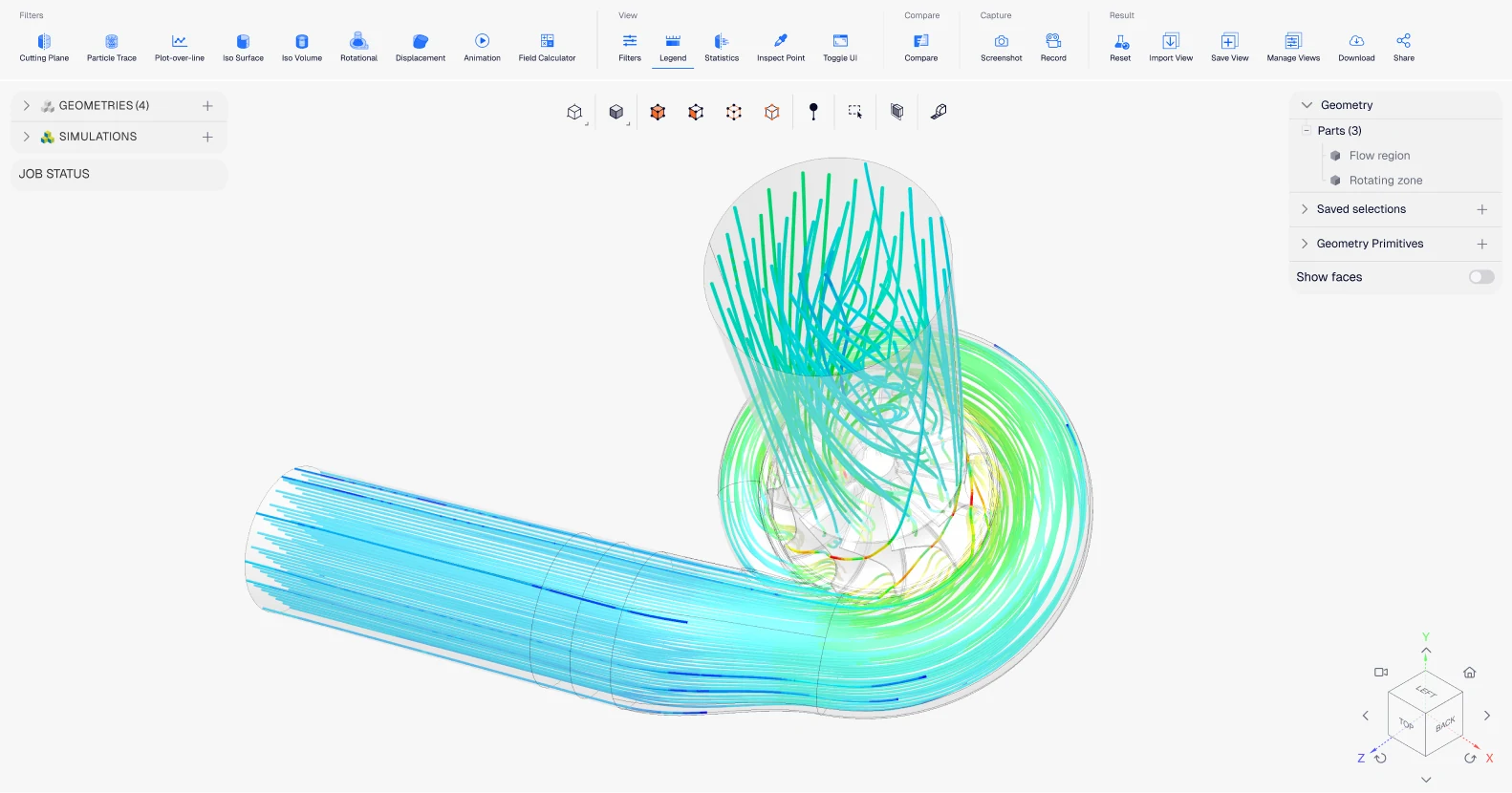












Physical prototypes and field re-trims are costly when separation efficiency and erosion risk need proving before the skid ships. SimScale unifies CFD, multiphase, and particle tracking on one cloud platform. Predict cut-size diameter and erosion-prone regions in hours, not weeks.
Cyclone separator simulation that covers your full design challenge
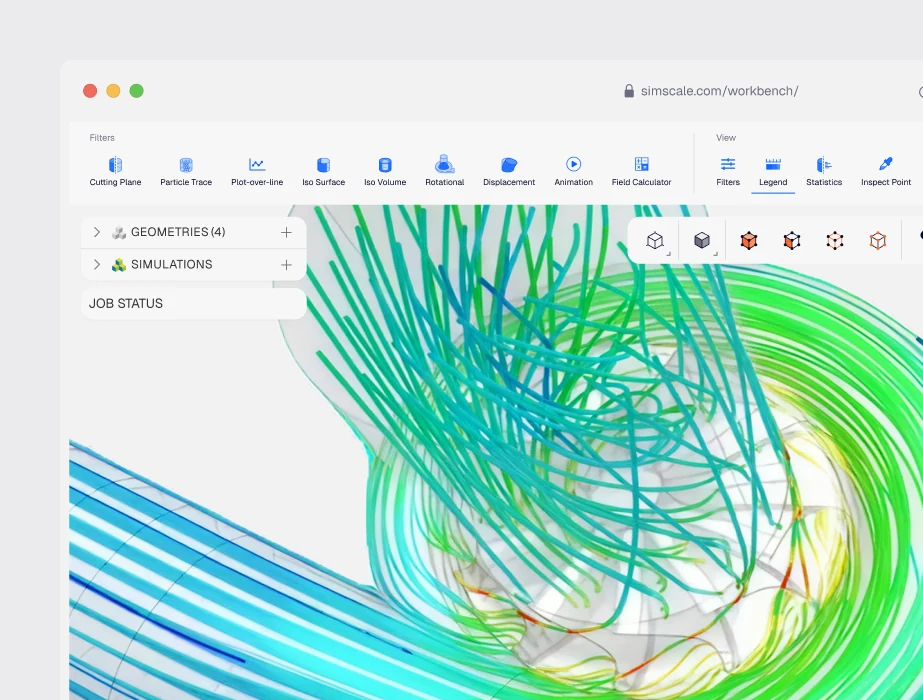
All the physics your engineers need
Couple CFD, multiphase, particle tracking, and structural FEA on the same cyclone geometry. One mesh, one results store. Validate vortex stability, particle collection efficiency, pressure drop, and wall erosion in a single project.
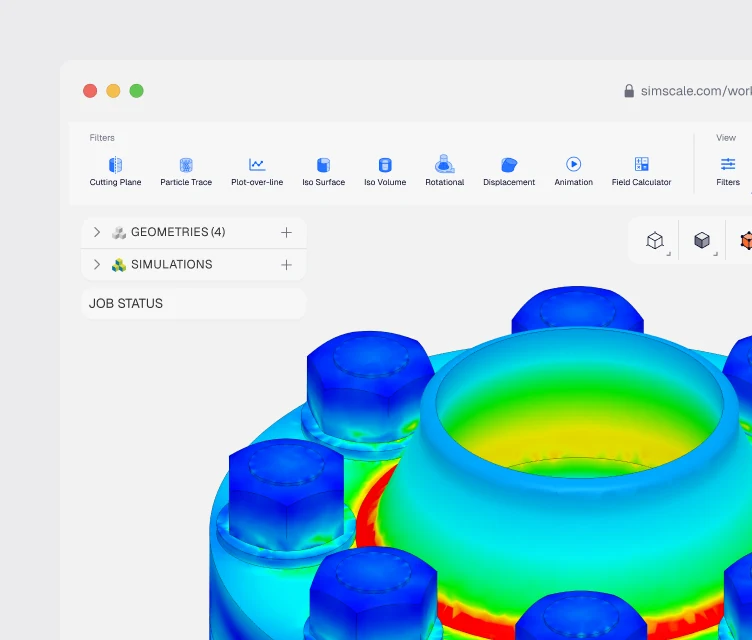
Multiphysics: CFD, multiphase, and erosion on the same cyclone
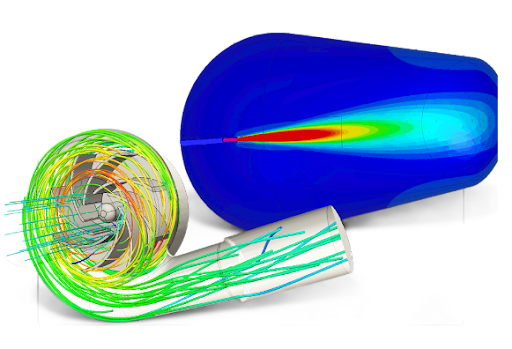
Cyclones fail across coupled domains: an unstable vortex drops cut-size, fine particles escape, and abrasive particles eat the cone wall. SimScale runs swirling-flow CFD, Lagrangian particle tracking, and wall-erosion analysis on the same geometry so the engineer evaluates the real cyclone, not three approximations.
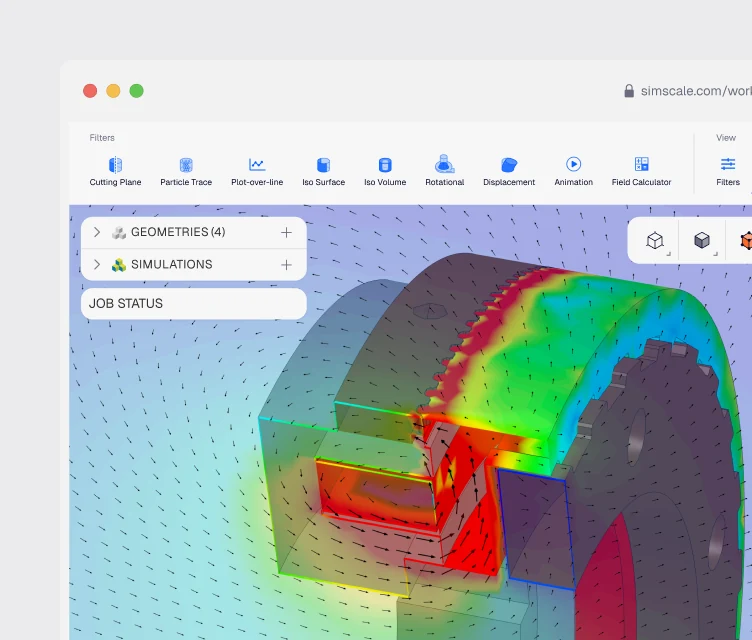
AI-native cyclone design optimization
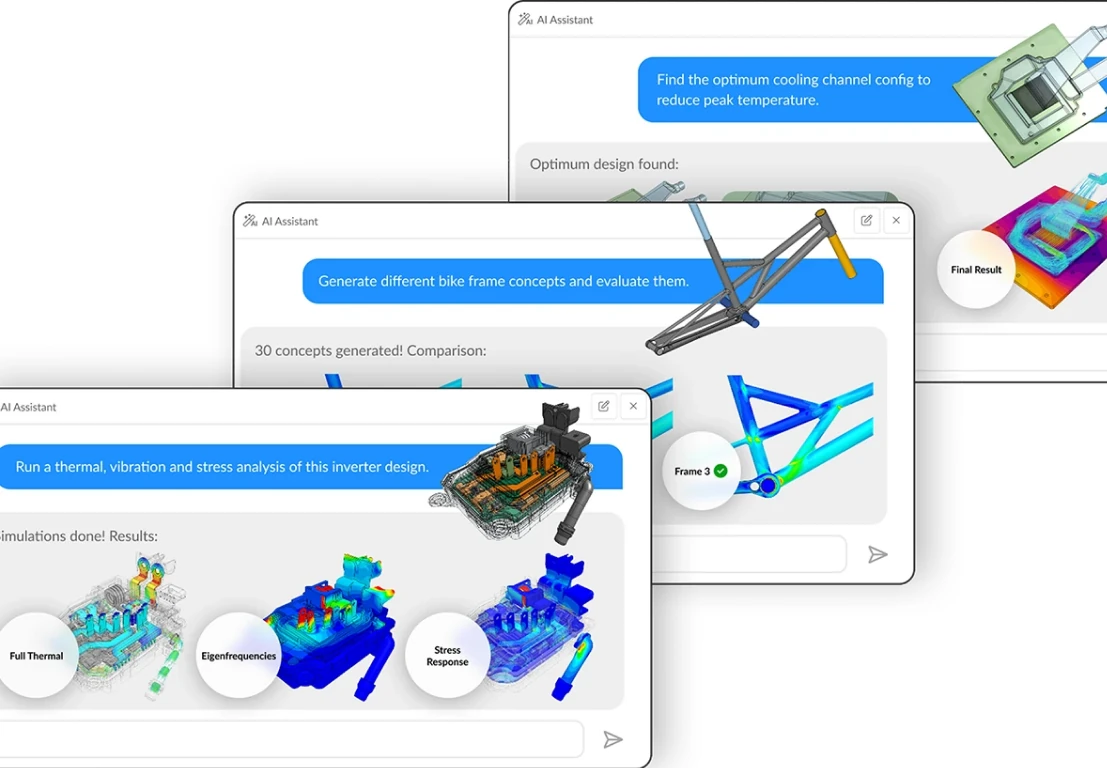
Physics AI delivers near-instant predictions on inlet, cone, and vortex-finder geometry sweeps. Explore Stairmand, Lapple, and high-efficiency variants in seconds, then promote the strongest candidates to full LES or particle-tracking runs before committing to fabrication.
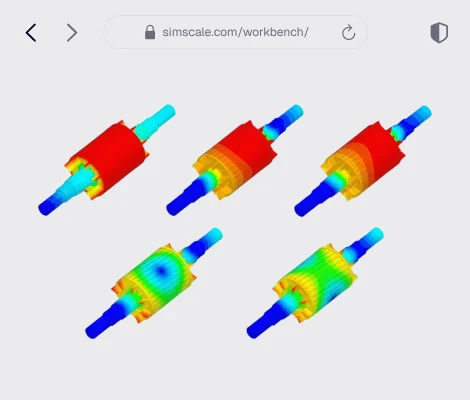
Cloud benefits: more variants, faster
Axens condensed 16 weeks of cyclone validation into 8 weeks of cloud CFD on SimScale. No on-prem HPC, no VPN, no licence ceiling. Elastic compute scales per project so a process team can sweep dozens of cone, inlet, and vortex-finder variants in parallel.
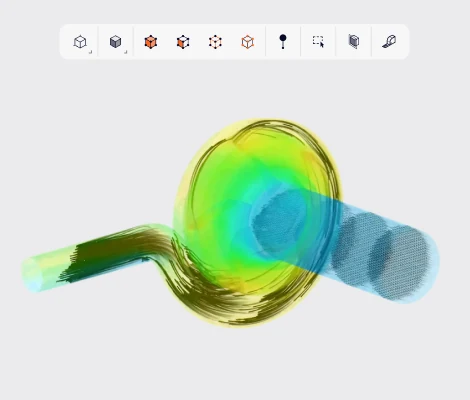
Separation efficiency and cut-size prediction
Run Lagrangian particle tracking with poly-disperse size distributions to predict grade efficiency curves and d50 cut-size. Validate Stairmand high-efficiency, high-throughput, and conventional cyclone geometries against measured collection data.
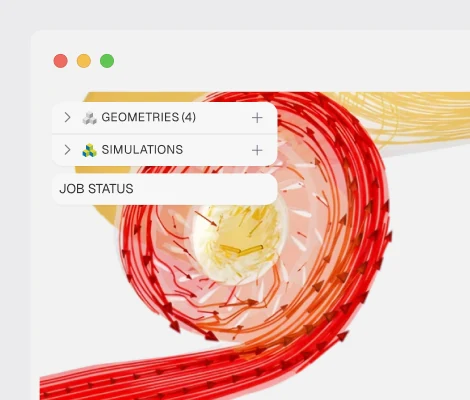
Pressure drop and inlet geometry optimization
Sweep tangential, scroll, and helical inlet designs to minimise pressure loss for a target cut-size. Map energy dissipation across the vortex core and re-entry region to recover fan power without sacrificing separation efficiency.

50% faster engineering phase
on refinery cyclones
“Axens engineers chose SimScale to perform Computational Fluid Dynamics analysis to validate the performance of cyclones during the engineering phase of regenerator units. Thanks to SimScale, the team has cut the duration of this validation phase in half.”
Axens, refining and petrochemical technology licensor
Filter validation
in cloud CFD before tooling
“Working with SimScale has been a game-changer for us. The cloud-native platform allowed us to test multiple filtration configurations in parallel, drastically cutting our prototyping time and giving us the confidence to deliver more reliable products to our customers.”
GV Filtri, industrial filtration and separator design
Process equipment design
validated in cloud CFD
“SimScale's cloud-native simulation platform allowed our team to evaluate flow patterns and thermal distribution in our process equipment with a level of detail that was previously out of reach. The collaborative environment and ease of use accelerated our design cycles significantly.”
KREYENBORG, plastics and bulk-material handling equipment
Related resources

Alex Graham
June 16, 2026
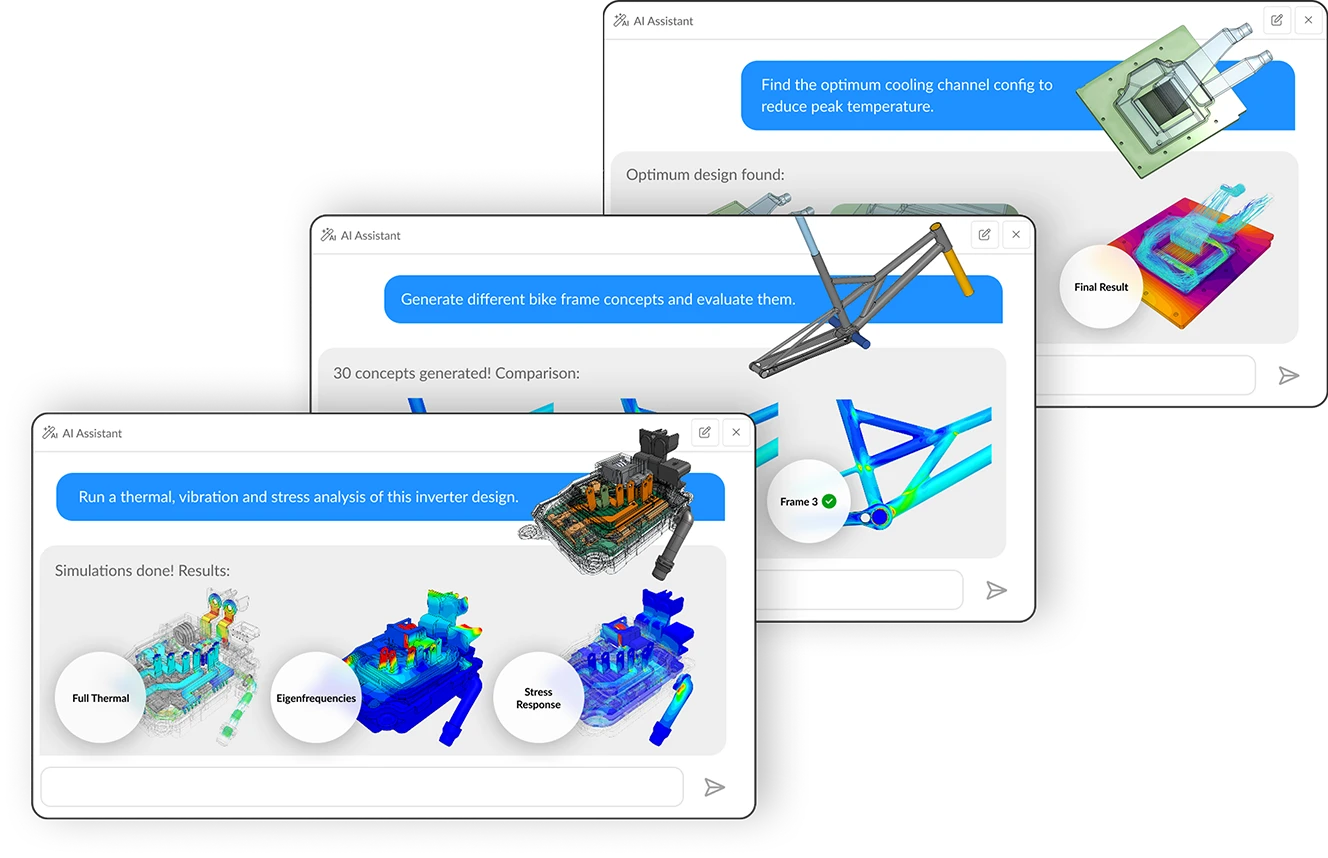
Multi-agent workflows: key takeaways from Design & Simulation Week 2026
SimScale and CoLab demonstrated live AI agent collaboration at Design & Simulation Week 2026, cutting engineering review and simulation lead times dramatically.
Alex Graham
June 12, 2026

SimScale Workflows: Why we are opening up the platform (& why you should care)
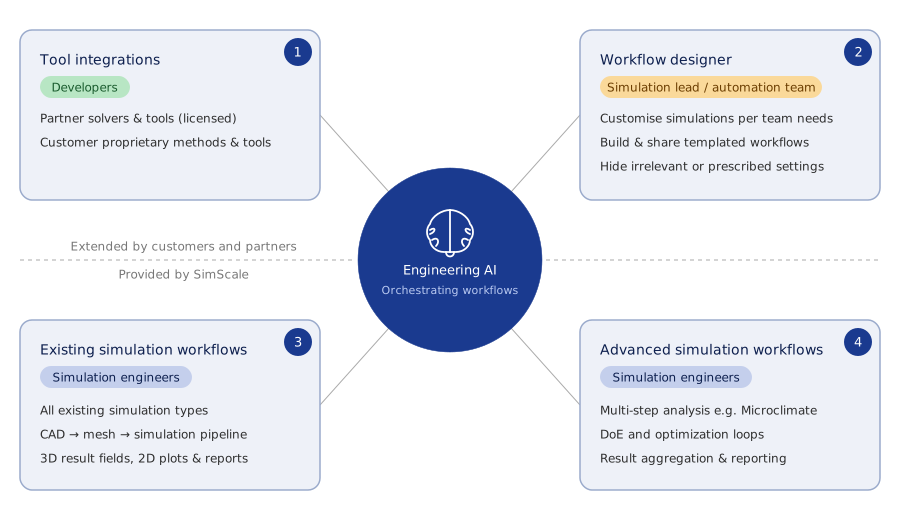
SimScale Workflows opens its platform to custom solvers and tools, enabling automated, AI-driven multi-step engineering simulation pipelines for any organization.
Alex Graham
May 29, 2026



Luis Goncaves
June 18, 2026
Luis Goncaves
January 27, 2026

Paras Ghumare
December 4, 2025


Jon Wilde
June 16, 2026


David Heiny
June 15, 2026
Jon Wilde
June 3, 2026

Peter Selmeczy
March 24, 2026
Peter Selmeczy
September 10, 2025
Peter Selmeczy
June 25, 2025
Peter Selmeczy
May 29, 2026
Stairmand high-efficiency, Lapple conventional, high-throughput, scroll-inlet, hydrocyclones, and refinery FCC and third-stage cyclones. CFD with Lagrangian particle tracking, Eulerian multiphase, and erosion modelling run in one project on the same geometry.
Lagrangian particle tracking releases a poly-disperse particle population at the inlet and tracks each particle through the swirling flow. The post-processor returns grade efficiency curves, d50 cut-size, and the count of particles escaping through the vortex finder for direct comparison to measured field data.
Yes. Wall erosion models (Finnie, Oka, DNV) couple to the Lagrangian particle solver and map cumulative impact rate and erosion depth across the cone, barrel, and vortex finder. Use the map to position wear linings or revise cone angle before the first refractory replacement.
Onshape, SolidWorks, CATIA, and STEP imports land directly in SimScale through the browser. Geometry updates re-run automatically against your saved simulation setup, so iterations don't lose progress.
Sign up for free, open a public cyclone separator project, and run your first simulation within an hour. Real-time support sits in the project for setup, meshing, and solver questions.