Heat Exchanger Simulation Software
Heat exchanger simulation, in one cloud-native CHT platform
Run CFD and conjugate heat transfer for shell-and-tube, plate-fin, finned-tube, and additively manufactured heat exchangers in parallel on the cloud. Validate effectiveness, predict pressure drop, and rank design variants before committing to tooling
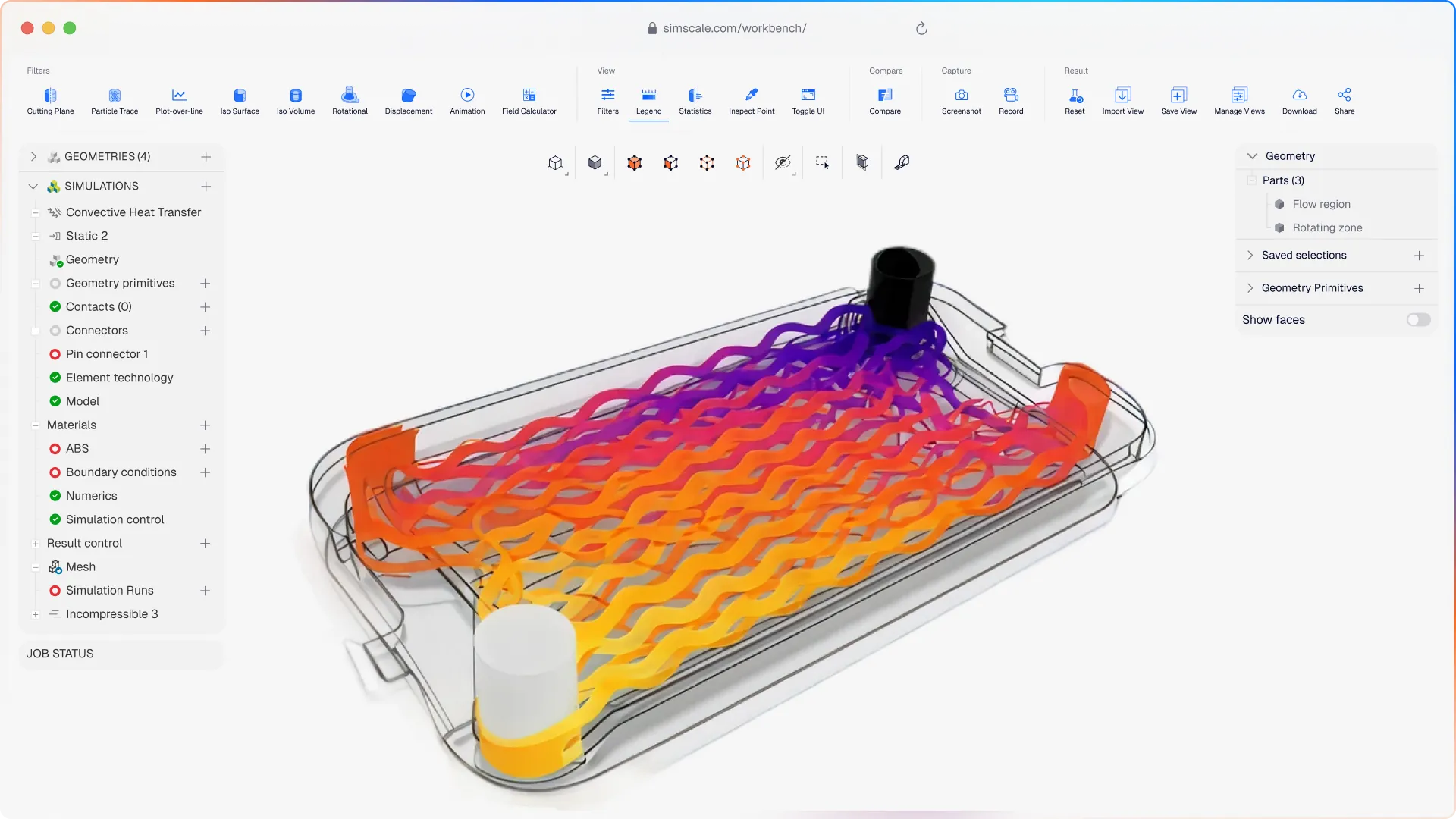












NTU hand calculations miss maldistribution, fouling, and real flow behaviour. Desktop CFD rarely has time to fill the gap. SimScale lets teams validate all three across multiple designs before committing to tooling.
Heat exchanger simulation that covers your full design challenge
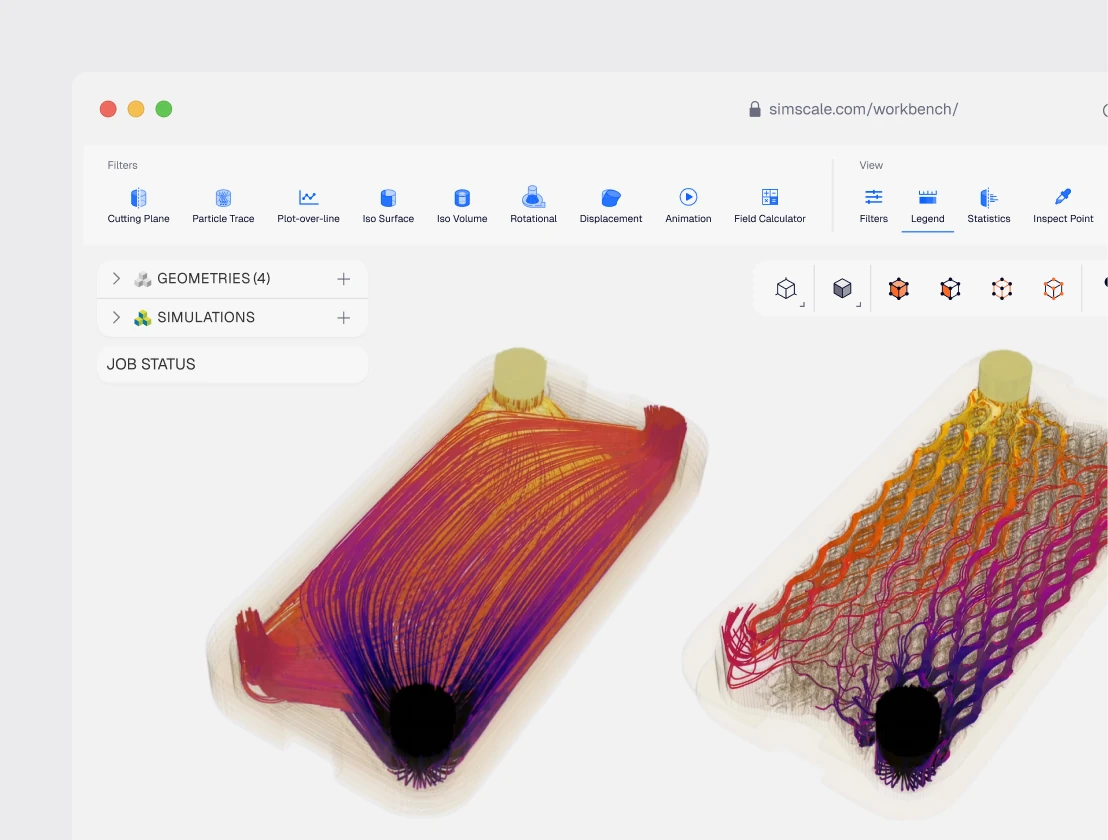
Cloud-native CFD & FEA for every heat exchanger geometry
SimScale runs steady-state and transient CFD, conjugate heat transfer, and structural FEA against shell-and-tube, plate-fin, finned-tube, micro-channel, printed-circuit, and additively manufactured heat exchangers — all in the browser, with no install, no license server, and no waiting for a workstation.
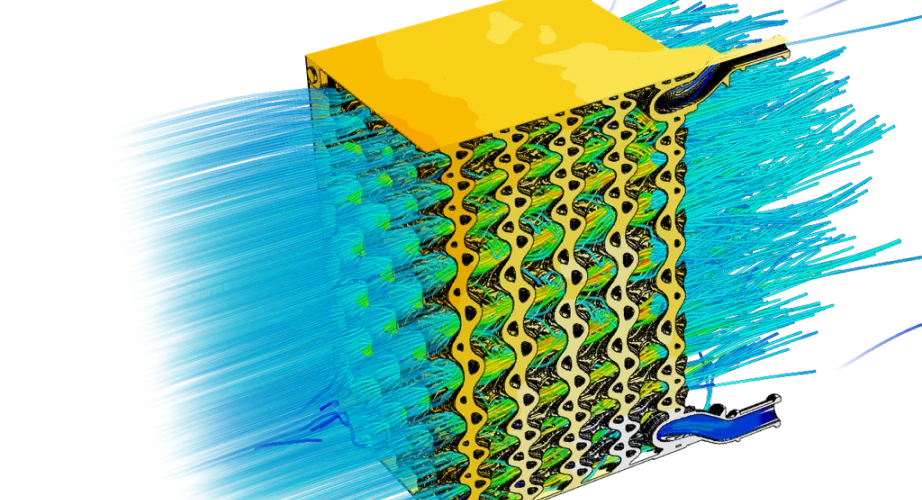
AI-assisted setup & intelligent meshing
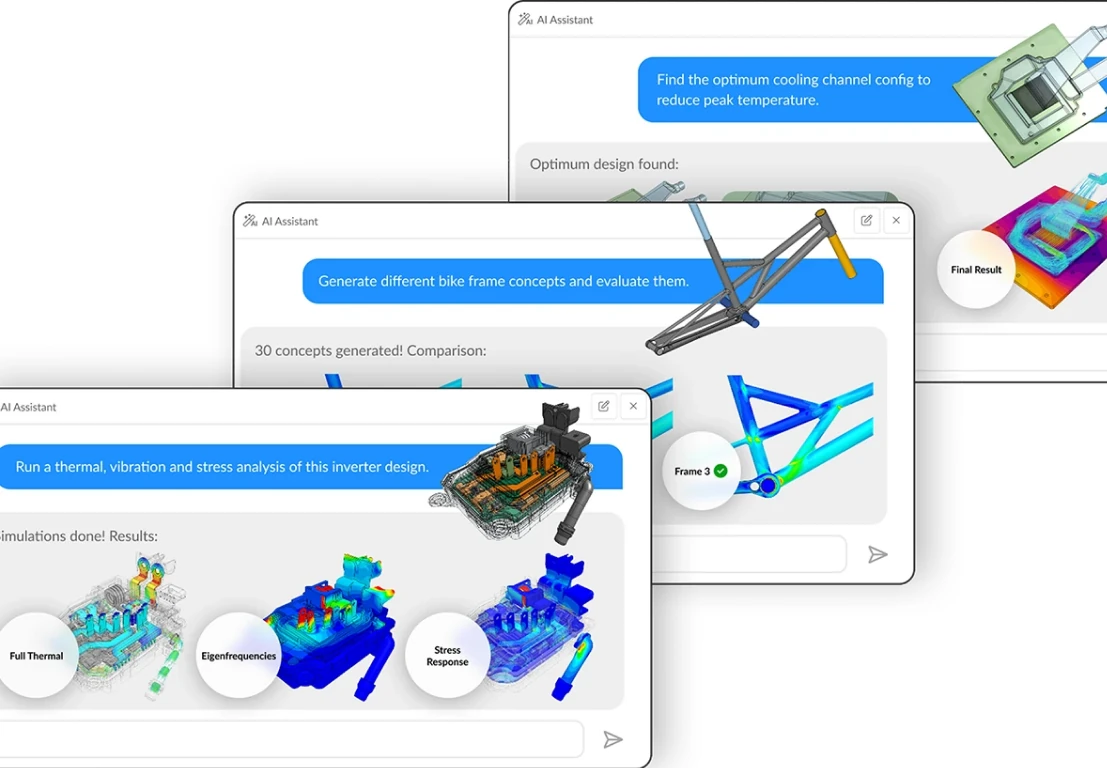
SimScale's AI agent generates first-pass simulation setups from a CAD upload, suggests turbulence models for the flow regime, and flags meshing problems before the solver runs. For heat exchanger geometries with hundreds of tubes or thousands of fin surfaces, the automated mesh refinement around walls and baffles cuts what used to be a half-day pre-processing job into minutes.
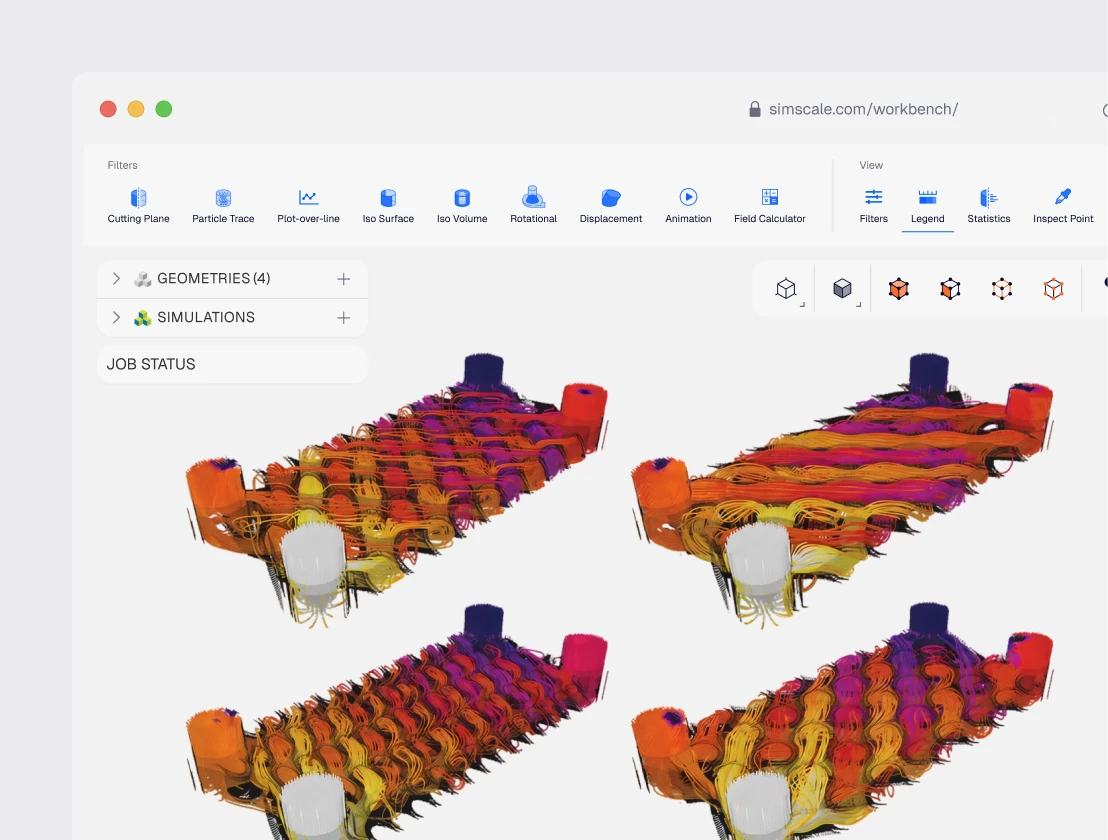
Unlimited cloud compute & parallel runs
Run 5, 10, 50 simulations in parallel on cloud-bursting infrastructure — no machine size to negotiate, no license to share. Sweep tube-pitch, baffle-cut, and fin-density together rather than serialising the study, and get to a ranked shortlist of designs in the time it used to take to finish one.
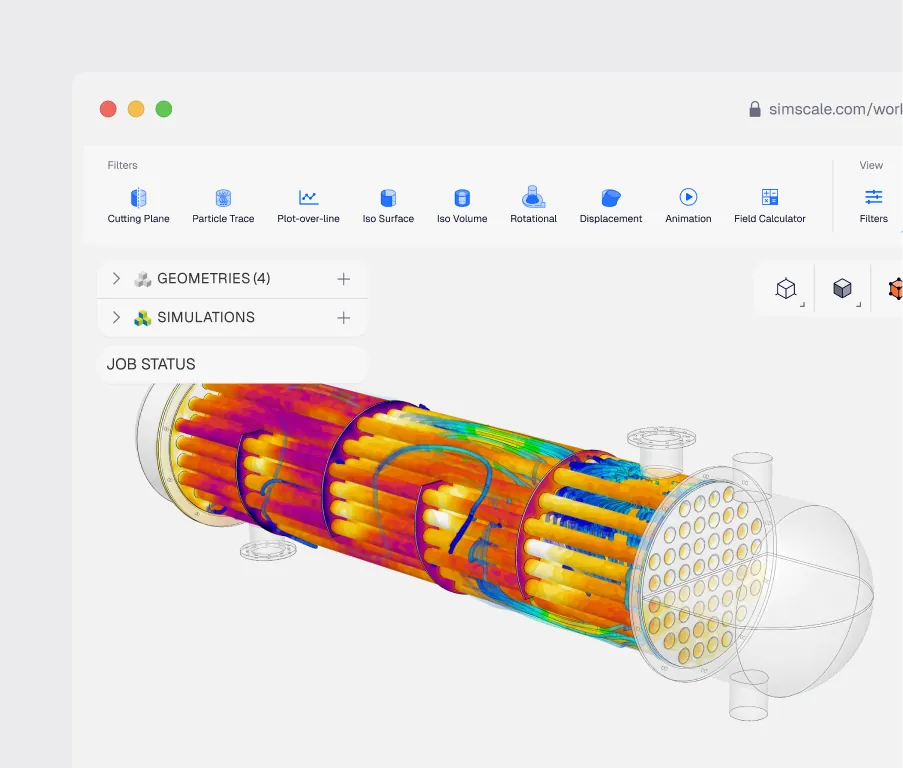
Shell-and-tube CFD
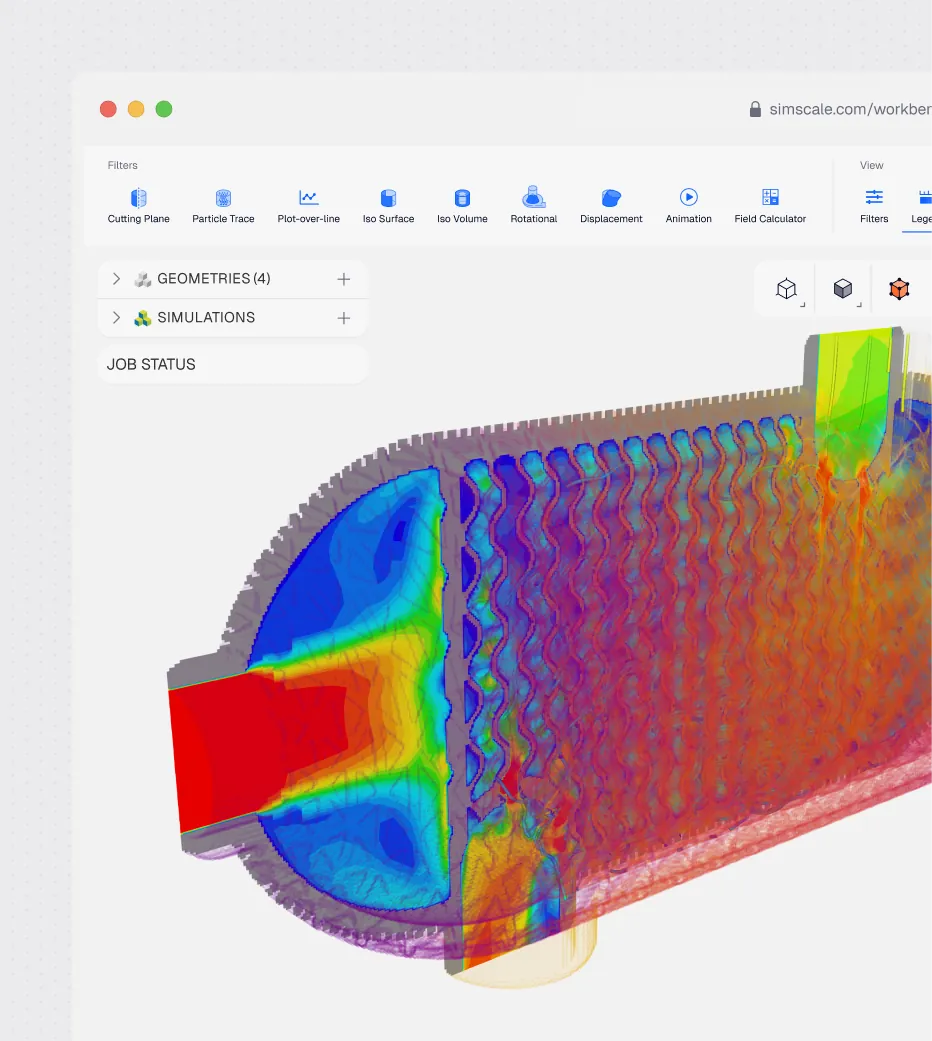
Resolve baffle-induced cross-flow, tube-bank pressure drop, and shell-side maldistribution with full 3D conjugate heat transfer. Compare segmental, helical, and rod-baffle configurations against the same boundary conditions and rank them on effectiveness and pressure penalty in a single project.
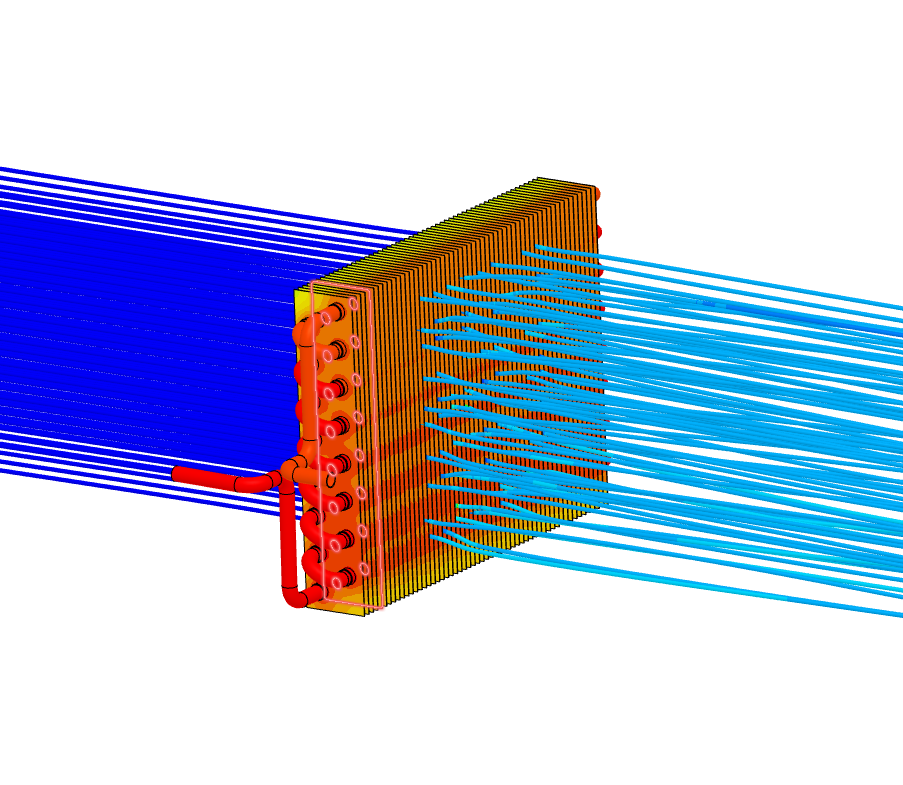
Plate-fin & compact heat exchangers
Plate-fin geometries can deliver significantly higher heat duty than shell-and-tube at comparable cost — but only when fin density, channel width, and header design are tuned together. Use CHT to capture conduction through fins and wall material simultaneously with channel-side flow, and identify the design corner that wins on heat duty without losing pressure-drop headroom.
Effectiveness & NTU validation
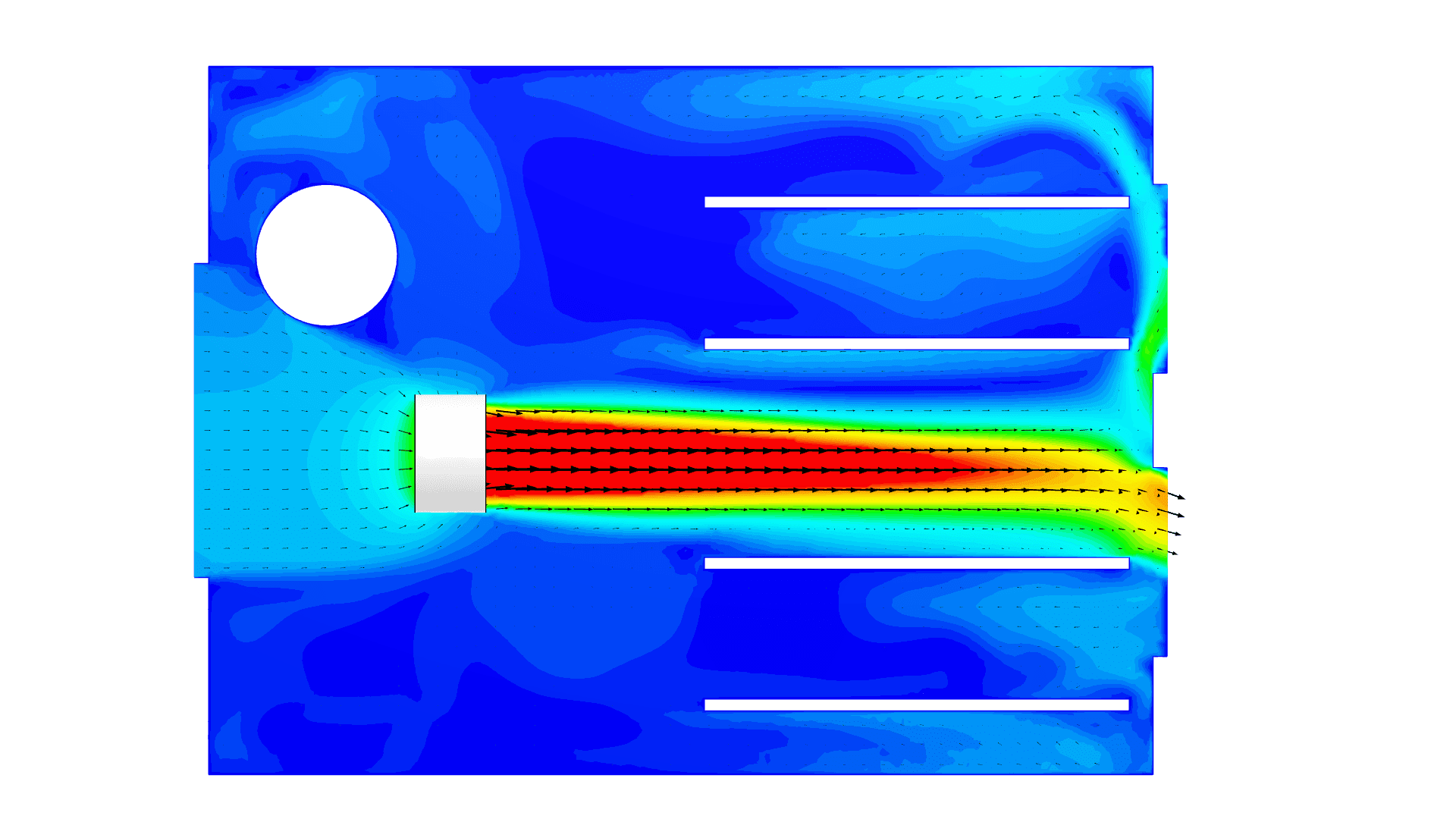
The classical effectiveness-NTU method is fast for sizing but breaks down under strong glide, two-phase behaviour, or high pressure drop — published research shows LMTD can over- or under-predict by 10-40% in those regimes. Use SimScale's CFD to validate hand-calculation results, locate where NTU assumptions diverge from reality, and document the deviation for your design review.
Pressure drop & flow maldistribution
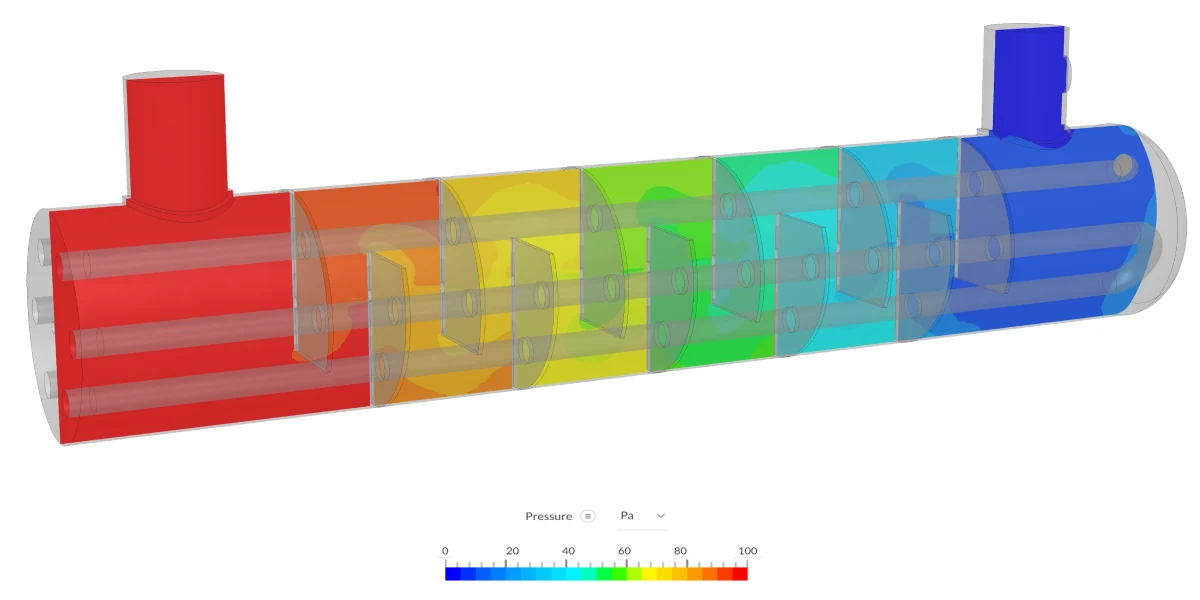
Pressure drop kills pump and fan budgets, and maldistribution silently degrades effectiveness. Resolve both directly — see exactly where tube-side or shell-side resistance dominates, identify stagnant zones that starve flow from certain passes, and compare baffle or manifold redesigns in parallel runs.
Fouling & degraded performance
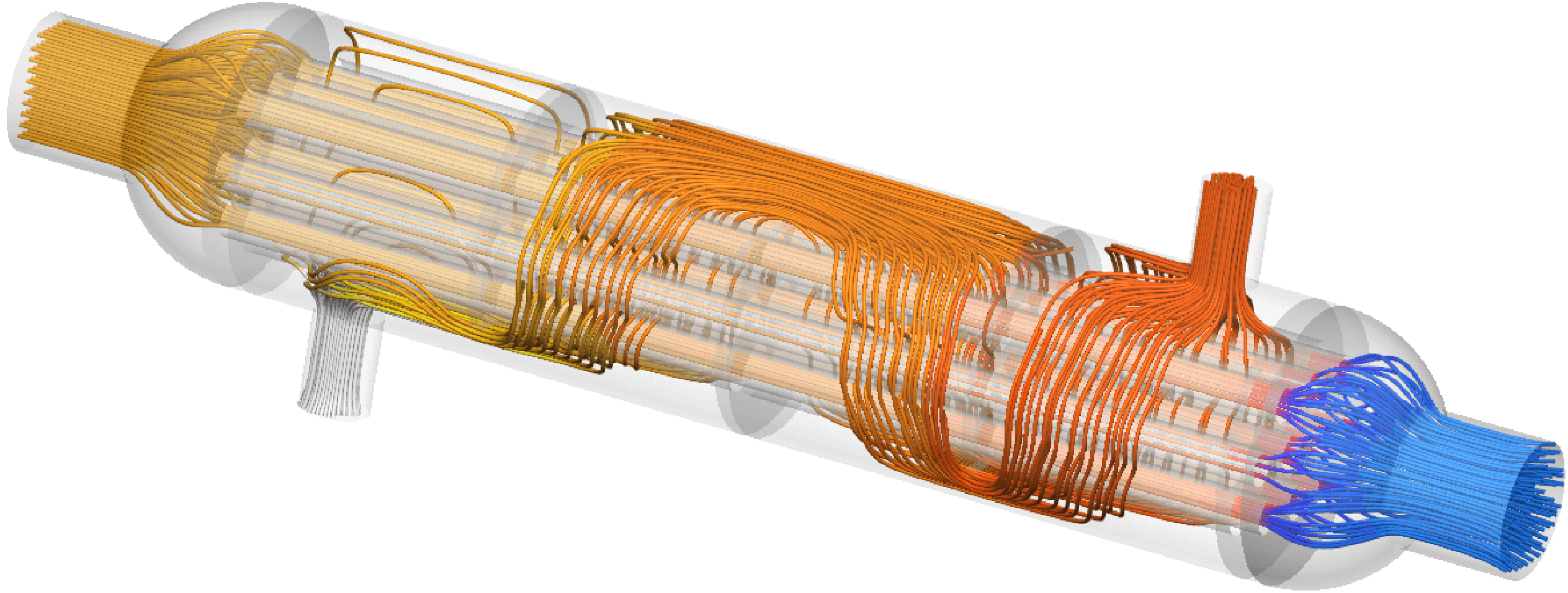
Fouling reduces the overall heat transfer coefficient U over time, and that drop propagates straight into effectiveness. Simulate the degraded geometry — added deposit thickness, changed wall thermal conductivity, blocked passages — to predict end-of-cycle performance and inform cleaning intervals. Useful both for new design margin-setting and for retrofit decisions on existing assets.
Early-stage thermal sizing → full CFD
Start with a lightweight steady-state CHT run to validate sizing, then push the same geometry into a detailed transient study without re-meshing or re-exporting. The progression from early-stage sizing to detailed CFD validation lives in the same project — no second tool, no second license.

TPMS
geometry import cut from hours to seconds
“Implicit modeling and direct simulations on implicit geometry is a real step change in speed and robustness of optimization workflows and necessary to unlock the real potential of additive manufacturing.”
Markus Lempke - Computational Designer, Siemens Energy

70%
pressure drop through the exhaust piping reduced
“SimScale's parallelization capability saves time. This precious time was used to turn our cost-reduction project into a performance upgrade for our customers at the reduced cost.”
Tirdad Ahmadpour - Engineer, ATAG

50+
simulations in 4 months
“Be confident in SimScale! The solution is easy to learn and taking advantage of the live chat support is a must, with very short answering delay and valuable input!”
Jean-François Le Coz - Technology Development Manager, Axens
Related resources


Andreea Zaharia
June 30, 2016

Milad Mafi
July 15, 2014

David Heiny
March 10, 2014



Luis Goncaves
June 18, 2026
Luis Goncaves
January 27, 2026

Paras Ghumare
December 4, 2025


Jon Wilde
June 16, 2026

David Heiny
June 15, 2026
Jon Wilde
June 3, 2026

Peter Selmeczy
March 24, 2026

Peter Selmeczy
September 10, 2025
Peter Selmeczy
June 25, 2025
Peter Selmeczy
May 29, 2026
SimScale supports comprehensive simulation of all major heat exchanger types including shell-and-tube, plate, plate-and-frame, helix, finned-tube, micro-channel, printed-circuit, and advanced additively manufactured geometries with TPMS and lattice structures. You can model single units or complex networks with recycling loops and multiple exchangers in series or parallel.
SimScale serves engineers across HVAC, energy and power generation, chemical processing, automotive (fuel cells and battery thermal management), oil and gas, food and beverage processing, pharmaceutical manufacturing, and industrial equipment. The platform scales from small component optimisation to large industrial plant systems.
Unlike desktop-bound solutions, SimScale eliminates hardware limitations and expensive workstation requirements. Run unlimited simulations in parallel, collaborate in real-time with your team, and leverage AI-powered automation to reduce setup time by up to 80%. SimScale offers CFD, conjugate heat transfer, and FEA in a single platform with transparent, scalable pricing — no hidden fees or per-module licensing.
Yes. SimScale offers a free Community plan and guided demos. Since SimScale runs entirely in the cloud, you only need a web browser and internet connection — no specialised hardware or IT infrastructure required.
Import your CAD geometry (STL, STEP, or IGES), define your hot and cold fluid regions, set boundary conditions (inlet temperatures, flow rates, pressure), and let SimScale's automated meshing create optimised interfaces between regions. Pre-configured templates for shell-and-tube and plate heat exchangers and an AI assistant help you get started in minutes.