Freezing and Thawing simulation software
Simulate freezing, thawing, and frost-defrost cycles for industrial refrigeration and biopharma — in the cloud
SimScale is an AI-native cloud platform that runs transient conjugate heat transfer, multiphase flow, and structural FEA on freezing and thawing systems — from industrial freezer rooms and frost-defrost evaporator coils to biopharma controlled-thaw chambers, cryogenic phase-separator tanks, and cold-chain thermal packaging. Predict temperature distribution, phase change, defrost cycle energy, and cell-thaw curves before the first prototype is built.

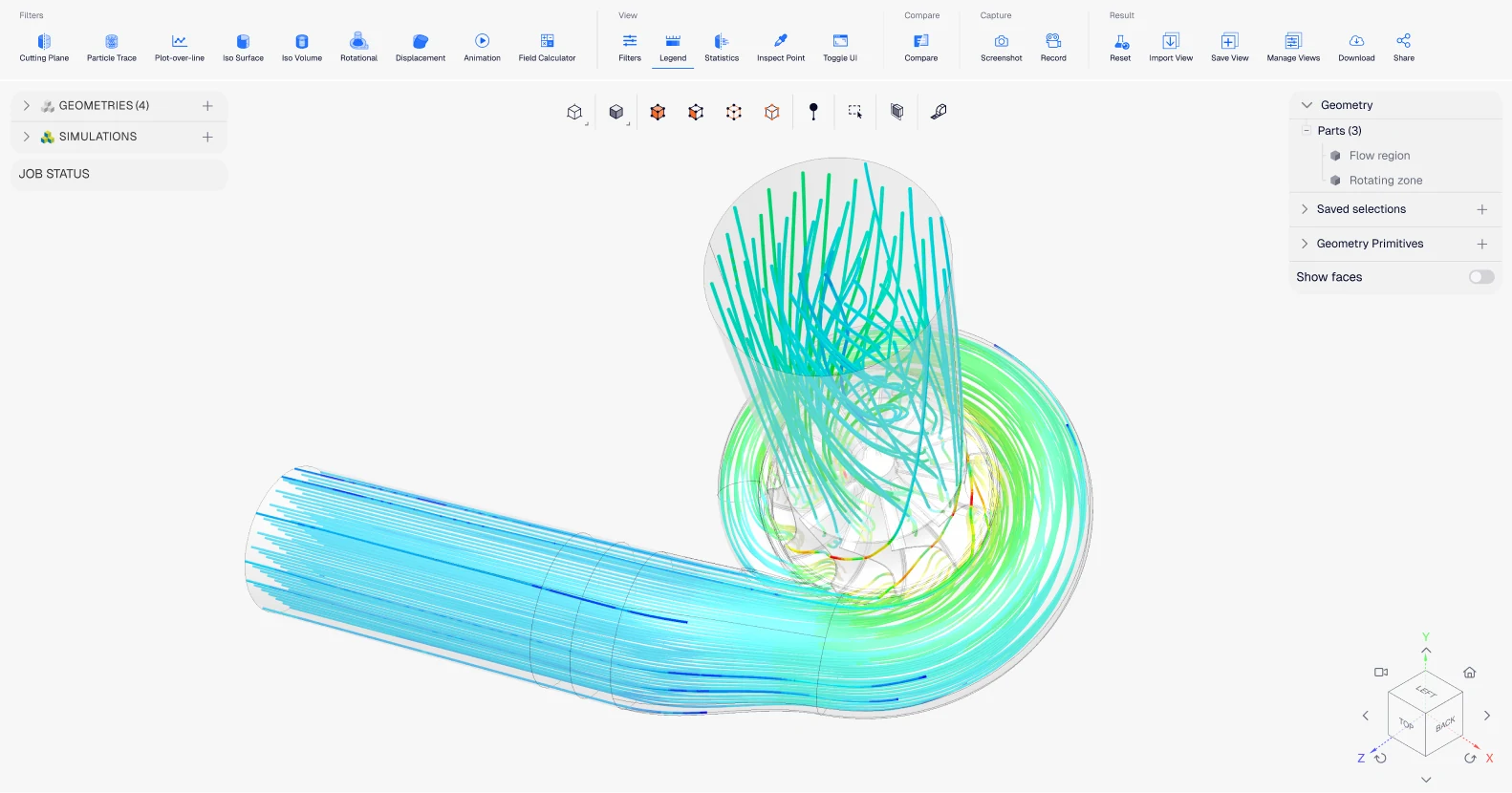












Physical testing of freezing and thawing systems is slow, expensive, and single-variable. SimScale runs coupled CFD, heat transfer, and structural FEA in the cloud — giving teams the design data they'd otherwise get from weeks of climate-chamber testing, in hours.
Freezing and thawing simulation that covers your full design challenge

Multiphysics: CFD, conjugate heat transfer, multiphase, and FEA in one freezing project
Freezing and thawing are inherently multi-physics problems — single-domain models miss the failure modes that matter. SimScale couples transient conjugate heat transfer, multiphase flow with phase change, joule heating, and structural FEA on the same geometry, so the engineer evaluates the real system — not four disconnected approximations — and sweeps design variants in parallel across the cloud.
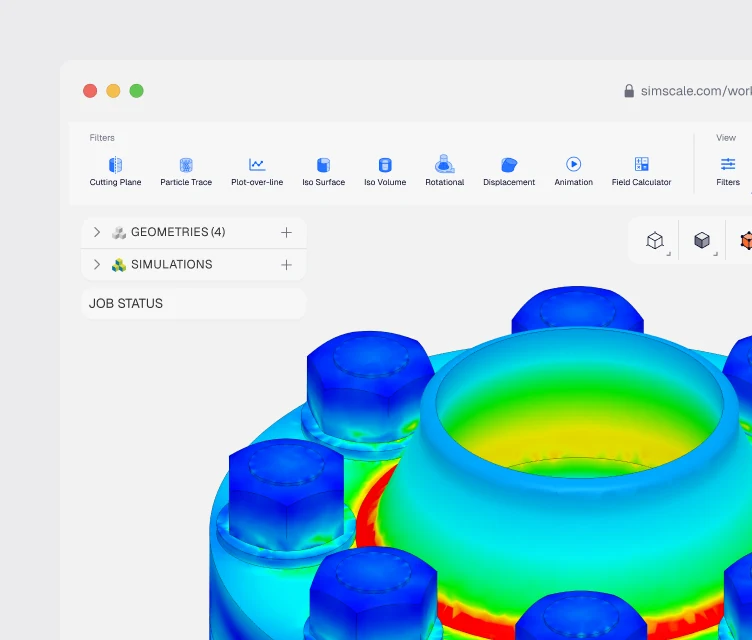
AI-native freezing and thawing design optimisation
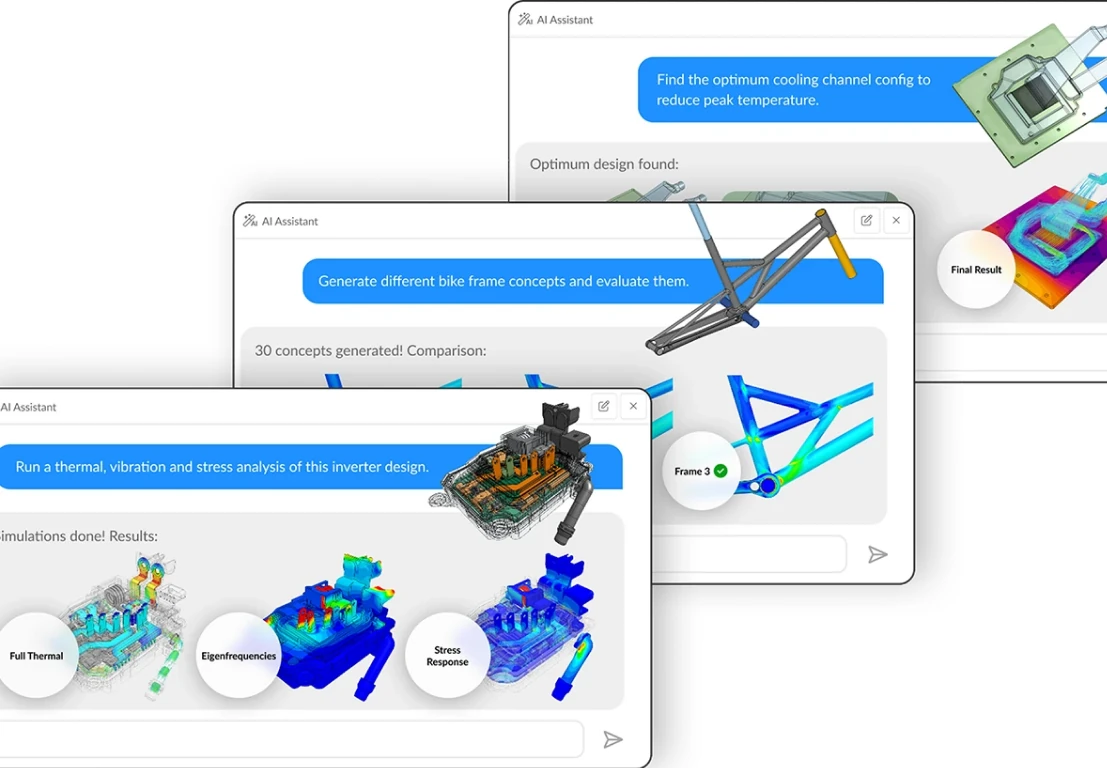
Physics AI delivers near-instant predictions on evaporator coil fin geometry, defrost cycle timing, phase-separator tank dimensions, and thermal packaging wall thickness. Sweep dozens of insulation, PCM melting point, fin pitch, and defrost duration variants in seconds, then promote the strongest candidates to full transient CFD before committing to tooling. Find the energy / weight / cost frontier without 200 manual runs.
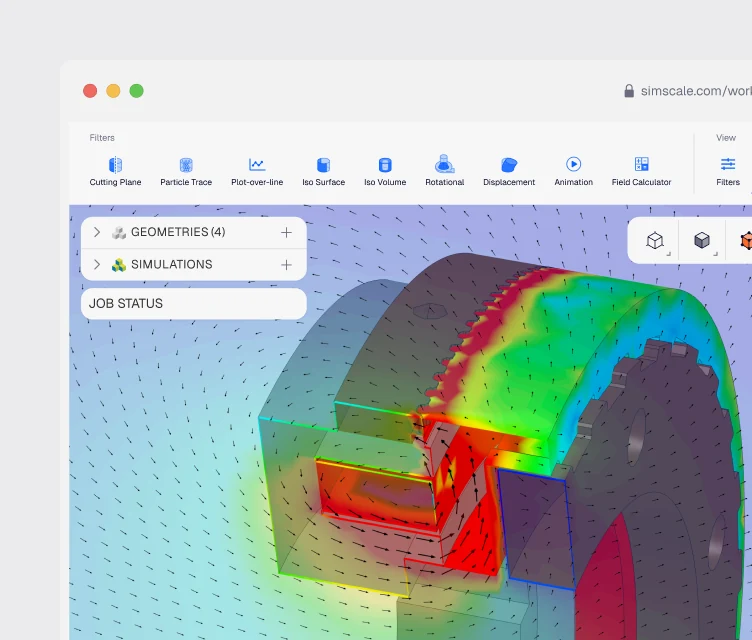
Parallel transient simulation in the cloud
Run multiple transient thermal analyses in parallel — summer and winter conditions, time-based and demand-based defrost, ice vs PCM cooling elements — with simulations executing in the cloud while the team works on other tasks. Replace climate-chamber test cycles that run 3-4 days with cloud simulation runs that complete in hours. No on-prem HPC, no VPN, no licence ceiling.
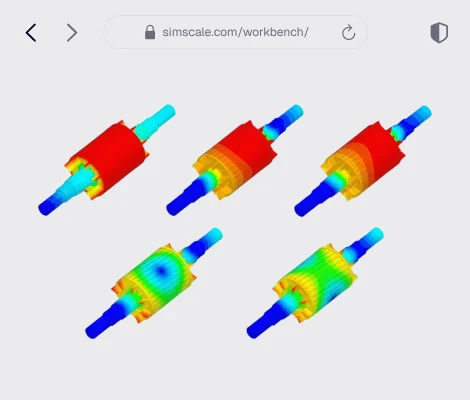
Frost-defrost cycle simulation on refrigeration evaporators
Predict frost build-up on evaporator coil fins, defrost cycle energy, and air-on coil temperature distribution under cycling load. Compare hot-gas, electric, and reverse-cycle defrost strategies on the same geometry, and validate time-based vs demand-based defrost triggering. Critical for walk-in freezers, blast freezers, and air-source heat pumps where defrost timing decides energy efficiency and product downtime.
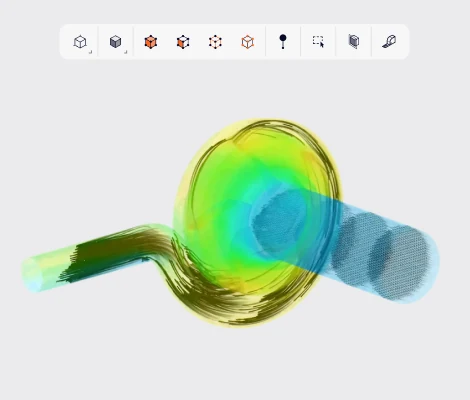
Cryogenic process equipment and phase-separator tanks
Simulate two-phase gas/liquid separation, cryogenic flow, and pressure drop in cryogenic plant equipment. Validate phase-separator tank performance, predict liquid purity, and cut multiphase simulation time from hours on legacy HPC to minutes in the cloud.
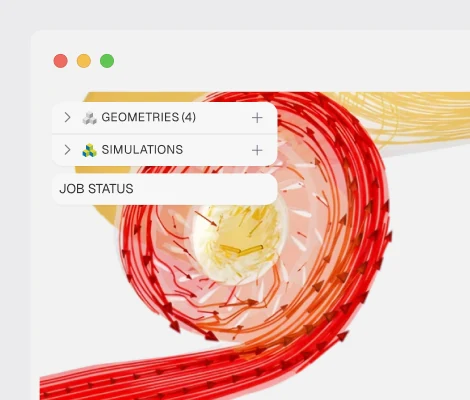
Controlled thawing for biopharma and cryopreservation
Simulate transient thaw curves for vaccines, cell therapy products, and biological samples. Model plate freezers, fluidised-bed freezers, and automated sample thawers. Predict cell-viability windows by validating that the thaw rate stays inside the protocol envelope at every point in the chamber. Critical for ADME / toxicology screening, cell-therapy manufacturing, and any lab where reproducible thaw decides assay outcome.

Multiphase simulation cut from 26 hours and 100+ core-hours on OpenFOAM to 8 minutes and 5 core-hours** on SimScale
CASE STUDY
“I'd been using Ansys Fluent for many years and am an experienced simulation user. SimScale is fast and easy to learn and very accurate when compared to legacy software tools. I found the cloud collaboration features very convenient and it let us do more simulation at the early stages of design which is something we never did before.”
Joseph Toubassy, Process Department Engineer, Cryo Pur (cryogenic plant for biogas-to-bio-LNG and liquid bio-CO2)
Thermal-bridge issue fully resolved** in whole-body cryo chamber
CASE STUDY
“Thanks to the dynamic and professional support of SimScale engineers, we were able to set up simulations in a fast way, without wasting time. The results of our analyses helped us increase the efficiency and safety level of our products, reduce total cost of prototyping and save time of R&D engineers who could now focus on other topics.”
CRYO Science engineering team, cryogenic chamber R&D (whole-body cryo chambers operating at -140 °C for medical, physiotherapy, sports, and beauty applications)
25 transient thermal simulations
on biodegradable cold-chain cooling boxes
“We serve a diverse set of clients across a wide range of climates. SimScale and simulation are essential to our work so that we can have the confidence that our solution will fit our clients' needs before we commit to tooling that could cost over 100 thousand euros.”
EUROpack A/S, engineering team (custom-built thermal packaging for food and pharmaceutical cold chain — including Corona vaccine, blood-sample, and tissue-sample packaging across European climates)
Related resources

Alex Graham
June 16, 2026
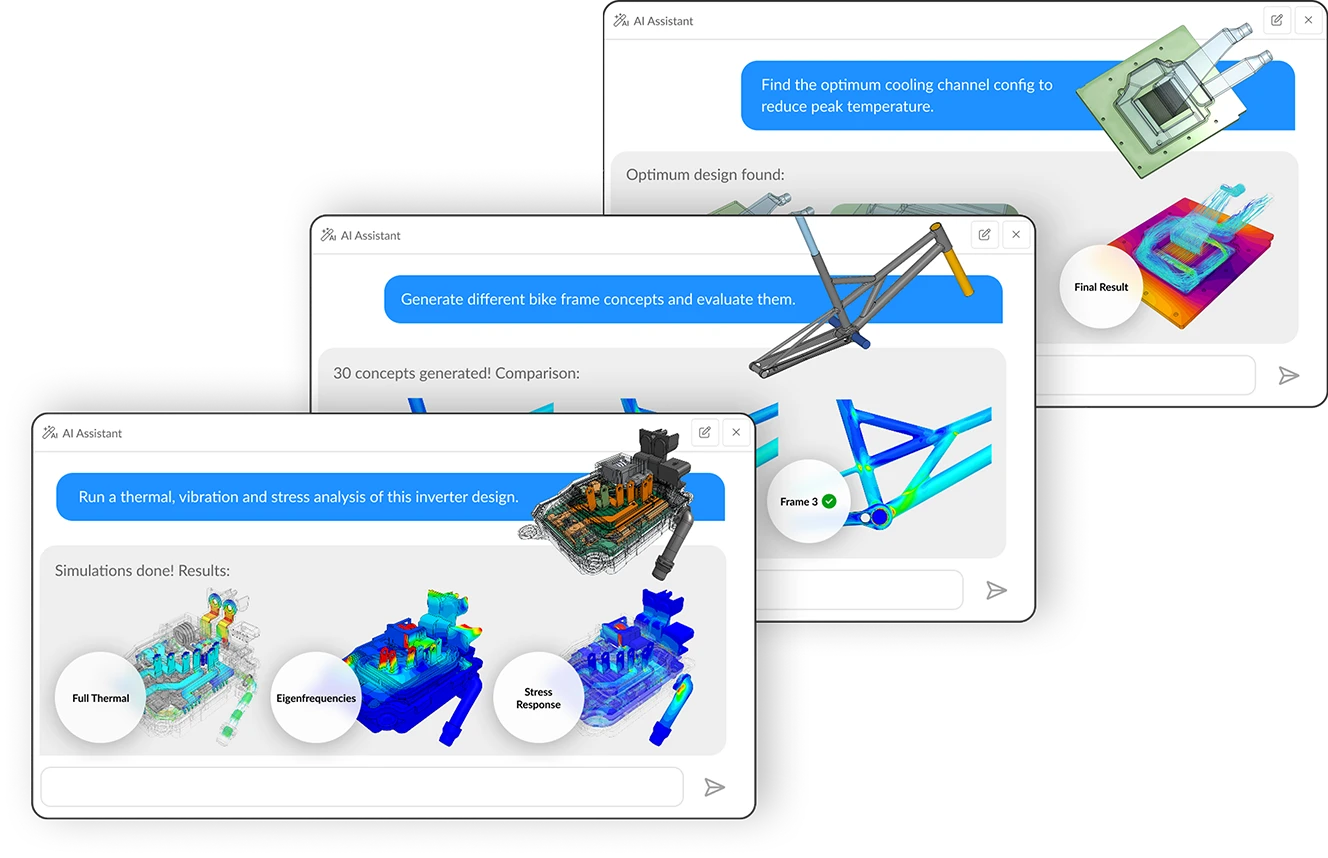
Multi-agent workflows: key takeaways from Design & Simulation Week 2026
SimScale and CoLab demonstrated live AI agent collaboration at Design & Simulation Week 2026, cutting engineering review and simulation lead times dramatically.
Alex Graham
June 12, 2026

SimScale Workflows: Why we are opening up the platform (& why you should care)
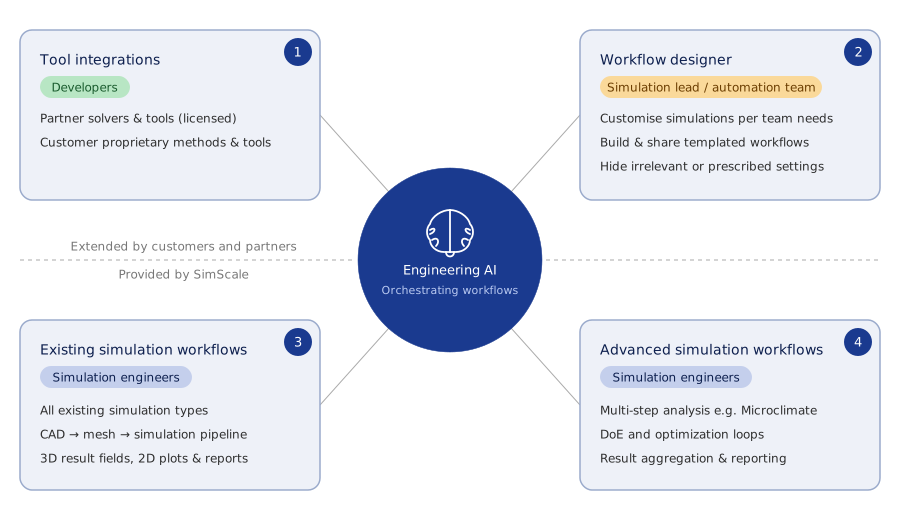
SimScale Workflows opens its platform to custom solvers and tools, enabling automated, AI-driven multi-step engineering simulation pipelines for any organization.
Alex Graham
May 29, 2026



Luis Goncaves
June 18, 2026
Luis Goncaves
January 27, 2026

Paras Ghumare
December 4, 2025


Jon Wilde
June 16, 2026


David Heiny
June 15, 2026
Jon Wilde
June 3, 2026

Peter Selmeczy
March 24, 2026

Peter Selmeczy
September 10, 2025
Peter Selmeczy
June 25, 2025
Peter Selmeczy
May 29, 2026
Industrial refrigeration evaporators with frost-defrost cycles, walk-in and blast freezers, plate freezers and IQF tunnels for food processing, cryogenic phase-separator tanks and bio-LNG plant equipment, biopharma controlled-thaw chambers and cryopreservation thawers, whole-body medical cryo chambers, freeze-dryers and lyophilisers, and cold-chain thermal packaging from cooling boxes to vaccine transport.
Freezing and thawing simulation predicts how heat moves into or out of a system as a material crosses a phase boundary — water to ice, gas to liquid, liquid to solid. It couples conduction (through chamber walls, insulation, fin material, packaging foam), convection (refrigerant flow, air circulation, vapour flow inside a freeze-dryer), and latent heat of phase change (the energy absorbed or released as ice melts or vapour condenses). Engineers use it to predict temperature distribution, freeze and thaw times, frost build-up, energy consumption, and — in biopharma — cell viability after a controlled thaw.
Yes. SimScale models frost build-up on evaporator coil fins as a transient conjugate heat transfer problem, then simulates the defrost cycle itself — whether triggered by time at fixed intervals or by demand based on the air-on coil approach temperature difference. Hot-gas defrost, electric-heater defrost, and reverse-cycle defrost can all be evaluated on the same geometry, with the simulator reporting defrost cycle energy, duration, and product-zone temperature swing during the cycle. The result is the data needed to decide cycle timing without running months of empirical walk-in freezer tests.
Controlled thawing is simulated as a transient conjugate heat transfer problem on the sample geometry — vial, bag, 96-well plate — coupled with the thawing system around it (water bath, dry automated thawer, plate-based platform). The simulation predicts the time-temperature curve at every point in the sample to validate that it stays inside the protocol envelope for cell viability. This matters for ADME / toxicology screening, cell-therapy manufacturing, vaccine handling, and any lab where reproducible thaw rate decides downstream assay reliability.
Yes. SimScale models the full transit cycle as a transient thermal simulation, evaluating cooling-element options (PCM vs water-based ice pack) across summer and winter ambient conditions and a range of wall thicknesses — replacing multi-day climate-chamber tests with cloud simulation runs that complete in hours. The physics can surface counter-intuitive results: PCM cooling elements can outperform ice packs for the 2-8 °C cold chain because the PCM melts at 4 °C and stays frozen until external heating begins, while ice packs melt continuously from the journey start.