
The Challenge
- The need for Ati Motors was to build a new chassis for the development of autonomous cargo vehicle.
- In order to cut down the time of building and manually testing a chassis, which in turn costs both time and money, Ati motors decided to go with CAE that was the most promising solution.
- Being a startup, the time spent should be cut short to select and find the right manufacturing process.
- The idea was to have an edge over the competition in terms of design portability and also the ease in understanding the flow of design.
- Each change requires going through the simulation to check to see if the constraints are being met.
The results
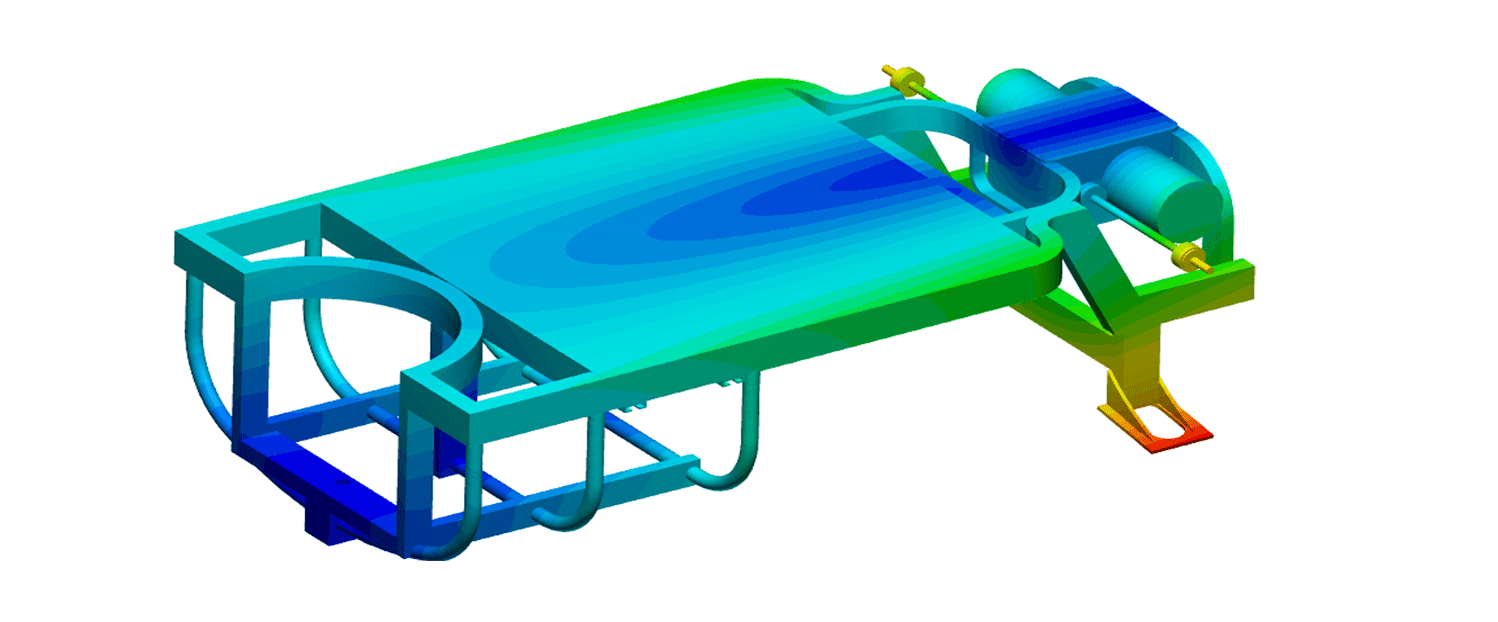
- The simulation results were visualized and the overall stresses and deflections were found out for different load cases.
- It was seen that the values were in expected ranges for all the load cases.
- Over 80 simulations were run for various case studies and iterations.
- The cloud platform made it possible to use SimScale and showcase the results on the go.
- These results henceforth provide us confidence in the design process.
About Ati Motors
Ati Motors is making an all-new autonomous cargo vehicle. The vehicle is inspired from the context in Bangalore but has a global applicability. The pilot and beta testing of the vehicle is complete and it can be seen here.
Minimizing Testing Time and Costs for New Chassis Design
The need for Ati Motors was to build a new chassis for the development of autonomous cargo vehicle. In order to cut down the time of building and manually testing a chassis, which in turn costs both time and money, Ati motors decided to go with CAE that was the most promising solution. Being a startup, the time spent should be cut short to select and find the right manufacturing process. The idea was to have an edge over the competition in terms of design portability and also the ease in understanding the flow of design.
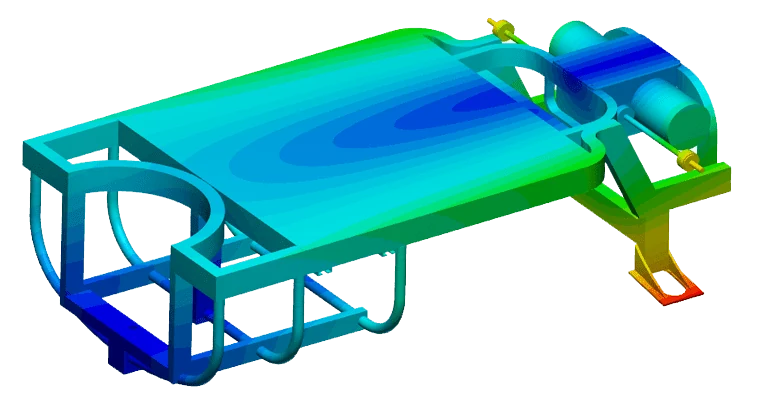
Hence Onshape and SimScale were used as CAD and simulation tools respectively. SimScale was targeted to be an iterative tool for the development process to understand the flaws in the design. Each change requires going through the simulation to check to see if the constraints are being met.
A CAE Solution with Compatibility, Flexibility, and Meshing Support
It was a viable choice to use SimScale rather than another tool in terms of cost and portability. The additional function of carrying out multiple simulations at the same without any hardware constraint was a welcomed feature. The geometry was imported from Onshape and a simple coarse mesh with local refinements formed the model mesh which had around 2.6 million elements and 9 million nodes. A static simulation was set up with multiple constraint and load conditions, which took around 15 to 20 minutes with 64 core machine. The main focus of the simulation was to find the torsional stiffness of the chassis. This was done by applying opposing load conditions as wheel reactions and studying the deflection.
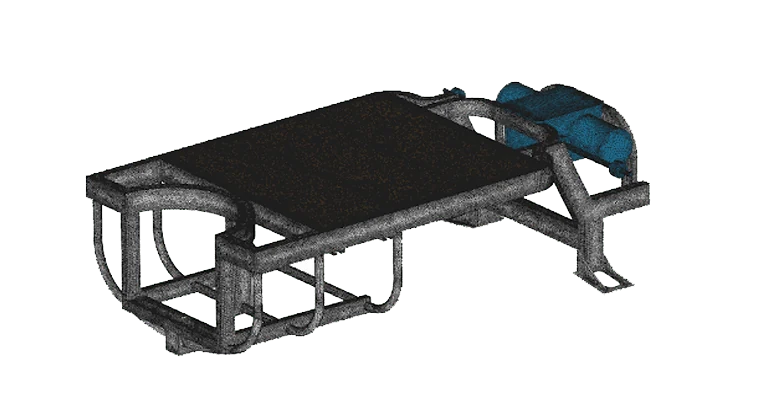
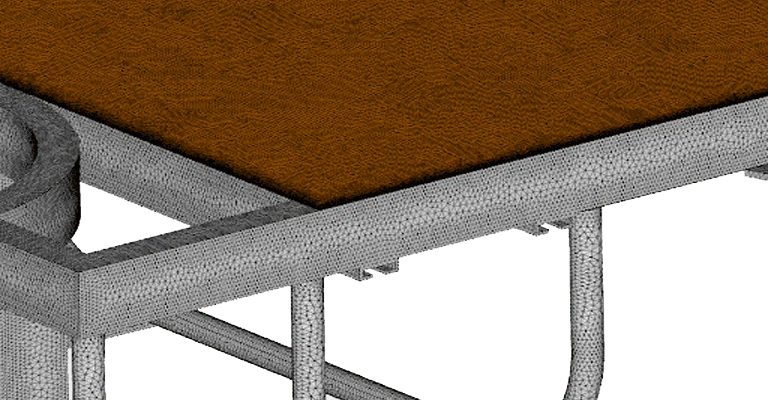
The greatest challenge in the initial stages was to do a convergence study. With the help of the SimScale team, ATI motors was able to understand how the mesh worked and the importance of proper mesh refinements. Towards the later stages, the concern was to bring down mesh elements for a faster study.
Simulating Stress and Deflection Helped Determine the Right Manufacturing Process
The simulation results were visualized and the overall stresses and deflections were found out for different load cases. It was seen that the values were in expected ranges for all the load cases. Over 80 simulations were run for various case studies and iterations. SimScale helped Ati motors understand and iterate on the design process, since it is easy to use with things like automatic meshing and interfacing. The community projects with a wide range of public projects and also the forum inputs from SimScale power users helped to troubleshoot issues with the project. The cloud platform made it possible to use SimScale and showcase the results on the go. These results henceforth provide us confidence in the design process.