
Simulating Vertical Farming: How IGS Uses Digital Twins to Drive Innovation

Three-week growth trials de-risked before physical testing

Validated CFD baseline enabling confident future design iteration
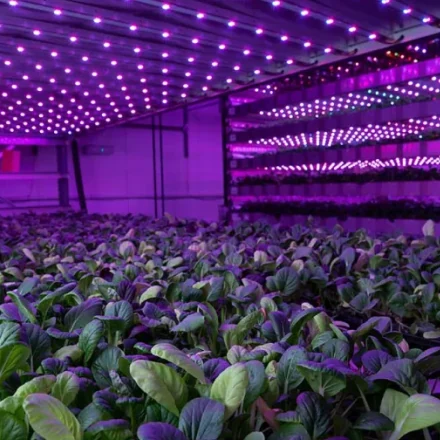
Founded in 2013 and headquartered in Dundee, Scotland, Intelligent Growth Solutions (IGS) is a multi-award-winning agritech company delivering vertical farming technology to growers around the world. Its flagship product, the IGS Growth Tower, provides a Total Controlled Environment Agriculture (TCEA) platform, giving operators complete control over lighting, temperature, humidity, and nutrient delivery to produce high-quality crops year-round, even in environments that would not typically support traditional growing methods. Growth Towers come in 9m and 12m variants and support a wide range of crops, from microgreens and herbs to tree seedlings and botanicals. IGS currently supplies technology to customers across Europe, the Middle East, North America, and Australasia, and holds a growing portfolio of patents covering its power, communications, and LED lighting systems.
At the heart of every Growth Tower is the Growth Tray with Lights (GTL): the growing platform that integrates LED lighting bars, HVAC-driven airflow, and nutrient delivery into a single, tightly engineered unit. Jill Macmillan is a Mechanical Design Engineer at IGS and the Sub-System Owner for the GTL. Her mandate spans the full product lifecycle, from concept and CAD design through FEA, CFD analysis, prototyping, and production rollout, and her work directly shapes the thermal and airflow performance that determines crop quality for IGS customers worldwide.
The engineering demands of the GTL require more than intuition. The unit channels airflow from the tower’s HVAC system through its internal geometry, directing it past multiple heat-generating LED bars and out onto the crops below. Because thermal and airflow behaviour emerges from the interaction of all these components simultaneously, predicting how layout decisions will affect overall performance is not straightforward. The consequences of getting it wrong extend beyond engineering to crop quality and customer yield.
What IGS needed was a CFD simulation platform capable of Conjugate Heat Transfer analysis, one that integrated cleanly with its PTC Creo CAD workflow and could produce results quickly enough to support a small team under constant delivery pressure. SimScale’s cloud-native platform met each of those requirements. The browser-based interface meant Jill could begin running simulations without specialist infrastructure or a steep learning curve. Direct CAD import from PTC Creo eliminated file reformatting overhead. And when questions arose during setup, SimScale’s support team resolved them quickly. Critically for a small engineering team, the cloud-native architecture also means multiple design iterations can be run in parallel without on-premise hardware, giving IGS the simulation capacity of a much larger organisation without the infrastructure investment to match.

“The platform’s seamless ability to import and work with CAD models created in PTC Creo also streamlined our workflow, eliminating the need for extensive reformatting or adjustments. Additionally, the responsive technical support provided by SimScale ensured that any challenges encountered could be resolved efficiently, helping maintain productivity throughout the project.”
Jill Macmillan
Mechanical Design Engineer, IGS
For a team where every engineer wears multiple hats, the ability to deliver reliable, accurate results in a short timeframe was critical.
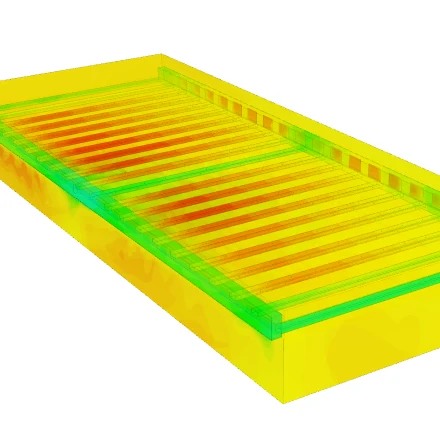
The GTL integrates multiple electrical components while channeling HVAC airflow through its internal geometry and past the LED bars. Because each bar generates heat and the flow path is shaped by the surrounding structure, the distribution of hotter and cooler zones across the unit is difficult to predict analytically. The objective was to use SimScale to generate accurate temperature and airflow mappings of the GTL virtually, then validate those results by performing physical tests. Using this ‘blind benchmarking’ approach, IGS aimed to establish a trusted digital baseline from which future design iterations could be developed with confidence.
Jill used SimScale’s Conjugate Heat Transfer (CHT) solver, the analysis type best suited to capturing the simultaneous interaction of heat transfer through both solid components and the fluid domain. Simplified CAD models built in PTC Creo were imported directly into SimScale, with minor geometry adjustments made to optimize them for simulation. Real operational data provided the boundary conditions. As Jill notes, “the speed and accuracy with which these simulations predicted real-world behaviour enabled us to confidently baseline our existing design.”
The simulation produced results with an extremely close likeness to IGS’s physical test data, close enough to confirm the model accurately representing the real thermal and airflow behaviour of the GTL. In vertical farming, growing conditions must be controlled with precision, and the simulation results feed directly into how IGS optimizes temperature control strategies across both the GTL and the wider Growth Tower, with tangible consequences for crop quality and customer yield.
The validated baseline now serves as IGS’s reference point for all future GTL development. New design iterations can be assessed against it virtually before any physical prototype is built. “This gave us the confidence that the simulation model would provide us with trustworthy results for future developments using the CFD model,” Jill explains, “minimising time-consuming and costly physical trials.”
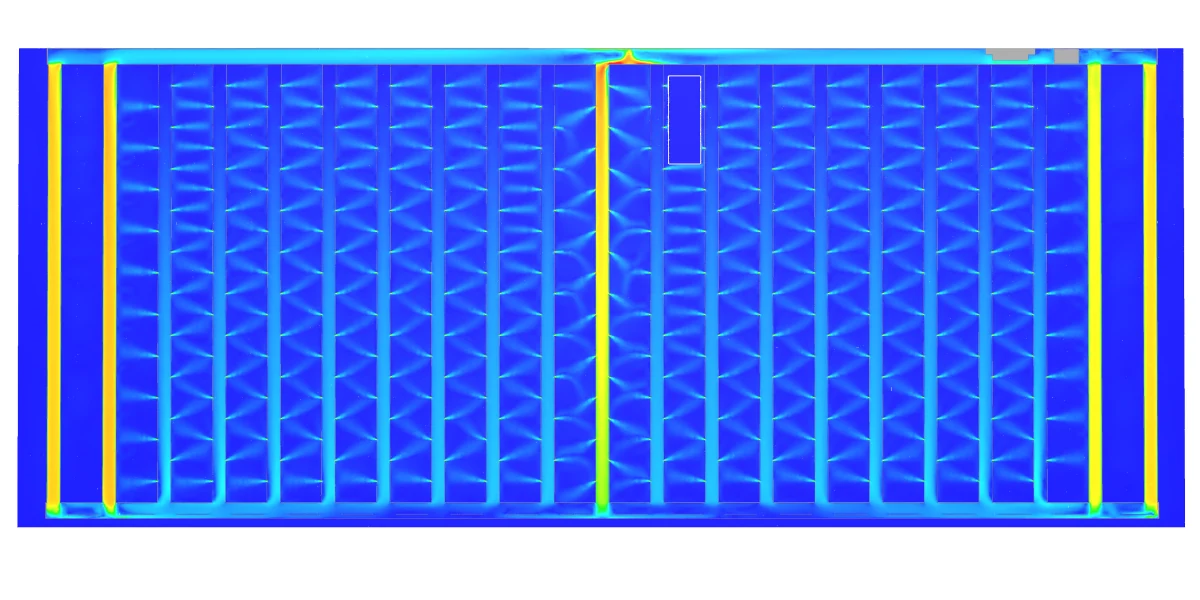
Physical testing of vertical farming systems is a necessarily lengthy process: every physical design change must be validated not just mechanically, but biologically. A growth trial of roughly three weeks must be completed and replicated before any change can be released into production, ensuring both people and plants are satisfied with the results. Simulation does not replace that process, but it changes where effort is spent. By validating design changes virtually first, the team arrives at physical testing with much greater confidence, reducing the number of rounds required.
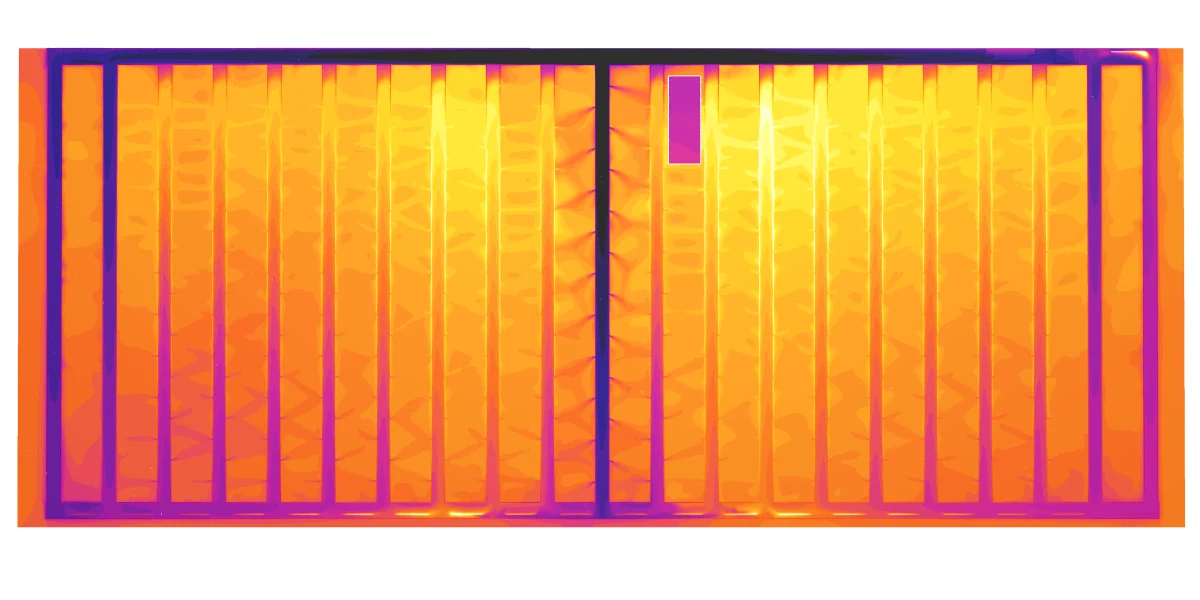
Jill also finds simulation results are a powerful means of communicating engineering outcomes internally. “SimScale’s interactive visualisation tools make complex thermal and airflow data accessible to stakeholders beyond the engineering team, making it so much easier to explain findings. It means we can make faster, better-informed decisions across the business,” she explains.
“Being able to explore many more design concepts virtually, before committing to a single physical trial, is a game-changing capability for us. It means we’re not just moving faster; we’re thinking bigger, and that’s what drives operational excellence in vertical farming.”
Jill Macmillan
Mechanical Design Engineer, IGS
Furthermore, insights gained from the GTL simulation have proved useful beyond component-level optimization. The deeper understanding of heat transfer and airflow behaviour has allowed the team to adapt temperature control strategies across the wider Growth Tower too, with direct implications for crop quality and yield across IGS’s customer base.
The IGS story is a clear illustration of what it means to build a validated simulation foundation rather than using CFD as a one-off analysis tool. By establishing a digital baseline that closely mirrors physical test results, the engineering team has shifted from reactive testing to proactive, simulation-driven design. That shift carries particular weight in vertical farming, where a single design iteration can take weeks to validate through agronomy as well as engineering.
The implications extend beyond the GTL itself. A reliable CFD model of the growing platform means IGS can now explore changes to component layout, airflow geometry, and thermal management strategy earlier in the development cycle, with confidence in the results before any hardware is committed. For a small team responsible for a product deployed commercially across multiple countries, that capability directly supports the culture of continuous improvement at the core of how IGS operates.
Looking ahead, Jill and the team plan to continue using SimScale as the GTL evolves through future iterations. SimScale’s FEA capabilities already support other areas of their design work, and the team intends to expand that use further, consolidating more of the structural and mechanical validation process into the same cloud-native platform alongside their CFD work. At IGS, the question is no longer whether to simulate. It’s where to apply it next.
“Looking ahead, we plan to continue using SimScale to support the development of future iterations of our GTL, enabling us to push the boundaries of what is possible in vertical farming.”
Jill Macmillan
Mechanical Design Engineer, IGS
Set up your own cloud-native simulation via the web in minutes by creating an account on the SimScale platform. No installation, special hardware, or credit card is required.

Subscribe to our newsletter
By subscribing you agree to with our Privacy Policy
Product
Solutions
Resources
Sign up for SimScale
and start simulating now