Physics AI
Explore thousands of design points in seconds
Physics AI predicts real physical behavior in seconds using models trained on high-fidelity simulation data. Run thousands of design variants instantly, optimize in real time, and turn your engineering data into reusable AI capability.
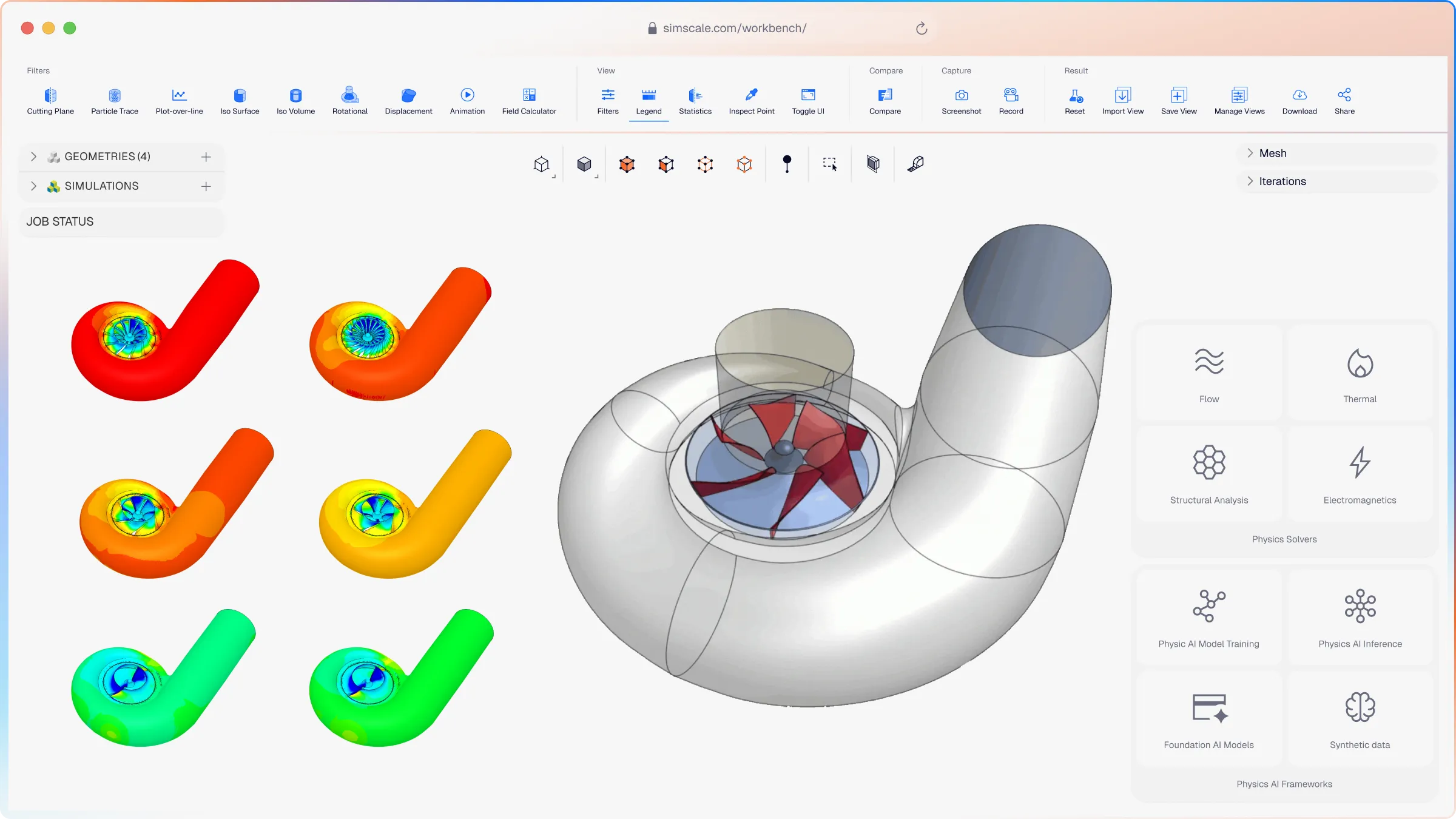












Speed without compromise
Instant design exploration grounded in validated physics, with the full solver always one click away.
Instant prediction. Grounded in physics.
Physics AI models learn from large volumes of high-fidelity simulation data to predict physical behavior in seconds. Engineers can evaluate design performance instantly without waiting for full simulation runs. Results remain grounded in validated physics models, enabling engineering speed without sacrificing credibility.
Turn past engineering data into future decisions
SimScale's cloud-native architecture turns every simulation run into a potential model training asset, building a proprietary IP dataset that fuels your AI strategy and gets smarter with every project. Engineering teams move from running isolated simulations to building reusable prediction capabilities.
Hybrid AI models with engineering confidence
Physics AI doesn't replace numerical solvers. It works alongside them. Explore variants instantly with AI predictions, then validate final candidates using full-fidelity CFD, FEA, thermal, or multi-physics solvers — all on the same platform. This hybrid approach delivers the speed of AI with the rigor of physics-based simulation.
When simulation feedback takes hours, innovation slows and competitive advantage slips. Physics AI delivers instant physics insight so engineers can optimize faster.
How it works
From simulation data to instant prediction, in four steps
Physics AI models are trained on high-fidelity simulation data, then deployed for instant inference — all within the same platform you use to run your simulations.
Generate data at scale
Reliable AI models require high-fidelity data to accurately capture the design space. With SimScale, engineers can leverage existing historical simulation data or generate new datasets using cloud-native solvers. By running hundreds of design variants in parallel, teams can rapidly build the large, structured datasets needed for robust model training that faithfully represent the underlying physics of the system.
Train Physics AI models
Physics AI models learn the relationships between design parameters and physical performance from high-fidelity simulation results. Leverage data from your simulation projects on SimScale to train models that capture complex multi-physics behavior. These models can instantly predict performance across thousands of new design variations, enabling engineers to explore large design spaces far faster than traditional simulation.
Hybrid AI–physics architecture
SimScale uniquely integrates traditional simulation and Physics AI side-by-side within a single unified platform. Because both analysis types use the same configuration and setup process, you can switch between them effortlessly. This allows your team to use Physics AI for near-instant design exploration and then instantly run a high-fidelity CFD or FEA simulation to validate your final design candidates.
Instant inference
Run inferences across your entire engineering ecosystem — interactively in your browser, through integrated CAD software, or via fully autonomous optimization cycles. Whether you are using the SimScale UI or orchestrating work through autonomous AI agents and APIs, every model is versioned, monitored, and published within SimScale's enterprise-grade simulation process and data management (SPDM) solution.
Built on industry-leading AI frameworks
Built on proven AI frameworks and accelerated computing, Physics AI models are trained on simulation data and grounded in physics — delivering reliable, engineering-grade predictions.



<1 hour
To explore thousands of design variants
“We now have an AI model that can generate a new optimized design in under an hour, and I have complete confidence in the results.”


seconds
To obtain reliable CFD parameters (lift, drag, speed) for vehicle aerodynamics
"By using cloud-native CFD in SimScale, the project resulted in savings of 45% compared to using traditional desktop software"


99.9%
reduction in simulation time
"SimScale drastically changed our R&D landscape regarding time, cost and simulation accuracy. It allows us to complete development cycles within days instead of months"

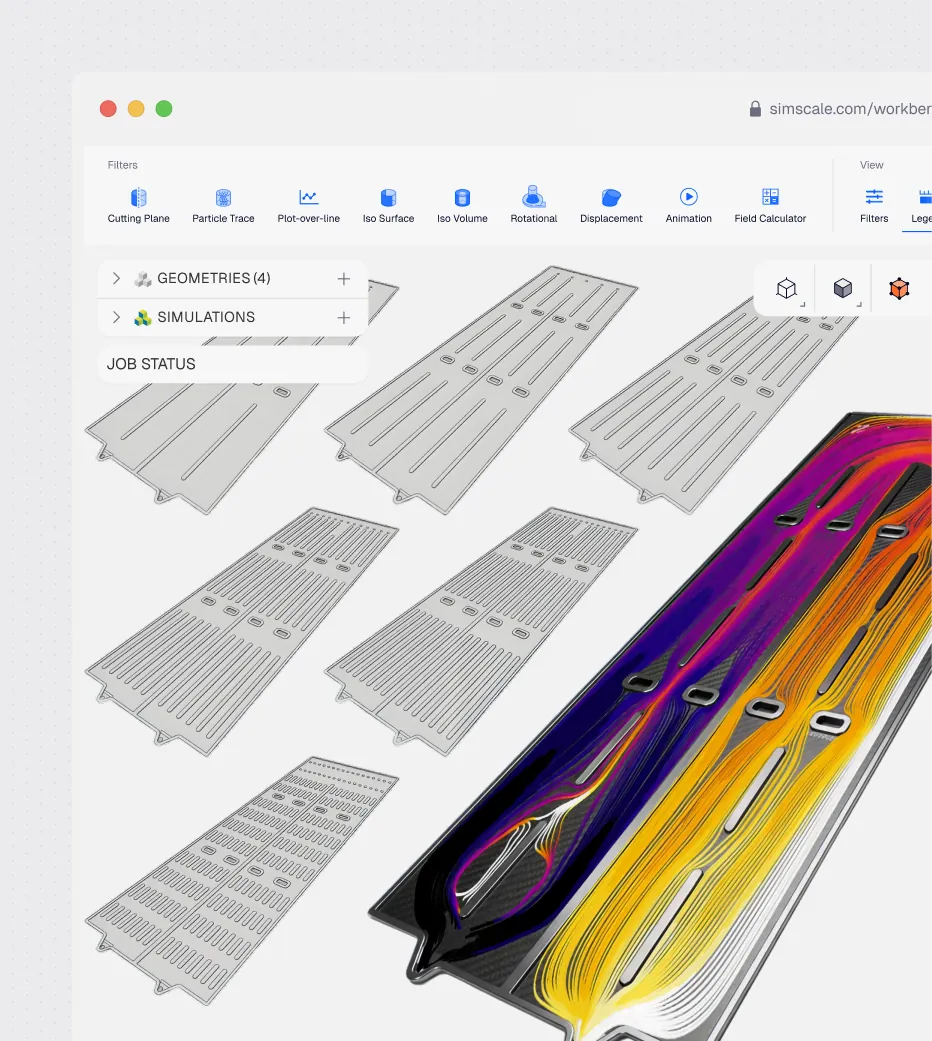
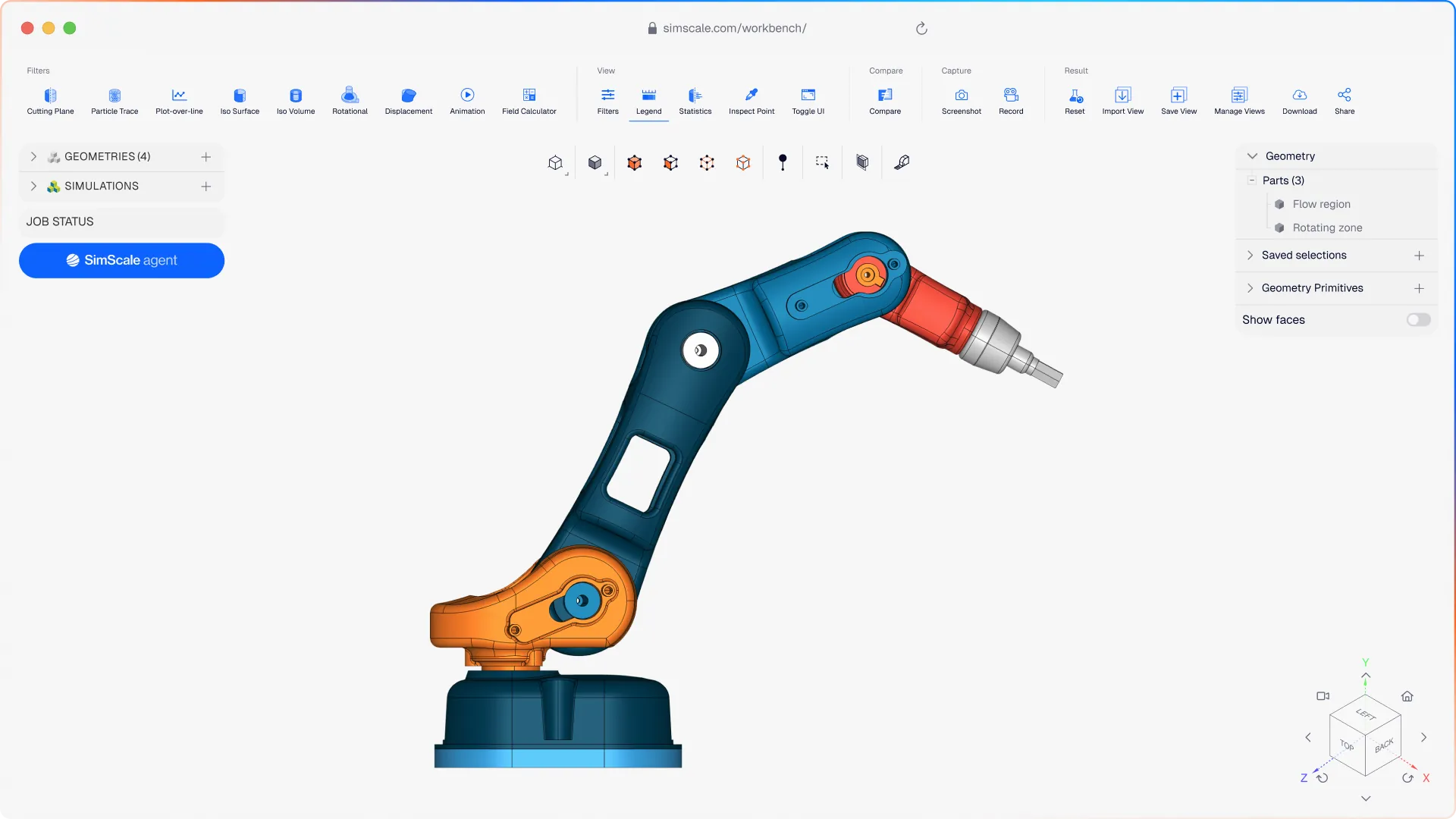
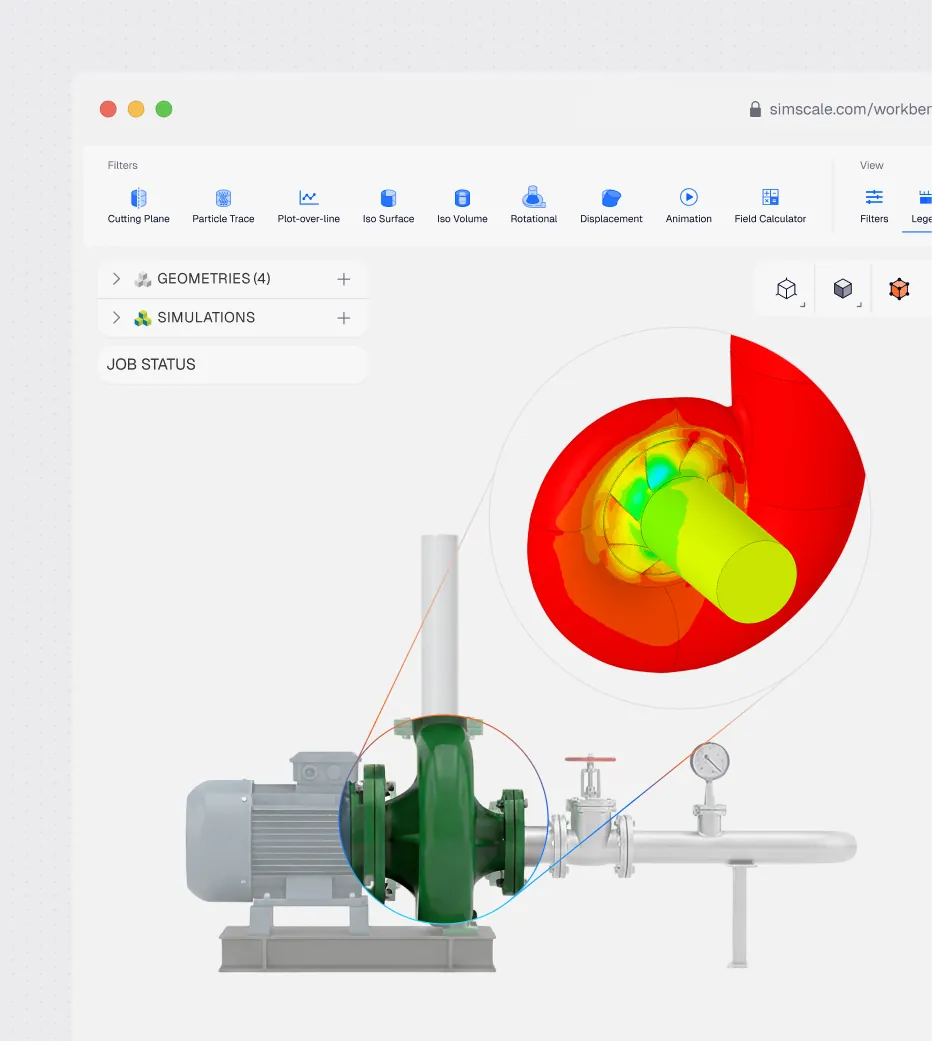
Where Physics AI delivers engineering innovation
Apply Physics AI to accelerate design exploration, reduce simulation turnaround time, and enable faster, data-driven engineering decisions across key applications.
By enabling engineers to explore thousands of virtual design options instantly, Physics AI eliminates the "wait-and-test" bottlenecks that often delay product launches. Instead, teams can rapidly iterate through diverse design candidates and support portfolio diversification without increasing overheads. Engineering teams move faster from concept to launch.
Physics AI delivers instant performance predictions across multiple design configurations, letting engineers validate feasibility and build physics-backed proposals in hours rather than days. Teams respond to more RFQs with greater confidence — increasing win rates and protecting margins without expanding engineering capacity.
Physics AI eliminates the trade-off between simulation accuracy and real-time speed. Trained on high-fidelity simulation data, Physics AI models respond to live operational inputs instantly — giving engineering and operations teams continuous, physics-grounded intelligence to optimize performance and catch problems before they occur.
Learn moreRelated resources

SimScale Workflows: Why we are opening up the platform (& why you should care)
SimScale Workflows opens its platform to custom solvers and tools, enabling automated, AI-driven multi-step engineering simulation pipelines for any organization.

Alex Graham
May 29, 2026

How Agentic Engineering is Reshaping Simulation-Driven Product Design — Key Takeaways
Agentic AI is transforming hardware engineering by combining Physics AI for fast simulation predictions with Engineering AI orchestration, compressing months of design optimization into minutes.
Alex Graham
May 18, 2026


Peter Selmeczy
March 30, 2026



Luis Goncaves
June 18, 2026
Luis Goncaves
January 27, 2026

Paras Ghumare
December 4, 2025


Jon Wilde
June 16, 2026

David Heiny
June 15, 2026
Jon Wilde
June 3, 2026
Peter Selmeczy
March 24, 2026
Peter Selmeczy
September 10, 2025
Peter Selmeczy
June 25, 2025
Peter Selmeczy
May 29, 2026
Explore our core technologies
Physics AI works alongside Engineering AI and cloud-native simulation — three technologies, one integrated platform.
Cloud-Native Simulation
SimScale puts powerful multiphysics simulation in every engineer's hands via an easy, instantly accessible web interface. Teams can explore, test, and share designs without friction.
Engineering AI
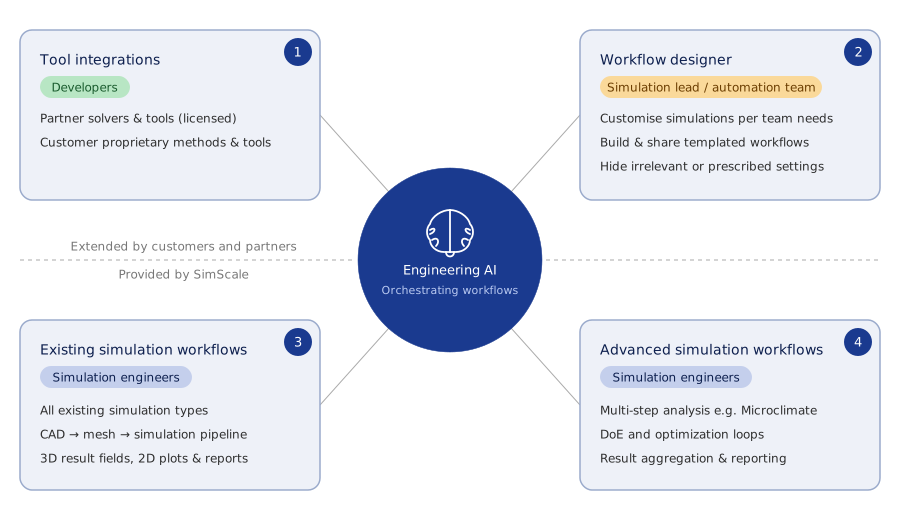
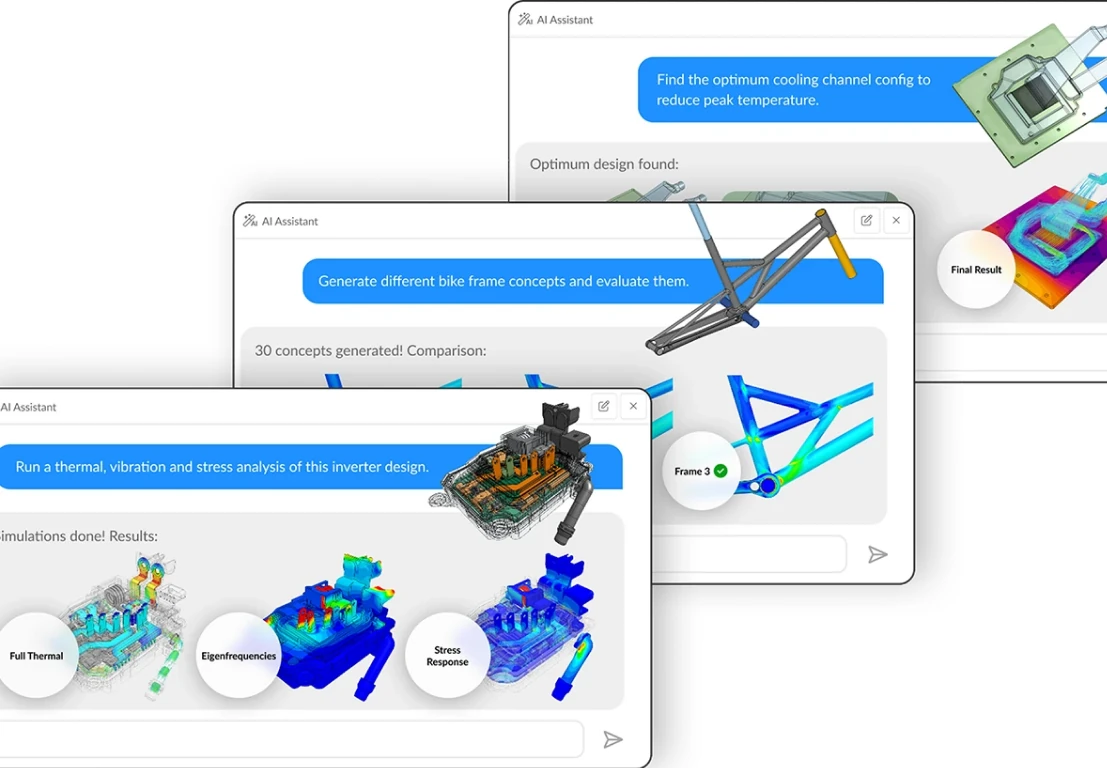
Engineering AI orchestrates the simulation process from intent to design, seamlessly managing complex workflows so teams can explore further, iterate faster, and build higher-performing products.
Time is no longer the enemy. It’s your advantage.
Explore Physics AI with SimScale.