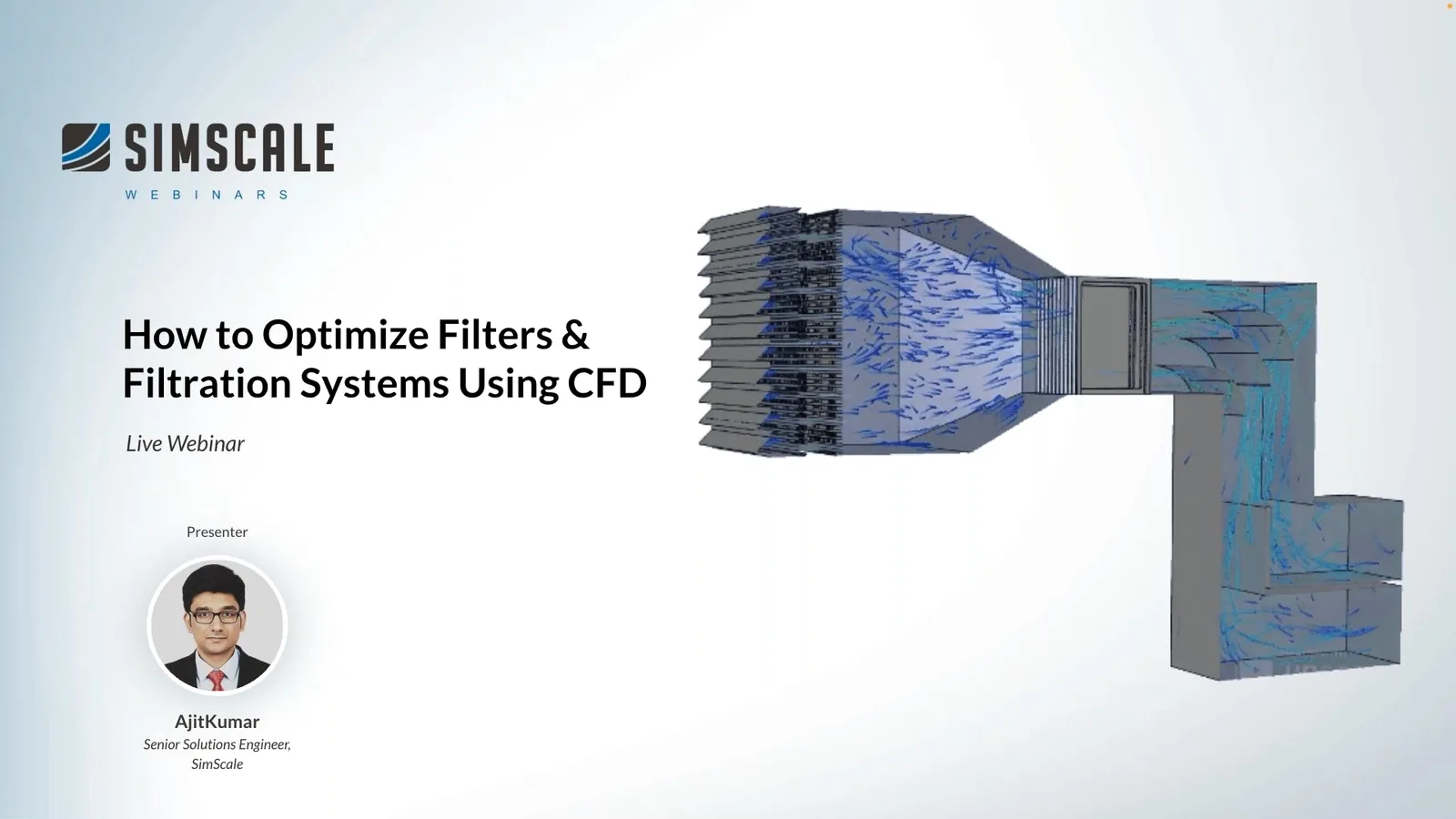

Filters range in size and shape from microfilters used in air handling units (AHUs) all the way to large-scale industrial high-pressure filtration systems used in water and wastewater treatment. Designing filtration systems is a challenge due to their geometric complexity, flow behavior, and increasingly complex compliance codes and standards often found in air quality and water treatment industries.
Recent advances have used coatings to improve the filtering and mechanical properties of filter media for the treatment of air (in particular in the development of antiviral, antibacterial filters and, above all, antiviral properties capable of destroying Coronavirus.) At the utility scale, filtration systems have complex components that work together to make a complete unit and the flow and pressure across all individual components must be optimized. CFD simulations are vital to understanding these complex flow patterns and in designing filters that lead to overall optimized system performance.
Watch this webinar and learn how to:
- Import and set up CFD simulations in SimScale using a variety of CAD models for different filter types.
- Define boundary conditions to accurately model pressure-flow characteristics based on manufacturers’ data.
- Run parallel simulations to compare different filter sizes and shapes efficiently.
- Post-process results to visualize flow behavior and quantify pressure losses through the filters.