R&D Cost Reduction
Cut R&D costs by testing designs before you build them
Replace expensive prototype-and-test loops with simulation. SimScale combines Engineering AI and Physics AI to explore thousands of design decisions in seconds, so your team finds the optimum design early, before committing to tooling, materials, and physical rigs.
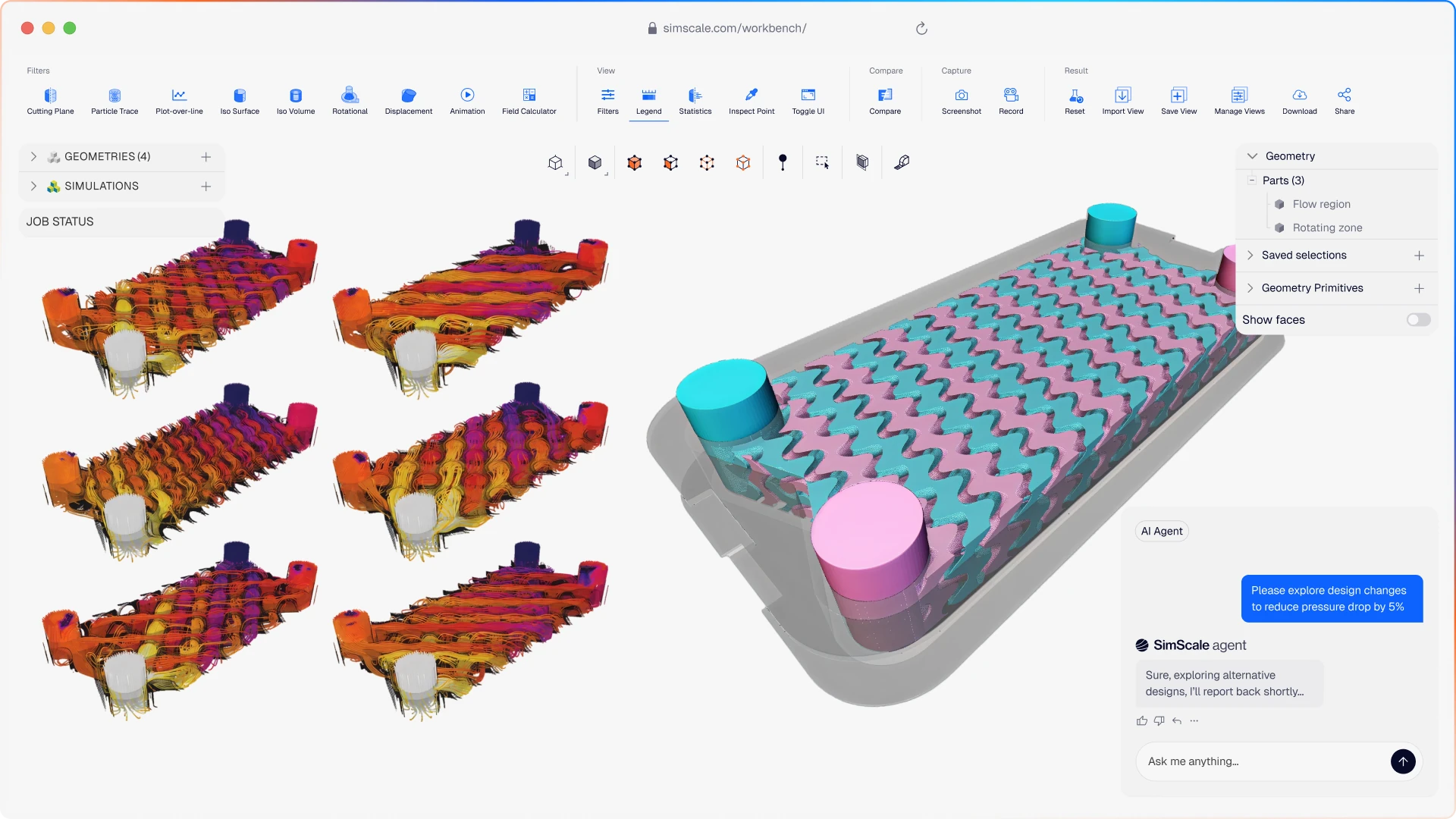












Every physical prototype, test rig, and late-stage redesign adds cost. Most of it is spent proving out designs that simulation could have ruled in or out for a fraction of the price.
Build fewer prototypes
Catch design problems on screen instead of on the bench. Teams using SimScale to validate before building report cutting physical prototypes by half or more, removing the largest line item in most R&D budgets.
Replace lab and field testing
Run the test campaign virtually. Simulate thermal, structural, flow, and electromagnetic behavior under real operating conditions, so physical testing confirms a design rather than discovering its flaws.
Cut material and tooling spend
Find the design that hits the target with less material. OnLogic trimmed $3 of material per unit across thousands of units by sizing cooling features in simulation first.
Avoid late-stage rework
Late redesigns are the most expensive ones. Validate early in the design cycle and you stop carrying flawed concepts into tooling, certification, and production where changes cost the most.
Get more iterations from the same budget
The cloud charges by the simulation, not the seat or the server. Run a 900-variant design study for a few hundred dollars instead of buying HPC hardware and licenses you use in bursts.
Free up specialist engineering time
Engineering AI automates setup and repetitive runs, so your most expensive engineers spend their hours on judgment, not pre-processing. Capacity goes up without adding headcount.

$3
saved per unit across thousands of units shipped
“SimScale let OnLogic size cooling features to within ~95% of physical test results, saving material on every system.”


Months to hours
to reach an optimized design
“We now have an AI model that can generate a new optimized design in under an hour, and I have complete confidence in the results.”


10% less material
on a high-volume molded part
“The real transformation comes from the reusability of the model. I can share it across the team and we can re-optimize the design as many times as we need to as we encounter new challenges and conditions.”

From design intent to the optimum design, at lowest cost
Engineering AI and Physics AI work together to automate design space exploration, prove out performance, and cut the physical work that drives R&D spend.
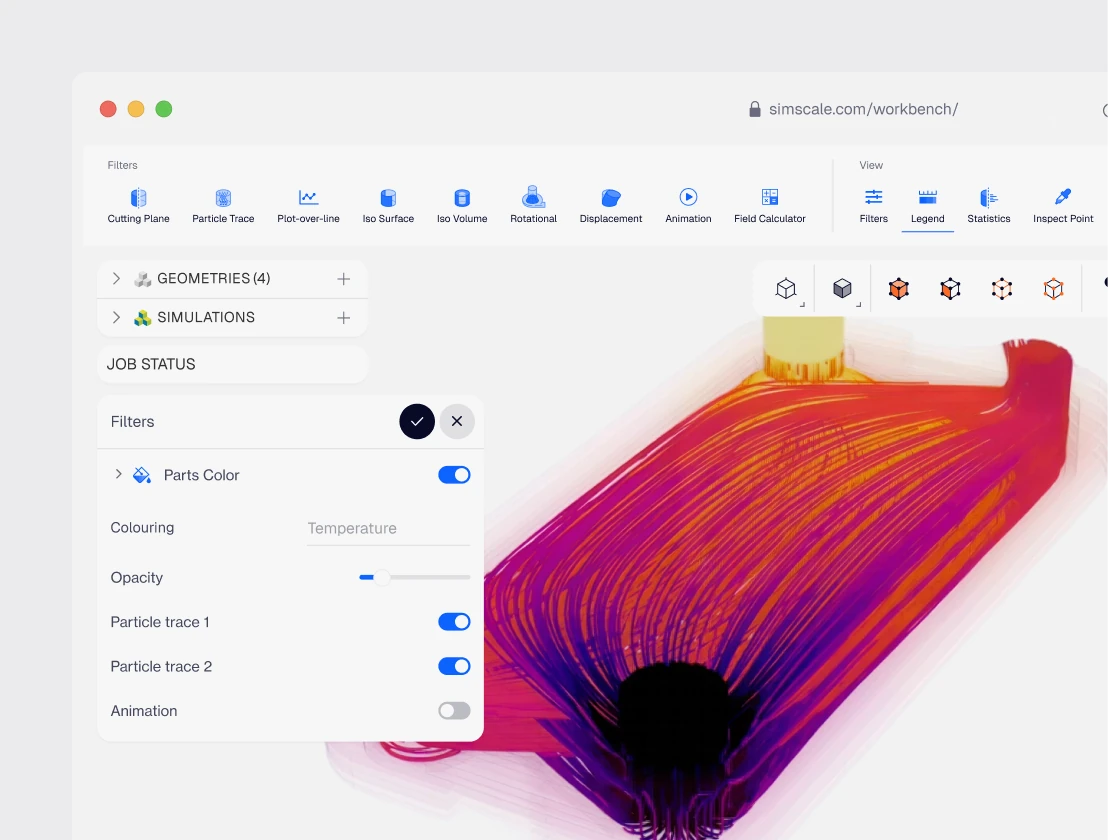
Virtual prototyping
Replace costly and time-consuming physical prototypes with rapid virtual testing in the cloud. Explore and validate dozens of design iterations in the time it would take to build a single physical model, drastically reducing material and lab costs and quickly bringing the most promising design options into focus
Material and cost optimization
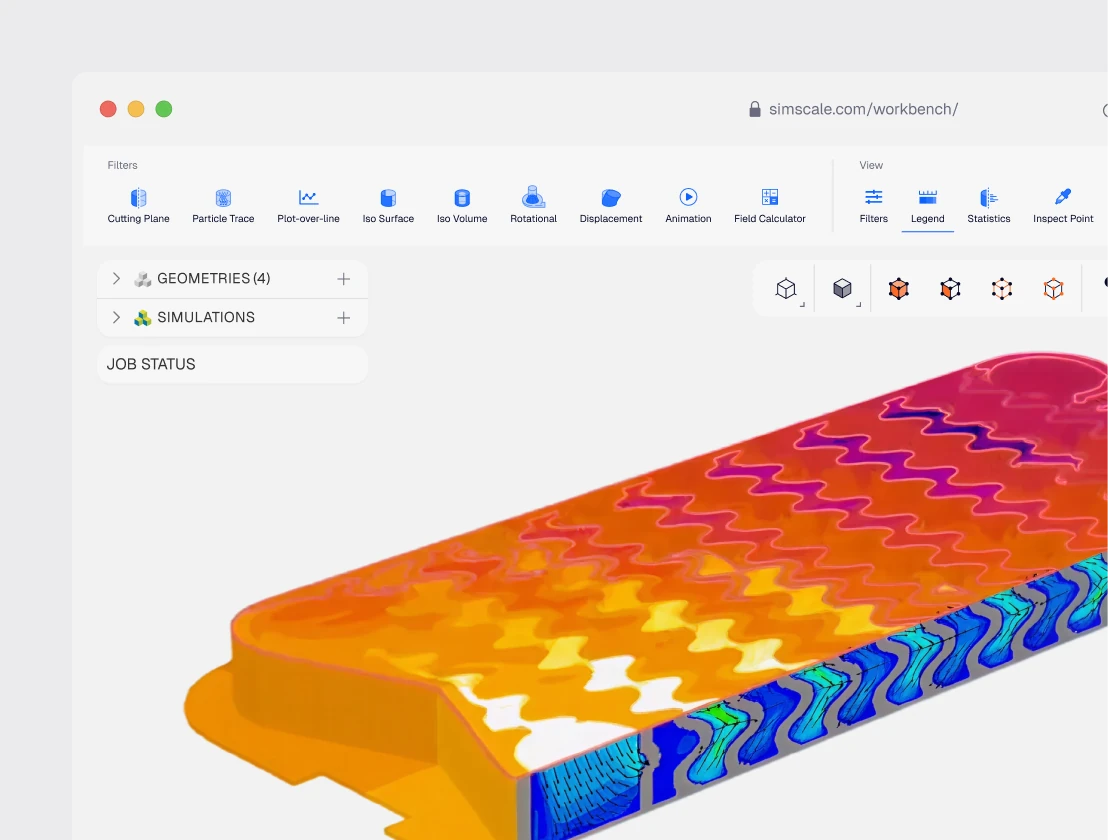
Leverage Physics AI to run automated studies that identify the most cost-effective designs and materials without sacrificing performance or safety. Balance weight, strength, and cost to find the optimal choice for your design and budget
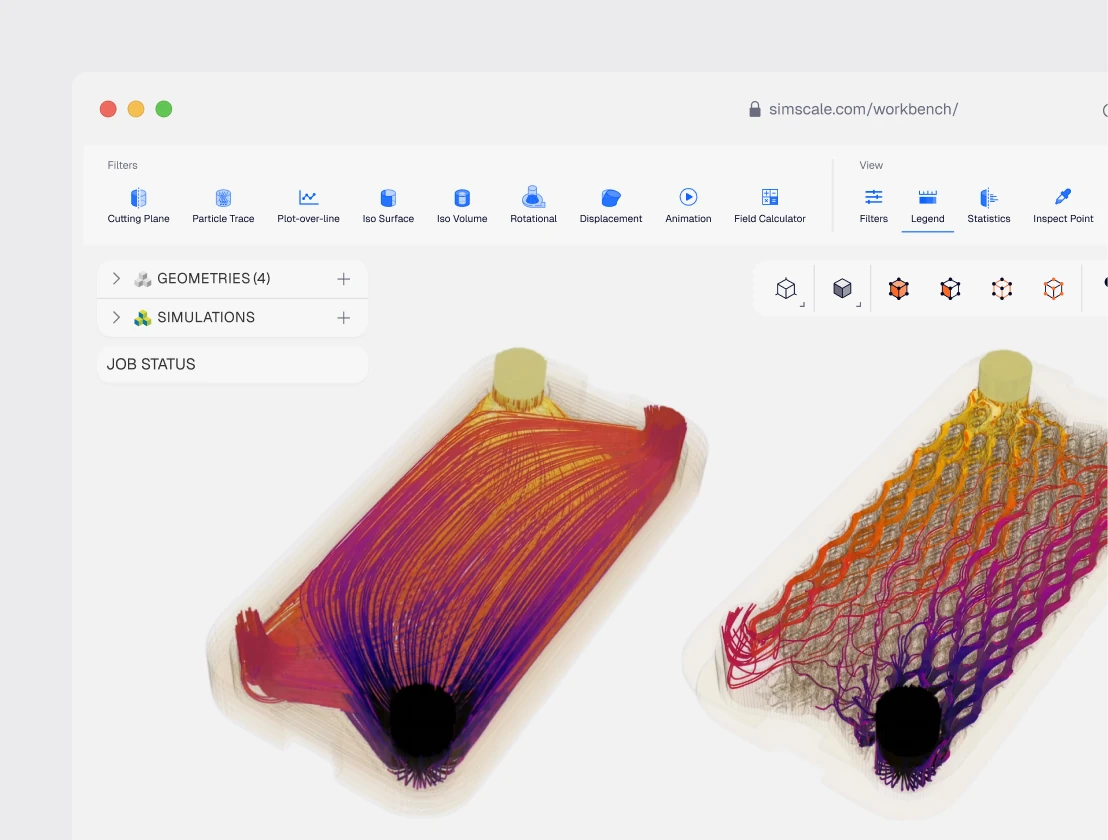
Performance verification
Identify and resolve potential product failures before committing to expensive tooling and manufacturing. Use simulation to understand stresses, vibrations, and thermal issues early, preventing costly late-stage redesigns, warranty claims, and damage to your brand reputation.
Cloud-native scale
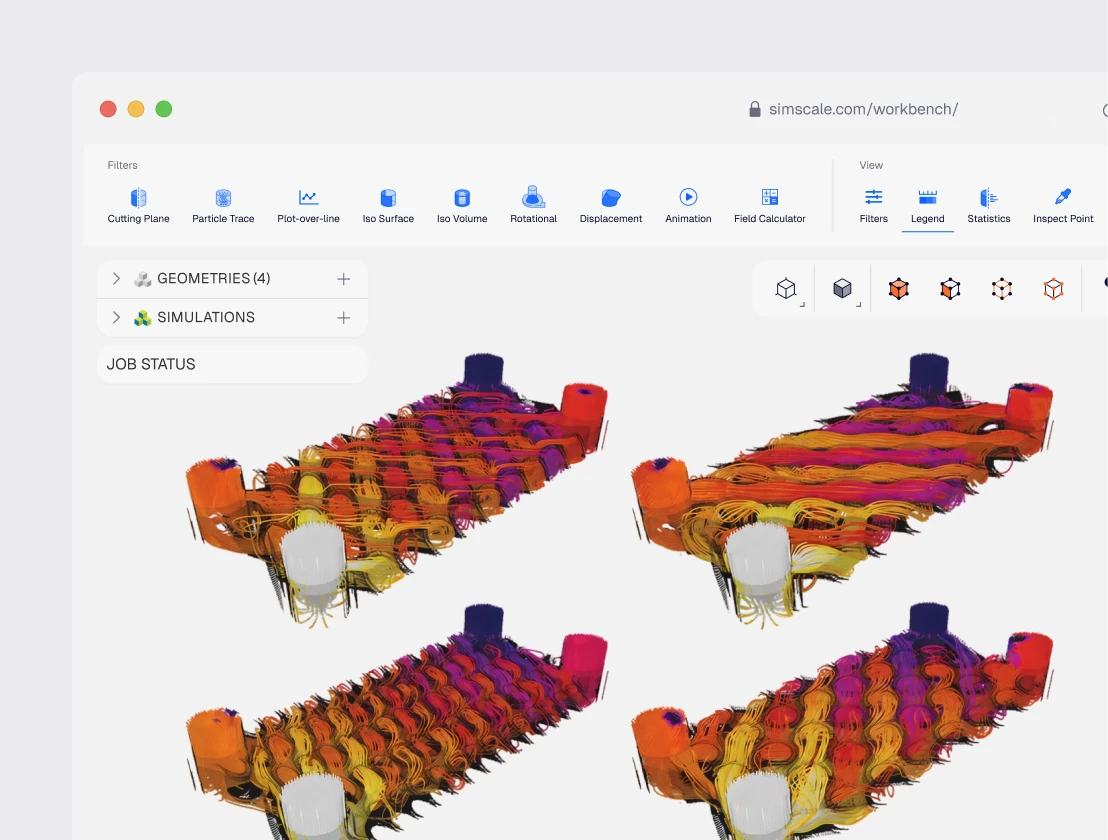
Run hundreds of design scenarios in parallel at a fraction of the time and expense of on-premise hardware. Eliminate HPC bottlenecks and data storage costs, allowing your team to explore more options and find savings faster.
FAQs
Evaluating simulation as a way to lower R&D spend? Here are the questions we hear most.
ContactIt moves design validation from physical prototypes to the cloud. You test designs virtually under real operating conditions, so you build fewer prototypes, run shorter physical test campaigns, and catch problems before they reach expensive tooling and production stages.
It depends on where your spend sits today. Published SimScale customers have saved material cost per unit at volume (OnLogic), cut prototype counts by half (Glanzer Dynamics), and compressed multi-month optimization into under an hour (Convion). The largest savings usually come from prototypes avoided and late-stage redesigns prevented.
No. SimScale is cloud-native and runs in a browser, with no HPC to buy, no VPN, and no idle licenses. You pay for the compute each study uses, which is what makes running hundreds of design variants affordable.
No. Engineering AI automates setup and repetitive runs, and validated templates let design engineers run studies without deep CAE expertise. Your specialists are freed for the complex work rather than consumed by routine analysis.
Most teams run their first cost-relevant study within days, since there’s nothing to install. Savings compound as you replace recurring physical tests with reusable simulation workflows across more of your projects.
Get started today
Start cutting R&D costs today. Explore simulation, Engineering AI, and Physics AI in one cloud platform. No hardware, no install, no setup required.