
The Challenge
- To reduce both the weight and complexity of the final product assembly, the design idea was to hold the reflector in place with the help of a plastic spring.
- In order to validate the proposal, a simulation project was built up, with the following objectives
- Test if the nominal stress in the component is sufficient to prevent it from becoming loose during normal operations
- Confirm that the stresses in the material are low enough to avoid any unacceptable level of plastic strain or fatigue
- Verify whether the initial stress is high enough so that after 10 years in service, it is still sufficient to function well, considering material creep
The Results
- The simulation results verified that the screwless design approach can meet all the mechanical requirements: neither permanent plastic deformation nor creep of material will occur.
- For analyzing the simulation results, the post-processing capability of SimScale was used.
- The overall costs for Lazer Lamps was significantly lowered, and the speed was significantly increased.
About Lazer Lamps
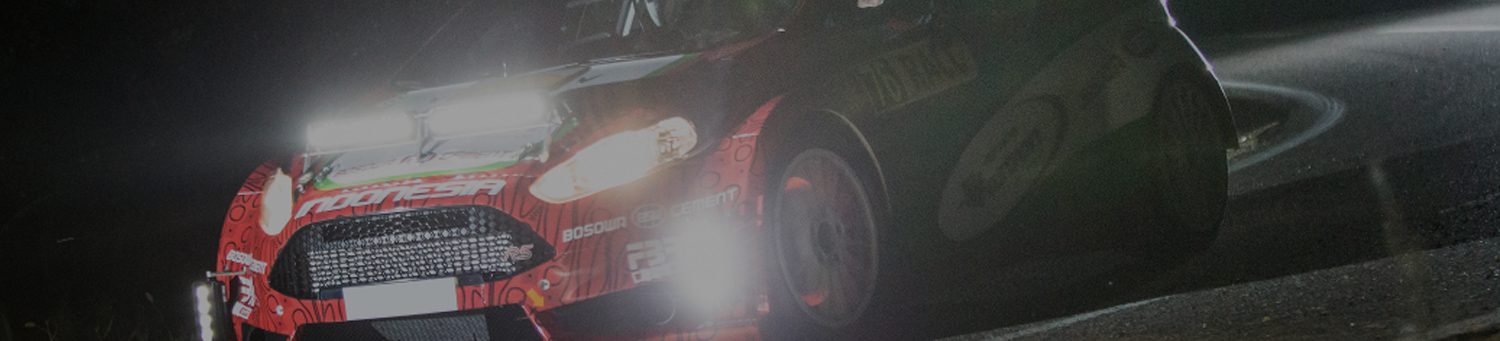
Founded in 2010, the British manufacturer Lazer Lamps Ltd. is at the forefront of the LED market, bringing world-class technology to its clients and in the process, setting the standard in automotive auxiliary lighting solutions. One of the innovative products from Lazer Lamps is a new type of LED motor sports headlamp that has been developed with the help of the simulation technology from SimScale.
Reducing Weight of Automotive Headlamps

To reduce both the weight and complexity of the final product assembly, the design idea was to hold the reflector in place with the help of a plastic spring.
In order to validate the proposal, a simulation project was built up, with the following objectives:
- Test if the nominal stress in the component is sufficient to prevent it from becoming loose during normal operations
- Confirm that the stresses in the material are low enough to avoid any unacceptable level of plastic strain or fatigue
- Verify whether the initial stress is high enough so that after 10 years in service, it is still sufficient to function well, considering material creep
FEA to Test the Headlamp Design
For the virtual testing of their design, the engineers at Lazer Lamps chose the SimScale cloud-based simulation platform. The design component had been extracted by the Lazer Lamps engineers from the assembly, uploaded to the SimScale platform, and discretized under the SimScale mesh generation environment. Despite the high complexity of the geometry, it was still possible to use the automated mesh operation, which created a high-quality computational grid within minutes.
One great advantage of SimScale that the engineers from Lazer Lamps benefited from is the possibility to boost their own simulation project, through the free Public Projects. This resource contains numerous successful simulations, which can be used as templates for free.
All that the engineers at Lazer Lamps needed to take care of was to adapt the material properties and the center of displacement based on an existing public project.
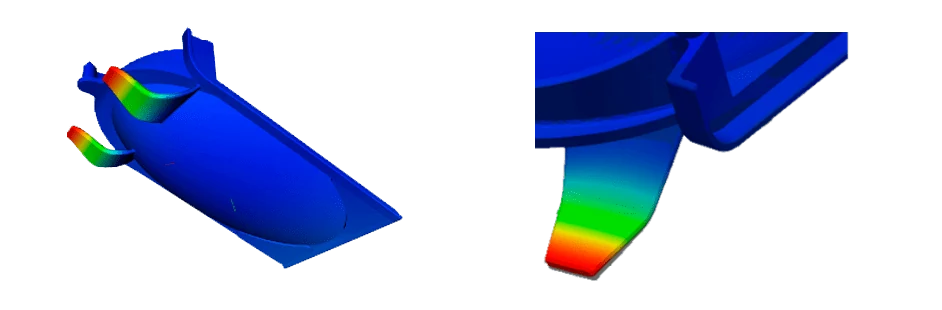
Screwless Automotive Headlamp Design Validated
The simulation results verified that the screwless design approach can meet all the mechanical requirements: neither permanent plastic deformation nor creep of material will occur.
For analyzing the simulation results, the post-processing capability of SimScale was used.
The overall costs for Lazer Lamps was significantly lowered, and the speed was significantly increased.