The drone industry does not give engineers generous timelines. Fixed-wing, multirotor, eVTOL, and hybrid configurations all have to prove structural integrity, aerodynamic stability, propulsion efficiency, and thermal management before a prototype ever leaves the ground. The pressure to compress design cycles while expanding design ambition is real — and it is changing how the best engineering teams work.
Over the past several years, a growing number of drone and advanced air mobility teams have built cloud-native simulation into the heart of their design process — not as a late-stage validation check, but as an active design tool from the first sketch. What they are learning is worth paying attention to.
Here are four lessons from drone and UAV engineering teams who used simulation to get further, faster.
Lesson 1: Explore the Design Space Before You Commit to Hardware
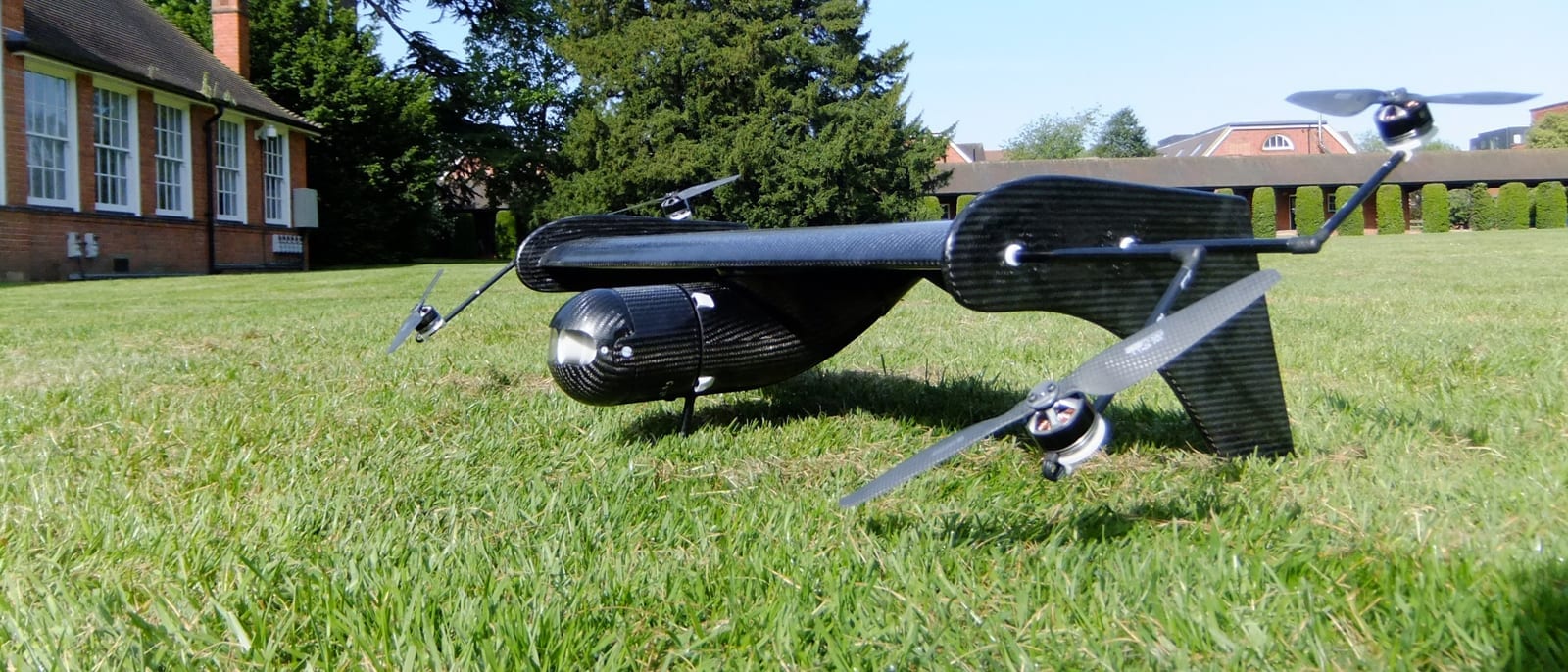
The team: VTOL Technologies, a UK-based developer of long-endurance beyond-visual-line-of-sight (BVLOS) drones for automated infrastructure inspection.
VTOL Technologies’ flagship product, the VTOL Flying Wing, needs to carry meaningful payloads over long distances. Aerodynamic efficiency is not optional — every percentage point of drag reduction directly affects range and endurance. But the team had a classic problem: committing to a new fuselage-wing configuration before you understand its aerodynamic impact is expensive. Physical prototypes take time, and testing them takes more.
The approach was to run a structured CFD analysis using SimScale on the incompressible regime, which is appropriate for the low-speed flight envelope typical of drone operations. Engineers compared different configurations — specifically, how different fuselage-to-wing blending geometries affected the aircraft’s lift and drag characteristics.
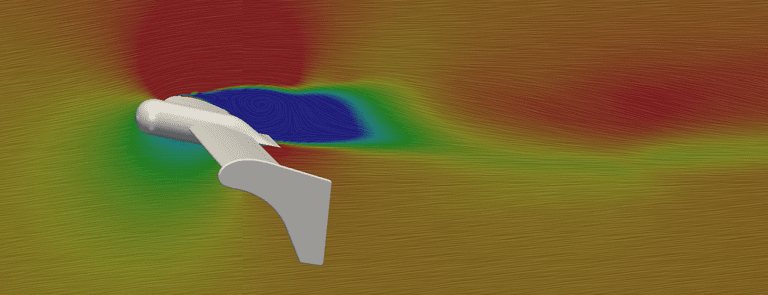
One configuration — which blended the fuselage smoothly into the wing — showed a 2% reduction in drag alongside a 20% increase in lift. “This was a phenomenal result,” said Marta Marimon, Aeronautical and Flight Mechanics Engineer at VTOL Technologies. “This will enable us to improve the aircraft’s performance, range and endurance.”
The team also saved four weeks of design time. The bigger structural change, though, was methodological. “We realized that some of the simulations of our drone design could be run much quicker and better with SimScale,” Marimon noted. “We used to not have a good process established, but now with SimScale, we have a proper design methodology and a validation tool for all the design modifications and improvements.”
The lesson: A design decision that feels like a commitment is often still a hypothesis. Cloud-native CFD lets small drone teams test that hypothesis in parallel before they write a purchase order.
Read the full VTOL Technologies case study
Lesson 2: Bring Simulation Into the Conceptual Phase — Not Just Validation
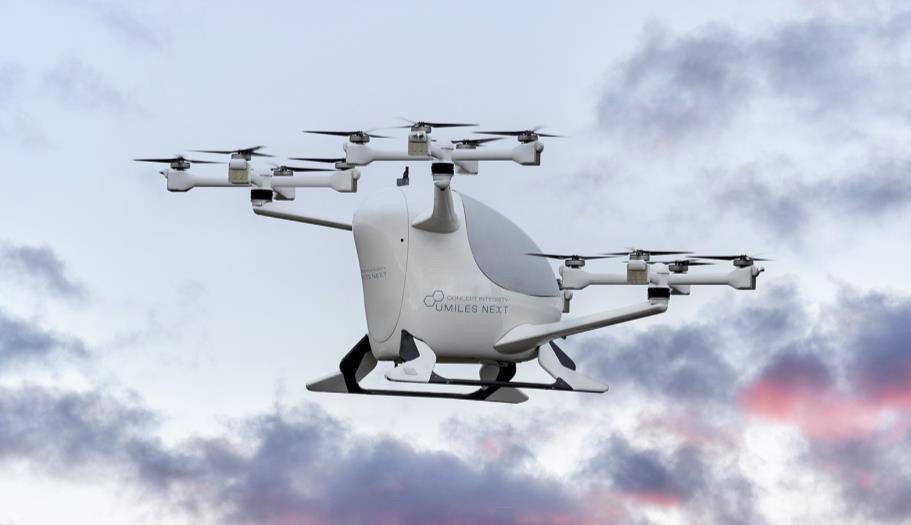
The team: TECNALIA, the largest applied research and technology organization in Spain and a member of the Basque Research and Technology Alliance. Their Innovative Air Mobility department is developing next-generation UAV and urban air mobility platforms.
Lucas Juan Bernácer Soriano, an aeronautical engineer in the team, describes a challenge common to advanced UAS development: teams often wait until the preliminary or detailed design phases before running high-fidelity simulation. By then, major architectural decisions have already been locked in.
TECNALIA structured their design workflow to change that. They integrated SimScale’s CFD solvers at three stages: a conceptual stage (many design alternatives, low detail, studying key interactions), a preliminary stage (major components fixed, increasing detail), and a detailed stage (full CFD validation, high-fidelity mesh). This meant simulation shaped early decisions, not just confirmed late ones.
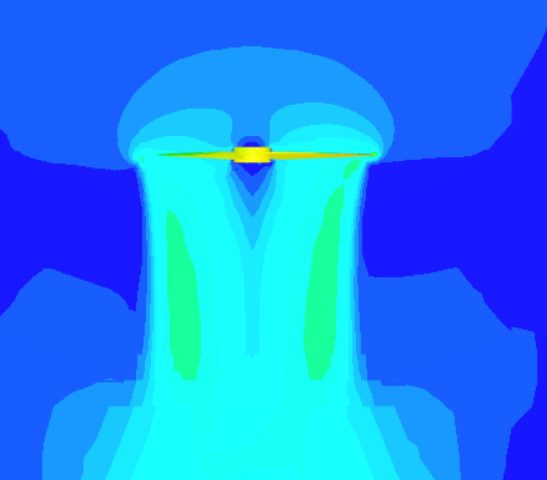
For the Concept Integrity project, the team evaluated multiple impeller designs across chord length, pitch angle, and number of blades. Testing five impeller designs in parallel using cloud simulation replaced what would have been five physical bench tests. Testing a single impeller physically — including mechanical assembly, testing, and data processing — takes approximately seven hours. For five impellers, that is 35 hours of work, or a full week. The simulations replaced it entirely.
The access advantage also scaled beyond the core CFD team. “SimScale was very easy to get started with,” Bernácer Soriano said. “I was the only CFD expert and in several projects, people from the department decided to include CFD as they found it very easy to use after a 1-hour explanation of how things worked and how to set up a simulation. This has broadened access to simulation within Tecnalia.”
The lesson: Moving simulation earlier in the design process changes the quality of decisions, not just their speed. When non-specialist engineers can run simulations independently, the entire team makes better-informed tradeoffs.
Read the full TECNALIA case study
Lesson 3: Simulation Reveals Physics That Physical Testing Cannot
The team: Turbulence Solutions, an Austrian aviation technology company developing patented turbulence-cancelling technology for fixed-wing aircraft.
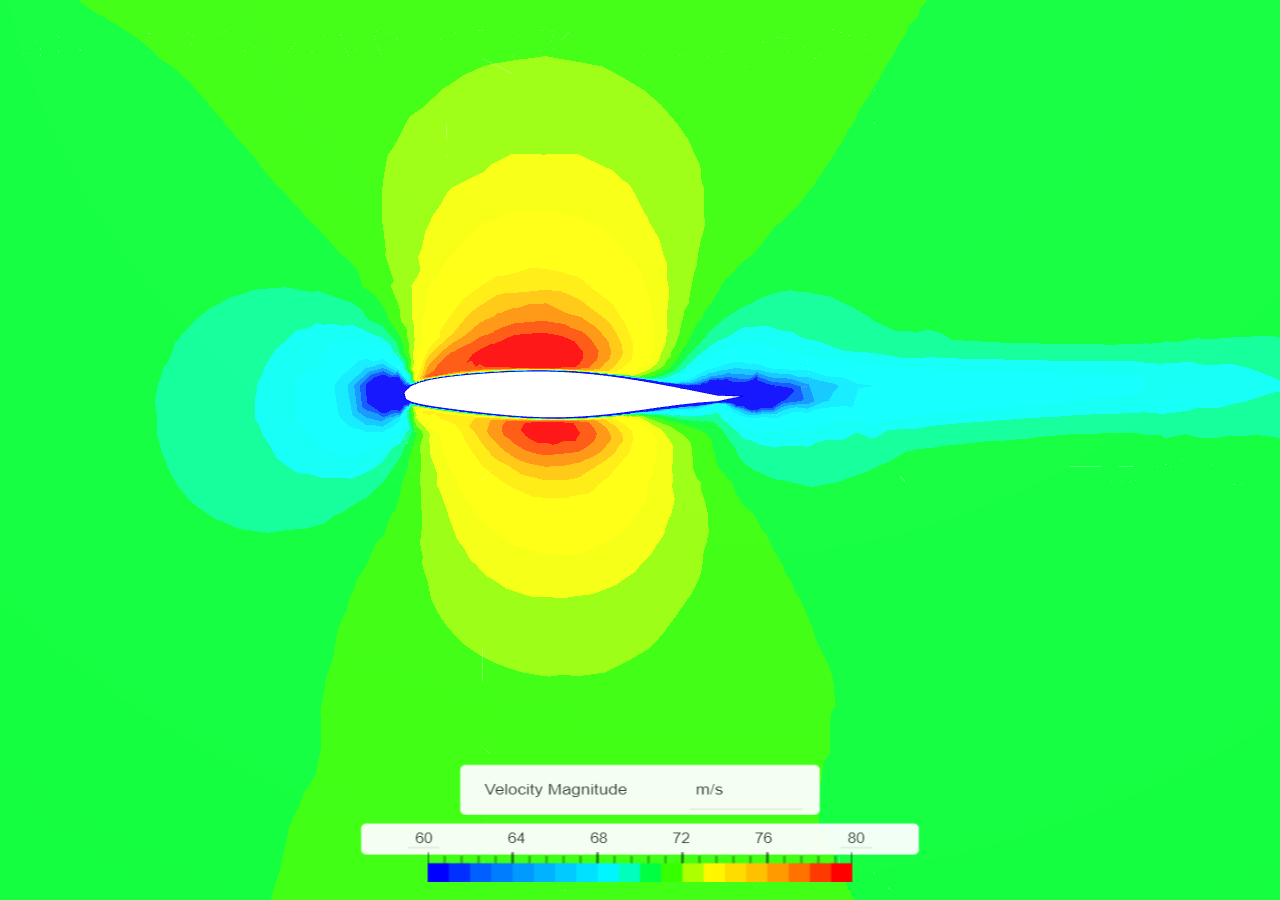
Turbulence Solutions is solving a problem that affects every fixed-wing aircraft: atmospheric turbulence. Their technology uses trailing-edge flaplets, LiDAR-fed feedforward control, and real-time pressure measurements to actively cancel turbulence loads before passengers feel them. The challenge is that validating this technology requires understanding aerodynamic behavior at a level of detail that instrumented physical tests alone cannot reach.

The team used SimScale’s OpenFOAM-based CFD capabilities to model the aerodynamic performance of their flaplet configurations and to validate the results against in-flight data from manned test flights. The turbulence model accuracy was maintained within plus or minus 10%, which is sufficient for the certification-grade confidence the technology requires.
The results confirmed what the physical tests had suggested but could not fully quantify: counteracting control surface deflections reduce turbulence loads felt by passengers by over 80% at up to 0.5 g-load. The simulations also identified a 2% drag reduction from the flaplet geometry. Proof-of-concept validation is now complete, and the technology is being prepared for deployment on commercial aircraft.
“Cloud-based access allows for simulations without the need for extensive in-house computing resources which has been of immense benefit to our team,” said DI Andras Galffy, CEO and Head of Research and Technology at Turbulence Solutions.
The lesson: For complex aerodynamic interactions — rotor-airframe interference, control surface behavior, ground effect, boundary layer separation — CFD surfaces the physics that gauges and strain sensors miss. Simulation and physical testing are not substitutes; they’re a feedback loop.
Read the full Turbulence Solutions case study
Lesson 4: Simulation Doesn’t Just Accelerate — It Eliminates Testing That Wasn’t Working Anyway
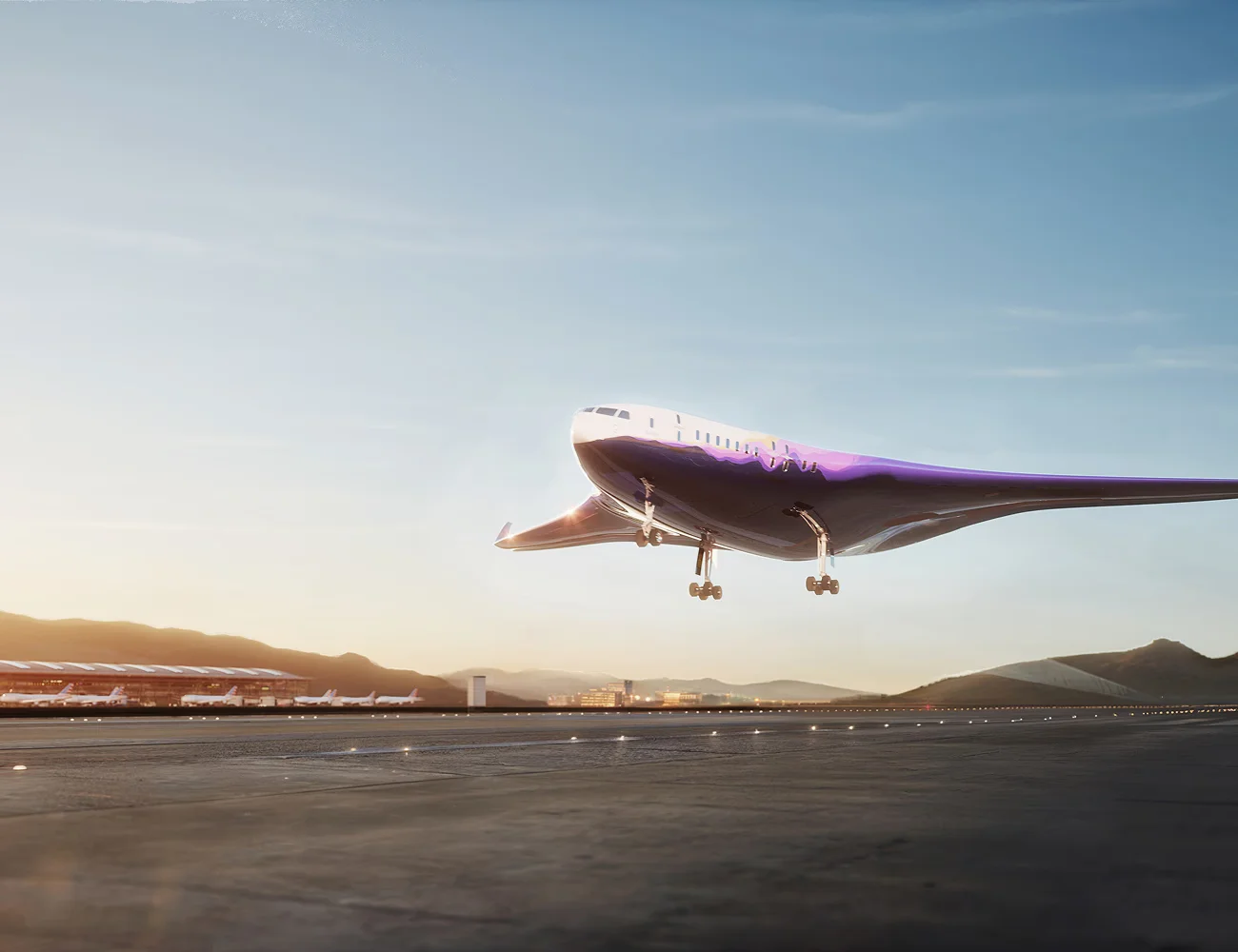
The team: Outbound Aerospace, a US startup designing the world’s first fifth-generation blended wing body (BWB) passenger airliner — 254 seats, all-electric power-by-wire, software-defined avionics, advanced aerodynamics.
Jake Armenta, CTO and founder, came from Boeing and from the world of 3D-printed rockets. His team built a 1/8th scale demonstrator called STeVe (Scale Test Vehicle) to validate the manufacturing process and aerodynamic architecture of the full-size aircraft. The challenge: BWB airplanes have notoriously complex aerodynamics. The hull shape, engine installation, and flight control surfaces all interact in ways that are expensive to test in wind tunnels — and the startup was operating under a $1M USD budget.
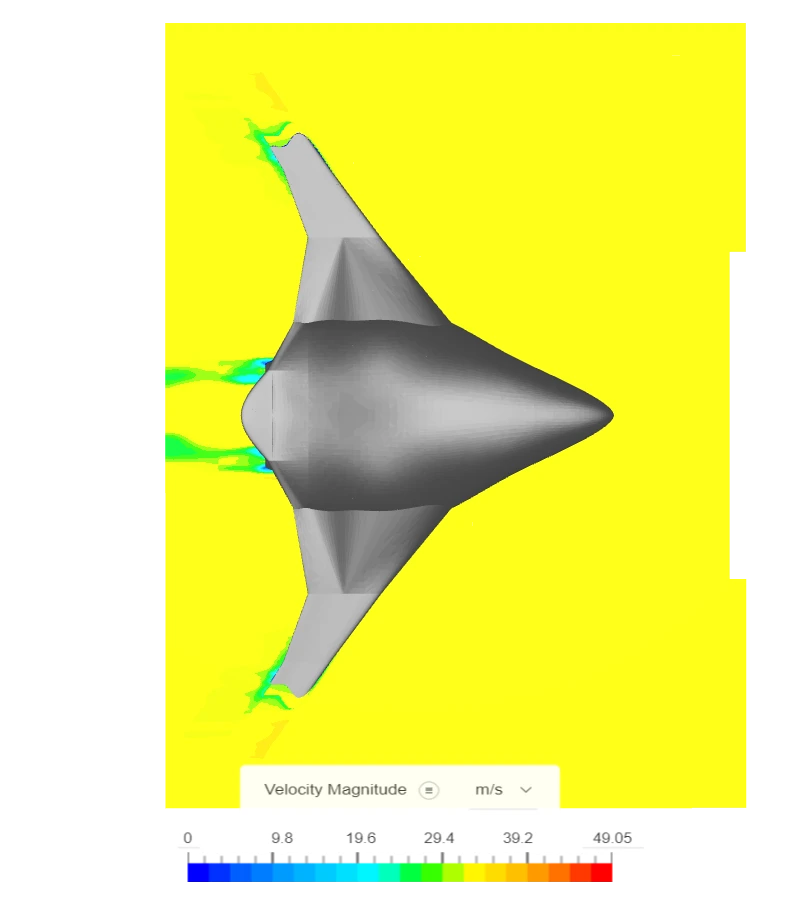
The team ran a wide range of CFD analyses using SimScale’s Lattice Boltzmann Method (LBM) solver for unsteady flow visualization and OpenFOAM-based solvers for steady-state and multi-parameter studies. They also used FEA to validate the structural integrity of their in-house designed retractable landing gear under worst-case loading conditions, including touchdown impact and lateral loads during taxi. In parallel, the CFD data fed directly into an aerodynamic database for flight control simulation and stability analysis.
The outcome: up to 10x faster iteration cycles for aerodynamic refinements, and savings of hundreds of thousands of dollars in avoided wind tunnel testing and physical prototyping costs.
“We used SimScale to validate the airplane aerodynamics and the structural design for our retractable landing gear,” said Armenta. “BWB airplanes have notoriously challenging aerodynamics, and we needed to validate the aerodynamic design of our hull, our engine installation, and our flight control surfaces — without relying on traditional wind tunnel testing.”
The lesson: For early-stage programs operating under capital constraints, simulation is not an alternative to wind tunnel testing. It is the realization that you were never going to do all that wind tunnel testing anyway — and that you do not need to.
Read the full Outbound Aerospace case study
The Common Thread: Simulation That Starts Early and Scales Broadly
Four teams. Four different aircraft categories. Four different engineering problems. One shared shift in how they work.
Each of these teams moved simulation earlier in their design process — from a late-stage validation check into an active tool that shapes decisions before hardware commitments are made. Each ran multiple configurations in parallel rather than sequentially. And each did it without dedicated HPC infrastructure, on-premise software licenses, or specialist-only toolchains.
This is what broad, early simulation actually looks like in practice: an aeronautical engineer comparing five impeller geometries simultaneously on a Tuesday morning. A startup CTO validating retractable landing gear structure and wing aerodynamics under the same budget line. A team of researchers finding a 20% lift improvement in an airframe configuration that nobody would have tested physically because it looked too speculative.
The drone and advanced air mobility industry is moving fast. The teams shipping are the ones who can test more ideas in less time, earlier in the design process, without bottlenecks in HPC queues or CAE specialist availability.
Start Exploring The Design Space
SimScale’s AI-native cloud platform brings CFD, FEA, thermal, and multi-physics simulation together in one browser-based environment — no installation, no VPN, no HPC headaches. Whether you’re optimizing propeller performance, validating structural integrity under flight loads, or building an aerodynamic database for control system development, you can run it in parallel, from anywhere, from day one of the design cycle.
Explore SimScale for Drone Simulation and see how teams like VTOL Technologies, TECNALIA, and Outbound Aerospace are designing better aircraft, faster.