Physics AI predicts real physical behavior in seconds using models trained on high-fidelity simulation data, enabling instant design exploration without sacrificing engineering trust.


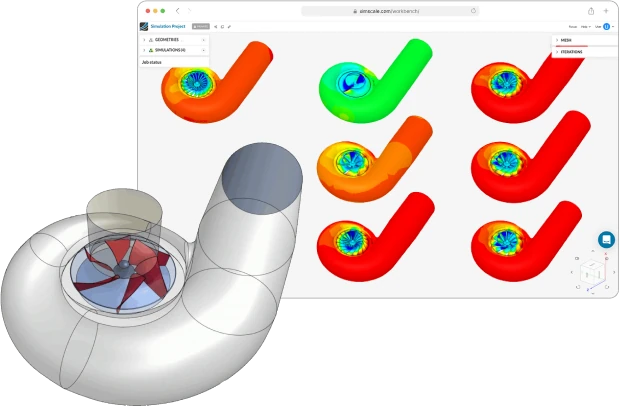











Physics AI models learn from large volumes of high-fidelity simulation data to predict physical behavior in seconds. Engineers can evaluate design performance instantly without waiting for full simulation runs. Results remain grounded in validated physics models, enabling engineering speed without sacrificing credibility.
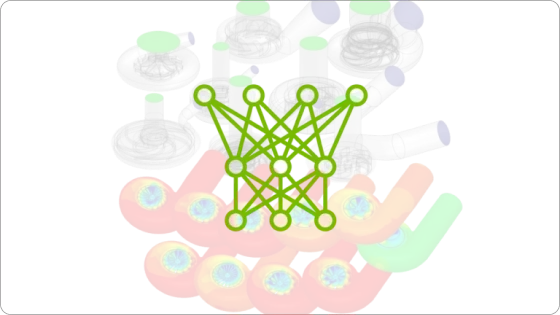
SimScale’s cloud-native architecture turns every simulation run into a potential model training asset, building a proprietary IP dataset that fuels your AI strategy and gets smarter with every project. Engineering teams move from running isolated simulations to building reusable prediction capabilities.
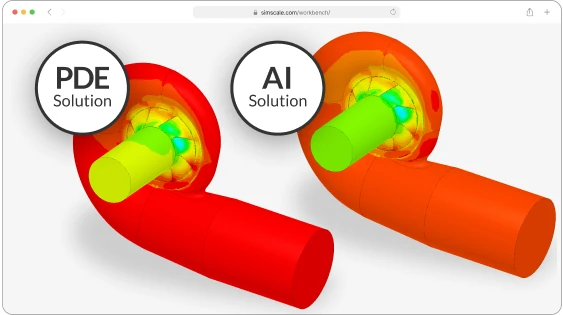
Physics AI doesn’t replace numerical solvers. It works alongside them. Explore variants instantly with AI predictions, then validate final candidates using full-fidelity CFD, FEA, thermal, or multi-physics solvers — all on the same platform. This hybrid approach delivers the speed of AI with the rigor of physics-based simulation.
How Physics AI Works in Practice
Reliable AI models require high-fidelity data to accurately capture the design space. With SimScale, engineers can leverage existing historical simulation data or generate new datasets using cloud-native solvers. By running hundreds of design variants in parallel, teams can rapidly build the large, structured datasets needed for robust model training that faithfully represent the underlying physics of the system.
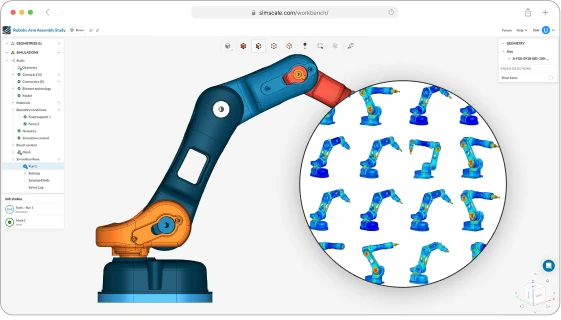
Physics AI models learn the relationships between design parameters and physical performance from high-fidelity simulation results. SimScale leverages datasets from over 1,000,000 public simulation projects to train models that capture complex multi-physics behavior. These models can instantly predict performance across thousands of new design variations, enabling engineers to explore large design spaces far faster than traditional simulation.
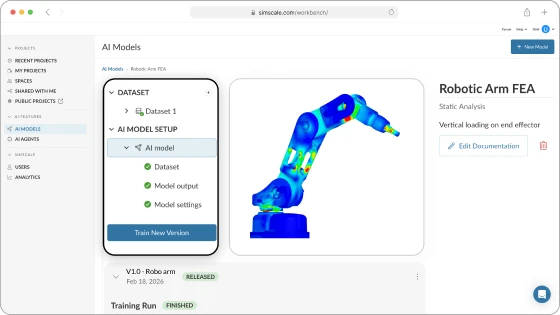
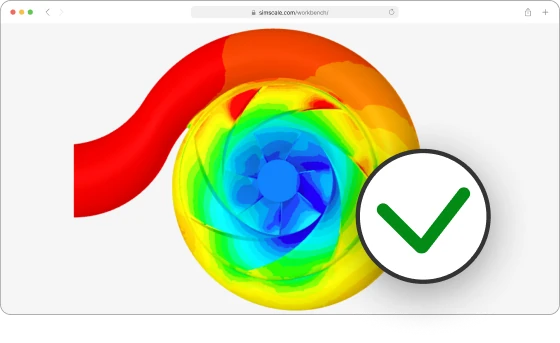
SimScale uniquely integrates traditional simulation and Physics AI side-by-side within a single unified platform. Because both analysis types use the same configuration and setup process, you can switch between them effortlessly. This allows your team to use Physics AI for near-instant design exploration and then instantly run a high-fidelity CFD or FEA simulation to validate your final design candidates.

Run inferences across your entire engineering ecosystem—interactively in your browser, through integrated CAD software, or via fully autonomous optimization cycles. Whether you are using the SimScale UI or orchestrating work through autonomous AI agents and APIs, every model is versioned, monitored, and published within SimScale’s enterprise-grade simulation process and data management (SPDM) solution.
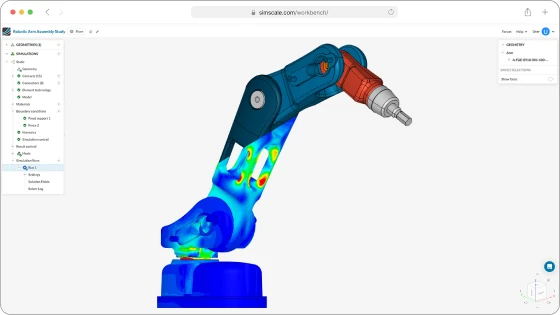


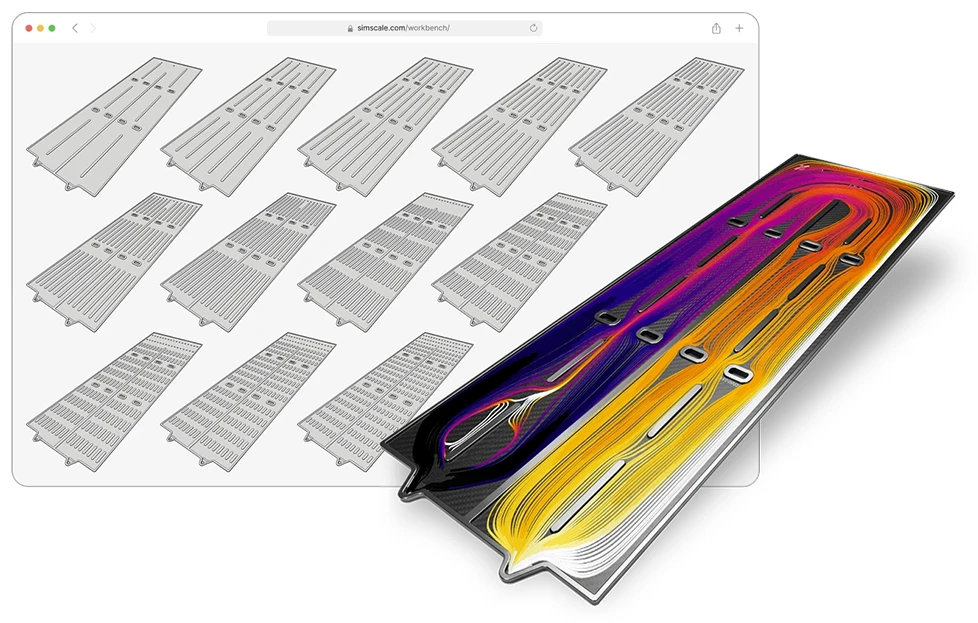
By enabling engineers to explore thousands of virtual design options instantly, Physics AI eliminates the “wait-and-test” bottlenecks that often delay product launches. Instead, teams can rapidly iterate through diverse design candidates and support portfolio diversification without increasing overheads. Engineering teams move faster from concept to launch.
Learn MoreRespond to complex engineering RFQs with faster technical insight. Physics AI evaluates design feasibility and performance instantly, helping teams produce stronger proposals with greater confidence. By replacing slow, specialist-dependent simulation cycles with instant AI inference, you can submit more accurate, data-backed proposals in a fraction of the time, protecting margins and increasing win rates.
Learn More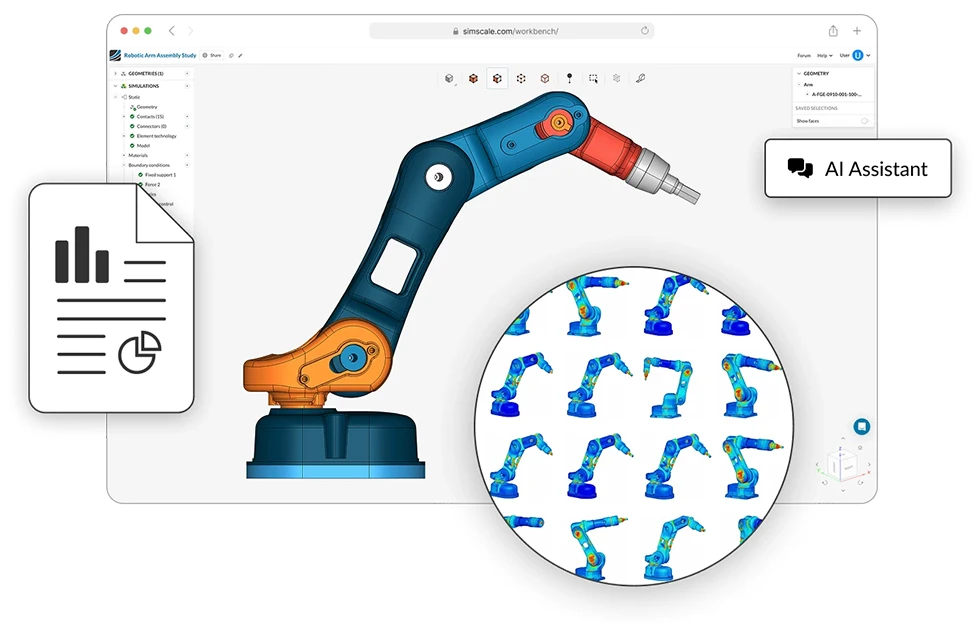
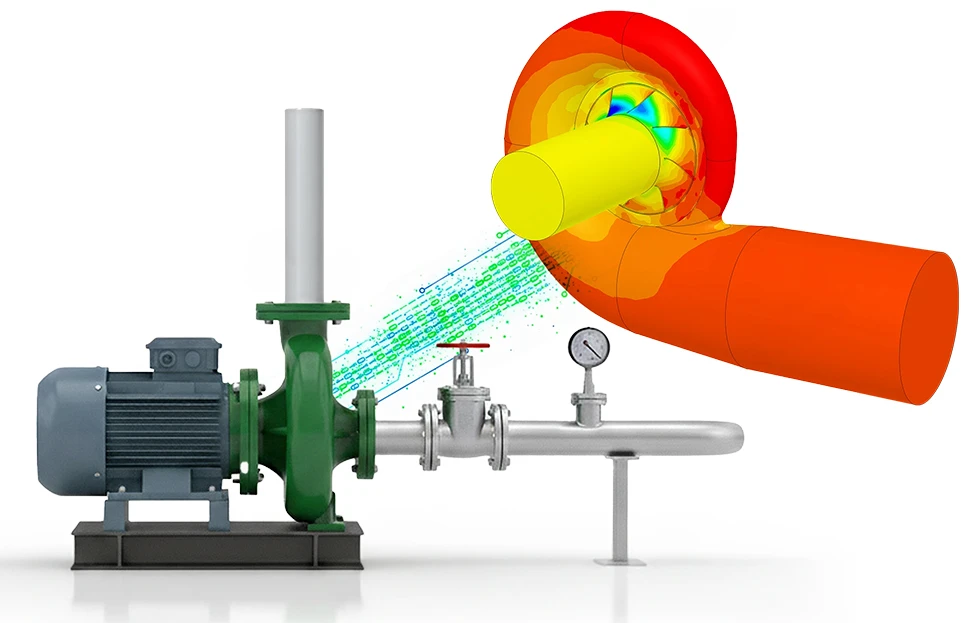
Physics AI enables real-time prediction of physical system behavior under changing operating conditions. Through SimScale’s robust API, AI-powered surrogate models integrate directly into your operational data streams and simulation process loops.. This allows teams to optimize operation, anticipate performance issues, and support continuous engineering insight across the product lifecycle.
Learn MoreRLE International transformed its automotive design process by integrating Physics AI to deliver reliable aerodynamic insights in seconds rather than hours. By leveraging SimScale’s cloud-native infrastructure, RLE built an end-to-end workflow that generates massive training datasets in parallel, cutting computation costs by 45% compared to traditional methods.
Learn More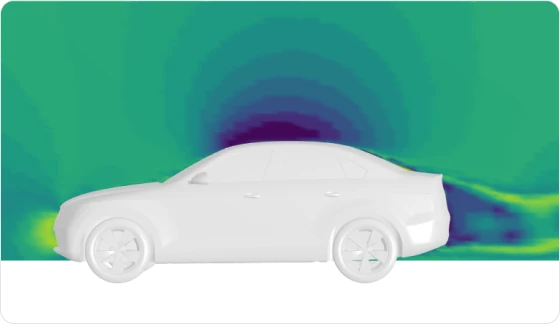
Explore Physics AI with SimScale
Sign up for SimScale
and start simulating now
