Engineering AI orchestrates the simulation process from intent to design, seamlessly managing complex workflows so teams can explore further, iterate faster, and build higher-performing products.


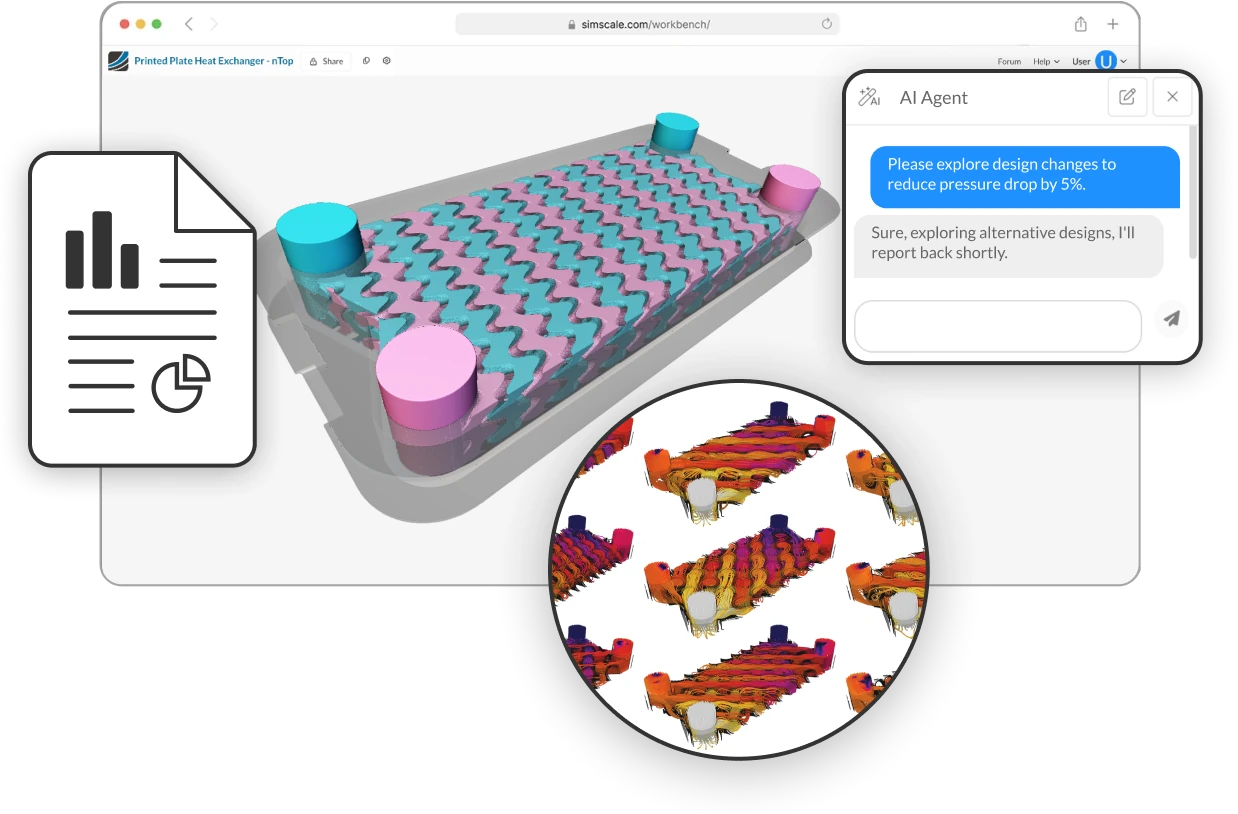











Engineering has long been workflow-driven, with simulation runs defined step by step before insight is possible. Engineering AI changes the starting point. Engineers define performance targets, constraints, and trade-offs and the system orchestrates validation paths aligned to those objectives. Execution follows intent. Engineers focus on outcomes.
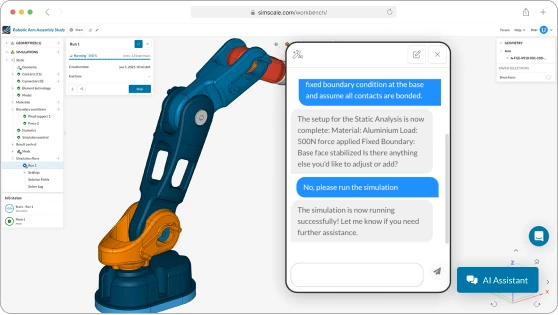
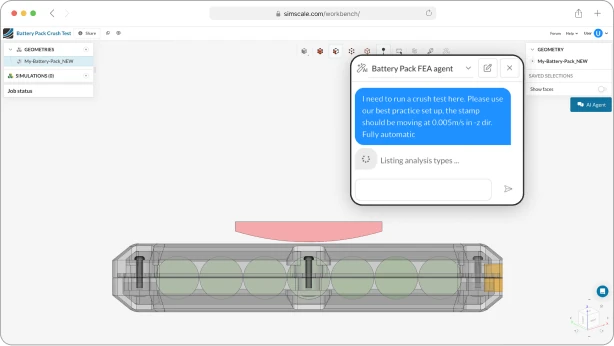
Engineering AI orchestrates simulation setup based on context and intent, selecting solver settings, mesh strategies, and boundary conditions automatically. Each validation cycle becomes repeatable, auditable, and scalable across teams. Experts can define templates, rules, constraints, and validation logic, creating reusable, governed workflows that encode your best practices.
Traditional automation executes predefined steps. Engineering AI agents reason about engineering intent. Agents coordinate end to end validation workflows. They interpret requirements, explore design alternatives, run multiphysics simulations, and assemble decision ready results within defined guardrails. Engineers remain in control. Agents handle orchestration.
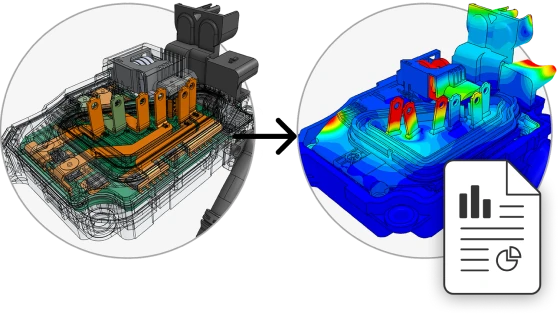
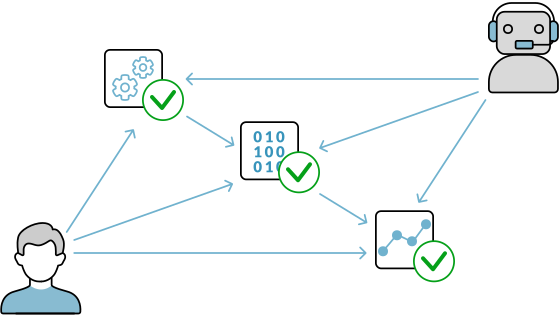
Engineering AI interfaces with users, agents, data, and compute. Every configuration choice, simulation step, and result is traceable and reproducible. Standards, templates, and compliance rules are embedded directly into execution, ensuring consistent validation across teams and programs. AI scales expertise. Governance preserves control.
How Engineering AI Works in Practice
The Engineering AI agent acts as an engineering collaborator and co-pilot within your workflow. The agent can interpret context, recommend strategies, and assist with setup, execution, and evaluation, aligning each step to your product performance goals.
Execution follows intent. Engineers focus on outcomes.
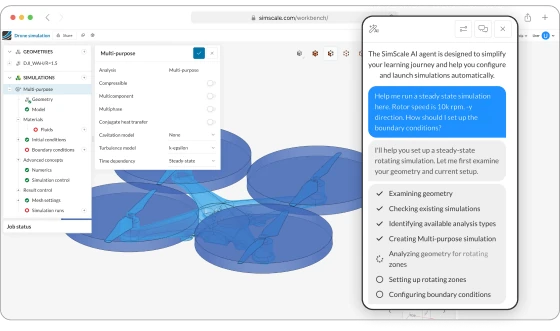
Given engineering intent and context, Engineering AI applies reasoning, embedded templates, and data from over 1,000,000 public simulation projects to configure appropriate simulation strategies in minutes, not hours. By building structured validation paths with consistency and rigor, it accelerates workflows while preserving engineering control.
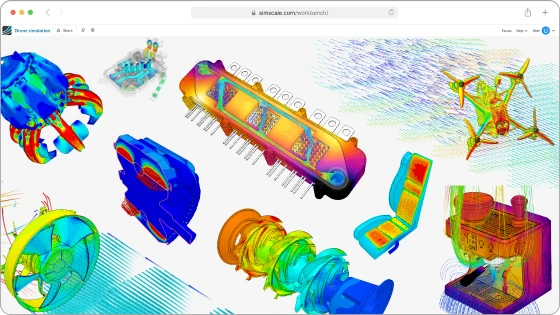
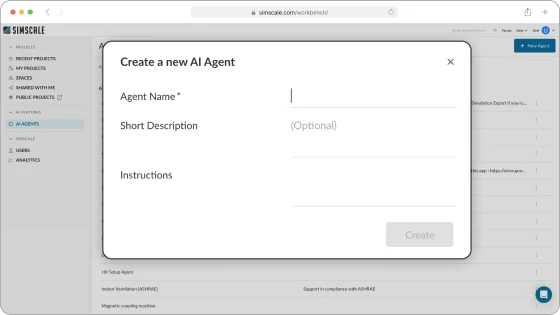
Create custom agents to fine-tune behavior and oversight. Agents can be configured and published to embed company best practices, compliance requirements, and domain expertise across teams and programs, enabling your wider engineering workforce with the power of simulation.
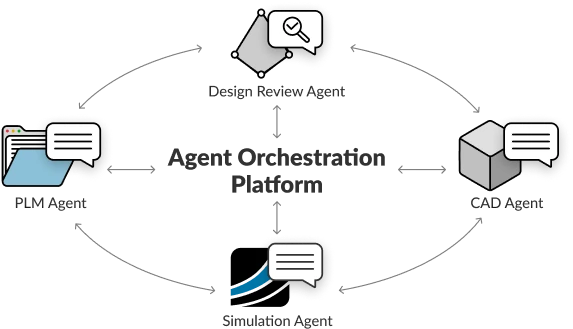
Agentic AI excels at autonomous operation and human-agent or agent-agent collaboration. Through APIs and modular agent frameworks, organizations can integrate AI into broader engineering workflows, enabling collaboration between design, simulation, and lifecycle systems. The result is coordinated, intelligent execution across the engineering stack.
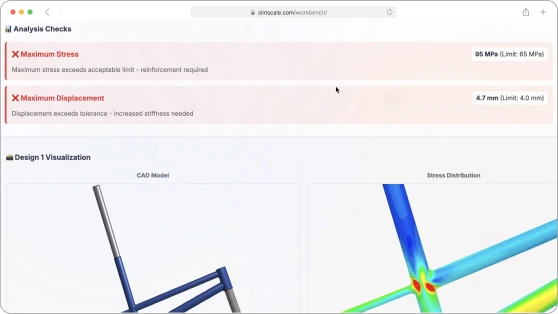
Use AI to orchestrate engineering work directly from an RFP/RFQ document. SimScale’s Engineering AI interprets requirements, generates design concepts, runs physics validation, and assesses feasibility. Produce proposal-ready technical reports in hours, increasing your win rate and protecting your margins.
Learn MoreStreamline certification by embedding regulatory and standards-based validation directly into AI orchestrated simulation workflows. Use Engineering AI to assess performance using a consistent, predefined methodology. Generate documented outputs aligned to certification requirements.
Learn More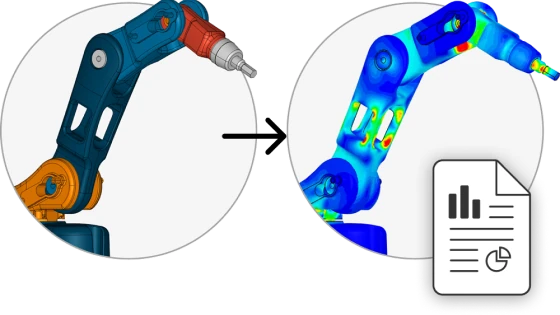
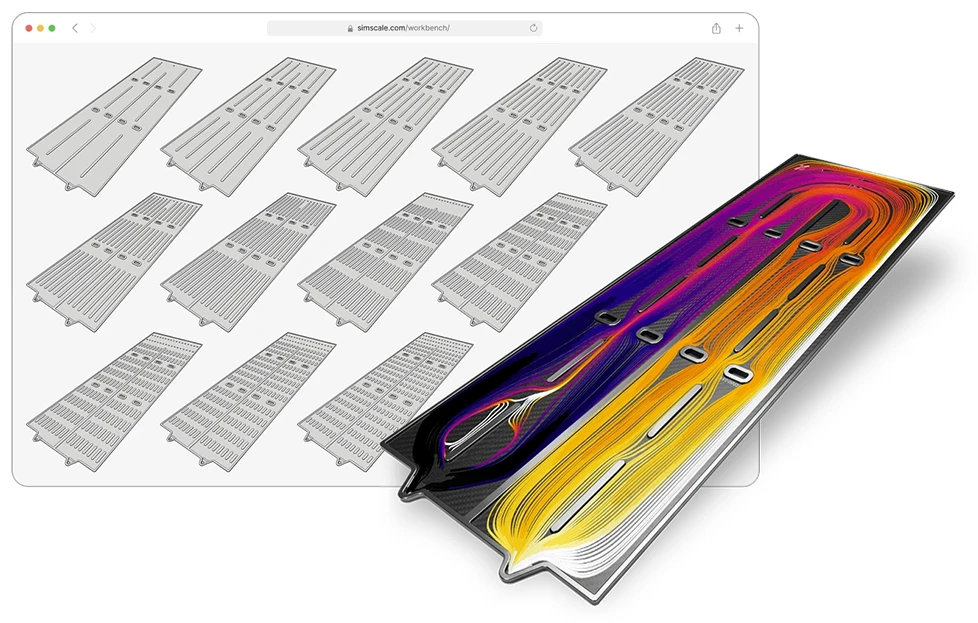
Bring validated insight earlier into new product development. Engineering AI orchestrates and accelerates requirements targeting through design exploration and optimization studies throughout the design cycle. By embedding best practices and reducing variability, product development teams minimize rework, improve decision quality, and advance programs with greater confidence. AI scales expertise. Governance preserves control.
Learn MoreSilent-Aire, a leading manufacturer of hyperscale cooling and modular data center solutions, embedded SimScale’s cloud-native simulation platform into its engineering design workflow. By replacing expensive physical prototypes with digital twins to pre-test the performance of its air handling units, Silent-Aire expanded rapid digital prototyping capabilities across its engineering team, cut product development and testing time and costs by 50%, and drastically reduced its reliance on external physical testing.
Learn More
Explore Engineering AI with SimScale
Sign up for SimScale
and start simulating now
