THE CHALLENGE
- OpSo first discovered SimScale when it began a project to design and develop an elastomer-based low stiffness torsional vibration spring damper/isolator.
- Until 2019, OpSo used ANSYS for its analysis needs, but switched to SimScale due to its wider engineering capabilities coupled with its versatility of usage over the internet and its affordable pricing structure.
- SimScale eliminated the burden of procuring and maintaining CAE hardware which was significant for a small organization like OpSo.
- Rubber-based torsional dampers generally work well for high-frequency vibration attenuation, but are either structurally unstable, or perform inadequately for low-frequency vibration attenuation.
- It is this need that prompted OpSo to innovate this device which is meant to replace the candidates currently utilized in the industry by providing improved structural robustness, NVH performance, and serviceability during the applications life.
The Results
- All and all, one frequency and one static analysis were performed.
- While the static analysis took around 70 minutes using 4 cores, the frequency analyses took no longer than 10 minutes using the same cores.
- The results obtained from using SimScale found the natural frequencies of the entire system, and proved that the torsional spring damper system could hold up to significant angular displacement.
- This allowed Optimized Solutions to move forward with their patent process, and market the technology further to customers.
About Optimized Solutions
Optimized Solutions, LLC (OpSo) develops novel Intellectual Property (IP) in the field of vibration damping and isolation. Led by Suhale Manzoor, Esq., OpSo markets new IP to clients in a variety of industries including automotive, aerospace, consumer products, and heavy industrial. The development of new IP involves rapid idea generation coupled with design iterations where these ideas are virtually validated until they are production feasible and simultaneously balanced for manufacturability and cost. The virtual validation process includes iterative design and Finite Element Analysis (FEA) runs to ensure the structural, thermal, and NVH stability of the invention in the desired application.
Optimizing an Innovative Spring Damper Design
OpSo first discovered SimScale when it began a project to design and develop an elastomer-based low stiffness torsional vibration spring damper/isolator. Until 2019, OpSo used ANSYS for its analysis needs, but switched to SimScale due to its wider engineering capabilities coupled with its versatility of usage over the internet and its affordable pricing structure. Furthermore, SimScale eliminated the burden of procuring and maintaining CAE hardware which was significant for a small organization like OpSo.
Rubber-based torsional dampers generally work well for high-frequency vibration attenuation, but are either structurally unstable, or perform inadequately for low-frequency vibration attenuation. It is this need that prompted OpSo to innovate this device which is meant to replace the candidates currently utilized in the industry by providing improved structural robustness, NVH performance, and serviceability during the applications life. All these aspects were analyzed and validated through the use of SimScale software suite.
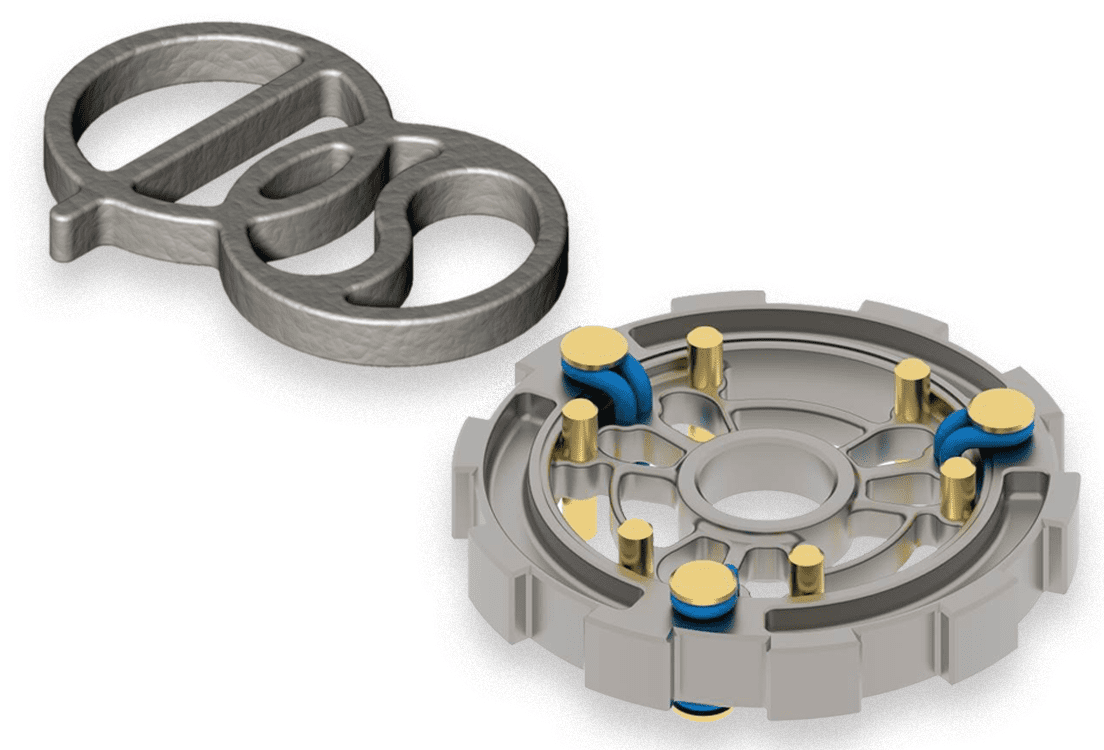
The device essentially consists of an inner hub that attaches to the vibrating shaft through its central bore, a ring having a gear, sprocket, pulley, etc. on its outer diametric surface, and is attached on its inner diametric surface to the hub through a bearing. Additionally, there is a plurality of elastomeric O-rings that pass through openings in the hub and are looped around protrusions present on either side of the ring. The result yields a torsional vibration damper/isolator spring of very low stiffness that is serviceable without removal from the vibrating shaft in the application.
Fast FEA Through Cloud-Based CAE
Non-Linear Quasi-Static Analysis:
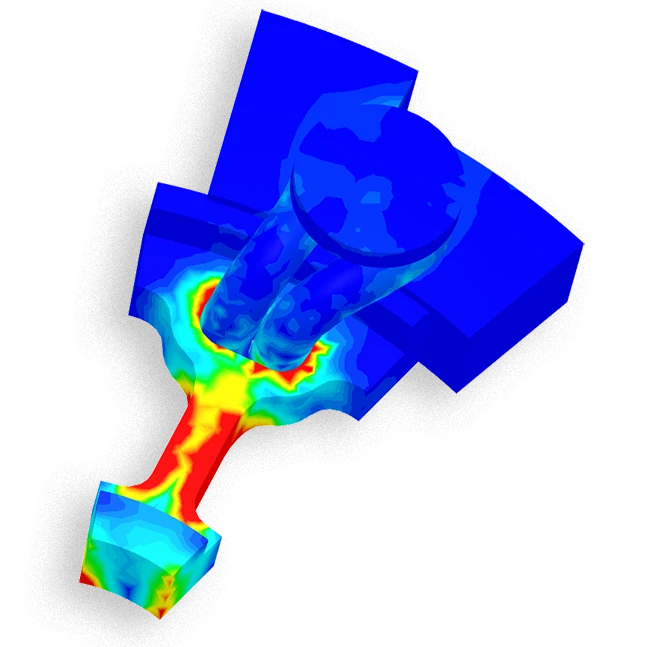
When the spring damper system works it puts stress on the metallic components. Of particular interest is the spoke region of the hub that gets stressed. The analysis is complicated as the system is highly non-linear: (1) large deflection (10 degrees angular) ; (2) material (hyper-elastic); and (3) 3D contact.
Frequency Analysis:
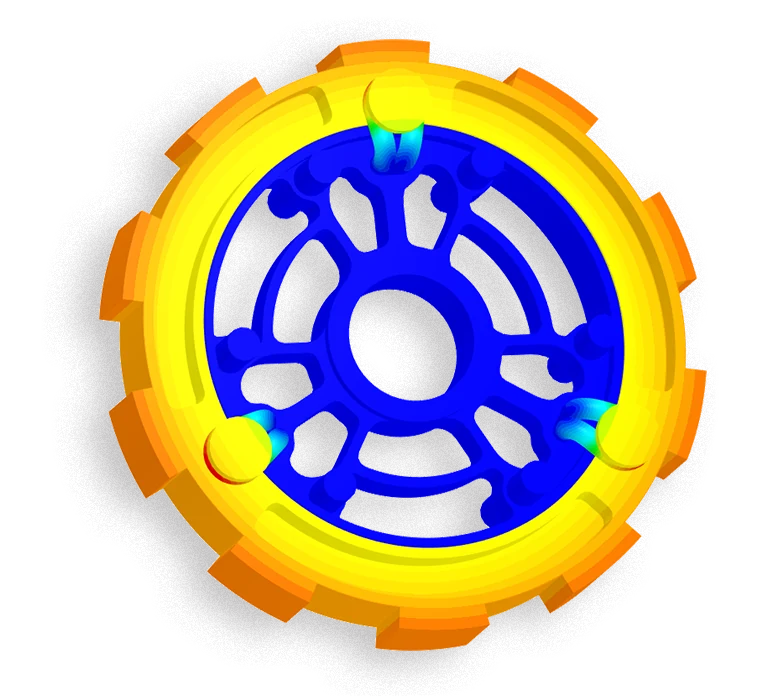
Developing a modal response signature for the device is also essential to validate that it is effective for low-frequency torsional vibration attenuation.

Suhale Manzoor, Esq.
Founder of Optimized Solutions, LLC

For organizations such as OpSo where ideas are constantly generated and validated, SimScale is a tool of choice due to its incredible analysis footprint coupled with the fact that it alleviates the financial burden of maintaining expensive computer hardware while providing an affordable pricing structure.
A Cost-Effective SimScale Solution
All and all, one frequency and one static analysis were performed. While the static analysis took around 70 minutes using 4 cores, the frequency analyses took no longer than 10 minutes using the same cores.
The results obtained from using SimScale found the natural frequencies of the entire system, and proved that the torsional spring damper system could hold up to significant angular displacement.
This allowed Optimized Solutions to move forward with their patent process, and market the technology further to customers.
Continued Collaboration
Currently, OpSo is working on more projects and designs that will then need to undergo the patent process to move onto their next phase. We look forward to seeing what comes next!