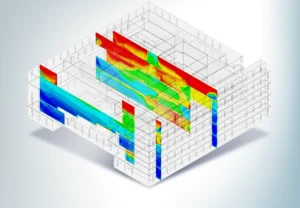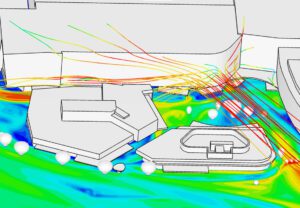

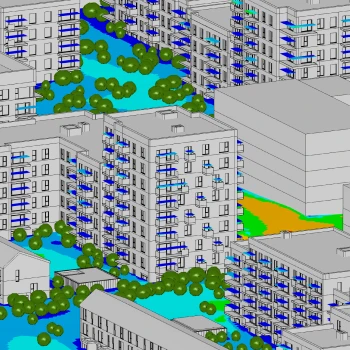
IN2 Engineering is a multidisciplinary building services organization with offices across Ireland, the UK, and Germany. They specialize in mechanical and electrical engineering design, with a dedicated department for engineering simulation focusing on thermal analysis, Computational Fluid Dynamics simulation (CFD), and lighting simulations. Their expertise includes a strong focus on sustainable and low-energy design, utilizing CFD for both internal HVAC flow verification and external pedestrian wind comfort (PWC) analysis. The wind simulation team is typically engaged during the pre-planning phase of development projects and provides crucial analysis of building siting, orientation, and wind microclimate to support the detailed architectural design.
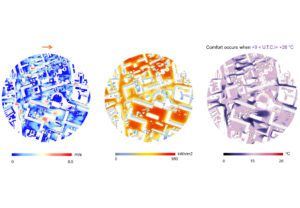
Each project brings a unique combination of building design, siting and surroundings, all of which need to work together to create a livable urban environment. In the pre-planning phases of a project, this involves performing detailed analysis using the Lawson Criteria to quantify wind comfort and to ensure that the design complies with local regulations.
Where issues are identified, the team at IN2 works directly with the architects to introduce mitigations. Modifications to the architectural design must also suit the architectural requirements of the development and so they will often work through several design iterations with the project architects to find a solution.
Here, speed is important, requiring fast turnaround of CFD analyses, followed up by clear visualization and communication of results. Working in this way, the combined team can confidently make and validate design changes while keeping the overall project on track.
Following their experience with desktop-based tools, the team at IN2 was looking for a solution that allowed them to easily run high fidelity analyses and, crucially, to communicate simulation results in an accessible and understandable way to non-CFD users.
The team at IN2 began to adopt SimScale in 2021, primarily drawn to its intuitive graphical interface for pre- and post-processing and its ability to handle detailed 3D models from Rhino without requiring time-consuming geometry simplifications and cleanup. They use the built-in pedestrian wind comfort (PWC) analysis type to run simulations in the cloud and evaluate results using the Lawson Criteria.
What initially drew our attention was the ease with which we could import a model and run a PWC simulation without spending time simplifying the geometry shapes or rounding off edges to make it work.
William O’Donnell, Associate Director at IN2 Engineering
As SimScale is a fully cloud-based platform, all data is retained for easy and fast retrieval and local machines are left free for other tasks while jobs run on remote cloud infrastructure.
It’s very helpful when you’re running really big simulations that everything is happening in the cloud so you don’t need to plan ahead, your local machine still works and you can do other things while it’s running.
Katy Moran, Environmental Engineer, IN2 Engineering
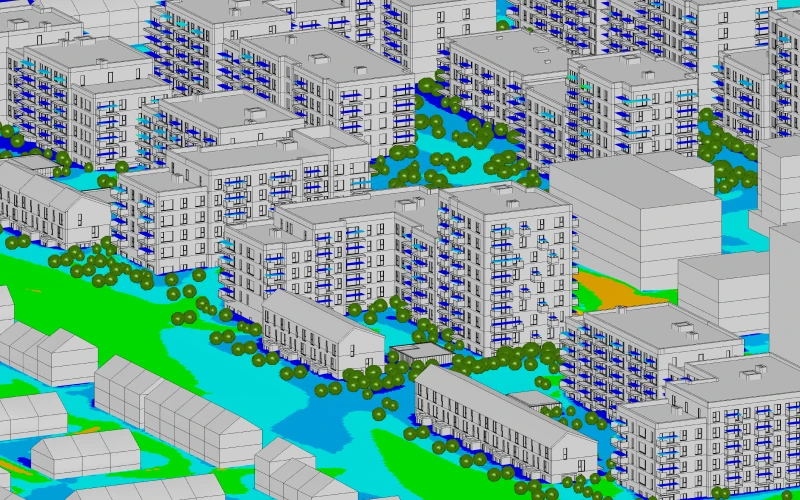
Adamstown is a planned urban strategic development zone (SDZ) on the outskirts of Dublin, Ireland, which has the aim of delivering over 9,000 residential units, a mix of apartments and houses, with associated transport and community infrastructure. IN2 has undertaken the pedestrian comfort assessments for almost 1,300 of the apartment units across the SDZ. The site faces the prevailing southwesterly wind across many miles of open countryside and farmland, creating a particular challenge for siting the high-rise residential buildings that are part of the development.
The team used SimScale’s Pedestrian Wind Comfort analysis to automatically simulate the 12 wind directions utilised for the Lawson Criteria. Wind data is automatically compiled based on local wind power and frequency data (wind rose) to calculate the weighted predicted comfort results, saving considerable manual effort in configuring, running, and post-processing simulations.
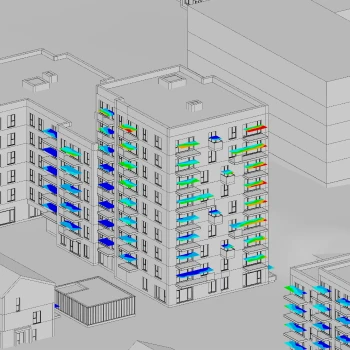
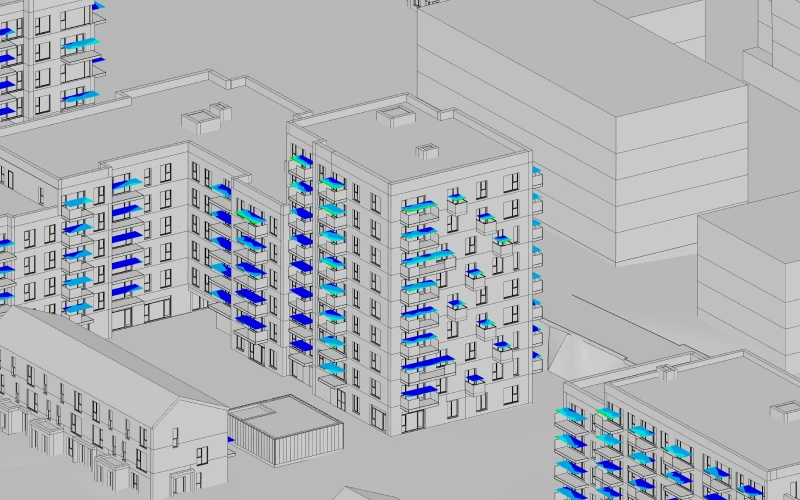
For the Adamstown Boulevard project, much of the work was focused on the private amenity spaces provided by apartment balconies. Using SimScale to create clear visualizations conveying the problems identified, the IN2 team worked with the project architects to specify balcony and screen configurations that ensured that individual balconies met wind comfort requirements.
IN2 found that by using SimScale to perform the analysis, they could avoid any compromises in detail level, being able to include every balcony in the development in every simulation run.
Whereas we might previously have only looked at the most exposed floors, now we can include every single detail in our analysis which means we can conduct a more thorough analysis and deliver a higher quality product to our clients
William O’Donnell, Associate Director at IN2 Engineering
As the project moved closer to the final planning submission deadline, simulation of the final and most detailed design revealed a last-minute problem. A small number of balconies had been added to one of the building facades and they were flagged as being problematic.

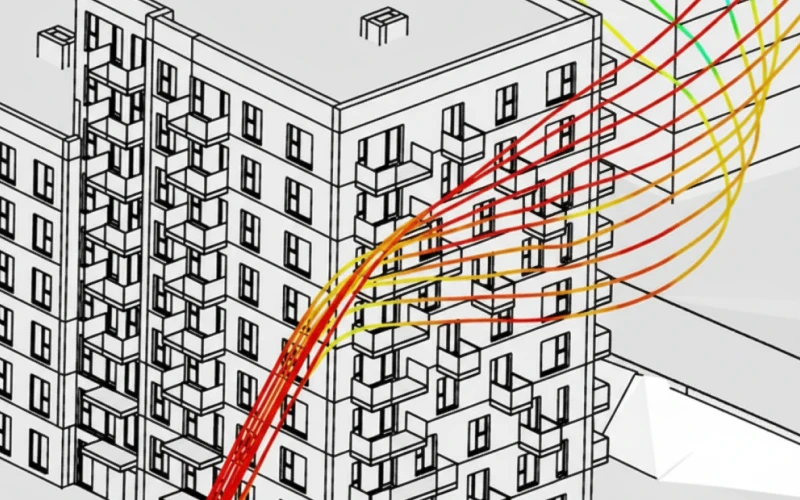
Using SimScale the team acted quickly to assess multiple design change options, in close collaboration with the architects. Each design iteration involved new simulations to assess the impact of proposed solutions, such as adding screens, moving balconies to other aspects, or modifying façade elements. The balconies, required under planning guidelines, were also critical from an architectural perspective, taking into account symmetry, aesthetic, and wayfinding needs.
The ability to rapidly turn around these simulations meant that IN2 could provide timely feedback to the architects, enabling them to explore various mitigation strategies without compromising deadlines.
Using SimScale it’s quick and easy to create crisp, clear visuals that include all the relevant details so that architects immediately understand the location and nature of issues identified
William O’Donnell, Associate Director at IN2 Engineering

The team at IN2 were happy to collaborate with SimScale providing feedback and suggesting enhancements to the PWC analysis tools through their communication with the customer support team.
We’ve had a very good relationship with SimScale over the last couple of years, especially where we have wanted to adjust things, given feedback, and been listened to. We’re very happy with the point we are at, and we’re able to use it really efficiently.

William O’Donnell
Associate Director at IN2 Engineering
I would say the support on SimScale is great. I have to give a shoutout there to Kaan, I talk to him a lot and it is really helpful to have the help desk just a click away, especially with him being able to directly access my simulations to help dig into questions that come up

Katy Moran
Environmental Engineer, IN2 Engineering
By leveraging SimScale, IN2 Engineering has significantly enhanced its ability to deliver accurate, efficient, and visually compelling pedestrian wind comfort analyses. This partnership has not only optimized their internal workflows but also strengthened their collaborative process with architects and planning authorities, ultimately contributing to the creation of more comfortable and compliant urban environments. IN2 Engineering continues to explore the full potential of SimScale’s capabilities, anticipating further advancements in their sustainable design practices and an even greater impact on livable urban developments.
Sign up for SimScale
and start simulating now