
websights

Fill out the form to download

Required field
Required field
Not a valid email address
Required field
Required field
Emrgy logo

Emrgy Uses SimScale to Design
Hydro Turbines for Irrigation Canals

Challenge

  • Designing vertical-axis turbines for non-disruptive canal installation presents complex fluid dynamics challenges.
  • Emrgy’s design goals extend beyond maximizing power output; they must also minimize hydraulic disruption, maintain acceptable upstream water levels, and preserve flow conditions vital to irrigation system operators.
  • A key challenge in deploying these systems is understanding both localized and large-scale hydrodynamic effects.
  • Turbine performance must be assessed alongside system-wide variables such as surface elevation rise, changes in flow regime, and potential flood risk.

Results

  • Emrgy integrates SimScale’s Multi-Purpose CFD module into its daily design cycle to simulate free-surface flows and assess turbine impacts on canal water levels, flow acceleration, and hydraulic efficiency.
  • SimScale enables the creation of a digital twin for turbine installations, enhancing performance, reducing risk, and unlocking deployment at speed.
  • Simulations help evaluate energy production potential, water surface rise and fall, downstream recovery and drag loss, and Venturi-style accelerator effects.
  • Development time is greatly reduced and aligns with mechanical, procurement, sales, and testing schedules.
Emrgy Simulation challenges
Emrgy Simulation results

About Emrgy

Emrgy is a recognized innovator in distributed hydropower, deploying modular hydrokinetic turbines in gravity-fed irrigation canals to generate clean electricity without disrupting water delivery. Their systems are tailored for infrastructure that already exists—avoiding the need for dams or diversions. Leveraging SimScale’s cloud-native CFD platform, Emrgy accelerates turbine innovation, validates site-specific deployments, and minimizes hydraulic impacts across a wide range of environments.

Innovative Hydropower

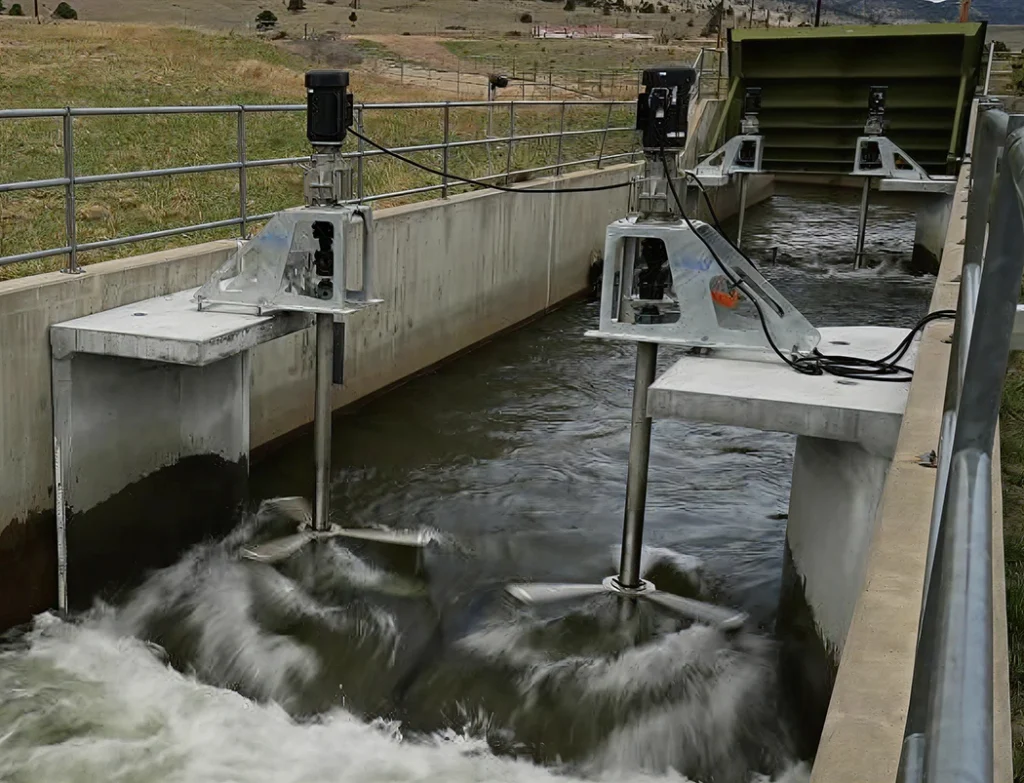
Emrgy’s hydrokinetic technology transforms clean energy production without traditional dams. Generating 5 to 25 kilowatts per turbine, this innovative approach harnesses flowing water’s energy, delivering reliable, cost-effective power while repurposing water channels for clean energy. Unlike conventional hydropower which requires gravity drop and head pressure for effective operation, Emrgy’s technology optimizes only on the kinetic energy or velocity of the volume of water flowing through a channel:
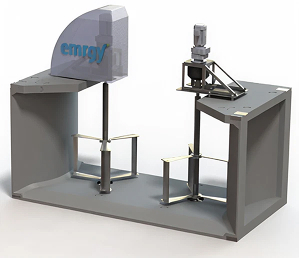
  • Twin vertical axis turbines rotate to give optimal mechanical energy and have demonstrated 70% water to wire efficiency 
  • Mechanical energy is converted from water to electrical using proprietary hardware and software to deliver reliable conditioned AC power
  • The turbines are housed in a precast concrete block that adds ballast and acts as an anchor while optimizing hydrodynamic performance because of its venturi design
Emrgy vertical axis hydro-turbine for irrigation canals

Simulation Optimized Power

Designing vertical-axis turbines for non-disruptive canal installation presents a complex interplay of fluid dynamics challenges. Emrgy’s design goals extend beyond just maximizing power output, they must also minimize hydraulic disruption, maintain acceptable upstream water levels, and preserve flow conditions vital to irrigation system operators. A key challenge in deploying these systems is understanding both localized and large-scale hydrodynamic effects. Turbine performance must be assessed alongside system-wide variables such as surface elevation rise, changes in flow regime, and potential flood risk. For large-scale rollouts, the ability to rapidly evaluate feasibility and optimize turbine placement digitally is becoming mission-critical.

Dr. Alex Stubbs, a CFD expert with a PhD in Large Eddy Simulation and Emrgy’s lead fluid dynamics specialist, integrates SimScale’s Multi-Purpose CFD module into Emrgy’s daily design cycle. The team uses modeling to simulate free-surface flows and assess turbine impacts on canal water levels, flow acceleration, and hydraulic efficiency.

Being able to create a digital twin of essentially any given turbine installation is becoming increasingly critical. SimScale enables us to simulate entire systems at scale—enhancing performance, reducing risk, and unlocking deployment at speed.

Alex Stubbs

Alex Stubbs

CFD Lead at Emrgy

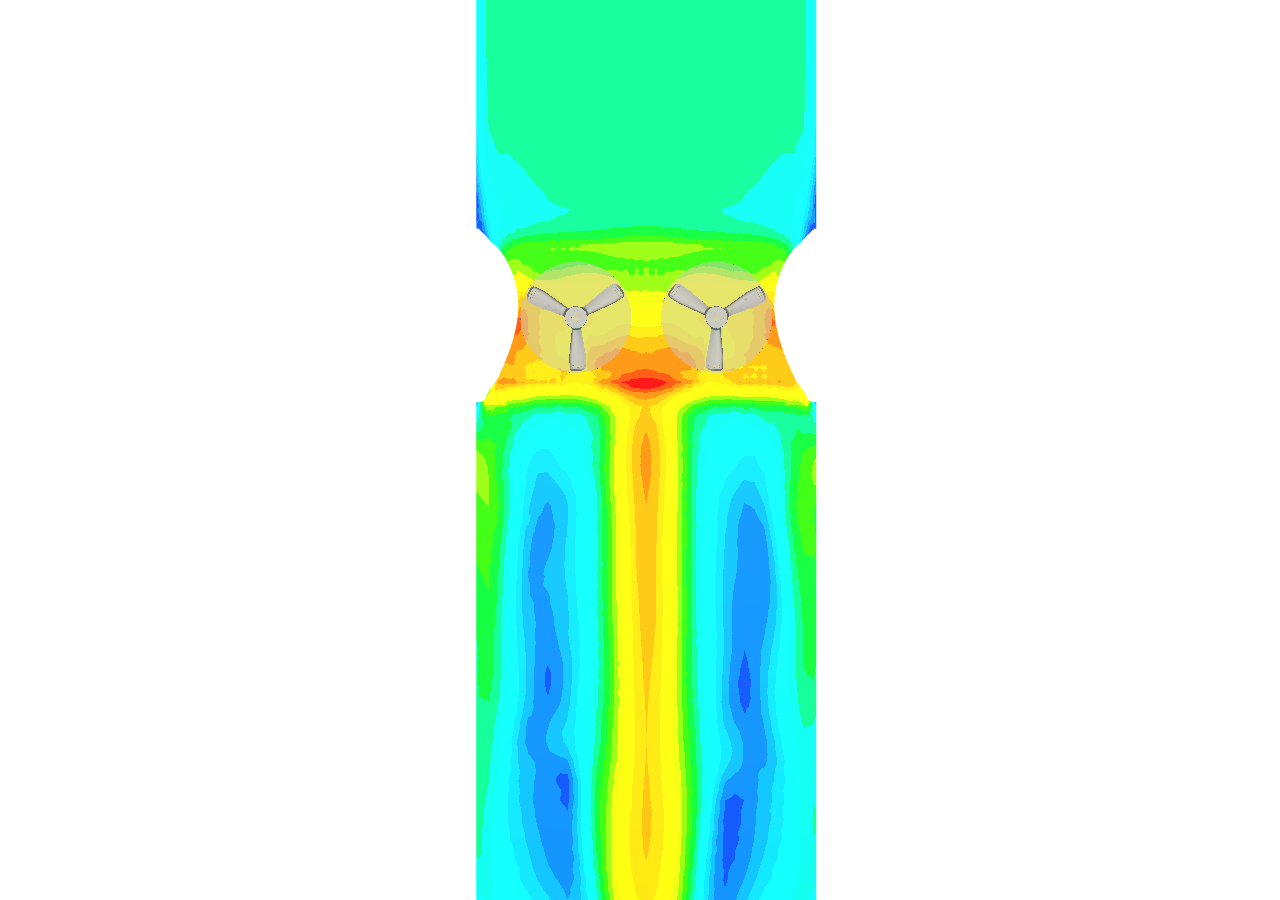
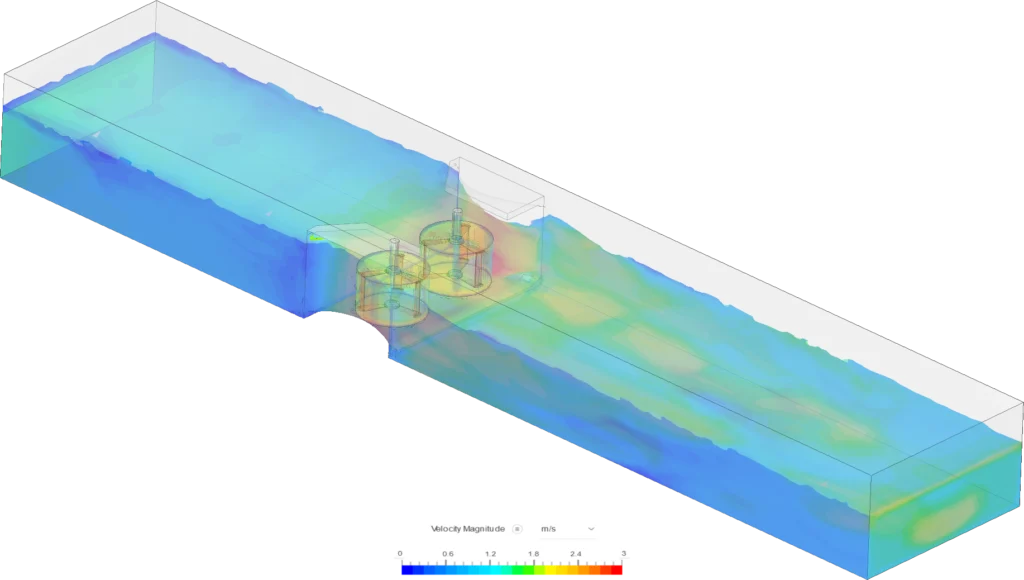
A representative project—the EM2.0 Twin model features a cross-section of two Emrgy turbines within a trapezoidal canal profile. Simulations track rotor RPM, flow velocity (1.0–1.5 m/s), and water surface deformation. The simulation model is used to evaluate:
  • Energy production potential
  • Water surface rise and fall (critical for canal safety)
  • Downstream recovery and drag loss
  • Venturi-style accelerator effects created by structural features
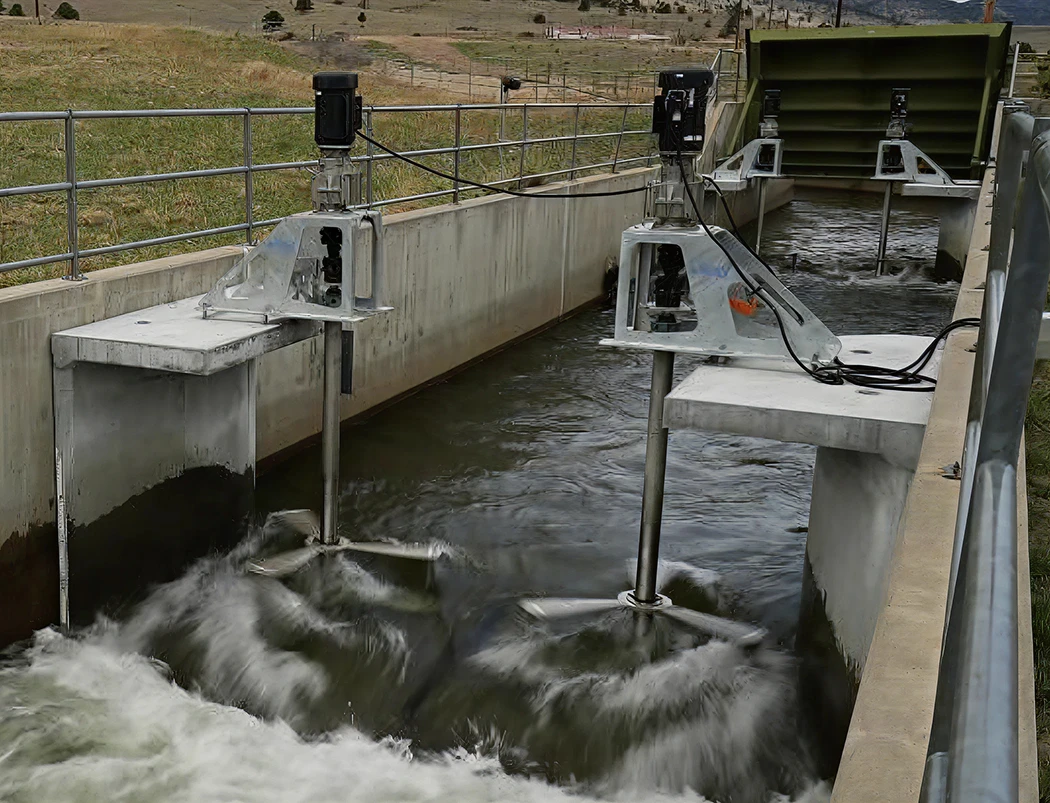
Installed twin vertical axis turbine in an irrigation canal.
Installed twin vertical axis turbine in an irrigation canal

Benefits of Using SimScale

Emrgy’s extensive use of SimScale allows it to go beyond generic hydro design and develop bespoke in-canal power solutions that coexist with irrigation infrastructure. The ability to model free-surface flow, rapidly assess turbine-canal interactions, and optimize layouts for both performance and hydraulic safety is transforming Emrgy’s design-to-deployment workflow including the following:

  1. Power Output Optimization: Simulations helped Emrgy refine turbine geometry and placement to increase velocity through the turbine zone via upstream accelerator walls—mimicking a Venturi effect that boosts kinetic energy.
  2. Hydraulic Impact Quantification: Emrgy can model the potential 3–4 inch remaining margin before canal overtopping. SimScale enables validation that turbine installations remain well within hydraulic tolerance limits.
  3. Rapid Design Iteration: Compared to legacy software, SimScale’s turnaround time enables virtually any size model to be tested quickly—driving faster product improvements and better-informed deployments.
  4. Cost & Labor Savings: The throughput enabled by SimScale’s platform has led to measurable reductions in labor hours per simulation. Combined with license savings, this results in a substantial drop in R&D cost per turbine deployment.
  5. Feasibility Studies: Emrgy runs predictive simulations based on canal geometry and flow data to inform site-specific PPAs (power purchase agreements) and asset performance estimates.
  6. Better-Targeted Physical Testing: With simulations informing core design decisions, field testing becomes a targeted validation step saving both time and capital.

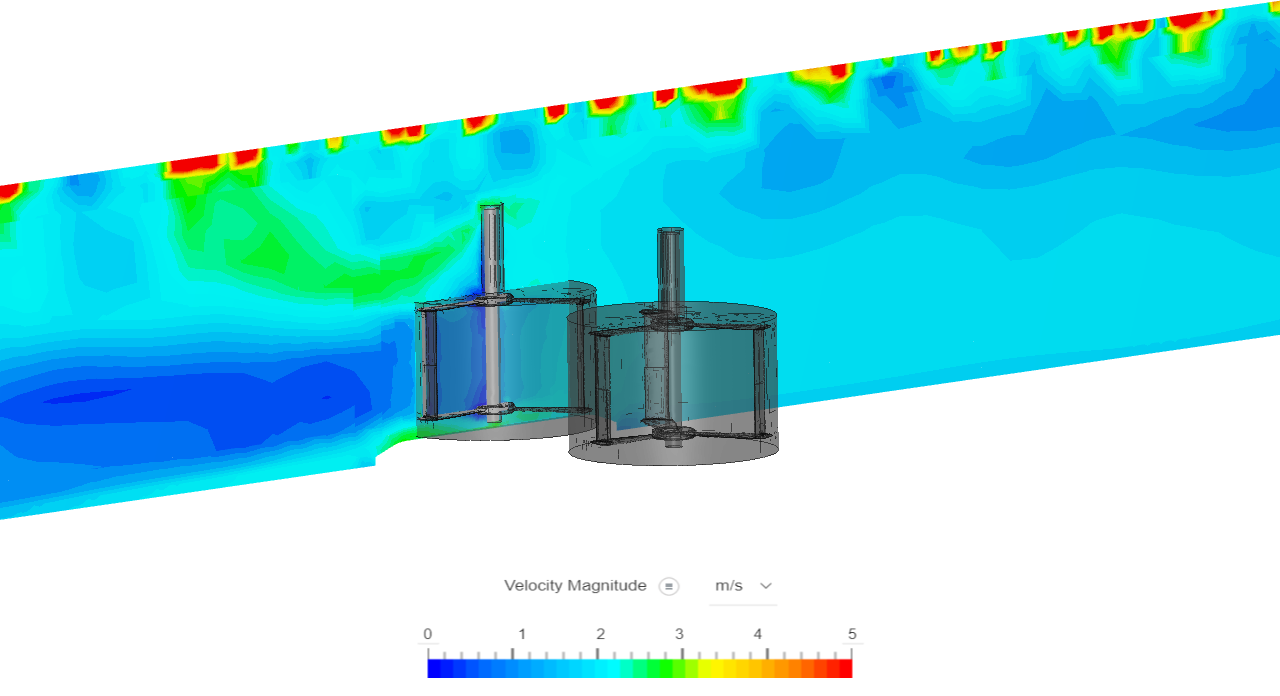
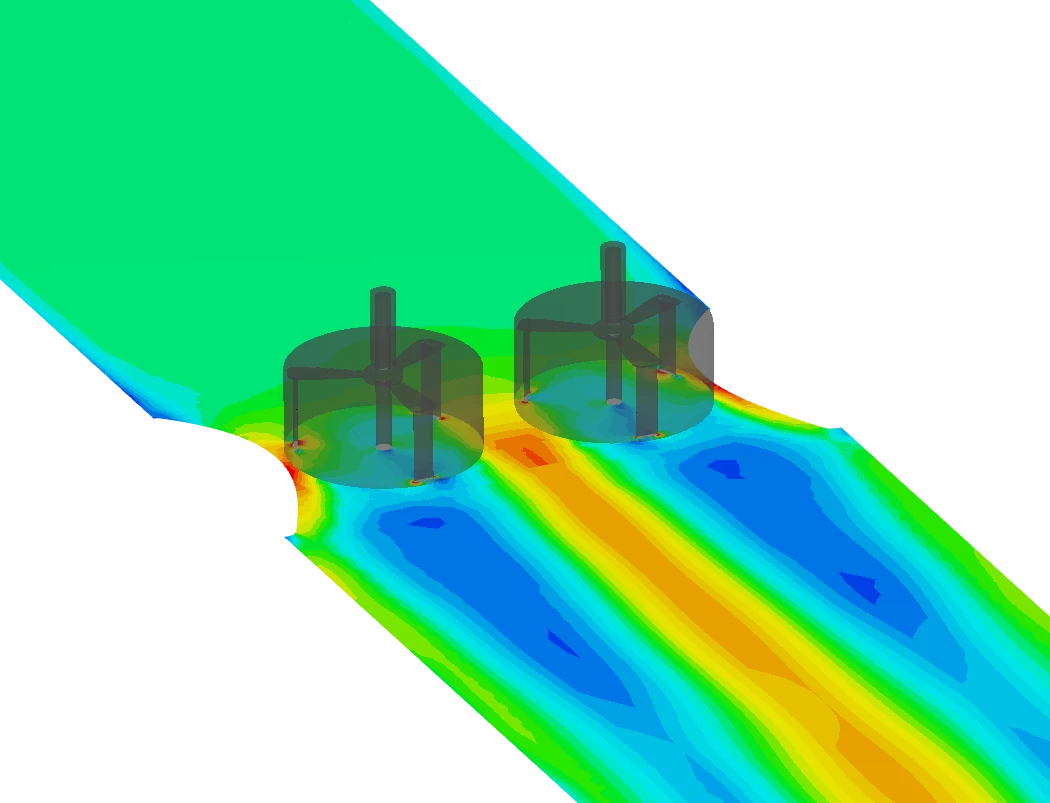
Flow simulation around an Emrgy vertical axis turbine:
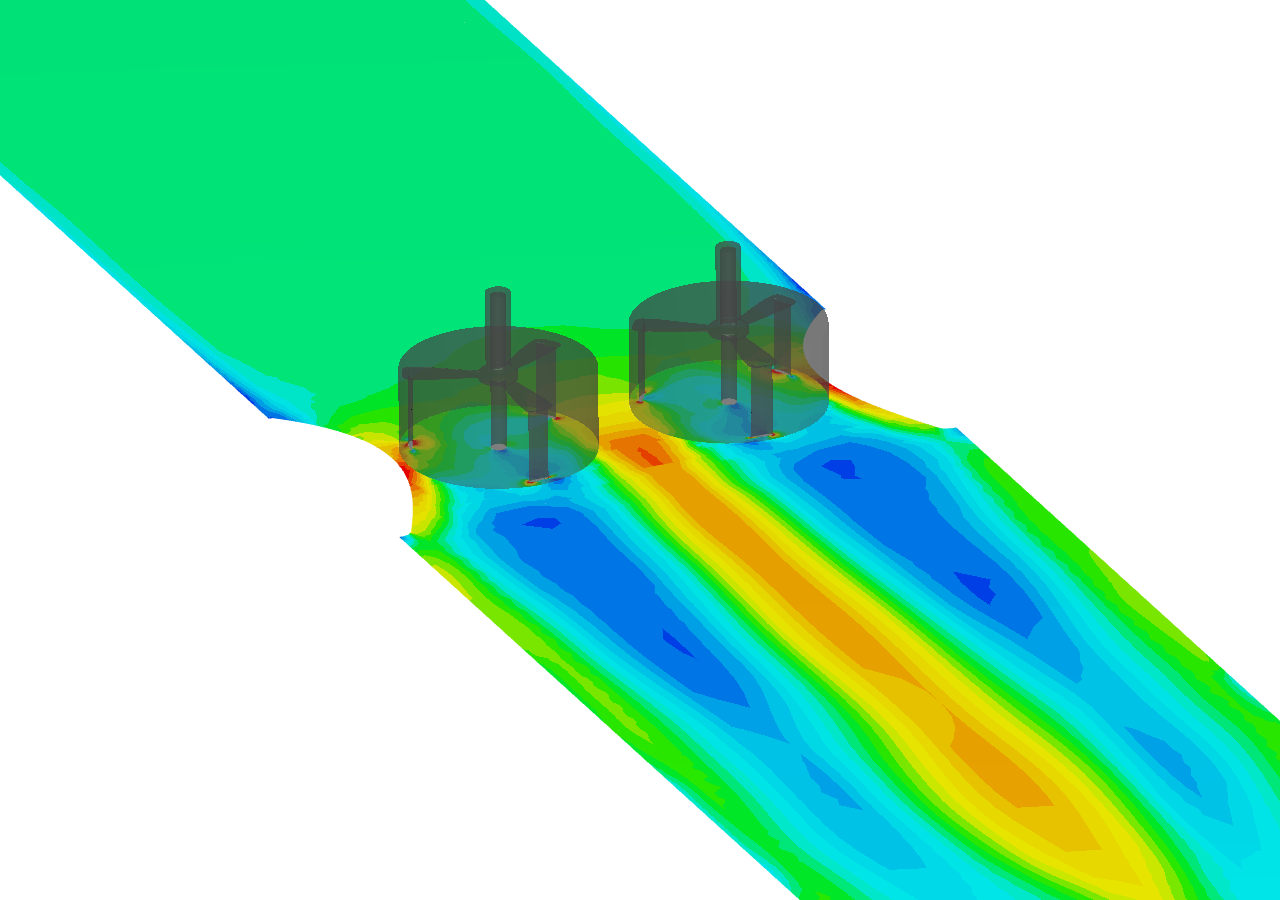
Flow simulation around an Emrgy vertical axis turbine
Flow simulation around an Emrgy vertical axis turbine (Flow direction is from left at 10 m/s)

Simply put, SimScale being cloud-based is more cost-effective. There are no hardware costs, and the flexible licensing is excellent, as it’s based on need rather than potential use. Using CFD in general to run through scenarios was historically a slow development cycle. Often, mechanical design development would outpace the simulation insights, which became the bottleneck. However, that’s changed. Now, it’s much faster and not limited by hardware. We can drive simulation insights into mechanical design and run five times the number of models at the same time compared to legacy systems. Development time is greatly reduced and aligns with mechanical, procurement, sales, and testing schedules. Scenario analysis can be performed instantly without needing to be scheduled.

John Tuttle

John Tuttle

Chief Engineer at Emrgy
Set up your own cloud-native simulation via the web in minutes by creating an account on the SimScale platform. No installation, special hardware, or credit card is required.