


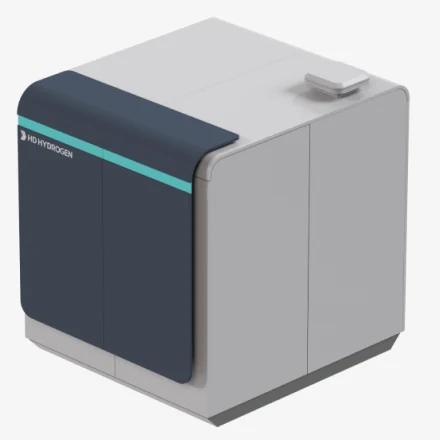
Established in 2012 in Espoo, Finland, Convion Ltd. is a technological pioneer in the solid oxide fuel cell (SOFC) and electrolyzer (SOEC) industry. Now a key subsidiary of the global shipbuilder HD Hyundai, Convion develops systems that are critical to the green energy transition.
Armin Narimanzadeh is the Thermofluids & Simulations team lead at Convion. Responsible for the thermal management, fluid‑dynamics & heat transfer performance of Convion’s systems, as well as 0D to 3D simulations. He applies physics‑based simulation and data‑driven methods to guide industrial design decisions.
Convion’s flagship products—the C60 Cogeneration System and the C250e Electrolyzer—leverage a Reversible Solid Oxide Cell (rSOC) architecture. This bi-directional technology can generate electricity from various fuel gases, or operate in reverse to produce green hydrogen from steam. Because these units operate at extreme temperatures exceeding 600°C, they achieve industry-leading efficiencies—over 60% electrical efficiency in power generation and >85% in hydrogen production.

“The design was complex, and using traditional simulation‑driven optimization to find the best‑performing configuration would have taken months.”
Armin Narimanzadeh
Manager, Thermofluids & Simulations, Convion
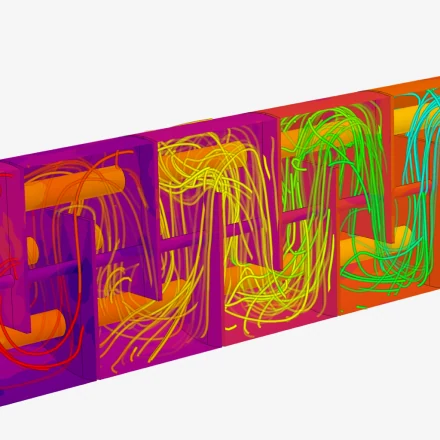
To maximize overall system efficiency, Convion’s solutions must recover and reuse high‑temperature process gases operating under harsh chemical and pressure conditions. These environments impose severe limitations on conventional mechanical solutions, necessitating a passive, geometry‑driven approach. “The geometry must simultaneously induce strong flow interaction while efficiently managing pressure recovery downstream,” Armin explains. “Key performance metrics are inherently coupled and often compete with one another, creating a highly non-linear design space that we need to carefully and thoroughly explore to identify optimal solutions.”
This engineering challenge was a prime candidate for design optimization, but time and resources were not available to run a CFD-driven optimization study for each variant and operating condition encountered. Previous efforts to address this using traditional surrogate modeling for improved iteration speed proved insufficient to capture the extreme non‑linear behavior present in this regime. Armin and the team needed a more capable approach.

Armin could see a potential solution in the form of Physics AI surrogate models, and so set about building a Physics AI ‘data factory’ using SimScale alongside a parameterized CAD model built in Onshape. “I found both tools to be very quick to pick up and drive via APIs, and they have a very smooth integration between them,” Armin comments.
He executed a large‑scale design of experiments (DoE) campaign in the cloud on SimScale, running hundreds of simulations in parallel. This produced a structured dataset linking geometric inputs to system‑level performance outputs. This dataset was used to train a Physics AI model that learned the underlying flow behavior. Once trained, the model could predict the performance of new design variants in milliseconds, effectively replacing hours‑long simulation runs. To validate the approach, Armin ran a full-fidelity CFD-driven optimization study alongside, arriving at an identical result. In terms of overall time investment, mapping the design space through DoE was comparable to a one-shot optimization study, thanks to the increased parallelism of DoE.
“We now have an AI model that can generate a new optimized design in under an hour, and I have complete confidence in the results.”
Armin Narimanzadeh
Manager, Thermofluids & Simulations, Convion
The resulting Physics AI model demonstrated impressive accuracy and speed, predicting performance within 5% of high-fidelity CFD simulation, and allowing the team to arrive at optimized designs in under an hour. But, as Armin notes, “the real transformation comes from the reusability of the model. I can share it across the team and we can re-optimize the design as many times as we need to as we encounter new challenges and conditions.”
Having proven the business case for investing in Physics AI model training to fuel rapid design exploration, Armin’s team are applying the same methodology to optimizing thermal management across other components in Convion’s rSOC product line. One such example is the development of the system’s high-temperature steam heater.

Before entering the active cell stack, incoming gases must be heated precisely to prevent catastrophic thermal shock to the delicate ceramics. Operating much like an industrial-scale immersion heater, the device relies on internal structural baffles to increase residence time and heat transfer by forcing the gas to circulate. However, engineers must meticulously balance this benefit against the aerodynamic drag generated by the baffles to minimize pressure drop, creating another optimization challenge.
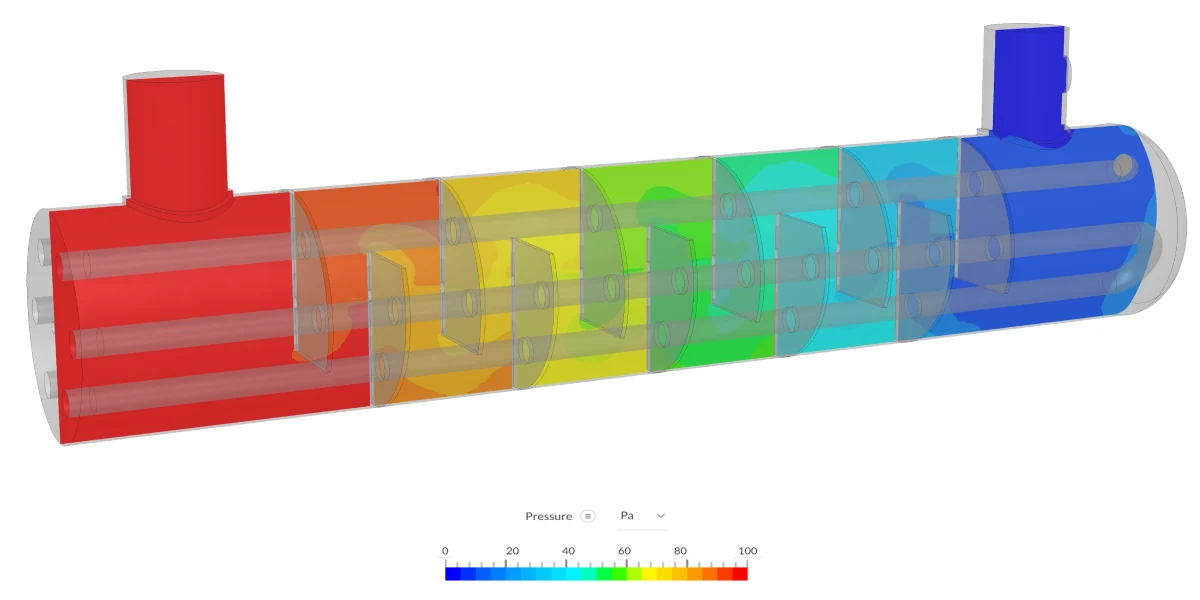
The team utilized Conjugate Heat Transfer (CHT) analysis in SimScale to build up a database of simulation data to rapidly explore different baffle configurations, again using a parameterized CAD model in Onshape. The CHT simulation predicts the simultaneous thermal interaction across four distinct physical regions: the heating core, the insulation material, the outer shell, and the internal fluid volume. The objective of the analysis is twofold: to measure the effectiveness of the heat transfer, while ensuring that material thermal limits are not exceeded.
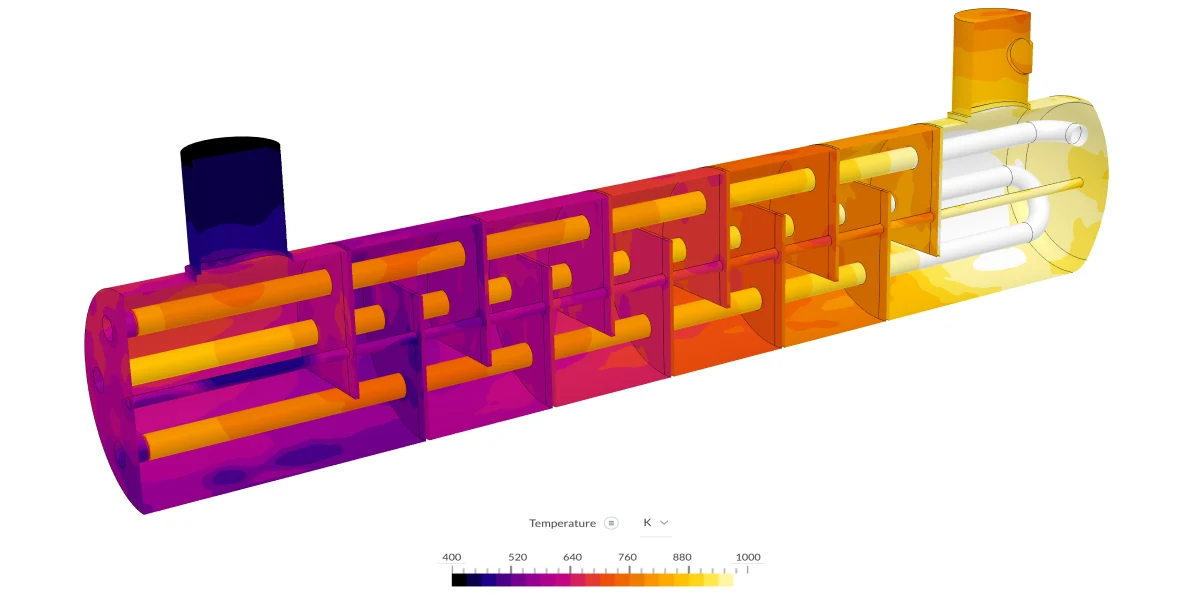
The success of this pilot established a new standard for Physics AI‑driven R&D at Convion. By making simulation insights immediately accessible through validated AI models released as internal tools, engineers can now explore design changes interactively without direct reliance on computationally intensive solvers.
To support the new paradigm of accelerated engineering using Physics AI, Convion has transitioned away from workstation‑based engineering and adopted a fully cloud‑native workflow, combining parametric CAD with high‑performance cloud simulation. This a trend Armin expects to continue, “we are now investigating all the possibilities that cloud-native simulation with AI unlock, especially ways in which the agentic Engineering AI can help to accelerate these processes even further and make the tools more easily accessible to the wider team”, he adds.
As the hydrogen economy continues to mature, the ability to iterate hardware at the speed of software will distinguish market leaders. Through its cloud‑native engineering approach and Physics AI adoption, Convion has secured this capability—ensuring its technology remains at the forefront of the global energy transition.
Set up your own cloud-native simulation via the web in minutes by creating an account on the SimScale platform. No installation, special hardware, or credit card is required.
Sign up for SimScale
and start simulating now
