

AIRLIT studio is an environmental design consultancy with an approach rooted in technical excellence and focused on developing sustainable and innovative solutions for buildings and entire developments. Its approach is centered around occupants and how they will experience a building and its environment. AIRLIT studio offers a suite of simulation services that drive analytical approaches to answering building performance questions.
As part of the design process, the studio assists its clients in framing the intent behind an energy, comfort, or indoor air quality analysis, considering factors such as the design concept, project schedule, cost, or other key drivers. The use of simulation tools is used to design for the following variables and performance indicators:
AIRLIT studio has recently introduced SimScale as part of its core simulation and analysis offering, led by Alonso, a Founding Principal at AIRLIT studio. Alonso is an expert in solving first principles in building science to achieve high-performance and occupant-centric solutions in the built environment. He leverages this experience in mechanical system design, energy and comfort analysis, and computational fluid dynamics (CFD) to find cost-effective and low-carbon solutions that meet clients’ aspirations. Alonso’s diverse project experience includes university campuses, science labs, museums, performing arts centers, elementary schools, and residential and office buildings. In addition, he has collaborated with states and cities to develop cutting-edge carbon neutrality policies. Notably, he contributed to the design of New York and Boston’s first all-electric skyscrapers and is now driving the adoption and usage of SimScale CFD and microclimate tools.
Using SimScale is a treat for those of us who love to combine architecture and engineering. We have used at least three other CFD packages in our professional lives, and nothing is as easy to use or as powerful as SimScale. We love how easy it is to use the interface, and yet how powerful the platform and tech support are to model complex physical phenomena including complex airflows around buildings and cities and indoor air quality using natural ventilation.

Alonso Dominguez, PhD
Principal at AIRLIT studio
AIRLIT studio used SimScale to support the design of a 9-story naturally ventilated library building at the University of Lima (Peru), designed by Sasaki Architects. As part of the wider energy and comfort design, Alonso used SimScale to answer questions that can’t be addressed using simpler bulk airflow models, like:
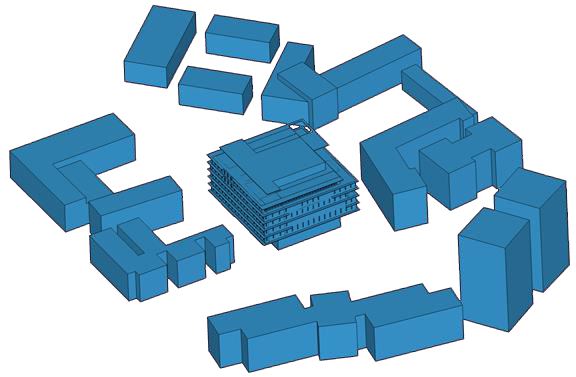
These problems are investigated by typically running large-scale simulations of incompressible flow, where the team is looking to understand air speeds. flow rates. and temperature distribution in indoor spaces. The workflow begins with a Rhino model provided by the architect, which was imported into SimScale after some CAD cleanup and modifications.
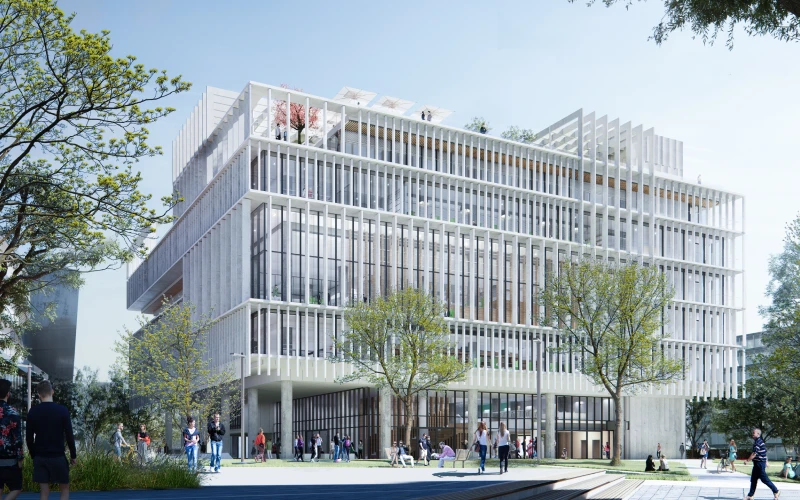
AIRLIT studio was tasked by the architect to understand how the current natural ventilation design performs in terms of thermal comfort and air velocities under buoyancy (only) and wind-driven conditions. This was necessary to form an understanding of how the library ventilation in floors 3 to 8, thermal comfort indoor air quality is impacted by natural ventilation at present. To do this, Alonso set up interior and exterior CFD simulations using SimScale with two scenarios:
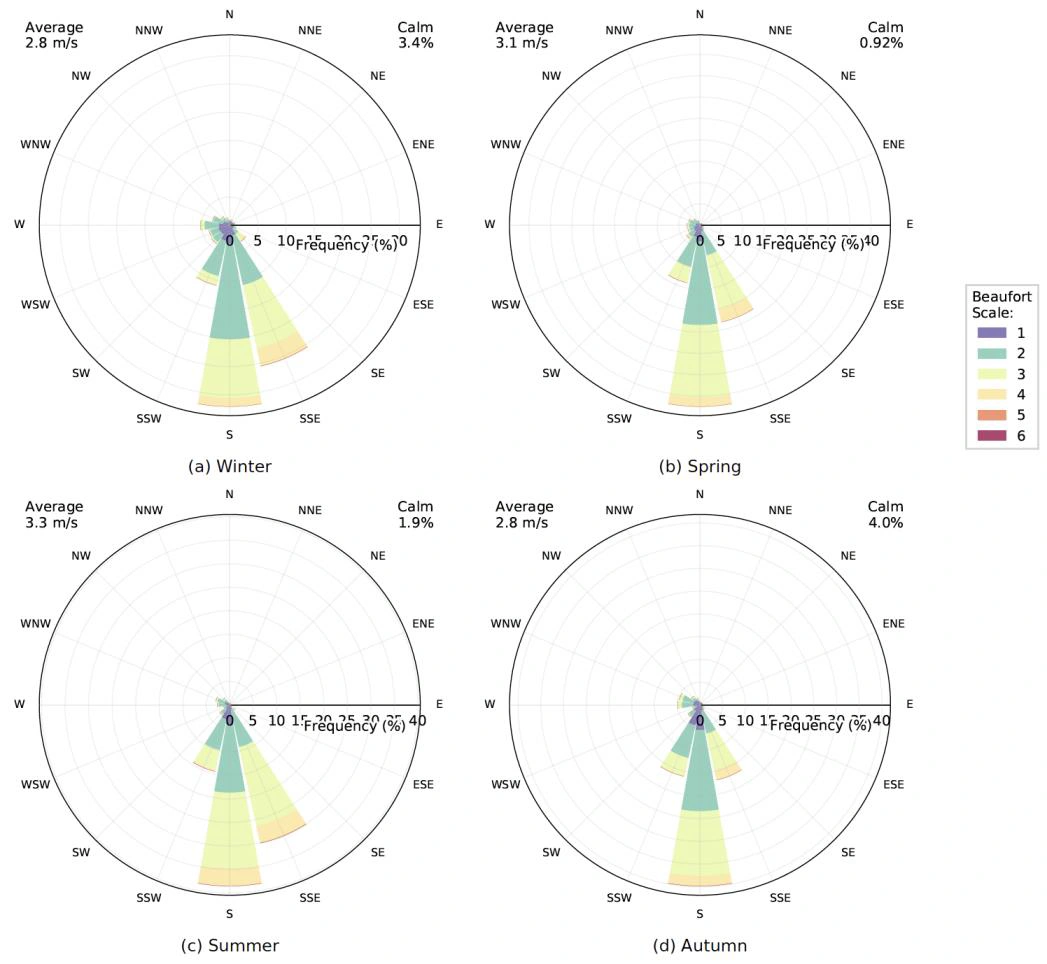
A good starting point is a climate analysis. Alonso’s team evaluated the annual and seasonal data for wind speeds and directions in Lima, Peru, to ascertain the correct external wind conditions needed for the simulation setup. This data can be edited to suit the local terrain and site and then imported into SimScale for incompressible external airflow simulation using OpenFOAM.
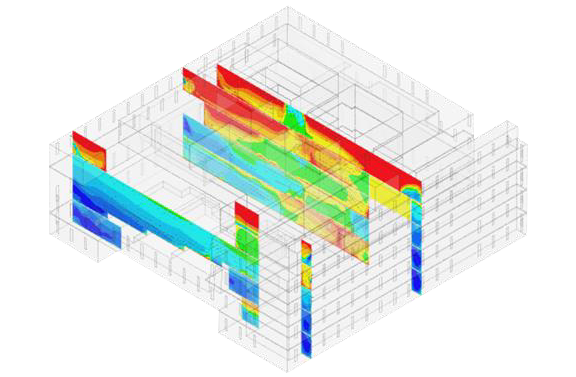
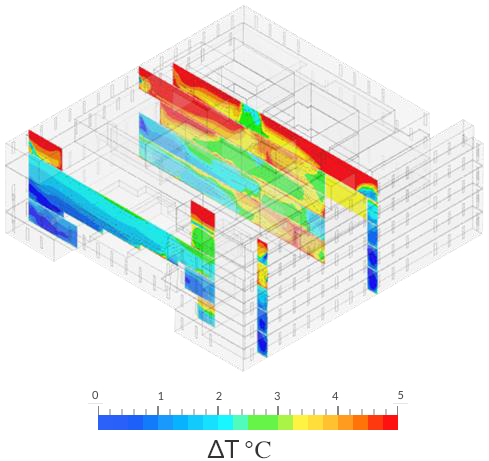
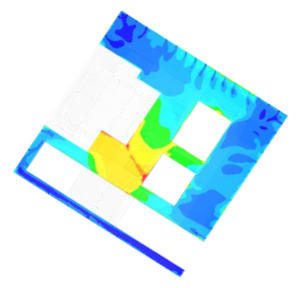
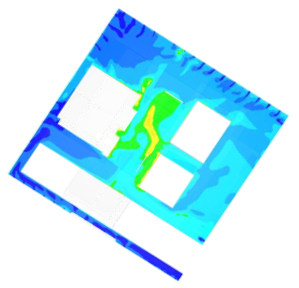
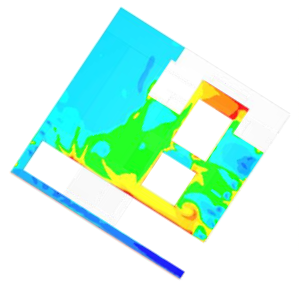
In this buoyancy-only scenario, the purpose of the study was to simulate temperature-driven air flow through the library building. Differences in air temperature between the exterior and interior air cause density variations that drive airflow. These temperature differences can come from heat gains from external sources (solar gains, conduction through the walls, or convective heat transfer through infiltration, window openings, etc.) or internal heat gains (heat emitted by occupants, lights, equipment, for example). In this case, the team wanted to understand the impact of heat gains on indoor temperature distribution. Thermal comfort boundaries were set at 18℃ – 26℃ as per the local guidelines, and thermal mass effects were not accounted for as a conservative scenario. The study focused on floors 3-7.
 |
 |
 |
 |
 |
 |
||||
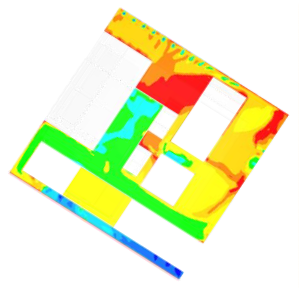
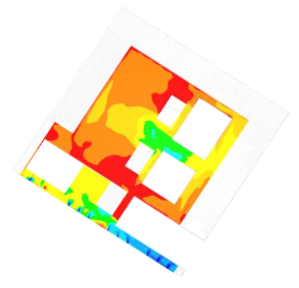
The current design is considered appropriate from a thermal standpoint. Thermal stratification is observed throughout the building: Lower floors are expected to be 3-4℃ cooler than upper floors. The floor temperatures are overall uniform in each floor, and while warmer, the upper floors remain within 5-6°C of outdoor air temperature which is considered acceptable.
It is expected that natural ventilation will be feasible between 52% and 62% of occupied hours (upper and lower floors, respectively), and keeping the window open at night will increase the passive cooling hours by almost 20%-30%. From the climate analysis and annual simulations, it can be seen that January – March may be too hot/humid to use natural ventilation.
In the wind-driven scenario, the purpose of the study was to evaluate the impact of wind on potential interior draft conditions. In the first simulation run, the setup was as follows:
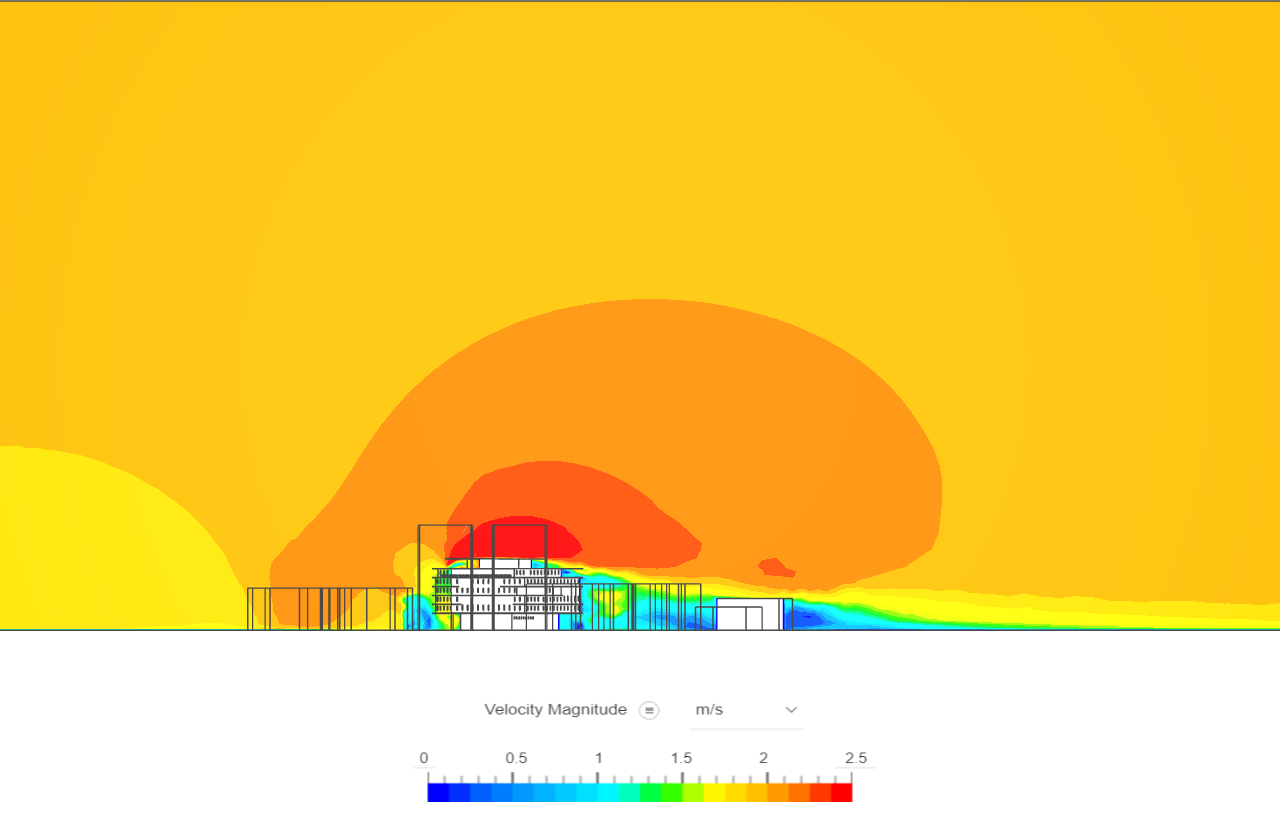
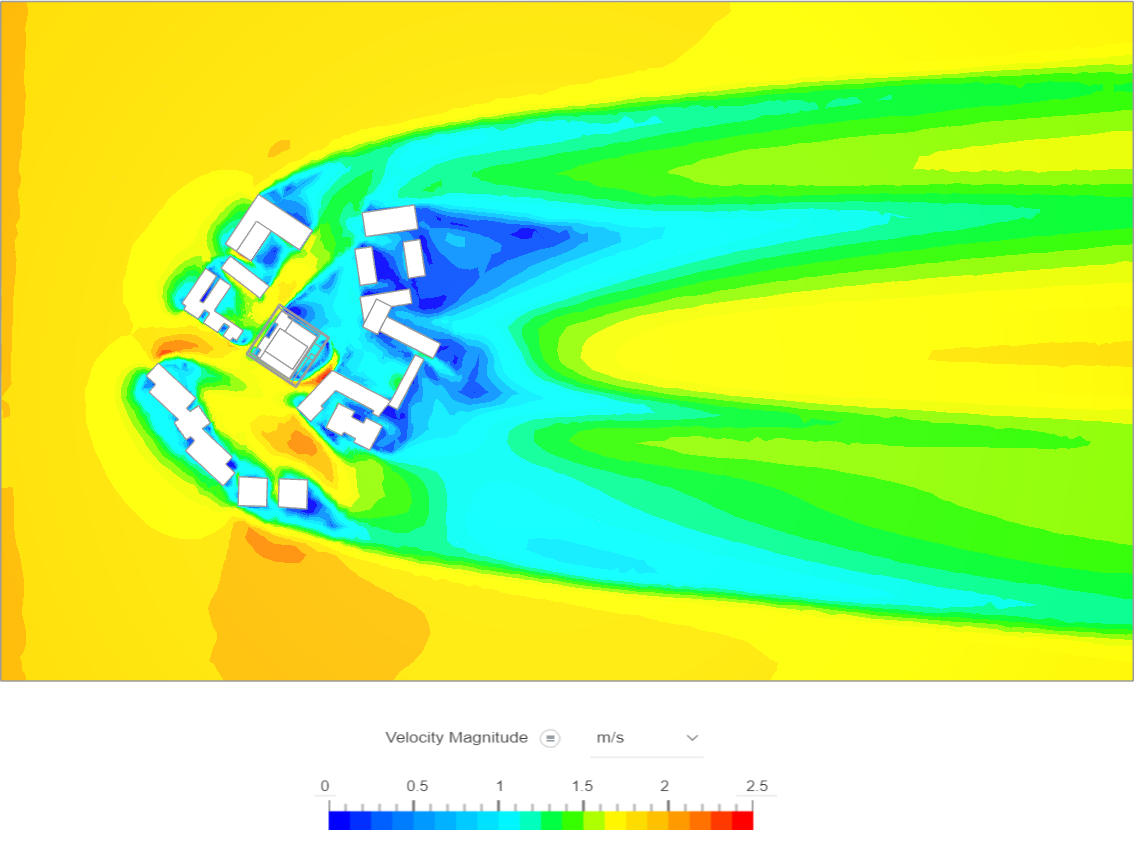
Indoor air speeds in most areas are expected to remain under 0.5 m/s, which is considered appropriate when evaluating wind drafts in naturally ventilated buildings. The 1m/s threshold may be exceeded when meteorological speeds exceed 4m/s, which is 15% of the time, annually.
The current design of the new library of the University of Lima will achieve comfortable conditions most of the year:
These findings could only have been made possible with the use of CFD tools such as SimScale.


Sign up for SimScale
and start simulating now