A new global survey of 350 engineering leaders reveals how AI is reshaping product design, why some teams are pulling ahead, and what it really takes to move from pilots to scaled operational value.

Engineering leaders no longer need convincing that AI matters. The challenge now is turning AI experiments into real engineering and business outcomes, at scale.
Our 2026 research shows that while adoption is accelerating, only a subset of teams are translating AI into measurable impact. The difference is not ambition, but how AI is embedded into workflows, infrastructure, and decision-making. For those getting it right, the shift is clear: engineering cycles are moving from months to minutes.
Here are five findings from the report every engineering leader should understand.
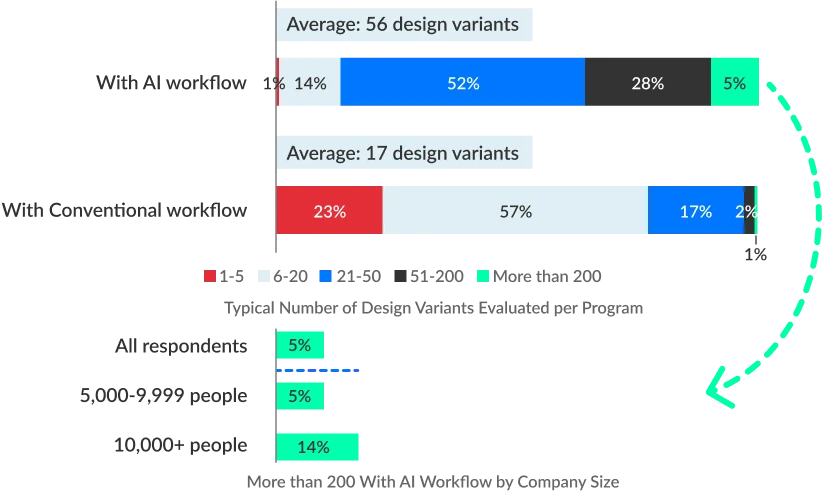
Teams using AI workflows evaluate >3× more design variants per program, enabling engineers to explore a broader solution space, test more ideas, and converge on optimized designs earlier in the development process. Rather than simply accelerating existing workflows, AI is expanding what engineering teams can achieve.
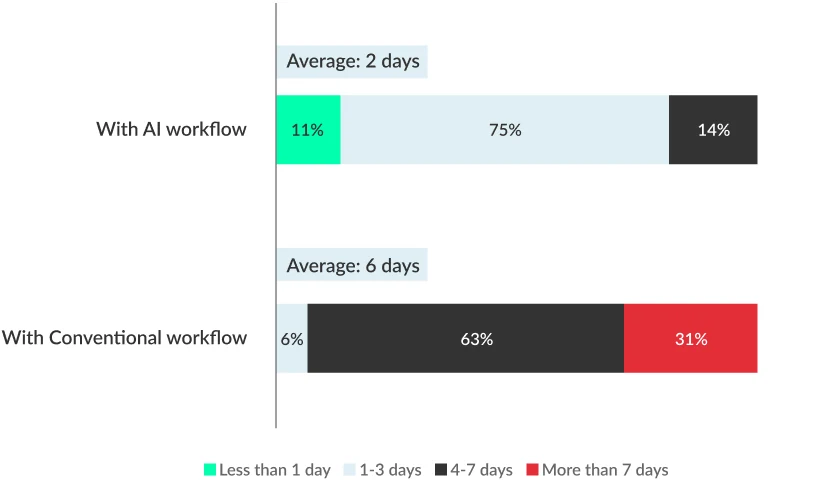
Engineering teams using AI workflows report ~3× faster RFQ turnaround times than those using conventional processes. This is no longer just an internal productivity gain—AI is improving customer responsiveness, increasing proposal competitiveness, and accelerating how quickly engineering teams can turn insight into commercial outcome
The 2026 report shows where Engineering AI is already creating value and what separates teams that are scaling from those that are still stuck in pilot mode.

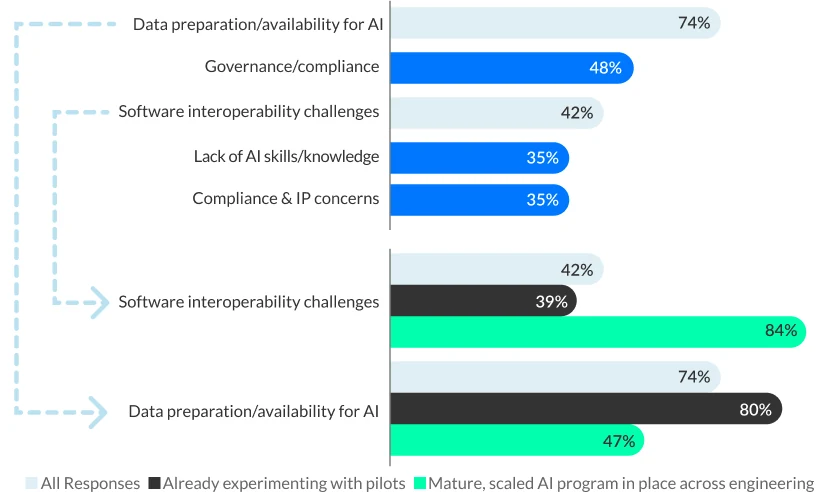
Organizations making the most progress are distinguished less by perfect data and more by modern engineering infrastructure. Leading teams combine cloud-native platforms, governance, and integrated workflows to embed AI into day-to-day engineering, showing that value can be created without waiting for ideal data conditions.
74% of organizations cite data preparation and availability as the top barrier to scaling AI. However, this concern is strongest among teams still in pilot stages. While advanced use cases require structured data, many Engineering AI applications can begin delivering value earlier—meaning waiting for perfect data can delay progress.
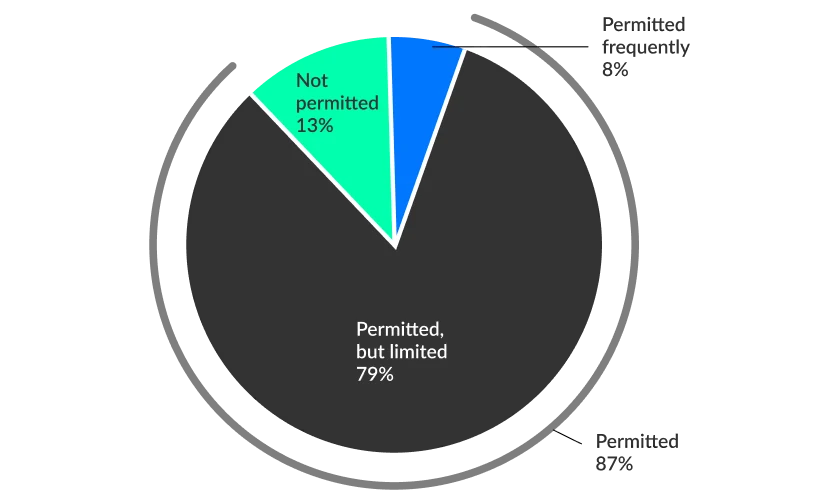
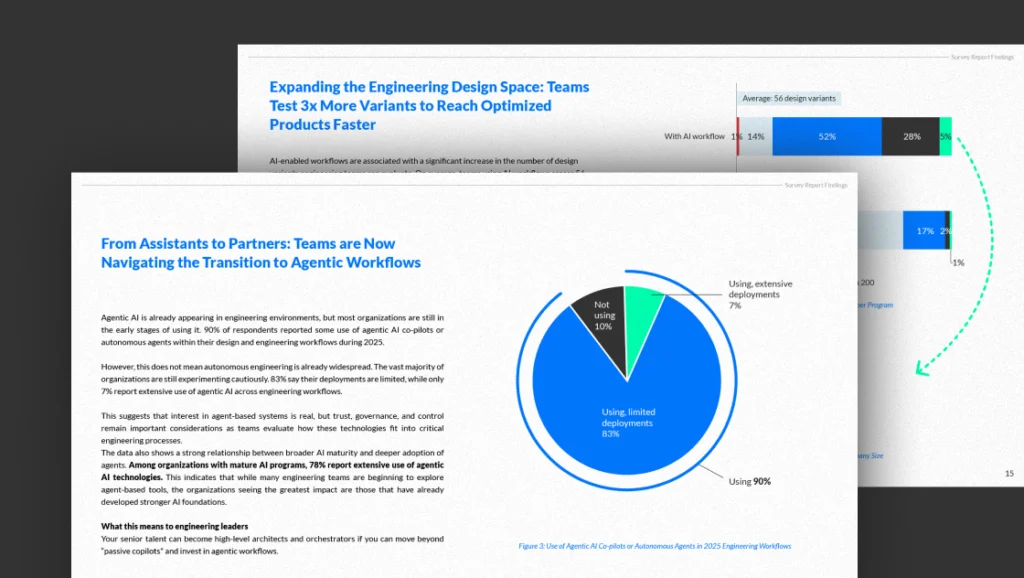
AI copilots are already widely used across engineering workflows, helping teams automate tasks and accelerate design processes. Fully autonomous agents remain early, as organizations build trust through governance and validation—indicating that autonomy is scaling carefully as confidence and control mature.
Explore the findings from the State of Engineering AI 2026 in our webinar, featuring speakers from SimScale and Accenture sharing practical insights on how Engineering AI is transforming product design and innovation across industries

Sign up for SimScale
and start simulating now
