
SimScale enables marine engineers and designers to test, validate, and optimize their designs through CFD, FEA, and thermal analysis.
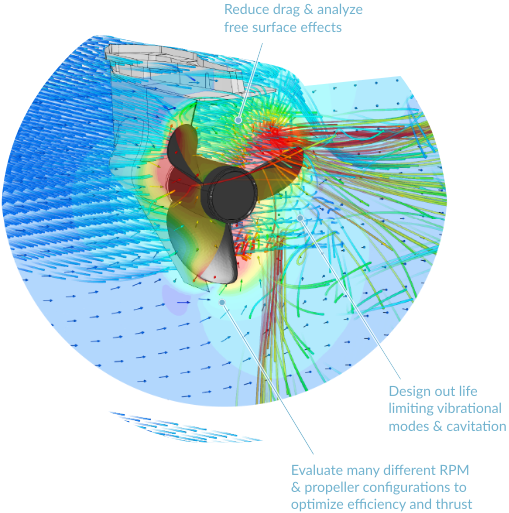







Being an integral part of the design process, from concept to product release and certifications, Computer-Aided Engineering is an indispensable tool in the Marine industry. SimScale’s cloud-based tools are recurrently applied to solve problems in the domains of computational fluid dynamics, structural, conjugate heat transfer, and thermal simulations. Single phase as well as multiphase CFD techniques are employed for the simulation of marine components.
The propulsive efficiency of ship propellers can be significantly enhanced with CFD. With SimScale’s cloud-based CFD tool, the propeller performance can be quantified and improved, end-to-end, in the web browser. Furthermore, SimScale’s cavitation model can robustly model the effect of vapor bubbles and resulting damage to the propeller.
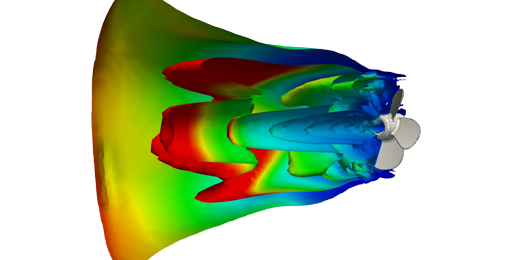
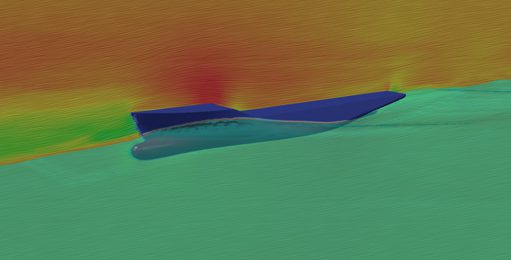
The ship hull resistance is the primary factor influencing fuel efficiency in ships. SimScale provides a 100% cloud-based CFD simulation of this process. The resistance of the ship in still water, as well as ship deck aerodynamics, including analysis of onboard ventilation systems, can be simulated in SimScale.

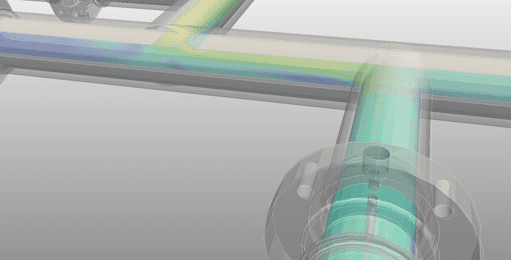
Submarine pipelines, often connecting two continents for oil or water supply, are highly reliant on fluid and structural simulations to alleviate points of failure. With SimScale’s FEA and CFD capabilities, high-fidelity simulation results, like pressure drop assessment, flow efficiency, and valve functioning, can be directly implemented into the early design as well as in-operation maintenance processes.
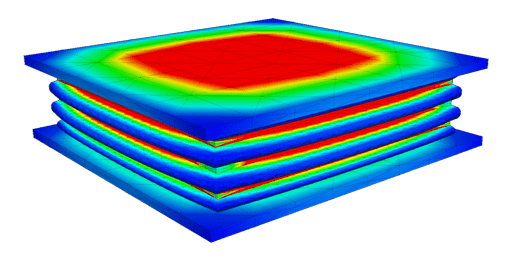
The bearing loads on a bridge are crucial to its structural integrity. With SimScale’s nonlinear FEA capability, the loads can be accurately quantified.
Because bridge elastomeric pads are crucial to safe and cost-effective bridge design, they are extensively prototyped and tested before they are used in production.
Customer Success
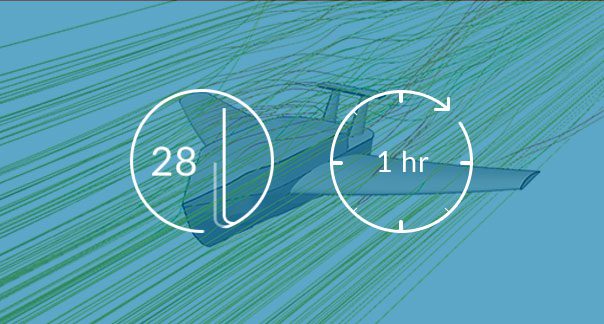
Brainbox used SimScale to study the behavior of a wing-in-ground (WIG) effect for a marine craft using external aerodynamic flow analysis. They were able to run 28 simulations in parallel and single-phase simulation results averaged an hour or less.


Sign up for SimScale
and start simulating now