
Uniola GmbH is an interdisciplinary architectural firm with approximately 140 employees dedicated to creating sustainable open spaces and living areas for people, animals, and plants. With five locations and a broad project portfolio encompassing landscape architecture and urban planning, Uniola emphasizes leveraging in-house knowledge and maintaining strong local client relationships.
Their Munich team, with over 25 years of experience, specializes in projects ranging from private gardens to large-scale urban planning, often serving as lead planners and open space experts within interdisciplinary teams. A key area of focus – led by Executive Manager Annika Sailer – is climate simulation and climate design.
Silvia Benedito, a landscape architect, architect, and urban designer with over 20 years of international experience in climate-responsive design and planning, serves as a climate expert at Uniola GmbH in Munich. She holds degrees from the University de Coimbra (Portugal) and Harvard University (USA), as well as a PhD dedicated to microclimates and design strategies aimed at enhancing comfort and well-being under thermal stress.
Uniola utilizes simulations in two primary ways: as a design tool and to support sustainability certification processes including those of the DGNB (German Sustainable Building Council). The firm’s workflow has evolved to incorporate simulation tools earlier in project development, allowing for a deeper understanding of climatic challenges and a shorter feedback loop between design decisions and their microclimatic impacts. This integration has led to greater autonomy in their design process.
For certification processes, simulations are crucial for validating strategies, such as protecting key wind corridors, managing stormwater on-site during extreme rainfall, and verifying solar radiation levels to ensure thermal comfort. Uniola also makes extensive use of simulation results to clearly and concisely communicate the microclimatic implications of different design strategies to external stakeholders.
Uniola chose SimScale for its cloud-based processing, which frees up local workstations and handles large simulations more quickly and robustly than other solutions they had experience of.
We typically save 5-8 hours per simulation with SimScale compared with our previous workflow

Silvia Benedito
Landscape Architect and Urban Designer, Uniola
This increased productivity, combined with responsive customer support, contributes to a fluid and efficient workflow, ultimately increasing engineering velocity: “Being able to see results so promptly enhances both efficiency and momentum in the design process,” states Silvia Benedito. Furthermore, “the readily available customer service—whether for resolving modeling issues or verifying outputs—helps streamline the workflow between us and SimScale, making the simulation process smooth and efficient.” SimScale has helped Uniola become more competitive by allowing them to bring simulation work fully in-house, linking directly with design.
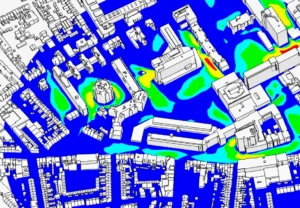
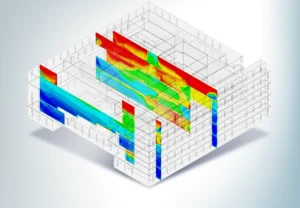
Since architectural engineering requires results to be communicated to multiple stakeholders – clients, authorities and regulatory bodies – the ability to rapidly retrieve simulation data and generate compelling visualization of flow and thermodynamic interactions is key. “It is also important for us to have easy access to standard metrics such as the Lawson criteria for Pedestrian Wind Comfort (PWC), which is an important indicator for DGNB sustainability evaluation”, adds Silvia.
Uniola applied its simulation expertise in the Siemens Campus Erlangen South Urban Quarter competition, in which their proposal was awarded second prize. For this project, Uniola collaborated with the architects Fink+Jocher. The project addressed nocturnal overheating in the area, a phenomenon known as the Urban-Heat Island Effect (UHI), which registered about 5-7°C. Uniola’s strategy focused on increasing ventilation to dissipate accumulated thermal energy.
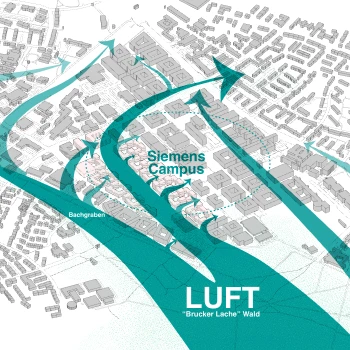
By analyzing information from the Planning Department of Erlangen, Uniola identified potential nocturnal wind movements which could be harnessed for cooling the new Siemens Campus Quarter. This insight formed the basis of their urban strategy, leading to the creation of a central park acting as a wind corridor.
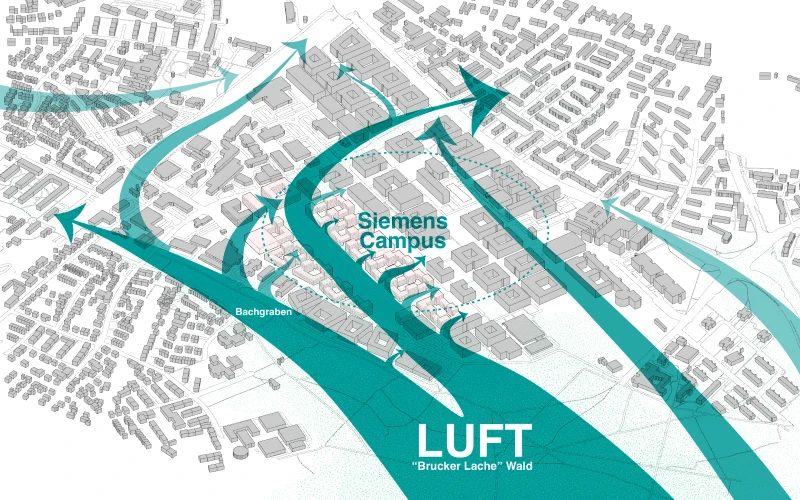
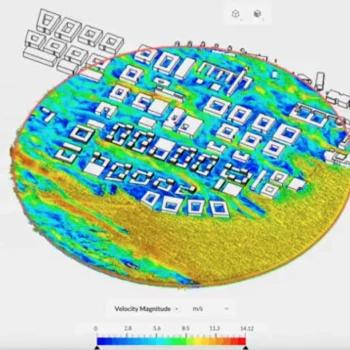
Uniola used SimScale to simulate the nocturnal wind movements, showcasing air movement through the proposed park. This “new void” became the generator of the urban form, with buildings oriented and aligned towards it. The park was also designed to manage rainwater, with increased humidity further improving adiabatic cooling and local air movement.
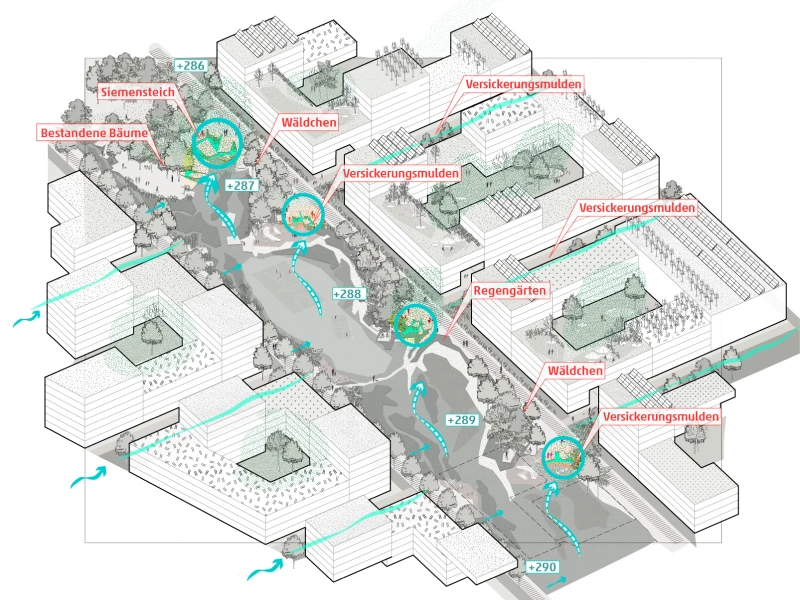
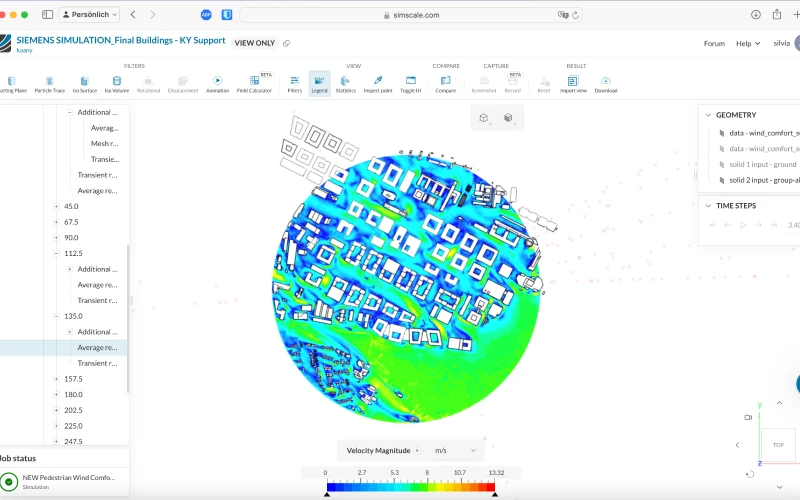
We used SimScale firstly to predict the air movements through this new park, and to quantify the cooling effect that results, but simulation was also crucial to help us to convey the idea of a ventilated new neighborhood to the judging panel.
Uniola used simulation to explore several variations, including the closing of the Eastern part of the site, which resulted in reduced ventilation capabilities. This also helped support the argument for demolishing an existing building in the center of the park by providing scientific evidence of the benefits.
Silvia and Annika anticipate that simulations will play an increasingly vital role in urban design strategies and landscape planning, as climate stress continues to heighten the importance of thermal protection. Identifying smart ways to harness natural systems for cooling—such as the wind corridor at the Siemens Erlangen campus—is essential for creating more sustainable urban environments. These approaches help reduce energy use, enhance ventilation, and mitigate thermal stress, contributing to healthier and more memorable open spaces.
Uniola anticipates scaling up its use of simulations with a growing project volume, with a future goal of combining thermal simulations with wind and comfort factors like PET and UTCI. The team is working on an optimized methodology to implement integrated approaches for thermal comfort evaluation.
Using SimScale, Uniola can offer a competitive “one-stop shop” for linking simulations with design, enhancing our ability to visualize and present bio-climatic concepts to clients and authorities.

Annika Sailer
Landscape Architect and Munich Executive Manager, Uniola

Sign up for SimScale
and start simulating now