
Pektron Accelerates Bespoke Automotive Electronics Development with Cloud-Based Thermal and Vibration Simulation

Peak temperatures within 5°C of environmental chamber tests

Transformed FEA workflow from weeks to days
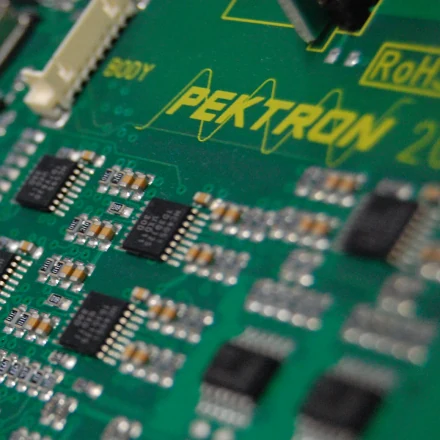
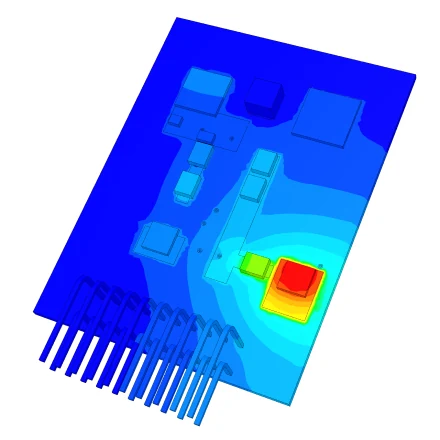
Pektron, headquartered in Derby, United Kingdom, is a specialized OEM manufacturer of bespoke, high-performance electronics. Founded in 1964, the family-owned enterprise has a 60-year history of delivering end-to-end electronics design and manufacturing for highly competitive, rugged environments, including the premium automotive, off-highway, agricultural, and construction sectors.
Pektron operates a fully integrated technology campus in the UK, complete with an on-site clean room, 11 plastic injection molding machines, and multiple surface mount technology (SMT) lines. Crucially, the campus houses a comprehensive UKAS-accredited testing laboratory no.23412 (ISO/IEC 17025:2017) equipped for rigorous climatic and dynamic validation. This deep integration with physical testing allows the company to progress designs from conceptual schematics to test-ready physical prototypes with exceptional speed.
Andrew Ashby, a Mechanical Engineering Manager at Pektron, has spent 16 years overseeing the mechanical packaging, thermal management, and physical validation of bespoke electronics. Operating with a quality-focussed, engineering-first culture, Andrew’s team must ensure delicate microelectronics can survive brutal physical testing protocols. “We prioritise engineering standards over most other considerations. In that sense, everything’s possible,” Andrew notes regarding their design philosophy.
The team could see the potential value in engineering simulation to drive design direction, eliminate poorly performing options early on and discover more innovative solutions. Previous attempts to adopt Finite Element Analysis (FEA) tools had ended unsuccessfully. The tools were found to be complex, requiring multi-day training courses just to build basic models. Pektron needed a platform that was accessible to mechanical engineers, computationally powerful, and fast enough to integrate into their agile commercial cycles.

“We don’t have the time or the manpower to spend weeks setting up a simulations, and I’ve got all the facilities on site to make physical prototypes and test them quickly. So I needed a fast, easy-to-use simulation tool.”
Mechanical Engineering Manager, Pektron
After discovering SimScale and experimenting with a community account, Andrew was convinced to try integrating cloud-based simulation into Pektron’s electrical and mechanical design workflow. “One of the biggest strengths is that we don’t need any specialist onsite IT kit – and we are not constrained by it either in the cloud. Since SimScale met all the IT cybersecurity standards we needed, it was an easy decision,” he adds.
A recent project required Andrew’s team to design a bespoke automotive control unit, densely populated with high-side drivers that control high-current loads like heated seats and windscreen wipers. These components produce a significant thermal load, and the engineering team had to guarantee the unit would not overheat under various worst-case load combinations.
Because the company has developed a rapid SMT prototyping process, physical iteration was the default method for this type of device. However, simulation could give the team the edge, if it could deliver results in a shorter timeframe.
“Generally once a design and schematics are done, I can have a board on the test bench within a week. But what I can’t see without simulation is all the different iterations and permutations… And that’s where it provides the big advantage – giving us the confidence to say yes, we’ve looked at the options and we are good to go down this route.”
Andrew Ashby
Mechanical Engineering Manager, Pektron
To maximize engineering velocity, Andrew isolates the primary heat-generating chips in his CAD model and applies a simplified geometry and heat source in SimScale to simulate the thermal dissipation. By running concurrent cloud simulations with ambient air domains at 25°C and 85°C (mirroring the UKAS environmental chambers), Andrew quickly and accurately mapped the thermal blooming. The digital predictions closely matched the tested reality, tracking within 5°C of physical results.
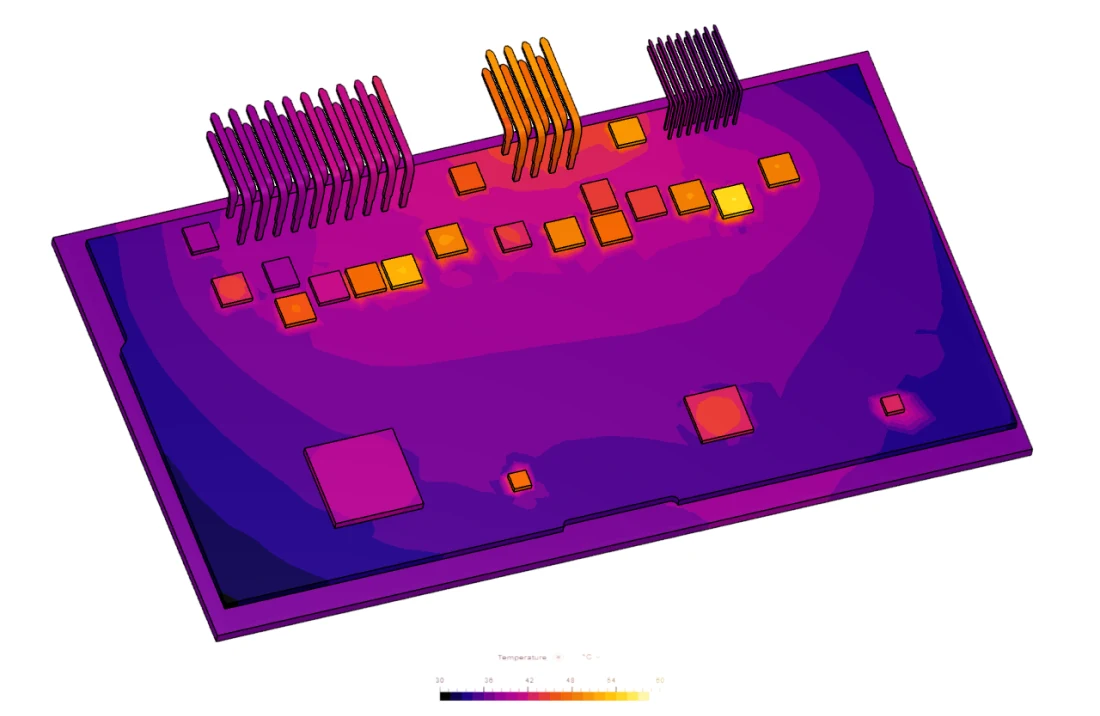
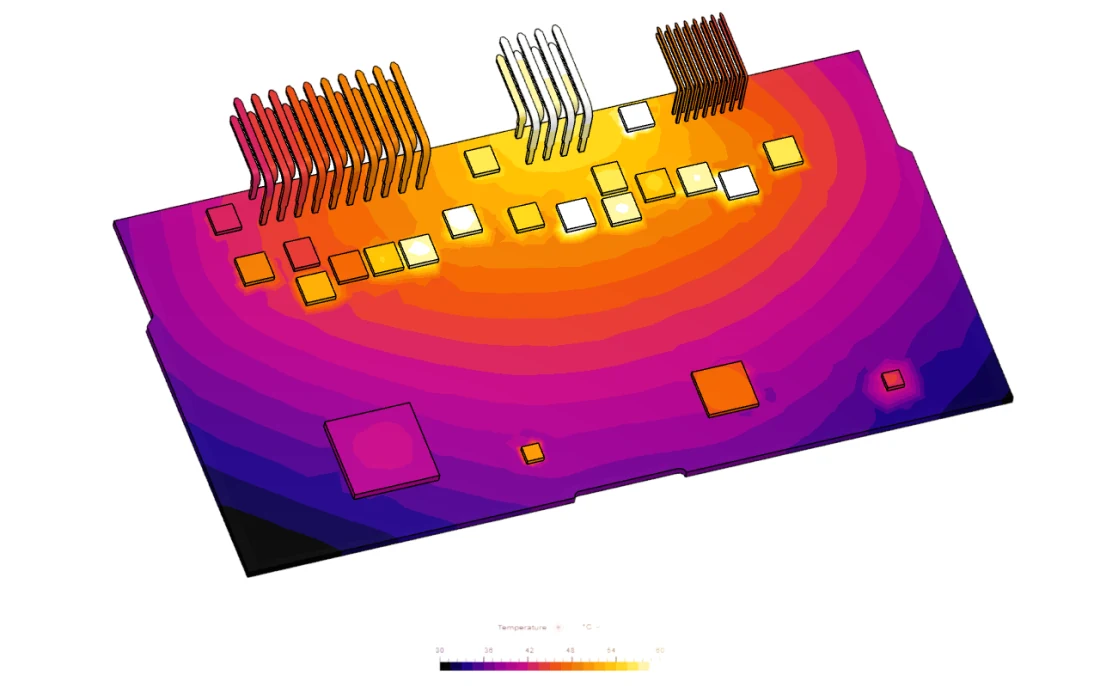
This predictive accuracy directly influenced the physical product architecture. The initial, conservative assumption was that the high-side drivers necessitated a heavy, expensive die-cast metal enclosure for heat sinking. By evaluating the thermal model in SimScale, Andrew proved a lightweight aluminum pressing was sufficient. “By testing a few options in simulation up front, I could be confident that we didn’t need a full metal enclosure”, he explains, so in this case we could select a much more cost-effective solution without sacrificing reliability.
Beyond thermodynamics, the mechanical team leverages SimScale for structural analysis. Maintaining their UKAS accreditation requires that all custom metallic testing fixtures (jigs) be analytically checked for natural resonances before live vibration testing on the shaker tables. If a jig resonates at the testing frequency, it will amplify the destructive energy and tear the product apart.


By importing STEP files into SimScale for rapid modal analysis, the team can visualize and eliminate resonant frequencies digitally. Recently, this capability allowed them to design a single, highly optimized, universal vibration jig capable of testing two completely different bespoke electronic assemblies safely. “We’ve only had to build one jig to cover two jobs with the use of SimScale,” Andrew notes, “significantly reducing custom machining costs and physical laboratory setup time.”
The practical implementation of SimScale has triggered a broader cultural shift within Pektron’s engineering department. The cloud-based workflow is now being utilized by graduate engineers and is steadily disseminating across the wider mechanical design team. By embedding simulation directly into the CAD workflow, Pektron continues to bridge the gap between aggressive commercial timelines and the rigid physics of bespoke electronic validation.
“I want simulation to become a standard tool for our design and engineering teams. With SimScale we have a really accessible way to get that extra insight and direction that simulation brings, especially early in the design process.”
Andrew Ashby
Mechanical Engineering Manager, Pektron
Set up your own cloud-native simulation via the web in minutes by creating an account on the SimScale platform. No installation, special hardware, or credit card is required.

Subscribe to our newsletter
By subscribing you agree to with our Privacy Policy
Product
Solutions
Resources
Sign up for SimScale
and start simulating now