In the second session of our AI Engineering Bootcamp series, we moved from pilot projects to the critical next step: scaling AI across an engineering organization – catch up below and watch the recording to learn more.
Eliminating Bottlenecks
The discussion broke down the two primary bottlenecks in engineering: simulation lead time (setup) and simulation cycle time (computation), and explored the AI technology that lets you transform engineering processes by effectively eliminating them.
We heard some great insights from Brian Sather from nTop, explaining the importance of a robust geometry pipeline for effective design exploration. Jon Wilde described SimScale’s approach to tackling the bottlenecks in simulation workflows that unlock the full potential of AI-driven engineering.
Key Takeaways:
1. Solving This Needs a Two-Pronged Solution
Physics AI (using GNNs/PINNs) learns physics to deliver instant predictions, crushing the computation bottleneck. Engineering AI (using LLMs) understands user intent to automate and orchestrate entire multi-step processes, crushing the setup and lead time bottleneck.
2. To Scale AI, You Must Solve Data Generation
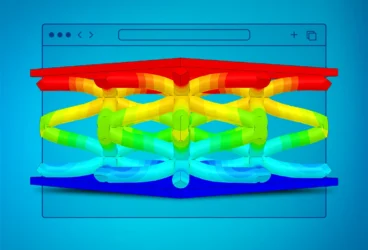
One of the most significant challenges in scaling AI is assimilating or generating training data. Here, the robustness and speed of geometry generation is key, and traditional CAD models can struggle. We looked at how “computational design” tools can algorithmically generate thousands of valid design variants, creating the synthetic data needed to train a reliable Physics AI model.
3. A Connected Toolchain Is Critical
Eliminating process bottlenecks is only possible with a seamlessly connected toolchain with limited sprawl. The session demonstrated how to build tight, AI-driven optimization loops involving nTop’s implicit models that can be read directly by SimScale, eliminating manual prep work and ensuring a robust transfer from geometry to simulation.
4. AI Agents Are the New “UI” for Democratization
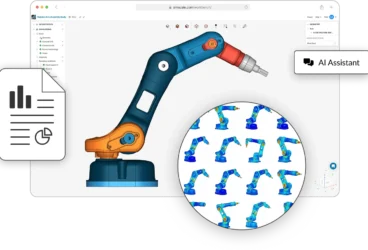
A live demo of SimScale’s Engineering AI agent showed how non-experts can now drive complex simulation much faster. By using natural language (e.g. “optimize this heat sink for me”), a user can trigger an agent to orchestrate CAD, simulation, and optimization in the background. This moves simulation from a specialist-only tool to a capability accessible to the entire organization.
Watch the full webinar recording below. And if this seems interesting, be sure to register for the rest of the series!