

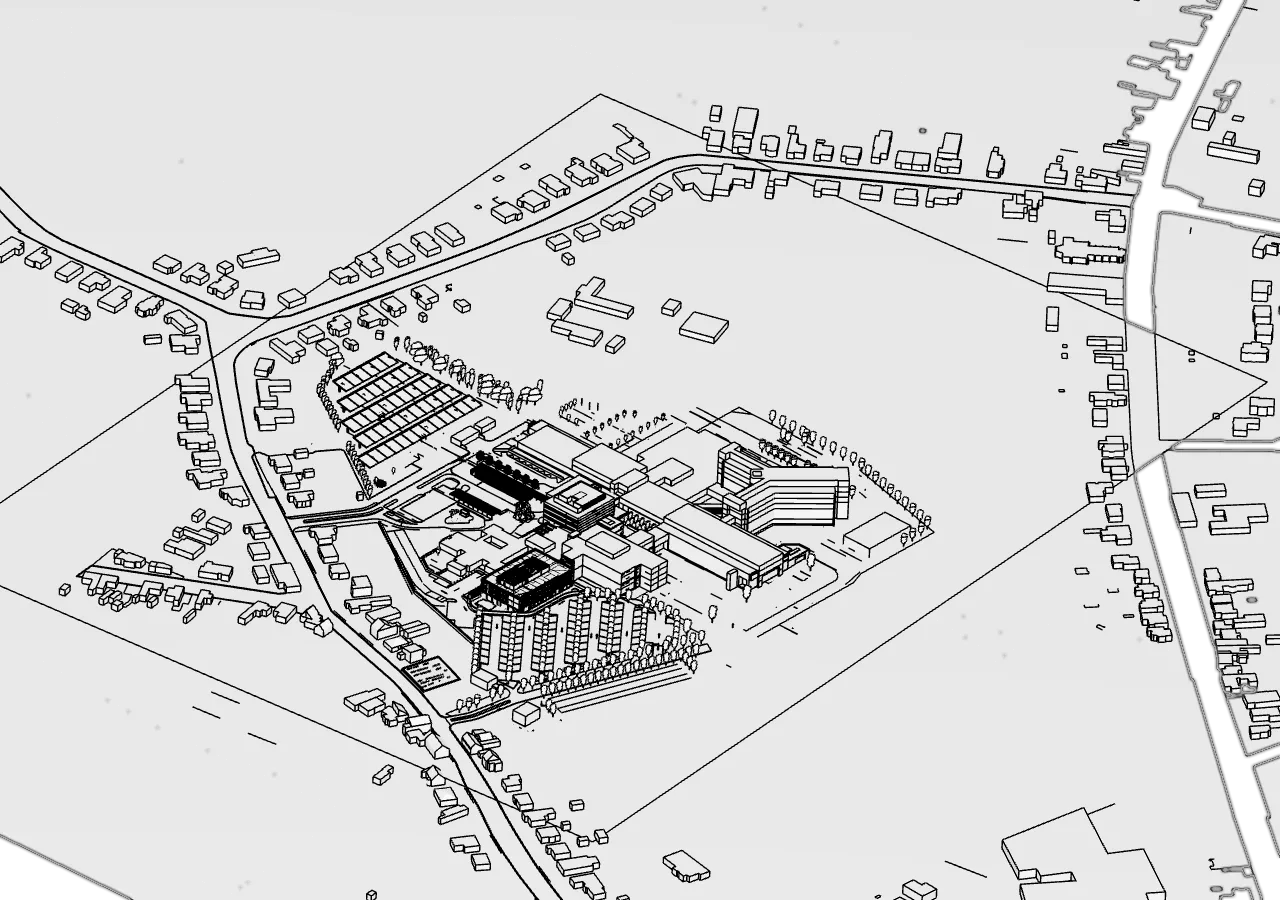
Founded in 2016 in Antwerp, Belgium, Helicus is a pioneering company at the intersection of healthcare and aviation. By leveraging unmanned aerial technology, Helicus is revolutionizing medical logistics through drone-based transport of medical goods between hospitals. With over 35 hospital partnerships, the company is dedicated to providing efficient and innovative solutions tailored to the healthcare sector. A core element of Helicus’ operational success is the development of Drone Cargo Ports—automated landing and take-off vertiports positioned near medical facilities to streamline deliveries.
Drone-based medical logistics is an emerging field of study and application and faces several critical engineering and operational challenges, including:
To address these challenges, Helicus turned to SimScale’s cloud-based simulation platform, which offers computational fluid dynamics (CFD) and finite element analysis (FEA) capabilities to accelerate and enhance the design process.
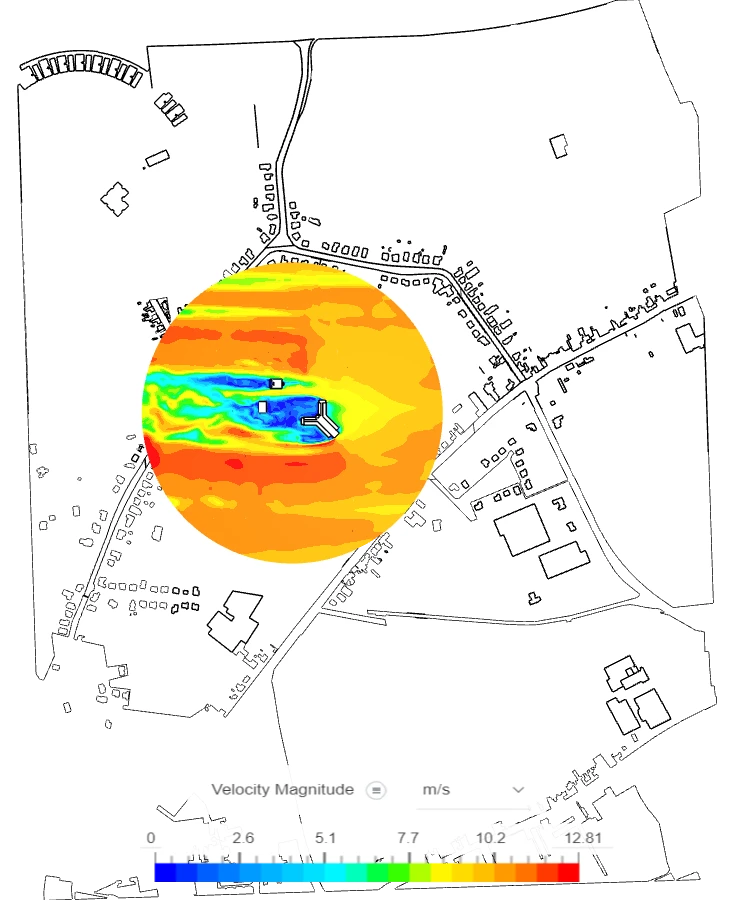
Using SimScale’s pedestrian wind comfort study, Helicus can efficiently determine the ideal landing and take-off locations for drones at hospital sites. The ability to conduct full 360° wind simulations in a single comprehensive analysis significantly reduces the time required to assess wind conditions. Previously, running eight separate wind direction simulations was necessary; with SimScale, all directions can be analyzed within a single simulation, improving efficiency and enabling more rapid decision-making. This includes transient analyses which are considered critical as shown in the hospital example below;
CFD simulations are used to determine the ideal landing location for the drone near a hospital site. For this we used the pedestrian wind comfort tools in SimScale, analysing the full 360° of annual wind profile. Leveraging its ease of use to quickly get a 360° view on the location offers a huge time saving and makes it possible to continue with other tasks while the simulation is running in the cloud. Recently, we have expanded its use of CFD simulations to assess and refine drone designs based on aerodynamic performance. By analyzing drag forces on various designs, the team can identify configurations that minimize resistance, leading to performance gains such as improved flight stability and extended battery life.

Chesney De Bondt
Product Developer at Helicus
We still prototype extensively, especially testing mechanical designs and then iterate from there. We are now leveraging SimScale to further optimize the designs both from a weight perspective but also from a production perspective. This is the real value of using SimScale, that we can converge on a final design solution much faster in the product development process before committing to high physical prototyping and testing costs. The aviation sector is very safety driven especially when it comes to drones flying in urban areas and SimScale is used to reduce the risks in drone design and flight.
Chesney De Bondt
Product Developer at Helicus




Sign up for SimScale
and start simulating now
