The ever-increasing pace of innovation demands rapid advancements in engineering design and simulation capabilities.
However, unlocking the full potential of AI in engineering isn’t just about sophisticated algorithms; it’s fundamentally about data and infrastructure. Many organizations struggle with disparate data volumes, inconsistent folder structures, and scattered spreadsheets, creating a chaotic environment that hinders AI adoption. To truly leverage the transformative power of AI simulation, a robust, centralized data foundation is not just beneficial—it’s essential.
At SimScale, we address this challenge head-on. Our cloud-native platform provides the necessary infrastructure to turn your past engineering data into a strategic asset for future decisions.
In a recent webinar, our experts explored the critical link between data, AI, and engineering, demonstrating how SimScale empowers you to build a successful AI adoption plan – have a look at they 5 key highlights below.
On-Demand Webinar
If the highlights caught your interest, there are many more to see. Watch the on-demand Simulation Expert Series webinar from SimScale on how real-time simulation with AI is driving faster design cycles and superior products by clicking the link below.

1. The data foundation for Physics AI
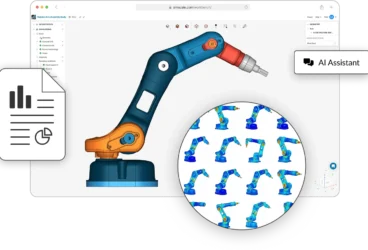
The need for speed in design validation is more critical than ever, but traditional simulation processes often create bottlenecks. SimScale’s Physics AI dramatically reduces simulation time from hours to seconds, enabling instant physics predictions. This allows engineers to perform multiple iterations quickly, fostering broader design exploration and faster convergence on optimal solutions.
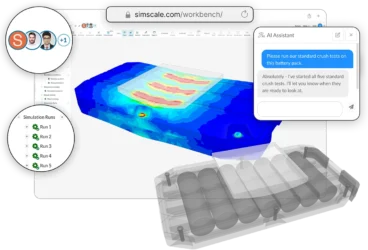
However, the power of Physics AI is unlocked by high-quality engineering data management. This is where SimScale’s cloud-native architecture becomes a game-changer. By centralizing and structuring your simulation data, our platform ensures it is AI-ready. This means you can retrospectively create Physics AI models from simulations that were not originally intended for this purpose, turning your existing data into a valuable resource for future innovation.
2. From data to decisions: A practical example
To illustrate how SimScale transforms data into actionable insights, we’ve created a standalone video demonstrating the end-to-end process. This video showcases how a complex valve simulation can be simplified and accelerated using our AI-powered tools, providing a clear, real-world example of the benefits discussed in the webinar.
3. Optimizing data utilization for AI integration
A critical aspect covered in the webinar is the importance of engineering data management for effective AI deployment. SimScale’s cloud-native platform facilitates the centralization and organization of simulation data, which is essential for training and refining AI models. By ensuring data quality and relevance, SimScale enables engineers to leverage AI more effectively, leading to more accurate and reliable simulation results.
4. Enhancing simulation accuracy with Agentic AI
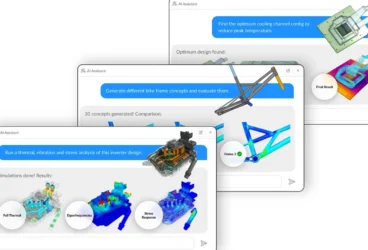
SimScale’s introduction of Agentic AI, or Engineering AI, represents a significant leap in intelligent simulation environments. This AI form can perform tasks autonomously, learning from each interaction and continuously improving its understanding of complex engineering problems. Engaging with Agentic AI allows engineers to offload routine simulation tasks and data analysis, ensuring that even the most subtle design optimizations are considered, leading to improved product performance and reliability.
5. Streamlining workflows with Engineering AI
The integration of Engineering AI goes beyond individual simulations, facilitating a more holistic approach to engineering workflows. Unlike Physics AI, which focuses on speeding up specific simulation tasks, Engineering AI acts as an intelligent assistant that aids in managing and automating broader aspects of engineering projects. By handling repetitive tasks and providing smart suggestions, it enables engineers to focus more on critical design decisions and innovation. This AI-driven approach ensures that designs not only meet the technical requirements but are also optimized for performance, cost, and manufacturability.
Conclusion: AI in Engineering represents a paradigm shift
The integration of AI within SimScale represents a paradigm shift in how engineering simulations are performed and utilized. By embracing AI technologies like Physics AI and Engineering AI, engineers can not only accelerate their workflows but also achieve higher precision and efficiency in their designs. This revolution in simulation technology is not just about speed but about enabling smarter, data-driven decision-making that propels innovation forward.
Watch Now
To dive deeper into how SimScale is harnessing the power of AI to transform engineering simulations, we invite you to watch the full on-demand webinar. Explore detailed demonstrations and discussions by our experts and learn how these technologies can be applied to your specific engineering challenges. Watch the full webinar here and see first-hand how AI is reshaping the future of engineering.